
The short answer: Punggol is one town, but it lives like six neighbourhoods. Town Centre is the busy heart around Punggol MRT and Waterway Point. Punggol Field is the oldest and most settled part in the south. Waterway East hugs the eastern half of the Waterway. Matilda is the quieter west. Northshore is the newest, facing the sea. Punggol Coast, around the newest MRT station and the Digital District, is where the town is growing next.
When people say “I live in Punggol,” they could mean a sea-view flat that was finished two years ago, or a block from the early 2000s next to a wet market. Those are very different lives. So before you choose a flat, a school or even a weekend café, it helps to know which Punggol you are talking about. Here is the town, one neighbourhood at a time, the way residents actually describe it.
Quick Facts
- Official subzones (URA): Punggol Town Centre, Punggol Field, Waterway East, Matilda, Northshore, Punggol Canal and Coney Island
- How residents talk: most people use the names in this guide, plus the name of their nearest LRT station
- MRT stations: Punggol (Town Centre) and Punggol Coast (north-east, next to the Digital District)
- LRT: the East Loop and West Loop both start and end at Punggol station
- Tip: the most useful single question about any flat is “how many minutes to the MRT?”
A note on boundaries: URA’s official subzone lines and HDB’s precinct names do not always match what residents say. This guide follows everyday use. For the planners’ version, read Punggol’s Eleven Districts.
Punggol Town Centre: Where Everything Meets
What it feels like: busy, convenient, never far from a queue. Punggol MRT/LRT station, the bus interchange and Waterway Point sit together here, and the Waterway runs right past. One Punggol, with its regional library, community club and hawker centre, is a short walk away next to Sam Kee LRT.
- Nearest station: Punggol MRT/LRT
- Everyday life: Waterway Point for shopping, cinema and food; One Punggol for the library and hawker centre
- Best for: people who commute daily and want the shortest walk to the train, and anyone who hates driving
- Trade-off: weekend crowds, and more noise and footfall than the rest of town
Punggol Field: The Original Punggol
What it feels like: settled and neighbourly. This southern part of town, around Punggol Field, Edgefield Plains and Punggol Road, is where many of the first blocks went up in the early 2000s. The trees are taller, the coffee shops have regulars, and Punggol Plaza, with its wet market and everyday shops, is close to Coral Edge LRT.
- Nearest stations: East Loop LRT stops such as Coral Edge, Riviera and Cove
- Everyday life: Punggol Plaza, neighbourhood coffee shops, easy access to Sengkang
- Best for: buyers who want an established community and often a bit more space per dollar
- Trade-off: these are Punggol’s older flats, so leases are shorter than elsewhere in town (though still long by Singapore standards)
Waterway East: Life Along the Water
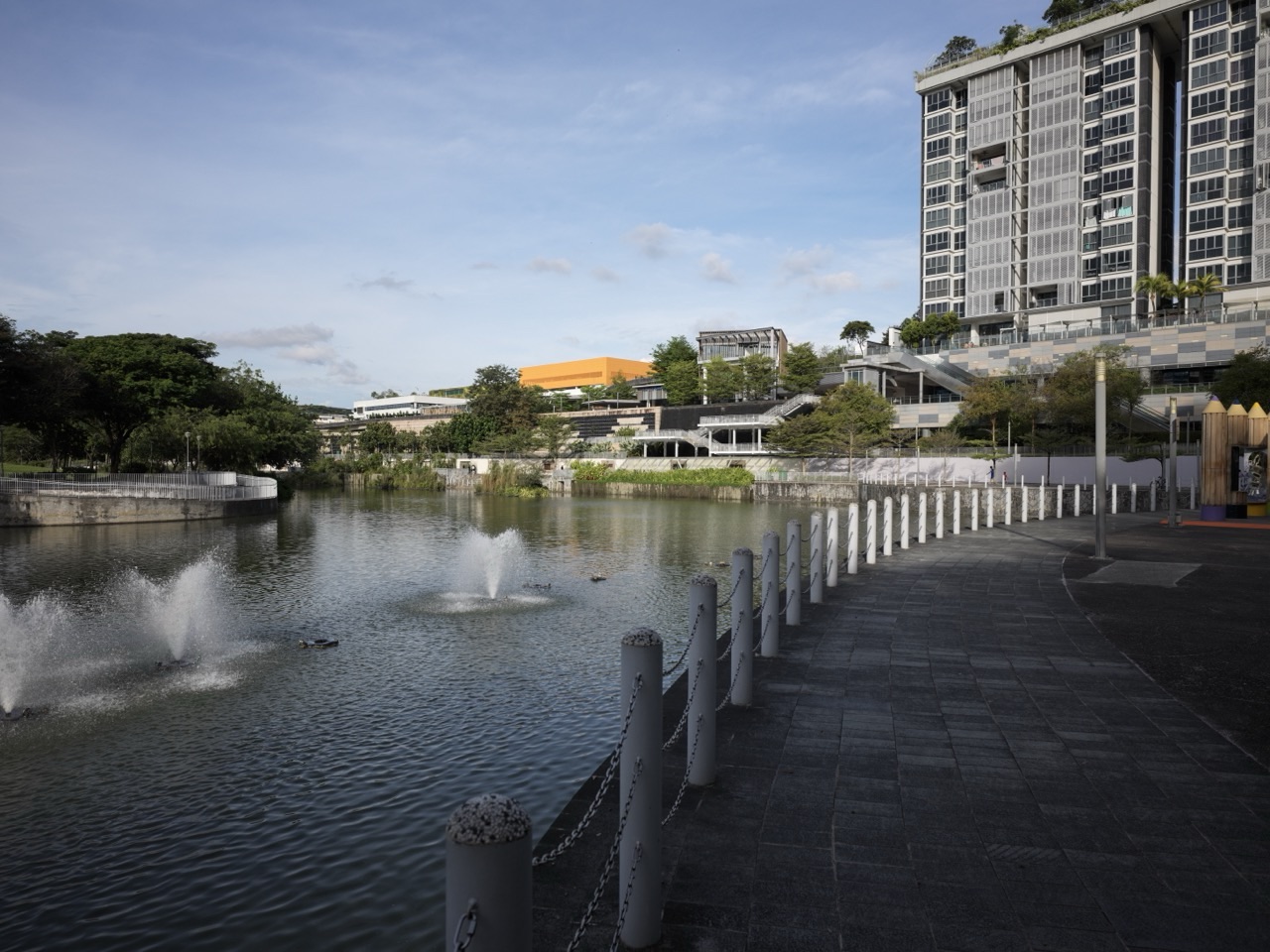
What it feels like: the postcard Punggol. Blocks line the eastern stretch of the Punggol Waterway, with Punggol Waterway Park, the boardwalks and the bridges right outside. Oasis Terraces, the neighbourhood centre with Punggol Polyclinic, a supermarket and food, is close to Oasis LRT.
- Nearest stations: East Loop LRT stops such as Oasis, Damai and Kadaloor
- Everyday life: evening walks by the water, Oasis Terraces, SAFRA Punggol within reach
- Best for: families who want the Waterway as their backyard, runners and cyclists
- Trade-off: most blocks need the LRT to reach the MRT
Matilda: The Quieter West
What it feels like: calmer and greener. The west side of town, served by the West Loop, takes its name from Matilda House, a restored century-old bungalow that is one of the last reminders of old Punggol. Newer BTO projects here carry the Matilda name, and the western stretch of the Waterway and the Punggol reservoir edge give it a softer, more residential mood.
- Nearest stations: West Loop LRT stops
- Everyday life: quiet estates, neighbourhood shops, the Waterway and reservoir edges for walks
- Best for: families who want quiet evenings and do not mind an extra LRT ride
- Trade-off: fewer big amenities on your doorstep; you will ride to Town Centre for most errands
Northshore: Punggol by the Sea
What it feels like: new, breezy and still settling in. Northshore sits along the northern coast, facing the Johor Strait, and was planned as Singapore’s first “smart” HDB district. Many flats have sea views, and Northshore Plaza gives residents their own shops and food. Thousands of Northshore flats reach their Minimum Occupation Period in 2026, so expect more activity on the resale market.
- Nearest stations: West Loop LRT stops along the north, with Punggol Coast MRT also within reach for some blocks
- Everyday life: Northshore Plaza, the coastal promenade, sunsets, cycling to Punggol Point
- Best for: people who value views and space, and families with young children who love the outdoors
- Trade-off: longest distance from Town Centre for some blocks, and amenities are still filling in
Punggol Coast and the Digital District: The Next Town Centre
What it feels like: a place under construction that is already useful. Punggol Coast MRT opened in December 2024 as the new end of the North-East Line. Around it, the Punggol Digital District brings the Singapore Institute of Technology campus, offices, Punggol Coast Mall and a hawker centre. The Settlement, Punggol Point and Coney Island are all nearby.
- Nearest station: Punggol Coast MRT
- Everyday life: Punggol Coast Mall, the new hawker centre, the promenade, weekend seafood at The Punggol Settlement
- Best for: people who work in the Digital District or at SIT, and anyone who wants a new MRT station within walking distance
- Trade-off: construction will continue for years, and the area is quieter on weekends outside the mall
Read more in Punggol Coast Is Becoming a Second Centre of Gravity.
And Coney Island?
Coney Island is officially part of Punggol, but nobody lives there. It is a nature park, and a very good one. Reach it by the bridges at either end, from the Punggol Promenade side or from the Lorong Halus side. See our Coney Island Park Guide.
Which Punggol Neighbourhood Is Right for You?
- You commute every day and want the shortest trip: Town Centre, or near Punggol Coast MRT
- You want an established community and good value: Punggol Field
- You want the Waterway as your backyard: Waterway East
- You want quiet evenings: Matilda
- You want sea views and space: Northshore
- You work at SIT or in the Digital District: Punggol Coast
Still weighing up the whole town? Read our honest guide: Is Punggol a Good Place to Live? And if the LRT will be part of your day, our Punggol LRT Guide shows which stop is nearest to where.
Station-Level Living Guides | Go One Layer Deeper
The neighbourhood names explain the big pieces of Punggol. The station guides below explain daily life at the next level down: housing, school geography, food, errands, parks and the real commute around each transport node.
Town Centre
Living Near Punggol MRT & Town Centre — the main interchange, Waterway Point, buses, MRT and the most central commercial route.
Punggol Field / Waterway East
- Cove (PE1)
- Meridian (PE2)
- Coral Edge (PE3)
- Riviera (PE4 / future CP3)
- Kadaloor (PE5)
- Oasis (PE6)
- Damai (PE7)
Matilda / Punggol West
Northshore / Punggol Point
Punggol Coast / Digital District
Teck Lee (PW2) connects the West Loop into SIT and Punggol Digital District. For the main-line station itself, use the Punggol Coast MRT Station Guide (NE18).
For the complete rail sequence and station codes, use the Punggol LRT Guide.
Frequently Asked Questions
How many neighbourhoods are there in Punggol?
URA divides Punggol into seven subzones: Punggol Town Centre, Punggol Field, Waterway East, Matilda, Northshore, Punggol Canal and Coney Island. HDB uses its own set of eleven districts. Residents mostly talk about Town Centre, Punggol Field, Waterway East, Matilda, Northshore and Punggol Coast.
Which part of Punggol is nearest to the MRT?
Blocks in Punggol Town Centre are nearest to Punggol MRT station. In the north-east, blocks near Punggol Coast MRT and the Digital District are also within walking distance of a station. Most other blocks use the LRT to reach the MRT.
What is the oldest part of Punggol?
Punggol Field, in the south of town, has many of the earliest blocks, completed in the early 2000s.
What is the newest part of Punggol?
Northshore and the area around Punggol Coast and the Punggol Digital District are the newest parts of town, with many projects completed in the 2020s and more still being built.
Why is it called Matilda?
The name comes from Matilda House, a bungalow built in the early 1900s for the Cashin family. It was restored and conserved as part of new development, and the surrounding neighbourhood took its name.
Last updated: 25 September 2026. Sources: URA Master Plan subzones, HDB, LTA, onePA (One Punggol). Part of The Complete Punggol Guide by eduKatePunggol.
Punggol Neighbourhoods: A Local-Differences Operating Guide
This Future Build section deepens the existing canonical place owner rather than creating another competing URL. The reader job is how Punggol neighbourhoods differ in everyday use. current facilities, transport and development facts should remain tied to their official or provider sources.
Reader job
Treat reader job as a practical local variable. Ask what changes for the household: time, route, access, weather exposure, school logistics, food, care responsibilities, independence or the ability to complete an ordinary weekday without unnecessary transfers.
Use current evidence where facts can change. Separate fixed geography from changing services, historical context from current conditions, and one resident’s experience from a claim about the whole town. That distinction keeps the page useful without manufacturing certainty.
Test the variable against a normal week. A place can feel different at school departure, peak-hour work travel, during rain, after CCA or on a grocery run with children. Repeated use gives stronger evidence than a single visit or anecdote.
Current-source boundary
Treat current-source boundary as a practical local variable. Ask what changes for the household: time, route, access, weather exposure, school logistics, food, care responsibilities, independence or the ability to complete an ordinary weekday without unnecessary transfers.
Use current evidence where facts can change. Separate fixed geography from changing services, historical context from current conditions, and one resident’s experience from a claim about the whole town. That distinction keeps the page useful without manufacturing certainty.
Test the variable against a normal week. A place can feel different at school departure, peak-hour work travel, during rain, after CCA or on a grocery run with children. Repeated use gives stronger evidence than a single visit or anecdote.
Town Centre
Treat town centre as a practical local variable. Ask what changes for the household: time, route, access, weather exposure, school logistics, food, care responsibilities, independence or the ability to complete an ordinary weekday without unnecessary transfers.
Use current evidence where facts can change. Separate fixed geography from changing services, historical context from current conditions, and one resident’s experience from a claim about the whole town. That distinction keeps the page useful without manufacturing certainty.
Test the variable against a normal week. A place can feel different at school departure, peak-hour work travel, during rain, after CCA or on a grocery run with children. Repeated use gives stronger evidence than a single visit or anecdote.
Matilda
Treat matilda as a practical local variable. Ask what changes for the household: time, route, access, weather exposure, school logistics, food, care responsibilities, independence or the ability to complete an ordinary weekday without unnecessary transfers.
Use current evidence where facts can change. Separate fixed geography from changing services, historical context from current conditions, and one resident’s experience from a claim about the whole town. That distinction keeps the page useful without manufacturing certainty.
Test the variable against a normal week. A place can feel different at school departure, peak-hour work travel, during rain, after CCA or on a grocery run with children. Repeated use gives stronger evidence than a single visit or anecdote.
Punggol Field
Treat punggol field as a practical local variable. Ask what changes for the household: time, route, access, weather exposure, school logistics, food, care responsibilities, independence or the ability to complete an ordinary weekday without unnecessary transfers.
Use current evidence where facts can change. Separate fixed geography from changing services, historical context from current conditions, and one resident’s experience from a claim about the whole town. That distinction keeps the page useful without manufacturing certainty.
Test the variable against a normal week. A place can feel different at school departure, peak-hour work travel, during rain, after CCA or on a grocery run with children. Repeated use gives stronger evidence than a single visit or anecdote.
Waterway East
Treat waterway east as a practical local variable. Ask what changes for the household: time, route, access, weather exposure, school logistics, food, care responsibilities, independence or the ability to complete an ordinary weekday without unnecessary transfers.
Use current evidence where facts can change. Separate fixed geography from changing services, historical context from current conditions, and one resident’s experience from a claim about the whole town. That distinction keeps the page useful without manufacturing certainty.
Test the variable against a normal week. A place can feel different at school departure, peak-hour work travel, during rain, after CCA or on a grocery run with children. Repeated use gives stronger evidence than a single visit or anecdote.
Northshore
Treat northshore as a practical local variable. Ask what changes for the household: time, route, access, weather exposure, school logistics, food, care responsibilities, independence or the ability to complete an ordinary weekday without unnecessary transfers.
Use current evidence where facts can change. Separate fixed geography from changing services, historical context from current conditions, and one resident’s experience from a claim about the whole town. That distinction keeps the page useful without manufacturing certainty.
Test the variable against a normal week. A place can feel different at school departure, peak-hour work travel, during rain, after CCA or on a grocery run with children. Repeated use gives stronger evidence than a single visit or anecdote.
Punggol Coast
Treat punggol coast as a practical local variable. Ask what changes for the household: time, route, access, weather exposure, school logistics, food, care responsibilities, independence or the ability to complete an ordinary weekday without unnecessary transfers.
Use current evidence where facts can change. Separate fixed geography from changing services, historical context from current conditions, and one resident’s experience from a claim about the whole town. That distinction keeps the page useful without manufacturing certainty.
Test the variable against a normal week. A place can feel different at school departure, peak-hour work travel, during rain, after CCA or on a grocery run with children. Repeated use gives stronger evidence than a single visit or anecdote.
Oasis and Damai
Treat oasis and damai as a practical local variable. Ask what changes for the household: time, route, access, weather exposure, school logistics, food, care responsibilities, independence or the ability to complete an ordinary weekday without unnecessary transfers.
Use current evidence where facts can change. Separate fixed geography from changing services, historical context from current conditions, and one resident’s experience from a claim about the whole town. That distinction keeps the page useful without manufacturing certainty.
Test the variable against a normal week. A place can feel different at school departure, peak-hour work travel, during rain, after CCA or on a grocery run with children. Repeated use gives stronger evidence than a single visit or anecdote.
Riviera and Kadaloor
Treat riviera and kadaloor as a practical local variable. Ask what changes for the household: time, route, access, weather exposure, school logistics, food, care responsibilities, independence or the ability to complete an ordinary weekday without unnecessary transfers.
Use current evidence where facts can change. Separate fixed geography from changing services, historical context from current conditions, and one resident’s experience from a claim about the whole town. That distinction keeps the page useful without manufacturing certainty.
Test the variable against a normal week. A place can feel different at school departure, peak-hour work travel, during rain, after CCA or on a grocery run with children. Repeated use gives stronger evidence than a single visit or anecdote.
Coral Edge and Meridian
Treat coral edge and meridian as a practical local variable. Ask what changes for the household: time, route, access, weather exposure, school logistics, food, care responsibilities, independence or the ability to complete an ordinary weekday without unnecessary transfers.
Use current evidence where facts can change. Separate fixed geography from changing services, historical context from current conditions, and one resident’s experience from a claim about the whole town. That distinction keeps the page useful without manufacturing certainty.
Test the variable against a normal week. A place can feel different at school departure, peak-hour work travel, during rain, after CCA or on a grocery run with children. Repeated use gives stronger evidence than a single visit or anecdote.
Soo Teck and Sam Kee
Treat soo teck and sam kee as a practical local variable. Ask what changes for the household: time, route, access, weather exposure, school logistics, food, care responsibilities, independence or the ability to complete an ordinary weekday without unnecessary transfers.
Use current evidence where facts can change. Separate fixed geography from changing services, historical context from current conditions, and one resident’s experience from a claim about the whole town. That distinction keeps the page useful without manufacturing certainty.
Test the variable against a normal week. A place can feel different at school departure, peak-hour work travel, during rain, after CCA or on a grocery run with children. Repeated use gives stronger evidence than a single visit or anecdote.
Samudera and Nibong
Treat samudera and nibong as a practical local variable. Ask what changes for the household: time, route, access, weather exposure, school logistics, food, care responsibilities, independence or the ability to complete an ordinary weekday without unnecessary transfers.
Use current evidence where facts can change. Separate fixed geography from changing services, historical context from current conditions, and one resident’s experience from a claim about the whole town. That distinction keeps the page useful without manufacturing certainty.
Test the variable against a normal week. A place can feel different at school departure, peak-hour work travel, during rain, after CCA or on a grocery run with children. Repeated use gives stronger evidence than a single visit or anecdote.
MRT access
Treat mrt access as a practical local variable. Ask what changes for the household: time, route, access, weather exposure, school logistics, food, care responsibilities, independence or the ability to complete an ordinary weekday without unnecessary transfers.
Use current evidence where facts can change. Separate fixed geography from changing services, historical context from current conditions, and one resident’s experience from a claim about the whole town. That distinction keeps the page useful without manufacturing certainty.
Test the variable against a normal week. A place can feel different at school departure, peak-hour work travel, during rain, after CCA or on a grocery run with children. Repeated use gives stronger evidence than a single visit or anecdote.
LRT access
Treat lrt access as a practical local variable. Ask what changes for the household: time, route, access, weather exposure, school logistics, food, care responsibilities, independence or the ability to complete an ordinary weekday without unnecessary transfers.
Use current evidence where facts can change. Separate fixed geography from changing services, historical context from current conditions, and one resident’s experience from a claim about the whole town. That distinction keeps the page useful without manufacturing certainty.
Test the variable against a normal week. A place can feel different at school departure, peak-hour work travel, during rain, after CCA or on a grocery run with children. Repeated use gives stronger evidence than a single visit or anecdote.
Bus access
Treat bus access as a practical local variable. Ask what changes for the household: time, route, access, weather exposure, school logistics, food, care responsibilities, independence or the ability to complete an ordinary weekday without unnecessary transfers.
Use current evidence where facts can change. Separate fixed geography from changing services, historical context from current conditions, and one resident’s experience from a claim about the whole town. That distinction keeps the page useful without manufacturing certainty.
Test the variable against a normal week. A place can feel different at school departure, peak-hour work travel, during rain, after CCA or on a grocery run with children. Repeated use gives stronger evidence than a single visit or anecdote.
Walking
Treat walking as a practical local variable. Ask what changes for the household: time, route, access, weather exposure, school logistics, food, care responsibilities, independence or the ability to complete an ordinary weekday without unnecessary transfers.
Use current evidence where facts can change. Separate fixed geography from changing services, historical context from current conditions, and one resident’s experience from a claim about the whole town. That distinction keeps the page useful without manufacturing certainty.
Test the variable against a normal week. A place can feel different at school departure, peak-hour work travel, during rain, after CCA or on a grocery run with children. Repeated use gives stronger evidence than a single visit or anecdote.
Cycling
Treat cycling as a practical local variable. Ask what changes for the household: time, route, access, weather exposure, school logistics, food, care responsibilities, independence or the ability to complete an ordinary weekday without unnecessary transfers.
Use current evidence where facts can change. Separate fixed geography from changing services, historical context from current conditions, and one resident’s experience from a claim about the whole town. That distinction keeps the page useful without manufacturing certainty.
Test the variable against a normal week. A place can feel different at school departure, peak-hour work travel, during rain, after CCA or on a grocery run with children. Repeated use gives stronger evidence than a single visit or anecdote.
Driving and pickup
Treat driving and pickup as a practical local variable. Ask what changes for the household: time, route, access, weather exposure, school logistics, food, care responsibilities, independence or the ability to complete an ordinary weekday without unnecessary transfers.
Use current evidence where facts can change. Separate fixed geography from changing services, historical context from current conditions, and one resident’s experience from a claim about the whole town. That distinction keeps the page useful without manufacturing certainty.
Test the variable against a normal week. A place can feel different at school departure, peak-hour work travel, during rain, after CCA or on a grocery run with children. Repeated use gives stronger evidence than a single visit or anecdote.
Wet-weather movement
Treat wet-weather movement as a practical local variable. Ask what changes for the household: time, route, access, weather exposure, school logistics, food, care responsibilities, independence or the ability to complete an ordinary weekday without unnecessary transfers.
Use current evidence where facts can change. Separate fixed geography from changing services, historical context from current conditions, and one resident’s experience from a claim about the whole town. That distinction keeps the page useful without manufacturing certainty.
Test the variable against a normal week. A place can feel different at school departure, peak-hour work travel, during rain, after CCA or on a grocery run with children. Repeated use gives stronger evidence than a single visit or anecdote.
Groceries
Treat groceries as a practical local variable. Ask what changes for the household: time, route, access, weather exposure, school logistics, food, care responsibilities, independence or the ability to complete an ordinary weekday without unnecessary transfers.
Use current evidence where facts can change. Separate fixed geography from changing services, historical context from current conditions, and one resident’s experience from a claim about the whole town. That distinction keeps the page useful without manufacturing certainty.
Test the variable against a normal week. A place can feel different at school departure, peak-hour work travel, during rain, after CCA or on a grocery run with children. Repeated use gives stronger evidence than a single visit or anecdote.
Food
Treat food as a practical local variable. Ask what changes for the household: time, route, access, weather exposure, school logistics, food, care responsibilities, independence or the ability to complete an ordinary weekday without unnecessary transfers.
Use current evidence where facts can change. Separate fixed geography from changing services, historical context from current conditions, and one resident’s experience from a claim about the whole town. That distinction keeps the page useful without manufacturing certainty.
Test the variable against a normal week. A place can feel different at school departure, peak-hour work travel, during rain, after CCA or on a grocery run with children. Repeated use gives stronger evidence than a single visit or anecdote.
Healthcare
Treat healthcare as a practical local variable. Ask what changes for the household: time, route, access, weather exposure, school logistics, food, care responsibilities, independence or the ability to complete an ordinary weekday without unnecessary transfers.
Use current evidence where facts can change. Separate fixed geography from changing services, historical context from current conditions, and one resident’s experience from a claim about the whole town. That distinction keeps the page useful without manufacturing certainty.
Test the variable against a normal week. A place can feel different at school departure, peak-hour work travel, during rain, after CCA or on a grocery run with children. Repeated use gives stronger evidence than a single visit or anecdote.
Schools
Treat schools as a practical local variable. Ask what changes for the household: time, route, access, weather exposure, school logistics, food, care responsibilities, independence or the ability to complete an ordinary weekday without unnecessary transfers.
Use current evidence where facts can change. Separate fixed geography from changing services, historical context from current conditions, and one resident’s experience from a claim about the whole town. That distinction keeps the page useful without manufacturing certainty.
Test the variable against a normal week. A place can feel different at school departure, peak-hour work travel, during rain, after CCA or on a grocery run with children. Repeated use gives stronger evidence than a single visit or anecdote.
Student care
Treat student care as a practical local variable. Ask what changes for the household: time, route, access, weather exposure, school logistics, food, care responsibilities, independence or the ability to complete an ordinary weekday without unnecessary transfers.
Use current evidence where facts can change. Separate fixed geography from changing services, historical context from current conditions, and one resident’s experience from a claim about the whole town. That distinction keeps the page useful without manufacturing certainty.
Test the variable against a normal week. A place can feel different at school departure, peak-hour work travel, during rain, after CCA or on a grocery run with children. Repeated use gives stronger evidence than a single visit or anecdote.
Libraries
Treat libraries as a practical local variable. Ask what changes for the household: time, route, access, weather exposure, school logistics, food, care responsibilities, independence or the ability to complete an ordinary weekday without unnecessary transfers.
Use current evidence where facts can change. Separate fixed geography from changing services, historical context from current conditions, and one resident’s experience from a claim about the whole town. That distinction keeps the page useful without manufacturing certainty.
Test the variable against a normal week. A place can feel different at school departure, peak-hour work travel, during rain, after CCA or on a grocery run with children. Repeated use gives stronger evidence than a single visit or anecdote.
Parks and waterway
Treat parks and waterway as a practical local variable. Ask what changes for the household: time, route, access, weather exposure, school logistics, food, care responsibilities, independence or the ability to complete an ordinary weekday without unnecessary transfers.
Use current evidence where facts can change. Separate fixed geography from changing services, historical context from current conditions, and one resident’s experience from a claim about the whole town. That distinction keeps the page useful without manufacturing certainty.
Test the variable against a normal week. A place can feel different at school departure, peak-hour work travel, during rain, after CCA or on a grocery run with children. Repeated use gives stronger evidence than a single visit or anecdote.
Sports and gyms
Treat sports and gyms as a practical local variable. Ask what changes for the household: time, route, access, weather exposure, school logistics, food, care responsibilities, independence or the ability to complete an ordinary weekday without unnecessary transfers.
Use current evidence where facts can change. Separate fixed geography from changing services, historical context from current conditions, and one resident’s experience from a claim about the whole town. That distinction keeps the page useful without manufacturing certainty.
Test the variable against a normal week. A place can feel different at school departure, peak-hour work travel, during rain, after CCA or on a grocery run with children. Repeated use gives stronger evidence than a single visit or anecdote.
Places of worship
Treat places of worship as a practical local variable. Ask what changes for the household: time, route, access, weather exposure, school logistics, food, care responsibilities, independence or the ability to complete an ordinary weekday without unnecessary transfers.
Use current evidence where facts can change. Separate fixed geography from changing services, historical context from current conditions, and one resident’s experience from a claim about the whole town. That distinction keeps the page useful without manufacturing certainty.
Test the variable against a normal week. A place can feel different at school departure, peak-hour work travel, during rain, after CCA or on a grocery run with children. Repeated use gives stronger evidence than a single visit or anecdote.
Teenager independence
Treat teenager independence as a practical local variable. Ask what changes for the household: time, route, access, weather exposure, school logistics, food, care responsibilities, independence or the ability to complete an ordinary weekday without unnecessary transfers.
Use current evidence where facts can change. Separate fixed geography from changing services, historical context from current conditions, and one resident’s experience from a claim about the whole town. That distinction keeps the page useful without manufacturing certainty.
Test the variable against a normal week. A place can feel different at school departure, peak-hour work travel, during rain, after CCA or on a grocery run with children. Repeated use gives stronger evidence than a single visit or anecdote.
Young children
Treat young children as a practical local variable. Ask what changes for the household: time, route, access, weather exposure, school logistics, food, care responsibilities, independence or the ability to complete an ordinary weekday without unnecessary transfers.
Use current evidence where facts can change. Separate fixed geography from changing services, historical context from current conditions, and one resident’s experience from a claim about the whole town. That distinction keeps the page useful without manufacturing certainty.
Test the variable against a normal week. A place can feel different at school departure, peak-hour work travel, during rain, after CCA or on a grocery run with children. Repeated use gives stronger evidence than a single visit or anecdote.
Older family members
Treat older family members as a practical local variable. Ask what changes for the household: time, route, access, weather exposure, school logistics, food, care responsibilities, independence or the ability to complete an ordinary weekday without unnecessary transfers.
Use current evidence where facts can change. Separate fixed geography from changing services, historical context from current conditions, and one resident’s experience from a claim about the whole town. That distinction keeps the page useful without manufacturing certainty.
Test the variable against a normal week. A place can feel different at school departure, peak-hour work travel, during rain, after CCA or on a grocery run with children. Repeated use gives stronger evidence than a single visit or anecdote.
Work commute
Treat work commute as a practical local variable. Ask what changes for the household: time, route, access, weather exposure, school logistics, food, care responsibilities, independence or the ability to complete an ordinary weekday without unnecessary transfers.
Use current evidence where facts can change. Separate fixed geography from changing services, historical context from current conditions, and one resident’s experience from a claim about the whole town. That distinction keeps the page useful without manufacturing certainty.
Test the variable against a normal week. A place can feel different at school departure, peak-hour work travel, during rain, after CCA or on a grocery run with children. Repeated use gives stronger evidence than a single visit or anecdote.
School commute
Treat school commute as a practical local variable. Ask what changes for the household: time, route, access, weather exposure, school logistics, food, care responsibilities, independence or the ability to complete an ordinary weekday without unnecessary transfers.
Use current evidence where facts can change. Separate fixed geography from changing services, historical context from current conditions, and one resident’s experience from a claim about the whole town. That distinction keeps the page useful without manufacturing certainty.
Test the variable against a normal week. A place can feel different at school departure, peak-hour work travel, during rain, after CCA or on a grocery run with children. Repeated use gives stronger evidence than a single visit or anecdote.
Tuition commute
Treat tuition commute as a practical local variable. Ask what changes for the household: time, route, access, weather exposure, school logistics, food, care responsibilities, independence or the ability to complete an ordinary weekday without unnecessary transfers.
Use current evidence where facts can change. Separate fixed geography from changing services, historical context from current conditions, and one resident’s experience from a claim about the whole town. That distinction keeps the page useful without manufacturing certainty.
Test the variable against a normal week. A place can feel different at school departure, peak-hour work travel, during rain, after CCA or on a grocery run with children. Repeated use gives stronger evidence than a single visit or anecdote.
Evening return
Treat evening return as a practical local variable. Ask what changes for the household: time, route, access, weather exposure, school logistics, food, care responsibilities, independence or the ability to complete an ordinary weekday without unnecessary transfers.
Use current evidence where facts can change. Separate fixed geography from changing services, historical context from current conditions, and one resident’s experience from a claim about the whole town. That distinction keeps the page useful without manufacturing certainty.
Test the variable against a normal week. A place can feel different at school departure, peak-hour work travel, during rain, after CCA or on a grocery run with children. Repeated use gives stronger evidence than a single visit or anecdote.
Weekend life
Treat weekend life as a practical local variable. Ask what changes for the household: time, route, access, weather exposure, school logistics, food, care responsibilities, independence or the ability to complete an ordinary weekday without unnecessary transfers.
Use current evidence where facts can change. Separate fixed geography from changing services, historical context from current conditions, and one resident’s experience from a claim about the whole town. That distinction keeps the page useful without manufacturing certainty.
Test the variable against a normal week. A place can feel different at school departure, peak-hour work travel, during rain, after CCA or on a grocery run with children. Repeated use gives stronger evidence than a single visit or anecdote.
Noise and construction
Treat noise and construction as a practical local variable. Ask what changes for the household: time, route, access, weather exposure, school logistics, food, care responsibilities, independence or the ability to complete an ordinary weekday without unnecessary transfers.
Use current evidence where facts can change. Separate fixed geography from changing services, historical context from current conditions, and one resident’s experience from a claim about the whole town. That distinction keeps the page useful without manufacturing certainty.
Test the variable against a normal week. A place can feel different at school departure, peak-hour work travel, during rain, after CCA or on a grocery run with children. Repeated use gives stronger evidence than a single visit or anecdote.
Crowding
Treat crowding as a practical local variable. Ask what changes for the household: time, route, access, weather exposure, school logistics, food, care responsibilities, independence or the ability to complete an ordinary weekday without unnecessary transfers.
Use current evidence where facts can change. Separate fixed geography from changing services, historical context from current conditions, and one resident’s experience from a claim about the whole town. That distinction keeps the page useful without manufacturing certainty.
Test the variable against a normal week. A place can feel different at school departure, peak-hour work travel, during rain, after CCA or on a grocery run with children. Repeated use gives stronger evidence than a single visit or anecdote.
Lifts
Treat lifts as a practical local variable. Ask what changes for the household: time, route, access, weather exposure, school logistics, food, care responsibilities, independence or the ability to complete an ordinary weekday without unnecessary transfers.
Use current evidence where facts can change. Separate fixed geography from changing services, historical context from current conditions, and one resident’s experience from a claim about the whole town. That distinction keeps the page useful without manufacturing certainty.
Test the variable against a normal week. A place can feel different at school departure, peak-hour work travel, during rain, after CCA or on a grocery run with children. Repeated use gives stronger evidence than a single visit or anecdote.
Waterfront benefits
Treat waterfront benefits as a practical local variable. Ask what changes for the household: time, route, access, weather exposure, school logistics, food, care responsibilities, independence or the ability to complete an ordinary weekday without unnecessary transfers.
Use current evidence where facts can change. Separate fixed geography from changing services, historical context from current conditions, and one resident’s experience from a claim about the whole town. That distinction keeps the page useful without manufacturing certainty.
Test the variable against a normal week. A place can feel different at school departure, peak-hour work travel, during rain, after CCA or on a grocery run with children. Repeated use gives stronger evidence than a single visit or anecdote.
Coastal weather
Treat coastal weather as a practical local variable. Ask what changes for the household: time, route, access, weather exposure, school logistics, food, care responsibilities, independence or the ability to complete an ordinary weekday without unnecessary transfers.
Use current evidence where facts can change. Separate fixed geography from changing services, historical context from current conditions, and one resident’s experience from a claim about the whole town. That distinction keeps the page useful without manufacturing certainty.
Test the variable against a normal week. A place can feel different at school departure, peak-hour work travel, during rain, after CCA or on a grocery run with children. Repeated use gives stronger evidence than a single visit or anecdote.
New development
Treat new development as a practical local variable. Ask what changes for the household: time, route, access, weather exposure, school logistics, food, care responsibilities, independence or the ability to complete an ordinary weekday without unnecessary transfers.
Use current evidence where facts can change. Separate fixed geography from changing services, historical context from current conditions, and one resident’s experience from a claim about the whole town. That distinction keeps the page useful without manufacturing certainty.
Test the variable against a normal week. A place can feel different at school departure, peak-hour work travel, during rain, after CCA or on a grocery run with children. Repeated use gives stronger evidence than a single visit or anecdote.
Housing type
Treat housing type as a practical local variable. Ask what changes for the household: time, route, access, weather exposure, school logistics, food, care responsibilities, independence or the ability to complete an ordinary weekday without unnecessary transfers.
Use current evidence where facts can change. Separate fixed geography from changing services, historical context from current conditions, and one resident’s experience from a claim about the whole town. That distinction keeps the page useful without manufacturing certainty.
Test the variable against a normal week. A place can feel different at school departure, peak-hour work travel, during rain, after CCA or on a grocery run with children. Repeated use gives stronger evidence than a single visit or anecdote.
Resale questions
Treat resale questions as a practical local variable. Ask what changes for the household: time, route, access, weather exposure, school logistics, food, care responsibilities, independence or the ability to complete an ordinary weekday without unnecessary transfers.
Use current evidence where facts can change. Separate fixed geography from changing services, historical context from current conditions, and one resident’s experience from a claim about the whole town. That distinction keeps the page useful without manufacturing certainty.
Test the variable against a normal week. A place can feel different at school departure, peak-hour work travel, during rain, after CCA or on a grocery run with children. Repeated use gives stronger evidence than a single visit or anecdote.
Rental questions
Treat rental questions as a practical local variable. Ask what changes for the household: time, route, access, weather exposure, school logistics, food, care responsibilities, independence or the ability to complete an ordinary weekday without unnecessary transfers.
Use current evidence where facts can change. Separate fixed geography from changing services, historical context from current conditions, and one resident’s experience from a claim about the whole town. That distinction keeps the page useful without manufacturing certainty.
Test the variable against a normal week. A place can feel different at school departure, peak-hour work travel, during rain, after CCA or on a grocery run with children. Repeated use gives stronger evidence than a single visit or anecdote.
Postal code use
Treat postal code use as a practical local variable. Ask what changes for the household: time, route, access, weather exposure, school logistics, food, care responsibilities, independence or the ability to complete an ordinary weekday without unnecessary transfers.
Use current evidence where facts can change. Separate fixed geography from changing services, historical context from current conditions, and one resident’s experience from a claim about the whole town. That distinction keeps the page useful without manufacturing certainty.
Test the variable against a normal week. A place can feel different at school departure, peak-hour work travel, during rain, after CCA or on a grocery run with children. Repeated use gives stronger evidence than a single visit or anecdote.
Road-name use
Treat road-name use as a practical local variable. Ask what changes for the household: time, route, access, weather exposure, school logistics, food, care responsibilities, independence or the ability to complete an ordinary weekday without unnecessary transfers.
Use current evidence where facts can change. Separate fixed geography from changing services, historical context from current conditions, and one resident’s experience from a claim about the whole town. That distinction keeps the page useful without manufacturing certainty.
Test the variable against a normal week. A place can feel different at school departure, peak-hour work travel, during rain, after CCA or on a grocery run with children. Repeated use gives stronger evidence than a single visit or anecdote.
District-name use
Treat district-name use as a practical local variable. Ask what changes for the household: time, route, access, weather exposure, school logistics, food, care responsibilities, independence or the ability to complete an ordinary weekday without unnecessary transfers.
Use current evidence where facts can change. Separate fixed geography from changing services, historical context from current conditions, and one resident’s experience from a claim about the whole town. That distinction keeps the page useful without manufacturing certainty.
Test the variable against a normal week. A place can feel different at school departure, peak-hour work travel, during rain, after CCA or on a grocery run with children. Repeated use gives stronger evidence than a single visit or anecdote.
Block finding
Treat block finding as a practical local variable. Ask what changes for the household: time, route, access, weather exposure, school logistics, food, care responsibilities, independence or the ability to complete an ordinary weekday without unnecessary transfers.
Use current evidence where facts can change. Separate fixed geography from changing services, historical context from current conditions, and one resident’s experience from a claim about the whole town. That distinction keeps the page useful without manufacturing certainty.
Test the variable against a normal week. A place can feel different at school departure, peak-hour work travel, during rain, after CCA or on a grocery run with children. Repeated use gives stronger evidence than a single visit or anecdote.
Map orientation
Treat map orientation as a practical local variable. Ask what changes for the household: time, route, access, weather exposure, school logistics, food, care responsibilities, independence or the ability to complete an ordinary weekday without unnecessary transfers.
Use current evidence where facts can change. Separate fixed geography from changing services, historical context from current conditions, and one resident’s experience from a claim about the whole town. That distinction keeps the page useful without manufacturing certainty.
Test the variable against a normal week. A place can feel different at school departure, peak-hour work travel, during rain, after CCA or on a grocery run with children. Repeated use gives stronger evidence than a single visit or anecdote.
East and west loops
Treat east and west loops as a practical local variable. Ask what changes for the household: time, route, access, weather exposure, school logistics, food, care responsibilities, independence or the ability to complete an ordinary weekday without unnecessary transfers.
Use current evidence where facts can change. Separate fixed geography from changing services, historical context from current conditions, and one resident’s experience from a claim about the whole town. That distinction keeps the page useful without manufacturing certainty.
Test the variable against a normal week. A place can feel different at school departure, peak-hour work travel, during rain, after CCA or on a grocery run with children. Repeated use gives stronger evidence than a single visit or anecdote.
Town Centre and Coast
Treat town centre and coast as a practical local variable. Ask what changes for the household: time, route, access, weather exposure, school logistics, food, care responsibilities, independence or the ability to complete an ordinary weekday without unnecessary transfers.
Use current evidence where facts can change. Separate fixed geography from changing services, historical context from current conditions, and one resident’s experience from a claim about the whole town. That distinction keeps the page useful without manufacturing certainty.
Test the variable against a normal week. A place can feel different at school departure, peak-hour work travel, during rain, after CCA or on a grocery run with children. Repeated use gives stronger evidence than a single visit or anecdote.
Punggol and Sengkang
Treat punggol and sengkang as a practical local variable. Ask what changes for the household: time, route, access, weather exposure, school logistics, food, care responsibilities, independence or the ability to complete an ordinary weekday without unnecessary transfers.
Use current evidence where facts can change. Separate fixed geography from changing services, historical context from current conditions, and one resident’s experience from a claim about the whole town. That distinction keeps the page useful without manufacturing certainty.
Test the variable against a normal week. A place can feel different at school departure, peak-hour work travel, during rain, after CCA or on a grocery run with children. Repeated use gives stronger evidence than a single visit or anecdote.
Family time cost
Treat family time cost as a practical local variable. Ask what changes for the household: time, route, access, weather exposure, school logistics, food, care responsibilities, independence or the ability to complete an ordinary weekday without unnecessary transfers.
Use current evidence where facts can change. Separate fixed geography from changing services, historical context from current conditions, and one resident’s experience from a claim about the whole town. That distinction keeps the page useful without manufacturing certainty.
Test the variable against a normal week. A place can feel different at school departure, peak-hour work travel, during rain, after CCA or on a grocery run with children. Repeated use gives stronger evidence than a single visit or anecdote.
Household fit
Treat household fit as a practical local variable. Ask what changes for the household: time, route, access, weather exposure, school logistics, food, care responsibilities, independence or the ability to complete an ordinary weekday without unnecessary transfers.
Use current evidence where facts can change. Separate fixed geography from changing services, historical context from current conditions, and one resident’s experience from a claim about the whole town. That distinction keeps the page useful without manufacturing certainty.
Test the variable against a normal week. A place can feel different at school departure, peak-hour work travel, during rain, after CCA or on a grocery run with children. Repeated use gives stronger evidence than a single visit or anecdote.
Normal Tuesday
Treat normal tuesday as a practical local variable. Ask what changes for the household: time, route, access, weather exposure, school logistics, food, care responsibilities, independence or the ability to complete an ordinary weekday without unnecessary transfers.
Use current evidence where facts can change. Separate fixed geography from changing services, historical context from current conditions, and one resident’s experience from a claim about the whole town. That distinction keeps the page useful without manufacturing certainty.
Test the variable against a normal week. A place can feel different at school departure, peak-hour work travel, during rain, after CCA or on a grocery run with children. Repeated use gives stronger evidence than a single visit or anecdote.
Wet Saturday
Treat wet saturday as a practical local variable. Ask what changes for the household: time, route, access, weather exposure, school logistics, food, care responsibilities, independence or the ability to complete an ordinary weekday without unnecessary transfers.
Use current evidence where facts can change. Separate fixed geography from changing services, historical context from current conditions, and one resident’s experience from a claim about the whole town. That distinction keeps the page useful without manufacturing certainty.
Test the variable against a normal week. A place can feel different at school departure, peak-hour work travel, during rain, after CCA or on a grocery run with children. Repeated use gives stronger evidence than a single visit or anecdote.
Peak hour
Treat peak hour as a practical local variable. Ask what changes for the household: time, route, access, weather exposure, school logistics, food, care responsibilities, independence or the ability to complete an ordinary weekday without unnecessary transfers.
Use current evidence where facts can change. Separate fixed geography from changing services, historical context from current conditions, and one resident’s experience from a claim about the whole town. That distinction keeps the page useful without manufacturing certainty.
Test the variable against a normal week. A place can feel different at school departure, peak-hour work travel, during rain, after CCA or on a grocery run with children. Repeated use gives stronger evidence than a single visit or anecdote.
First month
Treat first month as a practical local variable. Ask what changes for the household: time, route, access, weather exposure, school logistics, food, care responsibilities, independence or the ability to complete an ordinary weekday without unnecessary transfers.
Use current evidence where facts can change. Separate fixed geography from changing services, historical context from current conditions, and one resident’s experience from a claim about the whole town. That distinction keeps the page useful without manufacturing certainty.
Test the variable against a normal week. A place can feel different at school departure, peak-hour work travel, during rain, after CCA or on a grocery run with children. Repeated use gives stronger evidence than a single visit or anecdote.
Editorial review
Treat editorial review as a practical local variable. Ask what changes for the household: time, route, access, weather exposure, school logistics, food, care responsibilities, independence or the ability to complete an ordinary weekday without unnecessary transfers.
Use current evidence where facts can change. Separate fixed geography from changing services, historical context from current conditions, and one resident’s experience from a claim about the whole town. That distinction keeps the page useful without manufacturing certainty.
Test the variable against a normal week. A place can feel different at school departure, peak-hour work travel, during rain, after CCA or on a grocery run with children. Repeated use gives stronger evidence than a single visit or anecdote.
Evidence review
Treat evidence review as a practical local variable. Ask what changes for the household: time, route, access, weather exposure, school logistics, food, care responsibilities, independence or the ability to complete an ordinary weekday without unnecessary transfers.
Use current evidence where facts can change. Separate fixed geography from changing services, historical context from current conditions, and one resident’s experience from a claim about the whole town. That distinction keeps the page useful without manufacturing certainty.
Test the variable against a normal week. A place can feel different at school departure, peak-hour work travel, during rain, after CCA or on a grocery run with children. Repeated use gives stronger evidence than a single visit or anecdote.
Source routing
Treat source routing as a practical local variable. Ask what changes for the household: time, route, access, weather exposure, school logistics, food, care responsibilities, independence or the ability to complete an ordinary weekday without unnecessary transfers.
Use current evidence where facts can change. Separate fixed geography from changing services, historical context from current conditions, and one resident’s experience from a claim about the whole town. That distinction keeps the page useful without manufacturing certainty.
Test the variable against a normal week. A place can feel different at school departure, peak-hour work travel, during rain, after CCA or on a grocery run with children. Repeated use gives stronger evidence than a single visit or anecdote.
Decision closeout
Treat decision closeout as a practical local variable. Ask what changes for the household: time, route, access, weather exposure, school logistics, food, care responsibilities, independence or the ability to complete an ordinary weekday without unnecessary transfers.
Use current evidence where facts can change. Separate fixed geography from changing services, historical context from current conditions, and one resident’s experience from a claim about the whole town. That distinction keeps the page useful without manufacturing certainty.
Test the variable against a normal week. A place can feel different at school departure, peak-hour work travel, during rain, after CCA or on a grocery run with children. Repeated use gives stronger evidence than a single visit or anecdote.
The Final Place Principle
The intended return is a neighbourhood choice based on real local differences rather than generic place swapping. Locate, compare, walk the route, test the ordinary week, keep current facts with their owners and choose for the household that will actually live the decision.


