
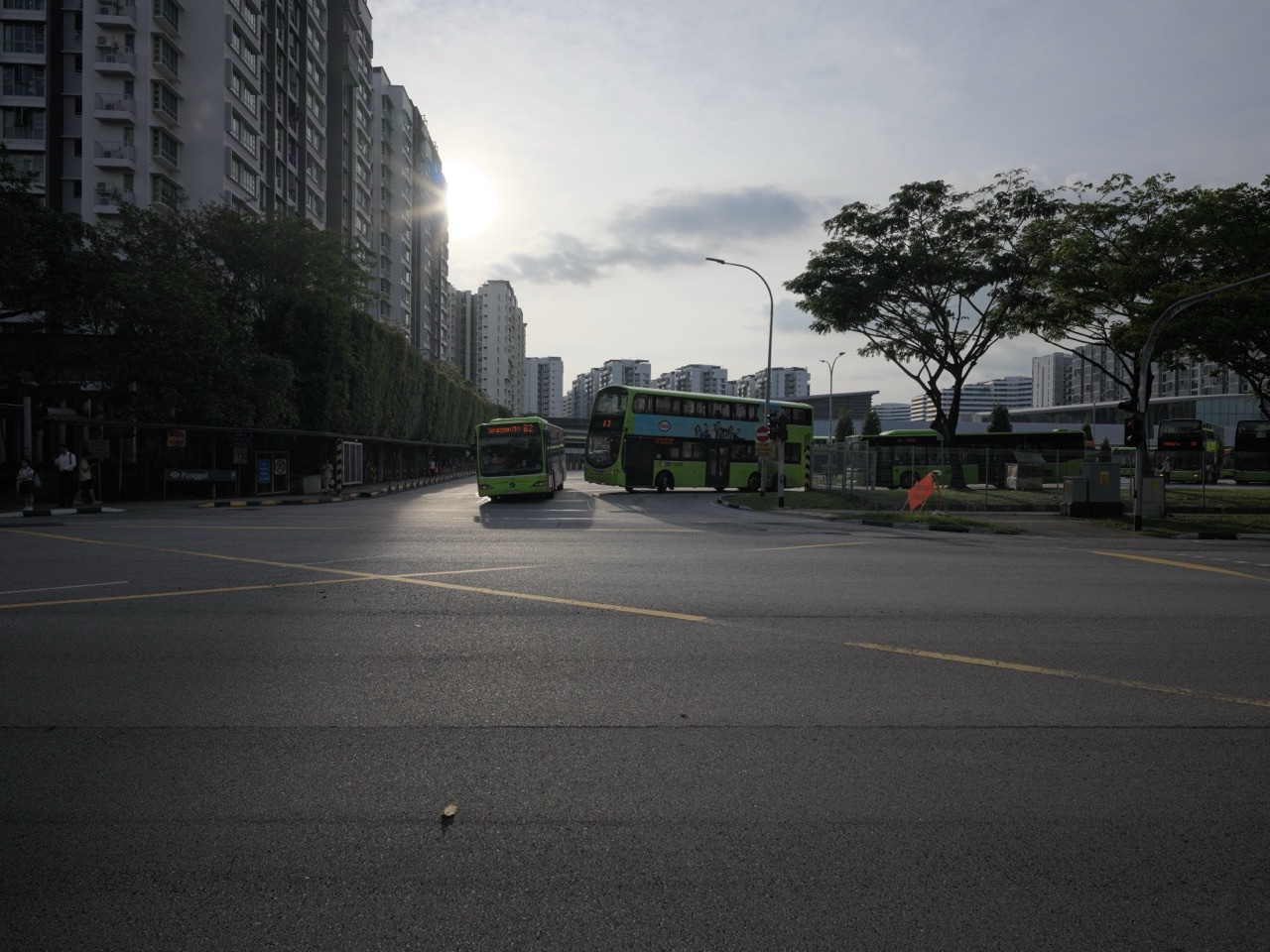
Living near Oasis LRT can work well when a household regularly uses Oasis Terraces, the Punggol Waterway and the surrounding school routes. The useful question is not whether Oasis is the best station in Punggol. It is whether a particular home makes the family’s real week easier: getting a child to the correct gate, reaching an appointment, bringing shopping home and returning from work with enough energy left for dinner.
Oasis is PE6 on the Punggol LRT East Loop. Oasis Terraces, at 681 Punggol Drive, combines neighbourhood shopping with Punggol Polyclinic and community spaces. Those are useful anchors, but a station name is not a doorstep, a clinic address is not an appointment and a school nearby is not an admission guarantee. This guide helps you turn the local map into decisions that can actually be checked.
The local facts below were checked against official and operator information on 30 September 2026. The examples are planning exercises, not measured journey times or accounts of particular residents. Start with the chapter closest to your situation, then use the viewing and first-month sections to test your assumptions.
Choose your reading route
New to the area: start with chapters 1–3. Planning school and care: read chapters 4–6. Building the everyday routine: use chapters 7–10. Comparing a home or settling in: go to chapters 11–16.
1. Understand the Oasis neighbourhood before comparing homes · 2. Read the East Loop as a loop, not a numbered queue · 3. Inspect the first mile with the person who will use it · 4. Plan polyclinic visits around the appointment, not the shopping centre
5. Separate Oasis Primary’s address from the family’s school decision · 6. Make childcare and after-school handovers explicit · 7. Use the supermarket for a real food plan · 8. Build a dinner routine that survives a late return
9. Treat Waterway access as an optional daily habit · 10. Make play and community activities flexible · 11. Compare homes at the room and route level · 12. Compare Oasis with another location using the same week
13. Test three ordinary household scenarios · 14. Use one purposeful viewing session · 15. Set up the first month without overloading it · 16. Quick answers and the next useful check
1. Understand the Oasis neighbourhood before comparing homes
Oasis has several overlapping identities. The LRT station is a transport point. Oasis Terraces is a neighbourhood centre. Punggol Polyclinic is a healthcare provider within that centre. Oasis Primary School is a separate campus at 71 Edgefield Plains. The Waterway is a wider landscape and recreational route. Keeping those places distinct makes everyday instructions clearer, especially when grandparents, children and visiting relatives use the same shorthand differently.
For example, “meet at Oasis” could mean a station entrance, a shop in the basement, the clinic level or the entrance used on the way to school. A useful household meeting point includes the building, level and recognisable entrance. Agree on it during a calm visit, rather than while someone is delayed and another person is already waiting with bags. The small amount of preparation is particularly valuable when the person collecting a child does not live in the neighbourhood.
HDB describes Oasis Terraces as its first new-generation neighbourhood centre and identifies an integrated polyclinic, childcare and community spaces among its features. Its published account also describes a direct connection to Oasis LRT. These are facts about the development, not proof that every nearby residential block has a fully sheltered, step-free journey to every destination. Check the approach from the home separately from the connection inside the centre. HDB’s neighbourhood-centre overview and HDB’s account of Oasis Terraces explain the development’s design.
When looking at a home, first draw a small map with five points: the residential entrance, Oasis LRT, the centre entrance you expect to use, the relevant school gate and the Waterway access you would actually take. Do not worry about attractive labels or broad neighbourhood boundaries yet. The paths between these points will reveal more about daily convenience than a description saying the property is “near everything”.
Then add the destinations outside this small map. An office, secondary school, grandparent’s home or weekly activity may dominate the household’s travel even if local errands are easy. Oasis can provide useful local services without being the right base for every distant journey. A good decision recognises both advantages and compromises instead of asking one station to solve every part of family life.
Back to contents · Next chapter
2. Read the East Loop as a loop, not a numbered queue
PE6 does not mean six compulsory stops before Punggol MRT. Station numbers identify positions in the network; they are not a travel-time scale. Before relying on any claim that Oasis has a longer or shorter feeder journey than another stop, check the current direction of the service, platform information and the whole trip you intend to make. The relevant authorities are the operator and LTA, rather than a property description or an old screenshot.
The SBS Transit system map provides the rail-network overview, while SBS Transit’s Oasis station information identifies nearby landmarks. Use current station signs and operator notices on the day of travel. This article deliberately does not freeze first-train times, last-train times or service intervals into a residential guide, because these details can change and may matter differently on weekdays, weekends and public holidays.
For an office commute, the useful measurement begins when you leave the flat and ends at your workplace entrance. Include the lift, crossing, station approach, waiting, rail transfer and final walk. Record the return separately. An outward trip can feel straightforward while the evening return becomes difficult because you also need to collect a child or buy dinner before a provider closes.
A sensible trial has a specific question. “Can I reliably reach my office before my required start?” is better than “How many minutes is Oasis from town?” Try the route at the time you expect to use it, with the same transfer and final destination. Record one result as one observation. If the decision is important, repeat under another ordinary condition rather than treating a single unusually smooth journey as the permanent norm.
Teach an older child the reasoning behind the route. Ask them to identify the line, station code, direction shown and transfer destination before boarding. A child who understands these elements is better equipped to pause and ask staff when signage or service arrangements change. The goal is not memorising a parent’s turn-by-turn voice instructions; it is recognising where they are and what information they need next.
Keep a backup for the essential journeys, but make it realistic. A bus alternative needs an actual boarding stop, direction and destination. A paid ride needs a practical pickup point and a cost the household can manage when necessary. A walking alternative needs a route that the traveller can use safely in the relevant conditions. Merely writing “take another route” does not create a usable backup.
Back to contents · Next chapter
3. Inspect the first mile with the person who will use it
The first mile is often where an attractive map becomes a tiring routine. Begin at the flat door, not at the block marker. Check the lift you would normally use, the exit from the lobby and the crossing that takes you towards the station or centre. If a route looks simple from above, look again at street level: an entrance on another side of a building can change the practical journey.
For a parent with a stroller, notice whether the route depends on lifting equipment, waiting for a particular lift or negotiating a narrow turn with shopping. Do the inspection with the stroller if possible. For a wheelchair user or someone with limited mobility, check the complete route and verify material access conditions with the responsible building or transport operator. A ramp at one end cannot establish accessibility for the entire journey.
Shelter also needs to be followed rather than assumed. Mark where coverage ends, which crossing is exposed and whether the alternative requires a detour. You do not need to conduct a viewing during dangerous weather to understand the problem. Observe the route in ordinary conditions, check the uncovered portions, and ask the relevant operator about access where necessary. A family can then decide whether an umbrella, a different entrance or a changed collection arrangement is the appropriate response.
The return trip deserves its own test. A light walk to the supermarket and a walk home carrying a week’s purchases are different tasks. A route used by an adult alone may not work equally well with a tired child. Try the journey with a representative load rather than making the decision on an empty-handed visit. This does not require buying a large basket of groceries; carrying the usual school bags or a small trolley can reveal the relevant turning and crossing issues.
Look for places where decisions become unclear. Which lift serves the destination? Does the person know which entrance leads towards home? Is there an obvious point to stop and call if the family separates? These questions are more useful than declaring an area universally easy or difficult. They identify precisely what the household must learn or change.
Finish by choosing one default approach and one alternative. Too many possible routes can confuse a child or a visiting caregiver. The default should be the route you expect to use most often, while the alternative addresses a specific problem such as a closed entrance or an unsuitable exposed section. Review it after the first week of real use; the route that looked shortest may not be the route the family prefers in practice.
Back to contents · Next chapter
4. Plan polyclinic visits around the appointment, not the shopping centre
SingHealth’s Punggol Polyclinic page lists the clinic at 681 Punggol Drive, Oasis Terraces #02-01, Singapore 820681. It identifies Oasis as the nearest LRT station and lists bus services 50 and 386 at the Punggol Drive stop. This is a concrete local advantage for households using that provider, but it remains a transport fact rather than a clinical recommendation or a promise of immediate care.
Before an appointment, check the provider’s current instructions, the service booked and any preparation the clinic has given you. Put the appointment details somewhere the accompanying adult can retrieve them. If an older relative is attending, confirm whether they want accompaniment and what practical help they need. Do not assume that being close to home means they can manage registration, navigation or the journey back without support.
Think of the visit as three stages: arrival, care and departure. The arrival stage includes reaching the correct level and allowing for the provider’s registration process. The care stage is governed by the clinic, including any movement between service points. The departure stage includes getting home and handling the rest of the day. A school pickup or work meeting immediately after an appointment can create pressure if the visit takes longer than expected.
Combining errands may help on a routine day when the person feels well enough. It should not become an obligation to shop simply because a supermarket is in the same building. If someone is unwell, the simpler plan may be to return home while another adult handles food separately. The value of nearby services is flexibility, not the maximum number of tasks squeezed into one outing.
A household can prepare a small practical checklist: appointment confirmation, identification or documents requested by the provider, a charged phone, the agreed pickup point and the contact of the accompanying person. Follow the clinic’s advice on anything specific to the appointment. Avoid turning an ordinary neighbourhood checklist into medical instructions; questions about symptoms, medication, fasting or treatment belong with qualified healthcare professionals and the treating service.
Finally, do not mistake an integrated polyclinic for a round-the-clock emergency department. Opening and appointment arrangements must be checked with SingHealth. For an urgent or emergency situation, use the appropriate official medical guidance and emergency services rather than choosing a destination solely because it is close to the flat. A residential guide can help with location and planning, but cannot determine the right level of care for a particular illness.
Back to contents · Next chapter
5. Separate Oasis Primary’s address from the family’s school decision
Oasis Primary School’s contact page gives its address as 71 Edgefield Plains, Singapore 828716. That tells you where the campus is. It does not establish the distance category for any particular home, which gate a child should use, whether a place is available or how a future registration exercise will proceed. Those questions need the current school and MOE information relevant to the child.
Start with the actual school journey if your child already attends. Confirm the permitted gate, reporting arrangements and dismissal arrangements through the school. Walk the route in the direction the child will travel, including the crossing immediately before the gate. A campus marker can make two homes appear similarly placed even when their practical approaches are different. The map is a starting point; the approved entrance is the destination.
For a prospective Primary 1 family, keep a separate admissions note. Use the current MOE Primary 1 registration guidance for the applicable exercise, address rules and registration process. Do not infer a distance band from the LRT station or copy historical applicant figures into a forecast. Even accurate past numbers describe a past exercise, not an assured outcome for the next child.
A useful school comparison has three columns in your own notes: what is confirmed, what needs checking, and what the household would do if the preferred arrangement is unavailable. Confirmed facts might include the school address and an existing enrolment. Questions might include the relevant gate or student-care arrangement. The alternative should be a practical plan, not a prediction that the child will definitely obtain a particular place elsewhere.
Consider the child’s age and independence. A younger child may need an adult for the entire journey; an older child may gradually take responsibility for familiar sections. Practise at the child’s pace and coordinate with school instructions. Independence is not something a neighbourhood label can supply. It develops through repeated, understood journeys and an agreed response when something changes.
School fit also extends beyond travel. Look at official school information, ask appropriate questions at school events and consider the child’s learning and support needs. A short journey is useful, but it should not replace a thoughtful educational decision. Conversely, a school that sounds attractive in an abstract comparison may create an unsustainable week if every day requires difficult travel and complicated handovers. The aim is a workable combination of education, care and family capacity.
Back to contents · Next chapter
6. Make childcare and after-school handovers explicit
A centre or school near home is only one part of a care arrangement. The family also needs the correct age group, available place, suitable days, collection conditions and a reliable adult to complete the handover. Before planning a move or adding a class around an assumed vacancy, confirm the current arrangement directly with the provider. Nearby provision and an available place are different facts.
For preschool, write down the ordinary drop-off and collection sequence. Which adult brings the child? Where is the entrance? What must be carried? What happens when the usual collector cannot come? Ask the provider about authorised collectors and its own procedures. These are not details to improvise through a hurried message after work has already overrun.
For school-based or other student care, confirm whether the service supports the child’s school and required schedule. Ask how the child moves from school to care, what happens on days with a different dismissal time and how the family is informed of changes. A building’s proximity does not answer any of those questions. If school and care are on the same campus, still check the actual handover arrangements rather than assuming the transfer is automatic.
Two children can turn individually easy journeys into a conflict. Put both collection times on one weekly sheet and add each adult’s availability. Look for overlap rather than simply adding travel times. A parent cannot be at two gates simultaneously, even if both gates are close to Oasis. A grandparent’s help also needs the grandparent’s own outward and return journey included in the plan.
Keep one clearly named fallback for a late workday. This might be another authorised collector or an arrangement already agreed with the provider. Do not assume a centre can extend care at short notice or that a neighbour will always be available. The backup works because the relevant people know about it, understand the trigger and can actually carry it out.
After the first fortnight, ask what is repeatedly difficult. If everyone is racing through the same handover each Tuesday, the problem may be the timetable rather than anyone’s effort. Change the collection arrangement, activity time or errand sequence where possible. A local neighbourhood centre is most useful when it helps the family build a calm routine, not when its convenience becomes a reason to accept an overloaded week.
Back to contents · Next chapter
7. Use the supermarket for a real food plan
FairPrice’s own published store information includes Oasis Terraces at 681 Punggol Drive, #B1-01. Use the FairPrice store locator for current outlet information; its store-delivery information also identifies this address. Opening hours, delivery conditions, availability and promotions should be checked with the retailer when they matter to a particular trip.
A supermarket nearby can support several different routines. One household may make a small top-up on the way home. Another may do one larger weekly shop. A household caring for an older relative may need frequent, manageable purchases rather than a heavy trolley. Decide which pattern you actually use before valuing the location. The same outlet can be convenient for one basket and awkward for another journey.
Begin with a short list of repeat essentials and two or three meals the household reliably eats. This is more useful than imagining that every evening will involve a fresh, elaborate cooking project. Keep some flexibility for late workdays and children’s changing schedules. A nearby shop helps when an ingredient runs out, but repeated unplanned trips can still consume time and money.
Check the physical return with the expected load. If you use a trolley, consider the turns, lifts and final approach to the block. If an adult is collecting a child at the same time, avoid assuming that adult can also carry the entire weekly shop. Split the tasks or change the shopping day when that produces a simpler sequence. The aim is fewer difficult handovers, not merely fewer dots on a map.
Delivery may be useful, but compare the complete arrangement. Look at the retailer’s current minimum order, fees, available slot and service to the exact address. Someone must be able to receive the order under the provider’s conditions. An apparent saving can disappear if the basket grows just to reach a threshold or the delivery window conflicts with school collection.
Food preferences and dietary requirements need their own checks. Do not assume every necessary product will be stocked at all times because the branch is large enough to feel comprehensive. For an item the household relies on, identify an alternative supplier before it becomes urgent. This is especially useful when buying for several generations with different preferences: a workable food routine should be based on the household’s actual meals, not on the number of shops around the station.
Back to contents · Next chapter
8. Build a dinner routine that survives a late return
A neighbourhood centre can offer several kinds of food, but a long tenant list does not automatically produce an easy dinner. The relevant questions are whether a suitable option is open when you return, whether the family can order and carry the meal comfortably, and whether the cost fits the number of times you expect to use it. Current outlet details belong with the businesses themselves and the centre’s current information.
Choose three ordinary dinner paths. One can be a simple meal at home, one a purchase on the return journey and one a fallback for a particularly late day. These are household choices rather than claims about particular restaurants. Agreeing them in advance reduces the tired conversation in which every person rejects the first suggestion while a hungry child becomes increasingly upset.
For a school-day takeaway, decide who orders, who collects and where the child waits. A parent supervising a young child may find one predictable collection point easier than several separate stops. If two adults split the journey, use a clear meeting point and a realistic collection window. Do not make the plan depend on everyone arriving at exactly the same minute.
Look at the full cost of the pattern over a normal week. Include drinks, delivery fees or extra journeys if those are part of how you actually buy food. This is not a claim that eating at home or buying food is always cheaper; the answer depends on the household and its choices. The useful comparison is between realistic routines, including wasted ingredients and the time available to cook.
Keep a quiet distinction between convenience and care. A nearby food option can free an adult to spend time with a child or an older parent. That can be worthwhile even if it is not the lowest possible cost per meal. Equally, feeling obliged to eat out because the centre is close can undermine the original budget. Decide consciously how often the household wants to use the convenience.
Use the wider Oasis Terraces guide when exploring the place itself, but confirm individual businesses before a time-sensitive visit. This residential guide’s job is to help you organise the week around the centre. It should remain useful even when a café changes hands, an outlet alters its hours or the family’s favourite dinner changes.
Back to contents · Next chapter
9. Treat Waterway access as an optional daily habit
The Waterway setting is part of Oasis Terraces’ identity, and HDB’s account describes the centre’s relationship with the landscape. For a household, however, the useful question is where an ordinary walk starts and ends. Find the entrance you would use from home, the point at which you would turn back and the route home if the outing needs to end early. A modest repeatable walk can be more valuable than an ambitious route attempted only once.
With a young child, build the outing around attention and energy rather than distance. Decide which adult is supervising, keep the return manageable and avoid combining an already tiring school day with a long compulsory excursion. A child may enjoy a short look at the surroundings and a conversation more than a route planned around completing a map. The neighbourhood should offer room to pause.
For a teenager, an agreed walking or exercise routine can provide a break between school and homework. Let the student have a role in choosing a familiar route and return time. Keep the plan appropriate to the student’s age and the actual conditions. The point is to make independent movement understandable, not to present any public space as automatically safe at every hour.
Cycling needs a separate assessment from walking. Shared paths involve other users, and the rider must follow current rules and signs. A route that feels straightforward on foot can require different decisions on a bicycle, especially around crossings, narrow sections and crowded approaches. Use responsible official guidance and practise the actual route rather than assuming the Waterway setting removes the need for judgement.
Weather changes the value of an outdoor plan. Check current conditions and follow official warnings or closure notices. Choose an indoor alternative when appropriate; the family does not lose the benefit of living near outdoor space by deciding not to use it on an unsuitable day. Keeping recreation optional is one way to prevent a pleasant local feature from becoming another source of pressure.
When comparing homes, be honest about how often you expect to use the Waterway. If regular walks are already part of the household’s life, convenient access may matter considerably. If they are only an imagined future habit, give them less weight until you have tried the routine. A scenic view and an accessible walking route are also different benefits. Check both rather than using the word “waterfront” as a substitute for either.
Back to contents · Next chapter
10. Make play and community activities flexible
HDB’s neighbourhood-centre information includes a children’s water-play feature and community space at Oasis Terraces. This supports the centre’s family-oriented design, but it is not a guarantee that a particular facility is operating whenever you arrive. Maintenance, weather, programme arrangements and local notices can affect what is available. Check before building a special outing around a single attraction.
For a casual after-school stop, keep the commitment small. Tell the child what kind of visit is planned and what the alternative will be if the chosen activity is unavailable. A spare change of clothes may be sensible for a planned water-play visit, while an ordinary errand may not be the right occasion to begin one. The child’s expectations matter as much as the physical proximity of the facility.
Community events can be enjoyable, but they are separate from the centre’s everyday operating pattern. Verify the organiser, date, venue, registration requirement and intended age group for a specific event. A photo from a previous celebration is not evidence of a current programme. If the event requires booking, check the terms before assuming the whole family can simply join on arrival.
Consider how optional activities fit around dinner and rest. A family may value being able to stop briefly on the way home without arranging a separate outing. Another may prefer to reserve recreation for a quieter part of the week. Neither pattern is inherently better. The practical benefit is having a choice that suits the child and the adult accompanying them.
For older relatives, ask what they would genuinely use. Some may enjoy a familiar meeting point or a gentle outing; others may prefer activities elsewhere with established friends. Do not assume that placing services nearby automatically creates a social life. Transport, confidence, language, interests and existing relationships all shape whether a facility becomes useful.
Keep the housing decision anchored to essential needs. An attractive play area should not outweigh a school journey that the household cannot manage, and an appealing event calendar should not excuse a home layout that does not work. Optional amenities can enrich a sound daily arrangement. They are a weaker foundation for a decision when the ordinary week still depends on repeated, unresolved compromises.
Back to contents · Next chapter
11. Compare homes at the room and route level
Two homes described as “near Oasis” may offer very different experiences. Their entrances, floor levels, orientation, layout and relationship to roads or common areas can differ. Inspect the actual home and its routes rather than treating all properties around PE6 as one product. The station is shared context; the flat or unit is where the household sleeps, studies, cooks and recovers.
Start with the rooms used at the most demanding times. Where would a child do homework while another person prepares dinner? Can a working adult take a call without taking over the only study area? Is there space to store a stroller or mobility aid without blocking movement? A location that saves a journey cannot compensate for every mismatch inside the home.
Noise should be assessed as an observation about a particular room, time and condition. During a viewing, notice what is audible with the relevant windows open and closed. If a concern matters, visit at another appropriate time or ask precise questions. Do not label the entire Oasis area noisier or quieter than another station without comparable evidence. The source and the room’s exposure are more useful than a broad neighbourhood reputation.
The same principle applies to light and heat. Notice orientation and how the home is used, but avoid drawing a permanent conclusion from a short visit in one weather condition. Ask about the features that affect the household’s likely experience. A room used for evening study has a different role from a room used for daytime remote work; the right questions follow the intended use.
Inspect the practical approach for visitors and deliveries. Is the correct block or entrance easy to identify? Where would a permitted pickup or drop-off happen? Can a visiting caregiver find the lift without relying on a confusing series of last-minute calls? These details do not need to dominate a decision, but resolving them early makes the first weeks less chaotic.
For financial or contractual decisions, use current authoritative information and qualified advice where needed. This guide does not estimate a station premium, predict appreciation or judge whether a particular purchase is affordable. Keep transport convenience separate from price assumptions. A desirable local feature may matter to your household without supporting any claim about future resale value or rental returns.
Back to contents · Next chapter
12. Compare Oasis with another location using the same week
A fair comparison holds the household’s needs constant. Choose a normal school-and-work week and test it from each shortlisted home. Use the same workplace, school gate, care arrangement and grocery pattern. Otherwise, it is easy to make one location look better by imagining an ideal routine there while measuring the other against the family’s current difficulties.
For each home, identify the three journeys that happen most often and the one journey that becomes hardest when someone is tired or delayed. These may not be the journeys a property advertisement emphasises. A weekly healthcare visit, a grandparent’s collection route or a child’s late CCA return can carry more weight than an occasional shopping trip.
Compare the whole task rather than isolated segments. If groceries are collected on a commute, measure the detour and carrying burden instead of counting a separate round trip that you would never make. If a caregiver travels to help, include that person’s journey. A plan that appears efficient only because it ignores someone else’s travel is not a complete household comparison.
Use words as well as numbers. “One familiar transfer, but an exposed final crossing” can be more informative than a single journey-time estimate. “Easy ordinary collection, difficult when both children finish together” identifies a real issue to solve. The purpose of the comparison is to reveal trade-offs, not to manufacture a score that makes the answer look objective.
Oasis may deserve more weight if the household already uses the polyclinic, school routes and neighbourhood shopping here. Another location may fit better if the dominant need is a different workplace, a different school or relatives elsewhere. That is a practical judgement based on the household, not a ranking of residents or stations. The same local infrastructure can produce different conclusions for two families.
Stop comparing once the essential conditions are understood and the remaining compromise is acceptable. Endless browsing can generate new attractive possibilities without improving the decision. A useful conclusion sounds specific: “This home works because these journeys are manageable, this care arrangement is confirmed and we accept this limitation.” It does not need to claim that Oasis wins every category or that no other neighbourhood could work.
Back to contents · Next chapter
13. Test three ordinary household scenarios
Consider a hypothetical household with a primary-school child and two working adults. One adult can handle mornings but has an unpredictable evening finish. The other returns earlier on most days. Their first task is to make collection dependable, not to add enrichment because the centre is convenient. They should confirm school and care arrangements, name the ordinary collector and agree on a fallback before deciding which errands can fit into the journey.
For this household, Oasis Terraces may be useful as a place to buy a few essentials after collection. A large shop on the same evening might be too much. The family could separate the top-up basket from the main weekly shop and reserve a simple dinner for the late-work day. The example illustrates sequencing; it does not assume any particular employer, provider or family arrangement is available locally.
Now consider an older resident who attends appointments at Punggol Polyclinic and prefers to manage some errands independently. The central questions are the route from their actual home, the relevant lift access, places to pause and how they feel about the whole journey. A relative should ask what help is wanted rather than assuming either full independence or full dependence from the resident’s age.
The resident might make an ordinary grocery trip alone but prefer accompaniment for a clinic visit. That distinction can be built into the schedule. A familiar meeting point at the centre and a clear return plan may be more valuable than a claim that all amenities are “at the doorstep”. The success of the arrangement is measured by whether the person can use it comfortably, not by whether a map looks compact.
Finally, consider a secondary-school student whose school is outside the immediate Oasis area. Local food and Waterway access may be welcome, but the school commute, CCA return and study routine deserve first attention. Practise the actual journey, identify what changes on late days and agree on communication if the student misses the expected connection.
The student’s home routine should include a realistic arrival, meal and rest period before work begins. Convenient surroundings can create better conditions for learning, but they do not guarantee grades or eliminate the need for teaching support. If additional tuition is being considered, judge the actual learning need, lesson arrangement and travel burden. A nearby class should earn its place in the week by helping the student, rather than merely filling time that the location appears to save.
Back to contents · Next chapter
14. Use one purposeful viewing session
Before visiting, write down the decision the viewing should help you make. Perhaps you need to know whether a grandparent can manage the centre route, whether school collection and groceries can be combined, or whether the home has enough usable study space. A focused question prevents the visit from becoming a pleasant walk that produces many impressions but little evidence.
Begin at the property entrance and follow one essential journey all the way to its destination. Name the points where you hesitate or change direction. Take simple notes about the condition observed, such as an uncovered crossing or an entrance that needs clarification. Avoid turning a photograph into a conclusion about a whole year’s experience; it records one place at one moment.
At Oasis Terraces, locate the specific service relevant to the household. If that is the polyclinic, confirm the level and route without entering restricted or clinical areas unnecessarily. If it is groceries, test the access and return. If it is a meeting point, make sure the landmark is specific enough for another person to recognise. You are checking the family’s use of the centre, not trying to inspect every business.
Then return by the route you expect to use with bags or a child. A one-way test misses the part of the journey that often feels hardest. Notice whether a different exit is more practical, whether the meeting point still makes sense and whether the route depends on a shortcut that may not always be available.
Back at the home, connect the outing to the indoor routine. Where will bags go? Can dinner and homework begin without everyone blocking the same space? Is there a calm place for someone who needs rest? The outdoor route and the home layout should be evaluated together because a smooth arrival is only useful if the household can settle once inside.
End with three lists: confirmed, unresolved and acceptable compromise. Keep them short. Confirmed means supported by your observation or current authoritative information; unresolved means you know who to ask; acceptable compromise means the household understands the limitation and can live with it. If a major requirement remains unresolved, do not hide it beneath a generally positive impression of the neighbourhood.
Back to contents · Next chapter
15. Set up the first month without overloading it
In the first week, learn the essential routes and keep optional commitments light. Prioritise the school or work journey, food, necessary care and a clear way to communicate changes. Moving or starting a new routine already creates unfamiliar decisions. There is no need to prove immediately that every nearby amenity will become part of the family’s life.
Create a small shared note with the home address, agreed meeting point, relevant provider contacts and the ordinary collection arrangement. Include only information the people using the note need. Keep children’s schedules and personal details within the family or the specific authorised caregivers rather than circulating them widely. Practical coordination works best when it is clear and appropriately private.
During the second week, notice the recurring pinch point. It might be a grocery trip that is too heavy, a late dinner after CCA or confusion about which adult is collecting. Choose one meaningful change and see whether it helps. Changing several things at once makes it harder to understand what improved the routine and what merely happened to be easier that week.
By the third week, add one optional local habit if the essentials are stable. That could be a short Waterway walk, a family meal at the centre or a visit to a verified activity. Choose something the household actually wants, not something it feels obliged to do because it is nearby. The ability to leave time unfilled is part of a workable location.
At the end of the month, compare the expected routine with the real one. Which journeys were manageable? Which required more adult coordination than expected? Did the food budget reflect actual habits? Did a child gain a little confidence using a familiar route? These are more useful measures than whether the neighbourhood matched an idealised description.
Keep the arrangements that work and revise the ones that repeatedly fail. Reopen the broader location question only when a material change makes it relevant, such as a different school, work pattern, care need or housing situation. A good local system should eventually fade into the background and support family life, rather than becoming a project that demands constant optimisation.
Back to contents · Next chapter
16. Quick answers and the next useful check
Is Oasis convenient for Punggol Polyclinic?
SingHealth identifies Oasis as the nearest LRT station to Punggol Polyclinic at Oasis Terraces. For a resident, the remaining question is the actual home-to-clinic journey and the appointment arrangement. Check both. The station relationship does not guarantee a particular walking time, a fully sheltered route from every home or availability of a specific clinical service.
Does living near Oasis help with primary-school planning?
It can make some school journeys worth investigating, including the route to Oasis Primary at 71 Edgefield Plains. Admission and distance categories must be checked separately through the current MOE process using the relevant address and exercise. This guide does not assign a home-school distance band or predict registration outcomes.
Can a household live here without a car?
Some households may find the combination of LRT, local services and their actual destinations workable. Test the essential journeys, heavy shopping, late returns and care arrangements before deciding. Car-free living is a pattern of specific journeys, not a property that can be guaranteed by naming a station.
Is every route through Oasis Terraces accessible?
Do not assume that a general description of the centre establishes every part of your journey. Check the entrance, lift, crossing, level change and final destination relevant to the person using it. Verify material access questions with the responsible operator, especially when a failed connection would prevent an essential trip.
Should a family choose Oasis over Damai or Kadaloor?
Use the same normal week to compare exact homes. Oasis Terraces and the polyclinic may matter greatly to one household, while another school’s route or a different commute matters more to another. Compare tasks and trade-offs, not broad claims that one station is quieter, stronger or more family-friendly in every circumstance.
What should we do next?
Choose one actual journey and test it from the home you are considering. Then confirm the one provider detail that could change the plan, such as school collection, childcare availability or an appointment arrangement. This small sequence produces more useful evidence than another general search for the best part of Punggol.
Continue with the Oasis Primary School parent guide, Living Near Damai LRT, Living Near Kadaloor LRT or the Punggol LRT guide. For wider local questions, return to the Complete Punggol Guide or the eduKatePunggol Atlas.
Oasis is most useful to understand as a set of real connections: a home to a station, a child to a school gate, an appointment to a workable return and an ordinary evening to food and rest. When those connections fit the household, the neighbourhood can support a calmer week. The decision becomes clearer when it is based on the family’s actual routes rather than a promise that one place has everything.


