
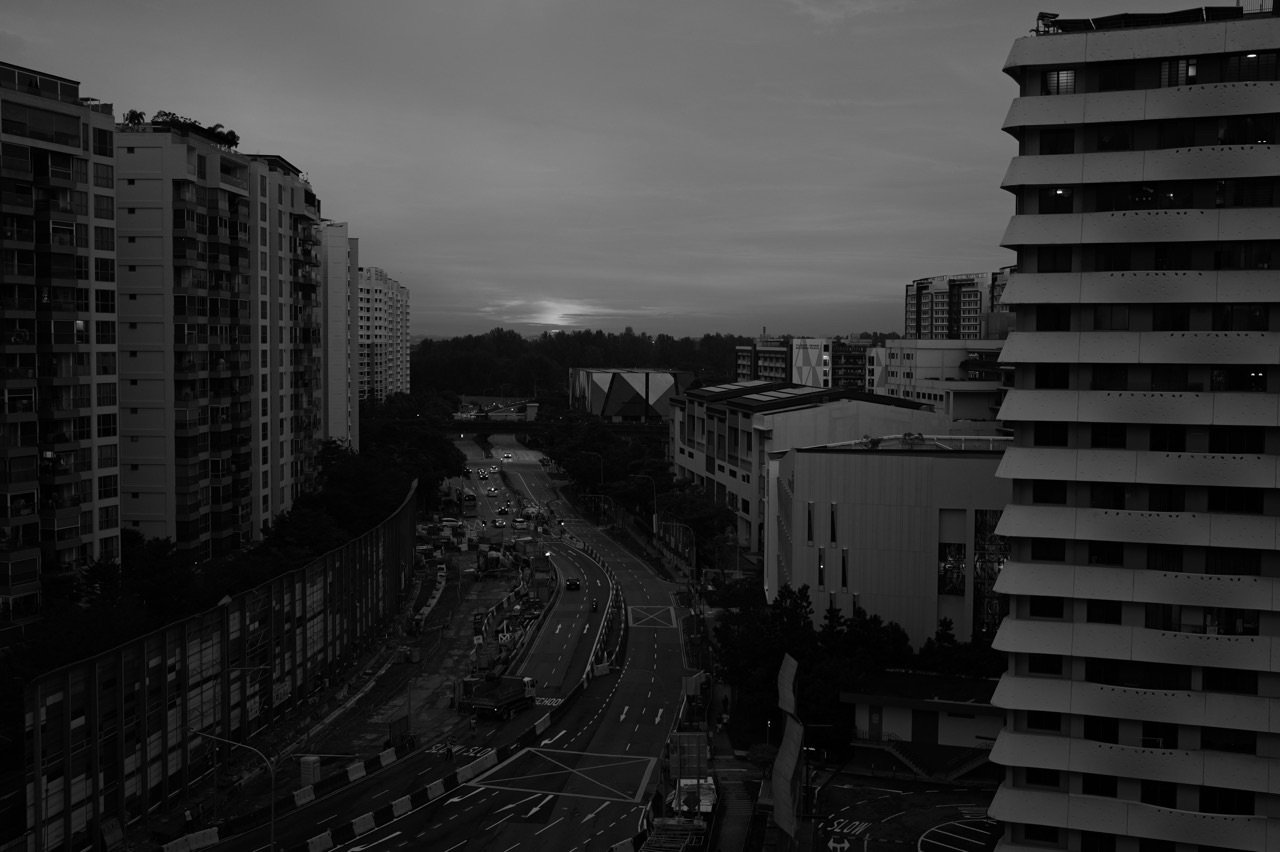
Punggol is one of the clearest places in Singapore to watch a town become more than a town. It began as a landscape of fishing, farming and waterfront settlements. It became a major residential new town. It then became Singapore’s first Eco-Town, a test bed for smart public housing, a waterfront community, an education corridor, and now a place where homes, a university, a digital business district, nature, rail infrastructure and daily family life are being brought unusually close together.
So, what about Punggol?
The short answer is that Punggol is no longer adequately described by any one label. “Housing estate” is too small. “Waterfront town” is true but incomplete. “Digital district” describes only one part of it. “Family town” misses the growing employment and university layer. “Future town” forgets that Punggol has a past worth remembering.
This page is the eduKatePunggol Punggol Hub: the place where those layers are allowed to meet. It is designed to connect the town itself with the questions families, students, educators and curious readers naturally ask about it: how Punggol grew, how it moves, how its water and nature work, what the Punggol Digital District changes, what it means to grow up beside SIT and an emerging technology cluster, how education fits into the town, and how the next decade may alter the mental map of north-eastern Singapore.
Choose the right Punggol map. This page owns the interpretive question—how Punggol’s history, water, transport, education, technology, nature and future fit together. For practical town discovery such as food, things to do, schools, transport, housing, health and services, use the Complete Punggol Guide. For the whole-site ownership and publishing graph, use the eduKatePunggol Atlas V2.3.
Punggol is not one thing.
It is a living system made from homes, water, movement, learning, work, nature, memory and the future arriving at different speeds.
What Is Punggol? A Quick Answer
Punggol is a waterfront HDB town in the north-east of Singapore. Its modern development has been shaped by public housing, the 4.2-kilometre Punggol Waterway, parks and promenades, rail connections, Coney Island, new neighbourhoods in the north, the Singapore Institute of Technology campus and the 50-hectare Punggol Digital District.
Historically, the area was associated with fishing villages, plantations, poultry and pig farming. The modern planning story includes the Punggol 21 vision announced in 1996, the Remaking Our Heartland plans from 2007, Punggol’s designation as Singapore’s first Eco-Town in 2010, smart-housing test-bedding at Northshore, and the more recent development of Punggol Coast and the Punggol Digital District.
That combination makes Punggol useful to think about at several scales at once. It is a home. It is a town-planning project. It is an education environment. It is a mobility network. It is a waterfront. It is an ecological edge. It is an economic node. And because so many of those layers are still changing, it is also a particularly visible example of how Singapore builds, revises and extends a place over time.
Punggol in one table
| Layer | What it means in Punggol | Why it matters |
|---|---|---|
| Home | A large HDB residential town with successive generations of neighbourhoods | Daily life remains the base layer of every other development |
| Water | Punggol Waterway, reservoirs, promenades and a strong waterfront identity | Water is both infrastructure and public realm |
| Nature | Coney Island, coastal edges, green corridors and nearby wetlands | Growth sits beside real ecological constraints and opportunities |
| Movement | NEL, Punggol LRT, Punggol Coast station, cycling and the future CRL–Punggol Extension | Connectivity changes which parts of Singapore feel near or far |
| Learning | Schools, family learning routes and the Singapore Institute of Technology | Education is present from childhood to applied university learning |
| Work | Punggol Digital District and its emerging technology ecosystem | More residents may be able to study and work closer to home |
| Community | Homes, public spaces, amenities, sport, food and neighbourhood life | A successful town is not only efficient; it must be liveable |
| Memory | Fishing, farming, Old Punggol Road and older waterfront stories | A future-facing town still needs historical depth |
| Future | Continued Punggol Coast development and major rail changes through the 2030s | Children growing up here will inherit a different town from the one their parents entered |
How to Use This Punggol Hub
A hub should not flatten everything beneath it. The opposite is more useful. A good hub keeps specialist pages specialist, then gives readers a reliable way to move between them.
- If you are new to eduKatePunggol, begin with Start Here at eduKatePunggol.
- If your question is about the organisation itself, read What is eduKatePunggol?.
- If you are a parent trying to decide what your child needs next, use The Punggol Parent’s Education Map.
- If you are thinking about education more broadly, enter Education at eduKatePunggol or Educational Field of Punggol.
- If the question is specifically tuition, use Tuition at eduKatePunggol and then move into the relevant subject and level.
- If you are here for the town itself, continue down this page into history, water, nature, transport, Punggol Digital District, SIT and the Punggol 2036 reading routes.
This structure matters because Punggol is now large enough, and eduKatePunggol’s archive is deep enough, that a reader should not be asked to search blindly through hundreds of pages. The job of this hub is orientation.
Contents
- Punggol as a system
- From fishing and farming to a 21st-century waterfront town
- Why water changes the town
- Nature, Coney Island and the ecological edge
- Homes, neighbourhoods and community
- MRT, LRT, cycling and the shrinking map of Singapore
- Punggol Digital District
- SIT and the learning corridor
- What it means to grow up in Punggol
- The education field of Punggol
- Tuition and parent decision routes
- English, Mathematics, Science and Additional Mathematics
- Primary years
- PSLE, Secondary school and the next handoff
- Punggol itself as a classroom
- Punggol 2032–2036
- What should Punggol protect while it changes?
- The Punggol Library
- Frequently asked questions
- Evidence and official sources
Punggol Is Better Understood as a System Than as a Collection of Buildings
A town can be described by naming what is inside it. There are flats, schools, shops, roads, stations, parks, bridges and offices. That description is accurate in the same way that listing the parts of a bicycle is accurate. It tells us what exists, but not what the thing does.
Punggol becomes more interesting when we ask how the parts affect one another.
A new MRT station changes the practical distance between a home and a workplace. A university changes who enters the town each morning and what kinds of knowledge circulate through it. A business district changes the ratio between residents who leave Punggol for work and people who enter Punggol to work. A waterway changes housing design, walking patterns, leisure and the visual identity of the town. A nature area changes what kinds of development are desirable or tolerable beside it. A school changes the daily time budget of a family. A good cycling path changes whether a two-kilometre trip feels like an errand that needs a car, a bus ride or ten easy minutes of movement.
That is why the central equation on this page is deliberately simple:
Punggol = settlement + infrastructure + ecology + institutions + opportunity + memory.
None of those layers is sufficient alone. The quality of the town emerges from their fit.
This also explains why Punggol feels different depending on when a person first encountered it. Someone who remembers the older end of Punggol Road carries a different mental map from a family who moved into a waterway-facing flat in the 2010s. A child beginning Primary 1 in 2026 may remember Punggol Coast, SIT and the Digital District not as “new developments”, but simply as things that were always there. By the time that child reaches adulthood, the Cross Island Line connection may feel equally ordinary.
Places change twice: first physically, then psychologically. The second change is slower. Punggol is now moving through both at once.
From Fishing and Farming to a 21st-Century Waterfront Town
Modern Punggol is young in appearance but not empty of history. HDB’s account of the town describes an earlier fishing village with predominantly Malay settlers, followed by Chinese immigrants engaged in plantation work, poultry farming and pig rearing. URA’s historical account adds other fragments that are easy to lose beneath the new skyline: the Japanese Fishing Pond, which moved to Punggol in 1927; the Basapa Punggol Zoo, remembered as an early full-sized public zoo and bird park; and a first bus route introduced in 1935.
These details matter because they correct a common optical illusion. When a place is heavily redeveloped, the newest built environment can make it seem as if the place itself began recently. It did not. Development changes the visible surface faster than it erases the accumulated human story beneath it.
1996: Punggol 21
The contemporary planning story accelerated in 1996 when the Punggol 21 vision was unveiled, describing Punggol as a “Waterfront Town of the 21st Century”. The phrase was ambitious because it tried to give the new town an identity before the physical town fully existed. Punggol would not simply be another expansion of housing supply; water would become part of the organising idea.
2007: Remaking Our Heartland
In 2007, Punggol became one of the pilot towns under the Remaking Our Heartland programme. HDB’s account explains that plans included damming Sungei Serangoon and Sungei Punggol and introducing a man-made waterway through the town to connect the two reservoirs. This is an important move in the Punggol story because infrastructure and public realm were designed together. The water system did not have to be hidden from daily life; it could help create daily life.
2010: Singapore’s first Eco-Town
In 2010, Punggol was selected as Singapore’s first Eco-Town. The language of sustainability was not treated only as an environmental label. Punggol became a living laboratory in which HDB could test ideas in green living and urban solutions. Treelodge@Punggol was among the early eco-friendly housing projects associated with that effort.
2014 onward: smart housing and Northshore
Northshore then became the first HDB district selected to test-bed smart technologies in public housing, including systems related to parking demand, lighting and waste management. The important point is not that a sensor automatically makes a town intelligent. It does not. The more useful question is whether information, infrastructure and design can reduce friction while improving the experience of living there.
Punggol’s development therefore did not move in one straight line from “old village” to “new flats”. It accumulated layers: waterfront planning, ecological ambition, smart infrastructure, new transport, new institutions and new economic functions.
For a deeper reflection on memory and development, continue to Old Punggol Road: Why a Future Town Still Needs Memory.
Why Water Changes the Town
The 4.2-kilometre Punggol Waterway is now one of the town’s most recognisable features. It is easy to photograph it as scenery. It is more interesting to read it as infrastructure that became identity.
Water changes sightlines. It changes where homes face. It creates edges that become promenades. It makes bridges important. It gives walking and cycling routes continuity. It creates places where a family can spend an hour without buying anything. It can lower the psychological density of a high-density neighbourhood because the eye is allowed to travel farther.
This is why the waterfront should not be treated as decoration added after the “real” town was built. In Punggol, water is part of the real town.
There is also a useful civic lesson here. A single piece of public infrastructure can perform several jobs at once. It can support water management, landscape, housing value, recreation, walking, cycling, social life and town identity. When infrastructure does only one job, a city can become technically efficient but experientially poor. When it is designed to do several compatible jobs, ordinary life becomes richer without requiring residents to think about the system every time they use it.
Read the companion essay The Waterfront Is Infrastructure Too for the larger argument.
Nature, Coney Island and the Ecological Edge
Punggol’s future-facing architecture sits unusually close to places that feel deliberately less finished. That contrast is one of its strongest qualities.
Coney Island Park is an 81-hectare park beside Punggol Promenade Nature Walk. NParks describes it as rustic and ecologically sustainable, with diverse natural habitats, boardwalks and cycling paths. Its presence creates a powerful counterweight to the glass, concrete, sensors and business infrastructure arriving nearby.
The correct question is not whether Punggol should choose technology or nature. A mature town must learn to hold both. The difficult work is boundary work: how close, how intense, how connected, how quiet, how protected, how accessible, and what should remain deliberately under-designed.
Nature near a dense town performs more than one function. It supports biodiversity and habitat. It gives residents a different sensory register from roads, shops and interiors. It creates opportunities for children to notice actual ecological systems rather than encounter nature only as textbook vocabulary. It can also become a moral test of development: whether a town values only the land that can be monetised or also the land whose value lies partly in remaining ecologically alive.
That is why Can Punggol Grow Without Losing Coney Island? belongs inside the Punggol conversation. It is not a side topic. It is a question about what kind of future the town wants.
Homes, Neighbourhoods and the Work of Making Community
Punggol is often discussed through its most visible projects, but the town succeeds or fails at the scale of ordinary days.
Can a parent complete the school run without turning the morning into a logistical campaign? Can a teenager move around safely without depending on a car? Can an older resident reach daily needs without crossing hostile roads? Can a child find somewhere to move, read, sit, play or meet friends? Can a resident walk home in the evening and feel that the route belongs to people rather than only to traffic?
These are small questions, but towns are made from repeated small questions. Grand plans matter because they shape millions of ordinary repetitions.
Punggol’s housing districts have arrived in waves, which means different parts of the town carry different design assumptions. Waterway-facing estates emphasise one relationship with landscape. Northshore introduces another. Punggol Point and Punggol Coast bring residents closer to the new economic and university district. Over time, these districts must still feel like one town rather than a sequence of isolated planning eras.
The challenge is social as much as architectural. A neighbourhood becomes more than housing when people repeatedly encounter one another in low-stakes ways: at a lift lobby, a playground, a hawker centre, a sports facility, a school gate, a park connector, a library, a café, a bus stop, a cycling path or the water’s edge. Community does not require everyone to know everyone. It requires enough shared ground for strangers to become familiar.
That is the deeper meaning behind A Town That Can Hold More of a Day: What “Home” Is Becoming in Punggol. The question is whether a resident must leave the town for most of life’s serious activities, or whether more of education, work, leisure, food, sport, nature and community can be held within a reasonable local radius.
MRT, LRT, Cycling and the Shrinking Map of Singapore
Distance in a city is not measured only in kilometres. It is measured in time, transfers, waiting, reliability, comfort and mental effort.
Punggol’s transport story therefore changes the town’s geography even when the town stays in the same physical place.
Punggol Coast on the North East Line
Punggol Coast station opened for passenger service on 10 December 2024 as the new terminal station of the North East Line. Located in the heart of Punggol Digital District, it connects the business park, SIT campus and the surrounding Punggol North area directly into the NEL. LTA estimated, at opening, that a trip from Punggol North to Outram Park would take about 45 minutes rather than around 60 minutes previously.
That fifteen-minute example is not merely a transport statistic. Multiply a saved fifteen minutes by two directions, several days a week and many years, and transport becomes a life-budget question.
The Cross Island Line–Punggol Extension
The next major change is the 7.3-kilometre Cross Island Line–Punggol Extension, currently targeted for completion in 2032. LTA says the four-station extension will directly connect north-eastern areas such as Punggol and Sengkang with eastern areas including Pasir Ris and Tampines North, with interchange connections at Pasir Ris, Riviera and Punggol.
For Punggol, the significance is not simply “another train line”. It introduces another direction of easy movement. A radial system encourages people to think city-centre first. A cross-island connection changes the geometry. Places in the east that once felt awkwardly lateral may become straightforward.
Read The Cross Island Line and the Shrinking of Singapore from Punggol and 2032: The Year Punggol’s Mental Map May Change.
Walking and cycling are transport too
URA’s 2026 guidance for the Punggol Digital District explicitly describes a public-transport-oriented, walkable and cycling-friendly district. That matters because the quality of a transport system is not only the speed of its fastest mode. It is also how gracefully people complete the first and last kilometre.
A useful town makes the short trip easy enough that people do not have to overthink it. This is the premise explored in The 10-Minute Punggol: What Changes When Walking and Cycling Become Real Transport.
Punggol Digital District: When a Residential Town Acquires an Economic Engine
The Punggol Digital District is the development that most clearly changes Punggol’s functional identity.
JTC describes PDD as a 50-hectare business park where innovation, education and community converge. Its focus includes emerging technologies such as cybersecurity, artificial intelligence, robotics and fintech. At full scale, JTC’s headline figures are 28,000 jobs, 12,000 SIT students and more than 500 faculty and professional officers.
Those numbers matter, but the deeper change is relational.
A conventional residential town exports a large share of its working adults every morning. A university campus imports students and staff. A business district imports workers and companies. When the three are deliberately placed together, the town begins to generate more complex daily flows. Some residents may work locally. Some students may live nearby. Some companies may collaborate with academic teams. Some research may be tested in the district itself. Shops and amenities can serve residents, students and workers at different times of day.
This is why Punggol Is No Longer Only a Residential Town is less a slogan than a structural observation.
Industry beside academia
URA and JTC both emphasise the integration of industry and academia. This matters because physical adjacency can shorten the distance between a problem and the people capable of investigating it. It does not guarantee collaboration, but it lowers one barrier to collaboration.
When a company, a university and a real operating district share geography, learning can become less abstract. Engineering can meet facilities. Computing can meet cybersecurity operations. Robotics can meet lifts, corridors and logistics. Sustainability can meet actual energy and building systems. Students can see the difference between a concept that works on paper and a system that must work repeatedly, safely and economically in the world.
The invisible layer
Smart districts are partly visible architecture and partly invisible coordination. Sensors, platforms, building-management systems, access systems, logistics, energy controls and data flows do not dominate the skyline, but they can shape how efficiently the district operates.
That invisible layer is explored in The Invisible City: What 20,000 Sensors at SIT Tell Us About Punggol’s Future and When Robots Start Taking the Lift: Physical AI Comes to Punggol.
The important educational habit is to look beyond the novelty. A robot taking a lift is interesting. The better question is what collection of standards, sensors, interfaces, safety rules, mapping, access permissions, network reliability and human oversight must work before that ordinary-looking journey becomes possible.
Jobs closer to home
Singapore’s broader decentralisation strategy aims to bring more workplaces closer to homes. For a Punggol household, “28,000 jobs” becomes meaningful only when translated into human time. A closer workplace can mean a shorter commute, an earlier dinner, more dependable school pickup, easier care responsibilities or simply less of the week spent in transit.
That possibility is examined in 28,000 Jobs Closer to Home: What Punggol Digital District Could Change.
SIT and the Learning Corridor: School → University → Industry
The Singapore Institute of Technology gives Punggol an educational layer that most residential towns do not have at this scale.
The most important change may be psychological. A child can grow up in a town where a university is not a distant symbol encountered only on an open-house day. It is part of the local landscape. Students, laboratories, applied projects and the language of engineering and technology are closer to ordinary neighbourhood life.
That does not automatically make every child interested in technology, nor should it. A good education widens possibility rather than narrowing it. But proximity can make certain futures easier to imagine.
There is a larger pathway emerging:
school → foundational knowledge → secondary specialisation → post-secondary choice → applied university learning → industry → new problems → new learning
It is not a conveyor belt. People can enter, leave, rotate, change direction and choose other fields. But the visible adjacency of education and work makes the learning-to-application relationship unusually legible.
Continue with School → SIT → Industry: A Learning Corridor Is Appearing in Punggol and When Home, University and Work Begin Sharing the Same Neighbourhood.
What Does It Mean to Grow Up in Punggol Now?
A town is experienced differently by a child because a child’s map is small before it becomes large.
At first the world may be home, lift, playground, school, grandparents, supermarket and one familiar route. Then it expands: LRT, MRT, library, sports, tuition, friends’ homes, parks, Coney Island, the waterway, malls, school transitions, secondary campuses, and eventually the city beyond Punggol.
For children growing up here in the mid-2020s, the surrounding environment contains unusually clear examples of the systems they study in school. Water cycles become visible through reservoirs and waterways. Ecology appears beside dense urbanisation. Mathematics exists in transport schedules, bridge geometry, energy systems and building design. Computing appears in smart infrastructure. Economics appears in the attempt to place jobs nearer homes. Civics appears in the negotiation between public benefit, development, heritage and nature.
This is why the best education in Punggol should not teach children merely to score inside Punggol. It should help them learn to read Punggol.
That idea sits behind Growing Up Beside an AI District: What Might Punggol Children Need to Learn?.
The skills that become more valuable, not less
A technology-rich environment can tempt adults to predict a narrow list of “future skills”. The safer educational strategy is to strengthen the durable capabilities that remain useful across changing tools:
- Language: the ability to read carefully, write clearly, explain, persuade and distinguish precise meaning from vague claims.
- Mathematics: the ability to reason with structure, quantity, relationships, uncertainty and models.
- Science: the ability to observe, test, infer, distinguish evidence from assertion and understand the limits of a model.
- Learning: the ability to retrieve, practise, diagnose errors, transfer knowledge and improve without waiting for constant supervision.
- Judgement: the ability to ask whether a technically possible action is sensible, safe, fair and worth doing.
- Adaptability: the ability to update a mental model when reality changes.
- Human depth: empathy, responsibility, integrity and the capacity to work with other people when the answer is not obvious.
Those capabilities are not anti-technology. They are what allow a person to use technology without becoming intellectually dependent on it.
The Education Field of Punggol
eduKatePunggol is an education site, so the town hub needs an education spine strong enough to connect local life with actual learning decisions.
The central education page is Educational Field of Punggol | How We Build an Education Network. It treats education not as a collection of isolated lessons but as a field in which school, home, tuition, habits, subjects, transitions and future pathways interact.
For families who want a more direct map, use The Punggol Parent’s Education Map: What Does My Child Need Next?. The purpose is not to push every child into more tuition. It is to identify the next useful problem.
That distinction is important. Education and studying are related but not identical. Studying is an activity. Education is the larger change in capability, knowledge, judgement and independence that the activity is supposed to produce. The difference is explored in Difference Between Education vs Studying at eduKatePunggol.
Start with the pathway, not the panic
When a child struggles, families understandably feel urgency. Urgency is useful only if it sharpens diagnosis. Otherwise it creates activity without direction.
The better sequence is:
- Identify the stage of the education pathway.
- Identify the subject or skill that is actually limiting progress.
- Separate a knowledge gap from an execution gap, attention problem, language problem or confidence problem.
- Decide whether school support, home practice, a change in study method or tuition is the appropriate tool.
- Use the least complicated intervention that can plausibly solve the problem.
- Check whether the intervention is working.
That is why eduKatePunggol keeps a Do I Need Tuition? Student Self-Check, a Parent Decision Engine, and a guide to When to Start Tuition.
Tuition in Punggol: A Tool, Not a Substitute for Education
Tuition works best when its purpose is narrow enough to measure and broad enough to matter.
A weak use of tuition is “more worksheets because marks are low”. A stronger use is “identify the missing concept, repair it, practise retrieval, improve execution under exam conditions and return the student to greater independence”.
The main route is Tuition at eduKatePunggol. For the underlying teaching model, read How Tuition Works at eduKatePunggol and How Tuition Works in Punggol | When the Learning Table Widens.
When does a Punggol student need tuition?
There is no useful answer based only on age or school level. A student may need tuition when a learning problem is persistent, consequential and not being repaired by ordinary school and home routines. Another student at the same level may not need tuition at all.
The local guide When Do Punggol Students Need Tuition? is designed around that decision rather than around a blanket assumption.
Why small groups?
Small-group teaching can create a useful middle ground between one-to-one intensity and a large classroom. A teacher can still see individual work, ask discriminating questions and adapt explanations, while students also encounter other reasoning paths and learn to articulate their own thinking in front of peers.
The educational question should always be whether the format improves learning for this student. Group size is a means, not a virtue by itself.
English, Mathematics, Science and Additional Mathematics in Punggol
The subject routes below give each discipline its own dedicated guide while this Punggol Hub provides the local context.
English
English is not merely another examinable subject in Singapore. It is also the language through which much of Mathematics, Science, Humanities and later academic learning is accessed. A child who cannot parse a question precisely can appear to have a content problem when the first problem is actually language.
Start with English Tuition at eduKatePunggol or Primary English Tuition in Punggol. For the broader educational position, read Regarding English at eduKatePunggol.
Mathematics
Mathematics becomes difficult when students accumulate small missing steps until later topics assume knowledge that was never secure. The correct repair is often not “more difficult questions”. It is to locate the earliest unstable dependency and rebuild forward.
Use Mathematics Tuition at eduKatePunggol, Primary Mathematics Tuition in Punggol and Primary Math Tuition in Punggol: Find the Missing Step Before Adding More Practice.
Science
Science education should produce more than remembered vocabulary. Students need to connect observation, evidence, mechanism, explanation and model. Punggol itself offers unusually visible examples: water systems, biodiversity, urban ecology, energy use, sensors, transport, materials and the interface between built and natural environments.
Begin with Science Tuition at eduKatePunggol or Primary Science Tuition in Punggol.
Additional Mathematics
Additional Mathematics is often where students discover whether their algebraic foundations are truly operational. It rewards fluency, structure recognition, symbolic control and the ability to carry multi-step reasoning without losing the thread.
The local owner is Additional Mathematics Tuition in Punggol, supported by Secondary 3 Additional Mathematics Tuition and Secondary 4 Additional Mathematics Tuition at eduKatePunggol.
The Primary Years in Punggol
Primary school looks gentle from the outside because the children are young. Structurally, however, the six years do a great deal of work. They establish reading fluency, vocabulary, sentence control, number sense, arithmetic, problem solving, scientific reasoning, classroom independence, test habits and the child’s earliest beliefs about whether learning feels manageable.
The main route is The Primary Pathway.
Primary English routes
- Primary 1 English Tuition at eduKatePunggol
- Primary 2 English Tuition at eduKatePunggol
- Primary 3 English Tuition at eduKatePunggol
- Primary 4 English Tuition at eduKatePunggol
- Primary 5 English Tuition at eduKatePunggol
- Primary 6 PSLE English Tuition at eduKatePunggol
Primary Mathematics routes
- Primary 1 Mathematics Tuition at eduKatePunggol
- Primary 2 Mathematics Tuition at eduKatePunggol
- Primary 3 Mathematics Tuition at eduKatePunggol
- Primary 4 Mathematics Tuition at eduKatePunggol
- Primary 5 Mathematics Tuition at eduKatePunggol
- Primary 6 Mathematics Tuition at eduKatePunggol
Primary Science routes
- Primary 3 Science Tuition at eduKatePunggol
- Primary 4 Science Tuition at eduKatePunggol
- Primary 5 Science Tuition at eduKatePunggol
- Primary 6 Science Tuition at eduKatePunggol for PSLE
The years should not be treated as six unrelated products. Primary 1 sets foundations that Primary 2 assumes; Primary 3 introduces Science and greater academic independence; Primary 4 expands complexity; Primary 5 is often where the slope steepens; Primary 6 compresses accumulated learning into PSLE preparation and the handoff to Secondary 1.
PSLE, Secondary School and the Next Handoff
PSLE feels like an endpoint because it ends Primary school. Educationally it is also a handoff.
The useful question after results is not simply “Which school?” It is “What changes in the learning system now?” Secondary school increases subject specialisation, abstraction, workload, assessment complexity and the need for self-management. The student who could rely on memory and last-minute effort in Primary school may discover that those habits no longer scale.
Use What Happens After PSLE? A Punggol Parent’s Guide to PG1, PG2, PG3 and Secondary 1 together with The Secondary Pathway.
Secondary English
- Secondary 1 English Tuition at eduKatePunggol
- Secondary 2 English Tuition at eduKatePunggol
- Secondary 3 English Tuition at eduKatePunggol
- Secondary 4 English Tuition at eduKatePunggol
Secondary Mathematics
- Secondary 1 Mathematics Tuition at eduKatePunggol
- Secondary 2 Mathematics Tuition at eduKatePunggol
- Secondary 3 Mathematics Tuition at eduKatePunggol
- Secondary 4 Mathematics Tuition at eduKatePunggol
Secondary 1 deserves particular care because transitions amplify weak foundations. eduKatePunggol therefore maintains a deeper local cluster around the transition, including Punggol Secondary 1 Mathematics Tuition | Preparing the Transition Shift, How Secondary 1 Mathematics Tuition Works at Punggol, and What Is So Important About Secondary 1 Mathematics?.
After Secondary school
The next transition should be treated as another pathway decision rather than a status ranking. The useful route is The SEC Examinations and JC/Poly/ITE Pathway. Different post-secondary routes optimise for different forms of learning, pacing, specialisation and application. The task is fit, not prestige theatre.
Punggol Itself Can Be a Classroom
One of the quiet advantages of living in a rapidly changing town is that abstract ideas have local examples.
Geography
Students can examine land use, transport networks, water bodies, population density, waterfront development, connectivity, decentralisation and the relationship between natural and built environments without leaving their home town.
Science
Coney Island and the coastal edge open questions about habitats, biodiversity, adaptation, ecological disturbance and conservation. Water systems invite discussion of catchments, reservoirs and environmental management. Buildings and the Digital District open questions about energy, materials, heat, sensors and control systems.
Mathematics
Transport frequency, travel-time savings, route networks, building geometry, population density, energy optimisation, water volumes and sensor data all become real contexts for quantitative reasoning.
English
A changing town gives students something worth describing, explaining, arguing about and questioning. Should development preserve more memory? What makes a good public space? Can technology make a town more humane? What should be protected? Which changes improve daily life and which merely look impressive? These are richer writing prompts than invented situations with no stakes.
Civics and ethics
Punggol makes visible the fact that public decisions involve trade-offs. Housing, transport, jobs, ecology, recreation, heritage, cost, construction time and future flexibility all compete for attention. Mature citizenship begins when a person can hold more than one legitimate objective in mind at the same time.
Punggol 2032–2036: The Town Today’s Children Will Inherit
Future writing becomes irresponsible when certainty replaces probability. So the useful way to discuss Punggol in the 2030s is to separate what is already committed from what remains open.
One major committed transport change is the Cross Island Line–Punggol Extension, targeted by LTA for 2032. Punggol Digital District is already opening progressively and will continue to mature as businesses, amenities and university activity fill the physical framework. Other parts of the town will continue to evolve through ordinary cycles of housing completion, new amenities, ageing estates, changing family demographics and shifts in how people work.
By 2036, a child who entered Primary 1 in 2026 will be around sixteen. That simple age calculation gives the future a human scale. The question “What will Punggol be like in ten years?” becomes “What kind of town will surround this teenager when important choices about education, identity and adulthood begin to arrive?”
Read the long-view sequence:
- Punggol 2036: The Town Today’s Primary School Children Will Grow Up In
- Punggol Is No Longer Only a Residential Town
- Punggol Coast Is Becoming a Second Centre of Gravity
- 2032: The Year Punggol’s Mental Map May Change
- Punggol 2036: What Should We Protect While Everything Changes?
The most interesting future may be the ordinary one
Future cities are often illustrated with dramatic technology because dramatic technology is easy to draw. Real improvement is frequently quieter.
- A shorter and more reliable commute.
- A child who can cycle safely to a useful destination.
- A parent who works close enough to be present more often.
- A student who can see a pathway from school knowledge to real engineering.
- A resident who can reach nature without first leaving the town.
- An older person who can continue moving independently.
- A public space comfortable enough that people stay rather than pass through.
- A district whose technology disappears into reliability rather than constantly demanding attention.
Those outcomes are less cinematic than a robot skyline. They may be more important.
What Should Punggol Protect While It Changes?
A good future is not produced by preserving everything. Neither is it produced by replacing everything.
The useful question is what qualities become harder to recover once lost.
Protect access to nature
Nature should not survive only as a photograph of what was once nearby. Ecological continuity, habitat quality and human access to genuinely green places deserve to be treated as infrastructure for long-term liveability.
Protect human-scale movement
If every short trip becomes unpleasant without a motor vehicle, density becomes exhausting. Comfortable walking, cycling, shade, crossings, wayfinding and first-last-mile connections are not minor amenities. They determine whether local life feels close.
Protect memory
A place with no memory can become efficient and strangely thin. Punggol’s earlier fishing, farming, roads, waterfront uses and stories do not need to prevent change. They need enough representation that future residents understand they live in a place with a past.
Protect room for children
Family towns can become over-programmed. Children need schools and enrichment, but they also need time, movement, unstructured play, friendships and places where curiosity is not assessed.
Protect the ability to change again
The most future-proof district is not the one that predicts every technology correctly. It is the one that can adapt when predictions fail. Flexible buildings, interoperable systems, good public spaces and strong transport networks can support uses that planners cannot fully anticipate today.
This argument is developed fully in Punggol 2036: What Should We Protect While Everything Changes?.
The Punggol Library: Curated Routes Across eduKatePunggol
This hub is designed to grow. New Punggol-specific work should attach here without forcing existing specialist pages to surrender their own topics. The sections below are the first curated spine.
1. Start here: eduKatePunggol and education
- Start Here at eduKatePunggol
- What is eduKatePunggol?
- Education at eduKatePunggol
- Educational Field of Punggol | How We Build an Education Network
- eduKatePunggol Parent Guide | Primary, PSLE, Secondary and SEC
- The Punggol Parent’s Education Map
2. Tuition decision routes
- Tuition at eduKatePunggol
- How Tuition Works at eduKatePunggol
- How Tuition Works in Punggol | When the Learning Table Widens
- Do I Need Tuition? | Student Self-Check
- Does My Child Need Tuition in Punggol? | Parent Decision Engine
- When to Start Tuition?
- When Do Punggol Students Need Tuition?
- Tuition: The Time Compressor
3. Subject hubs
- English Tuition at eduKatePunggol
- Mathematics Tuition at eduKatePunggol
- Science Tuition at eduKatePunggol
- Additional Mathematics Tuition in Punggol
4. Punggol 2036 and the changing town
- Punggol 2036: The Town Today’s Primary School Children Will Grow Up In
- Punggol Is No Longer Only a Residential Town
- 28,000 Jobs Closer to Home: What Punggol Digital District Could Change
- When Home, University and Work Begin Sharing the Same Neighbourhood
- LaunchPad @ PDD: What Happens When Startups Move Into the Heartlands?
- 2032: The Year Punggol’s Mental Map May Change
- The Cross Island Line and the Shrinking of Singapore from Punggol
- The Invisible City: What 20,000 Sensors at SIT Tell Us About Punggol’s Future
- When Robots Start Taking the Lift: Physical AI Comes to Punggol
- Punggol Coast Is Becoming a Second Centre of Gravity
- A Stadium Beside the Water: Why Punggol’s New Sports Centre Matters Beyond Sport
- The Waterfront Is Infrastructure Too
- Can Punggol Grow Without Losing Coney Island?
- Old Punggol Road: Why a Future Town Still Needs Memory
- Why a Hotel Overlooking Coney Island Changes the Story of Punggol
- Growing Up Beside an AI District: What Might Punggol Children Need to Learn?
- School → SIT → Industry: A Learning Corridor Is Appearing in Punggol
- The 10-Minute Punggol
- A Town That Can Hold More of a Day
- Punggol 2036: What Should We Protect While Everything Changes?
5. Learning transitions
- The Primary Pathway
- What Happens After PSLE?
- The Secondary Pathway
- The SEC Examinations and JC/Poly/ITE Pathway
This library is intentionally selective. A hub that displays every URL becomes another search problem. The route should widen only when a reader needs more resolution.
Frequently Asked Questions About Punggol
What is Punggol known for?
Punggol is known for its waterfront HDB development, Punggol Waterway, Coney Island, extensive park and cycling connections, Punggol LRT and North East Line access, and increasingly for Punggol Coast, the Singapore Institute of Technology campus and Punggol Digital District.
Was Punggol always a residential town?
No. Historical accounts from HDB and URA describe fishing, farming, plantations, poultry and pig rearing in the area. The large modern HDB town is one phase in a much longer local history.
Why is Punggol called a waterfront town?
The modern planning vision deliberately used Punggol’s relationship with water. The 4.2-kilometre Punggol Waterway connects two reservoirs and has become a major landscape and recreational spine, with housing and promenades organised around the waterfront.
What is Punggol Digital District?
Punggol Digital District is a 50-hectare JTC business district integrated with the Singapore Institute of Technology campus. It is intended as a growth cluster for digital and cybersecurity industries and includes activity in areas such as AI, robotics and fintech. JTC’s district figures include capacity for about 28,000 jobs and 12,000 SIT students.
Is Punggol Coast MRT station open?
Yes. Punggol Coast station opened on 10 December 2024 and is the current northern terminal of the North East Line, serving Punggol Digital District, SIT and the surrounding Punggol North area.
When will the Cross Island Line reach Punggol?
LTA currently targets the Cross Island Line–Punggol Extension for completion in 2032. The 7.3-kilometre extension is planned with four stations and will connect Punggol and Sengkang more directly with Pasir Ris and Tampines North.
Is Coney Island part of Punggol?
Coney Island Park sits beside Punggol Promenade Nature Walk and is reached from the Punggol side through its western entrance near Punggol Point Walk and Punggol Promenade. NParks lists the park at 81 hectares.
Why is Punggol important for families?
Punggol’s significance for families comes from the overlap of housing, schools, recreation, nature, transport, growing local employment and new tertiary education infrastructure. The practical value depends on each family, but the town increasingly supports more parts of a day within one geographic area.
Where should parents start on eduKatePunggol?
For a broad education decision, start with The Punggol Parent’s Education Map. For tuition decisions, use Tuition at eduKatePunggol and the Student Self-Check. For subject-specific help, move into English, Mathematics, Science or Additional Mathematics.
What is the central idea of this Punggol Hub?
Punggol makes the most sense when read as a connected system. Homes, water, transport, nature, learning, technology, jobs and community alter one another. This hub gives each specialist topic a clear home while showing how the pieces fit together.
Evidence, Fact-Checking and Official Sources
This page was fact-checked against current official material in September 2026. Planning dates and future completion dates can change; where a future date is stated, it should be read as the responsible agency’s current target rather than as a guarantee.
- Housing & Development Board — Punggol: Our Towns and Estates: history, Punggol 21, Remaking Our Heartland, Eco-Town, Northshore smart initiatives and the 4.2-kilometre Punggol Waterway.
- Urban Redevelopment Authority — Punggol Digital District: town history and the evolving living-working-learning district.
- URA — Punggol Digital District Urban Design Guidelines: integration of industry, academia and community, and the walkable/cycling-oriented district vision.
- JTC — Punggol Digital District: 50-hectare district, technology focus, employment and SIT population figures.
- Land Transport Authority — Punggol Coast Station: opening date, NEL extension and travel-time context.
- Land Transport Authority — Cross Island Line: CRL–Punggol Extension route and current 2032 target.
- NParks — Coney Island Park: park size, location, opening information and ecological character.
So, What About Punggol?
Punggol is what happens when a place is asked to do more over time.
First it had to hold settlement and livelihood. Then mass housing. Then a stronger waterfront identity. Then ecological ambition. Then smart-town experiments. Then more transport. Then a university. Then a digital business district. Then the question of how all those layers should coexist without making the town efficient but exhausting, advanced but forgetful, connected but characterless.
The answer will not be found in one building or one master plan. It will be found in whether the whole system improves ordinary life.
For eduKatePunggol, that is also the educational reason to keep watching the town. Punggol is a place where a child can learn that the world is made of connected systems: water and land, homes and transport, schools and families, knowledge and work, technology and ethics, development and memory.
And that may be the most useful answer to the title.
What about Punggol?
It is home. It is still becoming. And if we pay attention, it is also a remarkably good place to learn how a modern town works.
Next routes: Complete Punggol Guide · Punggol Atlas V2.3 · Start Here · Educational Field of Punggol · Parent Education Map · Tuition at eduKatePunggol · Punggol 2036
Continue reading: connected learning guides
Punggol history, places and systems
- Ponggol Rest House
- The Ponggol Rest House
- Punggol as a Classroom
- Why Lorong Halus Matters to Punggol
- How Smart Housing Arrived in Punggol
- Punggol Point
- The Japanese Fishing Pond at Punggol
- The Lost Punggol Zoo
- Wak Sumang and Kampung Punggol
- The Corridors of Punggol
- How the Punggol LRT Shapes the Town
- How Punggol Town Centre Works
- Punggol’s Eleven Districts
- Punggol’s Tropical Design
- How Punggol Uses Nature as Infrastructure
- Why Punggol Became Singapore’s First Eco-Town
- How Punggol Waterway Works
- How Punggol Became a Waterfront Town
- The Geography of Punggol
- What Does “Punggol” Mean?
- How Punggol Became Punggol





