
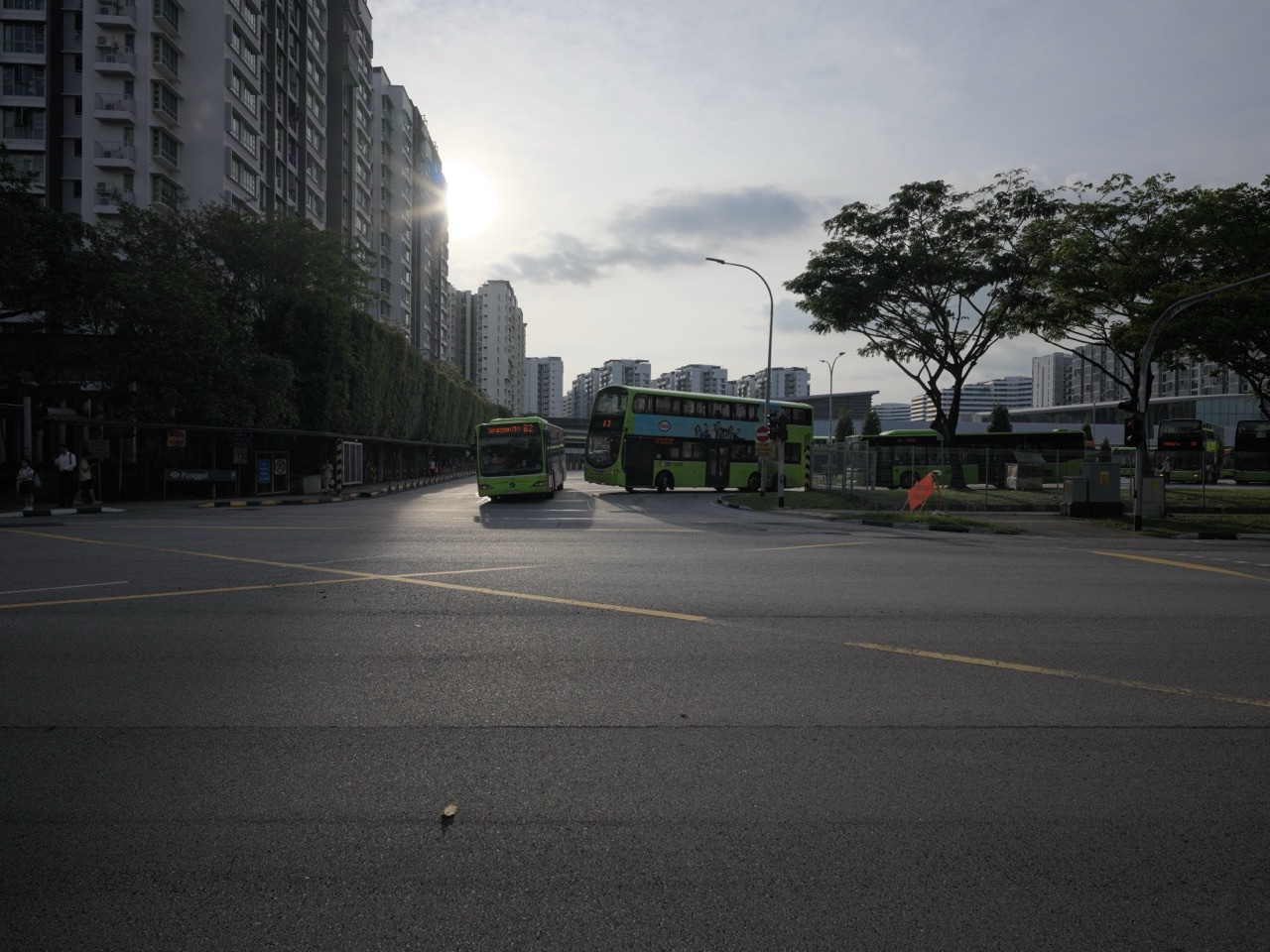
Living near Nibong LRT (PW5) is best understood as a family-routine question rather than a station-ranking question. Nibong is an established Punggol West Loop stop serving residential areas around Sumang Walk and the wider west side of Punggol. It does not need a large destination mall or a headline attraction to be useful. Its value comes from how the station, nearby school routes, local shops, buses and the rest of the West Loop fit an ordinary week.
One fact gives this neighbourhood a particularly clear family anchor: Punggol Cove Primary School currently lists Nibong (PW5) as its nearest LRT station and gives its address as 52 Sumang Walk. That relationship is useful for orientation, but it is not an admission guarantee and it does not make every home near PW5 equally close to the school. The exact block, official distance rules and the route to the correct school gate still have to be checked separately.
This 2026 guide rebuilds Nibong around those practical boundaries. It explains how to test the West Loop, school-day handovers, groceries, late returns, children’s independence, accessibility and the actual home. It avoids unsupported labels such as “quietest”, “best for families” or “guaranteed near school”, because a useful local guide should help a household make its own evidence-based decision.
Choose the part you need
PW5 and the West Loop · Punggol Cove Primary · Home inspection · Three-visit test
Read the neighbourhood
1. Start with the station’s real network role · 2. Understand the loop before judging travel time · 3. Use Punggol Cove Primary as a verified school anchor—not an admission promise · 4. Plan the school gate and handover, not just the school address
Run the weekday
5. Measure the complete work and school commute · 6. Build food and groceries into the route home · 7. Make sibling schedules survive imperfect timing · 8. Teach children the neighbourhood in stages · 9. Design the late-evening fallback before you need it
Check the hard details
10. Test strollers, wheelchairs and carrying routes end to end · 11. Build a rain-and-heat version of the day · 12. Inspect the exact block instead of believing a station-wide reputation · 13. Give visitors and caregivers precise meeting points · 14. Turn local routes into useful learning · 15. Run a three-visit household test · 16. Use Samudera, Sumang and the Town Centre when they solve the job better · 17. Build a one-week proof-of-fit before calling the area convenient
Transport and school information checked against current official/operator sources on 2 October 2026. School admissions, service schedules, tenant availability and home-to-school distance remain specific to the current official process and exact address.
1. Start with the station’s real network role
Nibong is PW5 on the Punggol LRT West Loop. SBS Transit opened Nibong, Sumang and Soo Teck for passenger service on 29 June 2014 as the first operating group on the West Loop. That history explains why older articles sometimes describe a much less developed west-side Punggol. In 2026 the question is no longer whether PW5 functions; it is how the established station fits today’s family routes.
Begin with the exact block-to-station journey. Count the lift, crossings, sheltered portions and any place where a child or older person might slow down. “Near Nibong” is not one walking experience. A unit across a convenient pedestrian route can feel very different from a unit that is similar in straight-line distance but requires an awkward road crossing or indirect path.
Next, list the five places your household visits most often: school, work, groceries, a regular class or activity, and the person or place that supports childcare. Mark which trips begin naturally at PW5. If the station simplifies several of them, it has genuine household value. If most routes point elsewhere, that is useful to know before a property decision rather than after moving.
Do not force every trip through the LRT. A bus may serve one destination better. Samudera and Northshore can handle another errand. Punggol Town Centre may be the right node for a large interchange or shopping job. The value of a local station is not exclusivity; it is giving the family another dependable connection inside the town network.
For rail geography, use SBS Transit’s current system map and service information. For a Punggol-specific explanation, use the Punggol LRT Guide. Current operator information should win when an old timetable, social-media post or neighbourhood memory disagrees with today’s service.
A useful home decision ends this chapter with a sentence such as: “PW5 handles the school and normal Town Centre route, while another node handles the weekly large grocery run.” That is much more actionable than “Nibong is convenient”. Convenience becomes meaningful only after the family can name the task.
Back to contents · Continue to the next chapter
2. Understand the loop before judging travel time
The Punggol LRT is a loop system, which means station order and operating direction matter more than they would on a simple straight line. Nibong sits between Samudera and Sumang on the West Loop network map. The complete trip to or from Punggol Town Centre should therefore be tested at the time you actually travel rather than estimated by counting dots.
Older SBS Transit announcements are useful for the history of the loop but not for freezing present-day frequencies or time-of-day direction patterns. Service operations can change. Use current operator information for a live journey. The stable lesson is to understand which platform and direction you are using, where the route returns to Punggol and what transfer follows.
Run a morning test with a clear start and finish. Time from the block lobby to the school gate or workplace entrance. Include waiting, lifts and the transfer at Punggol if your route continues onto the North East Line. A route that appears short on a diagram can become longer because of the first and last ten minutes; another that looks indirect may feel easy because the walking sections are simple.
Repeat the test in the evening. The direction, crowd pattern and family purpose can make the preferred route different. A parent returning from work may want the fastest trip home, while the same parent on another day needs to collect a child first. One station can support both routes, but the household should know which version applies to which day.
For a child learning the LRT, teach the loop visually. PW5 is not just “our station”; it is a named point in a sequence. Ask the student to identify the adjacent stations and explain how they know they are travelling in the expected direction. That small skill reduces dependence on scenery and gives the child a better chance of noticing a mistake early.
Keep one fallback route. It may involve a bus, a parent pickup or another station depending on the family. The fallback does not have to be elegant; it has to be understood. A neighbourhood feels resilient when a missed connection does not turn an ordinary evening into a crisis.
Back to contents · Continue to the next chapter
3. Use Punggol Cove Primary as a verified school anchor—not an admission promise
Punggol Cove Primary School gives Nibong one of the strongest school relationships in this part of Punggol. The school’s current contact page lists 52 Sumang Walk and identifies Nibong Station (PW5) as its nearest LRT. The same page lists public bus services 382W and 84. That is direct school-source evidence for orientation, not a marketing inference.
Keep the boundary clear: nearest LRT does not mean every home near PW5 is within a particular Primary 1 distance band. It also does not guarantee a place in the school. Registration phases, vacancies and official distance calculations belong to MOE and the current registration process. Use the exact home address when those questions matter.
For the daily route, physical distance is only the beginning. Walk from the candidate block to the school at the time children arrive. Identify crossings, sheltered stretches and where parents naturally wait. A younger child may need a route with fewer decision points even if another path is marginally shorter.
Then test dismissal. Punggol Cove Primary publishes current gate-opening information, including Gate E toward the LRT side. The useful family question is which gate the child actually uses at the relevant time and where the parent, grandparent or caregiver should wait. School gates can have different operating windows, so do not assume the closest-looking gate is always available.
Use the school’s current website for gate rules and visitor information rather than copying a schedule permanently into a neighbourhood article. The stable lesson is to plan around the gate the school authorises, then teach the child one precise meeting point. “Near the school” is too vague when hundreds of families are moving at dismissal.
For wider comparison, use Primary Schools in Punggol and the dedicated Punggol Cove Primary School guide. Keep school choice, registration outcome and transport routine as separate decisions. They interact, but one should not be used as proof of another.
Back to contents · Continue to the next chapter
4. Plan the school gate and handover, not just the school address
A school-day plan succeeds or fails in the final hundred metres. Punggol Cove Primary’s safety information asks parents to use designated waiting areas and follow school gate arrangements. That is why a home-to-school test should finish at the correct gate, not at the school boundary on a map. The child needs to know where the day actually begins and ends.
Choose one normal pickup point. It should be allowed by the school, visible and easy for both adult and child to describe. If a grandparent sometimes collects, make sure the same words are used. “Gate E waiting area” or another precise school-approved point is stronger than “outside school”. Consistency matters most on the day someone is running late.
Then decide what happens if the adult is not there. The child might wait in the agreed place and call, follow student-care arrangements, or use another school-approved process. Do not leave the backup to improvisation. Younger children need a short rule they can remember under stress.
For siblings, map the two dismissal times together. Can one adult move from one pickup to the next with a realistic buffer? If one child has CCA, does that simplify or complicate the route? If a tuition lesson follows, is there time for food and a short rest? A neighbourhood can be near school while the family schedule is still badly designed.
Vehicle pickup deserves its own check. School safety guidance may restrict where parents wait or when vehicles move through the site. Follow the current school rules rather than assuming the most convenient curb is acceptable. A five-minute walk from a lawful, predictable pickup point can be better than creating congestion or an unsafe crossing for the sake of door-to-door convenience.
The goal is a route the child can eventually explain. Ask: Which gate? Where do we meet? What if I am late? Which adult is the backup? If the child can answer those questions calmly, the local school geography has been converted into a working family system.
Back to contents · Continue to the next chapter
5. Measure the complete work and school commute
For an adult commuting from Nibong, the LRT is usually one piece of a longer chain. Measure from the home to the actual workplace, not from PW5 to Punggol MRT. Include the walk, platform wait, transfer and final leg. If one parent drops a child at school first, measure that combined journey because that is the route the household will repeat.
Use comparable tests when considering alternatives. If a bus route looks plausible, start the clock at the same home lobby and stop at the same destination. Record not only time but also number of transfers, shelter and how much attention the route requires. A route that is two minutes faster but involves a stressful interchange may not be the household’s preferred default.
Build buffer around consequence. A parent heading to a flexible office day may accept a tighter route. A student sitting an exam or a parent attending a fixed appointment should leave more margin. “How long does it take?” is less useful than “How early do we need to leave for this type of commitment?”
Return trips matter. A parent who finishes work late should test the evening sequence rather than assume the morning experience runs backwards. Check current operator times on the day they matter. If the family depends on a particular late connection, write down the fallback: perhaps a different route, pickup point or approved ride home.
For school mornings, avoid creating a chain where one small delay causes several later failures. If the child must reach school, the adult must continue to the MRT and another sibling must be handed over elsewhere, give each transition a buffer. A robust route is one that survives a slow lift or missed service without collapsing.
The Commuting From Punggol guide can help with wider destinations. This Nibong guide keeps the question local: does the home-to-PW5-to-next-stage sequence work for your repeated weekday?
Back to contents · Continue to the next chapter
6. Build food and groceries into the route home
Nibong is a residential station, so a useful food-and-grocery plan should not depend on pretending a large destination centre sits on the platform. Instead, identify the shops and eating options that are genuinely convenient to the candidate block, then map larger errands to neighbouring nodes such as Samudera/Northshore Plaza or Punggol Town Centre.
This can create a sensible two-level system. Local shops handle frequent, small needs; a larger node handles variety and bigger purchases. The household does not need every possible tenant downstairs. It needs predictable access to the things it uses often and a known route for everything else.
Perform a grocery test with bags. Buy the amount you would normally carry midweek and take the expected route home. Note crossings, shelter and lift changes. If the family usually drives for a weekly shop, test the top-up run when the car is unavailable. Those are the trips that reveal whether local convenience is real.
Dinner deserves its own route. On the hardest weekday, where does food come from between school, work and a child’s activity? If the answer requires going away from home and back again, see whether a nearby option can remove the extra leg. A neighbourhood feels much easier when dinner is solved on the path the family is already travelling.
Do not freeze prices or tenant claims into a long-lived neighbourhood article unless a current dated comparison is genuinely the subject. Retail changes quickly. The stable advice is to check the live provider when a particular shop matters and use the local guide to understand the spatial relationship among PW5, surrounding shops and larger Punggol nodes.
Children can participate as they become ready. A simple errand with a small budget and clear return point teaches navigation, money and communication. Start with a familiar route and one task. Independence grows faster when each stage is simple enough to succeed.
Back to contents · Continue to the next chapter
7. Make sibling schedules survive imperfect timing
Families with two or more children often discover that neighbourhood convenience is really a scheduling problem. One child may attend Punggol Cove Primary, another a different school, and both can have CCAs or tuition on different days. Write the week as a transport graph: who is responsible, where each handover occurs and which trips depend on another trip finishing on time.
Look for fragile chains. If one adult must leave work exactly on time, reach PW5, collect one child and then cross Punggol for another pickup with no buffer, the system will fail regularly. Fix the structure rather than blaming the neighbourhood each time. Student care, staggered activities, a backup adult or a different meeting point may make the week more robust.
Use the station as a handover only when it is age-appropriate and clearly understood. An older child might meet a parent at PW5 after an activity; a younger child may need direct adult collection. The family rule should specify the exact meeting spot, the time window and what happens when either person is late.
Protect dinner and sleep. A route that technically allows two activities in one evening may still create a child who reaches home exhausted and starts homework too late. When evaluating convenience, count the recovery time after transport. A shorter journey is valuable because it can return minutes to the child, not because shorter is automatically better.
Share the plan with caregivers. Grandparents and helpers should know the normal sequence and the fallback. If the family depends on one person carrying the whole schedule in their head, every change requires a stream of messages. A simple written weekly map makes the system easier for everyone.
Review the map at the start of each school term. CCAs, dismissal times and tuition can change. The home has not moved, but the route demands can be completely different. A good neighbourhood plan is maintained, not written once and forgotten.
Back to contents · Continue to the next chapter
8. Teach children the neighbourhood in stages
PW5 can become a useful independence anchor because a child can learn the station, nearby school route and a few repeated residential paths. Start with route recognition. Ask the child to lead from home to the station while the adult follows. They should identify PW5, the correct platform context and the landmark used to find the way home.
Then add one decision. Perhaps the child walks from the school gate to an agreed handover point, or from the station to a familiar shop. Only after that becomes reliable should the route grow. Independence is easier to build when the child learns one layer at a time rather than receiving a long list of instructions for a complicated journey.
Teach the recovery rule. If unsure, stop somewhere safe and familiar, contact the agreed adult and do not keep moving just to avoid embarrassment. A child who knows how to recover from uncertainty is more independent than one who memorised the normal route but panics when a sign or path changes.
Phone readiness supports this skill. The child should know essential contacts and have enough battery, but the phone should not replace understanding. If the device fails, can they still identify PW5, the home direction and the agreed meeting point? Practise the route in daylight before expecting the child to use it alone later.
Time management is part of independence. Agree on the latest sensible departure for school, CCA or tuition. If the child misses it, the rule might be to contact the parent rather than run, cross unsafely or take an unfamiliar shortcut. The family is teaching judgement, not simply punctuality.
For deeper practice, use the Punggol LRT for Students guide. The larger goal is that the child understands the network well enough to explain it, not merely follow an adult forever.
Back to contents · Continue to the next chapter
9. Design the late-evening fallback before you need it
Late travel deserves a separate plan because the household has less room for error. A child returning from CCA, an adult finishing work late or a family coming home from an event may face a different service pattern from the normal afternoon. Check current operator information on the day rather than relying on a saved screenshot or an old article.
Agree on the last comfortable connection, not merely the theoretical last possible service. If arriving after that point would leave a young person uncertain about the final leg, the family should switch to the backup earlier. This creates a safety margin and removes pressure to race for a connection.
Choose an approved pickup point for disruption. It might be Punggol MRT, another familiar station or a specific place near home depending on the family. The point should be easy to find, safe to wait at and understood by both adult and child. Avoid changing it on the fly unless communication is clear.
For adults, decide what matters more late at night: fewest transfers, shortest walk, shelter or fastest time. The preferred late route can be different from the daytime route. That is not inconsistency; it is good planning because the journey conditions and consequences have changed.
Keep enough phone battery for the return leg and make sure key transport apps or information sources are available. But do not let the app be the only plan. A known local fallback is valuable when the phone is low on power, mobile data is poor or a service disruption produces changing suggestions.
The Late-Night Transport Home to Punggol guide covers the wider fallback framework. Nibong households should adapt that framework to their exact home and the people who travel late most often.
Back to contents · Continue to the next chapter
10. Test strollers, wheelchairs and carrying routes end to end
A station can be step-free while the complete route is awkward. Check the whole journey from the block to PW5, from the block to school and from the station to the shops or meeting points the household uses. For a stroller, note ramps, kerbs and lift queues. For a wheelchair user, inspect gradients and surfaces. For an older person, count standing time and places to rest.
Do the route with the equipment or load that matters. Pushing an empty stroller is not the same as pushing a child plus bags. Walking with no luggage is not the same as carrying groceries or a school project. A practical test can change which entrance or path the family prefers even when the distance difference is small.
School gates create another access condition. Punggol Cove Primary publishes specific gate arrangements and asks parents to use designated waiting areas. A parent with a stroller or a grandparent with mobility needs should identify the gate and waiting point that actually apply at the required time rather than choosing purely by physical proximity.
Temporary works can alter accessible routes. Follow on-site signs and current notices instead of assuming a familiar path remains open. If a family member cannot manage a long detour, identify the alternative before a timed journey. Accessibility planning should include the bad day, not just the ideal one.
Avoid blanket claims that Nibong is “wheelchair friendly” or “not stroller friendly”. Those labels are too broad. State the route: this block to PW5, PW5 to a particular destination, or school gate to a pickup point. Specificity helps families reproduce the check for themselves.
Use the Stroller- and Wheelchair-Friendly Routes in Punggol guide for a broader complete-journey method. Then apply it to the exact Nibong address you are considering.
Back to contents · Continue to the next chapter
11. Build a rain-and-heat version of the day
The shortest route in dry weather is not always the family’s preferred route in heavy rain. When inspecting a Nibong home, identify shelter from the block to the station, the school and the usual shops. Note where umbrellas must open, where a child crosses a road and where water or crowding makes the route slower.
Write a school-day rain rule. Perhaps the family leaves ten minutes earlier, uses a different path or changes which adult handles a sibling. Decide before the rain begins. A clear wet-weather version prevents repeated morning arguments and reduces unsafe rushing.
Heat matters too. Test the school route around dismissal if possible. A child with a full bag experiences the distance differently from an adult walking in the evening. Shade, water and the ability to stop matter. A route that looks easy during a property viewing can feel very different at the hottest time the child uses it.
For outdoor routes elsewhere in Punggol, lightning and severe weather require official safety information. Use current alerts and follow the Staying Safe in Punggol guide when the issue is safety rather than convenience. A neighbourhood article should not invent its own emergency instructions.
Weather also affects handovers. If a grandparent waits outside the school or station, choose a sheltered approved point. If the child waits for the adult, make sure they know where to go without crossing unnecessarily. Small route choices become important when everyone is carrying umbrellas and visibility is poorer.
Once the wet-weather plan is tested, teach it to the family and caregivers. The aim is not perfection; it is reducing decision load. A routine that already has a rain version is much easier to run on a difficult morning.
Back to contents · Continue to the next chapter
12. Inspect the exact block instead of believing a station-wide reputation
A whole station area cannot honestly be described with one acoustic or comfort label. Nibong includes multiple blocks and developments with different orientations, distances to roads and relationships to the LRT. Do not accept broad statements that the area is “quiet”, “noisy”, “windy” or “premium” without checking the actual home.
Visit the unit at more than one time. Listen with the windows open and closed. Observe the lift lobby and the path to the station during a busy period. Look at where private-hire vehicles stop and whether school traffic affects the immediate route. These details shape daily life more than a station-wide reputation.
Check the first five minutes of the family day. How long does it take to leave the block? Can two children and an adult move comfortably with bags? Is there a confusing crossing? Where does a bicycle or stroller fit into the route? The first five minutes happen every day, so they deserve as much attention as the headline journey to the city.
Then check the support route. Can a grandparent find the block easily? Is the pickup point obvious? If a helper takes the child to school, does the route make sense to that person? A home can be near PW5 and school but still create friction for the person doing the repeated handover.
Separate lifestyle fit from investment prediction. Rail access and school geography are useful observable facts. They do not guarantee a property premium or future return. A family neighbourhood guide should stay with lived utility unless a separate qualified analysis addresses financial questions.
If comparing two homes, use the same worksheet: school route, work route, groceries, care, activities, late fallback and wet-weather plan. The better address is the one that fits your repeated journeys, not the one attached to the most flattering generic description.
Back to contents · Continue to the next chapter
13. Give visitors and caregivers precise meeting points
“Meet at Nibong” may be enough for a resident and confusing for everyone else. Give the station code PW5, the exit or nearby landmark when appropriate, and the exact meeting point. If the destination is Punggol Cove Primary, give the correct school gate or approved waiting area rather than asking the visitor to circle the campus.
For grandparents, consider whether meeting at the station is simpler than directing them through an unfamiliar estate. Walk the route once together. Point out the block number and a landmark that remains visible at night. If they use a mobility aid, choose the route that is manageable rather than the route that appears shortest.
For caregivers, write the normal handover in one line: place, time and backup. Avoid relying on a long chat history. When responsibility changes suddenly, a concise instruction is safer than asking someone to reconstruct the plan from old messages.
For children’s meetups, the point should be obvious and away from vehicle conflicts. Both families should use the same place name. If a child travels alone, the receiving adult should know the expected route and the child should know what to do if the adult is delayed.
Update directions when access changes. A construction detour, school gate change or relocated shop can make an old meeting instruction unreliable. Stable public landmarks usually age better than temporary retail tenants.
Clear directions are a good test of whether the household understands the neighbourhood. If you can explain the relationship among PW5, the school, the home and the larger West Loop in simple language, you are ready to use it for more complex family logistics.
Back to contents · Continue to the next chapter
14. Turn local routes into useful learning
Nibong is a good place to teach practical geography because a child can connect a station, school, road names and a loop network to places they actually use. Ask the student to draw home, PW5 and school from memory, then compare the drawing with a map. Which features did they remember? Which direction did they reverse? The exercise builds a mental model rather than rote directions.
Mathematics can use journey data. Time the home-to-school walk and the home-to-station walk on different days. Calculate a simple average, then discuss why the average cannot promise tomorrow’s exact time. Older students can compare routes fairly by holding the start and finish points constant.
English can use real audience writing. Ask the child to write pickup instructions for a grandparent, explain the difference between “nearest LRT” and “guaranteed school admission”, or summarise a school gate notice in clear language. Precision suddenly matters because another person has to understand and act.
History can enter through neighbouring Sumang and the wider story of Wak Sumang, but keep the evidence with established heritage sources. A child can ask why modern roads and stations preserve older names, then read the dedicated history owner instead of assuming every place name has an obvious explanation.
Science and design questions can come from the built environment. Why are shelters placed where they are? How does heat affect route choice? Why does a lift queue change the effective capacity of a path for a family with a stroller? These questions show children that systems are experienced through human behaviour, not just technical diagrams.
Stop before the outing becomes homework. The purpose of local learning is to help the child notice, question and explain. A student who begins checking signs and sources naturally is gaining a skill that travels far beyond Punggol.
Back to contents · Continue to the next chapter
15. Run a three-visit household test
A serious Nibong housing decision deserves three visits with three different jobs. First, come on a weekday morning. Start from the candidate block and complete the route that matters most: school, work or both. Record the walk, wait, transfer and points where the family could lose time.
Second, visit on an ordinary weekday evening. Arrive through the route you expect to use after work. Buy groceries or dinner, handle a child pickup if that is part of the future routine, and walk home carrying something. Notice lighting, shelter, crossings and whether the sequence requires backtracking.
Third, visit on a weekend and use the wider neighbourhood. Travel to Samudera/Northshore, Punggol Town Centre, the Waterway or another destination your family would genuinely use. This reveals whether PW5 feels well connected to the rest of Punggol rather than judging it only as a residential stop.
After each visit, write five notes: what worked, what caused friction, what needs verification, what changes in rain and what the backup plan would be. Keep opinions and facts separate. “We like the feel of this block” can sit beside “the school gate route needs another test”. Both are legitimate inputs.
Compare another home with the same tasks and time periods. Do not give your preferred option the easier test. A fair method prevents confirmation bias and gives the household language for the decision: not “this area is better”, but “these three repeated routes work better for us”.
Keep the notes if you move. They become the first version of the family’s local operating map. Update them when school, work, care or activities change. The station and roads may be stable while the household’s needs move around them.
Back to contents · Continue to the next chapter
16. Use Samudera, Sumang and the Town Centre when they solve the job better
Nibong becomes easier to use when the family understands its neighbours. Samudera connects into Northshore Plaza and the waterfront district. Sumang is the next West Loop station in the residential belt and carries a strong heritage name. Soo Teck leads back toward Punggol Town Centre. Each node can solve a different household task.
This means a Nibong resident does not need to demand that PW5 provide every amenity. The family can use the station as the local anchor while using another node for larger retail, a different school route or a specific activity. Network literacy is more valuable than station loyalty.
Explore those routes before you need them. Take the child to Samudera and back. Walk part of the route toward Sumang. Show an older relative how to reach Punggol Town Centre. Familiarity makes later schedule changes easier because the family is not learning a backup under pressure.
Use the Complete Punggol Guide as the town-level discovery layer. When a question becomes specific, open the correct owner: Punggol Cove Primary for current school information, SBS Transit for live rail information, the relevant centre for current tenants, and official agencies for access or safety notices.
Nibong’s strongest factual identity in this guide is clear and sufficient: an operating West Loop station and the officially stated nearest LRT for Punggol Cove Primary School. Around that anchor sits a residential family system that must be tested from the exact home. There is no need to add unsupported superlatives.
If the routes fit, living near PW5 can feel straightforward: school and the station become familiar anchors, larger Punggol nodes remain within the network, and the family learns a handful of reliable paths. That is a much stronger reason to choose a neighbourhood than any generic promise that one station is “the best”.
Back to contents · Continue to the final decision chapter
17. Build a one-week proof-of-fit before calling the area convenient
After the three visits, turn the evidence into a one-week simulation. You do not need to sleep in the candidate home to do this. Take your current family timetable and rewrite Monday to Sunday as though you already lived near PW5. Start with wake-up time, school reporting, work arrival, dismissal, CCAs, tuition, groceries, dinner and bedtime. Put the travel leg between each activity. The timetable will quickly show where the neighbourhood helps and where another arrangement is required.
Give Monday the normal route. Then deliberately make Tuesday imperfect: one parent works late. On Wednesday, assume rain at school dismissal. On Thursday, add a CCA ending later than usual. On Friday, include a grocery top-up and a family dinner. The purpose is not to create drama; it is to see whether the system still works when the week stops behaving like a property-viewing brochure.
For every day, identify the person carrying the responsibility. “Someone picks up the child” is not a plan. Write the name or role: parent A, parent B, grandparent, student care or another agreed adult. If the same person appears in two places too close together, the timetable has found a conflict before the family experiences it in real life.
Next, mark the high-consequence transitions. These are moments where being late has a larger cost: school reporting time, an exam, a medical appointment, a fixed lesson or a caregiver who cannot wait indefinitely. Give those journeys more buffer. Keep the lower-consequence errands flexible. This prevents the family from spending the same planning effort on buying fruit and reaching school on time.
Add one “no phone” thought experiment. If the child or adult temporarily cannot use a navigation app, does the route still make sense? Can the child identify PW5, the school gate and the home direction? Can a grandparent explain the meeting point? Technology should make the system easier, not be the only thing holding it together.
Now look at recovery. If the LRT is delayed, which task changes first? If the usual dinner option is unavailable, is there a second simple choice? If the pickup adult is late, where does the child wait? If heavy rain makes the usual walk unpleasant, which sheltered route replaces it? A home that has sensible answers to these questions is demonstrating practical fit.
Finally, ask what the timetable gives back. Does the move save enough travel to create a calmer dinner? Does a child gain time for sleep? Does a caregiver have an easier handover? Does the family use the local area more and travel across town less? Convenience should produce something positive, not merely reduce a number on a map.
When the week is written out, the decision becomes refreshingly concrete. Nibong does not have to be universally superior. It only has to support the particular people, schools, work locations and routines in your household better than the realistic alternatives you are considering. That is the standard this guide is designed to help you test.
Back to contents · Continue around Punggol
Continue around Punggol
Use the Punggol Cove Primary School guide for the school layer, Punggol LRT Guide for network geography, Punggol LRT for Students for independence practice and the Complete Punggol Guide for the wider town.


