
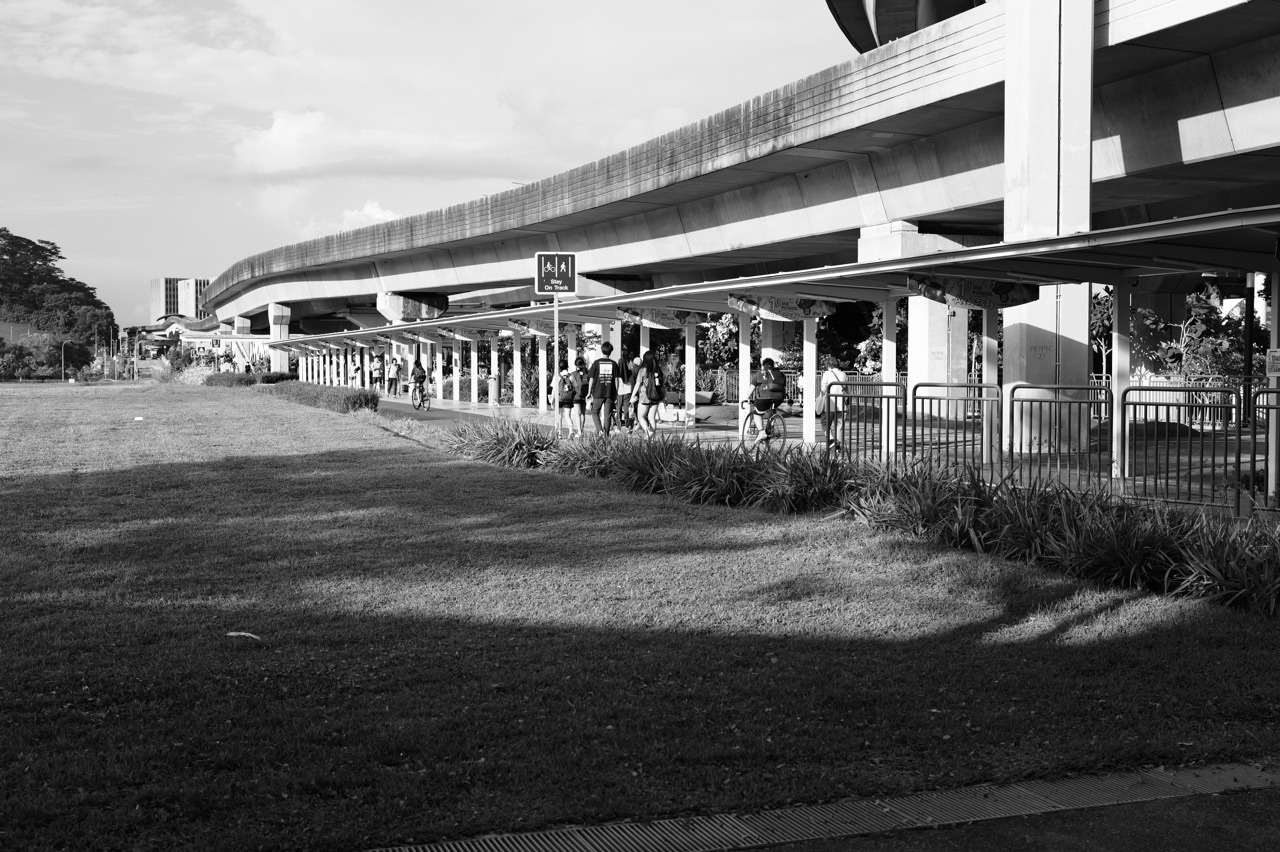
Damai LRT is useful to understand through the journeys that meet around it: a return towards Punggol interchange, a school run along the surrounding residential streets, groceries on Punggol Drive and visits to Oasis Terraces. Living near Damai can suit a household whose daily destinations line up with those routes. The right answer depends on the exact home and the people making the trips, rather than a general claim that this is the quietest or most convenient station.
Damai is PE7 on the Punggol LRT East Loop. The number is a station identifier, not an instruction to travel through seven stops to reach Punggol. Understanding the loop matters, but so do the walk from the block, the current service direction and the final destination after a transfer. This guide puts those details together with school, food, care and home-viewing decisions.
Official school addresses, operator information and retailer sources were checked on 30 September 2026. Household scenarios are illustrative planning examples, not measured local journey times or testimonials. Use the chapter routes to start with your immediate question, then work through the practical test before relying on an assumption about a particular home.
Choose your reading route
New to the area: start with chapters 1–3. Planning school and care: read chapters 4–6. Building the everyday routine: use chapters 7–10. Comparing a home or settling in: go to chapters 11–16.
1. Find your exact starting point in the Damai area · 2. Understand the short side of the East Loop · 3. Decide when walking, rail or a bus serves the task · 4. Build a school map from official addresses
5. Rehearse the morning before adding more commitments · 6. Give the afternoon its own plan · 7. Use the Punggol Drive grocery anchor deliberately · 8. Distinguish Damai errands from Oasis Terraces visits
9. Plan Town Centre trips by purpose · 10. Check the home while the neighbourhood is doing its ordinary work · 11. Design for grandparents, strollers and different mobility needs · 12. Give teenagers a route they can explain
13. Keep a workable plan for rain, delays and late returns · 14. Compare three hypothetical Damai households · 15. Run a focused comparison and first-month review · 16. Questions to settle before choosing a Damai home
1. Find your exact starting point in the Damai area
The phrase “near Damai” is an orientation, not a complete address. A home may be described using Damai, Punggol Drive, Punggol Central or a development name, while the entrance actually used sits on a different side of the building. Before comparing routes, identify the block, lift lobby and permitted exit. A map pin at the centre of a building can hide the part of the walk that matters most.
Write the full home address at the centre of a blank page. Around it, place Damai LRT, the grocery outlet you expect to use, your child’s actual school gate and your usual destination at Punggol. Add Oasis Terraces only if it is part of the household’s likely week. This produces a working map of your life, instead of an inventory of every amenity that can be found somewhere in the wider town.
Separate destinations that have similar names. Punggol MRT, Punggol Coast MRT, Punggol View Primary and Punggol Secondary are different places. Punggol Drive and Punggol Central are different roads. A grandparent or visiting relative may not share the family’s shorthand. Use the full destination and a recognisable meeting point when arranging a handover or asking someone to help with collection.
A practical starting description might be “our lift lobby, then the agreed crossing, then the station entrance we practised”, supported by an address and map. It should not rely on a shortcut through another property’s restricted area or on an entrance whose access you have not checked. If a gate matters to the route, establish whether it is permitted and available for the intended journey.
Notice that different members of the household may need different maps. The commuter’s most important destination may be Punggol interchange. A child’s may be a school gate. An older relative’s may be a grocery outlet or healthcare appointment. No single station-centred circle captures all three. The purpose of the location decision is to make the combined week manageable, rather than optimise only the journey of the person doing the property search.
Once the essential places are clear, optional destinations can be added. This order prevents a long list of cafés, parks or shopping centres from obscuring an unresolved school collection or a difficult work commute. Damai’s value to the household becomes easier to judge when the essentials are visible first.
Back to contents · Next chapter
2. Understand the short side of the East Loop
Damai lies next to Punggol on one side of the East Loop, with Oasis on the other side. That network relationship explains why the PE7 number should not be read as a compulsory long feeder journey. It does not establish a fixed door-to-door time. Current service direction, waiting, station access and the transfer you need still determine the practical trip.
Use the SBS Transit system map and LTA’s Sengkang-Punggol LRT information for network context. On the day, read the station display and current operator notices before boarding. An old journey screenshot or a neighbour’s remembered platform choice should not override what the operator is showing now.
For someone learning the route, ask three questions before boarding: which line is this, what direction is shown, and what is the next destination I need? The exercise takes little time but avoids blindly treating every train on a loop as equivalent. If the display is unclear or a service change is announced, ask station staff rather than trying to reconstruct the service from a residential article.
A commuter should practise the transfer at Punggol as well as the feeder ride. Identify the route from the LRT to the North East Line and the direction needed for the onward journey. The return transfer can feel different when the person is tired, carrying shopping or meeting a child. It is worth learning both directions before the first time-sensitive trip.
Do not calculate a time saving simply by subtracting station counts. Waiting and access can be a significant part of a short journey, and the household may have a practical walking or bus option for a particular origin and destination. The useful comparison is the complete trip at the time it will actually happen. Record the conditions rather than treating one result as a universal average.
For a child or older relative, a clear route may matter more than the smallest possible time difference. If a slightly different connection is easier to recognise and use, it may deserve consideration. Reliability here means the traveller understands the journey and has a sensible response to change. It does not mean a guide can promise that services, crowds or conditions will always be identical.
Back to contents · Next chapter
3. Decide when walking, rail or a bus serves the task
Start with the destination rather than the mode. “We need to reach this office entrance” or “we need to get home with these bags” is a clearer problem than deciding that every trip must use the LRT because the home is near Damai. A station can be useful without being the correct first step for every local journey.
For a possible walk towards Punggol, trace the actual path from the residential exit to the entrance you need. Check crossings, shelter, level changes and the person’s likely carrying load. Do not use a broad radius around Damai as proof that every home is within a particular walking distance of Waterway Point or the interchange. Distances need named endpoints and a route, while walking times also need the person’s pace and conditions.
Rail may be appropriate when the weather, load or onward connection makes it practical. Include the time and effort of entering and leaving the station. A brief train ride can still involve several transitions, and those transitions may matter to a stroller user or someone with limited mobility. Evaluate the whole journey rather than celebrating or dismissing the feeder segment in isolation.
A bus alternative needs a verified stop and direction. Find the current service information for the exact journey rather than assuming a bus that passes nearby goes to the required destination. Check the return stop too; it may not be directly opposite the outward stop in a way that is obvious to an unfamiliar traveller. Make the first trial when there is time to pause and understand the arrangement.
Choose a default for essential trips and one backup that solves a defined problem. For example, the backup may be useful when an exposed walk is unsuitable or a service is disrupted. It should be something the household can actually use, including any pickup point and expected payment arrangement. A list of theoretically possible modes is less useful than one alternative everyone understands.
Review choices as the task changes. A route suitable for an adult travelling alone may not be the preferred route with a child, a grocery trolley or an older relative. The flexibility to choose differently is a strength of a well-understood neighbourhood. It does not require declaring one mode permanently superior or one nearby station the winner for every kind of resident.
Back to contents · Next chapter
4. Build a school map from official addresses
Several schools are relevant to a broader Damai-area search, but listing them together does not mean they are equally close to every home. Oasis Primary lists 71 Edgefield Plains. Edgefield Primary lists 41 Edgefield Plains. Punggol Secondary lists 51 Edgefield Plains. These are separate campuses with their own visitor and student arrangements.
Punggol View Primary lists 9 Punggol Place, Singapore 828845. Its published directions identify Punggol MRT, Exit B, as the nearest MRT access. That is useful evidence against treating every school mentioned in a Damai guide as necessarily best reached through Damai station. The right approach depends on the home, school entrance and journey being made.
Place the relevant official school address on your map, then confirm the gate the child is permitted to use. A route to the general office for a parent appointment can differ from the child’s daily arrival route. Dismissal arrangements may differ again. Ask the school for the current instructions instead of assuming that the closest-looking entrance is available at every time.
For a family with an existing enrolment, focus first on the actual routine. Where will the child be handed over? Who is responsible after dismissal? Does a CCA day change the collection point or finish? Which adult can respond if the school contacts the family? These operational questions turn a school address into a workable plan.
For Primary 1 planning, use the current MOE registration guidance for the relevant exercise. A station name, property description or ordinary walking map does not establish the official home-school distance category or priority. Do not assume that historical vacancies or past balloting outcomes will repeat. The appropriate current process should decide those questions.
A school comparison should include the child’s needs and the household’s capacity, not just travel. Review official school information, attend suitable information events where available and ask questions that matter to your child. A location may make several school routes possible without making all school choices interchangeable. Keep educational fit, admission and everyday logistics as related but distinct parts of the decision.
Back to contents · Next chapter
5. Rehearse the morning before adding more commitments
A school morning begins before anyone reaches Damai station or a school gate. It includes waking, breakfast, getting dressed, finding materials and leaving the flat. If the household is routinely late before reaching the lift, changing transport mode alone may not solve the problem. Start by identifying where the sequence actually becomes difficult.
Prepare the predictable items the previous evening. Put bags, required materials and the next day’s collection information in a consistent place. This is not an invitation to make a young child responsible for every administrative detail. Give the child an age-appropriate role and let the adult check what still requires adult oversight. The aim is a calmer departure, not a perfect performance.
Practise the journey with enough spare time to explain it. Point out the crossing, the turn and the agreed destination rather than rushing through while the child follows. Ask the child to tell you the next step. Their answer shows whether the route is understood or merely familiar from being escorted. Correct uncertainty kindly before relying on independence.
If two adults share mornings, agree on the same basic instructions. Different shortcuts, meeting points and messages can make a simple route confusing. Where there is a good reason for two routes, explain the condition that changes the choice. For example, an adult may use a different approach for a particular handover, but the child should know why the plan differs.
Include the accompanying adult’s onward journey. A parent who walks a child to school and then returns towards Punggol for work is making a combined journey, not two disconnected short trips. Test that sequence as a whole. If the timing is consistently tight, consider whether another handover arrangement or workday pattern is available rather than assuming everyone can simply move faster.
Do not fill every apparent time saving with another task. A few minutes of margin can absorb a missing item, a slower lift or a child who needs reassurance. A location that supports a manageable departure can be valuable precisely because it leaves room for ordinary human variation. That benefit is lost when the morning plan is designed to work only under ideal conditions.
Back to contents · Next chapter
6. Give the afternoon its own plan
Afternoon travel is not simply the morning in reverse. Children may finish at different times, carry extra materials, attend CCA or need a meal before another activity. Adults may be coming from work or from another child’s school. Map these journeys separately so that a convenient morning does not conceal a difficult collection arrangement.
Begin with the school or care provider’s confirmed release point and time. Identify the person responsible at each stage. If the child goes from school to student care, establish how that transfer happens. If someone else collects later, make sure the provider recognises the collector under its current procedures. A family chat message cannot substitute for required authorisation with the provider.
A sibling timetable needs to show overlapping obligations. Put both children’s dismissal, care and activity times on the same page, then add travel and the adult’s availability. Look for moments when one person is expected in two places. A short local distance may reduce the problem, but it does not eliminate simultaneous handovers.
Plan the late-workday response before it happens. Name the backup collector, confirm they can use the route and agree on when they need to be contacted. If a centre’s collection deadline matters, ask about its actual terms rather than assuming flexibility. A backup that depends on an unconfirmed place or an unavailable relative is only a hope.
For a child beginning to travel independently, keep the transition gradual. Practise the usual route and a simple response to a missed meeting. Agree on where the child should wait and whom to contact. The plan should be specific enough to use without turning every journey into constant remote supervision. Follow school guidance and the child’s readiness.
Review the week by looking at recurring strain. If Thursday repeatedly ends with a rushed meal and late homework, consider moving an optional activity or simplifying the dinner plan. The purpose of living near useful transport and groceries is to support the household. It should not become a reason to accept a timetable that leaves no room for rest or an ordinary delay.
Back to contents · Next chapter
7. Use the Punggol Drive grocery anchor deliberately
FairPrice’s own published outlet information identifies the branch at Block 612 Punggol Drive, #01-06, and lists it as a 24-hour outlet. See the retailer’s neighbourhood-store information and confirm current arrangements with the store locator before a time-sensitive visit. Holiday changes, specific services and stock availability should not be inferred from an ordinary-hours listing.
This is a useful local fact, but its importance depends on the household. Someone returning late from work may value a confirmed late shopping option. A family buying groceries earlier in the day may care more about the route from school collection and the weight of the return basket. Do not let an attractive opening-hours label replace the question of how the shop will actually be used.
Divide shopping into three jobs: an urgent missing item, a routine top-up and the main household shop. They need different amounts of time and carrying capacity. A top-up on the way home may fit easily, while a large shop may deserve its own trip or delivery arrangement. Treating every grocery need as a spontaneous errand can lead to repeated walks and a less predictable budget.
Make the list before the journey when possible. Group regular essentials and check what is already at home. If someone else is collecting the groceries, communicate substitutions and the spending limit clearly. A familiar local outlet helps, but it does not remove the confusion created by an unclear request such as “get whatever we need”.
Test the route home with a representative load. A person who can comfortably walk empty-handed may struggle with bulky items while supervising a child. Consider a trolley, a smaller basket or a separate collection arrangement where appropriate. The practical solution follows the person’s capacity, not a desire to prove that living near a supermarket makes every shopping trip effortless.
Keep another verified option for an item the household depends on, especially if a specific product is important. That might be a different retailer, delivery or an earlier shopping trip. This is ordinary contingency planning, not a prediction that the local branch will fail. It allows the family to use a convenient outlet confidently without making its entire food routine depend on every item always being available.
Back to contents · Next chapter
8. Distinguish Damai errands from Oasis Terraces visits
Damai-area errands and Oasis Terraces visits can complement each other, but they are not the same trip. A grocery top-up at the outlet you use near home may be simple enough to fit into an ordinary evening. A visit to the polyclinic at Oasis Terraces has a particular appointment, level and return arrangement. Combining them makes sense only when the sequence suits the people involved.
SingHealth’s Punggol Polyclinic page gives the address as 681 Punggol Drive, Oasis Terraces #02-01, and identifies Oasis as the nearest LRT station. That tells a Damai household where the provider is. It does not mean the clinic is downstairs, that every home has the same access or that taking the LRT is always the preferred route from a particular block.
For an appointment, first follow the provider’s instructions. Then plan the transport and accompaniment required. If a relative needs support, decide who is going and how the return works. Avoid scheduling a tightly timed school pickup immediately afterwards unless the arrangement can handle uncertainty. The clinic’s workflow, not the family’s shopping list, governs the visit.
On a day when the person feels well enough, a nearby errand might be convenient. On another day, returning home promptly may be the better practical choice. The presence of shops does not oblige a patient or caregiver to complete additional tasks. A useful neighbourhood gives options; it does not turn every outing into a productivity challenge.
For a non-medical visit to Oasis Terraces, choose the destination before travelling. A meal, a particular shop, a community activity and a meeting point may require different entrances or levels. Check current business or organiser information when timing matters. The centre’s general existence is not evidence that a specific service is available at your intended hour.
Use the Oasis Terraces guide for the place itself and the Living Near Oasis guide when comparing residential routines. Keep the comparison grounded in exact journeys. It is more useful to know which errands your household would make from Damai than to award either station a general convenience score.
Back to contents · Next chapter
9. Plan Town Centre trips by purpose
“Going to Punggol” can refer to several different tasks: transferring to the North East Line, meeting someone, visiting a shop, having a meal or continuing to another local destination. Name the final place before comparing a walk with an LRT journey. Arriving at the interchange is not necessarily the end of the trip.
For a transport transfer, minimise unnecessary detours and learn the required signs. For a shopping visit, identify the entrance and the type of purchase. For a family meal, think about the return when children are tired. The same route can be appropriate for one purpose and inconvenient for another because the load, timing and people differ.
Do not assume a town-centre visit must become a large outing. One reason to understand the Damai connection is that the household can decide whether a particular task is worth the journey. A focused visit for one essential item may be enough. Equally, several compatible errands can be grouped when doing so avoids repeated travel without overwhelming the people making the trip.
If meeting friends or relatives, agree on a specific point and a waiting plan. “At the mall” is too broad when different people arrive through different entrances. A clear level and recognisable landmark reduce unnecessary walking and calls. For a child or an older visitor, choose a place that is comfortable to wait at and explain what to do if the other person is delayed.
The last part of the return deserves attention. A train journey that feels easy on the outward trip may be followed by a tiring walk home with bags. If the household expects to shop regularly, include this in the initial route test. An attractive station relationship should be evaluated through the whole job, including the lift lobby and front door.
For broader comparisons, use the Punggol MRT and Town Centre guide. A Damai home and a Town Centre home should be compared using the same actual week. Direct access to one destination may be less important than the combined school, care and work pattern. The right choice is the one whose compromises the household understands and can manage.
Back to contents · Next chapter
10. Check the home while the neighbourhood is doing its ordinary work
A quiet weekend viewing reveals only one version of a home. If weekday school activity, deliveries, traffic or rail sound might affect the household, seek an appropriate opportunity to understand those conditions. Record what you observe rather than converting it into a claim that Damai as a whole is always quiet or always busy.
Inside the home, assess the rooms the family will actually use for sleep, study and work. Notice the position of windows, the direction they face and the activities audible during the visit. If an issue could change the decision, ask a precise follow-up question or arrange another viewing where possible. A general statement that a neighbourhood is “residential” does not answer what happens in a particular bedroom at a relevant time.
Look at the circulation inside the home. Where will school bags, shoes, a trolley or a mobility aid be kept? Can people move comfortably while someone is cooking or working? A location can reduce travel without solving a cramped or awkward daily layout. The home needs to support the activities that become possible once everyone arrives.
For a household with remote work, consider whether the workspace is genuinely usable alongside children’s routines. A desk in a photograph may look sufficient until school collection, homework and calls all happen at once. Think through one ordinary afternoon. The question is not whether the property has an extra corner, but whether the household can share the space without constant disruption.
For a renter, clarify the actual terms and permitted use with the responsible parties. For a buyer, keep the location assessment separate from financing, tenure, eligibility and contractual advice. Use current authoritative information and appropriate professional support for those matters. This article does not forecast a price premium or suggest that a station connection makes a particular transaction worthwhile.
Finish the home assessment by naming the main compromise honestly. It might be a less convenient grocery return, a room that needs a different furniture arrangement or a route that requires more adult help. Some compromises are manageable and some are not. Naming them is more useful than trying to make every feature sound like an advantage.
Back to contents · Next chapter
11. Design for grandparents, strollers and different mobility needs
Households often evaluate a route using the fastest adult in the family and then expect everyone else to use it in the same way. A better test begins with the person whose journey has the most constraints. That might be a grandparent, a parent with a stroller, someone using a mobility aid or an adult carrying supplies while accompanying a child.
For a grandparent helping with collection, include their journey to the neighbourhood and home again. They may be comfortable with one familiar route but less comfortable with a complicated interchange or an unfamiliar exit. Ask what works for them rather than treating their availability as an unlimited resource. An arrangement that is manageable once may be tiring several days a week.
For a stroller route, inspect lifts, corners, kerbs and crossings using the actual equipment where practical. Notice whether an apparently direct approach depends on carrying the stroller or finding a lift that is not obvious. The difficulty may be solved by a different entrance or a little more time, but it should be identified before the route becomes essential.
For wheelchair or other mobility access, verify the entire path and any material uncertainty with the responsible building or transport operator. A general accessibility claim about a station cannot establish the approach from every residential block or the entrance to every destination. Temporary conditions can matter as much as permanent design, so important trips deserve a current check.
Avoid equating independence with travelling alone. A person may independently manage a familiar grocery trip while choosing company for an appointment or an unfamiliar route. The household can support that choice by agreeing on specific assistance rather than taking over everything. Clear meeting points, an accessible contact and a understood return plan can make help more proportionate.
The final question is whether the arrangement remains comfortable after repetition. Ask the person using the route what was difficult and what they would prefer to change. A housing decision becomes more inclusive when their experience can alter the plan. It should not require them to fit a journey designed only from another person’s pace and assumptions.
Back to contents · Next chapter
12. Give teenagers a route they can explain
A secondary-school student needs more than a parent saying that Damai is convenient. They need to understand the actual school journey, the CCA-day variation and the way home if the usual plan changes. Begin with the route they will use most frequently and ask them to explain it back using station names, directions and recognisable destinations.
Practise an ordinary journey together, then let the student lead appropriate parts while an adult is available. Notice whether they read signs or rely entirely on habit. A student who can identify the relevant line and transfer is better prepared for a changed display than one who simply knows where a parent usually stands. Confidence should grow from understanding rather than repeated reassurance that the trip is easy.
Agree on communication that is useful without becoming excessive. The family may want a message at a particular handover or when a late finish changes dinner. Make the expectation clear and realistic. A charged phone helps, but the student should also know the destination and a sensible place to ask for assistance if the phone is unavailable.
CCA days often deserve a separate dinner and homework sequence. A student returning later may need food and a brief rest before starting demanding work. Do not assume that being near transport means the day contains unlimited energy. Look at the actual arrival and what remains to be done, then decide which tasks are essential that evening.
Additional lessons should respond to an identified learning need. Consider the teacher, level, timetable and travel involved rather than adding a class because it happens to be near a familiar station. A convenient location can reduce one burden, but it cannot make an unsuitable lesson useful. The student should understand the purpose of the support and have room to apply what is learned.
Over time, review the route when the student’s schedule changes. A new CCA, different school or later dismissal can alter which connection works. The student can take part in that review, learning to compare actual conditions rather than depending on adults to redesign every detail. Damai then becomes part of a wider skill: moving through the town with judgement and explaining decisions clearly.
Back to contents · Next chapter
13. Keep a workable plan for rain, delays and late returns
A normal-day routine needs enough flexibility to survive an ordinary disruption. The point is not to imagine every possible failure. It is to identify the few changes that would genuinely prevent the household from completing an essential task, such as collecting a child, reaching work or accompanying a relative to an appointment.
For rain, identify the exposed sections of the usual route and decide what changes when the walk becomes unsuitable. The answer might be a different transport option, a changed pickup arrangement or postponing a non-essential errand. Do not promise a fully sheltered route unless the entire path has been verified. Follow current weather warnings and operator advice when conditions are hazardous.
For a transport delay, agree on the point at which the traveller informs the person waiting. The message should name the problem and the next useful action rather than simply saying “late”. A caregiver might need to activate an already authorised collector. A workplace may need a revised arrival estimate. Clear information helps others adapt without repeatedly asking for updates.
For a late return, separate essentials from optional tasks. Collecting a child and getting dinner may take priority over a grocery top-up that can wait. A useful local shopping option does not mean every errand must still be completed. Keep a simple food fallback so that one delayed journey does not create several further decisions.
A paid ride may be part of the contingency plan if it is appropriate and affordable for the household. Confirm the practical pickup location and consider the people and equipment travelling. Do not assume a vehicle can always arrive immediately or stop at any entrance. The plan should remain realistic rather than treating a booking app as a guarantee that every timing problem can be solved.
After a disruption, change the routine only if the event reveals a recurring weakness or a material new condition. One unusual delay does not prove a neighbourhood is unsuitable. Equally, the same missed handover every week should not be dismissed as bad luck. The useful response is proportionate: understand the cause, make one effective change and preserve the parts of the routine that still work.
Back to contents · Next chapter
14. Compare three hypothetical Damai households
Imagine a household with one child at an established school and adults travelling to different workplaces. Their strongest reason to consider Damai may be the combination of the child’s actual route and the connection towards Punggol. They should test both adults’ journeys, not assume that one successful commute represents the family. The most important compromise may be the evening collection rather than the morning train ride.
If one adult returns late twice a week, the household might use confirmed care and a simple dinner plan on those days. The nearby grocery option can support a top-up, but the main shop could move to another time. This is a scheduling example, not a claim that any particular school or provider has a vacancy. The care arrangement must be established before the rest of the plan relies on it.
Now imagine a household with a grandparent who helps occasionally. The younger adults may see Damai as a simple feeder stop, while the grandparent finds the transfer unfamiliar. A trial journey together could show that a different arrival point or a more explicit meeting place is helpful. The correct response is to adapt the handover, not to insist that the map proves the route should be easy.
For this household, the value of local amenities may be the ability to keep the grandparent’s outing short and purposeful. A collection followed by one familiar grocery stop could work, while a series of additional errands may not. The family should ask which tasks the grandparent is comfortable doing and avoid treating help as automatic simply because destinations are nearby.
Finally, imagine a single adult working shifts. School proximity may have little relevance, while current late shopping hours, the actual return service and the home’s suitability for daytime rest matter greatly. The viewing should focus on those needs. A general “family-friendly” description would miss the very features that determine whether the home works for this person.
These examples show why a station cannot be ranked without specifying a household. The same rail geometry, grocery outlet and school addresses can support different decisions. A useful comparison identifies what is repeatedly needed, who carries the burden and which compromise is acceptable. It does not borrow another household’s priorities merely because their situation sounds familiar.
Back to contents · Next chapter
15. Run a focused comparison and first-month review
When comparing two homes, choose a representative week and hold the destinations constant. Use the same school gate, workplace entrance, care arrangement and grocery pattern. Otherwise, one location may seem superior because you have imagined a lighter schedule there while judging the other against your busiest current week.
Record a few meaningful observations rather than dozens of speculative scores. Note how the essential route worked, which access question remains unresolved and what the carrying or handover burden was. A statement such as “the return with the trolley needs a different entrance” is actionable. A general score saying “convenience: eight out of ten” hides the detail the household needs.
Keep facts, preferences and assumptions separate. An official school address is a fact. Preferring fewer transfers is a household preference. Expecting to walk every evening is an assumption until the routine has been tried. This distinction makes disagreements easier to resolve because family members can see whether they are disputing evidence or simply valuing different things.
In the first week after a move or routine change, keep the essentials stable. Learn the ordinary transport direction, confirm collection arrangements and establish a manageable food plan. Optional outings and new activities can wait. A household already handling a new home does not need to use every local service immediately to justify its choice.
During the following weeks, look for repeated friction. Perhaps the grocery basket is too heavy, the child arrives home hungry or a relative finds one meeting point confusing. Make a small change targeted at that issue and observe the result. It is easier to improve a real routine than an idealised plan that nobody can consistently follow.
At the end of the month, decide what to keep. The useful outcome is a week that the household can explain and sustain, with an understood backup for the important trips. Revisit the larger housing comparison when a meaningful condition changes. Until then, let the routine support family life without turning every journey into an ongoing optimisation exercise.
Back to contents · Next chapter
16. Questions to settle before choosing a Damai home
Does PE7 mean a long ride to Punggol?
No. The East Loop is a loop, and Damai’s position next to Punggol on one side is important. Read current direction displays and operator notices, then assess the full journey from the home. The station code alone cannot tell you the waiting time, transfer burden or door-to-door duration.
Can every Damai household walk to the Town Centre?
This guide does not make that universal claim. The answer depends on the exact home entrance, destination, route, traveller and conditions. Check the real path and return with the expected load. A broad circle around a station is not an adequate substitute for those details.
Which schools are relevant to compare?
Oasis Primary, Edgefield Primary, Punggol View Primary and Punggol Secondary are among the official addresses discussed here. Their inclusion is for orientation, not a claim that all are equally near or suitable. Use the child’s actual school or current admissions process, and confirm the gate and daily arrangements separately.
Are there late grocery options?
FairPrice’s published information lists the Block 612 Punggol Drive branch as operating 24 hours. Confirm current outlet arrangements before relying on a late visit, particularly around holidays or for a specific service. Other retailers should be checked individually rather than inheriting the same hours from a neighbourhood description.
Is Damai quieter than Oasis or the Town Centre?
There is no comparable evidence here that supports a station-wide ranking. Inspect the actual room, orientation and times relevant to your household. Different homes within the same area can experience different activity. Treat a viewing as an observation, and investigate a material concern rather than relying on an attractive adjective.
What is the simplest next step?
Take the one journey that matters most from the exact home under consideration. Include the return, the person making it and the load or handover involved. Then verify the one unresolved provider detail that could change your decision. This gives the household something concrete to act on instead of another general impression.
Continue with the Punggol LRT guide, Living Near Oasis, Living Near Punggol MRT and Town Centre or the Punggol map guide. For wider neighbourhood and learning routes, use the Complete Punggol Guide and eduKatePunggol Atlas.
A Damai home works when its connections fit the household: the right train direction, a manageable school gate, a practical grocery return and a home that supports rest and study. Understanding those connections is more valuable than calling the station a secret shortcut or a universal family favourite. Choose the actual week you can live with, and let the map serve that decision.


