
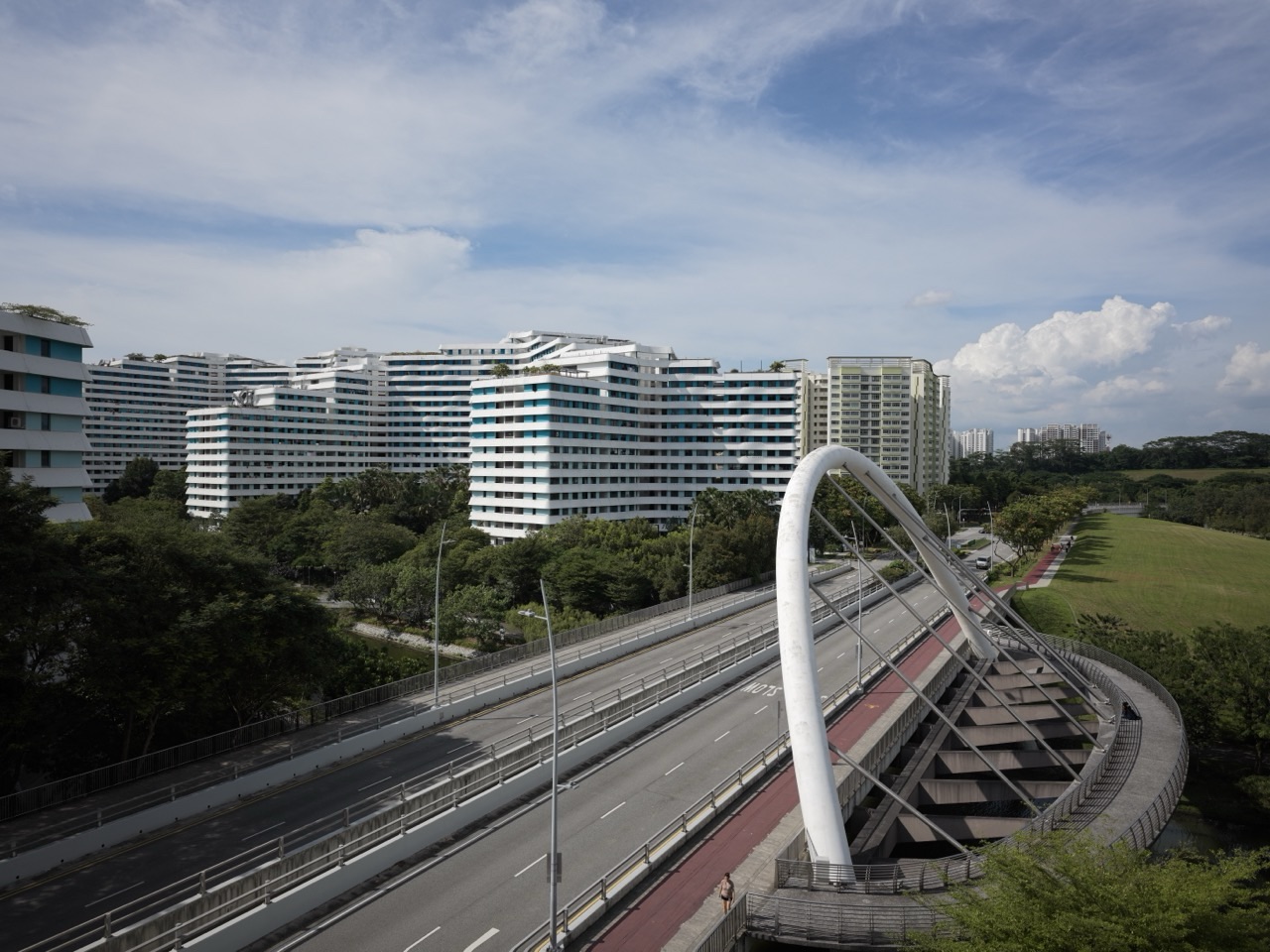
Wak Sumang and Kampung Punggol are among the richest pieces of memory inside Crazy Rich Punggol because they remind us that the modern town did not begin with HDB blocks, the Waterway or Punggol Coast MRT. Long before the new town, families lived, fished, worshipped, studied and worked around Punggol Point in a coastal kampung whose history survives through maps, oral testimony, photographs, archives and descendants.
Did you know? National Heritage Board material describes Kampung Wak Sumang, also known as Kampung Punggol, as one of Singapore’s early fishing villages, founded by Wak Sumang, a settler from the Riau Islands. But the exact chronology remains debated. His great-grandson Awang Osman remembered the village as existing before 1819; local-history researchers have argued for an even earlier origin; other accounts place its establishment in the 1850s or 1860s. An 1852 map based on surveys from the 1840s does show a Malay community around Punggol Point. The richest reading is therefore not one forced date—it is the evidence trail itself.
The Crazy-Rich Idea: A Town Is Wealthier When Its People Still Have Names
Urban history can become strangely anonymous. We remember “old Punggol”, “the kampungs” or “the fishing village” as though whole communities were background scenery waiting for redevelopment.
Wak Sumang changes that scale. So do Awang Osman, the villagers interviewed by the National Archives, the worshippers of Masjid Wak Sumang, the children of Sekolah Melayu Punggol and the families who stayed until resettlement.
The luxury of memory is specificity. Places become richer when history still contains people rather than only dates.
Kampung Punggol Was a Coastal Community Before It Was a Heritage Story
Kampung Wak Sumang sat around Punggol Point and belonged to a maritime geography. Fishing, boat sheds, shoreline livelihoods and movement across the Tebrau Strait shaped the community.
National Heritage Board material records that refugees from Johor villages arrived during the Malayan Emergency and brought skills that supported the local kupang (mussel) trade and cottage industries. Older inhabitants and Wak Sumang’s descendants identified strongly with the sea, while later inland settlers were sometimes distinguished as orang darat.
This is useful because it reminds us that “Punggol” once described a social landscape organised by water long before the modern Waterway made water the town’s planning identity.
Masjid Wak Sumang Turned Memory Into Community Infrastructure
Heritage accounts record that a seaside shrine associated with Wak Sumang later became Masjid Wak Sumang at Track 26 of old Punggol Road. After the Second World War, the local community helped rebuild a mosque there, and it served generations of residents before demolition in 1995 during redevelopment.
A mosque in a kampung was not simply a building. It organised worship, social life, identity and memory. When the physical structure disappeared, its significance did not disappear with it.
Sekolah Melayu Punggol Shows That the Kampung Was Also a Learning Community
Sekolah Melayu Punggol was established in 1955 to educate younger generations in the kampung. Heritage records note that it was funded initially through community and private contributions before being taken over by the government in 1963 and later relocated along old Punggol Road.
This matters because historical villages are sometimes romanticised as picturesque places outside modern systems. In reality, communities built institutions because children needed schooling, families needed worship, livelihoods needed organisation and daily life needed structure.
Why the Wak Sumang Timeline Should Stay Slightly Untidy
Several dates survive in the public record, and they do not all line up. That is not a reason to pick the most dramatic version and ignore the rest.
- Descendant memory: Awang Osman said the kampung existed before 1819.
- Local-history interpretation: some researchers argue for a much earlier settlement.
- Literary tradition: Muhammad Ariff Ahmad’s Tok Sumang places the village in the mid-19th century.
- Map evidence: an 1852 map based on 1840s surveys shows a Malay community at Punggol Point.
- Later oral histories: National Archives interviews preserve memories of the community into the 20th century.
A strong local-history page should tell readers which kind of evidence each claim rests on. That is more useful than turning uncertainty into false certainty.
The Name “Sumang” Still Lives in the Modern Town
Wak Sumang’s legacy remains visible in modern Punggol through names such as Sumang Walk, Sumang Lane, Sumang Link, Sumang Crescent and Sumang LRT. The streets do something subtle: they let a highly modern town carry an older person’s name through everyday navigation.
A child may learn “Sumang” first as a station code or road sign, then later discover that the name leads backward into a fishing village and oral history.
That is heritage working quietly.
What Students Can Learn From Wak Sumang
- History: different source types can disagree without making the whole story useless.
- English: distinguish fact, memory, inference and interpretation.
- Geography: coastal livelihoods emerge from physical landscape.
- Civics: communities build institutions such as schools and places of worship before planners arrive.
- Research: maps, oral histories, photographs and archival records answer different questions.
The best question is not “Which story is true?” It is “What can each piece of evidence legitimately tell us?”
Continue Through Old Punggol
For Punggol’s name and etymology, continue with Crazy Rich Punggol | Punggol Meaning, Malay Origins and the Luxury of a Name With Memory. For the wider transformation from kampung and farms to new town, read Crazy Rich Punggol | From Kampung and Farms to Waterfront City. For the preserved route of Old Punggol Road, continue with Crazy Rich Punggol | Old Punggol Road, Heritage Trail and the Luxury of Memory.
Evidence Anchors
- National Heritage Board — History of Punggol
- National Heritage Board — Waterfront Living at Punggol
- National Library — Remembering Punggol’s Kampong Wak Sumang
The crazy-rich Punggol lesson is that history becomes more valuable when it stays human. Wak Sumang matters not because every detail of the legend can be proven, but because the stories, records and descendants keep old Punggol populated with real people instead of leaving us only a blank map marked “before development”.
Jump to: First: Kampung, Kampong and Punggol are already evidence problems · Masjid Wak Sumang turned the kampung into a religious and civic network · Systems view: reconstructing a lost kampung is a multi-source machine · How to Read Kampung Memory Without Turning It Into Legend
Wak Sumang’s story offers a way into old Punggol: its coastal community, family memories and the records that help us understand how people lived.
Some details remain uncertain. Reading the sources together makes the history richer while keeping those uncertainties visible.
Modern Punggol is full of things we can date precisely. A station opens on a particular day. A housing project receives keys in a particular year. A waterway is officially launched. A planning document has a publication date. Digital infrastructure leaves records.
Wak Sumang belongs to a different evidential world.
His story survives through descendants, oral histories, a 1957 Malay literary work, old maps, newspaper reports, land records, photographs, artefacts, the memories of former villagers and the traces of a settlement that disappeared beneath one of Singapore’s most dramatic urban transformations.
Some parts line up beautifully.
Some do not.
That does not mean the history is unusable.
It means we have to read different kinds of evidence for the jobs they are actually capable of doing.
The mature question is not “Which Wak Sumang story should we believe?” It is “Which parts are documented, which parts are remembered, which parts are literary reconstruction, and where must uncertainty remain?”
This guide follows Wak Sumang and Kampong Wak Sumang / Kampung Punggol as a lived community, showing what each kind of source can tell us about the founder tradition and the village.
For the complete Punggol reading system, return to the parent hub: What about Punggol?
For related questions, What Does “Punggol” Mean? examines the place-name and etymology evidence. How Punggol Became Punggol follows the wider transformation from coastal settlement to modern town. Here we stay with the founder tradition, the kampung, its people, and what the surviving sources can actually establish.
First: Kampung, Kampong and Punggol are already evidence problems
Singapore historical sources often use the colonial-era spelling kampong. Contemporary Malay spelling generally uses kampung.
So you will encounter:
- Kampong Wak Sumang,
- Kampung Wak Sumang,
- Kampong Punggol,
- Kampung Punggol.
These do not necessarily refer to four different settlements.
They are variant spellings and naming conventions around the same historical community at Punggol Point.
The same problem appears with Wak Sumang himself. National Library material records forms including Wak Sumang, Wah Soomang, Wah Sumang, Tok Sumang and Che Soman.
Historical research therefore begins before we even reach the biography.
We first have to recognise that spelling changes do not automatically mean identity changes.
The short answer: what can we say with high confidence?
- Kampong Wak Sumang, also known as Kampong Punggol, was a real Malay settlement at Punggol Point.
- The community survived well into the twentieth century and was photographed, mapped, reported on and extensively remembered by residents.
- Wak Sumang is the founder figure preserved by the community and Singapore heritage institutions.
- His descendants remained strongly associated with the village. Awang Osman, the village headman from 1932 until the kampung’s demolition in 1985, was Wak Sumang’s maternal great-grandson.
- The exact founding date is not settled. Descendant tradition places the settlement before 1819; other accounts place Wak Sumang’s arrival in the mid-nineteenth century.
- Maps establish a Malay community around Punggol Point by the 1840s/early 1850s, but they do not identify one incontrovertible founding day.
- The 1957 work Tok Sumang is invaluable but should be read as a literary reconstruction built from oral traditions, not as a contemporary nineteenth-century administrative record.
- The kampung was a social system, not merely a set of houses. It included fishing and mussel livelihoods, family networks, a mosque, a Malay school, boatel businesses, community leadership and waterfront recreation.
- Most residents were resettled during the 1980s as Punggol entered reclamation and redevelopment. Some boat-related activity lingered into the 1990s, and Masjid Wak Sumang was demolished in 1995.
- The physical kampung is gone, but the memory system is not. Sumang survives in street names and the LRT station, in National Archives oral histories, in NLB’s Punggol Stories exhibition and in current community heritage work.
Everything after this section is about learning how those conclusions are built.
Why the founding date is difficult
There are at least three chronological traditions that do not collapse neatly into one date.
Descendant oral tradition: National Heritage Board material records Awang Osman’s account that Kampung Wak Sumang existed before Stamford Raffles’s arrival in 1819. Heritage researcher Sarafian Salleh has argued for an even older history.
Literary reconstruction: Muhammad Ariff Ahmad’s Tok Sumang, published in 1957 under the pen name Mastomo, places Wak Sumang within the world of the Lingga court and the mid-nineteenth century. National Library’s reconstruction therefore describes him as believed to have arrived at Punggol Beach in the mid-1800s.
Cartographic floor: a map of Singapore published in 1852 from surveys conducted between 1841 and 1845 shows a Malay community around Punggol Point. That proves settlement in the area by the survey period. It does not prove the community began then.
These pieces create an honest boundary.
We can securely say that a Malay community existed around Punggol Point by the 1840s. We can securely say Wak Sumang is the founder figure preserved by descendant and community tradition. We cannot securely assign one uncontested founding year from the surviving public evidence.
That is not a failure of the history.
It is the correct resolution of the evidence we have.
The map ladder: what changes when we put maps in sequence?
One old map can mislead if we ask it to do too much.
A sequence is stronger.
c. 1820 — the Punggol name is already in the cartographic world
National Library research notes an early “Poongul” form on an 1820s map of Singapore. This matters mainly for the place-name question: the Punggol name appears early enough that simple stories in which Wak Sumang alone coins the word at a later date become difficult to sustain without qualification.
The related place-name guide, What Does “Punggol” Mean?, explores that argument in detail.
1844 — J. T. Thomson maps Tanjong Pongol
National Library’s BiblioAsia identifies an 1844 map by Government Surveyor J. T. Thomson as the earliest accurate geographical depiction of the area, showing Tanjong Pongol, or Punggol Point.
This gives us geographic precision.
It does not yet give us a biography of Wak Sumang.
1852 — a Malay community is visible around Punggol Point
The 1852 map, based on surveys undertaken between 1841 and 1845, is a stronger settlement marker because it shows a Malay community around Punggol Point.
For chronology, this is critical.
Whatever later stories say, the settlement history of the Punggol Point area is already real by the survey period.
1939 — Punggol Village becomes much more explicit on the map
A 1939 topographic map preserved in the Singapore Land Authority collection and reproduced by NLB shows Punggol Village in the historical landscape alongside other features such as Punggol Point, Matilda Estate and the old Punggol Zoo.
By this point the question is no longer whether a community existed.
The map is documenting an established place.
1985 — survey mapping meets photographs and living memory
This is where the evidential resolution becomes much higher.
NLB reproduces a 1985 survey map showing Kampong Wak Sumang stretching from Track 24 at Punggol Point down toward Punggol Port Road, close to where My Waterway@Punggol lies today.
The same year is richly represented by National Archives photographs of houses, the village well, Masjid Wak Sumang, the graveyard, families, stilt structures and waterfront livelihoods.
At this late stage of the kampung’s life, map, photograph, newspaper and oral testimony can be cross-checked against one another.
This is why twentieth-century Kampong Wak Sumang is much easier to reconstruct than nineteenth-century Wak Sumang.
Maps give us location, not omniscience
An old map looks authoritative because it has lines, labels and dates.
But maps answer the questions their makers needed answered.
A survey can show a village without telling us who founded it.
A topographic map can show a road without recording what villagers called one bend in that road.
A settlement can exist before a colonial mapmaker records it.
A map spelling can preserve an outsider’s transcription rather than the exact pronunciation used locally.
Therefore:
first mapped is not automatically first inhabited; first written is not automatically first spoken.
That single distinction protects local history from a large amount of false certainty.
Who was Wak Sumang?
The safest answer has two layers.
Historical-community layer: Wak Sumang is the founder figure associated with Kampong Wak Sumang / Kampong Punggol at Punggol Point. His descendants lived in the community for generations and preserved his memory.
Biographical-story layer: later accounts describe him as coming from the Riau Islands, likely Daik. He is usually described as Javanese, though at least one source identifies him as Bugis. The literary tradition presents him as musician, wise man, healer and sometimes warrior or court figure.
The second layer is much harder to verify independently.
That does not make it disposable.
It changes the label we put on it.
“Wak Sumang was definitely a violin-playing court diplomat who fled a royal romance” is too strong.
“The 1957 Tok Sumang literary tradition, based on stories collected from descendants, portrays him as a gifted musician connected with the Lingga court” is evidence-disciplined.
Those two sentences sound similar.
They are not doing the same historical job.
Tok Sumang is important precisely because it is not a police report
Muhammad Ariff Ahmad, the Malay literary pioneer writing under the pen name Mastomo, published Tok Sumang in 1957.
NLB explains that Muhammad Ariff based the work on stories he had heard from Wak Sumang’s descendants while teaching at Sekolah Melayu Ponggol.
This gives the book unusual value.
It preserves community memory that might otherwise have disappeared.
But it also means we should not treat every narrative detail as if Muhammad Ariff had personally witnessed nineteenth-century events.
The work sits at an interface:
oral tradition → literary reconstruction → later historical source.
That makes it neither “just fiction” nor a transparent archival transcript.
It is a source whose genre must remain visible while we use it.
Awang Osman gives us a completely different kind of evidence
Awang Osman is one of the most important bridges between the lost kampung and the archival record.
He was Kampong Wak Sumang’s headman from 1932 until its demolition in 1985.
He was also Wak Sumang’s maternal great-grandson.
The National Archives of Singapore recorded roughly 800 minutes of oral history with him over 30 reels between August 1984 and December 1985.
That archive is enormously valuable—but its evidential strength changes depending on the question.
When Awang Osman describes events he personally experienced in the twentieth century, he is an eyewitness participant.
When he describes what his great-grandfather did generations earlier, he is transmitting family memory.
Both are evidence.
They simply have different distances from the event.
Oral history is not second-rate history
Written archives are uneven.
Governments record taxes, land, infrastructure and administration.
Newspapers record what editors considered news.
Surveyors record what a map requires.
Families remember kitchens, rituals, nicknames, arguments, work routines, smells, boats, wells, marriages, paths and who helped whom build what.
If we use only official paperwork, a kampung can collapse into lots and boundaries.
Oral history restores lived texture.
But oral history also has known limits.
- Memory compresses time.
- Family stories can merge generations.
- Repeated stories can become smoother with retelling.
- Dramatic incidents are remembered more strongly than routine ones.
- Later knowledge can influence how earlier events are narrated.
- Different descendants may preserve different versions.
The proper response is not to reject oral memory.
It is to triangulate it.
A useful evidence ladder for Wak Sumang
| Claim type | Best surviving evidence | How strongly should we state it? |
|---|---|---|
| A Malay settlement existed around Punggol Point by the 1840s | 1852 map based on 1841–45 surveys | Strongly |
| Kampong Wak Sumang / Kampong Punggol was a real twentieth-century community | Maps, photographs, newspapers, oral histories, institutions | Strongly |
| Wak Sumang is the founder figure preserved by the community | Descendant memory, oral history, Tok Sumang, heritage sources | Strongly, with source label |
| The village existed before 1819 | Descendant oral tradition and later heritage research | Possible, not conclusively documented |
| Wak Sumang arrived in the mid-1800s | Later literary/oral reconstruction | Plausible tradition, not uncontested |
| He was Javanese | Most later accounts | Probable tradition; one source says Bugis |
| He was a court musician, healer, warrior or diplomat | Tok Sumang and oral/literary tradition | Attribute to the tradition |
| The village well had healing properties | Villager belief recalled in oral/news testimony | State as belief, not medical fact |
This is how uncertainty becomes structured instead of vague.
Where exactly was Kampong Wak Sumang?
The settlement was at Punggol Point, near Singapore’s northern coast.
That sounds simple until we compare old and new geography.
Reclamation changed the coastline substantially.
Modern roads do not follow every old track.
Parts of the landscape used by villagers now sit within a very different urban-water system.
NLB notes that the precise historic location is difficult to reconstruct fully because so much land has been reclaimed. But a 1985 survey map gives us a high-resolution late-stage footprint, showing Kampong Wak Sumang stretching from Track 24 at Punggol Point toward Punggol Port Road.
A 1986 Berita Minggu report cited by NLB identified Wak Sumang’s estate as two land parcels, Lots 23 and 24, totalling about 10.27 acres, or 4.16 hectares.
This gives us a useful caution.
A late land parcel can help locate a family estate. It should not automatically be treated as the complete boundary of every historical phase of the kampung.
The kampung was not one household enlarged
Founder stories can accidentally make villages sound as if one heroic person built everything.
Real communities accumulate.
Families branch.
New migrants arrive.
Occupations change.
Institutions form.
Infrastructure arrives.
By the twentieth century, Kampong Wak Sumang was a living social system with a history much larger than the biography of its founder.
Wak Sumang’s descendants turned founder memory into continuity
NLB records that when Wak Sumang died in the late nineteenth century, he left an estate that included fruit plantations and at least nine houses.
Later descendants continued living in Punggol for generations.
This matters because the founder tradition was not preserved by distant admirers alone.
It was preserved inside a community that understood itself partly through descent.
That helps explain why Wak Sumang remained socially powerful even when the documentary biography remained incomplete.
Founder memory can operate as social infrastructure.
It tells a community where it came from.
The well shows the difference between historical fact and historical belief
National Archives photographs from 1985 document a well at Kampong Wak Sumang.
Villager tradition held that Wak Sumang had dug it and that its water never ran dry.
A former teacher and resident later recalled a belief that bathing children with the well water could cure fever and epileptic fits.
Three different claims are hiding inside one story:
- A well existed. Photographic evidence supports this.
- Wak Sumang dug it. This belongs to community tradition.
- The water had healing power. This is a historical belief, not a medically established property.
A good history article can preserve all three without confusing them.
Masjid Wak Sumang turned the kampung into a religious and civic network
The former Masjid Wak Sumang stood at Track 26 of old Punggol Road.
NLB records a tradition that it developed from an earlier seaside shrine associated with Wak Sumang. After that shrine deteriorated, the community built a mosque after World War II.
The important part is not only the building.
The mosque became a meeting point.
Villagers contributed money, bricks, cement, timber and labour.
Political visitors came there to meet residents.
Wak Sumang and his wife were remembered as buried nearby.
When the mosque was demolished for redevelopment in 1995, NLB records that their remains were exhumed and reburied at Jalan Bahar Muslim Cemetery, while some mosque objects entered museum collections.
This is a classic transformation of heritage:
living institution → redevelopment → dispersed material traces → archival and museum memory.
Sekolah Melayu Ponggol shows a community investing in its children
As the village grew, residents established a Malay school for the younger generation.
Sekolah Melayu Ponggol opened in 1955 with funds raised through the Rotary Club and private donors. It was later taken over by the government in 1963 and relocated to Track 13.
The school matters because it corrects the visual stereotype of a kampung as informal housing beside water.
Kampung communities built institutions.
They organised education.
They fund-raised.
They negotiated with government systems.
They were not outside modernisation. They were participants in it.
The community itself changed
A long-lived kampung is not ethnographically frozen.
NHB and NLB material records a significant later arrival of refugees from three Johor villages—Ayer Biru, Pasir Merah and Pulau Tukang—during the wartime and Malayan Emergency period.
The newcomers settled farther inland and were described as orang darat, land people, while descendants of the older Wak Sumang community used the term orang laut, sea people, for themselves.
The labels are socially revealing even though the actual livelihoods overlapped strongly.
The Johor arrivals were skilled fishermen.
Their arrival helped develop a kupang, or mussel, trade in the village.
This demonstrates something fundamental:
Kampong Wak Sumang was not one unchanged founding family persisting through time. It was a community capable of absorbing migration, new livelihoods and new social distinctions.
Fishing was livelihood, but “fishing village” is still too small a label
Kampong Wak Sumang is often described as one of Singapore’s early fishing villages.
That is useful but incomplete.
The sea supported several overlapping economies.
- fishing,
- mussel harvesting and shelling,
- boat ownership and repair,
- boatel businesses,
- water-skiing,
- boat rental,
- sightseeing,
- supplying seafood restaurants, hotels and markets.
By the 1960s onward, Punggol Point had become famous for seafood and recreation as well as traditional fishing.
Some Kampong Wak Sumang residents participated directly in that leisure economy.
For the later coastal dining story, continue to Punggol Point’s seafood heyday. Read it alongside the kampung history to follow how the coast supported different livelihoods and memories over time.
The mussel trade shows the household economy in motion
NLB’s reconstruction of village life describes how entire families could participate in shelling kupang.
A boatload of mussels required hours of manual work.
Firewood was used in processing.
The work could generate better income than ordinary fishing, but it also created risks—including house-fire danger.
This kind of detail matters because it moves us away from nostalgia.
The kampung was picturesque in photographs.
It was also a workplace.
Livelihood involved uncertainty, smoke, manual labour, weather, water and risk.
The 1960s brought modern infrastructure into kampung life
NLB records piped water, electricity, paved roads and drainage reaching Kampong Wak Sumang during the 1960s.
This is historically important because it breaks the false binary between “traditional kampung” and “modern city”.
Modernisation often arrives in layers.
The village did not stop being a kampung the day electricity arrived.
Nor did piped water instantly turn it into an HDB estate.
For a period, older settlement patterns and newer national infrastructure coexisted.
That transitional period is easy to lose if history is written only as “before HDB” and “after HDB”.
A kampung can be modernising and still be spatially vulnerable
By the early 1980s, Punggol had entered a much larger national land-use transition.
NLB records the 1983 announcement of a reclamation project for future housing needs. Residents of Kampong Wak Sumang, along with Punggol Point’s seafood restaurants and boatels, were asked to vacate as the coastline was prepared for redevelopment.
Awang Osman remained village headman until the kampung’s demolition in 1985.
This is the point where modernisation changes category.
Earlier infrastructure had entered the village.
Now redevelopment would replace the village’s spatial system altogether.
Resettlement was not one clean closing date
Historical transformations rarely obey a single date neatly.
The main residential kampung was cleared in the mid-1980s.
But some former residents continued returning.
Some continued fishing after moving into flats.
Some boatel operators remained by the water because clients’ boats still needed supervision.
NLB records that in 1994, almost a decade after most villagers had left, boat operators were still staying in small surviving structures to watch boats even after main offices and huts had been torn down.
Masjid Wak Sumang remained until 1995.
So “the kampung disappeared in 1985” is useful administratively but incomplete socially.
resettlement moved people first; livelihoods, routines and emotional attachment decayed on different timelines.
Awang Osman kept returning because home is not the same as property
After giving up his boatel business and moving to Hougang, Awang Osman continued returning to Kampong Wak Sumang.
NLB records his use of the Malay proverb “Tempat jatuh lagi dikenang, inikan pula tempat bermain” to express the difficulty of forgetting the place where one had lived and grown up.
This gives us a distinction planning documents cannot measure easily.
A compensation payment resolves a property claim.
It does not automatically resolve belonging.
A new flat can improve sanitation, security, access and services dramatically.
It can still arrive with grief for a lost landscape.
Both can be true.
Do not romanticise the kampung
Memory is vulnerable to a second distortion.
Old photographs can make kampung life look like uninterrupted community, shade, sea breeze and children playing outside.
Those things were real.
So were:
- manual labour,
- income uncertainty,
- weather exposure,
- fire risk,
- limited early infrastructure,
- wartime trauma,
- distance from central services.
A mature history does not need to choose between “kampung life was wonderful” and “urban redevelopment was progress”.
It asks what improved, what disappeared, what could not be transferred, and what memories deserve to remain available to later residents.
Do not romanticise redevelopment either
The opposite mistake is to treat the old kampung as an inefficient prelude to the “real” Punggol.
That erases too much.
Kampong Wak Sumang contained community leadership, education, religious organisation, fisheries knowledge, boat handling, household industry, intergenerational memory and a complex relationship with the coast.
The modern town replaced a settlement form.
It did not invent human life in Punggol.
What happened to the physical evidence?
NLB’s 2023 reconstruction states that no physical traces of Kampong Wak Sumang remain today in the form of an intact village.
But “nothing remains” would still be wrong.
The evidence migrated.
- Photographs entered the National Archives.
- Maps entered archival collections.
- Oral histories were recorded.
- Mosque artefacts entered museum repositories.
- Tok Sumang was digitised.
- Descendants preserved family stories.
- Street and station names preserved Sumang.
- NLB created Punggol Stories at Punggol Regional Library.
The settlement moved from place to distributed archive.
Reconstructing it now requires connecting those fragments again.
The Sumang name is now an everyday memorial system
Sumang survives in modern Punggol through names such as:
- Sumang Walk,
- Sumang Lane,
- Sumang Link,
- Sumang Crescent,
- Sumang LRT station.
That is more powerful than it looks.
A monument requires someone to visit it.
A station name enters routine speech.
Thousands of residents can say “Sumang” without knowing who Wak Sumang was.
The name therefore performs two jobs at once:
- navigation in the present,
- memory potential from the past.
Education supplies the missing bridge between them.
Punggol Regional Library now brings the archive back into Punggol
There is a pleasing circularity in the current memory system.
Stories left the village through archives, newspapers, books and resettled families.
Now NLB brings them back into the modern town through Punggol Stories.
As of August 2026, NLB describes Punggol Stories as a permanent exhibition trail at Punggol Library, including Singaporium on Level 4. Its “Punggol Pioneers” section covers the early kampongs and plantations, while other sections trace seaside leisure, the Japanese Occupation, the transition from kampongs to HDB and imagined futures.
This is not simply a museum display inside a library.
It is archival return.
Evidence collected from a vanished place is reintroduced to the people now living on and around that transformed landscape.
Heritage Activation Node @ Punggol adds another layer in 2026
The National Heritage Board’s current Heritage Activation Node at Punggol extends the memory work beyond institutional display.
NHB describes HAN@Punggol as a community-oriented programme exploring the neighbourhood’s history, transformation, recreational heritage and natural heritage. Its 2026 theme, Histories in Transition, is especially appropriate for Wak Sumang’s Punggol because the old settlement is now encountered mostly through changing names, archives, shorelines and resident memory.
This matters because heritage can become more robust when residents are not only audiences.
They can become contributors, interviewers, walkers, mappers and storytellers.
The archive stays open to new memory.
A well-grounded history uses a claim ledger
If a student, parent or researcher wants to work on Wak Sumang, a useful method is to create a four-column ledger.
| Claim | Source | Source type | Confidence / note |
|---|---|---|---|
| Malay community at Punggol Point by 1840s | 1852 map based on 1841–45 surveys | Contemporary cartographic evidence | High |
| Wak Sumang founded the kampung | Descendant tradition; Awang Osman; heritage sources | Oral/community tradition | Strong tradition; exact date uncertain |
| Wak Sumang was a musician in the Lingga court | Tok Sumang | 1957 literary reconstruction from oral stories | Attribute to source; not independently confirmed |
| Kampung had mosque and school | Photographs, newspapers, archival history | 20th-century documentary evidence | High |
| Well healed children | Resident recollection of village belief | Oral belief tradition | Historical belief, not medical fact |
| Kampung demolished 1985 | NLB historical reconstruction; contemporary records | Late 20th-century documentary record | High for main settlement clearance |
| Some boatel life continued into 1994 | Contemporary newspaper reporting | Documentary / eyewitness reporting | High |
This method prevents an attractive story from becoming stronger every time it is repeated.
The same person can be a strong and weak source at once
This is one of the most important lessons in historical reasoning.
Awang Osman can be an excellent source for village life in the 1930s–1980s because he lived it and led the community.
He can simultaneously be a more distant source for what Wak Sumang did in the nineteenth century because those details reached him through family tradition.
Source quality is therefore not a permanent label attached to a person.
It depends on the claim.
Never ask only “Is this source reliable?” Ask “Reliable for which question?”
Absence from the map is not proof of absence from the world
Suppose a village tradition says the settlement is older than the earliest clear map.
Two bad reactions are possible.
Bad reaction one: the oral story must be true because descendants say so.
Bad reaction two: the oral story must be false because no earlier map proves it.
Both overreach.
The careful conclusion is:
the documentary record proves settlement by the 1840s; earlier existence remains possible where oral tradition claims it, but is not established to the same evidential level by the currently available map record.
That sentence preserves both evidence and uncertainty.
A literary source can preserve truth without preserving chronology perfectly
Tok Sumang may contain literary shaping, dialogue and narrative compression.
That does not mean nothing inside it is historically useful.
Literary works built from oral testimony can preserve:
- names,
- kinship relationships,
- community values,
- remembered migration routes,
- social ideals,
- stories that mattered enough to survive.
The danger begins when we extract every dramatic scene and give it the same evidential status as a dated survey map.
Genre is part of evidence.
What the map cannot tell us, the photograph sometimes can
A map can show the village footprint.
A photograph can show:
- how close houses stood to water,
- what materials were used,
- how boats were stored,
- how children occupied the spaces between homes,
- how vegetation surrounded buildings,
- what the mosque looked like,
- how the well sat inside the village environment.
But photographs have their own limits.
A beautiful 1985 image cannot tell us what the same place looked like in 1885.
Nor does one photograph represent every household.
Again, a stronger reconstruction comes from overlap.
Systems view: reconstructing a lost kampung is a multi-source machine
No single source owns the whole truth.
Maps give spatial anchors
Where was the point, road, village and shoreline?
Land and administrative records give formal structure
Which parcels, roads and institutions were formally recognised?
Newspapers give dated moments
What happened when the school opened, redevelopment began or residents were interviewed?
Photographs give material texture
What did houses, boats, mosque, well and waterfront actually look like at the moment photographed?
Oral histories give lived experience
How did residents remember work, war, community, belief and displacement?
Literature gives narrative memory
Which founder stories, values and family traditions were important enough to become a book?
Modern names show what the new town chose to retain
Which fragments of the old community remain legible in the contemporary city?
The reconstruction becomes strong when several independent source types converge on the same conclusion.
What we can actually know about Wak Sumang
We can know that Wak Sumang is not a modern branding invention.
His name is embedded in descendant history, historical village identity, oral testimony and later Punggol naming.
We can know that Kampong Wak Sumang existed as a real community and that Wak Sumang’s descendants lived there for generations.
We can know the settlement occupied Punggol Point and can reconstruct its late-stage footprint with considerable confidence.
We can know that maps show Malay settlement in the area by the 1840s.
We can know that the precise founding date remains disputed.
We can know that Tok Sumang preserves a strong literary and oral tradition about the founder’s Riau/Lingga origins and personal qualities.
We cannot responsibly upgrade every part of that narrative into documented biography.
That is the boundary.
What we can actually know about Kampung Punggol
We can reconstruct far more.
By the twentieth century, the source density is high enough to show a living fishing-and-waterfront community with institutions, internal migration, education, religious life, changing infrastructure, household economies and growing ties to island-wide recreation.
We can follow the village through modernisation.
We can follow residents through resettlement.
We can see how some livelihoods survived after residential relocation.
We can see where objects and memories went after the buildings disappeared.
And we can see the modern town actively rebuilding access to that memory.
Why the uncertainty is educationally valuable
A child can learn history as a set of completed answers.
Or a child can learn how answers are built.
Wak Sumang is better for the second kind of education.
A student can ask:
- Why do descendant memories and a literary chronology disagree?
- What exactly does the 1852 map prove?
- Why is a 1985 photograph strong evidence for 1985 but weak evidence for 1850?
- How should a historical belief about a healing well be written?
- When should we use the phrase “according to oral tradition”?
- What would stronger evidence for Wak Sumang’s exact arrival date look like?
- Why can two sources both be useful while disagreeing?
That is historical reasoning.
The goal is not to destroy stories with scepticism.
It is to preserve stories without lying about how certain they are.
A better way to tell the Wak Sumang story
Instead of saying:
“Wak Sumang arrived in year X, named Punggol after event Y and founded the village exactly here.”
We can say:
Wak Sumang is the founder figure preserved by Kampong Punggol’s descendants and Singapore’s heritage record. Oral traditions differ on when he arrived and on parts of his biography. Nineteenth-century maps establish a Malay community around Punggol Point by the 1840s, while twentieth-century maps, photographs, newspapers and National Archives oral histories allow Kampong Wak Sumang itself to be reconstructed in much greater detail. The exact founding chronology remains uncertain, but the community and its legacy are not.
That version is less tidy.
It is also stronger.
The final return: what did Wak Sumang leave Punggol?
Not a biography we can reconstruct perfectly.
Something more durable survived.
A community remembered him as founder.
His descendants remained at Punggol Point for generations.
The kampung developed institutions, livelihoods and memory around the coast.
Its headman left hundreds of minutes of oral testimony before the settlement disappeared.
Maps and photographs captured the place before reclamation changed the landscape.
Museum and library collections preserved fragments after demolition.
Modern street names and Sumang LRT carry the founder name into ordinary twenty-first-century routines.
And Punggol’s current heritage programmes continue asking new residents to connect their lives with the older place beneath the town.
A well-grounded Wak Sumang history is not one perfect legend. It is the chain by which a founder tradition became a village, a village became memory, and memory survived after the landscape that carried it was rebuilt.
Continue exploring Punggol history
- What about Punggol? — a starting point for exploring Punggol’s history and present-day neighbourhoods.
- What Does “Punggol” Mean? — the etymology, spelling, map and place-name evidence.
- How Punggol Became Punggol — the whole historical transformation from coastal settlement to modern waterfront town.
- The Corridors of Punggol — how Old Punggol Road survives as part of the modern Heritage Trail system.
- Old Punggol Road: Why a Future Town Still Needs Memory — why retaining a historical line matters in a future-facing town.
Evidence anchors
The principal evidence for this article comes from Singapore’s national library, heritage and archival institutions. National Library Board’s BiblioAsia feature Remembering Punggol’s Kampong Wak Sumang and the Man Who Made It Happen reconstructs Wak Sumang and the village from maps, oral histories, newspapers, photographs and museum collections; it also identifies the 1844 J. T. Thomson map, the 1852 settlement evidence, the 1939 topographic map and the 1985 survey map. National Heritage Board’s History of Punggol and Waterfront Living at Punggol preserve the competing founding chronologies, village institutions, Johor refugee migration and waterfront livelihoods. National Archives of Singapore preserves the extensive Awang Osman oral-history collection; its current Access to Records service provides the route into oral histories, maps and photographs. NLB’s current Punggol Stories exhibition, updated in August 2026, returns these histories to Punggol Regional Library, while NHB’s current Heritage Activation Node @ Punggol continues community-based heritage work. The 1957 Tok Sumang tradition is treated here as a literary reconstruction based on descendant stories, not silently converted into contemporary nineteenth-century documentation.
How to Read Kampung Memory Without Turning It Into Legend
Old Punggol survives through several kinds of evidence at once: maps, official records, photographs, newspaper reports, family stories, place names and the recollections of people who lived or worked there. Those sources do not perform the same job. A map can establish that a road or settlement existed at a particular time, while an oral account can preserve how a family experienced that place. One should not be forced to substitute for the other.
When a memory gives a precise claim—where a house stood, who operated a business, when a route changed—the next useful step is to look for a second source that can test it. Agreement strengthens confidence; disagreement does not automatically make the memory worthless. It may reveal different dates, different parts of Punggol, a renamed place, or a later retelling that combined several events.
Separate the Scene From the Date
A photograph can show boats, houses, vegetation or a road, but the visual scene should not be given an exact year unless the image record supports it. Likewise, a family story may accurately describe kampung life while the date is remembered approximately. Keep the scene and the chronology as separate claims so one uncertain detail does not unnecessarily weaken everything else.
This matters in Punggol because the area changed repeatedly. Farming, coastal activity, resettlement, new-town planning, reservoirs, the Waterway, housing and transport arrived in different phases. A story that sounds inconsistent with today’s map may still describe a real earlier landscape. The reader should first establish which historical layer the account belongs to.
Use Place Names as Clues, Not Proof
Names such as Sumang, Punggol Point and Old Punggol Road can preserve historical memory, but the survival of a name does not by itself prove one origin story. A name may have been retained, revived, reinterpreted or applied to a new development. Treat it as a clue that directs research toward maps, archives and oral histories.
The same rule protects local history from becoming too neat. Residents do not need a single heroic founder or one definitive story for the neighbourhood to have meaning. Punggol’s history is stronger when different forms of evidence remain visible and uncertainty is stated clearly.
Interviewing a Family Member About Old Punggol
Start with open questions: where did you live, what was nearby, how did you travel, what work did people do, where did children go, and what changed first? Let the speaker describe the place in their own sequence before introducing names from a modern map. This reduces the risk of steering the memory toward what the interviewer expects to hear.
After the conversation, label each claim as a memory, an interpretation or something that can be checked externally. Search old maps, newspapers, photographs or institutional histories only after preserving the speaker’s own wording. The goal is not to “catch” a relative making an error. It is to understand what the memory can establish and where documentary evidence can add precision.
A Good Local-History Ending
The most responsible ending is often modest: this is what the evidence supports, this is what people remember, and this part remains uncertain. That is not a weakness. It lets later researchers add a stronger source without having to dismantle an invented certainty first.
To follow these clues into the present-day town, read Punggol’s street and station names. Return to the maps and oral accounts when a modern name raises a historical question: the name provides a starting point, while the sources help establish what can actually be known.
Return to the parent hub: What about Punggol?


