
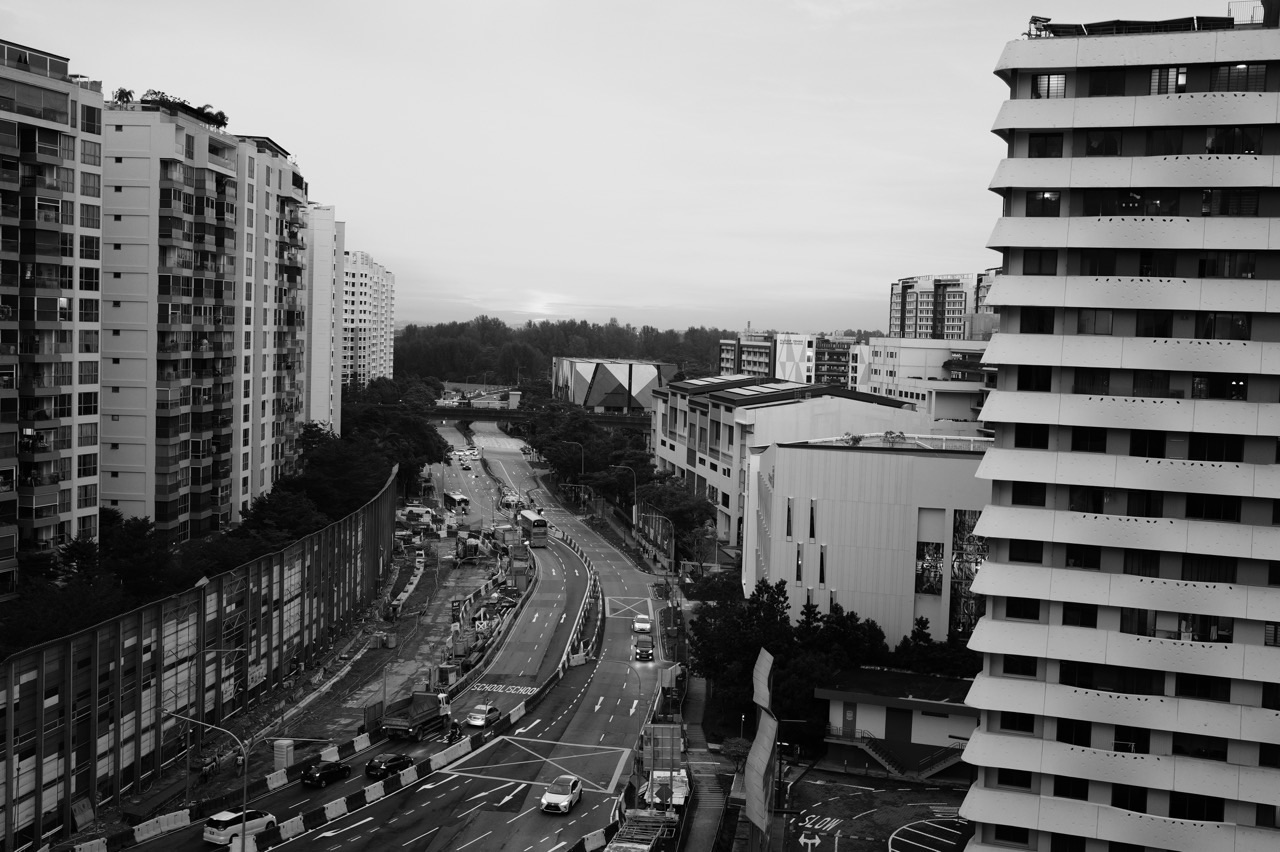
A child walking to primary school in Punggol in 2026 is not simply growing up in a finished town. The town is still being written around them.
That distinction matters. It is easy to think of development as scenery: another building, another station, another path, another cluster of offices beyond the familiar route home. But a ten-year change in a town can quietly become a ten-year change in a childhood.
By 2036, a child who is in Primary 6 today may already be a young adult. A child in Primary 1 may be approaching the end of secondary school or moving into post-secondary life. They will remember a Punggol in which some of the things we now call “new” had not yet become ordinary.
Punggol’s most interesting future may not be what is built here. It may be what becomes normal to a generation that grew up beside it.
2036 is a lens, not a promise
There is a useful discipline when writing about the future: separate what is happening from what is committed, and separate both from what we are merely imagining.
- Happening now: Singapore Institute of Technology has consolidated its main campus in Punggol, and Punggol Digital District is progressively filling with businesses and public activity.
- Committed: the Cross Island Line–Punggol Extension is targeted for 2032.
- Planned direction: Punggol continues to be shaped around a mixed-use, car-lite, green-and-blue planning model with work, education and community uses brought closer together.
- 2036 thought experiment: what these changes may feel like once a child has lived with them for a decade.
The distinction keeps the article honest. 2036 is not a forecast of every shop, job or technology that will exist. It is a long enough horizon to ask a better question: what kind of environment is a Punggol child being normalised to?
A university in the neighbourhood changes the meaning of “school town”
SIT’s Punggol Campus is not simply a university placed near housing. It sits inside Punggol Digital District and is deliberately designed to bring learning, research, industry and community into contact. SIT describes the campus as a living lab and the “University for Industry”; JTC describes the wider district as a place where education, industry and community converge.
For an adult, that can sound like planning language. For a child, it may become ordinary geography.
The university is not somewhere in another part of Singapore that appears only when one turns eighteen. Students, laboratories, events, companies and experiments exist within the same broader town in which children go to school, cycle, eat with their families and meet friends.
That does not automatically produce ambition, skill or opportunity. Proximity is not education. But proximity changes what can be seen. A distant possibility becomes part of the visual field.
A university can become less mythical when you have walked past it for years.
A business district beside home changes the meaning of “going to work”
Punggol Digital District spans about 50 hectares. JTC says it is expected to bring approximately 28,000 jobs closer to residents in Punggol and the north-east, with sectors including artificial intelligence, cybersecurity, robotics, fintech, machine learning and smart-city solutions.
In May 2026, UOB began moving staff into its S$500 million global technology and innovation centre at PDD. Nearly 400 employees started there on 4 May; UOB said more than 3,000 technology, digital and innovation employees would be based there by October.
This is where the demographic meaning becomes interesting.
Many of Punggol’s early families were accustomed to the town as a place from which adults travelled outward for work. The emerging district creates a different possibility: some children may grow up seeing substantial professional work happen inside the town itself.
The change is not that everyone will work in Punggol. They will not. The more subtle change is that the old mental map—home here, serious work somewhere else—becomes less absolute.
The town itself is becoming a classroom of systems
SIT says its Punggol campus uses around 20,000 sensors in an integrated building-management system. It includes a multi-energy microgrid, large-scale solar deployment, district cooling and living laboratories. JTC’s Open Digital Platform links systems across the wider district so that infrastructure can be monitored and used as a testbed for new urban solutions.
A child does not need to know any of that to cross the district.
But later, a Science lesson about energy systems, a Computing lesson about data, or a Geography discussion about sustainable cities can point to something physically nearby.
This is one of the quiet advantages of growing up in a changing place: abstractions acquire addresses.
Then transport changes the scale of the child’s world
The Punggol Coast MRT station has already changed access to the northern end of the town. The next major shift is expected in 2032, when the Cross Island Line–Punggol Extension is targeted to connect Punggol more directly towards Pasir Ris and the wider eastern corridor.
Transport infrastructure is usually discussed in minutes saved.
For a young person, it can be better understood as independence gained.
When a place becomes easier to reach, it becomes easier to imagine using it without an adult planning the journey. Schools, internships, work, friends, sports and cultural activities enter a larger practical radius.
A rail line does not merely shrink a commute. Over time, it can enlarge a young person’s usable Singapore.
What will still matter when the technology becomes ordinary?
It would be easy to turn this into an article telling children to learn coding because Punggol has a digital district.
That is too small an answer.
The technologies that seem advanced in 2026 will not necessarily be the technologies that distinguish a young adult in 2036. Tools move quickly. What lasts longer are the human capabilities required to understand and work with change: reading carefully, reasoning with evidence, representing problems, communicating with people who know different things, learning unfamiliar systems, recognising when an answer is weak, and being able to revise.
In other words, the future does not reduce the importance of foundations. It exposes whether they are real.
A town can become more advanced and still lose something
There is another side to development that deserves equal attention.
A good future Punggol is not simply the Punggol with the greatest number of jobs, sensors, offices or transport connections. Families also live by slower infrastructure: shade, water, places to walk, trees mature enough to remember, familiar food, playgrounds, sports, grandparents nearby, ordinary routes that become childhood memory.
The town has long been planned around its waterways and green connections. The more technologically significant Punggol becomes, the more valuable that balance may become.
A future worth having should give a child more possibilities without making the place they came from unrecognisable.
So what should a Punggol parent do with all this?
Probably less than the future industry would like us to believe.
There is no need to turn every seven-year-old into a miniature AI engineer. There is no reason to chase every new technology course. A child does not become future-ready by being made anxious about the future.
But there is value in allowing children to notice the town.
- Walk through Punggol Digital District and ask what a business district is for.
- Notice SIT and talk about what universities actually do beyond awarding degrees.
- When the new transport links arrive, let older children learn the map rather than merely being driven.
- Use the waterway, parks and public spaces often enough that development is experienced as a lived place, not a render on a planning board.
- When children ask about robots, AI, energy systems or buildings, follow the question before rushing to a class.
Curiosity is a better beginning than premature specialisation.
The child and the town are both unfinished
Perhaps that is the most interesting parallel.
Punggol is still becoming something. So is the child growing up in it.
We should be careful with both. Development needs direction without pretending the future is fully knowable. Education needs preparation without reducing childhood to preparation.
By 2036, many of today’s construction fences will be gone. New routes will feel old. Technologies that now deserve press releases may be invisible utilities. The university will have its alumni. Children who once watched all of this from the back seat may be using the district themselves.
They may not remember when Punggol “changed”.
They may simply remember it as home.
Planning notes and sources
This article uses 2036 as an editorial horizon, not as a claim that every future condition is fixed. Current and committed facts were checked against JTC’s Punggol Digital District overview, PDD’s official district site, Singapore Institute of Technology’s Punggol Campus information, and UOB’s May 2026 announcement. Future transport references should be read with the latest LTA project information as plans and delivery dates can change.
Return to the parent hub: What about Punggol?


