
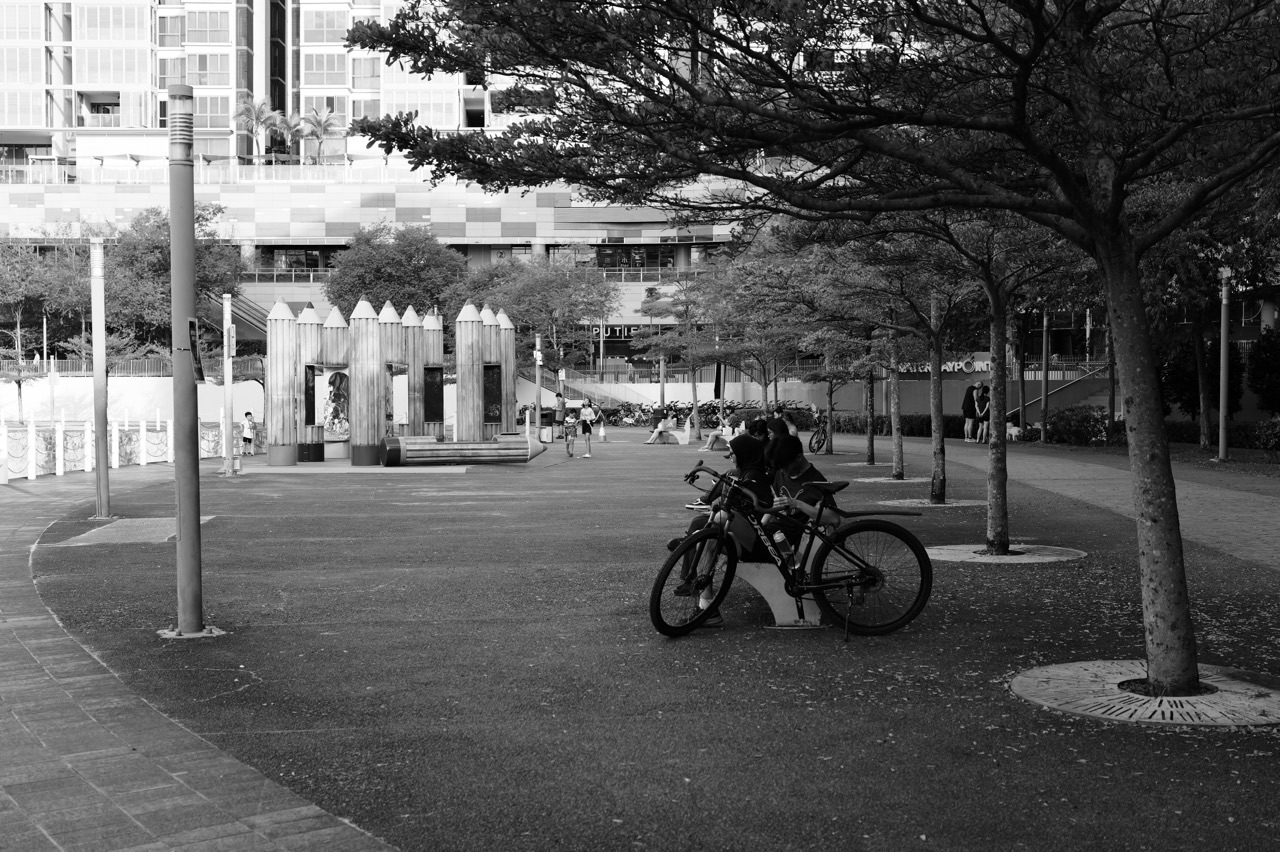
Punggol 2036 will almost certainly look richer in infrastructure than Punggol does today: more jobs, more rail, more university life, more technology, more visitors, more public amenities and more reasons to spend an entire day in the town. The harder Crazy Rich Punggol question is what should remain recognisable when all of that progress becomes ordinary.
Did you know? URA’s current North-East plan deliberately describes the region as “future-ready” with a “rustic charm”. That pairing is unusually revealing. Punggol Digital District can become one of Singapore’s most technologically advanced mixed-use districts while still preserving the 1.3 km Old Punggol Road alignment as a Heritage Trail, retaining four hectares of vegetation as accessible community landscape, linking into the 26 km North-Eastern Riverine Loop and keeping the waterfront public enough that people can still walk, cycle, sit, play and do very little without buying a ticket.
The Crazy-Rich Idea: Growth Is Only Wealth If the Town Keeps Its Best Freedoms
A town can gain buildings and still lose something important.
It can gain jobs but lose quiet. Gain retail but lose free space. Gain technology but lose privacy. Gain visitors but make everyday life harder for residents. Gain efficiency but flatten memory. Gain density but make a child’s independent movement more difficult.
The richer version of Punggol is not the one that maximises every measurable quantity. It is the one that keeps enough room for things whose value is harder to count.
Protect the Public Waterfront
Punggol’s waterfront is valuable precisely because so much of it belongs to ordinary public life. The promenade, park connectors, Waterway, Coney Island approaches and Punggol Point routes let people experience water without needing private ownership of the view.
As the town grows, that public edge becomes more valuable—not less. The wealth to protect is the ability to reach the water on foot or bicycle, sit beside it without paying, and still feel that the coast belongs to the town rather than only to the buildings facing it.
Protect the Right to Be Unproductive
Smart districts are very good at asking what space can do. A mature town should also protect places that do not need to justify themselves through output.
A shaded bench. A patch of rough greenery. A waterfront where nothing is scheduled. A trail that bends because the old road bent. A child looking at insects for twenty minutes. An older resident walking slowly without being in anybody’s way.
These are not failures of efficiency. They are part of liveability.
Protect the Town’s Memory
The Punggol Heritage Trail is important because it proves a future district does not have to erase the ground that came before it. The first 400 metres are already open, retaining the old road’s undulating terrain and coastal-forest character, while the full 1.3 km trail is intended to preserve mature greenery and reconnect the route toward Punggol Point.
A place becomes shallow when every generation sees only what its own generation built.
Keeping physical traces gives future children something to argue with: Why does this road bend? What was here before? Why did planners keep this tree? Who used this route when none of these buildings existed?
Protect Nature That Is Allowed to Stay Slightly Wild
Punggol’s richness is partly the contrast between highly managed urban systems and places that resist complete optimisation. Coney Island, conserved vegetation, mangrove trees, waterfront habitats and connected green corridors give the town ecological texture that cannot be recreated instantly after it is lost.
The smartest future is not one in which every square metre behaves like a machine. Some land should continue doing the slow work of shade, habitat, cooling, soil, water and memory.
Protect Independent Movement
A child who can walk or cycle safely to a station, library, activity or friend has more practical freedom than a child who needs an adult to drive every short journey.
PDD’s car-lite design, more than 1,500 bicycle parking lots, underground service infrastructure and pedestrianised public realm point toward one version of that future. The important test is whether those principles remain useful beyond renderings: comfortable in heat, legible in rain, safe at crossings and practical for actual families.
Protect Privacy as the Town Becomes Smarter
Sensors, digital twins, smart grids and automated services can reduce waste and improve operations. But capability is not the same thing as permission.
A genuinely advanced town should become better at asking what data is necessary, who can use it, how long it should exist and what happens when systems make mistakes. The richer smart city is not the one that sees everything. It is the one that knows what it does not need to see.
Protect Affordable Everyday Life
As Punggol gains offices, hotels, visitors and destination appeal, ordinary affordability matters more. Hawker food, public libraries, free waterfront space, neighbourhood shops, community facilities and accessible transport keep the town usable by people whose lives are not organised around premium consumption.
A place can look prosperous while becoming less useful to the people who made it a community. The richer outcome is growth that adds choice without making normal life feel increasingly priced out.
Protect the Ability to Change Course
By 2036, some technologies celebrated today will look ordinary. Some may look misguided. Some planning assumptions will turn out to be wrong.
The strongest systems therefore preserve reversibility. Flexible spaces, adaptable infrastructure, mixed-use districts and public realms that can support different activities give future residents room to correct today’s guesses.
That may be the most sophisticated kind of future readiness: not pretending to know the future perfectly, but leaving the town able to learn.
The Punggol 2036 Test
- Can a child still reach useful places independently?
- Can a family still spend a good afternoon without needing to buy much?
- Can an older resident sit comfortably in public?
- Can nature still feel slightly wild?
- Can the town explain what existed before the newest buildings?
- Can residents benefit from smart systems without surrendering unnecessary privacy?
- Can everyday food and services remain affordable?
- Can the waterfront still feel publicly owned in practice?
- Can the town adapt when today’s best ideas become tomorrow’s mistakes?
If the answer remains yes, then Punggol will not have preserved itself by refusing to change.
It will have protected something harder: the freedoms that made change worth having.
Current 2026 Sources
- URA — North-East Region, Master Plan 2025
- URA — Fun by the Water, Play Near Home
- JTC — Punggol Digital District Sustainability
- JTC — Punggol Digital District Community
The final Crazy Rich Punggol lesson is simple: a town becomes truly wealthy when progress gives residents more capability without taking away the ordinary freedoms that make the place feel like home.
By 2036, much of what now makes Punggol sound futuristic may be boring.
That is not an insult.
It is what successful infrastructure does.
Punggol Coast MRT will simply be a station people complain about when the train is crowded. The Cross Island Line–Punggol Extension, if delivered on its present 2032 target, will become part of the inherited map. Punggol Digital District’s offices will have ordinary Mondays. SIT will have graduates who remember the campus differently from the students arriving now. The robots may stop attracting phones. The hotel overlooking Coney Island will have guests who never knew it was once unusual for Punggol to have a hotel at all.
Children currently learning to cross a road with an adult will be making decisions for themselves.
The future rarely arrives looking like the future for very long.
This is why a town should decide what it values before novelty becomes normal.
Punggol will gain useful things over the next decade. More substantial employment close to homes. A university embedded in the district. New startup activity. A regional sports centre. New transport connections. A hotel. Public spaces at the coast. More reasons for people who do not live here to come here.
The mistake would be to judge the town only by how many things it manages to gain.
Growth has another ledger.
What remains easy to reach without paying for it? Where can a child move independently? What can still be rough? Which trees were allowed to become old? Can someone sit beside the water without being converted into a customer? Does a road remember where it used to go? Can a natural place remain natural enough to occasionally inconvenience us?
These questions sound softer than jobs and rail capacity.
They are not.
Old Punggol Road is a good example. The first part of the new heritage trail is already open, and the full plan preserves roughly 1.3 kilometres of its old alignment as an undulating walking and cycling route. The detail is modest beside the scale of the digital district.
But a road that no longer needs to carry cars can carry another kind of load.
It can tell a child that Punggol had a before.
Coney Island does something similar in a different register. NParks currently lists the park at 81 hectares, with more than 80 resident and migratory bird species recorded there. Near Beach Area C are two wild Paku Raja cycads whose natural timescale makes a ten-year urban plan look impatient.
The island is useful partly because it is not very useful.
It does not need to become an office, an event venue, a classroom or a fully polished attraction to justify its position beside valuable land. The mangrove is already doing something. The birds are already using it. A child discovering that the world contains places not arranged entirely for human convenience has learned something even if nobody issued a worksheet.
The waterway belongs in the same conversation.
It carries movement, recreation, weather, memory and the simple privilege of a longer route home because the evening is pleasant. New plans continue to connect public life back to the waterfront, from PDD’s promenade spaces to the regional sport centre’s water-sport ambitions.
The water is not empty space waiting for a better use.
It is already part of why the town works.
Then there is time.
The most sophisticated version of Punggol should not be the one in which every minute has been activated.
A town with work close to home, easier transport, walkable routes and more nearby amenities can return small pieces of time to families. That time can immediately be filled with more programmes, more productivity and more optimisation.
Or some of it can remain unused.
A child talks too long after school. Someone cycles without recording the ride. A family eats and stays by the water because nobody needs to be anywhere for another hour. A teenager has enough transport independence to go somewhere without turning the trip into a parental project.
That is infrastructure paying a human dividend.
Punggol should also protect its permission to be more than one thing.
The digital district should not make every child feel they ought to become a technologist. The university should enlarge the imagination of education without becoming the only respectable destination. A successful local employment node should give residents options without making leaving the neighbourhood feel like failure. Better connectivity should make the rest of Singapore more available, not less relevant.
A mature place creates possibility without prescribing a life.
That may be the most important thing to protect.
Not a particular skyline.
Not nostalgia for an earlier Punggol.
Not the novelty of being Singapore’s newest version of something.
Protect the ability of the town to give different people different good reasons to be here.
The student hurrying to class. The office worker who now has a shorter journey. The runner circling the waterway. The founder testing a machine. The grandmother at the hawker centre. The child who knows the quickest route home. The visitor looking from a hotel window toward an island they have never seen before. The bird that has no idea any of this is called Punggol Digital District.
A town becomes culturally rich when those lives can overlap without one of them consuming all the others.
By 2036, Punggol will almost certainly feel different from Punggol in 2026.
That is not the problem.
The question is whether a child growing up through that change will inherit more choices, more independence, more knowledge of where they came from, and enough quiet ground on which to decide what to do with all of it.
If the answer is yes, we will not have preserved Punggol by keeping it the same.
We will have preserved something harder.
Its capacity to remain home while becoming more of the world.
Source note. The 2036 horizon in this essay is a thought experiment, not a prediction of fixed outcomes. Current planning and project facts draw on URA’s August 2026 PDD overview, URA’s 2026 North-East recreation plan, NParks’ current Coney Island Park information, URA’s PDD urban-design guidelines, and the latest official project material from JTC and LTA. Dates and plans may change.


