
What education options are available in Punggol, Singapore, in 2027? Punggol families can choose among MOE primary and secondary schools, infant care, preschool, school-based and community student care, relevant special education pathways, independent and international schooling where eligible, tuition and enrichment, and post-secondary routes such as junior college, ITE, polytechnic and university. The Singapore Institute of Technology is already based in Punggol Digital District. Do not choose simply from a list of school names: begin with the child’s age, citizenship and actual educational needs, then verify the correct admission route, school or course, current year and practical commute.
This is the Education in Punggol parent guide for finding the right page quickly. It links the practical decisions: P1 registration and nearby primary schools; PSLE and Secondary 1 posting; preschool fees and vacancies; student care and 2027 SCFA; special educational needs and SPED schools; 2027 school holidays; school financial assistance; junior college choices; polytechnic and ITE; and SIT and adult learning. For live admission criteria, published school programmes and course entry requirements, use MOE SchoolFinder and CourseFinder, together with the responsible institution’s current notices. A helpful guide gives an answer first, tells you which details can change and offers the next action without making families read every article in the ecosystem.
- Child entering P1: Check the MOE registration year, phase, official home–school distance and balloting.
- Child completing PSLE: Read actual PSLE results, Posting Groups, school score ranges and six school choices.
- Child in K1/K2: Compare preschool vacancy, fees, ECDA support, MOE Kindergarten and KCare.
- Working-parent care: Find student care, confirm real vacancies and check revised 2027 SCFA.
- Child with academic strengths: Understand 2027 higher-ability provisions and Punggol View advanced modules.
- Child needing specialised support: Compare mainstream SEN support, SPED admissions and Pathlight 3’s future plans.
- Need fee help: Apply for MOE FAS through the official Student Finance System.
- Planning leave: Check 2027 MOE terms, holidays, school and care closures.
- School attendance difficulty: Start with safety, listening, school contact and appropriate support.
- Considering extra lessons: Compare actual tutor quality, group sizes, fees and learning needs.
- After secondary school: JC and A-Level choices or ITE/polytechnic course and admission planning.
- University and reskilling: SIT Punggol applied degrees, SITLearn and Digital District careers.
- Other school models: GIIS and OWIS in Punggol or MOE-approved home-schooling requirements where applicable.
- Still unsure? Start by identifying who owns the rule: MOE, ECDA, MSF, SEAB, the school or the course provider.
How to use this guide when you only have five minutes
Start with the child’s current stage rather than the most popular link. For a four-year-old, preschool eligibility, vacancies and working-parent care are more urgent than PSLE. For a P6 child, the confirmed score and Secondary 1 posting rules matter more than an article about university jobs. For a teenager finishing the SEC, the correct admissions exercise and exact subject-level results determine the next step. A parent who feels overwhelmed can reduce the problem to three questions: What decision must we make? Who controls the actual rule? What do we need to verify today?
Use the linked guides only after that question is clear. Read the answer-first opening paragraphs and quick checklist. The longer chapters explain mechanisms, exceptions, practical examples and consequences for ordinary Punggol households. If a detail can change, such as a vacancy, cut-off, fee or campus-opening date, click through to the official provider. This guide is a navigation room; it does not replace the live application system.
The education pathway from age three through adulthood
The common path begins with preschool or kindergarten, moves to Primary 1–6, then secondary education. Students progress through their subject-level learning and eventually toward junior college, Millennia Institute, polytechnic, ITE or other eligible routes. University and adult education provide further opportunities. The system is not one straight ladder with a single correct destination. Different programmes develop different strengths, and students can move through qualifications at different stages under the applicable admissions conditions.
Punggol provides important local pieces of that journey: primary and secondary campuses, libraries, transport connections, enrichment and student care, and a university at Punggol Digital District. Some other institutions lie beyond the town, so the family must consider daily travel. The useful question is what pathway fits the learner’s abilities, interests and circumstances now while preserving reasonable future options. A child should not be reduced to the reputation of a school, a posting label or one examination score.
Punggol primary schools and Primary 1 registration
Families searching for “primary schools near me” should use MOE SchoolFinder for current school profiles and the official Primary 1 registration service for the correct phase, distance categories and admission procedure. Punggol and nearby communities have several primary-school choices, including schools such as Edgefield Primary, Greendale Primary, Horizon Primary, Mee Toh School, Northshore Primary, Oasis Primary, Punggol Cove Primary, Punggol Green Primary, Punggol View Primary and others. A school name in a directory is not proof of an available place at your postal address.
The official one-kilometre and one-to-two-kilometre categories are administrative priority factors, not guarantees. Demand in a phase can exceed vacancies and lead to balloting. A family should compare eligibility, actual commute, school culture and after-school care. Students already in primary school who are moving house may need a different transfer procedure rather than P1 registration. The full Punggol primary-school admission guide separates these cases.
Primary schools should be compared on learning and daily life
A parent may be tempted to rank schools by past awards or hearsay. A more useful comparison asks how the school helps pupils develop reading, numerical understanding, scientific curiosity, friendships and confidence. Look at its actual curriculum programmes, daily routines, CCAs and learning support, then check whether they suit the child. A strong educational fit might be a school with an appealing programme or one with a simpler daily journey that preserves sleep and family time.
Try the route near the expected arrival time, including road crossings, LRT or bus transfers, rainy-day shelter and the correct school gate. Ask the school about P1 orientation and student-care enrolment as separate questions. Do not treat proximity on a map as an admission outcome. When a decision concerns a new HDB address, use truthful residence records and the official method for distance. These details matter more than an online ranking that cannot see your family’s circumstances.
Preschool, childcare, kindergarten and KCare
Parents of younger children need to distinguish infant care, childcare, ordinary kindergarten, MOE Kindergarten and Kindergarten Care. They serve different age groups and operating patterns, and a vacancy in one programme does not imply a vacancy in another. Begin with the child’s birth date, desired start month, hours of care and actual daily pickup route. Use a reliable official preschool search service, then ask the individual centre for a real offer and current fee sheet.
Subsidy eligibility varies by programme and household. A gross monthly fee may be different from what a family pays after approved assistance; deposits and separate charges also matter. The right centre supports language, early numeracy, social confidence, play and predictable care. An impressive worksheet collection alone does not prove good teaching. The Punggol childcare and preschool guide explains fee comparisons, ECDA support, KCare and how to evaluate a centre visit.
Student care when parents work beyond dismissal
Student care fills an important gap between the end of school and the time an authorised adult can collect the child. School-based and community-based centres can differ in location, transport, programme details and operating hours. A parent should ask how the child transfers from classroom to centre, what happens if the pupil does not arrive, who supervises homework and meals, and how the operator checks that the evening collector is authorised.
From January 2027, MSF’s revised Student Care Fee Assistance scheme has higher income thresholds for eligible families: S$6,500 gross household income for qualifying households of four or fewer, or S$1,625 per-capita income for households of five or more, alongside other conditions. This is not the same as school financial assistance or preschool subsidy. Read the student-care guide with SCFA and safe-pickup questions and obtain a current provider quotation before assuming a place or subsidy is secured.
PSLE results and choosing a secondary school
When a P6 student receives the official PSLE result, the family should understand the overall AL score, individual subject profile and eligible Posting Group, then build school choices using the current MOE rules. The historical cut-off range is a reference to an earlier cohort’s admissions; it cannot promise entry this year. Families should investigate schools whose programmes, subjects, CCAs, culture and travel are suitable, then put genuine preferences in the correct order.
The secondary-school choice guide explains Full SBB and school fit. For the result-day sequence and school posting deadlines, consult the PSLE results guide and the current MOE S1 Posting system. A child with a modest score can still develop meaningful strengths, and a child with a strong score may need support adapting to a new environment. Secondary school choice is a beginning, not a final judgement of ability or future employment.
What PG1, PG2 and PG3 mean under Full SBB
Singapore’s Full Subject-Based Banding framework distinguishes Secondary 1 Posting Groups from subject levels G1, G2 and G3. A Posting Group concerns the entry route; a subject level describes the depth at which a learner studies a particular subject. They are related but not identical. A student may offer different subjects at different levels under MOE’s published eligibility and progression rules. Parents should resist using a Posting Group label as though it were a permanent identity or complete measure of potential.
Schools also bring together pupils through common school experiences, CCAs and character-development opportunities. Ask the receiving school how it manages academic review, subject choices and student support. The Full SBB school-life guide connects ordinary school life to the academic framework. For a family navigating school choices after PSLE, these concepts should be understood before any assumption about future JC, ITE or diploma eligibility.
What changes after the 2027 SEC examination
The first Singapore-Cambridge Secondary Education Certificate cohort will take the new examination in 2027. MOE has announced a combined Post-Secondary Admissions Exercise beginning with results in January 2028, which differs from the former separation of several admission exercises. Parents of students from the 2026 O-Level examination cohort entering post-secondary education in 2027 must use the appropriate existing route for that year instead of assuming the new 2028 system already governs their application.
A student’s subject levels and qualifying results matter for the destination course. Parents should not try to convert an old aggregate using guesswork. The polytechnic and ITE pathways guide explains the different intake years and how to read course details. The larger lesson is to keep examination year, results year and intake year together in every application note. That one habit prevents many avoidable misunderstandings.
Higher-ability learners and the GEP changes from 2027
The old Gifted Education Programme is being phased out for new cohorts. From 2027, more pupils can benefit from school-based provisions that develop domain-specific academic strengths, with optional advanced modules at designated centres. MOE says around 10% of primary pupils will benefit from broader school-based opportunities, and the centres will offer advanced English, Mathematics and Science modules to suitable learners. Punggol View Primary School is one of the announced host locations.
This is not simply a new way of coaching children for examinations. The modules aim to develop curiosity, creative problem-solving and critical reasoning. The refreshed P3 identification process uses one stage and additional school evidence, with later opportunities as strengths emerge. Parents should focus on their child’s actual interests and learning rather than a status label. The 2027 GEP-changes and Punggol View guide explains the timeline, school roles and family travel considerations.
Learning support, special educational needs and SPED
Children learn and participate in different ways. Some benefit from targeted support in a mainstream school; others need an appropriate special education environment and curriculum. Families should consider actual cognitive, communication, sensory, mobility and adaptive needs with qualified professionals and the responsible school. A diagnosis alone does not determine the same destination for every pupil. School suitability depends on how the individual child can participate and develop.
Pathlight School 3 has a projected permanent Punggol location in 2032, but this is a future development, not an existing Punggol campus that guarantees a 2027 place. Parents need to use the current operating schools and their real admissions criteria. Read the Punggol SEN/SPED and Pathlight guide for mainstream comparisons, professional recommendations, screening and local referral support. Do not switch schools based only on a planned building date.
When a child is struggling to attend school
A child who repeatedly refuses school may be facing a difficult transition, illness, bullying, anxiety, a stressful commute or a learning need. Start with safety and a calm conversation; notify the school through its actual attendance process and contact appropriate staff to understand what is happening. A parent cannot diagnose the cause from one morning, nor should a child be forced to ignore a credible threat simply to improve the attendance record.
The school-refusal guide provides a practical route through observations, school contact, counselling, healthcare assessment when appropriate, and a reviewed return plan. This issue is separate from tuition. Extra lessons might address a defined academic gap, but they cannot substitute for protection from bullying or necessary health support. A successful response helps the child feel safe and reconnect with learning rather than simply obey a rushed instruction to go through the gate.
Financial assistance: three schemes parents confuse
Parents frequently search for “school subsidies” and encounter several programmes with different eligibility and administrators. MOE Financial Assistance helps eligible students with specified basic schooling expenses such as fees, approved books, attire, meals and transport. MSF Student Care Fee Assistance helps eligible working families pay for approved student-care arrangements. Preschool and KCare support follows separate age- and programme-specific rules administered through the relevant agencies.
These schemes cannot be treated as one general wallet. For the 2027 school year, the MOE FAS guide explains the Student Finance System and the national scheme’s core eligibility tests; the student-care guide explains SCFA’s different thresholds and centre requirements; and the preschool guide addresses ECDA and KCare distinctions. Ask the administrator how each approval is issued and which costs remain payable. Never expose family financial documents in public parent groups.
School holidays 2027 and care gaps
The 2027 MOE school year starts on 4 January for P1 and K1 pupils, with P2–P6 and K2 returning on 5 January under the published arrangements. Families should record the official March, June, September and year-end breaks as well as school-specific closure days. Working parents must then overlay actual centre operating hours and their own employment roster. A school holiday does not automatically mean the student’s care centre is open for the same hours.
The Punggol school-holiday guide lists the 2027 term and break framework, special closures and a childcare planning method. Build a shared calendar with the adult responsible for each afternoon, and confirm transport rather than assuming the ordinary school bus operates during the vacation. A healthy holiday includes rest, play, reading and selected enrichment where useful. The number of paid activities does not measure the educational value of the break.
The real Punggol school journey: LRT, MRT, bus and walking
A school in the same town can still be inconvenient from one HDB block and easy from another. A family near Punggol Coast may have a different route from a family near the east LRT loop. Do not estimate the full school-day journey by looking only at the nearest MRT station. Include the walk to the stop, transfers, the actual gate, rainy-day shelter and the time needed for pickup after CCA or tuition.
Try the journey at the time the child will actually travel. For younger pupils, the authorised caregiver and safe crossing matter more than saving a minute. Older students can gradually develop independent travel skills with preparation. The Punggol school bus, LRT and walking guide provides further route-planning questions. Where a campus has moved or will move later, verify the current address before using an old map. Transport decisions affect sleep, punctuality, meals and the ability to participate in school life.
Tuition and enrichment: solve a specific problem or choose not to enrol
Punggol families have access to private tutors, small groups, larger tuition classes and online lessons. The appropriate choice depends on what the child needs and how teaching occurs. A pupil who cannot read a Mathematics word problem correctly needs a different intervention from one who understands the concept but writes poor working. A student coping well may not need tuition. Compare the actual tutor, feedback quality, class size, fees, location and the effect on sleep and family routines.
eduKate offers small-group tuition in Punggol, but the advice should remain honest: enrol only after the student’s starting position is clear. The Punggol tuition-centre comparison explains how to evaluate classes and written fee terms. A good programme repairs or extends identifiable skills, checks independent understanding and makes the student less dependent over time. Extra worksheets without a diagnosis of the gap can consume hours without solving the problem.
International schools in Punggol
Punggol families considering an international-school curriculum can investigate GIIS SMART Campus and OWIS Digital Campus at Global Campus Village. They provide different curricula and admissions arrangements; a shared wider location does not mean identical fees, programmes or offers. Families should compare the child’s current grade, likely future educational destination, languages, actual subject sequence, fees and school travel. An age label such as Grade 6 should not be converted automatically into Singapore’s Primary 6 curriculum.
Citizenship and compulsory-primary-education rules may also affect whether a particular international route is legally available for a Singapore Citizen child. Do not assume a school brochure overrides MOE requirements. The GIIS versus OWIS Punggol guide explains curriculum and fee comparisons and points to current official admissions pages. An offer must be considered together with legal eligibility, a suitable academic pathway and a sustainable family budget.
Homeschooling and compulsory primary education
Some parents want more flexible learning or a tailored curriculum at home. In Singapore, home-schooling for a Singapore Citizen child subject to compulsory primary education is not simply a decision to withdraw from school. The family must understand the Compulsory Education Act, exemption framework and MOE’s current requirements. A home-learning timetable, private tutor or subscription to an online overseas school does not by itself create lawful exemption.
The Singapore home-schooling and MOE exemption guide explains how to ask the right questions about approved curriculum, parental responsibilities, assessment, PSLE where applicable and holistic development. Families should preserve the child’s existing lawful educational arrangements until the necessary decision is obtained. Home-Based Learning days arranged by an enrolled school are a different form of education and should not be confused with long-term home-schooling.
Junior college choices from Punggol
Some Punggol teenagers are interested in a more academic pre-university pathway through JC or Millennia Institute. The correct decision begins with eligibility for the actual intake and the college’s subject offerings. From the 2028 JC intake, MOE has announced a revised five-subject L1R4 qualifying aggregate, which must be understood under the new rules rather than inferred from historical L1R5 cut-offs. A qualifying score is not an assurance of a place at the most competitive college.
Colleges such as Anderson Serangoon, Nanyang, Tampines Meridian and Yishun Innova may be relevant to Punggol families, but the actual route and educational fit differ. The junior colleges near Punggol guide explains current campuses, CCA and subject choices, 2027/2028 admission distinctions and the future CJC relocation plan. Catholic Junior College’s projected Punggol campus is tentatively targeted for 2034; it should not be treated as a present-day local JC available for the next intake.
Polytechnics and ITE: choose courses before campus names
Singapore’s polytechnics and ITE colleges offer applied programmes in a wide range of areas. A course name and a historical entry score do not fully reveal what is taught. Students should read modules, practical components, required subjects, programme duration and progression opportunities. A learner interested in engineering may require different teaching and foundations from one interested in communication, culinary work, healthcare or digital services.
The polytechnic and ITE guide compares course discovery, the five polytechnics, ITE colleges and travel from Punggol, while distinguishing the 2027 JAE and the new 2028 PSE framework. Do not treat ITE as an educational dead end or a polytechnic diploma as an automatic university admission. Progression depends on the actual qualification, results, course mapping and current rules. The right route is one the student can enter, learn from and build upon.
SIT and learning for adults in Punggol Digital District
The Singapore Institute of Technology operates in Punggol Digital District and offers undergraduate degrees and continuing-education opportunities. An applied degree, a specialist certificate and a short course have different entry criteria, academic credit, costs and likely outcomes. A parent or working adult considering reskilling should identify the missing skill or qualification before selecting the programme with the most exciting title.
The SIT Punggol and adult-learning guide explains how to compare degree programmes, SITLearn courses, work-study and industry links, and the conditions that apply to funding or credit recognition. The district is a useful local learning environment, but its companies do not guarantee jobs to anyone who attends a course. Families can use its existence to stimulate curiosity in younger children while letting actual university applicants research specific admission requirements and realistic career goals.
The Punggol Regional Library and everyday learning
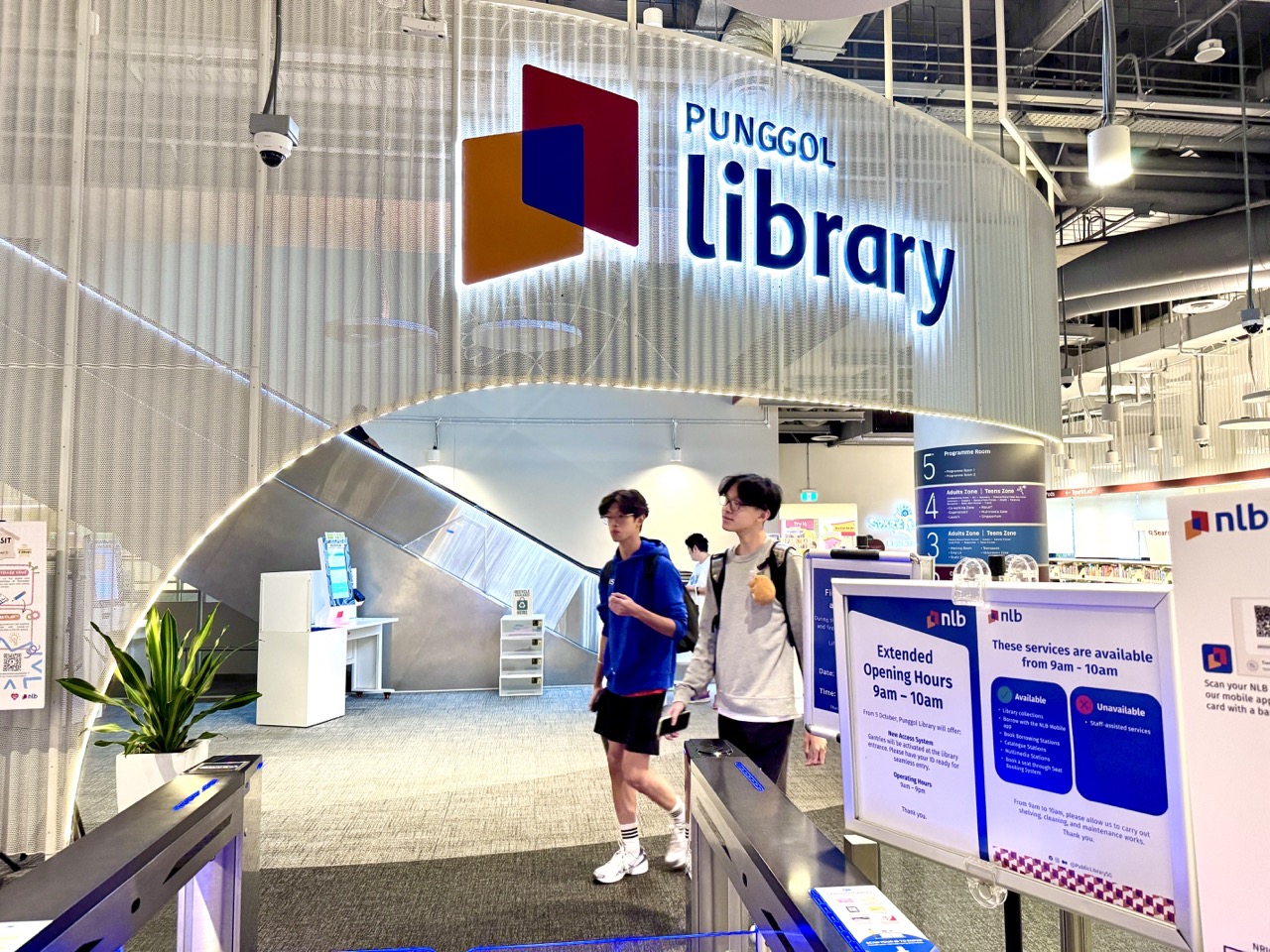
Education does not happen only during a school lesson. Punggol Regional Library at One Punggol provides books, reading areas, programmes and accessible resources under National Library Board arrangements. Parks, transport journeys, family meals and community activities can also become opportunities for learning. A child may practise measuring distances on a walk, asking questions about water systems, reading historical descriptions or explaining the difference between two viewpoints.
The Punggol Regional Library guide covers the practical local library experience. Parents should not treat every outing as a formal lesson, but meaningful conversations can connect school concepts to ordinary life. A student who can observe, describe, reason and ask better questions develops useful intellectual habits. Protecting curiosity can be more valuable than placing one more paid worksheet class into an already full week. The environment of Punggol can be a living resource when used thoughtfully and safely.
Parents Gateway, school notices and official communication
Many family decisions become confusing because the parent is reading a school notice, an official scheme page, a forwarded message and an old article at the same time. Parents Gateway can carry school-specific information such as consent, school activities and important communication. But the authoritative source depends on the question: MOE sets national admission rules, MSF administers student-care subsidies, ECDA oversees preschool matters, SEAB publishes examination information and the actual school controls ordinary reporting instructions.
Before acting, ask whether the source names the right child cohort, year and school. Check the link independently and avoid sharing Singpass credentials or sensitive records in group chats. Our Parents Gateway and school-communication guide explains these decisions. A parent can save a small directory of verified official links and use it every term instead of rediscovering the same information through rumours. Good administration reduces unnecessary educational stress.
A family that has two children at different educational stages
Imagine a Punggol household with a Primary 2 pupil and a Secondary 3 pupil. The younger child needs a stable after-school plan and may be developing reading confidence. The older child has subject-level requirements, CCA commitments and future post-secondary choices to consider. A parent who reads a general school article may feel that every topic is urgent. In reality, the children’s priorities are quite different.
Build two separate lines in the family calendar. For the younger child, track school, care, reading, sleep and the appropriate enrichment if needed. For the older, track actual learning gaps, upcoming assessments, subject choices and realistic future admissions. The family can share meals, weekend outings and conversations without trying to combine both children’s academic plans. The useful outcome is a manageable household system in which each learner receives the support they actually need.
A family moving into a new Punggol BTO estate
A move can change school routes, preschool availability and the location where grandparents or parents provide care. The family should first confirm the actual address, move-in timing and the educational stage of each child. A P1 applicant uses the relevant registration and home–school distance framework; a child already attending primary school may need a different transfer route. A student moving between care centres also needs a safe handover and clarity about any subsidy transfer.
Do not assume every school near the new HDB block has a vacancy or that an unfinished residential move qualifies the family to use a future address immediately. Use truthful information and the official admission or transfer service. Test transport on an ordinary weekday. The full Punggol neighbourhood guide can help with wider housing, transport and community decisions. Education planning works best when it responds to the real household move rather than an idealised map of the future estate.
The four-week family education decision method
Week 1 — identify the exact decision. Is it a school place, student-care vacancy, a financial-assistance application, extra teaching or a next-stage course? Locate the correct official administrator. Week 2 — collect facts. Read the relevant guide, verify current rules, gather the child’s actual work or results and ask the institution questions that only it can answer.
Week 3 — test daily life. Compare travel, timetable, costs, support and the child’s interests. Use a realistic backup when an admission or vacancy has not been confirmed. Week 4 — decide and document. Complete the authorised application or arrange a trial where appropriate, record the outcome and set a date for review. The four weeks are a planning structure, not a substitute for official deadlines or a promise that a school will decide within that period. The aim is to replace uncertainty with a clear next action.
A quick decision worksheet parents can keep
For any education choice, write seven headings on one page: Child’s stage; problem to solve; correct authority; current eligibility; options; daily family cost; next verified action. For example, a parent seeking student care might record P1 entry in 2027, need for safe supervision until 6 pm, MSF and school sources, intended start date, two verified centres, net fee after any approved subsidy and the date of the centre’s next reply.
The same worksheet works for Secondary 1 posting or a new tuition programme. For school posting, eligibility and historical score ranges matter; for tuition, the child’s actual learning gap and feedback matter; for post-secondary courses, modules and entry requirements matter. Do not invent a single universal scoring formula. The worksheet simply keeps facts separate from preferences and helps families avoid acting on an unverified assumption.
Frequently asked questions about education in Punggol
Which primary school is nearest to my home? Use MOE’s official school tools and the real address; do not rely on a broad estate-level list. Is a close P1 school guaranteed? No. Phase rules, vacancies and possibly balloting matter. Which secondary school can my child enter after PSLE? Check the actual score, Posting Group, current eligibility and school references. Do all Punggol schools offer the same programmes? No; use current individual school profiles.
Is there a polytechnic in Punggol? SIT is a university in the district, not a polytechnic campus. Is the new GEP at Punggol View? Punggol View is a designated advanced-module host, while school-based provisions remain available across schools. Is Pathlight School 3 already open in Punggol? Its permanent local campus is a future projected development. Do all families get student-care subsidy? No; MSF assesses eligible children and households. Must every pupil attend tuition? No; add support when the learner’s actual starting position shows a need.
How to read future announcements without making mistakes
Education policies can be announced years before every part is implemented. A school may have a planned new campus, an intake date that applies only to one cohort or a pilot programme that is later revised. Always distinguish announced, approved, under construction, open for applications, and operating now. These are different states. The Pathlight 3 planned Punggol campus and CJC’s tentative 2034 move are useful examples: both matter for future town planning, but neither should be described as an already available local placement for a child starting school next year.
Similarly, the 2027 SEC and 2028 PSE reforms affect particular cohorts, while older candidates may still use the existing route. When a search result says “latest”, check its actual date and the year the rule governs. A reader benefits when a guide makes the boundaries of the information explicit. That is why each linked article ends with current-source instructions rather than pretending all details are permanent.
Where the information comes from and what to check next
Core official resources: MOE SchoolFinder; MOE CourseFinder; P1 registration service; Secondary 1 posting; MOE school calendar; MOE Student Finance System; MSF Student Care Centre Locator; 2027 SCFA guidance; LifeSG Preschool Search; MOE SEN parent guide.
How to navigate eduKatePunggol: use the topic-specific articles linked above for the decision in front of the family. For a wider neighbourhood introduction, visit The Complete Punggol Guide. To understand why SchoolFinder and CourseFinder provide evidence rather than an educational ranking, read our school-search guide. Prepared in November 2026. Admission windows, school programmes, vacancies, fees, transport and future openings can change; the responsible institution’s current published information remains authoritative.


