
How many MOE primary and secondary schools are in Punggol, and where are they? Punggol town has 11 mainstream primary schools and four mainstream secondary schools. For Primary 1, the correct school depends on your child’s eligibility, the official home–school distance calculation, phase vacancies and sometimes balloting; the closest gate is not a guaranteed school place. For Secondary 1, the child’s PSLE score, Posting Group eligibility, school preferences and allocation rules matter. Use MOE SchoolFinder and the school’s current official website for the final address and programme details. This directory gives parents a practical location-first starting point, not an academic league table.
The eleven Punggol primary schools are Edgefield, Greendale, Horizon, Mee Toh, Northshore, Oasis, Punggol Cove, Punggol Green, Punggol View, Valour and Waterway. The four local secondary schools are Edgefield Secondary, Greendale Secondary, Punggol Secondary and Yusof Ishak Secondary. Important name warning: Punggol Primary School, despite its name, is at 61 Hougang Avenue 8 in Hougang; do not confuse it with a primary school inside Punggol town. Addresses and transport routes are verified against published school information available in November 2026, but families should confirm current gate and journey arrangements before any application or travel.
- 11 primary schools: see full names, street addresses and neighbourhood distinctions below.
- 4 secondary schools: use the local list, then compare current subjects, programmes, CCAs and realistic route.
- School name trap: Punggol Primary School is in Hougang, not Punggol new town.
- Primary admission: check the applicable P1 phase, citizenship rules, official distance category and current vacancies.
- Secondary admission: check actual PSLE Score, Posting Group, six genuine choices and the official posting results.
- Journey: compare home-to-gate walking, LRT, buses, school bus, weather shelter and evening return after CCA.
- New HDB home: verify the address officially permitted for registration; planned move-in does not automatically establish priority.
- After school: student care and school transport need separate confirmed applications.
- Decision: assess both school fit and sustainable family logistics; historical balloting is not a quality ranking.
- Official links: MOE SchoolFinder, P1 Registration and S1 Posting.
Why an address-based school guide is different from a ranking
Searching “best primary school Punggol” produces results that mix school names, old balloting data and subjective opinions. Parents deserve a clearer question: which schools are in reach, which are available through the child’s admission route, and which are likely to suit the learner? Address information answers the geographic part. It does not measure educational quality. Historical Phase 2C applicants can show past demand but cannot guarantee future admission, nor prove that a school without balloting provides weaker teaching.
Use three separate columns: eligibility, practical journey and school fit. Eligibility is established through official application rules. The journey is measured from the actual HDB block to the school’s gate, including transfers. Fit includes teaching approaches, programmes, CCA interests, support and the child’s experience. A reliable choice uses all three without pretending that one metric settles everything.
Punggol primary school directory: all eleven addresses
This alphabetical directory provides the address starting points for the town’s eleven mainstream primary schools. It is deliberately not numbered as a popularity ranking. A street address identifies a destination; it does not establish the official home–school distance category for P1 registration. Use MOE’s own tools for that administrative calculation, especially when your home is close to a 1 km or 2 km boundary.
Parents should also check whether the school operates more than one gate, which access point is appropriate for a child or visitor, and the school’s current arrival and dismissal arrangements. Those can differ from the location of a map pin. The address list also helps families avoid mixing adjacent schools with similar names, such as Edgefield and Greendale, or mistaking the separate Punggol Primary campus in Hougang for a Punggol-town option.
| School | Published school address |
|---|---|
| Edgefield Primary School | 41 Edgefield Plains, Singapore 828869 |
| Greendale Primary School | 50 Edgedale Plains, Singapore 828848 |
| Horizon Primary School | 61 Edgedale Plains, Singapore 828819 |
| Mee Toh School | 21 Edgedale Plains, Singapore 828867 |
| Northshore Primary School | 30 Northshore Drive, Singapore 828671 |
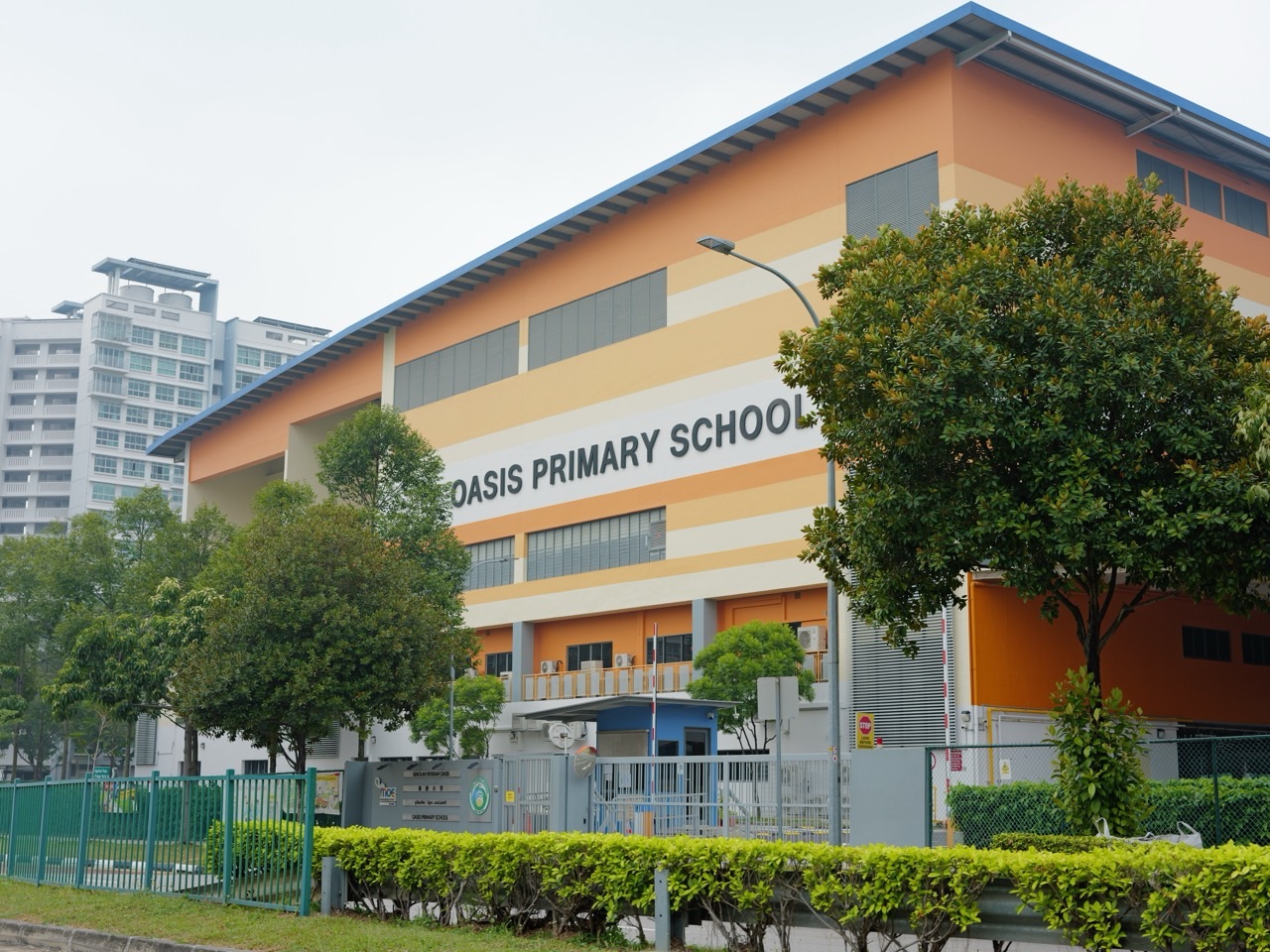
| Oasis Primary School | 71 Edgefield Plains, Singapore 828716 |
| Punggol Cove Primary School | 52 Sumang Walk, Singapore 828674 |
| Punggol Green Primary School | 98 Punggol Walk, Singapore 828772 |
| Punggol View Primary School | 9 Punggol Place, Singapore 828845 |
| Valour Primary School | 49 Punggol Central, Singapore 828728 |
| Waterway Primary School | 70 Punggol Drive, Singapore 828802 |
Punggol secondary school directory: the four local campuses
Punggol has four mainstream secondary schools in the list below. They are different institutions with their own course offerings, subject combinations, CCAs, applied programmes, support arrangements and transportation patterns. A child should not be assigned to a preferred school solely because the name resembles a primary school they know. Primary and secondary campuses can have separate addresses and admission procedures.
For Secondary 1 placement, a family must establish the child’s PSLE score, Posting Group eligibility and school-choice process. Under Full Subject-Based Banding, Posting Groups for entry are not the same thing as G1/G2/G3 subject levels taught later. Once admission eligibility is understood, compare real school content and commute. A school far enough to require a transfer may still be worthwhile for a particular pupil, but the family should test the route and return after CCA rather than relying on a nominal distance.
| School | Published school address |
|---|---|
| Edgefield Secondary School | 36 Punggol Field, Singapore 828814 |
| Greendale Secondary School | 51 Edgedale Plains, Singapore 828866 |
| Punggol Secondary School | 51 Edgefield Plains, Singapore 828870 |
| Yusof Ishak Secondary School | 8 Sumang Walk, Singapore 828676 |
The most common Punggol school-name mistake
Punggol Primary School sounds as though it must be in the modern Punggol town. It is not. The school’s official contact page gives 61 Hougang Avenue 8, Singapore 538787. The address belongs to Hougang and is reached through a different local transport context. Families moving into new Punggol blocks should not use the school name as a shortcut for locating it. This error is especially costly when discussing P1 distance or testing a morning journey.
There is no problem with considering a school outside the estate if it is eligible and suitable. The problem is relying on a mistaken place. Verify the street address first, then use the official registration and transport tools. For a cross-estate school, the family should investigate extra travel, student care and early morning commitments. Treat every educational directory as a discovery tool, not a substitute for a current school contact page.
Edgedale Plains: a cluster of different primary schools
Greendale Primary, Horizon Primary and Mee Toh School have addresses on Edgedale Plains, yet they are separate schools with different campuses and programmes. A visitor can travel into the same general local neighbourhood and still need to reach a different gate. This is why a parent should specify both the school name and postal address when organising a visit, especially when a caregiver receives instructions through a phone message.
For an application, do not merge three school profiles because they share a street. Check their individual MOE SchoolFinder records and P1 admissions information. For daily life, ask whether a child needs to cross a main road, navigate a sheltered path or use a feeder service. A family with siblings at two separate schools should write down two pickup points and timing constraints. Geographical clustering can be useful without making any admissions outcome automatic.
Edgefield Plains and the practical difference between two addresses
Edgefield Primary and Oasis Primary are both on Edgefield Plains, with official published addresses at numbers 41 and 71 respectively. Punggol Secondary is also on Edgefield Plains at number 51. The shared street does not mean these institutions have one reception, one timetable or the same entry gates. A parent who has visited one may still need to inspect a different block-to-gate route for another.
Oasis Primary’s 2026 official contact page identifies 71 Edgefield Plains, Singapore 828716. Older third-party school lists sometimes display a different street location despite the same postal code; use the institution’s maintained contact page when there is a conflict. In practice, write the school name, street number and postal code together. A child’s normal after-school transfer to student care should be arranged with the actual school and operator, not assumed because another nearby campus offers a similar service.
Northshore Primary: why the north-side route matters
Northshore Primary School’s published address is 30 Northshore Drive, Singapore 828671. For families living in Punggol’s northern neighbourhoods, the school may be an important local option. But “Northshore” as a neighbourhood name is not an official guarantee that every nearby housing block is within a particular P1 distance band. The official home–school calculation remains necessary for registration.
Parents should inspect morning travel from their actual building, including any LRT connection or bus. A walk that seems simple on a sunny weekend may be uncomfortable in heavy rain or when the household is managing a younger sibling. Ask the school for the correct reporting gate and the first-term orientation programme. A child arriving rested and calm has a better starting point for learning than one whose route has been planned using the most optimistic possible time.
Punggol Cove Primary and Yusof Ishak Secondary in Sumang Walk
Punggol Cove Primary School’s address is 52 Sumang Walk, while Yusof Ishak Secondary is at 8 Sumang Walk. They are different schools serving different ages, and their relative proximity to a particular home should be verified rather than inferred from the shared street name. Families with children at both levels may be tempted to combine pickups, but dismissal and CCA schedules can differ substantially.
A secondary student may eventually travel independently, while a younger primary pupil may still require a named caregiver. Plan those journeys as separate routes before deciding whether one adult can manage both. For school selection, use P1 registration and S1 posting rules separately. The existence of a secondary school near a primary school does not create automatic progression from one to the other. Confirm each school’s official requirements and actual attendance instructions.
Punggol Green, Punggol View, Valour and Waterway
Punggol Green Primary is at 98 Punggol Walk; Punggol View Primary at 9 Punggol Place; Valour Primary at 49 Punggol Central; and Waterway Primary at 70 Punggol Drive. These names may sound like a single town-centre cluster, but the street-level routes and nearby transport differ. A family needs to verify each campus from its actual home rather than assume that every name beginning with “Punggol” is beside the MRT interchange.
Waterway Primary’s maintained website identifies Kadaloor LRT as the nearest LRT station and publishes school-specific information on office hours, bookshop and student care. That kind of practical school page is more useful than a general list when organising real life. Use the directory to shortlist, then the school page to confirm gates, current bus information and any changes before term starts.
How the Punggol LRT connects school journeys
LTA describes the Punggol LRT as two loops serving residential neighbourhoods and connecting them with Punggol MRT on the North East Line and the bus interchange. As of its current public overview, the Punggol LRT has 14 stations. Different schools are nearer to different stops, but the optimal route depends on the child’s home, direction of service, actual school gate and whether a connecting bus or walk is needed.
Use the LTA Sengkang–Punggol LRT guide and its journey-planning tools. Avoid declaring a universal five-minute walk or specific station-to-school time without measuring it for the destination and date. The child’s safety, crowding, traffic crossings and late-afternoon return are part of the decision. A route with one reliable transfer can be preferable to a shorter-looking route requiring several uncertain connections.
Why the bus route should be confirmed with the actual operator
Singapore buses are useful for completing school journeys, but route patterns, stops and traffic conditions can change. A family may read an old post listing a particular service beside a school and assume it is still the best route. Check LTA’s current journey planner and the bus operator’s published information. If the school offers an appointed school-bus service, ask the school about the current operator and how routes and fares are agreed.
A school bus is not automatically the same arrangement as a public bus. Contracts can set fees, pickup points, notice periods and service days. The family should verify who supervises the child, what happens if the bus is late and whether an adult is required at drop-off. A primary pupil should not be left to solve a missed-bus situation alone. The school directory helps find the right destination; the transport provider controls the operational route.
School gates matter more than map pins
A mapping service may put its marker at the centre of a school compound while actual students enter through a gate on another side. That can change the walk from the nearest block, carpark or bus stop, and it matters when a grandparent or school-bus driver arrives. A parent should follow the school’s approved gate instructions, not a random shortcut through a neighbouring property.
During a school visit, note the actual entrance, safe crossings, pickup waiting area and any restriction on private vehicles. Consider whether the child knows whom to contact if the usual gate is temporarily closed. Do not take photographs of identifiable children or school security arrangements without permission. The objective is a predictable and lawful route that a family can practise. A few extra minutes spent verifying the correct gate can prevent an entire term of confusion.
How to check the official P1 home–school distance
Primary 1 registration uses official criteria that may include home–school distance. The bands commonly discussed by parents are within 1 km, between 1 and 2 km and beyond 2 km, but the applicable priority rules depend on registration phase and other criteria. An estimate from a general map is not the official administrative result. Neither is an assertion from a relative who lives a few blocks away.
Use MOE’s P1 registration service to establish the distance result and follow the rules for the actual residence. Keep a dated record of the official address and applicable year. Do not use a planned future address or a relative’s home unless the current MOE rules permit that specific arrangement and it is truthfully documented. A school place is determined through the formal process, including vacancies and ballot outcomes where applicable.
Historical P1 balloting should be read as history
Parents often compare the previous year’s Phase 2C applicants and available places to estimate competition. This information can be useful context, but it does not establish that one school is academically superior or that an applicant will face an identical ballot next year. New HDB completions, changed family choices and phase eligibility can alter the distribution of demand. Never turn a historical number into a claimed current vacancy.
Our earlier eleven-school guide includes dated Phase 2C figures, clearly marked as historical. For an actual application, use the current MOE portal. If a school previously balloted, plan a realistic alternative. If it did not, avoid assuming a place is guaranteed. The child’s experience over the next six years depends far more on sustained learning and family support than on whether a popular school happened to ballot in one year.
Four secondary schools do not mean only four choices
A Punggol child can consider eligible secondary schools outside the town, subject to the relevant admission process. The four local schools are a useful starting group because transport may be manageable, but school fit can justify a different commute. Families should look at actual programmes, CCAs, subject options, school culture and academic support rather than rule out every location beyond the town boundary.
The student’s official PSLE score and Posting Group eligibility govern which choices are available. Historical score ranges are reference points, not guaranteed cut-offs for a future intake. In the standard S1 posting process, families rank six schools according to actual preference. A sensible list includes genuinely acceptable options, balancing aspiration with realistic prior admission information. See the Punggol Secondary 1 choice guide for the admissions mechanism.
Full Subject-Based Banding and the school’s subject menu
Students entering Secondary 1 under Full Subject-Based Banding may take subjects at G1, G2 or G3 levels according to the relevant conditions. The Posting Group used for entry is not necessarily the level at which every subject will be taught, and schools may differ in subject offerings or later combinations. Families should check MOE SchoolFinder and the receiving school’s current subject information rather than assume that all four Punggol secondary schools provide identical upper-secondary courses.
A child interested in Art, computing, Humanities, science or Additional Mathematics should look at the actual pathway and prerequisites. A programme listed at one point in time may change before the child reaches upper secondary. Do not lock a twelve-year-old into a rigid career plan, but make sure the chosen environment allows meaningful development of known interests. Combine subject research with practical questions about learning support and commute.
New BTO housing estates and school planning
New homes in Punggol Northshore, Matilda, Sumang and other areas change the everyday routes families use. A household considering a property purchase or expecting a BTO handover may be tempted to make schooling plans based on an advertised proximity to a campus. That can be a useful reason to investigate, but it is not proof of P1 registration priority or a vacancy. A school may be close to the estate name while the specific block has a different official distance band.
Before committing to a school decision, establish the address the family is legally entitled to use, check the current admission criteria and compare the walk from the completed home. If the move is not yet final, keep a realistic backup. For a child already enrolled in school, review the correct transfer service rather than using the P1 registration procedure by mistake. Housing and education planning interact, but an estate development announcement cannot override MOE rules.
Two children, two campuses and one pickup adult
Imagine a family with a P2 pupil attending a primary school near the east LRT loop and a Secondary 1 student at a campus near Sumang Walk. The parent sees both schools on a town map and assumes a single pickup circuit will be easy. But the younger child may finish earlier, the teenager may have CCA, and the adult’s workday may end at a fixed time. Distance alone does not settle whether the arrangement can work.
Make a weekly grid including the school gate, dismissal time, CCA changes, student care and the named adult who will receive each child. Test travel when the school is operating and when it rains. If the schedule has an impossible overlap, arrange authorised alternate care before the school year begins. The most important measure of a local education system is that the child is safe and can learn, not how many campus names can fit on one map.
Student care is a separate availability question
A family may secure a primary school place and then discover that the associated student-care centre has a waiting list. School admission and after-school care enrolment are separate decisions, often administered through distinct procedures. A campus location near home may be attractive, but the parent still needs to know what happens between dismissal and the return from work.
Ask the school whether it has a school-based centre, which operator manages it, how to apply and whether a place is available for the child’s year. Community-based care can also be considered, but then the transfer from school to centre must be safe and documented. For eligible families, MSF’s Student Care Fee Assistance may reduce the cost subject to conditions. Use the Punggol student-care guide for the distinct application and 2027 subsidy criteria.
School finances and transport subsidies
School location can affect the household budget through bus fares, travel cards, meals and the need for care when parents work. Even a relatively close campus may involve paid school transport if no adult can accompany a young child safely. Parents should itemise these costs alongside school supplies rather than compare education purely through tuition or uniform prices.
Eligible families can ask about the MOE Financial Assistance Scheme, which includes specified support for school fees, textbooks, attire, meals and certain transport expenses. Eligibility and benefit delivery depend on current official conditions, and a scheme approval should not be assumed before it is issued. Ask the receiving school about any relevant transport assistance and whether it applies to the actual mode used. Read the Punggol 2027 MOE FAS guide to keep school aid separate from student-care aid.
What to ask at school visits and open houses
A parent does not need to ask every question about school reputation. Bring a small list connected to the child’s actual life. How do new students settle in? What are the basic arrival and dismissal routines? How does the school support pupils who are uncertain about reading, Mathematics or friendships? Which subjects, CCAs and distinctive activities are currently offered? How are parents informed of schedule changes and student-care arrangements?
Ask the child what they notice, too. A pupil may respond strongly to the environment, opportunities or the way older students describe school life. An open house cannot guarantee admission, and a single visit may not capture an ordinary school day. Record the date and the information that actually changes a decision. The school’s official website remains the reference for current administrative details, while impressions from the visit can help judge family fit.
A simple way to compare schools without a league table
Create a row for every eligible school and five columns: admission route, home-to-gate journey, relevant subjects or programmes, after-school routine and questions requiring confirmation. Use “confirmed,” “needs checking” or “not suitable” rather than inventing a universal score. The final shortlist should reflect what the child needs and what the family can sustain. A popular school that cannot reasonably be reached every day may not be the best fit for that child.
Be honest about uncertainty. A school’s 2026 admission range is historical, not a 2027 guarantee. A planned bus service is not a confirmed place. A stated programme does not mean the child will automatically join it. A comparison becomes useful when it keeps facts, hopes and unknowns apart. This method reduces argument between family members because it gives everyone a common evidence base.
Walking to school and the child’s independence
A child does not become ready for independent travel merely by reaching a particular birthday. Readiness depends on road-crossing skills, route complexity, ability to seek help, familiarity with transport and the family’s safety assessment. A younger pupil may need adult accompaniment, while an older student can gradually practise a consistent route. The correct pace is individual.
If the child will walk, identify safe crossings, a clear meeting point and the route to use if the usual path is blocked. Practise without rushing and establish a simple contact plan. Avoid teaching shortcuts through restricted areas or asking a child to wait alone in an isolated location. For public transport, ensure they know the correct stop and what to do if they miss it. The goal is reliable independence, not proving that the child can manage the longest possible journey without support.
The school-day plan when transport breaks
A missed bus, LRT delay or heavy downpour can disrupt the most carefully planned journey. Parents should know how the school handles late arrivals and whom to contact if the child is delayed. A younger child needs a safe adult-directed plan rather than an instruction to keep trying unfamiliar routes alone. For a secondary student, teach a few verified alternative options and the importance of seeking assistance when uncertain.
Keep emergency contacts private and accessible. If the family uses a school bus, confirm the operator’s procedure for missed pickup, substitute drivers and change notifications. Do not send money or disclose a child’s identity to someone claiming to be a new driver without verification. Good transport planning is partly routine and partly resilience: the child and caregiver know what to do when the first plan cannot operate as expected.
A four-week 2027 school-location planning method
Week 1 — confirm the child’s stage. Establish whether the question concerns P1 registration, a transfer, PSLE posting or a future secondary choice. Record the official admission route. Week 2 — create the map and shortlist. Use the eleven-primary and four-secondary address lists, confirm relevant schools in SchoolFinder and identify genuinely eligible options.
Week 3 — test real routes. Visit the relevant area, check the school gate, public transport, bus service, student care and late-afternoon return. Week 4 — decide and document. Compare teaching fit with the journey and household cost; follow the actual application deadline, keep alternatives and plan pickup responsibilities. The schedule is a family organisation tool, not a promise that MOE will complete an admissions decision in four weeks. Use current rules wherever they supersede older general advice.
Worked example: a Northshore family choosing Primary 1
A family moving into Northshore sees a nearby primary campus and assumes it is the automatic destination. The parents begin by verifying the address permitted for P1 registration, then check the official home–school distance category and phase conditions. They also identify other eligible schools with journeys that might be workable if the preferred school is oversubscribed.
They investigate learning programmes, student care and the actual walk from the new block rather than simply quoting the school’s name. The move may not be final when the application period begins, so the family checks what the official residence rules allow instead of borrowing another address. This approach does not promise a place, but it gives the child a realistic start and prevents family decisions being built on a misunderstanding of proximity.
Worked example: two secondary schools with different trade-offs
A Punggol student considers one local secondary school with a shorter journey and another offering an attractive programme. The child and parents visit both school pages, compare their current subjects and CCAs, and test the home-to-gate route. The longer commute may still be worthwhile if the student will genuinely use the programme and can manage the return after late activities.
The family checks the child’s actual PSLE Posting Group and the relevant historical ranges. It does not treat either school’s previous cut-off as a fixed admission score. The final six-school list includes realistic options in genuine preference order. This example shows that a location directory is most useful when it starts the conversation rather than pretends to finish it. The actual child should remain at the centre of the decision.
Frequently asked questions
How many primary schools are in Punggol? Eleven mainstream primary schools in the town, listed above. How many secondary schools? Four mainstream secondary schools. Is Punggol Primary School in Punggol? No; its official address is 61 Hougang Avenue 8. Does living within 1 km guarantee a P1 place? No, admission depends on phase, priority and vacancies, with balloting in relevant cases.
Can my child enter a secondary school beyond Punggol? Yes, subject to eligibility and the official S1 posting process. Is an LRT stop the same as a school gate? No; confirm the actual walking route. Does a school place include student care? Not automatically. Which school is best? The one that genuinely fits the child, admission requirements and a sustainable family routine—not a universal league-table position.
Official sources and further Punggol reading
Official: MOE SchoolFinder; P1 Registration; S1 Posting; LTA Punggol LRT; Oasis official address; Waterway official visitor and transport information; Punggol Primary, Hougang address.
Related guides: All 11 Punggol primary schools; All four local secondary schools; School buses, LRT and walking routes; Complete 2027 education guide. Prepared in November 2026. The address directory is for finding and comparing schools; it is not a representation of live school vacancies, admission eligibility or guaranteed journey times.


