
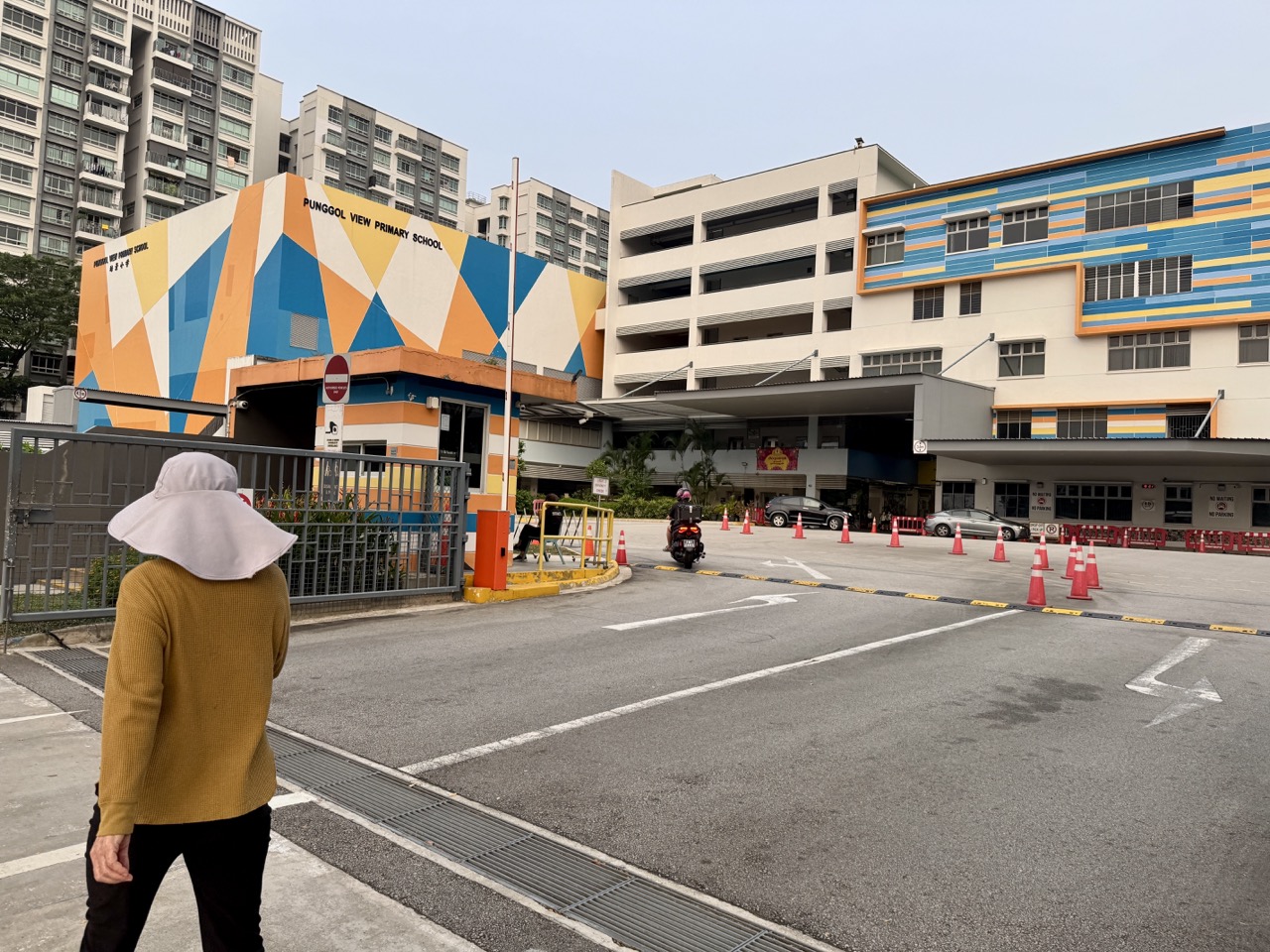
What changes in Singapore’s 2027 Primary 1 registration exercise, and what should Punggol parents do differently? The Ministry of Education (MOE) has announced two changes that take effect in the 2027 P1 Registration Exercise for children entering Primary 1 in 2028. First, most primary schools will reserve 60 places for Phase 2C, up from 40. Schools with fewer than 180 P1 places will retain 40. Second, 12 schools in neighbourhoods with significantly less public housing will divide their Phase 2C places into two tracks: one for children living within 2km and one for children living more than 2km away. Within each track, home-school distance will not determine priority. The 2027 changes are confirmed; the detailed 2027 registration dates have not yet been published.
For Punggol families, the key point is that none of the 12 two-track schools is located in Punggol. The general increase in Phase 2C places applies to most primary schools nationally, including the wider registration system families use when considering a school outside their immediate neighbourhood. The ordinary phases, sibling priority, alumni and community-affiliation criteria remain important. This guide explains who may register, how the new Phase 2C allocation works, which schools are affected, why balloting may still happen, what families should prepare and how to build a sensible school shortlist without treating any distance or previous-year vacancy figure as a guarantee.
- The changes apply to the 2027 registration exercise for children entering P1 in 2028.
- Most schools reserve 60 Phase 2C places, up from 40; schools with fewer than 180 P1 places retain 40.
- Phase 2B remains at 20 reserved places; the announced changes focus on Phase 2C.
- Twelve specified schools will split Phase 2C places into two tracks: within 2km and beyond 2km.
- Within each track at those 12 schools, distance priority does not apply; balloting may still occur.
- Singapore Citizens have priority over Permanent Residents; PR applicants are considered after SC applicants across both tracks are admitted.
- Unused places in one track can flow to SC applicants in the other track under the announced arrangements.
- The 12 schools are mostly in Bukit Timah and Marine Parade, not Punggol.
- MOE has said the changes go ahead in 2027 with no transition period.
- The other registration phases and their eligibility criteria remain unchanged under the announcement.
- 2027 application dates and portal instructions must be checked when MOE publishes the next exercise details.
- Official starting point: MOE P1 Registration Portal.
Which children register in 2027 for P1 in 2028?
The P1 registration exercise in 2027 is for children entering Primary 1 in January 2028. Based on the usual six-year-old cohort rule, the expected birth-date range is 2 January 2021 to 1 January 2022, inclusive. Parents should verify the eligibility dates on MOE’s 2027 portal once it is updated. Do not use the dates for the 2026 exercise, which applied to a different birth cohort.
Singapore Citizens and Permanent Residents use the national P1 registration process for mainstream primary schools. International students follow a separate route and timeline. If the child has unusual citizenship, residency, overseas-schooling or age circumstances, consult MOE directly rather than assuming the standard phase applies.
The first change: 60 places for Phase 2C in most schools
Phase 2C is the phase for children who do not qualify under the earlier priority phases. From the 2027 exercise, most primary schools will reserve 60 places for this phase instead of 40. Schools with fewer than 180 P1 places will retain 40. MOE introduced this change to widen access for families without prior connections to a school.
The increased reserve does not mean every applicant will receive a place, nor does it eliminate balloting. A school can still receive more eligible applications than it has available places. Families should understand Phase 2C as a broader open-access opportunity, not an admission guarantee.
The 12 schools using the new two-track Phase 2C scheme
The two-track scheme applies to 12 schools identified because their surrounding neighbourhoods have a significantly lower proportion of public housing than the national average. The schools are Anglo-Chinese School (Junior), Anglo-Chinese School (Primary), CHIJ (Katong) Primary, Methodist Girls’ School (Primary), Nanyang Primary, Ngee Ann Primary, Pei Hwa Presbyterian Primary, Raffles Girls’ Primary, Singapore Chinese Girls’ Primary, St. Margaret’s School (Primary), Tanjong Katong Primary and Tao Nan School.
These schools are mostly in the Bukit Timah and Marine Parade areas. None is a Punggol primary school. A Punggol family considering one of them should pay particular attention to the actual travel route and the new track rule. Do not assume that a school is part of the scheme simply because it is popular or has a long waiting list.
How the two tracks work
At each of the 12 schools, Phase 2C places are divided into two tracks: children who live within 2km of the school, and children who live more than 2km away. The announced arrangement splits the Phase 2C places equally between the two groups. The aim is to preserve access for nearby families while opening a defined share to families who live farther away.
Within each track, home-school distance does not provide additional priority. This is different from the usual distance-based balloting order. The address determines which track an applicant enters; once in that track, a child living 500 metres away does not automatically rank ahead of a child living 1.8km away. If applications exceed places within a track, balloting may be required.
Worked example: a 60-place Phase 2C allocation
Suppose one of the 12 schools has 60 Phase 2C reserved places. Under the two-track arrangement, 30 are allocated to the within-2km track and 30 to the beyond-2km track. If 35 Singapore Citizen applicants living beyond 2km apply for the 30 places, balloting is needed in that track. If only 25 Singapore Citizen applicants within 2km apply, all 25 can be admitted and the five unfilled places can flow to Singapore Citizen applicants in the other track.
This is an illustration of how the announced allocation works, not a prediction of vacancies at a real school. The actual number of applicants, available places and citizenship mix will determine the result. Never use a hypothetical example as evidence that a particular child will be admitted.
Singapore Citizens and Permanent Residents
Citizenship priority remains important. MOE’s announced explanation says Singapore Citizen applicants continue to have priority over Permanent Resident applicants, with PR applications considered only after all Singapore Citizen applicants across both tracks have been admitted. This is not a system in which a PR applicant can take a reserved place ahead of a Singapore Citizen merely because the PR lives closer.
Families should use the correct citizenship status and official application details. Do not enter a different address, use another person’s address or misstate a child’s status. Incorrect information can invalidate an application and create serious problems for the family.
Why the 2027 changes may affect Phase 2A places
The total number of P1 places at a school is limited. When more places are reserved for Phase 2C, fewer places may remain for earlier phases such as Phase 2A, depending on how many places have already been filled and the school’s intake. For example, a school with a fixed intake may have to allocate a larger part of its remaining places to the new Phase 2C reserve.
This does not mean Phase 2A is being abolished or that every school will experience the same change. The actual effect depends on the school’s intake and registrations in earlier phases. Parents with alumni eligibility should still understand and follow the Phase 2A rules, but should not assume the number of available places will match the previous year’s count.
What remains unchanged in Phases 1, 2A and 2B
MOE has said the 2027 review focuses on Phase 2C and does not make structural changes to Phases 1, 2A and 2B at this stage. Phase 1 continues to prioritise children with a sibling studying in the school. Phase 2A includes specified alumni and other qualifying connections. Phase 2B includes qualifying parent-volunteer contributions and ties to an affiliated church, clan or community organisation under the stated criteria.
The details matter. A parent should not assume that a casual association, a short period of volunteering or a general community connection automatically qualifies. Schools set and publish relevant volunteer requirements where the scheme is offered. Check the school’s official P1 registration page and MOE’s phase eligibility before making any commitment.
Parent volunteering: do not confuse Phase 2B with Phase 2C
Phase 2B is designed for qualifying parent-volunteer contributions and certain religious or clan affiliations. MOE has said there is no change to the Parent Volunteer Scheme in the 2027 revision. The scheme is not a guaranteed route to admission: a school may have its own needs and requirements, and places may still be insufficient.
Parents should not begin volunteering simply because a school is popular without checking whether the school runs a scheme, the service period required and the tasks expected. Volunteering should be a genuine contribution. A family should never pay someone to manufacture volunteer hours or provide a false record.
How ordinary Phase 2C balloting works
Outside the 12 schools using the two-track scheme, the ordinary Phase 2C rules continue to use the established priority structure when balloting is required. Citizenship is considered first, followed by the home-school distance categories. The exact ballot is triggered when eligible applicants exceed the places available in the phase.
The new 60-place reserve increases access for families without prior ties, but schools with heavy demand may still have more applicants than reserved places. A school that admitted all applicants in one phase last year may face different demand in the next exercise. Past vacancies are information, not a promise.
Why a school with fewer than 180 places retains 40
MOE’s announced exception keeps the Phase 2C reserve at 40 for schools with fewer than 180 P1 places. These schools have a smaller overall intake, so reserving 60 would account for a larger share of their places. The exception is based on school intake size, not on whether the school is considered popular or whether a parent lives nearby.
Check the official school-level vacancy information when the 2027 registration exercise opens. Do not assume that every school with a small building or a small class size falls within the exception; the criterion is the published intake figure.
What this means for a Punggol family
For families living in Punggol, the main practical impact is the general increase in Phase 2C places at most schools, not the two-track list of 12 schools. Local school choice should still begin with the child’s daily journey, family logistics, teaching environment and the actual school vacancy information. A distant school may be attractive, but the longer commute can affect a young child’s sleep, meals, after-school care and family schedule.
If a family is considering one of the 12 schools outside Punggol, the new two-track system changes how the home address affects Phase 2C. Test the journey at the actual school start and dismissal times, not just during a quiet weekend. A place in a school that is difficult to reach every day can create a burden over six years.
Distance is measured from the official address, not a convenient landmark
The home-school distance category is determined using MOE’s official address and measurement approach. Parents should not estimate distance from a nearby MRT station, shopping mall, relative’s home or a route-planning app. The P1 portal and MOE’s address guidance explain how to check whether an address falls within a distance band.
If the family has recently moved or is planning to move, read the official address and residency requirements carefully. A paper address that does not reflect the child’s actual home may create a registration problem. Ask MOE about the correct evidence if the family’s situation is unusual.
Can families move house to enter the within-2km track?
A genuine move changes a family’s daily life as well as its registration address. Parents should read MOE’s address, residency and documentary requirements before relying on a new address for a P1 application. The policy should not be treated as a game in which a child can use a temporary or borrowed address to enter a preferred distance category.
Consider the cost, lease, transport, childcare and long-term family plan before moving. A move for a school may create a six-year commute and housing commitment. Never provide false information or rely on a verbal promise that an address will be accepted.
Registration dates: what is and is not confirmed
MOE conducts the P1 registration exercise for Singapore Citizens and Permanent Residents online, usually from June to August. However, as at 15 November 2026, the detailed 2027 registration timetable and phase dates for 2028 entry should be checked once the official portal publishes them. The 2026 phase dates are historical and must not be copied into the next year’s calendar.
Parents can prepare their Singpass access, child and parent details, eligibility documents and preferred-school shortlist in advance. Then follow the 2027 portal notice for the actual opening and closing times of each phase. A late application can be costly, and a family should not rely on an unofficial countdown shared in a chat group.
How to build a realistic school shortlist
List schools in three groups: schools that are practical for everyday travel, schools that fit the child’s learning and family priorities, and schools where the family understands the phase and ballot conditions. A popular name should not automatically outrank a school that provides a more manageable commute and a supportive environment. Consider after-school care, siblings, transport and the parent’s work schedule.
The child’s primary years involve daily routines, not simply the registration result. Look at the school’s communication, learning support, co-curricular opportunities, travel and how the child responds to the environment during an open house. Do not confuse a previous year’s demand with a guaranteed outcome.
What if the child is not allocated the first-choice school?
The registration process includes subsequent phases and MOE’s allocation arrangements. If a child does not obtain a place in an earlier phase, the family should follow the next phase for which the child is eligible and check the portal for available schools. The next action depends on the actual results and remaining vacancies, not on a general social-media recommendation.
Keep a backup list of schools the family is willing and able to use. If the child is not placed in a preferred school, focus on completing the official process and preparing a positive start. The school a child attends does not determine every later academic outcome.
A worked Punggol family example
Imagine a Punggol family considering two nearby schools and one school outside the estate. The parents check their child’s registration phase eligibility, the published intake, the likely travel time and the official distance category. They discover that the distant school is one of the 12 two-track schools. They understand that the beyond-2km track gives them a separate allocation pool, but not a guaranteed place.
The family then compares the likely commute and the child’s daily routine. They keep the nearer schools in their shortlist and decide which school they would genuinely prefer if all options were available. The exercise is not to guess the ballot result but to make a choice the family can live with.
A four-step P1 preparation plan
Step 1: check the child’s birth cohort, citizenship and phase eligibility on the official MOE site. Step 2: identify the schools the family is genuinely willing to attend and understand their phase structure. Step 3: check the 2027 vacancies, distance rules and whether a two-track scheme applies. Step 4: prepare portal access and documents, then submit only within the published phase window.
This is a preparation checklist, not an application form or a replacement for the official instructions. If the family has a complex address or eligibility issue, ask MOE before the relevant phase opens.
Frequently asked questions
Does the 2027 exercise apply to P1 entry in 2027? No. The 2027 registration exercise is for entry in 2028. Will most schools reserve 60 Phase 2C places? Yes, except schools with fewer than 180 P1 places, which retain 40. Are all Punggol schools in the two-track scheme? No; none of the 12 named schools is in Punggol.
Does living 500m away beat a child living 1.8km away in the within-2km track at a two-track school? No, distance priority does not apply within either track. Can balloting still happen? Yes. Are the 2027 dates published? Check MOE when the next timetable is released. Have Phases 1, 2A and 2B changed? MOE’s announced changes focus on Phase 2C.
Official sources and related Punggol reading
Official MOE: P1 Registration Portal; MOE Primary 1 admission information; 7 October 2026 parliamentary discussion of distance, affiliation and social mixing; CNA explanation of the 2027 changes and 12-school list.
eduKatePunggol: Birth to Primary 1 readiness; Primary school assessment 2027; Complete Punggol education guide. Updated 15 November 2026. The 2027 timetable and school-specific vacancies must be rechecked on MOE’s official portal when published.


