
Thinking about a polytechnic diploma or ITE Higher Nitec after secondary school while living in Punggol? Begin by selecting a field you genuinely want to study, then check the exact course’s entry requirements in MOE CourseFinder or the institution’s current admissions page. The five polytechnics are Republic Polytechnic, Nanyang Polytechnic, Temasek Polytechnic, Singapore Polytechnic and Ngee Ann Polytechnic; ITE operates College Central, College East and College West. The Singapore Institute of Technology in Punggol is a university, not a replacement for a local polytechnic or ITE college. Students should compare courses, admissions eligibility, practical learning and the actual daily commute, not simply search for the institution closest to the HDB block.
The admissions year is especially important. Students with 2026 GCE O-Level results planning to enter a course in 2027 use the applicable Joint Admissions Exercise (JAE) framework or a relevant early-admission route. Students sitting the new Singapore-Cambridge Secondary Education Certificate (SEC) in 2027 are expected to use the new Post-Secondary Admissions Exercise (PSE) in January 2028. MOE announced the new combined system in March 2026. Parents should not use a 2027 JAE worksheet as though it were the rulebook for the 2028 SEC cohort. This guide explains both pathways and how Punggol travel, tuition costs and future progression affect a responsible choice.
- For the 2027 intake after 2026 O-Level results, check MOE JAE and the 2027 course information.
- For the 2027 SEC examination cohort applying in January 2028, check MOE PSE, the new combined post-secondary admissions exercise.
- Use MOE CourseFinder to compare the actual curriculum, admissions criteria and course options.
- Consider Higher Nitec at ITE, polytechnic diplomas, JC, MI and other eligible paths without implying one route is a statement of personal worth.
- Check each course’s subject requirements and permitted examination results; eligibility varies by cohort and pathway.
- Read the course modules, work attachments, projects, assessment methods and progression opportunities.
- Visit the official institutions: Republic Polytechnic, Nanyang Polytechnic, Temasek Polytechnic and ITE.
- Test travel from the actual Punggol home to the actual campus entrance, then repeat a return trip after lessons.
- Compare total costs after approved bursaries and subsidies, including transport, meals, equipment and materials.
- Keep official dates, course codes and application status together; historical entry ranges are not guaranteed cut-offs.
The two admission years that change the answer
A student leaving secondary school with GCE O-Level results from 2026 is preparing for admission in 2027. The existing Joint Admissions Exercise remains relevant to that situation, together with eligible early-admission routes and the current course requirements. Another student, one year behind and taking the new SEC examination in 2027, belongs to a changed system for 2028. MOE has announced that the new Post-Secondary Admissions Exercise will bring several admissions pathways together.
This is why searching “ITE or poly 2027” can return advice that is accurate for the wrong cohort. Always write the examination taken, the year results are received and the intended intake year at the top of the family’s notes. Once the cohort is known, find the official admissions portal. That three-line preparation prevents a student from preparing for the wrong aggregate formula, submission system or deadline.
What JAE still means for the 2027 intake
The Joint Admissions Exercise allows eligible O-Level certificate holders to apply for courses at junior colleges, Millennia Institute, polytechnics and ITE under the published rules. For the January 2027 exercise, 2026 O-Level results will be released before applications open, and students should follow MOE’s actual announcement for the live dates. Republic Polytechnic’s Open House 2027 page describes the JAE application period in January 2027, the posting outcome in February and polytechnic enrolment before the April academic-year start.
The current JAE framework typically allows up to 12 course choices where applicable. Students should use the course codes and eligibility list supplied through the official application system, not codes copied from an old social post. Previous-year entry ranges give context, but they cannot guarantee a current offer. A thoughtful shortlist should reflect both interest and realistic eligibility.
What changes with PSE in January 2028
MOE’s 2026 announcement says that candidates from the 2027 SEC cohort will receive their results in January 2028 and apply through a new combined Post-Secondary Admissions Exercise. The PSE is designed to cover junior colleges, Millennia Institute, polytechnics and eligible ITE Higher Nitec routes through one main application process, instead of forcing families to track several separate exercises. It will let students rank up to 12 eligible choices under the published rules.
MOE also announced choice-order tie-breaking, following citizenship, when candidates with equal net aggregates compete for the last available course place. This encourages students to order options genuinely. Parents should not assume every historical JAE aggregate or course code translates directly into the new system. Official updates for the 2028 intake and specific course entry criteria remain essential. Early-admission routes retain their separate conditions.
Polytechnic and ITE are not competing labels for one course
Polytechnic diplomas and ITE Higher Nitec programmes are different qualifications with different curricula, admission routes and progression possibilities. Polytechnics typically offer applied diploma education across sectors such as engineering, business, information technology, media, design, health and science. ITE provides practice-oriented technical and vocational training, including Higher Nitec routes and further options under its current qualification framework.
Choosing ITE should not be framed as having failed at education; choosing a polytechnic should not be framed as automatic entry to a professional career. The right route depends on current qualifications, the course’s style, genuine interests and the learner’s readiness. Some students progress from ITE to polytechnic and then higher education. Others enter employment and continue learning through work-study or part-time routes. The route’s value becomes clearer when the student knows what skill it builds and what next options genuinely exist.
Five polytechnics and where they are
Singapore’s five polytechnics are Republic Polytechnic in Woodlands, Nanyang Polytechnic in Ang Mo Kio, Temasek Polytechnic in Tampines, Singapore Polytechnic in Dover and Ngee Ann Polytechnic in Clementi. These are distinct campuses, and the journey from Punggol can vary substantially by institution and the household’s location. One family may find a route with few transfers to a more distant campus easier than a shorter but awkward journey.
Do not assume the nearest institution offers the field the student wants. The same broad subject name can conceal different modules, projects and career preparation at different polytechnics. Use the official course pages to learn what each diploma actually teaches. Then test the commute. A student should not choose a three-year programme solely because a map lists one campus a little nearer, nor ignore daily travel simply because a brochure is attractive.
ITE’s three colleges and how to compare them
ITE’s three college campuses are College Central in Ang Mo Kio, College East in Simei and College West in Choa Chu Kang. The best choice begins with the actual programme and its availability at a particular college, not with an assumption that every ITE college runs the same specialist course. A desired course may only be offered at selected locations or in certain intakes.
Visit ITE’s official course site and check the programme name, course length, qualification, admission criteria, campus, modules and practical components. Ask about opportunities for industry attachment, employment and further study. A student interested in electronics may need a different comparison from one interested in community care, culinary operations or business services. The course-campus match should be verified before planning transport or making claims about eligibility.
SIT is in Punggol, but it is a different educational level
The Singapore Institute of Technology is located in Punggol Digital District and offers applied university degrees and continuing-education opportunities. That is excellent local educational infrastructure, but it does not mean a Punggol teenager can enrol in a polytechnic diploma at SIT simply because the campus is nearby. Degree, diploma and Higher Nitec qualifications have different entry requirements and learning commitments.
For a secondary-school graduate, the immediate task may be identifying an appropriate polytechnic or ITE course elsewhere in Singapore, with SIT becoming a possible later destination depending on qualifications and admissions. Read the eduKate guide to SIT Punggol separately for degree and adult-learning options. The correct picture is one connected educational ecosystem with different kinds of institutions, not a single campus that replaces every stage.
CourseFinder: use the modules, not just the title
MOE CourseFinder is a good first tool because it helps students discover courses and examine information such as field of study, programme details and entry requirements. But the display is a discovery interface, not a universal ranking of what any one student should do. A course labelled “cybersecurity” may emphasise different aspects of networking, software, governance or operations depending on the institution.
Open the detailed course page and list three things: what students study in the first year, what they practise later and what the course prepares them to attempt next. If a student dislikes most modules but likes the career headline, that mismatch deserves attention. Conversely, a course with an unfamiliar name may align closely with the learner’s interests. The modules reveal educational fit more clearly than a popularity chart or a cut-off number.
Minimum entry requirements versus competitive admission
A course may have minimum grades or subject requirements that allow an application, yet still attract more eligible applicants than there are places. Meeting the minimum therefore does not automatically secure admission. Historical entry ranges can describe previous competition, but the next intake depends on applicants, choice order, capacities and the current posting rules. Students should distinguish eligibility from the chance of being posted.
Before filling a preference list, verify the specific course requirements against the student’s actual examination results. A weak assumption about one required subject can make an attractive option invalid. Keep several credible choices. If the student narrowly misses an entry requirement, consult the official admissions guidance rather than treating a parent-forum anecdote as proof that an exception will always be made. It is better to understand options accurately than to depend on an imaginary loophole.
The change from O-Levels to SEC requires careful reading
The 2027 SEC is designed around the Full Subject-Based Banding environment, where students may offer subjects at G1, G2 and G3 levels. Post-secondary admission criteria are being updated to use these qualifications in ways appropriate to the programmes. A student who has studied a mixture of subject levels should not assume that old Express, Normal (Academic) or Normal (Technical) labels provide a complete explanation of the new route.
Use MOE’s official PSE guidance to see the relevant grade and aggregate requirements for the destination. Some courses need particular subject levels or combinations, while other pathways provide different starting points. Parents should help children identify what they actually qualify for and what preparation would strengthen their next stage. The language of education is changing, but the goal remains the same: choose a course that teaches useful knowledge and permits realistic progression.
A Higher Nitec can be a starting point, not the last stop
ITE’s Higher Nitec courses provide applied vocational and technical training. Depending on the qualification, results and current progression rules, graduates may pursue relevant polytechnic diplomas or other training. However, it is not correct to promise that every Higher Nitec automatically grants admission to any diploma. Course mapping, GPA, entry conditions and available vacancies matter.
The 2026 education guidance describes revised ITE-to-polytechnic progression criteria for future intakes, and students should verify the specific academic year they intend to apply in. Ask whether the diploma field is mapped from the completed ITE course and what academic performance is required. Good career guidance makes both the next step and its conditions visible. A student who understands the path can focus on achieving the learning outcomes needed rather than assuming the transition happens without effort.
Choosing between direct diploma study and a staged technical route
Imagine one student who is already ready for a polytechnic diploma in the desired field and another who learns best through more structured technical practice before progressing. A direct diploma route might suit the first. A Higher Nitec route that builds applied competence and confidence may suit the second. Neither student can be judged solely by the label on the first institution they enter.
Compare course duration, curriculum structure, assessment approach, placements, costs and realistic progression conditions. Discuss what the student actually enjoys: design, repair, patient care, coding, investigation, hospitality or another field. Families should support ambition while respecting current readiness. A good educational route challenges the learner without requiring them to live constantly beyond their demonstrated foundations. Progression should be planned from evidence, not social pressure.
How to compare two diplomas in the same field
Suppose two polytechnics offer courses with broadly similar names. A headline comparison may make them look interchangeable. Read the detailed year-by-year modules, specialisations, capstone projects, professional facilities and industry components. The balance between programming, mathematics, communication, design and hands-on practice may differ. A student should be able to explain what distinguishes the courses before making one a clear first choice.
Ask whether the student would enjoy the actual learning tasks, not just the graduate job titles. Visit official open houses or virtual information sessions and take notes on questions answered. The school’s academic staff may clarify the workload, project format and equipment. Compare confirmed facts before asking which campus is more famous. Reputation can be a consideration, but it cannot substitute for a curriculum that the student is prepared and motivated to study.
The travel reality from Punggol to Woodlands
Republic Polytechnic is in Woodlands, with its official campus address at 9 Woodlands Avenue 9. Its published transport guide identifies Woodlands and Woodlands North MRT areas and local bus services, with service patterns depending on the route and time. For a Punggol resident, the exact journey depends on the starting location and the available train and bus network when classes begin.
Do not claim a universal travel time. A family near Punggol MRT may use a different arrangement from one living around Northshore or Waterway. Use the official transit planner to test arrival for a morning lecture and departure after a late class. Include walking, waiting and transfers. A long journey is not necessarily unacceptable, but it has a cost in sleep and available study time. Make the decision with measured journeys rather than optimistic map estimates.
Commuting to Ang Mo Kio and Simei
Nanyang Polytechnic and ITE College Central are in Ang Mo Kio, while ITE College East is in Simei. Temasek Polytechnic is in Tampines. For Punggol families, these locations have different transport options and travel burdens. The most sensible campus cannot be chosen solely from a simplified north–east map; students may need transfers, feeder buses and walks within a large campus.
Check the actual building and reporting location after an offer is confirmed. If a course includes labs or workshops, start times and equipment needs may differ from an ordinary lecture. Students who carry bulky materials or finish practical sessions late should also examine the return journey. Try a normal weekday trip, not a quiet Sunday journey. Good transport planning supports attendance and punctuality, which in turn makes it easier to keep up with demanding applied courses.
What about the farthest polytechnic choices?
Singapore Polytechnic in Dover and Ngee Ann Polytechnic in Clementi may involve longer travel for many Punggol residents. That does not automatically make them poor options. If a particular diploma aligns strongly with the student’s interests and offers features not available elsewhere, the longer route may still be worthwhile. The key is to acknowledge the travel cost and decide with a full weekly timetable.
Look beyond the first-year excitement. A student may have morning labs, project meetings, internships and late CCAs throughout the course. Calculate the journey during a representative weekday and consider the safety of returning after dark. Ask whether parts of the schedule require campus attendance and whether placement locations change in later years. Families should discuss how commuting interacts with part-time work, rest and home responsibilities.
Industry attachment and internships: what they teach
Many applied diploma and technical programmes include practical projects or workplace components. These can teach professionalism, teamwork, safety, communication, time management and how a concept works under real constraints. But not every programme uses the same internship duration, employer arrangement or assessment method. Read the precise course description rather than applying one generic claim across all institutions.
Students should ask what they will need to demonstrate: a portfolio, practical competence, written reflection, a project outcome or professional conduct. A successful placement is educational evidence, not necessarily a permanent job offer. When an internship involves confidential information or regulated work, students must follow the rules of the placement and institution. The quality of reflection often matters as much as the visible task completed.
Cost comparison for a Punggol household
Families should compare more than tuition fees. A polytechnic or ITE programme can involve travel, meals, equipment, laptop or device requirements, materials, course-related purchases and time away from paid work. Costs and assistance depend on the student’s citizenship or residency, institution, programme and family circumstances. Use the official fee pages rather than relying on a relative’s old invoice.
Build a three-year or course-length view of expenses where relevant, while clearly identifying items that are uncertain. Compare the cost of travelling to each possible campus and the realistic attendance schedule. Ask the institution about bursaries and scholarships for which the student may qualify. A financially sustainable route makes it easier to complete the course; a lower headline fee that leads to constant transport or equipment pressure may not be the only cost to consider.
Financial assistance after secondary school is a new set of rules
MOE school-based assistance at primary and secondary level does not automatically continue unchanged when a learner enters a polytechnic or ITE. Post-secondary institutions have their own bursaries, fee assistance, scholarships or other schemes and eligibility criteria. A family should check the financial support offered by the destination institution as soon as course options become serious.
Do not assume that receiving MOE FAS in Secondary 4 guarantees a specific tertiary subsidy, or that a particular scholarship requires repayment without reading the conditions. If the course has industry sponsorship or a bond, understand what happens if the student withdraws or changes direction. A parent can be supportive without promising aid that the institution has not approved. Keep separate folders for admission, tuition fees, support applications and transport costs.
Career prospects are not job guarantees
Course websites may describe possible career roles and progression destinations. These are useful signals about where graduates may apply their learning, but they are not contracts promising an individual job. A student should examine the actual skills employers require and whether the course equips them to demonstrate those skills. The labour market can change during a multi-year programme.
Choose a route with transferable capabilities: reasoning, technical competence, communication, ethical conduct and the ability to keep learning. A graduate who can explain project decisions and learn new tools may be better prepared than one who memorised a list of popular job titles. Parents should avoid forcing a subject solely because it appears in a current salary ranking. The student needs both readiness and sustained motivation to complete the course well.
Early Admissions Exercise: before final results
Some students may consider Polytechnic Early Admissions Exercise or ITE Early Admissions Exercise, which have distinct eligibility, application periods and selection processes. These routes may consider aptitude, interest and relevant performance under the published scheme. A successful early offer can carry conditions, so it should not be treated as admission without further obligations.
Read the institution’s and MOE’s official instructions for the intended intake before applying. A student interested in an applied course might prepare work samples, projects or evidence of sustained involvement, but should avoid inventing achievements or paying strangers for a guaranteed portfolio. The most convincing application explains what the student has learned and why the course fits. Parents should help with administrative preparation without turning the process into an adult-authored fiction.
What if the preferred course is not offered nearby?
A family may discover that a desired specialist diploma is offered at an institution farther from Punggol. Before abandoning it, ask what the course contains and whether a comparable programme exists at another polytechnic or ITE campus. Compare modules, specialisations and graduate opportunities. A different title may still offer a meaningful path toward the same field.
If the specialist course really is distinct, test the transport and cost of attendance. Decide whether the student’s motivation and resources justify the longer journey. A practical alternative may be a related course with different later specialisation options, but do not assume credit transfers or career equivalence unless the institution confirms them. It is better to make a clear trade-off than to pretend that every nearby course is interchangeable.
Open house visits should change a decision
A polytechnic or ITE open house is most useful when the student arrives with a few questions. Ask about the first-semester modules, teaching approach, lab or workshop hours, assessment, internship arrangements, scholarships and recent student projects. Bring the actual academic results where appropriate, and clarify which admissions route applies to the student’s cohort.
Try a typical practical activity if the organiser offers one, but do not judge the entire course by a short demonstration. Ask current students what has been difficult and what they find meaningful. Collect the official programme URL and information about the next intake. Back home, compare options while the visit is fresh. A successful visit produces a better shortlist, not just photographs and brochures.
A four-week course-choice plan
Week 1: decide the correct admissions year. Distinguish JAE 2027 for relevant O-Level applicants from PSE 2028 for the 2027 SEC cohort. Week 2: discover courses. Use CourseFinder and official institution pages, then record modules, requirements and likely study style. Week 3: test practical fit. Compare travel, costs, work components, support and the student’s interests.
Week 4: prepare an evidence-based preference list. Check every course code and eligibility condition against official sources, order choices genuinely and keep reasonable alternatives. Continue developing foundational skills while waiting for the actual application window. When results arrive, follow the correct live portal, not an old screenshot. The purpose of preparation is to reduce avoidable uncertainty without promising admission to any course.
Worked case: a student choosing engineering routes
Imagine a Punggol student who enjoys solving physical problems but finds advanced algebra difficult. They initially focus on an engineering diploma because the title sounds right. A closer look at the modules reveals significant mathematics, physics and design work. The family asks whether the student is ready for that demand, and whether a technical Higher Nitec programme might offer a more suitable starting progression given the actual results.
They also compare travel to Ang Mo Kio and other campuses, and ask about subsequent progression requirements rather than assuming every route leads automatically to the same outcome. This is not about lowering ambition. It is about selecting the sequence of learning that can most realistically develop competence. The best route is the one the student can enter, engage with seriously and build upon.
Worked case: a student interested in digital media
Another Punggol student likes video production and graphic design. A general search for “media diploma” produces several courses, but the student discovers that some focus more on storytelling and creative production, while others emphasise interface design, coding, animation or business communication. The family compares specific modules and final-year projects rather than picking the most recognisable name.
The student visits official open houses and examines admissions criteria. They build a small portfolio documenting original projects and the decisions made during production, without pretending the portfolio guarantees entry. The family also tests the travel journey to the relevant campus. A more informed choice emerges from the student’s demonstrated interests, not a ranking table or a parent trying to predict the job market three years in advance.
Worked case: the 2027 SEC student planning for 2028
A Secondary 4 student in 2027 will sit the SEC under Full SBB and apply for post-secondary education in 2028. Their older sibling used JAE after O-Levels, and the family assumes the application process will be identical. The student finds MOE’s new PSE guidance and learns that eligible JC, MI, polytechnic and ITE options are intended to appear through a more unified process.
The family therefore avoids calculating everything using an outdated O-Level admissions worksheet. It monitors the official 2028 course criteria, discusses genuine preference order and prepares several pathways consistent with the student’s subject levels and strengths. The older sibling’s experience remains helpful as a personal story, but it cannot replace the current official rules. This is an excellent example of why a good education guide teaches readers to check which year a claim belongs to.
Frequently asked questions for Punggol parents
Is there a polytechnic campus in Punggol? Punggol houses SIT, a university; Singapore’s five polytechnics have campuses elsewhere. Can ITE students progress to polytechnic? Some can, subject to applicable GPA, course mapping and admissions requirements. Do I use JAE or PSE? For the relevant 2027 intake after 2026 O-Level results, use the existing JAE framework; the 2027 SEC cohort uses the new PSE for 2028.
Which is nearest? Travel depends on the Punggol address, campus and route; test the journey rather than assume. Is a diploma cut-off guaranteed? No. Historical aggregate ranges are reference points. Are all diploma courses identical? No. Modules and practical components differ. Should I include JC and MI options? Compare every eligible pathway that fits the student’s interests and academic readiness.
Official sources, references and further reading
Official: MOE Joint Admissions Exercise; MOE Post-Secondary Admissions Exercise; MOE CourseFinder; MOE 2026 PSE announcement; ITE pathways and support; Republic Polytechnic’s campus travel guide.
eduKatePunggol: ITE, polytechnic and JC choices; ITE-to-poly progression; How to compare pathways without ranking a student; SIT and Punggol Digital District.
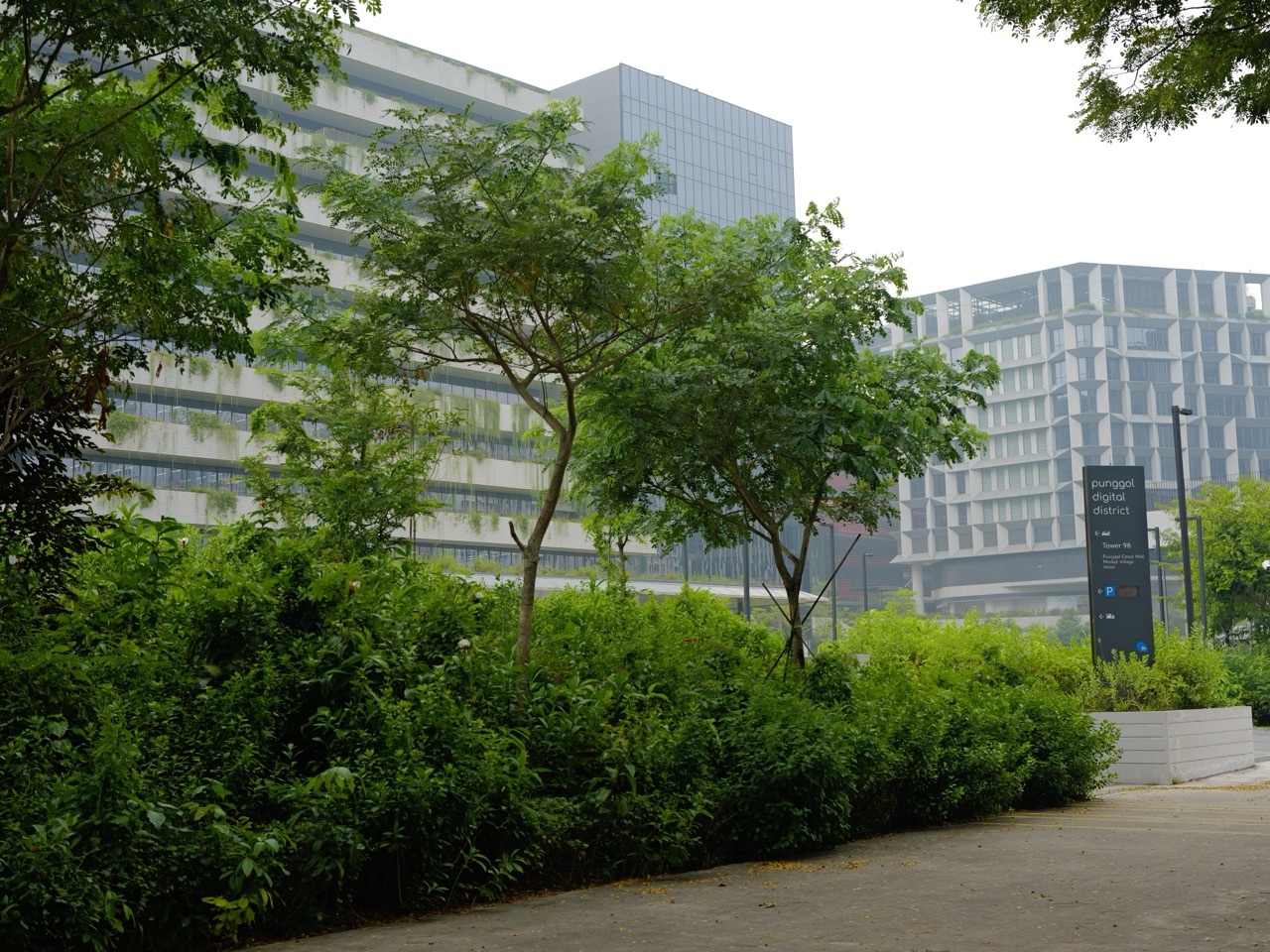
Prepared in November 2026. Programme menus, entry criteria, course codes, application periods, fee schedules and transport routes must be checked against the official information for the intended intake. The featured photograph illustrates Punggol’s education district, not a claim that a polytechnic or ITE campus is located at SIT.


