
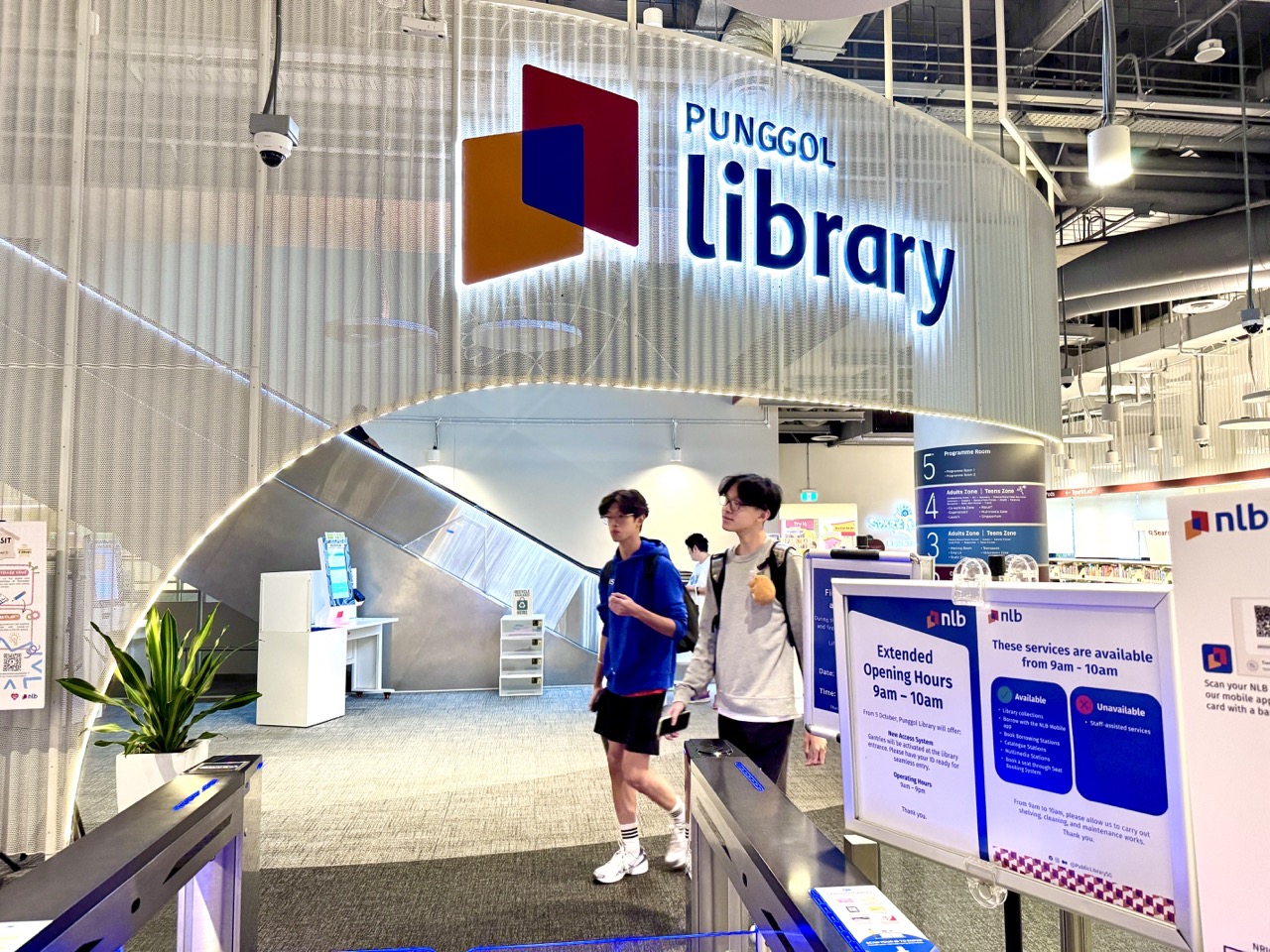
Where can families find free or affordable learning activities in Punggol? Begin with Punggol Regional Library at One Punggol, the One Punggol Community Club, official onePA courses and events, public parks, and low-cost family projects that use everyday neighbourhood life. The community club is at 1 Punggol Drive, #04-05, Singapore 828629; its listing offers courses such as children’s art, music, public speaking and other enrichment, but these are not automatically free. Prices, age limits, dates and places are controlled by the current organiser listing. The library provides reading and public learning resources under NLB’s own conditions; a listed event may still need registration or have a fee.
A parent does not need to buy a long programme package to build a child’s vocabulary, mathematical reasoning, scientific curiosity or social confidence. A weekly library visit, a safe walk to observe water and plants, a family discussion about a hawker-centre budget and an occasional well-chosen community workshop can create a coherent learning routine. The important distinction is learning from experience versus simply filling the calendar with entertainment. This guide explains how to verify One Punggol CC and NLB activities, understand real costs, select age-appropriate courses, use public spaces safely and construct a four-week low-cost learning plan. It does not promise that every activity described is currently running or that a public-interest group is open to children of every age.
- First stop: One Punggol community hub and One Punggol CC’s live onePA listing.
- Address: One Punggol CC is at 1 Punggol Drive, #04-05, Singapore 828629.
- Name warning: the separate venue called Punggol CC is at 3 Hougang Avenue 6, not inside One Punggol.
- Library: Punggol Regional Library is at One Punggol; use NLB’s current library page for opening, membership, services and events.
- PA courses: some courses are low-cost relative to private lessons, but published prices can range widely and extra fees may apply.
- Some interest groups are free: age and participation conditions vary; do not assume a seniors’ group accepts children.
- Low-cost language learning: books, story conversations, NLB e-resources and community language or cultural events.
- Science and Geography: supervised observations around Punggol Waterway and public parks, without unsafe experiments or disturbing wildlife.
- Mathematics: household budgets, prices, time, measurement, maps and data from ordinary outings.
- Digital skills: look for NLB and relevant approved workshop offers, checking age criteria and registration.
- Before enrolling: verify exact venue, price per session or course, total materials, cancellations, learning objectives and child supervision.
- Parent principle: select one meaningful activity and repeat what was learned, rather than booking everything that looks popular.
- Review: can the child explain a new idea or use a skill somewhere else after the experience?
One Punggol is a community hub, not a single commercial tuition centre
The People’s Association describes One Punggol as a co-located community hub with multiple partners, including the community club, Punggol Regional Library, a hawker centre and various public services. That arrangement is useful for a family because several different kinds of learning and errands can happen around one destination. A parent might visit the library, attend a registered activity and practise practical money skills during a meal without travelling across Singapore.
However, the partners have separate operating rules, fees and registration systems. Being inside One Punggol does not mean every facility is free or that every room is available to the public whenever the building is open. Check NLB for library facilities, onePA for community courses and the relevant agency for government services. A hub is valuable when the family understands which organisation controls which activity. It should not be advertised as an all-in-one school or an automatic source of subsidised private tuition.
One Punggol Community Club: the correct address
The official onePA listing places One Punggol CC at 1 Punggol Drive, #04-05, Singapore 828629. Its programme pages may include children’s art, dance, music, public speaking, abacus and other courses, depending on the month. The venue has multiple activity spaces, and PA’s official hub description identifies studios, multipurpose facilities and interest-group rooms. For a family, the advantage is a structured setting with a published organiser and course details.
The correct educational question is which course is suitable for the child now. A four-year-old who enjoys stories might not benefit from a course marketed toward experienced speakers. A twelve-year-old interested in design may be better served by an art or maker programme than a generic study-skills class. Read the full course description, trainer information, age eligibility, duration, materials and fee. If the programme is already fully subscribed, it cannot be treated as a confirmed option. An attractive listing is only the beginning of a proper enquiry.
The surprising Punggol CC name trap
OnePA also lists a different community club simply called Punggol CC, whose address is 3 Hougang Avenue 6, Singapore 538808. That may surprise a parent who assumes every organisation named Punggol is located inside the modern town’s HDB estates. The separate club can host courses and events under its own timetable, but it is not the One Punggol CC at Punggol Drive. Choosing the wrong venue could send a family to a completely different part of Singapore.
Before a workshop, copy the exact programme name, organising club, venue, level, classroom and reporting time from the onePA booking. Do not rely on the event title alone. If the family uses public transport, test the journey to the actual address. A low course price can lose its practical value if the child and caregiver must make a difficult commute or miss the start because the address was assumed. The same verification habit applies to school open houses, libraries and other community activities.
What onePA programmes cost in practice
Community courses are sometimes affordable, but “community” does not mean “free”. The One Punggol CC listing in October 2026 included examples such as public speaking for children priced from S$110 to S$115 for its named course, children’s art from S$90 to S$100, and abacus mental arithmetic around S$145 to S$150. These were dated programme listings, not a permanent price guarantee or a promise that the courses remain bookable in 2027.
A parent should examine whether the quoted amount is per lesson, for a block of sessions or for another arrangement. Ask about materials, trainer fees, PAssion membership pricing, additional charges at checkout and the withdrawal policy. A ten-lesson package may be cost-effective for a child who is genuinely interested, but expensive if they attend only once. The best comparison is total cost and meaningful learning, not a promotional “from” price. Keep an accessible copy of the booking and current policy before paying.
Some PA interest groups are free, but read who they serve
The onePA listings for One Punggol include some interest groups marked free. These can create opportunities for residents to participate in hobbies, movement or community life. Yet several groups are associated with active-ageing or seniors’ programmes; the fact that a listing says “free” does not establish that it is suitable or open to a Primary 3 pupil. Age, residency, membership and registration conditions can apply.
Parents should open the actual group page and ask about participation before taking a child along. If the group is intended for older adults, it might still interest a grandparent in the family while the child uses a separate suitable activity. Do not advertise a seniors’ exercise group as a free children’s sport class. Honest classification protects both readers and organisers. A family can gain educational value from multiple generations learning and participating, but only where the programme welcomes them under its own rules.
Punggol Regional Library: the family’s second learning room
Punggol Regional Library offers a dedicated public space for books and learning at One Punggol under National Library Board arrangements. A child can explore fiction, science, history, languages and everyday information at a pace appropriate to their interests. Some public library services and programmes may require advance registration, while other resources can be enjoyed through ordinary membership or access rules.
Parents can make a weekly habit of choosing a book, reading part of it together and discussing one surprising idea. An older student could compare two sources on the same topic and identify their differences. A younger child might retell a picture book or learn a new word through the illustrations. The learning value is not the number of titles borrowed; it is the understanding the reader develops. Check the detailed Punggol library guide for current services and learning opportunities.
NLB membership, borrowing and digital resources
NLB provides library membership, borrowing and digital resources according to published eligibility and service rules. A parent should identify whether the child has the appropriate membership and account access before a planned programme or borrowing session. Electronic books and other digital resources can support learning at home, but individual titles may have lending limits or device requirements. Do not assume every item in a catalogue is instantly available without a queue.
For a Punggol household with limited space for books, borrowing can reduce recurring spending while keeping reading opportunities broad. A family can explore different genres before deciding what the child truly likes. Teach children to care for borrowed items, track return dates and respect shared resources. A tablet can provide access to reading, but the family should also manage attention, privacy and ordinary screen-time routines. Digital convenience is useful when it supports actual comprehension rather than replacing every quiet moment with another app.
Children’s reading: a free plan with a strong learning purpose
A useful reading routine does not require a commercial comprehension course. Ask the child to choose a suitable book and spend time reading or listening without rushing. During or after the story, invite one genuine question: What changed? Why did the character decide that? What would you do differently? These conversations help the learner connect language to cause, intention and evidence.
For a beginning reader, the adult can model the sentence and encourage decoding at a suitable level. For a more fluent child, a nonfiction book can prompt research into a new subject. Avoid turning every borrowed book into a long written report. A child should have freedom to read for pleasure. The parent can still notice useful progress: greater vocabulary, stronger explanations and willingness to attempt unfamiliar books. This kind of language development can be sustained week after week with minimal spending.
Language learning through stories and family conversation
The library and community environment can support Chinese, Malay, Tamil and other languages through books, cultural activities and meaningful interaction. Parents should check programme availability, language and age range rather than assume each library session offers every language. A child who understands a home language but lacks speaking confidence may benefit from short conversations with relatives, stories and familiar songs alongside suitable school instruction.
For older pupils, explain vocabulary in context and invite examples from life. A phrase learned during a story can later describe a visit to the market or an event at school. This connection between words and experience builds abstraction and makes language easier to remember. A family should not feel obliged to buy a vocabulary package simply because other children use one. The strongest practice is repeated, meaningful language use. Paid specialist instruction can be considered if a clear school-learning gap remains.
Mathematics through real shopping and budgeting
A family outing can teach numbers, comparison, percentage and estimation without creating a new tuition timetable. A younger child might count how many items fit into a basket or compare two prices. An older student could estimate a total cost, understand a discount or compare a unit price. A teenager might make a small budget for a hypothetical event and explain the trade-offs involved. These are genuine mathematical decisions in an environment children recognise.
Ask the learner to show how they reached an answer rather than praising speed alone. If the method is wrong, discuss the quantities and the relationship. A few minutes of meaningful reasoning can build more understanding than repeated imitation of a rule. Parents should not turn a relaxed family meal into an examination paper, but they can recognise naturally occurring learning opportunities. The goal is to help children see Mathematics as a tool for making decisions, not merely a subject on a school report.
Science outdoors around Punggol Waterway
Punggol Waterway and nearby public spaces create opportunities to observe plants, water, sunlight, wind, bridges and people using shared paths. Children can practise asking a testable question, making a prediction and noting what they actually see. For example, compare the apparent shade at two locations or observe how rainwater drains after a downpour from a safe public area. A parent can explain the difference between an observation and a claim about why it happened.
Safety is essential. Do not approach dangerous water edges, enter restricted facilities, disturb wildlife or attempt risky experiments. A field observation can be valuable without collecting specimens or entering waterways. The child may take notes or draw a sketch; a photograph is optional and should respect the privacy of others. At home, the learner can explain what was discovered and what remains uncertain. These habits support school Science and Geography by linking concepts to concrete evidence.
Nature walks as English and Mother Tongue practice
A supervised walk through a park can become a language lesson without feeling like school. Ask a younger pupil to name five visible objects and describe their colours, positions or movement. Invite an older child to write a short explanation of how the landscape changes between two parts of the route. A student learning Mother Tongue can describe the same scene in the relevant language, using a few precise terms rather than a list of impressive words copied from a dictionary.
The family can later read a related book from NLB and compare the written explanation with their own observations. That is a useful connection between experience, text and concept. Children become better communicators when they have something real to describe. Do not demand a polished composition every time the family goes outside. The learning should leave room for curiosity, play and ordinary conversation. A small number of carefully chosen reflections is enough.
Digital literacy without expensive devices
A child may need to distinguish reliable information, understand basic account security and learn how to explain an idea using a computer or another device. Parents can begin with simple questions about sources: Who wrote this? What evidence is offered? Is it current? Does another credible source support it? Some NLB and community programmes may offer digital activities or facilities, but the exact age and registration requirements must be checked directly.
Families do not necessarily need to buy the newest laptop to practise basic digital thinking. A shared, suitable device under adult supervision can be enough for simple research, word processing or a digital project. Protect the child’s personal information and do not use unknown accounts or public chat systems as a substitute for proper school services. A digital workshop is worthwhile when the pupil learns a transferable skill, not because the course advertisement includes a large collection of fashionable technology names.
What MakeIT and maker learning can teach
Maker-style learning asks children and adults to design, build, test and revise. Depending on the facility and event, activities can involve crafts, digital design, simple electronics, 3D modelling or other creative techniques under suitable supervision. Some NLB branches and programmes use the MakeIT approach, but parents should verify which resources are currently available at Punggol Regional Library rather than assume every tool or workshop is available all day.
The educational value comes from seeing why a design works or fails. A child building a paper bridge, for example, can compare shapes and loads with ordinary household materials. The pupil should explain what changed between attempts and why. Safety and age suitability remain important, particularly when using sharp tools, heat or electrical equipment. A paid workshop is optional; simple maker learning can often start with paper, cardboard and a thoughtful question at home.
Art classes: creative expression versus buying a certificate
One Punggol CC’s official listings include arts-related courses at various times. A well-matched class may help a child explore materials, composition, observation and confidence in presenting ideas. The family should check the current price, age requirements, teacher and materials before enrolling. A class that costs less than a private studio may be worth trying, but it is not automatically excellent because it is community based.
Parents can also support art at home using low-cost paper, recycled packaging, pencils or ordinary objects. Ask the child to explain their design choices or revise a picture after noticing a new detail. A creative project helps develop patience and visual thinking even when no formal award is attached. Not every drawing needs to be judged. The goal is to help children observe the world and express ideas, not to accumulate certificates for an application portfolio long before a relevant opportunity exists.
Music, speech and performance: choosing the right format
Public speaking and music programmes can be helpful for pupils who enjoy communication and performance, but they differ in what they teach. One course may develop presentation structure, another may build vocal confidence and another may provide instrumental instruction. Before paying, ask what age and experience level is expected and whether the child can participate comfortably. A pupil who is nervous speaking to classmates may need a supportive introductory environment rather than an advanced competition class.
At home, children can practise storytelling, singing, explaining a favourite topic or presenting a small project to family. The adults should listen and ask kind, meaningful questions. Improvement appears when the learner communicates with greater clarity and manages a mistake without giving up. A course can provide guidance and peer practice, but it should be chosen for those actual educational benefits. An expensive performance costume or certificate is not evidence that the child learned to communicate better.
Sport is part of learning even when there is no academic score
Active movement can build coordination, resilience, teamwork and an understanding of rules. Punggol public spaces and relevant ActiveSG facilities or community programmes may provide opportunities, but current availability, booking requirements and fees must be checked with the operator. Some courts and lessons are paid; some ordinary park activities are available without programme registration. The family should not present a booked paid facility as a free public lesson.
Parents can teach a child to follow a fair rule, take turns and reflect on what improved during practice. Younger children may benefit from simple ball games and movement exploration, while older pupils can learn planning and leadership through team sport. Participation should be safe, age-appropriate and enjoyable. A family with a limited enrichment budget can still give children meaningful physical experiences through supervised public spaces. Learning extends beyond examination subjects, and development of confidence and relationships is part of the benefit.
Community service and local citizenship as education
Volunteering and community activities can teach responsibility, empathy and the need to work with people beyond one’s immediate circle. Some local resident groups and community clubs organise appropriate activities, while others focus on adult participation. Parents must verify the minimum age, consent, supervision and organiser before bringing a child to an event. A clean-up activity, for example, may involve equipment or safety restrictions unsuitable for very young children.
Even at home, children can practise caring for shared spaces, sorting recyclables correctly and considering the needs of neighbours. A pupil might write a short reflection on why a public area needs rules or how a group coordinated to solve a problem. These connections make Character and Citizenship Education tangible. The point is not to collect service hours for an award. It is to understand that knowledge and responsibility help communities work better. Genuine contribution begins with small, consistent actions.
A learning budget of zero, S$20 or S$100
Families differ in what they can afford, and an educational activity should not become a source of shame. A zero-dollar week might include library reading, conversation, safe park observation and a practical mathematics activity at home. If the household has a modest S$20 budget, it might pay for inexpensive materials or one verified low-cost event, subject to the actual provider’s fees. A higher S$100 budget could support a well-chosen workshop, but the family should still check whether the money buys genuine teaching or merely repeated entertainment.
The best decision is not automatically to spend the whole budget. Ask which experience addresses a real interest or learning need and whether something similar is already available at school. Keep transport, meals and adult time in view. A nominally free event across town may have a significant travel burden for a family with young children. Sustainable learning is built through consistent opportunities, not the most expensive weekly calendar.
How to compare two community programmes
Suppose a child is interested in both a public-speaking course and a visual-art workshop. Compare the actual session schedule, teacher, venue, fees and the skills taught. Does the child enjoy explaining ideas to an audience, or are they more motivated by observation and visual design? A course with a polished promotional video may not be suitable if the participant is below the stated age. Another may offer good value but require an inconvenient weekday journey.
Before enrolling, ask the programme organiser what a child will create or demonstrate by the end, and whether the course includes feedback. Request the complete total price including materials. Look at the cancellation and missed-session rules. If the family can afford only one programme, choose the one the child can attend consistently and benefit from meaningfully. A smaller, well-matched commitment is better than several partially attended courses that create stress for parents and disappointment for the learner.
Holiday activities: check the programme’s actual date
PA and NLB event calendars are updated as activities are announced, and a search result may continue showing an event after it has ended. For example, a programme listed in October 2026 is evidence that the organiser has hosted such an activity, not evidence of a place in March 2027. Parents should use a live listing and read the date, venue, age limits and registration deadline. Some events sell out or have limited capacity.
A school-holiday plan should also include supervision and transport. A workshop that ends at 3 pm cannot solve a working parent’s care gap until 6 pm unless a responsible adult has agreed to collect the child. If the programme is cancelled, keep a safe alternative such as a library visit or simple home activity. Avoid planning the entire holiday around speculative listings. A calm, flexible schedule with rest and a few meaningful experiences serves most children better than rushing from booking to booking.
The educational role of grandparents and caregivers
Many Punggol households rely on grandparents or other trusted caregivers during school holidays and after work. This can create opportunities for language, family history and practical learning. A grandparent might explain the meaning of a family recipe, share how the neighbourhood changed or teach a child to keep a small spending record. Such experiences support vocabulary, cultural memory and reasoning without requiring paid enrichment.
Caregiver capacity should be respected. An older adult may enjoy reading or cooking with a child but be unable to supervise a long outdoor outing. Parents should agree on suitable activities, safety limits and essential contacts rather than leave the entire week’s timetable to assumption. The child should not feel that every afternoon needs a formal lesson. Ordinary relationships are themselves meaningful learning environments. A family can maintain connection across generations while protecting the caregiver’s wellbeing and the child’s need for play.
A four-week Punggol low-cost learning plan
Week 1 — discover. Check the official One Punggol CC and NLB pages, note actual dates and age criteria, and let the child select one interest. Week 2 — experience. Visit the library or undertake a safe observation outdoors. Ask the learner to describe one new idea. Week 3 — connect. Use a book, conversation or simple household experiment to explore the idea further, and consider a paid workshop only if it offers something the family cannot easily provide.
Week 4 — reflect. Can the child explain the concept, use it in a new setting or show a simple piece of original work? Review spending and enjoyment before booking another activity. If a programme has its own registration deadline, act according to that rather than an artificial four-week cycle. This plan is designed to make learning coherent and affordable. It should leave room for rest, friendship and ordinary family life.
Worked family: a P3 child who is curious about science
A Primary 3 pupil in Punggol is fascinated by bridges and water. The family cannot justify a weekly science enrichment package, so it begins with a library book and a supervised walk near the Waterway. The child sketches two bridge shapes, asks which might be stronger and tries a safe paper model at home. The adult helps distinguish what they observed from what they guessed.
Later, the family checks whether One Punggol CC or NLB has a suitable workshop and compares its actual fee and content. If no relevant programme is available, they continue the project with ordinary materials. The child learns observation, measurement, design, explanation and vocabulary without relying on a branded course. When a formal school Science unit introduces forces or materials at an appropriate level, the learner has concrete experiences to connect with the concept. That is meaningful progress independent of an award or examination mark.
Worked family: an older child improving English communication
A Secondary 1 student writes reasonably well but finds oral presentations uncomfortable. The family looks at public-speaking courses and sees a One Punggol CC listing, but the published age criteria and dates may not fit. Instead of rushing to pay for a different programme, the student begins a small weekly practice routine: choose a library article, explain its central idea in two minutes and answer two genuine family questions.
After several weeks the learner can present more clearly and describe why a claim needs evidence. If an appropriate course later becomes available, the family can decide whether peer practice and a trained teacher would add further value. They compare price, venue and feedback rather than assuming every public-speaking activity is worth buying. The example shows how local resources and modest home practice can develop useful communication, with paid instruction reserved for a specific remaining need.
Frequently asked questions about free learning in Punggol
Is every course at One Punggol free? No. Official onePA listings include paid courses and some free interest groups, with different age conditions. Where is One Punggol CC? 1 Punggol Drive, #04-05. Is Punggol CC the same venue? No; the separate Punggol CC is listed at 3 Hougang Avenue 6. Can I borrow books from Punggol Regional Library? Use NLB membership and borrowing rules for the current service.
Are parks useful for science learning? Yes, through safe observation and explanation, without disturbing wildlife or entering unsafe areas. Do public programmes guarantee better exam marks? No. Learning may be broader than examination preparation. Can a free interest group accept any child? Not necessarily; check the intended audience. Must we buy a course every school holiday? No. A balanced plan can combine reading, rest, family experiences and selected activities.
Official sources and related Punggol reading
Official: People’s Association One Punggol hub facilities; One Punggol CC current courses, events and interest groups; Different Punggol CC venue in Hougang; NLB Punggol Regional Library; NParks Waterway Park; ActiveSG information.
eduKatePunggol: Library reading and MakeIT guide; Punggol events and family activities; 2027 school holidays and care planning; Complete Punggol education guide.
This article uses official community information available in November 2026, including dated examples of 2026 onePA courses. It does not claim those classes remain available or priced identically in 2027. Check actual fees, eligibility, dates, facilities and safety arrangements with the responsible organiser before travelling or paying.


