
Starting Secondary 1 in Punggol in January 2027? Begin with the receiving school’s official posting and reporting instructions, then prepare the child’s daily journey, uniform and booklist, account access, subject levels, CCA information and evening routine. The 2027 MOE secondary school year starts on Monday, 4 January 2027, but the actual reporting time, orientation programme, gate and first-week timetable come from the allocated school. The transition is not just a harder version of Primary 6. Under Full Subject-Based Banding (Full SBB), students enter through a Posting Group and may study individual subjects at G1, G2 or G3 levels, according to their eligibility and school arrangements. A Posting Group is not a permanent label for a child’s future.
For Punggol families, a successful first month involves more than buying schoolbooks. A child may be learning a new LRT or bus route, using school digital accounts, joining form classes with different academic strengths, meeting several subject teachers, choosing a CCA and adapting to algebra, longer reading and more independent planning. Since January 2026, MOE has also broadened its restrictions on secondary pupils using smartphones and smartwatches during school hours, including recess and CCA, with exceptions handled by schools. The aim of this guide is to make the first thirty days safer, calmer and more productive. It tells parents what to check now, what to watch during orientation and how to respond when one part of the transition is difficult.
- **Before term starts:** confirm the actual school allocation and the school’s current Secondary 1 reporting, orientation and contact instructions.
- **Date:** Monday, 4 January 2027 is the official start of the MOE secondary-school year; check each school’s exact morning arrangements.
- **Full SBB:** Posting Group determines entry route; G1, G2 and G3 describe subject levels, which may differ across the child’s timetable.
- **Travel:** practise the complete home-to-gate trip during a weekday, including the return after a late CCA.
- **School supplies:** buy from the receiving school’s actual list and wait for personal learning device purchase instructions.
- **Digital accounts:** the receiving school will explain SLS, school email and other approved accounts; protect credentials and avoid unofficial reset links.
- **Phones and watches:** from 2026 the restrictions cover the entire school day, including recess, CCAs and remedial lessons, subject to school procedures.
- **CCA:** explore interest and practical timetable fit before making a commitment; confirm registration and the school’s requirements.
- **Study foundations:** repair negative-number, fraction, reading and explanation gaps only where the child’s actual work shows a need.
- **Wellbeing:** check friendships, sleep, meals, safety, confidence and whether the teenager knows a trusted adult.
- **Financial help:** check MOE FAS, approved book or uniform arrangements and device assistance before unnecessary private spending.
- **Follow-up:** review one ordinary schoolweek at a time, then use a four-week parent-and-student plan below.
The first thing to do after Secondary 1 posting
When the official result is released, record the receiving school and read its published reporting instructions carefully. Do not rely on a forwarded school list or assume every school uses the same orientation timetable. Confirm the school office contact, reporting point, date and items the student must bring. Some schools provide online or in-person registration steps, Parents Gateway notices and a list of compulsory supplies.
A family should avoid buying an expensive uniform bundle while still considering an appeal or waiting for a formal outcome. If a child has an accepted DSA-Sec arrangement, the later obligations can differ from ordinary S1 posting. Read the terms for that route rather than making a generic six-choice plan. The key administrative principle is to act on the actual placement, not an expected one. Once that is secure, the family can begin preparing daily life instead of continuing endless admission research.
The 2027 start date and why actual school timetables differ
MOE’s school calendar sets Monday, 4 January 2027 as the start of the secondary-school year. That national date does not replace the receiving school’s detailed instructions. Orientation, class allocation, reporting time, textbook collection and a child’s first CCA briefing may be arranged differently by school. Some activities may occur after regular classroom hours in the first weeks.
Parents should put the confirmed timetable in a shared calendar and avoid treating assumptions as fixed plans. A parent who must return to work may need a named caregiver or an agreed route for the first day. A school that expects early reporting can make an ordinary transport plan too optimistic. Ask which items are needed on Day 1 and which can arrive later. A clear first-day plan reduces anxiety more effectively than purchasing every optional accessory on a packing list.
The four Punggol secondary schools to investigate
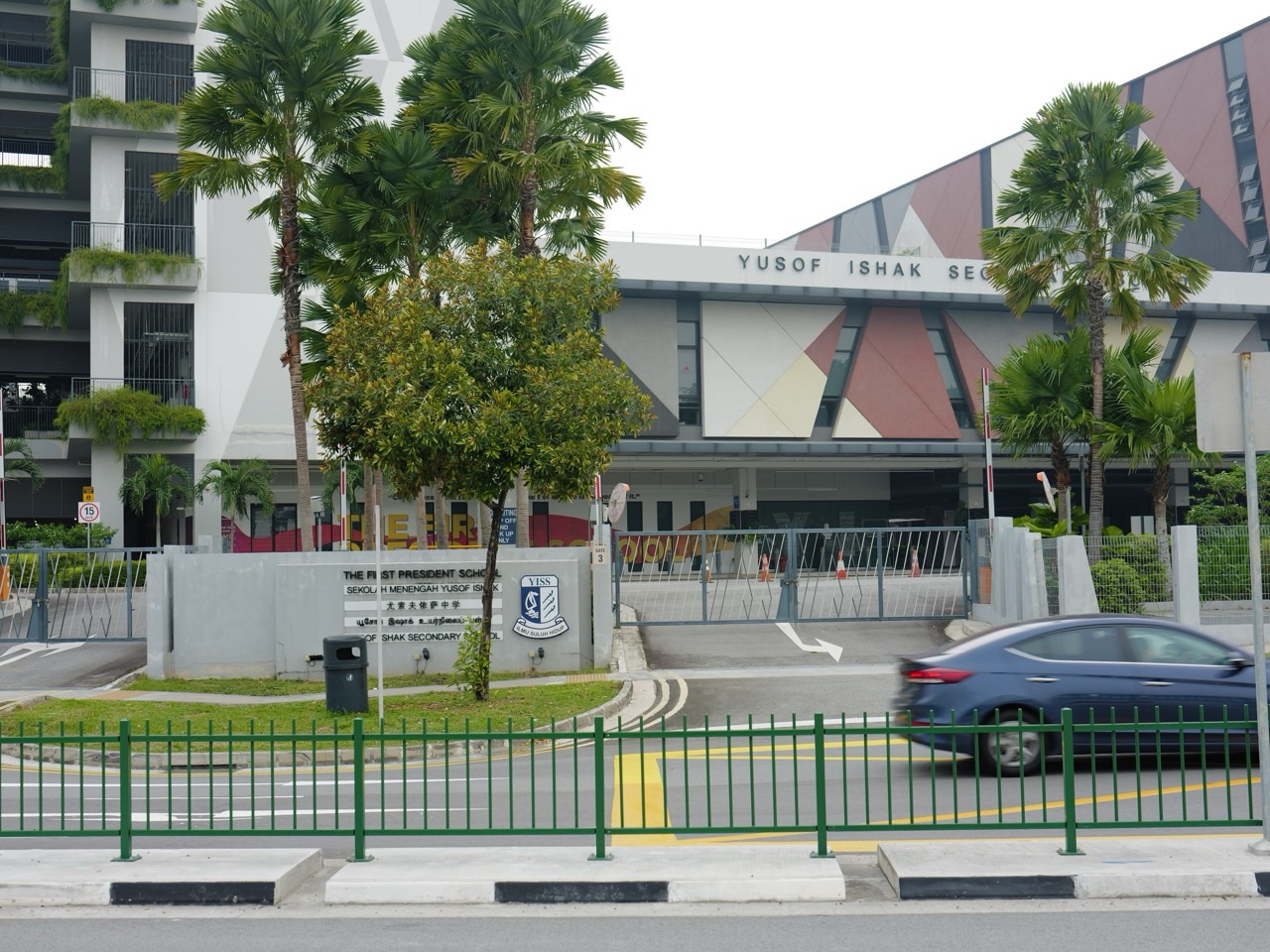
Local families commonly look at Edgefield Secondary School, Greendale Secondary School, Punggol Secondary School and Yusof Ishak Secondary School, although eligible pupils may attend schools elsewhere in Singapore. The four campuses offer different subjects, programmes, school cultures and journeys. Their names do not imply automatic progression from a primary school with a similar name, and their current addresses should be checked through MOE SchoolFinder or the school website.
After posting, the relevant question changes from “Which school should we choose?” to “How does the child settle into this actual school?” Read its reporting directions, subject-level arrangements, relevant CCA information and support channels. If a family is still investigating possible secondary options, the Punggol Secondary 1 choice guide covers the earlier decision. The first-month plan below assumes a place has already been confirmed.
What does Full Subject-Based Banding change for a new S1 pupil?
Full SBB replaces the old permanent separation into Express, Normal (Academic) and Normal (Technical) streams for new secondary cohorts. Students enter using Posting Groups and can offer individual subjects at G1, G2 or G3 levels when they meet the relevant criteria. They also participate in common learning and wider school life with classmates who may have different academic profiles. A student should understand the actual timetable rather than assume that everyone in a form class studies every subject at one identical level.
The educational principle is that strengths are not always uniform. A teenager can be relatively strong in one subject and need a more gradual pace in another. Parents should avoid using Posting Group as a judgement of personality, future work or worth. Ask the school’s teachers how subject-level decisions are reviewed and what evidence would support a later adjustment. The new experience is more nuanced than three fixed labels.
Posting Group and G1/G2/G3 are not interchangeable
A pupil might be posted under one of the three entry Posting Groups but be eligible to study certain subjects at a more demanding level. Saying “my child is PG2” does not fully specify the level of Mathematics, English, Mother Tongue and Science on the timetable. The exact combination follows current MOE eligibility criteria and school arrangements. This is why a parent should request the relevant subject information instead of buying a generic workbook associated with one old stream.
At orientation, check which subjects are offered at which levels, how the school explains progression and whom to contact if a question remains. Students should know that their learning is reviewed over time. Taking a subject at G1 or G2 is not proof of a fixed lifelong ability, just as G3 study does not guarantee strong performance without understanding. Appropriate challenge and clear teaching matter more than a label attached in Primary 6.
How to explain subject levels to a child without creating shame
Children can easily interpret numbers and group labels as public rankings, especially when classmates discuss them. Parents can explain that different subjects may require different pacing and that learning should be matched to what a student is ready to understand. A child can be confident in Science, uncertain about English writing and still enjoy friendships and activities shared with classmates. Being good at one subject does not require being equally advanced in all others.
Avoid using language such as “lesser class”, “failed stream” or “top people”. Ask instead what a lesson expects and what help is needed to make progress. If the pupil is worried about what others think, listen and discuss how the school fosters belonging. A supportive environment should allow students to ask questions and develop confidence. The best early progress is often a child who can explain a difficult idea without feeling defined by the result of one assessment.
A different timetable means more planning
Primary school often provides a fairly familiar classroom and teacher rhythm. In secondary school the student usually moves between more subjects, specialised spaces and educators, with different assignment expectations. One teacher may use a digital platform; another may expect a physical worksheet; a practical lesson may require equipment on a specific day. The learner needs a simple system for keeping track.
Encourage the teenager to use the approved school timetable and record deadlines in one reliable place. Before bed, check tomorrow’s subjects and materials, but do not have the parent repack every item indefinitely. Allow the pupil to take increasing responsibility while an adult provides light guidance. If the child regularly forgets something, examine whether the checklist is unclear or the timetable changes unexpectedly. A small organisational habit can solve problems that no amount of extra subject tuition would address.
Punggol transport: one route is not enough
A family near the east Punggol LRT loop may have a different morning journey from one near Northshore, Sam Kee or Punggol Coast. Even within the estate, a secondary campus might require an LRT transfer, public bus or extended walk. The child should practise the actual home-to-gate journey at the relevant time and understand how to return after a late CCA, not only the route used during a calm holiday visit.
Record safe crossings, correct bus stops, the nearest sheltered alternative in heavy rain and a contact plan if transport is delayed. Older teenagers can gradually manage independent travel, but readiness is individual. A school with a familiar name may have a different entrance from a neighbouring primary school. Use the school’s official arrival instructions alongside current LTA route information. A reliable daily journey protects attendance, sleep and confidence.
The first-week school bag, uniform and booklist
The school will issue the list of uniforms, PE attire, textbooks and compulsory stationery. Parents should buy based on that list rather than the contents of another family’s old Secondary 1 bag. Subject levels affect textbook choices, and some schools have specific arrangements for bookshop collection, online ordering or assistance. It may be possible to reuse supplies where the edition and school policy allow, but confirm first.
Check what is needed on the first day and avoid loading the child with every book for the entire week. A younger teenager can learn to match the next day’s timetable to the bag contents and review whether the bag is manageable. If the family qualifies for MOE FAS, ask about approved materials and collection before spending privately. Some schemes supply books and attire directly rather than reimbursing arbitrary purchases. Preparing carefully can reduce unnecessary cost and physical strain.
PLD onboarding: the school controls its device specification
The National Digital Literacy Programme supports secondary learning with Personal Learning Devices. The school’s prescribed device model, purchase arrangement, device management application, warranty and accessories may differ from another school’s. Parents should wait for official onboarding instructions. An existing tablet at home is not automatically a suitable replacement because the school’s management and software requirements may be specific.
Ask how the device will be paid for, whether eligible Edusave funds can be used, and what financial assistance is available. Check the school’s guidance on responsible use and the appropriate management settings. The pupil should learn to charge the device, store it securely, update through approved channels and report a genuine problem. Digital learning succeeds when technology supports reading, reasoning and communication. A premium gadget does not replace good learning habits or a clear understanding of the task.
SLS and school email: protect access, not just passwords
Secondary students may receive school-managed access to the MOE Student Learning Space, school email and other learning tools. The school will explain the correct accounts and recovery procedures. Students should avoid sharing passwords, login approval prompts or private school records with classmates. A message claiming to offer an urgent new SLS link or free device should be checked through the verified school communication route.
The first weeks are a good time to practise responsible digital habits. Can the pupil navigate to the official SLS service, recognise the teacher’s assigned work and ask for help when access fails? If a file cannot be opened or homework fails to submit, capture a non-sensitive record of the error and contact the school under its instructions. Do not repeatedly upload personal information to unrelated sites. For known problems, the Punggol Parents Gateway and SLS guide explains safe recovery routes.
The smartphone and smartwatch rule from 2026 onward
MOE expanded secondary-school device restrictions from January 2026 to include non-lesson periods, such as recess, CCA, supplementary and enrichment activities. Schools manage storage and any permitted exceptions under their rules. A student should not assume that being able to bring a phone means it can be used freely throughout the school day. The receiving school’s handbook and notices give the actual implementation details.
Parents should plan communication around the school’s authorised channels and the child’s safe journey rather than instructing the teenager to use a hidden device during prohibited periods. If a special communication or health need exists, ask the school about an appropriate arrangement. The goal is a school environment where face-to-face interaction and focused learning are possible. Students still need to learn responsible online behaviour after school, when device rules alone cannot guide every social interaction.
How to prepare for the first CCA decision
CCAs can be an important part of school belonging, physical activity, teamwork and discovery. A Secondary 1 pupil may encounter sports, uniformed groups, arts and clubs or societies that were not available at primary level. Rather than choosing the activity that seems most impressive on a future portfolio, encourage the student to ask what they enjoy and what skills they want to practise over time.
Confirm the school’s actual selection process, trial opportunities, training schedule and any required equipment. Check whether the activity clashes with tuition, family commitments or transport. A demanding CCA may be worthwhile for a motivated pupil but should not erase every evening of recovery. LEAPS 2.0 or other co-curricular recognition should be understood as part of holistic development, not a reason to force a child into an unsuitable activity. Sustained participation matters more than collecting names.
What English becomes in Secondary 1
Secondary English often requires students to interpret longer texts, justify answers using evidence, write with clearer organisation and choose words precisely. A child who previously performed well by recognising familiar Primary 6 question patterns may need a different approach. The shift is toward understanding a writer’s purpose and producing an explanation that connects ideas instead of repeating memorised phrases.
Parents can help by reading together, discussing one unfamiliar paragraph and asking why a sentence supports an answer. Encourage the teenager to explain vocabulary in context rather than recite definitions alone. Teachers can identify what the school’s actual assessment expects. If a student struggles with a particular skill, use an example of real work to diagnose it. A generic collection of composition templates can conceal the real problem. The aim is more confident communication across subjects, not only a higher score on one English paper.
The hidden Mathematics transition: arithmetic becomes algebra
In Primary school, a child may solve many problems with numbers, bars and familiar procedures. Secondary 1 requires a growing command of symbols and relationships, including variables, expressions, equations and negative quantities. Consider 3 × 7 = 21 and 3x = 21. The answer may be simple, but the second form asks the pupil to understand an unknown quantity and an equality relationship. That is a conceptual change, not merely more difficult arithmetic.
A tutor or parent should check whether the learner can explain why an operation is applied to both sides, how a negative sign behaves and what a symbol represents. Avoid teaching “move it across” as a substitute for understanding. Small foundational gaps can affect later algebra, fractions and graph questions. A calm explanation followed by independent practice is more durable than large volumes of worksheets without targeted correction. Our immutable Secondary 1 Mathematics transition example explains this mechanism in detail.
Science becomes an explanation of systems
Secondary Science asks students to use concepts, observations and evidence to explain relationships. Students may meet more formal scientific language, diagrams and investigations that depend on controlled variables. Knowing a definition is useful but not sufficient if a learner cannot use it to predict what would happen in a changed situation or explain an observed result.
At home, parents can ask the child to describe one classroom idea in their own words and give a simple everyday example. A child might discuss why an electrical circuit needs a complete path or how changing one variable affects a fair test. Appropriate safe demonstrations and diagrams can help. The point is not to recreate a laboratory unsupervised. It is to connect scientific vocabulary to causal understanding. If schoolwork reveals repeated explanation errors, ask the teacher where the chain of reasoning fails before purchasing advanced revision material.
Humanities and Mother Tongue also need attention
Students sometimes focus so strongly on Mathematics and Science that they overlook changes in reading, writing and subject-specific language in Humanities and Mother Tongue. History and Geography can require source interpretation, argument and evidence. Mother Tongue learning may involve more sophisticated reading, oral communication and writing, with eligibility for particular levels or Higher Mother Tongue governed by current rules.
A balanced first-month routine asks what each subject expects without adding tuition for all of them. Encourage the child to review teacher feedback and ask for examples of a well-explained answer. Use local Punggol experiences for meaningful discussion: a transport map can support Geography, a neighbourhood story can prompt historical questions, and family conversation can strengthen language. These are small ways to connect school learning with real life. The objective is to build independence across subjects rather than specialise prematurely.
Students need time to make friends
The first month can be socially demanding. A pupil may leave familiar Primary 6 friends and enter a new form class, CCA or mixed subject-level group. Some make friends quickly; others need more time to feel comfortable. Parents should ask who the child has spoken to and whether there is a trusted adult at school, without turning dinner into a detailed interrogation about every social interaction.
Normal adjustment uncertainty is not necessarily a serious problem, but bullying, sustained exclusion or severe distress should be taken seriously. Encourage respectful participation and help the student think about ways to join activities or repair ordinary conflicts. If the child reports threats or repeated harm, follow the school’s reporting and protection procedures. A healthy sense of belonging supports concentration and willingness to ask questions. Academic confidence is easier to develop when the student also feels safe in the school community.
Homework planning: one reliable system is enough
New secondary students may face assignments from several teachers on different days, some printed and others digital. An overloaded system of multiple apps, notebooks and parental reminders can become more confusing than helpful. Let the teenager use the school’s approved channels and one personal method for tracking deadlines. The method can be simple: record the task, due date and next small action immediately.
Build a short daily review. Can the child name the two most important tasks and the materials needed tomorrow? If an assignment is taking unexpectedly long, help identify whether it is conceptually difficult or simply poorly organised. A pupil who genuinely does not understand the topic may need teacher support; a pupil who forgot a worksheet may need a better handover habit. The response should match the problem. Independence grows through repeated, manageable responsibility, not through the parent checking every answer indefinitely.
How much revision is sensible in the first month?
The first month is a period of learning routines, teacher expectations and basic subject foundations. A large fixed revision timetable copied from a Secondary 4 exam programme may be unnecessary for a new S1 pupil. Begin with homework completion, brief review of unfamiliar concepts and a small amount of independent practice targeted to the child’s actual mistakes. Protect sleep, meals, movement and social adjustment.
If there is a recurring gap carried from Primary 6, identify it specifically. A learner struggling with directed numbers may need to practise number-line reasoning; another who is weak in English comprehension may need to understand text evidence. More paid hours do not automatically produce better learning. A four-week review of actual school feedback is a better basis for deciding whether tuition or another support is appropriate. Early steadiness is often more useful than premature acceleration.
How to judge the first assessment result
A new school’s first assessment can feel like a verdict, especially when a student performed strongly at PSLE. It is not. Different subjects and standards create new expectations, and the child may be learning how to answer a form of question they have not previously encountered. The useful response is to study which mistakes occurred, what the student already understands and whether the problem is likely to recur.
Ask the child to explain one error and try a similar question without a model answer. A teacher can clarify how marks are awarded and which habits matter. If the child is doing comfortably, continue the existing routine rather than adding tuition automatically. If difficulty is persistent, seek targeted support early and review whether it helps. One score can prompt a useful diagnosis, but it does not define the learner’s potential or future pathway.
When to ask the form teacher for help
The form teacher can be an important first contact when a child is struggling with the overall transition, social relationships, attendance or school routines. Subject teachers may be better placed to address detailed questions about a particular topic. Parents should follow the receiving school’s communication guidelines and describe the issue with concrete examples rather than a vague demand to fix everything.
A helpful message might state that the student has had repeated difficulty submitting assignments or appears worried about recess, ask what the teacher has observed and request a suitable next step. If there is a serious safety concern, report promptly. Parents should not share another student’s private information or publicise an allegation before an appropriate review. A clear, respectful question is more likely to produce a useful plan than a long group-chat argument. The goal is cooperation around the student’s learning and wellbeing.
Financial assistance and essential school purchases
A family can be excited about the new school and still face real costs for uniform, books, meals, transport, device onboarding or CCA equipment. MOE FAS can support specified essential costs for eligible families, with application and benefit procedures administered through the official Student Finance System and the school. Parents should check the current 2027 requirements and collection instructions before buying items they expect to be provided under the scheme.
Keep school expenses separate from optional tuition and enrichment. A child should be able to begin secondary school without the family feeling obliged to purchase every advertised revision package. The Punggol 2027 school budget guide explains how to distinguish compulsory purchases, dependent services and optional lessons. Budget clarity can reduce pressure during a transition that is already demanding enough.
The four-week Secondary 1 settling-in method
Week 1 — arrive safely and understand the system. Confirm routes, reporting instructions, form teacher, digital accounts, timetable and how to ask for help. Week 2 — build basic habits. Practise bag packing, recording homework, being on time and talking about one lesson each evening. Week 3 — explore and join. Confirm CCA choices and check whether the student is building friendships and managing the return journey.
Week 4 — review real evidence. Look at assignments, teacher comments, sleep and the child’s confidence. Identify only one or two priorities for improvement. If a specific subject gap appears, ask how it can be repaired; if the challenge is the timetable or transport, change the daily system first. This is a family support framework rather than a rigid official school schedule. A good first month builds confidence, competence and the ability to cope with the next one.
Worked example: a Punggol student learning the bus journey
A hypothetical new Secondary 1 student attends a school reachable from Punggol through an LRT and bus connection. The family practises a morning journey during the holidays, but the child later has a CCA that finishes much later than ordinary dismissal. The student is unsure which return service to take and begins to feel anxious before the activity.
The parent and child check the actual route at the relevant time, agree on a safe alternative and learn the school’s procedure for an unexpected delay. They also confirm the exact CCA schedule rather than relying on an old brochure. The problem is not academic ability; it is a new responsibility that requires preparation. Once travel becomes predictable, the child may have more energy to participate and learn. Everyday independence is part of the Secondary 1 transition.
Worked example: a pupil who understands fractions but struggles with algebra
Another student enters S1 with reasonably strong PSLE Mathematics but becomes uncertain when teachers use letters in equations. The parent initially looks for an intensive course covering the whole year’s syllabus. A closer inspection of schoolwork shows that the child can calculate with numbers but does not yet understand variables or the balance principle behind equations.
Instead of adding a large set of worksheets, the family asks the teacher for a clearer example and practises representing unknown quantities. The pupil explains why a mathematical step is allowed and checks solutions through substitution. After several weeks, the student can use the idea in unfamiliar questions. The family reviews whether this targeted support is enough. The lesson is to repair the specific transition in thinking rather than equate a difficult first test with permanent weakness.
Worked example: a child quiet in a new mixed form class
A teenager joins a school with Full SBB and becomes unusually silent, even though earlier teachers described the pupil as confident. The parent learns that the child worries about making mistakes in front of classmates with different subject-level strengths. Rather than comparing labels or demanding perfect oral participation immediately, the family talks with the form teacher about ways to rebuild a safe learning habit.
The student begins by asking one question privately, then contributes in a small group before speaking more often in class. The teacher’s response and the peer environment matter. A child can take time to develop confidence in a different setting without being viewed as unable to learn. The parent checks whether school life, friendships and sleep are improving. Success involves feeling comfortable enough to attempt difficult work, not pretending the first month is effortless.
Frequently asked questions for 2027 Secondary 1 parents
When does school start? MOE lists 4 January 2027; the receiving school provides its actual reporting instructions. Are PG1, PG2 and PG3 the same as G1, G2 and G3 subjects? No. One describes entry Posting Group; the others describe subject levels. Will every child get exactly the same PLD? No; follow the receiving school’s approved device programme.
Can the student use a smartphone at recess? MOE’s strengthened guidelines from January 2026 cover non-lesson hours too, subject to school arrangements and necessary exceptions. Must a child join the most prestigious CCA? No; match interest, selection criteria and sustainable participation. Should parents buy tuition before term starts? Only when the starting learning need is clear. What if the first month is difficult? Identify whether the issue is academic, social, safety, health or logistics and seek the appropriate school support.
Official sources and Punggol reading
Official: MOE 2027 school calendar; MOE secondary education; MOE SchoolFinder; Full Subject-Based Banding; National Digital Literacy Programme; MOE school-device guidance from 2026.
Related guides: Secondary 1 Full SBB and starting levels; Punggol school location planner; Digital account help; Complete 2027 parent guide. Prepared November 2026. The actual receiving school’s current timetable, device policy, programme requirements and student support channels control the individual child’s arrangements.


