
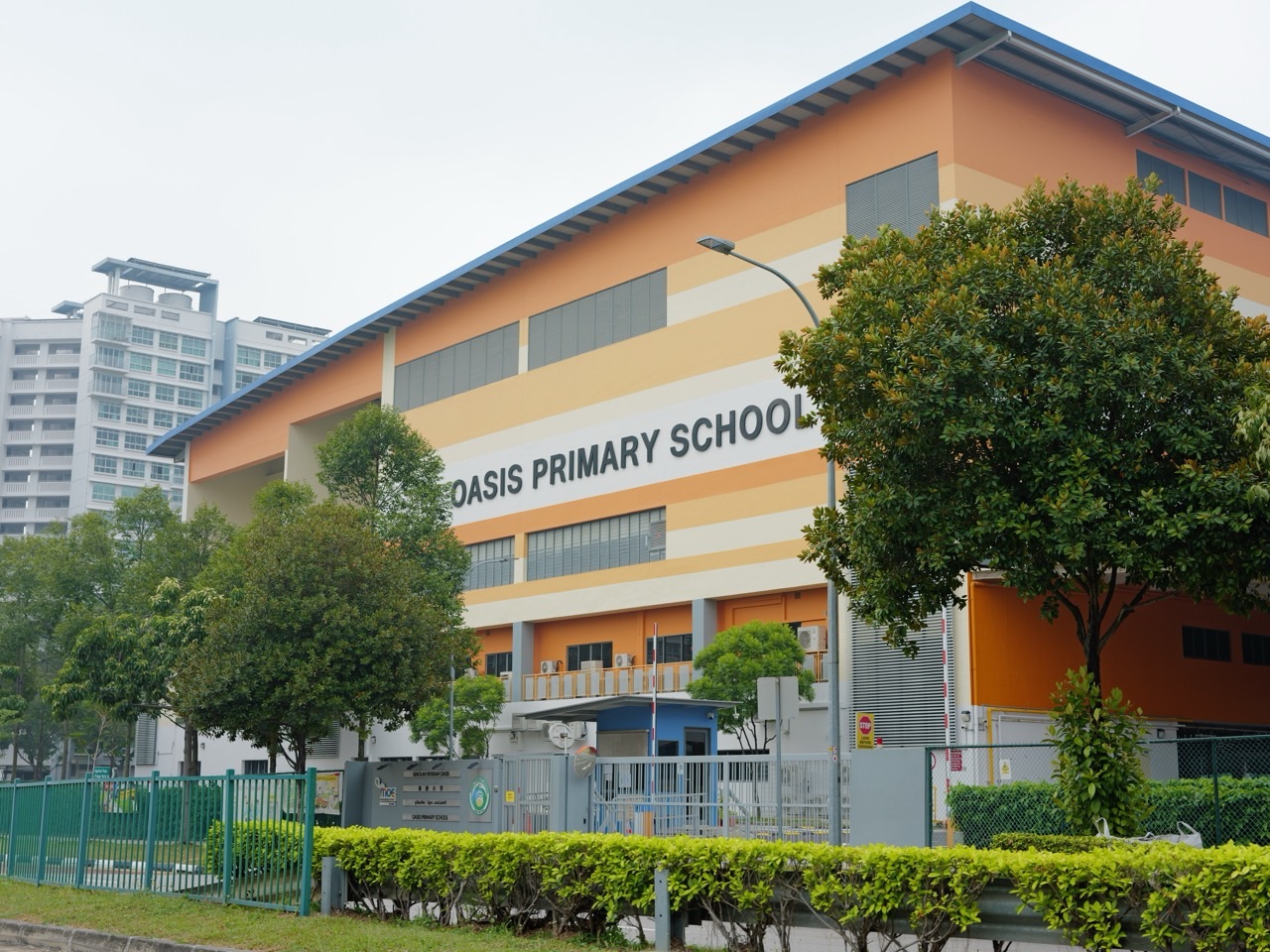
Looking for primary schools near Punggol for your child? Begin with the official MOE SchoolFinder and Primary 1 registration portal, not an online ranking. A school can be close to your HDB block yet fall into a different official home–school distance band from the one you expected. For admission, the correct registration phase, citizenship priority, available vacancies and any required balloting matter as much as the name on the school gate.
This Punggol guide explains how to build a realistic list of primary schools, verify the 1 km and 1–2 km categories, understand when balloting matters, and plan the daily journey. It is a decision guide rather than a promise of a school place. MOE’s 2026 P1 exercise, for children entering P1 in 2027, ran from June to August 2026. Families preparing for a later intake should use the dates and eligibility rules published for their own registration year.
- Start with your child’s birth date and the correct P1 registration year; do not copy a past exercise’s deadlines.
- Use MOE SchoolFinder for current school profiles, and the official P1 registration service for phase rules and distance information.
- Check home–school distance through the official method for the precise residential address, not a hand-drawn radius.
- Separate school proximity from admission certainty: a place depends on phase, priority, capacity and sometimes balloting.
- Consider actual morning travel, road crossings, after-school care, parent work hours and CCA schedules.
- Shortlist a few schools your family can genuinely attend rather than choosing by reputation alone.
- Read the school’s website for curriculum programmes, CCAs, student care, entry gates and parent briefings.
- Keep a contingency choice and follow the official result before making irreversible changes to childcare or transport.
The fastest answer to ‘which primary school is nearest to me?’
Enter your home address in the official school discovery and P1 registration tools and record nearby options. Do not start by searching for a single “best primary school in Punggol”. The answer to near me depends on where in Punggol the family lives. An estate near Northshore does not have the same daily paths as a household near Waterway Point or the eastern LRT loop. The same school can be easy for one family and inconvenient for another.
Write down three separate facts for each school: the official home–school distance category used for admission, the actual travel time during school arrival and dismissal, and the school’s educational fit. A short straight-line distance can still involve a road crossing, lift wait, feeder bus, rainy-day route or childcare handover. These should not be collapsed into one number.
School list: know the names before interpreting them
Punggol families commonly encounter schools such as Edgefield Primary, Greendale Primary, Horizon Primary, Northshore Primary, Oasis Primary, Punggol Cove Primary, Punggol Green Primary, Punggol View Primary, Valour Primary, Waterway Primary and Mee Toh School when exploring the wider Punggol area. This is a starting list, not a guarantee that every school serves a particular address or that the current exercise offers the same vacancies at each campus.
Use MOE SchoolFinder to verify names, addresses, programmes and current school status. Some schools sit near neighbourhood or planning-area boundaries; “Punggol” as used in conversation may not match an official administrative boundary. The right question is not whether an online directory includes a school, but whether that school matches your actual registration eligibility and family routine.
P1 registration is an admission process, not a school ranking
Singapore’s Primary 1 registration exercise places children into mainstream primary schools for the following academic year. The route for Singapore Citizens and Permanent Residents is organised in phases with different eligibility conditions. International students have a separate process and timeline. A parent’s preference for a curriculum theme, school award or convenient location does not create an additional admission phase.
This distinction is easy to miss because school comparison happens before the family registers. Research is broad: you can read about many schools. Registration is precise: you submit through the phase and procedures for which the child qualifies. Parents should establish the correct path first, then use school research to make the choice within it. See the official MOE P1 portal for the authoritative current rules.
How the registration year works
The most important date is the child’s eligibility year, not the date on a popular article. MOE stated that children born between 2 January 2020 and 1 January 2021 could register in the 2026 exercise for entry in 2027. These details are specific to that cohort. The next exercise will have its own applicable birth-date interval, calendar and instructions.
Parents who are reading in late 2026 should not treat the June–August 2026 period as a new application window. Use MOE’s eligibility checker and registration-year instructions for the child’s actual cohort. Add your calendar reminders only after checking the current official page. The practical failure here is not poor planning; it is careful planning against last year’s dates. A screenshot can be accurate for the year it was taken and unsuitable for the year you now need.
What are Phase 1, 2A, 2B, 2C and supplementary registration?
For Singapore Citizens and Permanent Residents, the 2026 P1 registration framework comprised Phase 1, Phase 2A, Phase 2B, Phase 2C and Phase 2C Supplementary. Each has distinct qualification conditions and a published sequence. Parents should avoid treating the phases as interchangeable attempts at the same school. Whether a child may participate in a particular phase depends on that phase’s rules.
The correct method is to open the official phase guide, identify the child’s genuine eligibility, verify the applicable documents and submit only in the permitted window. Do not rely on rumours that a parent volunteer arrangement, alumni connection or religious association automatically qualifies every family. Detailed conditions matter, and they can change. The school and MOE remain the sources of truth when a family’s specific case is unclear.
What 1 km and 1–2 km actually mean
Home–school distance is an admission-priority factor in specified P1 registration situations. The usual categories described by MOE distinguish homes within 1 km, homes between 1 km and 2 km, and homes farther than 2 km. The categories do not mean a family can drive to school in a matching number of minutes. They also do not mean a child is guaranteed admission just because an address is within 1 km.
Treat the official calculated category as an administrative result. A mobile map’s walking route may not match MOE’s method. Do not estimate from the centre of a housing development or from a nearby MRT entrance, then publish that estimate as fact. Check the actual eligible residence through the official P1 service and understand the address-use requirements before drawing a conclusion.
Why a flat across the street may still require checking
In a growing town, new blocks, sheltered walkways and road layouts make a neighbourhood feel familiar very quickly. Parents can see a school from the apartment window and reasonably think it must be in the nearest category. The admission system, however, does not decide eligibility through what is visible from a balcony. Address details and the designated calculation method matter.
If the official result appears surprising, verify the postal address and whether the address recorded for registration is the correct one. Consult MOE’s official guidance rather than trying to resolve the issue with a map screenshot. A wrong assumption can affect the family’s shortlist. A useful checklist is simple: address, postal code, school, distance category, registration year, screenshot date and official source. Keep them together so another caregiver can follow the same information.
Distance priority is not the same as a reserved seat
Suppose two hypothetical families both live in an eligible home–school distance band. One applies in a phase with enough available places. Another applies when the number of eligible applications exceeds the remaining places. Their proximity is similar, but their admission outcomes can differ because the phase, available capacity and priority order are not the same.
This is why a parent’s shortlist must include more than a favourite school. Read the current year’s vacancy and balloting updates. Understand the conditions that apply if there are more eligible registrants than vacancies. Do not tell a child “you will definitely attend this school” before receiving the official allocation. Plans for uniforms, student care and transport should remain reversible until the result is confirmed.
Balloting explained without unnecessary anxiety
Balloting is the mechanism used in specified oversubscribed registration circumstances after the relevant priority rules are applied. It does not assess a child’s intelligence, effort or future educational potential. An unsuccessful ballot does not mean the child was rejected as a learner. It means there were more eligible applicants competing for the available places under that phase’s rules.
Parents should read MOE’s official balloting explanation, including which groups may have priority and how outcomes are communicated. A school’s balloting history tells you what happened in a previous exercise; it does not guarantee the same pattern next year. Housing completions, family movements and applicant preferences can change demand. Use past data as context, not a prediction stated with certainty.
How to use past vacancies and balloting data responsibly
The MOE P1 service provides information and links to prior vacancy or balloting data. This is often the first evidence parents seek when asking whether a school is “competitive”. It is more useful than a rumour that a school is always impossible to enter, but the data still needs interpretation.
Check the year, phase and category before comparing two figures. An application count across all phases cannot be used as though it were the chance for a child applying in one particular phase. Nor can a historical no-ballot result be treated as a future guarantee. Keep uncertainty visible. A responsible Punggol guide tells parents exactly what previous results describe and what remains unknown for a future intake.
A three-column shortlist parents can finish in twenty minutes
Create a simple comparison table or notebook with three headings: Eligibility, Daily Life and Learning Fit. Eligibility includes the official phase and distance category. Daily Life covers route, rain plan, school hours, caregiver pickup and care after lessons. Learning Fit covers how well school practices, support, programmes and culture suit the child.
Score none of these as a universal school-quality metric. Instead, mark each as confirmed, needs checking or not applicable. For example, a family may value an after-school arrangement more than a particular enrichment programme, while another may have a child who needs specific learning support. Different trade-offs can be reasonable. The completed sheet should identify the next question to ask, not manufacture a single “top-ranked” primary school.
What to ask at a school visit or parent briefing
A school visit is most useful when it changes a decision. Ask how P1 pupils settle into the timetable; how reading, early mathematics and classroom routines are taught; what support is available if a child needs extra time; how the school communicates with parents; and how the school handles arrival, dismissal and student care. A school’s general aspiration is encouraging, but a concrete example of a typical day is more useful.
If the school offers distinctive programmes, ask what P1 pupils actually experience rather than assuming every listed activity starts immediately. Ask whether particular facilities or CCAs begin only in later levels. Do not compare schools by the number of marketing phrases in their prospectuses. Compare the daily experience your child will have. Record the source and date so that old event material is not mistaken for the current intake guide.
A child’s first school is also a transport system
At Punggol, the family may use a direct walk, an LRT connection, a bus, a school bus or an adult’s short drive. Each introduces different constraints. A route that is pleasant at midday may become crowded at the start of school. A traffic crossing may need practice. Parents who rely on public transport should include realistic waiting and transfer time rather than the shortest possible timetable.
Try the journey on a normal weekday, ideally near the expected arrival hour, and repeat the return trip. Note shelter, toilets if needed, safe crossing points, school gate instructions and where the caregiver will actually wait. A school five minutes farther away may still be the better daily arrangement if its route is simpler and more reliable. These are family logistics, not judgements about a school’s teaching.
What if the family is moving to Punggol?
Parents planning a move need to separate a future home address from an address that the admission system permits them to use at the relevant time. HDB completion schedules, lease arrangements, temporary stays and changes of caregiver can complicate assumptions. Do not use a relative’s address merely to improve a priority category unless the applicable official rules genuinely allow it.
Keep evidence of the actual residence arrangement and read MOE’s declaration and address rules. If a child is already in primary school rather than entering P1, the relevant pathway may be the Primary School Transfer Service instead. That is a different process with different eligibility and vacancies. Mixing the two can cause unnecessary delays.
What if a child needs additional learning support?
Parents sometimes ask “which school has the best results?” when their real concern is whether the child will be supported. Start with the actual need: classroom transition, communication, learning support, sensory requirements, language development or a particular diagnosed support arrangement that the family chooses to discuss with the school. Ask about the school’s official services and how referrals or support are organised.
Do not infer that a school can or cannot accommodate a child from a single parent review. Nor should a tuition advertisement replace a school conversation. Ask the school for its current support process and MOE for programme eligibility where relevant. For an independent learning routine, the starting goal might be a calm morning and confidence in classroom directions, not extra worksheets. A good school choice supports the whole child.
How to prepare for Primary 1 without turning K2 into Primary 2
School readiness is broader than early mastery of difficult test papers. Useful preparation includes listening to simple directions, recognising personal belongings, using the toilet independently, asking an adult for help, recovering after small mistakes, opening a lunch box and enjoying books. A child who can make a friend and ask a question is building a meaningful foundation.
Learning matters too, but it should be introduced through stories, conversation, counting, games and gradual familiarity with pencil and page. Read together, talk about cause and effect, compare quantities and practise routines. Not every child needs tuition before P1. If a specific difficulty persists, consult educators and consider focused support rather than an indiscriminate acceleration programme. Protect play and rest; the first school term is already a significant transition.
What should families do about student care?
A school-based student care centre may be useful when parents work beyond dismissal, but availability, eligibility and application procedures need to be checked separately from P1 placement. A child receiving a school place does not automatically secure a preferred care arrangement. For some families, grandparents, flexible work or an independent care provider may form part of the plan.
Before making promises, verify who collects the child, what happens if transport is delayed, how meals and homework are handled, the closing time and backup arrangements. Look at the entire afternoon, not just where the child is at 2 pm. The detailed Punggol care guide explains how these handovers fit alongside school and family life.
Financial planning: know what you are actually paying for
A nearby primary school may reduce transport spending, but it does not remove every cost of school life. Families should budget for uniforms, shoes, stationery, meals, transport where needed, co-curricular activities and possible student care. Purchases should be based on the receiving school’s current lists instead of buying every item recommended in parent chat groups.
MOE financial assistance and school support may be available to eligible families; criteria and benefits should be checked through current official information rather than copied from an old table. Keep compulsory items separate from optional enrichment. A thoughtful family budget should leave room for ordinary childhood: health, sleep, play and conversation. More paid classes do not automatically mean a better education. The aim is a sustainable start, not a race to accumulate invoices.
A four-week family preparation plan
Week 1 — establish eligibility. Confirm the child’s birth-date cohort, citizenship/registration route, family address and official P1 exercise. Record the URLs and dates used. Week 2 — build the shortlist. Compare the eligible schools, verify home–school distance and look at each school’s basic programmes and student care arrangements.
Week 3 — test daily life. Walk or travel sample routes, research transport and pickup, ask about the school day and talk with your child about what feels unfamiliar. Week 4 — document the decision. Keep the main option and a realistic alternative, organise documents, and set reminders for official registration milestones. Once a school place is confirmed, use a new four-week plan for settling in rather than repeating admission research endlessly.
Example family: the home near the Punggol LRT
Imagine a family whose child will enter P1 after the next registration exercise. The parents see a school name on a map beside the LRT and assume it is both nearest and easiest. When they compare the official registration distance category against the real school gate journey, they discover these are separate questions. A school reachable by one sheltered walk may be more manageable than a school with a seemingly shorter map distance but two transfers.
The family also needs an adult to collect the child when school finishes. Instead of ranking schools by reputation alone, they shortlist schools using confirmed eligibility, realistic transport and after-school care. They then read the current school’s P1 orientation material. This process does not predict admission; it creates a more robust family decision even if the first choice cannot be secured.
Example family: a move scheduled for next year
Another family expects to move into a new Punggol home before school starts. They find a school near the future address and make ambitious plans. The risk is not the school itself. It is assuming the future residence is automatically the valid registration address. The family needs to check which address can be used under the applicable MOE rules and whether any proof or occupancy obligations apply.
They document the planned move honestly and ask MOE or the school about uncertainties rather than improvising a paper arrangement. At the same time, they examine an alternative that would remain workable if the move is delayed. A good decision uses both the expected future and a realistic backup. Education planning should adapt to housing life, not deny that housing schedules can change.
Example family: a child who needs a gentler transition
A third family has a bright child who is anxious about a new environment. The parents are tempted to buy a demanding early academic course so that the child will seem more prepared. They instead ask schools about first-term routines and the ways teachers support adjustment. They practise packing a bag, asking an adult for help and reading a short book together.
They pay attention to the child’s sleep and travel rather than adding pressure. If the child has an identified learning need, they contact the school early to discuss appropriate arrangements. The lesson is not that academics are unimportant. It is that good P1 preparation solves the actual transition problem. Preparedness includes emotional security, independence, friendship and the confidence to try.
When private tuition is useful — and when it is not
Some families in Punggol need targeted help with English reading, foundational mathematics or an older sibling’s school transition. Others do not. A child already progressing comfortably with support at school and home may gain little from another fixed lesson every week. The first question is what difficulty has been observed and whether a proposed intervention directly addresses it.
Where a small group is appropriate, the tutor should examine real student work, locate the earliest unstable skill, teach with clear explanations and review progress without promising instant grades. eduKate offers small-group tuition in Punggol, but a school-selection guide is not an argument that every family needs to enrol. Start with the child’s present position and the routine the household can sustain. See our Punggol primary tuition guide for the separate learning-support decision.
How to avoid bad P1 advice online
Three warning signs are worth recognising. First, a page gives a future year’s registration deadline before the official calendar is published. Second, it treats a historic ballot result as guaranteed admission. Third, it presents a school as “best” without explaining the child, family and purpose against which that conclusion was reached.
When you encounter a claim, ask who owns the rule, which year it describes, whether it applies to your child’s phase and where the official page confirms it. A social post can help parents discover a question; it should not be the final authority for an application. Save the direct official link beside your shortlist. In a changing town, a resilient guide teaches people how to verify facts rather than pretending to own the whole live database.
Frequently asked questions
Is a primary school within 1 km guaranteed? No. Registration phase, eligibility, available vacancies and any balloting can affect allocation. Should I use Google Maps to decide the official distance band? No. Verify the registered address and distance through MOE’s official P1 service. Does the P1 exercise take place when school starts? No. It registers children for the following school year; consult the exercise calendar.
Can I register using a relative’s address? Only use an address arrangement permitted by the current official rules and supported truthfully. Are Punggol schools all identical? No. Their programmes, cultures and practical routes differ. Should I decide only by PSLE results? No. Younger children need suitable teaching, well-being and a sustainable routine. What happens if we move after P1? Check the separate MOE school-transfer process and its eligibility rather than assuming P1 registration rules still apply.
Useful links, sources and next reading
Official: MOE P1 registration, phases, distance and balloting; MOE SchoolFinder. eduKatePunggol: Primary school, P1 and PSLE overview; Punggol school choices and learning programmes; Moving house and primary-school transfers.
This guide was prepared for Punggol readers in November 2026. School vacancy figures, deadlines, phase rules and individual school arrangements are live matters: check the official pages at the point of action. The family decision is successful when it turns reliable information into a school experience that the child and caregivers can actually sustain.


