
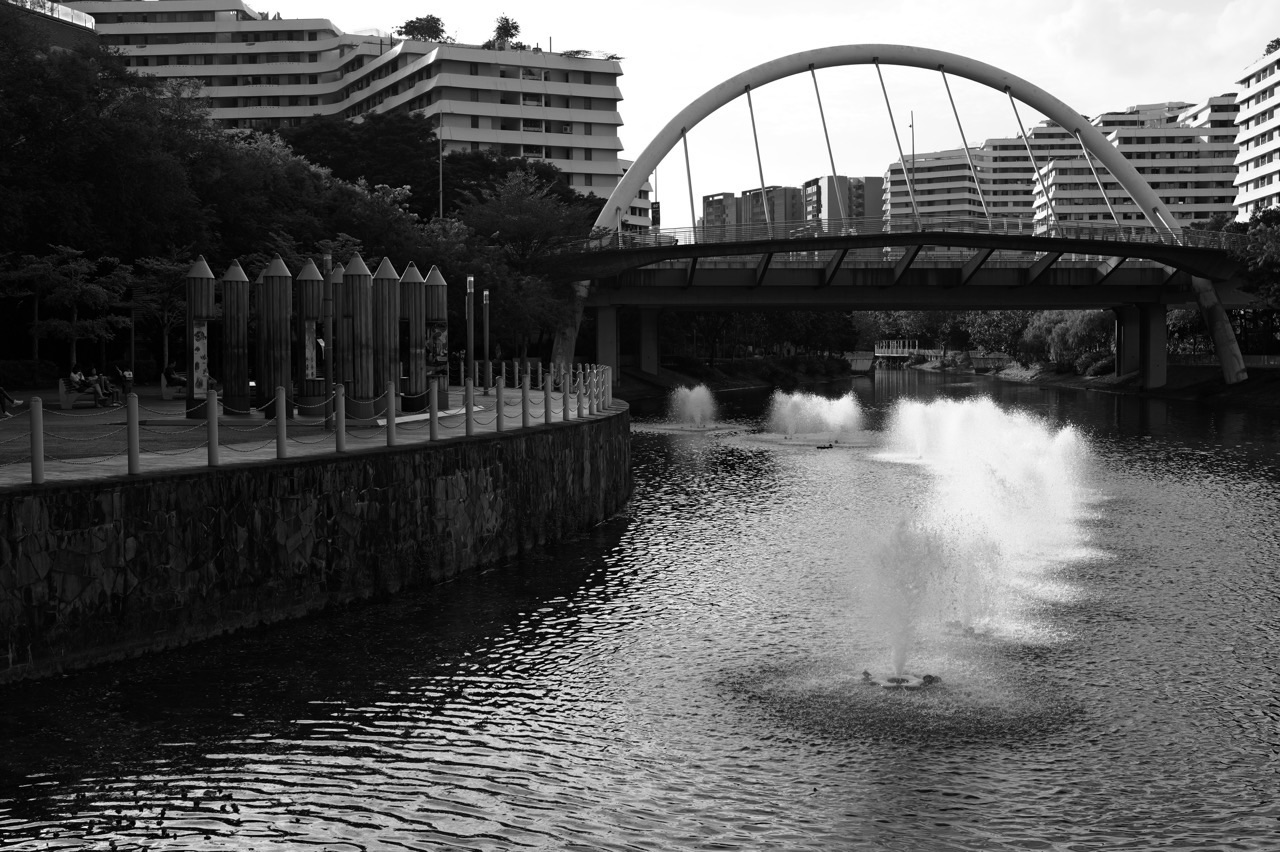
What can you do in Punggol after the rain stops? Start by checking that lightning risk, heavy showers, haze and any local flooding or path closure no longer make an outdoor visit unsuitable. Then choose a short familiar public activity: observe a safely accessible stretch of Punggol Waterway Park, take a brief photograph of fresh light and planting, enjoy an indoor meal around One Punggol or Waterway Point, or browse Punggol Regional Library. The best post-rain outing is not a long march along every wet bridge. It is one appropriate place, a clear route home and the freedom to stop when conditions change.
Things to do around Punggol after a shower depend on what the rain left behind. A paved path may remain slippery, a children’s play feature may be closed for cleaning, storm drains can have fast-moving water and the park may be unsuitable for some mobility needs. The sky may become brighter without air pollution having cleared. This guide explains what is genuinely useful about the after-rain window: small observations, photography, safe family activities, choosing the correct indoor or outdoor option, and knowing when to postpone entirely.
18 October 2026 haze notice: NEA forecast unhealthy to very unhealthy 24-hour PSI (150–220) for today. Do not treat a rain shower as proof that Punggol’s PM2.5 has returned to normal. Use the latest one-hour PM2.5 personal guide for immediate plans and NEA/MOH guidance appropriate to age, health status, duration and intensity. Children, older people and pregnant women are advised to minimise outdoor activity for the forecast, and people with chronic heart or lung conditions are advised to avoid it. Under unsuitable conditions, an indoor activity or postponement is the correct choice.
The after-rain Punggol decision table
| What is happening? | Most sensible choice | Why | Do not assume |
|---|---|---|---|
| Rain stopped but lightning warnings remain | Stay in safe indoor shelter | Lightning risk may continue beyond visible rain | No rain means no lightning |
| Rain stopped but haze remains unhealthy | Use a suitable indoor or at-home option | Outdoor pollutant exposure remains a separate decision | Wet roads mean clean air |
| Conditions are suitable and paths are dry enough | Short familiar public Waterway route | Enjoy light, planting and public views with easy return | Every bridge or boardwalk is slip-free |
| A child wants active play | Check age-appropriate playground condition first | Wet equipment and puddles create different hazards | All equipment reopens immediately |
| A visitor needs a step-free route | Check the exact public entrance and path surface | Accessibility differs by segment | One ramp makes whole park accessible |
| Only 30 minutes are available | One indoor browse or safe nearby outdoor look | A small outing can be complete | A full park loop fits |
| Outdoor conditions change again | Go home or use safe indoor fallback | Avoid rushed travel during renewed storms | The first forecast must remain correct |
Why ‘after the rain’ is not a single safety condition
The sky may look open while a thunderstorm remains nearby
Rain can pause at your block before the wider storm has ended. Lightning may occur when the heaviest shower is no longer directly overhead, and another cell can arrive quickly. A sunny-looking slice of sky is not a personal all-clear signal for exposed bridges, boardwalks or open waterfronts. MSS provides lightning and rain information to support immediate decisions.
Check the official current conditions and avoid exposed outdoor routes while lightning danger remains. If you are at One Punggol or a retail centre, there is no obligation to step out just because the glass doors reveal a brighter path. A safe ordinary indoor experience counts.
Wet ground changes the character of a familiar route
A path that feels easy on a dry morning can become slippery after rain, especially where there are painted markings, leaves, smooth surfaces or puddles. Different footwear and mobility needs also change what feels safe. A child running toward a puddle or a person using a walking aid may not be able to adjust quickly.
Choose a familiar short public route, use appropriate footwear, watch the surface and turn back when conditions are doubtful. Do not assume every Punggol Waterway bridge, timber boardwalk or park connector dries at the same speed. A short, manageable path is better than an improvised long circuit.
Fast-moving stormwater should stay a distant observation
Punggol’s Waterway and public drainage are parts of an engineered urban environment. Rain can change water levels, surface appearance and drainage flow, but a person cannot infer safety from how attractive the water looks. A photo of fast-flowing runoff is not a reason to approach or enter a drain, canal or flooded underpass.
Stay out of floodwater and away from rapidly moving runoff. Do not send children to measure rainwater near a canal or retrieve an object washed toward a drain. For water-system curiosity, use PUB’s public information and the Punggol Waterway Science Trail when a safe public route is suitable.
Clearer visibility after rain is not a PM2.5 measurement
Rain can affect particles, wind and local air mixing, while regional haze transport may continue. The colour of the sky depends on many things: cloud cover, sunlight, moisture, aerosol and camera exposure. A bright sunset following a shower cannot determine the concentration of fine particulates that affect health.
Write down ‘the distant building appears clearer’ as a visual observation if true, then check the official air-quality readings separately. The Punggol haze outdoor activity guide owns the health-decision explanation. Do not schedule a long run or bike ride based on appearance alone.
Puddles can be interesting but also hide real hazards
Children may want to splash, photograph reflections or throw stones into water. On a park path, puddles may cover uneven ground or slippery material. Puddles close to a road or cycle lane can also draw children into other users’ way. Some puddles may contain dirty runoff.
Choose a safe, appropriate play area instead of treating every puddle as a water-play facility. For nature observation, a child can describe the shape of a reflection from a safe dry point. Do not let children enter unknown water, drains or floodwater for an experiment.
Park rules still apply after a shower
Rain does not change NParks’ regular path-sharing requirements. Punggol Waterway Park’s Kelong, Wave and Adventure Bridges and boardwalk have cycling restrictions. Wet weather may make shared paths busier or create unexpected stopping points for photographers. Everyone needs a little more space and patience.
Dismount where required, slow around other users and avoid occupying a narrow bridge for a photograph. The Punggol public-space etiquette guide connects the rules for walkers, cyclists, pet owners and families; these apply whether or not it recently rained.
The right weather fallback should be in the same neighbourhood
Families often rescue a rainy-day itinerary by travelling from the Waterway to the northern coast or another faraway venue. That can create more exposed walking and transfer time precisely when the weather remains unpredictable. Instead, plan one known indoor place close to the original activity.
Around central Punggol, appropriate normal library areas, food and retail may be useful; at Punggol Coast, actual open mall and food spaces are a possible fallback. Each operator has its own hours and eligibility, so an indoor option still needs a simple check.
Not all Punggol neighbourhoods have the same shelter and ground conditions
Oasis, Coral Edge, central Waterway, Northshore and the Digital District have different built layouts. A route that looks sheltered in a photograph may still expose someone at crossings. A naturally ventilated community spine is not identical to a fully enclosed mall. Rain can also leave some public planting or paths temporarily inaccessible.
Choose the exact venue and current public approach before promising a comfortable post-rain walk. The Punggol Without a Car guide explains different stations and how to avoid cross-town detours. For someone with mobility needs, check actual step-free continuity.
Rain can expose genuine beauty without requiring special equipment
A few raindrops on a leaf, soft light between clouds or the reflection of a tree from a suitable public path can make a simple photograph or sketch. You do not need a professional camera, a dramatic viewpoint or an hour-long hike. The activity is about noticing one scene, not collecting every landmark.
Keep photography to lawful safe viewpoints; do not lean over railings, stand on slippery stairs or obstruct a cycle lane. If current haze advice discourages outdoor exposure, use a previously taken image and create a short indoor photo diary instead.
Time of day matters for rest and family routines
An afternoon shower may stop just before a child’s dinner, bedtime or school preparation. A parent does not have to turn that moment into an excursion. A couple may prefer an unhurried meal, while a teenager might choose a reading stop. A short post-rain opportunity is worthwhile only if it fits the people involved.
Ask how much time and energy genuinely remain, and account for returning home. The Punggol lifestyle planner helps balance duration, budget and comfort. There is no requirement to go outside after every shower.
Punggol Point closure does not end because the weather improves
Punggol Point Park has been under upgrading closure; the northern Digital District and Punggol Heritage Trail have distinct phased public access. A shower ending cannot restore closed facilities or make a partially complete walkway continuous. An outdated visitor guide may lead someone to a fenced park.
Use current NParks and JTC notices rather than old waterfront photographs. Check Punggol Point upgrading and the Punggol Digital District guide before heading north. Choose a confirmed open alternative when the intended connection is unavailable.
After-rain dengue prevention is a home task, not a public adventure
Water left in flowerpot plates or uncovered containers after rain can encourage mosquito breeding. NEA advises regular checks and removing stagnant water at home. Families can use a safe adult-led routine to inspect accessible household containers without creating new standing water for an experiment.
Do not ask children to climb roofs, reach through high windows or handle unknown waste in public drains. Use official dengue guidance and the site’s Healthy HDB Home article for home-specific concerns. This is more useful than turning a waterlogged park into a collection exercise.
Five good Punggol after-rain activities when conditions are suitable
A short Waterway Park observation
Choose a familiar signed public path with a safe turning point. Notice how the light, water and plants look after the shower without trying to cover all four park zones. Walk only if official weather and air-quality guidance, personal health and the path surface make it appropriate.
A 10–20-minute view can be enough. Keep the return route easy, supervise children and do not approach water edges or slippery boardwalks for a closer reflection. The Waterway Park guide owns individual features.
One Punggol library and food
Punggol Regional Library at One Punggol is a practical indoor-oriented leisure option. A family can choose age-appropriate books or a normal permitted reading area, then have a meal in a suitable current food location. The main activity does not depend on an outdoor path becoming dry.
Some library rooms, programmes and maker equipment require registration or have special operating hours. Ordinary browsing is different from a booked activity. The One Punggol guide helps clarify the building’s different functions.
A photography or sketchbook pause
From a safe permitted place, notice one post-rain texture such as a leaf, building reflection or cloud edge. Take one photograph or draw a small view. Compare it with an existing dry-weather image while recognising that lighting, angle and cloud cover change appearance.
Do not infer actual air-quality conditions from the colour of the photograph. Do not photograph identifiable strangers intrusively or block paths. See the four-weekend photo diary for how to record what was actually observed.
A short local food-and-walk pairing
Choose one current open food option in the neighbourhood you are already visiting. If conditions later permit, follow with a short public walk nearby. For example, the central town or One Punggol can work as a meal-first destination with the Waterway an entirely optional second part.
Meal venues have different operating hours and prices, while exposed outdoor segments can remain wet. The Punggol food-and-walk pairings explains which clusters naturally go together without forcing a cross-town trip.
A family water-and-weather conversation indoors
Use a book, official MSS weather page or existing local photograph to discuss why rain falls, where runoff goes and how weather differs from climate. A parent can ask one observation question while children draw a cloud or waterway. No one needs to travel or stand in rain to learn something interesting.
This is the preferred version when haze or lightning makes outdoor exposure unsuitable. The Punggol rain-watching journal owns the safe at-home activity, while the Waterway Science Trail is a later safe outdoor extension.
Twenty-two small things to notice after a shower
1. A change in light
Notice: Describe whether a familiar building looks brighter or darker. Boundary: Do not claim the measured air is cleaner. This is an optional observation, not a checklist that has to be finished in wet weather.
2. Drops on a leaf
Notice: Observe from an appropriate public path or safe indoor view. Boundary: Do not pull public branches down. This is an optional observation, not a checklist that has to be finished in wet weather.
3. A wet pathway
Notice: Notice where people step or slow down. Boundary: Do not deliberately walk across slick surfaces. This is an optional observation, not a checklist that has to be finished in wet weather.
4. A reflection
Notice: Look at a puddle or canal from a safe position. Boundary: Do not stand at a water edge or in traffic. This is an optional observation, not a checklist that has to be finished in wet weather.
5. Cloud layers
Notice: Compare two visible cloud colours or shapes. Boundary: Do not identify a storm system from colour alone. This is an optional observation, not a checklist that has to be finished in wet weather.
6. Tree movement
Notice: Notice branches moving after a rain shower. Boundary: Do not infer a numerical wind speed. This is an optional observation, not a checklist that has to be finished in wet weather.
7. Drainage direction
Notice: Read public PUB information about runoff. Boundary: Do not enter a drain or floodwater. This is an optional observation, not a checklist that has to be finished in wet weather.
8. A dry versus wet photo
Notice: Compare two dated images of the same scene. Boundary: Angle and time can also change appearance. This is an optional observation, not a checklist that has to be finished in wet weather.
9. A public sign
Notice: Check whether the route or equipment has any notice. Boundary: Old blog photos may be out of date. This is an optional observation, not a checklist that has to be finished in wet weather.
10. A shaded seat
Notice: Choose a proper safe permitted rest point. Boundary: A public bench cannot be reserved indefinitely. This is an optional observation, not a checklist that has to be finished in wet weather.
11. A bridge silhouette
Notice: See the outline from a wide safe public space. Boundary: Do not block narrow crossings. This is an optional observation, not a checklist that has to be finished in wet weather.
12. A planted water edge
Notice: Observe how vegetation meets the path. Boundary: Avoid trampling planted banks. This is an optional observation, not a checklist that has to be finished in wet weather.
13. A bird returning to an area
Notice: Watch without approaching or feeding wildlife. Boundary: No species sighting is guaranteed. This is an optional observation, not a checklist that has to be finished in wet weather.
14. A restaurant window view
Notice: Enjoy a meal while watching changing light. Boundary: Respect a commercial venue’s seating rules. This is an optional observation, not a checklist that has to be finished in wet weather.
15. A library weather book
Notice: Look for one relevant subject or picture. Boundary: Special sessions may need booking. This is an optional observation, not a checklist that has to be finished in wet weather.
16. A short map check
Notice: Identify the closest covered alternative. Boundary: Do not mistake schematic distance for access. This is an optional observation, not a checklist that has to be finished in wet weather.
17. A changed forecast
Notice: Compare the current MSS bulletin with earlier expectations. Boundary: A forecast is not a guaranteed minute-by-minute prediction. This is an optional observation, not a checklist that has to be finished in wet weather.
18. Current haze guidance
Notice: Look up one-hour PM2.5 before deciding about outdoors. Boundary: Rain is not a substitute for the reading. This is an optional observation, not a checklist that has to be finished in wet weather.
19. Mosquito prevention
Notice: Check safe household plant containers with an adult. Boundary: Do not create standing water samples. This is an optional observation, not a checklist that has to be finished in wet weather.
20. One interesting photograph
Notice: Take it only from a safe and legal position. Boundary: No photograph is worth a slip. This is an optional observation, not a checklist that has to be finished in wet weather.
21. A different family preference
Notice: Ask whether people prefer a walk, book or rest. Boundary: Nobody is required to enjoy wet paths. This is an optional observation, not a checklist that has to be finished in wet weather.
22. A comfortable return
Notice: End the activity near a familiar transport or home route. Boundary: Do not force a long exposed final leg. This is an optional observation, not a checklist that has to be finished in wet weather.
Four practical Punggol plans following a shower
The ten-minute home observation
Stay indoors at a safe window, note what rain left on a familiar public-facing landscape and check current official weather and haze information. If you can see a tree or roofline, compare its outline with the same view from earlier. Write down what is observed rather than guessing rainfall amounts.
This is appropriate even if the storm has not fully cleared, provided the observation position is safe. No rooftop, balcony edge or street crossing is needed. An existing photograph can replace the window view if necessary.
The thirty-minute library stop
Travel only if conditions make the journey appropriate. At One Punggol, choose an ordinary suitable NLB reading area and spend the time browsing rather than trying to tour the Waterway. The family’s meeting point and transport home should be clear. You can enjoy a book even when outdoor pathways remain wet.
This works for a young child, reader or person who wants a calm low-demand activity. Check NLB’s area-specific hours and avoid assuming special room access or seats are guaranteed.
The forty-five-minute meal plus optional public view
Choose a suitable open food destination near Punggol MRT or another nearby cluster. Enjoy the meal first. Afterward, assess current weather, air quality and path conditions. If safe and genuinely desired, make a very short visit to a familiar publicly accessible landscape; otherwise go home.
This format suits friends and relatives because the essential activity is indoors. It also prevents a family from spending a rainy evening searching across several different parts of Punggol for a view.
The next clear day: Waterway and a small nature activity
When conditions are suitable on a later date, use the signed public approach to a manageable section of Waterway Park. Look at one planted area or bridge and ask a light observation question. Return along a known route, giving way to path users and avoiding any closed works.
This is intentionally a postponed option. Outdoor nature, photography and cycling should not be forced on a day when lightning or NEA guidance makes exposure inappropriate. Use Punggol Nature Without Hiking to keep the eventual visit low effort.
What changes for families, seniors and people with mobility needs?
Young children
A toddler may be delighted by puddles and wet playground equipment, but the adult must decide whether the surface and surroundings are safe. A short indoor reading or supervised home activity can be better than slippery paths, particularly when the current haze forecast discourages outdoor exposure.
Primary school students
A child can use a safe window to compare actual cloud conditions with official weather information, or later observe how wet surfaces change reflections. Avoid requiring children to measure runoff or enter drains for a school-style activity. Accurate observation and ordinary curiosity are sufficient.
Teenagers and friends
A meal, book, indoor game or short approved public outing can work without rushing toward a post-rain waterfall-style photograph. Agree on meeting points, spending and the return trip. Transport disruptions and heavy showers may justify postponement.
Older relatives
Ask about comfortable walking surfaces, distance, seats and toilets. A wet footpath may be more difficult even where a dry route is normally manageable. A library or food-led day with a short optional outdoor look can be easier than a long Waterway circuit.
Stroller or wheelchair users
Check the entire actual route for slopes, puddles, slippery transitions, lifts and crossings. An accessible building does not make every adjacent park path universally usable. The Punggol stroller/wheelchair guide is the separate detailed route resource.
Visitors new to the town
Central Punggol and Punggol Coast are separate clusters. If the shower passes while a visitor is at One Punggol, the sensible answer may be to remain in the same area rather than transferring north for a photograph. The car-free Punggol guide gives the transport logic.
Frequently asked questions about going out in Punggol after rain
Is Punggol Waterway Park safe immediately after heavy rain?
Suitability depends on current weather, lightning, path condition, access and personal needs. Rain stopping does not guarantee every segment is safe or dry.
Can lightning continue after rain stops?
Yes. Check MSS warnings and stay out of exposed waterfront areas when lightning danger remains.
Is a brighter sky proof the haze has gone?
No. Rain and sunlight affect visibility, but official PM2.5 readings and PSI guidance are required for health decisions.
What should families do on 18 October 2026?
NEA forecast unhealthy to very unhealthy PSI. Follow the latest immediate and next-day health advice, favouring indoor or postponed outdoor plans as appropriate.
What is a good short indoor alternative?
An appropriate ordinary reading experience at Punggol Regional Library, a home game or a suitable open food location can work. Check access and travel safety.
Can children splash in park puddles?
Do not assume a puddle is safe. Wet surfaces, runoff and nearby paths can be hazardous; use appropriate age-suitable play options.
Can we fish in Punggol Waterway Park after rain?
No. NParks prohibits fishing in Punggol Waterway Park. Other locations have their own designated rules.
Do Waterway bridges become cycling routes when rain stops?
No. NParks’ cycling restrictions on selected bridges and boardwalks remain in force.
Can I use Coney Island after a storm?
Only during its 7am–7pm opening window and when trails, terrain and weather are appropriate. Rustic paths may remain wet and unsuitable for some visitors.
Is Punggol Point Park now open?
No inference follows from the weather. It is under upgrading; use current NParks notices before planning a visit.
Can we enjoy the Punggol Heritage Trail after rain?
The first public part is open, with later parts phased. Check access, weather and surfaces before any outdoor visit.
Will the rain clean all pollution out of the air?
No. Rain can influence particles and local conditions, but pollutant levels still depend on winds, regional smoke and other factors. Read NEA measurements.
What is the difference between PSI and one-hour PM2.5?
The PSI forecast helps with broader next-day activity planning; the one-hour PM2.5 concentration supports immediate fine-particle guidance. Follow the current official personal guide.
Can I photograph puddle reflections?
From a lawful safe stopping place, yes. Do not stand on slippery ledges, block a cycle lane or approach a waterway edge for a closer image.
What if the park path is flooded?
Do not enter floodwater or force a crossing. Choose an open safe alternative and follow PUB/NParks warnings.
What can we learn at home instead?
Record cloud and rain observations from a safe window, check MSS information or draw a water cycle. You need not travel to complete an activity.
Can a grandparent enjoy a post-rain walk?
Possibly, but confirm the actual path surface, mobility comfort, shade, seat and return route. A short indoor outing can be preferable.
What about a stroller?
Wet paths, ramps and crossings differ; check the full chosen route. Do not assume every boardwalk or park segment is appropriate.
Why check for stagnant water after rain?
Standing water in household containers can support mosquito breeding. Follow NEA’s regular mosquito-prevention advice and handle inspection safely.
Is wet park water safe to touch?
Do not treat canal or drain water as safe for contact or sampling. Use official water-safety and drainage education instead.
How long should an after-rain activity last?
There is no universal duration. Ten to thirty minutes can be enough for a short observation if conditions genuinely suit, with a clear exit.
Where can we eat and walk afterward?
Central Punggol, One Punggol or other food clusters can work with an optional nearby public stroll. See the Punggol food-and-walk pairings.
Can a public library host our large rainy-day party?
Not without following specific facility and booking rules. Ordinary library access does not confer exclusive group use.
Where do I find all wet-weather Punggol activities?
Use the Punggol rainy-day guide for indoor venue ideas and the complete town hub for wider lifestyle choices.
What if weather improves while haze remains unhealthy?
A visually improving sky should not override the current NEA/MOH guidance. Consider an indoor activity or a future outdoor date.
Read the connected eduKate Punggol guides
- Punggol Rainy-Day Activities
- Rain Watching from Home
- Waterway Park Guide
- Nature Without Hiking
- Punggol Waterway Science Trail
- Four-Weekend Photo Diary
- Outdoor Haze Guidance
- Indoor Haze Places
- One Punggol Library and Community Hub
- Punggol Food and Walk Pairings
- Punggol Without a Car
- S$20 Day Out in Punggol
- Punggol Public-Space Etiquette
- Stroller and Wheelchair Routes
- Healthy HDB Home and Dengue
- eduKateSG Punggol Green Learning
Official references and 18 October 2026 update
Primary sources: Meteorological Service Singapore Lightning Information, MSS Rain Area, PUB Flood Management, NParks Punggol Waterway Park, NParks path-sharing guidance, NEA 17 October haze advisory for 18 October, MOH Haze Health Advice, and NEA dengue prevention. Updated 18 October 2026. Live weather, air quality and park access change; use the official current information for any immediate outing.


