
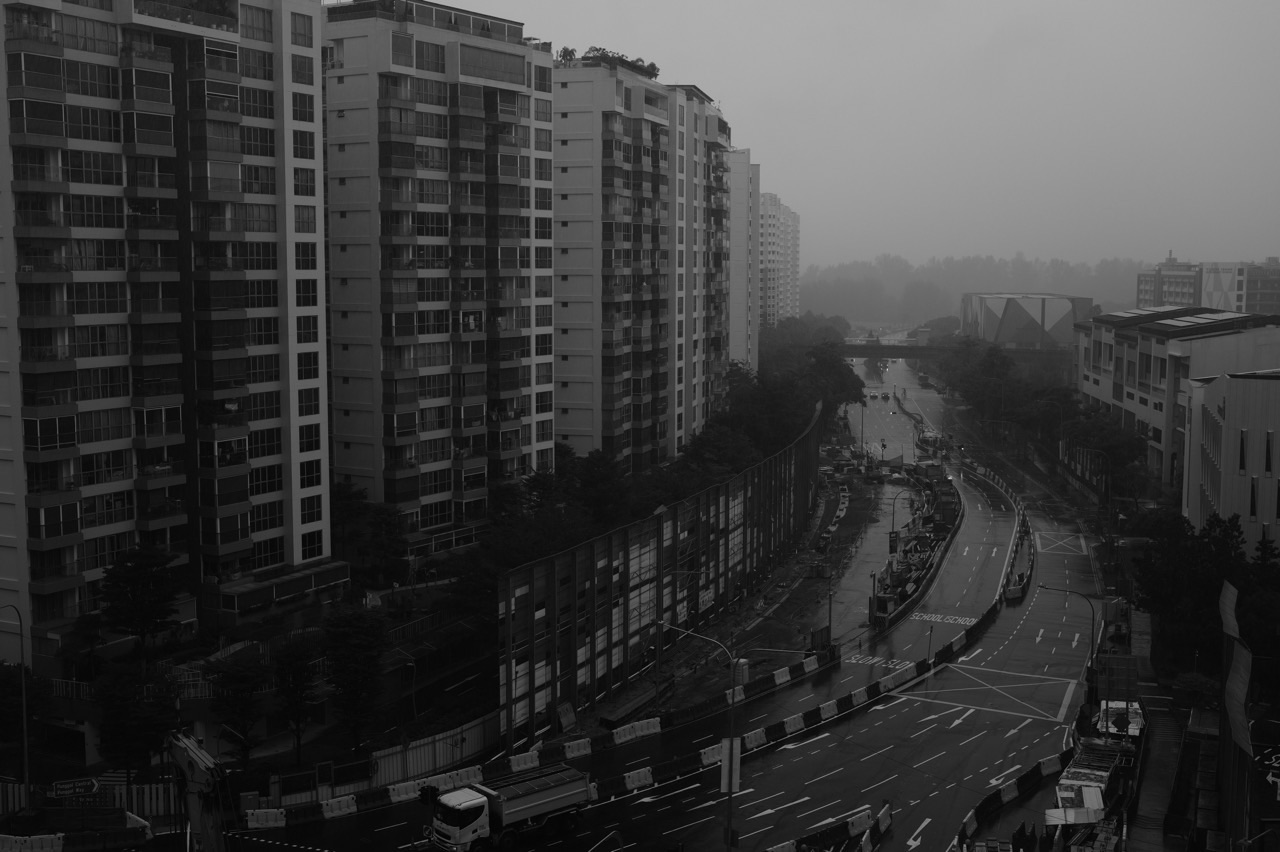
Things to do in Punggol on a rainy day do not have to begin and end inside a shopping mall. Punggol Regional Library, One Punggol, Waterway Point, Punggol Coast Mall, food, movies, sheltered civic spaces and short weather-dependent walks can be combined into a full indoor-and-outdoor day. The key is to treat rain as a planning condition rather than as a failed version of a sunny itinerary.
For families, couples, students and solo visitors searching for indoor things to do in Punggol, rainy-day activities in Punggol or wet-weather weekend ideas, the most useful strategy is to choose one transport-connected indoor anchor and build from there. Punggol MRT supports Waterway Point, the town centre and One Punggol. Punggol Coast MRT supports the newer Punggol Digital District and Punggol Coast Mall. Both areas let visitors wait out showers without losing the whole day.
This 2026 rainy-day Punggol guide explains what to do during light rain, heavy rain and thunderstorms; how to use Punggol Regional Library, One Punggol, Waterway Point and Punggol Coast effectively; when outdoor parks should be avoided; how to plan for children; and how to turn weather interruptions into a more relaxed, realistic Punggol itinerary.
Rainy-Day Punggol at a Glance
- Best all-purpose indoor base: Waterway Point beside Punggol MRT.
- Best quiet indoor stop: Punggol Regional Library at One Punggol.
- Best family civic stop: One Punggol, with library, hawker dining and community facilities.
- Best newer indoor zone: Punggol Coast Mall beside the Punggol Digital District.
- Best movie option: Shaw Theatres at Waterway Point.
- Best rain-between-showers plan: indoor base + short waterway walk + indoor meal.
- Best low-cost rainy day: library + One Punggol public spaces + hawker meal or packed snack.
- Best rule during thunderstorms: leave exposed waterfronts, open parks and cycling routes and stay indoors until conditions are safe.
A rainy day becomes manageable when the group knows where it can be comfortable for an hour without feeling trapped. Punggol has several such places, which is why a wet forecast does not need to cancel a local outing.
First: Understand the Difference Between Rain and Lightning
Not all wet weather creates the same risk. Light rain may simply require an umbrella and slower walking. Heavy rain can make paths slippery, reduce visibility and turn a pleasant walk into a logistical problem. Thunderstorms and lightning are different again: exposed waterfronts, open fields, park connectors and cycling routes should not be treated as suitable waiting areas.
The correct response is not to ask whether the rain looks inconvenient. It is to ask whether the conditions are safe for the activity. If lightning is present or likely, move into a proper indoor location. Do not remain beside open water, under isolated trees or on exposed paths simply because the route was planned in advance.
A good Punggol itinerary therefore contains a real indoor fallback, not just a shelter on the route. Waterway Point, One Punggol, Punggol Regional Library and Punggol Coast Mall are useful because they can become the main activity for a period of time.
1. Use Waterway Point as the Primary Rainy-Day Anchor
Waterway Point is directly connected to Punggol MRT/LRT and the bus interchange. Its official visitor page currently lists daily opening hours of 10am to 10pm and includes dining, retail, family facilities and an 11-screen Shaw Theatres cineplex with IMAX. That combination makes it the easiest place to build a weather-resilient Punggol day.
Arrive by rail and stay dry from the station connection. Eat, browse, watch a movie or simply wait for the rain pattern to change. If the weather improves, step outside into the waterway area. If it worsens, the day still has enough indoor structure to continue.
Families benefit from nursing rooms, diaper-changing stations, kids’ shower rooms, potty seats and wheelchair loans listed by the mall. Those facilities matter when weather extends the outing unexpectedly.
Check Waterway Point’s official visitor page for current opening hours and amenities.
2. Spend Real Time at Punggol Regional Library
Punggol Regional Library is one of the strongest rainy-day destinations because it is not merely shelter. It is an activity in its own right. The library occupies multiple levels within One Punggol and was developed as Singapore’s first fully inclusive library, with spaces and collections designed for a wide range of users.
Families can browse together, then split by interest. Children can choose their own books rather than being directed toward a school topic. Adults can read, work or slow the day down. Students can use the weather interruption as focused reading time.
The library also creates a useful psychological reset. Rain often makes groups restless because they feel they are waiting for the real outing to resume. A library visit changes that framing. The indoor period is not delay; it becomes one of the main stops.
Current facility information is available through the People’s Association One Punggol hub guide.
3. Explore One Punggol as a Civic Indoor Destination
One Punggol brings together Punggol Regional Library, One Punggol Community Club, a hawker centre, ServiceSG and community spaces. That mix gives a rainy-day visit more variety than a single-purpose building.
People can read, eat, sit, attend a community activity if one is scheduled, or simply move through a public building designed around everyday life. The hub is particularly useful for multi-generation groups because not everyone needs to want the same activity at the same time.
The broader One Punggol facilities are listed by People’s Association, but specific partner operating hours can differ. Check the exact venue if the day depends on a particular programme or service.
4. Watch a Movie at Waterway Point
A movie is one of the simplest ways to turn a two-hour storm into a planned part of the day. Waterway Point’s official visitor information lists Shaw Theatres, including IMAX, within the mall. Current schedules change daily, so use the cinema’s live listings rather than relying on an article for session times.
The practical advantage is location. The cinema is beside food, transport and the central waterway. If the film ends and weather has improved, the outing can transition directly into a walk. If rain continues, dinner and the train home remain easy.
For couples or friends, a movie can be the fixed-time anchor around which the rest of the day stays flexible. For families, it is better suited to children who can comfortably sit through the chosen film.
5. Build a Library-and-Hawker Afternoon
One of the simplest low-cost rainy-day plans is Punggol Regional Library followed by One Punggol Hawker Centre. The activities sit in the same integrated hub, which means nobody needs to cross exposed roads or make a complicated transfer if the rain is heavy.
Spend the first block browsing or reading. Move to lunch or an early dinner when attention fades. After eating, check the weather. If conditions are safe, add a short outdoor walk. If not, continue indoors or end the day without feeling that the trip was wasted.
This sequence works particularly well with children because the quieter library block comes before the meal, while adults still have an obvious reset point.
6. Use Punggol Coast Mall as a Northern Rainy-Day Base
Punggol Coast Mall gives the newer northern part of Punggol its own indoor anchor. JTC’s current community information says the mall has more than 120 food, beverage and retail brands and is accessible from Punggol Coast MRT.
That means visitors can explore the Punggol Coast area even when the weather is uncertain. Begin indoors, eat, browse, then move into Punggol Digital District only when rain and lightning conditions permit. If the weather never improves, the journey remains straightforward because the MRT is nearby.
The mall also reduces the need to travel back to central Punggol for every meal or indoor break. This is important as Punggol Coast becomes a destination in its own right.
Use JTC’s Punggol Digital District community page for current public-amenity information.
7. Eat at Punggol Coast Hawker Centre
JTC currently states that Punggol Coast Hawker Centre is open with 40 stalls. It provides a lower-cost food anchor within the Punggol Coast district and can be combined with the mall and nearby public spaces.
On a rainy day, hawker dining can be more than a meal. It is a deliberate pause. Groups can eat slowly, compare options and wait for the weather to change without travelling to another district.
Individual stall hours may vary, so do not travel for one specific stall without checking its current schedule. The strength of the hawker centre is variety.
8. Explore Punggol Digital District Between Showers
Punggol Digital District should not be treated as an indoor attraction, but its mixture of sheltered routes, public spaces, mall access and MRT connectivity makes it possible to explore in short weather windows. JTC describes the district as a 50-hectare mixed-use environment integrating business, SIT and community life.
Use the indoor spaces as anchors and the district walk as an optional extension. When a shower stops and lightning risk has passed, take a short architecture or public-space walk. Return indoors if weather changes again.
This style of exploration is better than forcing a continuous 90-minute route in uncertain weather. It also gives visitors more time to notice the district rather than rushing through before the next storm.
9. Walk the Punggol Heritage Trail Only When Conditions Are Safe
JTC currently states that the first 400 metres of Punggol Heritage Trail are open, linking Punggol North Avenue to Campus Boulevard. The trail can be paired with a Punggol Coast rainy-day visit, but it should be treated as an outdoor segment.
Wet ground may be manageable with appropriate footwear, but lightning changes the decision. Wait indoors until conditions are safe. Do not use the heritage route as the place to shelter.
When weather clears, the post-rain landscape can be attractive. Surfaces darken, greenery becomes more saturated and the contrast between older landscape traces and new development becomes visually stronger.
10. Use the Waterway Only in Safe Weather Windows
Punggol Waterway Park remains one of the town’s major attractions, and NParks lists it as open 24 hours. That does not mean every weather condition is suitable for walking. Open water and exposed paths should be avoided during thunderstorms.
If the rain is light and there is no lightning risk, a short umbrella walk may be enjoyable. The waterway can look quieter and more reflective after rain. Choose a compact loop near Punggol MRT rather than committing to a long park-connector route.
The safest rainy-day structure is indoor first, outdoor second. Let current conditions earn the walk rather than assuming the walk must happen.
Use the NParks Punggol Waterway Park page for official park information.
11. Avoid Coney Island During Severe Weather
Coney Island is a nature park with more limited facilities than the town centre. NParks currently lists the park as open from 7am to 7pm. Rainy conditions can make the experience less comfortable, while thunderstorms make exposed travel and nature routes inappropriate.
If rain is likely to be persistent or severe, move Coney Island to another day. A nature destination is not improved by entering because the schedule said so. The island is better when visitors have enough time, light and weather stability to enjoy the environment.
Check the official NParks Coney Island page before travelling specifically for the park.
12. Turn the Rainy Day Into a Reading Challenge
Families can create a simple library challenge: each person chooses one book connected to Punggol or to something visible outside. Water, birds, bridges, Singapore history, architecture, transport, robotics and sustainability all work.
After browsing, each person explains the choice in two minutes. Nobody needs to finish the book during the visit. The purpose is curiosity and conversation, not homework.
Couples and friends can use the same method. Choose the strangest interesting book for the other person, then compare over food. Rain creates time for a slower form of exploration.
13. Have a Rainy-Day Photography Session Indoors
Wet weather creates reflections, window patterns and different light. Instead of abandoning photography, use covered or indoor areas. Photograph rain on glass, people moving with umbrellas from a respectful distance, changing light in the mall or civic hub, or architectural details in Punggol Digital District when sheltered.
Do not step into unsafe areas for a dramatic image. Avoid blocking entrances or photographing individuals intrusively. The exercise is about seeing weather as part of the town rather than as an obstacle.
When rain stops, the wet ground outside can produce strong reflections. A short post-rain walk around the waterway or Punggol Coast can be visually richer than the original sunny plan.
14. Build a Rainy-Day Date in Central Punggol
Meet at Punggol MRT. Move directly into Waterway Point or One Punggol depending on the plan. Browse, eat or watch a movie. When weather improves, take a short waterway walk. Return to the station without a long exposed final leg.
This plan works because nobody has to commit to the outdoor portion. The date remains complete even if it rains continuously. That lowers planning pressure and makes conversation the central activity.
For a broader couple guide, see Things to Do in Punggol for Couples.
15. Build a Rainy-Day Family Plan
Families need more than shelter. They need toilets, food, places to sit and activities that match the child’s age. One Punggol plus Punggol Regional Library is one of the strongest combinations because the building supports several needs at once.
Waterway Point is equally useful when the family wants a movie, more commercial entertainment or direct MRT access. Keep the plan simple: one indoor activity, one meal, one optional short walk if weather improves.
Avoid repeatedly moving children between distant indoor places just because the outdoor schedule failed. The day will feel calmer if one building becomes the temporary base.
See Things to Do in Punggol With Kids for age-specific options.
16. Plan for Toddlers and Preschoolers
With young children, rainy-day success depends heavily on transitions. Minimise them. One Punggol lets the family combine library, food and public indoor space. Waterway Point provides family facilities, food and shelter close to the station.
Do not promise an outdoor playground until the weather is actually suitable. Young children can struggle when an anticipated activity is repeatedly postponed. Present the indoor plan as the main plan, then treat outdoor time as a bonus.
Carry a spare layer and keep wet umbrellas, shoes and bags manageable. The smallest logistical friction can dominate the outing when a toddler is already tired.
17. Plan for Primary-School Children
Primary-school children can use rainy indoor time more actively. Give them a library mission, let them plan a meal budget, ask them to navigate from Punggol MRT to One Punggol, or compare the town-centre and Punggol Coast environments.
If rain stops, add a short observation walk rather than a full delayed expedition. Children can notice how drainage, shelter, path surfaces and greenery respond to rain. The weather itself becomes part of the learning.
Keep the tone exploratory. A rainy-day outing should not become an academic replacement programme simply because the park is unavailable.
18. Plan for Teenagers
Teenagers may prefer autonomy over child-focused indoor attractions. Give them responsibility for choosing the film, food stop, route or photography theme. Punggol Coast can be especially suitable because the digital district, mall and hawker centre feel less like a children’s venue.
A rainy day can also support a longer café or library conversation without the pressure to perform an activity. Let teenagers bring a friend or choose a section of the outing where adults step back.
If weather improves, architecture photography or a short heritage-trail walk can provide a more mature outdoor extension.
19. Use Rain as an Urban-Design Lesson
Punggol is an interesting place to observe how a town handles tropical weather. Look at covered connections, drainage, path slopes, sheltered entrances, tree canopies and the relationship between MRT stations and malls.
At Punggol Digital District, JTC emphasises passive design, natural ventilation, green spaces and integrated infrastructure. A rainy day reveals another side of design: how people keep moving when the climate is not ideal.
Ask one question: where can a person move without getting soaked, and where does the shelter break? That simple observation makes urban design visible without needing technical expertise.
20. Try a Food-Tasting Route Without Crossing the Town
Rainy weather is a good reason to make food one of the main activities. Choose one zone and stay there. Central Punggol offers Waterway Point and One Punggol. Punggol Coast offers the mall and hawker centre.
Instead of one large meal, share smaller items if that suits the group. Compare drinks, desserts or hawker dishes. The activity remains social even when the weather removes outdoor movement.
Set a budget before starting if cost matters. Rain can encourage unplanned spending because people remain in commercial spaces longer than expected.
21. Use the Rain to Slow the Day Down
A common mistake is trying to replace every cancelled outdoor minute with indoor entertainment. That creates another crowded schedule. Rain may be telling the group to do less.
Read longer. Eat slowly. Sit and talk. Browse without buying. Let children spend more time with one book or one game. The outing can become more restful than originally planned.
Punggol’s indoor public spaces make this possible because visitors do not need to keep purchasing something in order to remain somewhere comfortable.
22. Carry a Small Rain Kit
- A compact umbrella for each adult or a size that comfortably covers the child who needs it.
- A light rain layer if you plan to move between buildings.
- A small plastic or waterproof pouch for phones and electronics.
- A spare pair of socks for children on longer outings.
- A reusable bag for wet umbrellas or small damp items.
- A power bank for weather checks, maps and transport planning.
- Water, because indoor air-conditioning can hide how little you have drunk.
- Comfortable shoes with enough grip for wet surfaces.
The purpose of the kit is not to defeat heavy rain. It is to make ordinary transitions easier while you move safely between indoor locations.
23. Do Not Let the Mall Decide the Budget
A rainy day spent inside a mall can become expensive simply because the group is exposed to repeated opportunities to buy. Decide in advance what counts as part of the outing: perhaps one meal and one movie, or one snack and no shopping.
Families can explain the plan before arriving. Couples can agree whether the date is meant to be low-cost. Students can bring water and use the library before moving into commercial space.
Budget clarity prevents the weather from turning into accidental spending.
24. Use Live Information for Transport and Weather
Rain affects walking time and can change how much of the route feels practical. Use live weather information and a current public-transport planner instead of relying on a fixed article for bus timing.
Punggol Coast continues to evolve, so access routes and bus services may change as the district develops. Punggol MRT remains the central anchor, while Punggol Coast MRT is the direct rail anchor for the newer northern district.
Check before leaving each indoor stop rather than once at home. The weather may have changed enough to open or close the outdoor part of the plan.
25. A Two-Hour Rainy-Day Punggol Plan
Arrive at Punggol MRT. Go directly to Waterway Point. Eat or browse for the first hour. If the rain remains heavy, watch a movie or continue indoors. If it clears and there is no lightning risk, take a short waterway walk before returning to the station.
This plan avoids difficult transfers and works even when the outdoor portion disappears entirely.
26. A Half-Day Rainy-Day Family Plan
Begin at One Punggol and Punggol Regional Library. Spend a substantial indoor block there rather than treating it as waiting time. Eat at the hawker centre. Check the weather after the meal.
If conditions are safe, take a short Waterway Park walk. If not, move to Waterway Point by a practical route and use the cinema or other indoor options. End at Punggol MRT.
The day contains reading, food and entertainment without requiring the family to travel across multiple Singapore districts.
27. A Punggol Coast Rainy-Day Plan
Take the North East Line to Punggol Coast MRT. Use Punggol Coast Mall as the initial base. Eat, browse and monitor conditions. When the rain pauses safely, take a short Punggol Digital District walk.
If weather remains unstable, use the hawker centre and mall rather than forcing the Heritage Trail or longer outdoor route. The trip still gives you a look at one of Punggol’s newest areas.
JTC’s current community page is the best place to check open amenities before travelling.
28. A Low-Cost Rainy Day
Use the library as the main destination. Bring water. Eat at a hawker centre rather than building the day around paid entertainment. Add a free public-space walk only if the weather becomes suitable.
A low-cost rainy day succeeds when indoor public space carries real value. Punggol Regional Library and One Punggol make that possible.
For a broader low-cost guide, see Free Things to Do in Punggol.
29. What Not to Do on a Rainy Day
- Do not wait in exposed waterfront areas during thunderstorms.
- Do not enter Coney Island because the schedule says you must complete the route.
- Do not cycle through heavy rain if visibility, grip or lightning conditions are poor.
- Do not promise children an outdoor activity before checking current weather.
- Do not assume all buildings or partners keep the same operating hours.
- Do not turn every cancelled outdoor minute into paid indoor entertainment.
- Do not ignore wet-surface slip risk simply because the rain has stopped.
- Do not rely on a single old article for current events, closures or transport arrangements.
30. Turn a Wet Afternoon Into a Study or Work Session
For students, university learners and adults carrying a laptop, a rainy afternoon can become productive without feeling trapped at home. Punggol Regional Library is the natural first choice because the environment is designed for reading and public learning rather than constant consumption.
Define one small piece of work before arriving: read one chapter, revise one topic, outline one report or clear one administrative task. The goal is not to occupy a table for an entire day without regard for other users. It is to use the weather block deliberately.
After the work is complete, reward the transition rather than the output. Take a short walk if conditions are safe, eat, or simply go home. The day can contain both productivity and leisure without needing a paid coworking environment.
31. Use Rainy Weather for a Family Conversation Day
A family outing does not always need a physical attraction. The library, hawker centre or sheltered community area can become a setting for conversation that ordinary home routines rarely create. Ask children what they want to learn next term, which part of Punggol they would redesign, or what kind of family outing they actually enjoy.
Parents often discover that children value simple things—choosing food, having unhurried attention, taking photographs, reading together—more than adults expect. Rain slows the schedule enough for those preferences to become visible.
Keep the conversation age-appropriate and non-evaluative. The aim is not to conduct a performance review. It is to use shared time well.
32. Compare Two Indoor Punggol Worlds
One Punggol and Waterway Point sit relatively close but represent different types of indoor space. One is a civic and community hub built around public services, library access and participation. The other is a major commercial and lifestyle mall built around retail, dining and entertainment.
A rainy day creates time to compare how each environment feels. Where do people sit without buying anything? Which space is easier for families? Where do you see more community activity? Which one makes it easier to stay for two hours?
Older children and teenagers can learn a surprising amount about urban design simply by observing these differences. Adults may also become more conscious of how public and commercial spaces shape behaviour.
33. Build a Rainy-Day Food Budget
Wet weather often increases food spending because people linger indoors and buy repeatedly. Set a simple structure: one main meal, one optional snack and water you already brought. A clear plan makes the day feel abundant without constant transactions.
Hawker centres at One Punggol and Punggol Coast provide variety at different price points. Waterway Point and Punggol Coast Mall expand the range but can make impulse spending easier. Choose the environment that matches the budget.
Families can involve older children in comparing prices and planning what the group can share. This turns budgeting into an ordinary life skill rather than a lecture.
34. Plan for Older Adults and Multi-Generation Groups
Rain can magnify mobility problems. Slippery surfaces, umbrella handling, sudden temperature changes between outdoors and air-conditioning, and longer waiting times all matter more to older visitors. Choose indoor anchors with lifts, toilets, seating and short access from transport.
Waterway Point and One Punggol are strong central options. Punggol Coast Mall gives the newer district an equivalent indoor base. Keep the outdoor portion short and optional.
Do not let younger walkers set the pace simply because they can move quickly in rain. A multi-generation day is successful when everyone remains comfortable enough to participate.
35. Dress for Wet Transitions, Not for an Expedition
The most useful rainy-day clothing is usually ordinary clothing that dries reasonably fast, shoes with adequate grip and a compact layer for cold indoor air-conditioning. You do not need hiking equipment for a mall-and-library day.
Children may benefit from spare socks or a lightweight change of top if the outing is long. Adults carrying electronics should use a small waterproof pouch or a bag with a protected compartment.
The goal is to recover quickly after a wet transition. Once everyone is dry and comfortable, the day stops feeling disrupted.
36. Look at Punggol Immediately After Rain
When a safe weather window opens, post-rain Punggol can be unusually attractive. Water on pavement creates reflections, greenery appears more saturated and the air may feel cooler for a short period. A 15- or 20-minute walk can be enough.
Central Waterway Park is the easiest option because you can return indoors quickly if another shower approaches. Punggol Digital District also offers short architecture walks close to mall and MRT access.
Do not confuse the end of rain with the end of lightning risk. Check current conditions and use judgment before leaving a secure indoor space.
37. Build a Rainy Evening Without Losing Sleep
If rain continues into the evening, shorten the plan. Eat, choose one indoor activity and go home. Do not compensate for the lost outdoor hours by staying out much later than intended, especially on a school or work night.
A movie may be enough. Library time and dinner may be enough. Couples may simply talk over food. Families may browse and leave. The quality of an outing is not proportional to the number of hours spent outside the home.
Punggol’s strong transport connections make an early finish easy. Use that advantage.
38. Turn the Rain Into a Repeatable Routine
Residents can create a personal rainy-day circuit: library, hawker meal, short post-rain walk. Couples can build a movie-and-waterway routine. Parents can keep one indoor family plan ready for weekends when the weather collapses.
Repeatable routines reduce decision fatigue. You do not need to search the internet every time clouds arrive. The family already knows where to go, what it costs and how to get home.
Over time, even rainy weather becomes part of the place memory: a favourite table, a book discovered by accident, a wet bridge photograph, a meal shared while waiting for thunder to pass.
Frequently Asked Questions
What is the best rainy-day activity in Punggol?
Punggol Regional Library is the strongest free indoor activity, while Waterway Point is the easiest all-purpose commercial option because it connects directly to Punggol MRT and includes food and cinema.
What can families do in Punggol when it rains?
Use One Punggol, Punggol Regional Library and Waterway Point. Build around one indoor activity and one meal, then add a short outdoor walk only if conditions improve safely.
Is Punggol Waterway Park okay in light rain?
A short walk may be reasonable in light rain when there is no lightning risk and surfaces are safe. During thunderstorms, leave exposed waterfronts and open paths.
Should I go to Coney Island if it is raining?
For persistent or severe rain, postpone the visit. Coney Island is a nature park with limited facilities and is better enjoyed in stable weather during its official opening hours.
What can couples do in Punggol on a rainy day?
Combine the library, a meal, a movie or Waterway Point browsing. If weather clears safely, add a short waterway walk.
Is Punggol Coast worth visiting in the rain?
Yes if you treat Punggol Coast Mall and the hawker centre as anchors and make the digital-district walk optional. Direct MRT access keeps the plan simple.
Can I have a cheap rainy day in Punggol?
Yes. Use Punggol Regional Library and One Punggol as the main destinations, eat at a hawker centre or bring a snack, and avoid turning the wet weather into automatic shopping.
How do I know when to resume an outdoor walk?
Use current weather and lightning information, observe local conditions and follow official safety guidance. The fact that rainfall has weakened does not automatically mean lightning risk has ended.
Related Punggol Guides
- Things to Do in Punggol | Complete Local Guide
- Things to Do in Punggol With Kids
- Things to Do in Punggol for Couples
- Free Things to Do in Punggol
- Things to Do in Punggol at Night
- How Punggol Town Centre Works
A Rainy Day in Punggol Can Still Feel Complete
The best rainy-day plan protects the purpose of the outing instead of protecting every original stop. If the purpose is family time, the library and a meal may be enough. If the purpose is a date, conversation and a film may replace sunset. If the purpose is exploring Punggol, the digital district or civic hub can reveal a different side of the town.
Choose one indoor anchor, keep the outdoor segment optional, use public transport to reduce exposed travel and respond quickly to lightning or heavy rain. That structure makes the day resilient.
Punggol does not need perfect weather to be worth visiting. It needs a plan that understands what the weather changes—and what it does not.


