
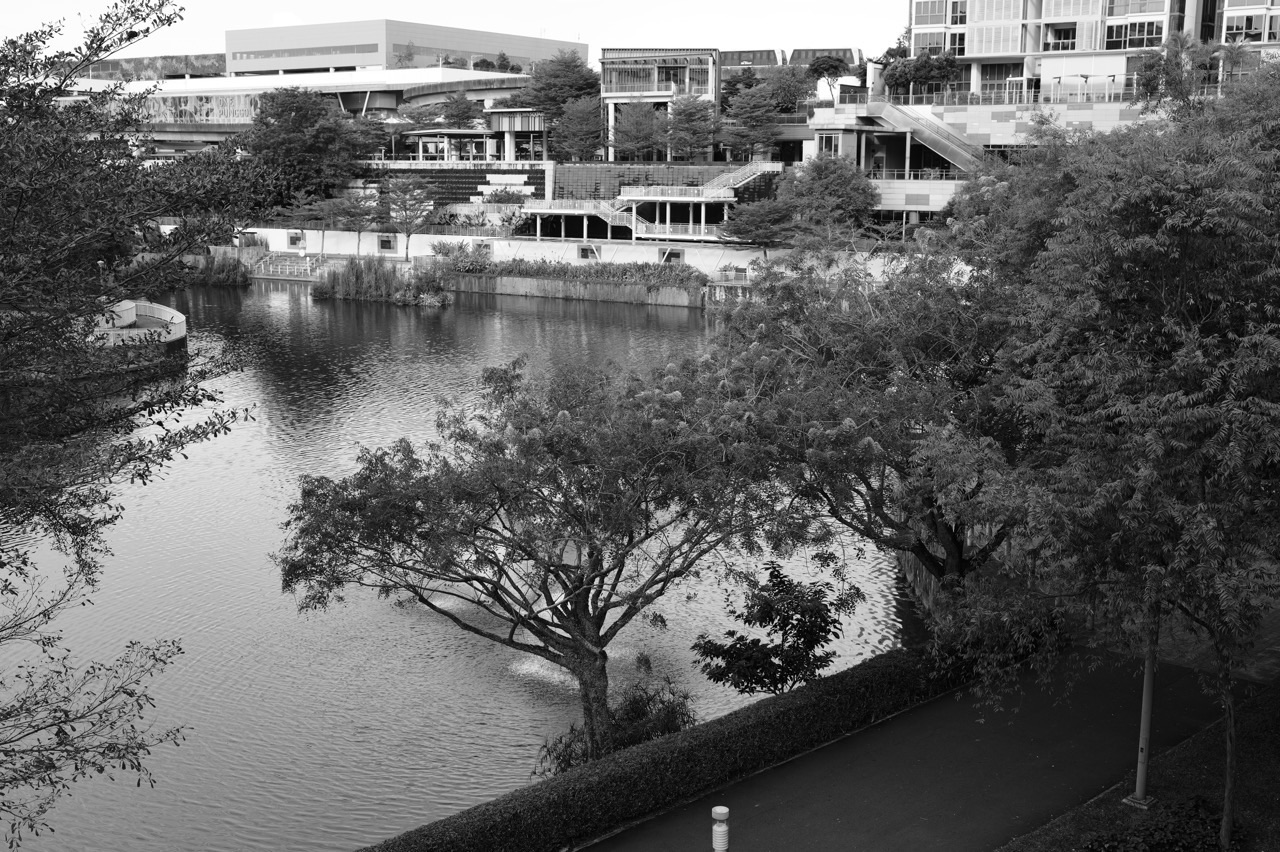
Want a photography activity in Punggol that does not require an expensive camera? Make a four-weekend photo diary. On your first safe outing, photograph one familiar public view in Punggol Waterway Park or another neighbourhood near home. On the second, look closely at planting and natural details. On the third, document an everyday town feature such as a bridge, transport connection or publicly accessible building. On the fourth, compare the pictures and write short, accurate captions about what you noticed. A phone, a simple folder and roughly 20–45 minutes per outing are enough.
Punggol photography for beginners can be more interesting when there is a reason to take the photograph. This guide is not another list of ‘Instagrammable spots’: the site already has a Punggol photo-spots guide, plus individual tutorials on panoramas, reflections and shadows. Here the goal is a small personal documentary project. You will record how light, water, public spaces and everyday routines appear over time, distinguish real change from weather and camera effects, and end with a four-picture local story.
Important for 17–18 October 2026: NEA’s 17 October haze update forecasts 24-hour PSI of 150–220 for 18 October, in the unhealthy to very unhealthy range. Healthy people are advised to avoid prolonged or strenuous outdoor exertion, with stricter guidance for children, older adults, pregnant people and those with chronic heart or lung disease. Check current 1-hour PM2.5 for immediate decisions and the next-day PSI forecast for planning. Do not go outdoors to complete this photo challenge during unsuitable conditions: the first weekend can be spent choosing an existing photograph and making an indoor storyboard.
The four-weekend Punggol photo diary in one table
| Session | What to photograph | What to learn | When to do it |
|---|---|---|---|
| Weekend 1: Place | A safely viewed Waterway or neighbourhood scene | Framing, viewpoint and accurate location notes | A suitable weather and air-quality window |
| Weekend 2: Detail | Public plants, textures, water or shadow | Close observation without disturbing habitats | After checking public access |
| Weekend 3: Everyday Punggol | Transport, library exterior, public art or town design | Buildings, people and change without invading privacy | Daylight, permitted public spaces |
| Weekend 4: Compare | Repeat a viewpoint or pick four strongest images | Evidence, captions, honest editing and local memory | Indoors when weather is poor |
Why a photo diary is different from a photo-spot list
A good photograph begins with a decision
Photographers often chase the most famous bridge or spectacular sunset without knowing why that object interests them. A diary changes the question from ‘Where is everyone taking photos?’ to ‘What is one thing I want to remember about Punggol?’ That can be a child looking at the Waterway from an appropriate distance, the repetition of a public railing, or the way a tree frames a block of flats.
Choose a subject before changing venues. A recognisable ordinary place can produce a stronger series than four unrelated tourist landmarks because the viewer understands the connection between pictures. If you begin near your own home, you also reduce transport, expense and outdoor exposure.
The camera records a viewpoint, not the entire truth
A photograph captures a moment and a selected field of view. It can show a waterway reflecting dark clouds, but not automatically explain the weather systems that formed them. It can record a construction hoarding, but not prove when the work started or why the project changed. A bright orange sky during haze cannot, by itself, establish pollutant concentration.
Write a factual caption describing what is visible, then separate any explanation that requires an external source. Compare with NParks, JTC or historical documentation where appropriate. The distinction between observation and inference is especially useful for students, but adults benefit too.
Repeatable viewpoints make comparisons stronger
Taking a photo from a different angle, zoom setting or time of day changes the appearance of objects. If you wish to document genuine physical changes in the neighbourhood, try returning to the same safe public place and framing an easily recognised fixed object in a similar way. You do not need exact mathematical replication.
Keep notes about date, approximate time, direction and any important camera choice. Do not climb a fence, stand in traffic or enter a private area to reproduce a previous viewpoint. Safety and current access rules are more important than a perfect before-and-after pair.
The subject need not include identifiable strangers
Punggol’s everyday life includes families, delivery riders, students and commuters. That does not mean strangers are raw material for a personal social-media documentary. You can tell a convincing neighbourhood story through spaces, silhouettes where appropriate, public design, empty seating or people photographed with informed permission.
Ask before making close portraits, especially of children. Avoid revealing the exact routines or locations of minors, publishing identifying school details alongside a child’s face, or recording private conversations. When in doubt, choose the public environment rather than the person.
A public route does not mean every vantage point is permitted
Punggol Waterway Park is an NParks public park, but routes include shared paths, planted areas, waterways and bridges with rules. Nearby businesses, workspaces and residential facilities have their own access. Do not infer unrestricted photography from the fact that a building is visible outside.
Use signed public paths and wide safe stopping points. Stay behind railings, keep a clear passage for walkers and riders, and check whether staged or commercial photography requires operator permission. A photographer who treats the site well is more likely to enjoy returning.
Editing should clarify the image without inventing a scene
Simple adjustments to exposure, crop or colour can help a viewer see the subject. However, removing a large construction site, adding a fake planet, making haze disappear from a purported air-quality photograph or depicting an unopened facility as open would mislead readers. In a diary, credibility matters more than dramatic effects.
Keep originals when documenting changes, and label creative transformations clearly if you make them. A caption can say ‘The warm light is from late afternoon’ when you know that; it should not say ‘Air quality was good’ unless verified independently.
A family photo diary should stay enjoyable
Adults sometimes turn a creative hobby into an assignment with twenty required photographs, equipment specifications and grades for children. A simpler invitation works better: each person chooses one picture that shows something they like about the town. A child can describe it aloud; an older student may write a fuller paragraph.
If nobody wants to make the trip, use an earlier photograph and discuss it indoors. The best outcome is a project you want to repeat, not finishing it on the exact four calendar weekends.
A diary becomes more useful when the dates are honest
A photograph from last March should not be presented as a picture taken this October. A building photographed before it opened should not support a claim that a current shop or service is operating. Punggol Digital District, Heritage Trail and northern park areas are changing rapidly, which makes dated captions important.
Use local date and approximate time, the general neighbourhood name and any restriction that affects interpretation. If you cannot remember a detail, write ‘date uncertain’ rather than guessing. Good local memory does not demand a polished but inaccurate narrative.
Four sessions, with enough detail to do them properly
Weekend 1: choose one familiar view and make a place portrait
Pick a safe public viewing point in a convenient part of Punggol, ideally a place you could revisit without difficulty. The central Waterway offers planting, bridges and residences in one view, but a neighbourhood centre, LRT streetscape or publicly accessible district square can also work. Take a wide photo showing location and surroundings, then a second from a slightly different angle. Decide which tells the story more clearly.
Record where you stood at a broad location level, such as ‘public path near central Waterway’. Include the date, time range and conditions you actually experienced. If you are working with a child, ask which part of the scene is most important to them. You are making a memory, not producing a survey report. During the current haze episode, do this using an existing photograph at home.
Weekend 2: document a small natural or architectural detail
Return to a safe open public place and photograph something easy to overlook: a leaf shape from the path, a patterned railing, the reflection of a tree, a rainwater landscape or the shadow of a building. A phone can create an interesting detail by changing your position safely and paying attention to where the light falls. You do not need to bring a macro lens or telephoto camera.
Do not pick plants, chase insects, move wildlife or lean over water to obtain a closer image. If you are unsure what a species is, describe its features instead of guessing. Compare the detail photograph with the first week’s wide image: what is lost when you crop tightly, and what becomes clearer? The site has Punggol flower-photography pointers for optional technique.
Weekend 3: create a picture of how people use a town without intruding
Punggol contains everyday public infrastructure worth documenting: station entrances, a sheltered walking link, the One Punggol exterior, a clearly publicly accessible part of Digital District, community planting or public art. Photograph a design element or view that suggests how people move, rest, shop or learn. It is possible to capture the use of a space through signs, seating and paths without identifiable faces.
Do not stage unauthorised access to schools, campus interiors, workplaces or residential facilities. Where a public mural is included, credit its named artists and distinguish the artwork from surrounding architecture. One clear explanatory image is enough. Avoid photos that reveal children’s routines or other people’s personal information.
Weekend 4: build a four-photo story and write the captions
Select four images: the place, a detail, a public activity or building feature, and a picture that shows a comparison or change. Arrange them in a logical order and give each a caption of one to three sentences. The caption should state what is visible, where it was taken generally and what remains uncertain. If you repeated a viewpoint, acknowledge differences in weather, angle and time of day before inferring physical change.
Keep a copy of the unaltered images if you plan to use the series as local documentation. Ask permission before sharing identifiable people and do not reveal home addresses or other private location details unnecessarily. The finished result can stay in a private family album; public posting is entirely optional.
Where to try the photo diary in Punggol
Central Punggol Waterway
Useful for wide scenes, bridge geometry, reflected light and planted water edges. Its four themed areas provide different landscapes, but you do not need to complete them. Start from a known public approach near Punggol MRT and return before the chosen time is up.
Stay on permitted paths and avoid standing in shared-cycle routes. Check NEA and NParks information before a weather-sensitive walk.
One Punggol and its public-facing exterior
Useful for a story about how a modern community hub integrates library, food and services. The building itself can be photographed from a permitted public position without making visitors identifiable or treating the library as a film set.
Interior photography and organised events can have additional rules. A short exterior study is often enough.
Oasis Terraces or Coral Edge neighbourhood centres
Useful for showing the difference between daily errands and postcard tourism: shops, public links, greenery and ordinary streets. Pick one design feature rather than documenting shoppers’ faces.
Opening hours and tenant operations vary. Do not treat healthcare areas or schools as tourist attractions.
Northshore public spaces near Samudera
Useful for shaded community-spine design, seafront-oriented town planning and contrast with the older central streetscape. Choose confirmed open public paths and note whether a photo shows retail, residences or landscaping.
Punggol Point Park remains closed for upgrading under current notices. Do not use that closure as an invitation to search for an illegal shortcut.
Punggol Digital District and current public art
Useful for photographing a town in transition. The first accessible part of the Heritage Trail and the documented Our Punggol Story mural can be observed from lawful public space; record the date because construction and access evolve.
The future full trail is not necessarily open. Credit artists and check public access, especially around SIT and business premises.
Twenty simple photo diary prompts
1. A bridge from a respectful distance
Photo idea: Look for its shape and how the path connects to it. Practical boundary: Do not block the path to fit more of the bridge in frame. One carefully noticed subject can tell a stronger story than ten rushed snapshots.
2. One bench with context
Photo idea: Show why this is a useful place to stop. Practical boundary: A bench is public space, not a staged private photo area. One carefully noticed subject can tell a stronger story than ten rushed snapshots.
3. A leaf in its environment
Photo idea: Include some surrounding greenery instead of isolating it entirely. Practical boundary: Observe rather than plucking or arranging protected plants. One carefully noticed subject can tell a stronger story than ten rushed snapshots.
4. Water without entering it
Photo idea: Record the relationship between water, bank and path. Practical boundary: Avoid leaning beyond railings or taking risky close-ups. One carefully noticed subject can tell a stronger story than ten rushed snapshots.
5. A sheltered link
Photo idea: Photograph how architecture helps people move in tropical weather. Practical boundary: Do not obstruct people using the path. One carefully noticed subject can tell a stronger story than ten rushed snapshots.
6. A public sign
Photo idea: Use it to explain a local service or behaviour rule. Practical boundary: Do not imply signs are current if the photograph is old. One carefully noticed subject can tell a stronger story than ten rushed snapshots.
7. A shadow pattern
Photo idea: Notice the geometry of light and structures. Practical boundary: Do not stare directly at bright sunlight. One carefully noticed subject can tell a stronger story than ten rushed snapshots.
8. Two different roof lines
Photo idea: Compare the design of two visible public buildings. Practical boundary: Avoid entering restricted rooftops to improve the angle. One carefully noticed subject can tell a stronger story than ten rushed snapshots.
9. One repeated colour
Photo idea: Find it in planting, railings or buildings. Practical boundary: Do not change the image heavily and then call it a natural colour. One carefully noticed subject can tell a stronger story than ten rushed snapshots.
10. A quiet weekday place
Photo idea: Show an ordinary scene without assuming it is always quiet. Practical boundary: State the time rather than generalising from one photo. One carefully noticed subject can tell a stronger story than ten rushed snapshots.
11. A storm-cloud comparison
Photo idea: Use a photo taken from a safe indoor spot. Practical boundary: Do not stand outdoors during lightning for dramatic clouds. One carefully noticed subject can tell a stronger story than ten rushed snapshots.
12. A neighbour-approved portrait
Photo idea: With appropriate consent, photograph someone enjoying the town. Practical boundary: Do not post identifiable details without permission. One carefully noticed subject can tell a stronger story than ten rushed snapshots.
13. A close and wide pair
Photo idea: Compare what extra context the wide image supplies. Practical boundary: Avoid presenting the close-up as a complete view. One carefully noticed subject can tell a stronger story than ten rushed snapshots.
14. An old versus new district contrast
Photo idea: Photograph a present streetscape, then research a documented old image. Practical boundary: Keep dates and copyright/attribution clear. One carefully noticed subject can tell a stronger story than ten rushed snapshots.
15. Public art with credit
Photo idea: Photograph one detail in the Community Promenade mural. Practical boundary: Include the artwork title and artist credits where possible. One carefully noticed subject can tell a stronger story than ten rushed snapshots.
16. A community garden from a path
Photo idea: Show how plants and public space meet. Practical boundary: Do not enter members’ plots or harvest without permission. One carefully noticed subject can tell a stronger story than ten rushed snapshots.
17. An LRT access point
Photo idea: Record how transport is part of daily life. Practical boundary: Avoid photographing travellers intrusively. One carefully noticed subject can tell a stronger story than ten rushed snapshots.
18. An early evening scene
Photo idea: Look at artificial lighting and remaining daylight. Practical boundary: Prefer safe familiar routes and official weather guidance. One carefully noticed subject can tell a stronger story than ten rushed snapshots.
19. A repeat viewpoint
Photo idea: Return safely to the first week’s location. Practical boundary: Do not infer construction progress from different camera angles alone. One carefully noticed subject can tell a stronger story than ten rushed snapshots.
20. A closing ‘home’ picture
Photo idea: Choose a public scene that now feels familiar. Practical boundary: Keep your exact home location private if the album is shared. One carefully noticed subject can tell a stronger story than ten rushed snapshots.
A sample four-caption diary, with observation separated from interpretation
Photo 1 — the place
Punggol Waterway Park, viewed from a public path. The frame shows the water edge, a planted bank and a pedestrian route. The photograph records this viewpoint on a particular day; it does not establish the condition of the whole park.
This is an observational caption. It names what is visible and avoids unsupported assertions about an unseen area.
Photo 2 — the detail
A leaf and railing detail beside a public waterway path. The leaf’s outline and colour are visible, but the exact species has not been verified.
This allows natural curiosity without pretending that a species label is known.
Photo 3 — the public place
A public-facing view of a Punggol community or transit building. It shows how a resident might approach the area, without showing a particular person’s private routine.
This connects landscape to everyday life while respecting privacy.
Photo 4 — the comparison
A second safely taken image from a similar viewpoint. The light and cloud cover differ from the original, and any claim about a permanent physical change should be checked against the scene or official notices.
This is the important conclusion: a photo diary can be accurate without claiming every difference is development.
Frequently asked questions about a Punggol photo diary
Do I need a DSLR or mirrorless camera?
No. A phone is sufficient to start. Practice framing, safe positioning, exposure and captioning before considering other equipment.
How long should each session take?
Roughly 20–45 minutes is a practical planning option, not a rule. Use a shorter period if the group prefers or weather limits outdoor exposure.
Do I have to travel to four different places?
No. Repeating one safe public viewpoint can create a better before-and-after narrative than visiting four unrelated attractions.
Can children take part?
Yes, with appropriate supervision, safe photo locations and permission rules. Allow younger children to choose one image rather than completing a technical assignment.
What if the October 2026 haze continues?
Use existing photographs indoors, make captions and plan future viewpoints. Follow the latest NEA/MOH advice before scheduling new outdoor sessions.
Is Punggol Waterway Park open twenty-four hours?
NParks lists 24-hour opening, but specific paths, lighting and safety require individual judgement. There is no need for a night shoot to complete the diary.
Can I photograph strangers in Punggol?
Photography laws and venue rules depend on circumstances, and privacy and consent still matter. Avoid intrusive close-ups and seek permission for identifiable portraits, especially of children.
Can I use public art as a photo subject?
From an appropriate permitted public position, yes subject to site rules. Attribute the mural and its artists when sharing the work; do not present it as your own artwork.
Is Punggol Heritage Trail completely open?
No. Only its first section has been officially opened; the longer planned connection is phased. Check JTC and signage.
Can a photo prove that haze is healthy or unhealthy?
No. Visibility and colour are not a substitute for official air-quality measurements. Use NEA’s current readings and explain that the photo shows appearance, not a measured concentration.
How do I make a fair before-and-after comparison?
Use similar public viewpoints and record dates, time, angle and weather. Keep originals and distinguish temporary light differences from real construction or landscape change.
What if I cannot identify a plant or bird?
Write what you saw and keep the species uncertain. Use official field guides later, without disturbing wildlife.
Can I take photographs of schools?
Observe any school or venue restrictions and avoid intrusive photography of children, entrances during pickup or identifiable private routines.
Can I stand on a Waterway bridge with a tripod?
Only where safe and permitted, without obstructing others. Some bridges and paths are busy shared spaces; an alternative handheld viewpoint may be better.
Can I use filters?
You can create artistic images, but label changes clearly if the album purports to document actual environmental or structural conditions.
What about taking the same photo every month?
That can be an excellent longer project if the site remains accessible. Keep dates and viewpoints consistent and accept that some months may be unsuitable.
Do I need to publish the diary online?
No. A private family album or a notebook can be the complete finished product. Sharing is optional.
What should I write in each caption?
Location at a suitable general level, local date, what is visibly present and one short explanation only when supported by evidence.
Can this become a student project?
Yes. It can support visual literacy, descriptive writing, map-reading and evidence evaluation without replacing formal coursework.
Where can I find actual Punggol photo locations?
Use the Punggol photo-spots guide for specific sites. This page teaches a repeatable project rather than replacing a venue directory.
Related eduKate ecosystem reading
- Punggol photo spots — location owner.
- Waterway panorama photography — wide-angle technique.
- Waterway reflections — water and lighting.
- Shadow photography in Punggol — pattern and contrast.
- Document Punggol as It Changes — education and memory context.
- Punggol History Lovers’ Guide — what historical evidence really says.
- Public Art and Creative Walks — mural and artist attribution.
- Punggol Lifestyle Planner — choose safe time and duration.
- eduKateSG Punggol school journeys — literacy and community connections.
Official sources and 2026 accuracy check
Use NParks Punggol Waterway Park, JTC Punggol Digital District public areas, Singapore Land Authority OneMap, NEA Haze Situation Update, 17 October 2026, and MOH haze health advice. The diary is a creative lifestyle idea, not evidence that any particular 2026 venue is open or that current outdoor conditions are safe. Updated 17 October 2026.


