
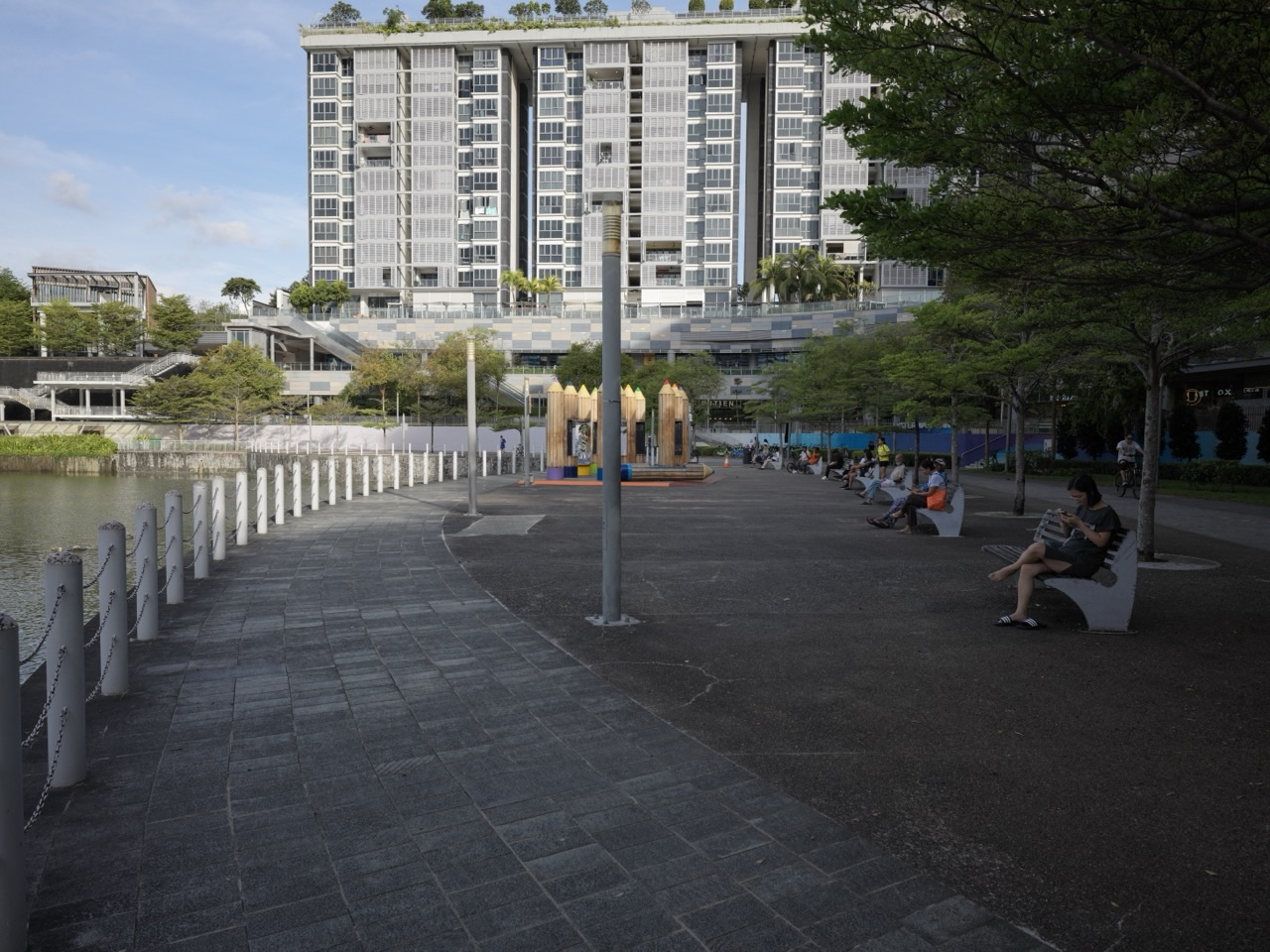
Current Status First | Punggol Point Park Is Closed
As of 2 October 2026, Punggol Point Park remains closed for upgrading. NParks’ current Park Connector Network notice says the closure began on 11 August 2026 and gives 31 December 2027 as the expected completion date. That is not the same as a confirmed reopening date.
NParks current notices should be treated as the operating source when planning a visit. A generic park-detail page may still display the park’s ordinary opening hours, but the specific active closure notice is the more relevant current-status instruction.
Expected Completion Is Not Reopening
“Expected completion 31 December 2027” describes the current project target. It does not guarantee that the public will be able to enter the park on 1 January 2028, nor does it establish whether reopening will be full, partial or phased. A later NParks notice must confirm the actual access state.
This distinction is the central job of this page. Search results can preserve an older target long after the project changes. A reliable local guide should keep the date attached to its source and update the tense when NParks does.
The Adjacent Carpark Is Part of the Closure
The current closure notice covers Punggol Point Park and its adjacent carpark. A visitor should therefore not plan a trip around the old park parking arrangement. If the purpose is dining, a promenade visit or another nearby destination, check that destination’s own current access and parking information instead.
Do not infer that an open nearby business can use the closed park carpark, or that a historical parking map remains current through construction. The park, promenade, Punggol Settlement and surrounding roads are separate operational owners even though they sit in the same northern Punggol area.
The Toilets and the Park Are Different Status Items
The closure notice has previously identified toilets as remaining available while the park and adjacent carpark are closed. That does not mean the closed park can be entered to reach other features. Follow the current hoarding, signs and NParks instructions on the day of the visit.
A facility remaining accessible during works is a narrow fact. It should not be expanded into a claim that the former viewing deck, lawns, play areas or all old paths remain available.
Punggol Point LRT Is Not the Park
Punggol Point LRT station can remain in service while Punggol Point Park is closed. The shared name should not cause those two statuses to be merged. Someone travelling to the station, nearby housing or another destination is making a different trip from someone attempting to visit the closed park.
When giving directions, name the final destination. “Punggol Point” can refer to a station, a wider locality, the park, the promenade or historical Punggol Point. A precise noun prevents a transport fact from being mistaken for an access instruction.
The Promenade Has Its Own Access Conditions
The park closure does not automatically mean every metre of the wider Punggol Promenade is closed. At the same time, an open promenade segment is not permission to pass through barriers protecting the upgrading site. Visitors should follow current route notices and on-site signs.
A permanent local guide should therefore avoid drawing an unofficial detour around construction. The responsible route is whichever public path is currently signed and open. If that changes, update the route rather than preserving an old workaround.
Punggol Settlement Is a Separate Destination
The Punggol Settlement remains a distinct commercial destination with its own restaurant, road and parking conditions. A person going there for a meal should use the development and restaurant’s current information rather than assume the park’s closed carpark or old access arrangement applies.
This separation also protects the history. Punggol Point’s former seafood-dining identity, the present commercial development and the closed NParks park overlap geographically but are not the same institution or period.
Do Not Use an Old Sunset Recommendation as Current Access Proof
Punggol Point has long been associated with open coastal views and sunset outings. Historical or older travel writing about those views can remain accurate as description of the place before closure. It should not be used as evidence that the former viewpoint is accessible during upgrading.
If the goal is sunset photography now, choose another currently accessible public location and verify its current status. The photographic job can move; the closure boundary should not.
Cyclists Need the Current Connector Notice
A cycling route through northern Punggol can be affected by more than the park closure. Park connectors, construction works and local diversions can change independently. Cyclists should consult current NParks notices rather than assuming a route recorded in an older cycling article remains continuous.
Do not ride through a barrier because another cyclist appears to know a shortcut. A safe public alternative should be established from current signs or responsible-source information, not inferred from behaviour at the worksite.
Walking Plans Should Begin With an Open Start and Finish
A useful walking plan identifies a public start, a public finish and the route between them. During upgrading, avoid a plan whose midpoint requires the closed park. If the old route no longer works, choose a different current walk rather than trying to preserve the historical itinerary at all costs.
The household should also consider weather, mobility, toilets and the return trip. An open segment may still be a poor choice for a particular person on a hot or wet day.
Families With Children Need a Current Activity, Not a Closed Landmark
Parents should not bring children to the park expecting to negotiate access after arrival. Choose an open alternative whose play, walking or viewing purpose is actually available now. A closure can be disappointing, but it is easier to explain before the journey than at the barrier.
Keep construction zones out of children’s exploration tasks. Do not ask a child to photograph barriers up close, inspect equipment or find a route through the works. The learning opportunity is understanding why access changes and how public notices help people plan safely.
Older Adults and Mobility Users Need the Complete Current Route
A former accessible feature inside a closed park is not currently usable simply because it was designed for broad access. Plan from the home or transport stop to an open destination and include crossings, shelter, seating and the return journey.
Do not assume stairs or an informal detour are acceptable substitutes for a person who requires step-free access. The current public route should work for the actual user, not only for the adult researching it.
Construction Can Change in Phases
Upgrading projects do not remain visually identical from start to finish. Hoarding, access points, work intensity and completed sections can change while the overall closure remains in force. A photograph from one month should therefore be dated and not presented as a permanent construction map.
The key status remains simple until NParks says otherwise: the park is closed. Smaller changes inside the site do not justify readers entering before an official access change.
The short answer: NParks has closed Punggol Point Park and its adjacent carpark since 11 August 2026 for upgrading works. NParks gives 31 December 2027 as the expected completion date, rather than a confirmed reopening date. The toilets remain open. If you were planning a sunset walk or a picnic on the ship-shaped deck, pick another spot for now. Coney Island, the Punggol Heritage Trail and Punggol Waterway Park are all close by.
Punggol Point is one of those places people keep in their back pocket: the spot you take visiting relatives to, where you watch the sky turn orange over the Straits of Johor. This guide keeps the familiar coastal setting separate from what is accessible during the works. The closure status below was checked on 2 October 2026 against the NParks notices page and its Punggol Point closure notice and map.
Quick Facts
- Closed: Punggol Point Park and its adjacent carpark
- Works: started 11 August 2026; expected completion 31 December 2027
- Still open: the park toilets
- Why: upgrading works by NParks
- Nearest LRT: Punggol Point (West Loop)
Read the Closure Map Before Planning a Walk
The notice’s first page marks the closed park and adjacent carpark in red and the toilets in green. Its second page labels a temporary footpath. Use that official map together with the signs on site. A map label does not establish that every older route, jetty approach or beach access is available.
If the purpose of your trip is dinner nearby, confirm the restaurant’s entrance and parking directly with the operator. If it is a walk, choose a currently accessible start and finish. These are different journeys, even when a navigation app groups them under “Punggol Point”. For a family outing, settle the route before adding food or another park.
What Is Punggol Point Park?
NParks describes a small, 0.4-hectare coastal park at Singapore’s northern edge. It is known for its 300 square metre ship-inspired deck looking out to the Straits of Johor and Pulau Ubin, a quiet pond with tortoises and dragonflies, and its place on the Park Connector Network, which links it to Coney Island. It also sits in one of Punggol’s most meaningful heritage landscapes. Read Punggol Point: Memory and Recreation for the story.
What the Closure Means for You
- No parking at the park. The adjacent carpark is closed too, so plan to arrive by LRT, bus, bicycle or on foot, or park elsewhere.
- Sunset plans need a new spot. See the alternatives below.
- Cyclists: check NParks for any park connector diversions before long rides along the northern coast.
- Nearby food: check whether individual restaurants in the area are affected before you go.
Punggol Point Park, Punggol Jetty and Punggol Point Walk Are Three Different Things
Punggol Point is a small coastal landscape with several overlapping names. The park is the 0.4-hectare NParks space currently closed for upgrading. Punggol Jetty is the older waterfront/landing-place landmark beside the northern coast. Punggol Promenade Punggol Point Walk is the longer 1.3km waterfront connector that links this area into the wider Promenade and Coney Island network. The park closure does not mean every metre of the northern promenade has disappeared, but visitors should follow current hoarding, detours and NParks signs rather than forcing the old route.
Why People Come Here for Sunset
NParks’ North Eastern Riverine Loop guide specifically uses sunset at Punggol Promenade Punggol Point Walk as one of the route’s signature scenes. The northern coast opens toward the Straits of Johor, Pulau Ubin and the western/north-western evening sky, which is why Punggol Point became one of the town’s classic end-of-day places.
During the 2026–2027 park closure, do not enter the closed park or assume the old ship-deck viewpoint is available. Use accessible sections of the Promenade or another current sunset route instead. For other places to consider, read Sunrise and Sunset Spots in Punggol and check the current access notices for your chosen route.
The Ship-Inspired Viewing Deck
Before the current upgrading closure, Punggol Point Park’s best-known feature was a roughly 300-square-metre ship-inspired viewing deck. NParks describes it as a panoramic lookout toward the Straits of Johor, Pulau Ubin and parts of Coney Island. It turned an old seaside edge into one of modern Punggol’s strongest visual links back to the coast.
Pond, Dragonflies and the Small-Park Ecology
NParks describes the pond as a habitat for dragonflies, fish and tortoises. This is background on the park’s character, rather than an invitation to visit the pond during construction. Its condition and public access after upgrading will need a fresh check.
The Heritage Layer
Punggol Point is one of the places where several Punggols overlap: seaside recreation, the former Japanese Fishing Pond, the wartime Sook Ching massacre landscape, the post-war seafood/boating era, Punggol Jetty, and the new HDB Green Heritage district. Read Punggol Point | Memory and Recreation for the deep history rather than compressing all of it into a park-visit page.
The Sea and Intertidal Edge
The wider Punggol Point Walk also sits beside a fragile intertidal environment. NParks may manage access to selected beaches during peak periods, and visitors should use designated access points, avoid removing marine life and follow safety notices. Box jellyfish have also been reported in Singapore waters, so this coast should not be treated as an informal swimming beach.
How to Get to Punggol Point During the Closure
- LRT: Punggol Point LRT is the nearest station named by NParks for the park area.
- Bus: The NParks Point Walk directory lists service 84 and the Punggol Road End stop. Treat this as a location reference; confirm the current service direction and stop in your journey planner before travelling during the works.
- Driving: the park’s adjacent carpark is closed during upgrading. If you are dining at The Punggol Settlement, use that development’s current New Punggol Road access and parking information instead of the old park carpark.
- Cycling / walking: check the current NParks Park Connector notices because the northern route is affected by multiple projects and diversions.
Where to Go Instead
- Coney Island Park: a daytime nature alternative. NParks lists 7am to 7pm opening, with rugged terrain in parts. Choose an entrance using the current notices; do not assume the route through the closed Point Park is available.
- Punggol Heritage Trail: explore its open sections. NParks still lists Phase 2 for completion by end-2026; the full connection to the jetty should not be assumed available.
- Punggol Waterway Park: consider a shorter inland walk around its bridges and gardens. Check the chosen entrance and path conditions, especially when planning with a stroller or wheelchair.
- Punggol Coast: the Digital District, mall and hawker centre. See our Punggol Digital District guide.
What We Know About the Upgrade
The closure notice identifies upgrading works and an expected completion date. It does not provide a complete specification of the finished park. Existing facilities, artist impressions and neighbouring development plans should not be presented as confirmed features of the upgrade. Our Digital District guide separates its operating facilities from future projects. This page will need another access check when NParks issues a revised notice or confirms reopening.
Frequently Asked Questions
Is Punggol Point Park open?
No. NParks lists it as closed for upgrading from 11 August 2026, with expected completion on 31 December 2027. The notice says the toilets remain open.
Is the Punggol Point carpark open?
No. The carpark next to the park is closed for the same period.
When will Punggol Point Park reopen?
NParks gives 31 December 2027 as the expected completion date. That is a planning target. Check for an explicit reopening announcement before arranging a visit to the park itself.
Last checked: 2 October 2026. Sources: the linked NParks closure notice, park directories and Heritage Trail update. Part of The Complete Punggol Guide by eduKatePunggol.
Punggol nature web: Coney Island · Waterway Park · Lorong Halus · Punggol Promenade · Sunrise & Sunset · Birds & Wildlife · Photo Spots · Picnic & BBQ · Accessible Routes · Punggol & Serangoon Reservoirs · Complete Punggol Guide.
Estate routing: Return to the eduKatePunggol Atlas for the full learning, family and town knowledge graph, or continue through the parks and nature routes above.
Punggol Point Park | Reopening Evidence, Alternatives and Update Rules
This layer exists because a long closure creates stale-search risk. It does not predict the reopening; it explains how to use the current closure accurately and how the canonical page should change when NParks publishes a new status.
How to Read the Reopening Tracker
Treat this page as a status tracker with three columns in mind: what NParks currently says, what older pages describe about the park, and what visitors can actually plan today. The current notice controls present access. Older descriptions remain useful for understanding the park’s design and history but should not be converted into visit instructions until the closure is lifted.
What Would Count as Reopening Evidence
A confirmed reopening needs an explicit current statement from NParks or another responsible public owner that access has resumed. A contractor leaving the site, new landscaping appearing, a map pin showing normal hours, or somebody posting a photograph from nearby does not meet that standard. When the official status changes, update the headline, opening paragraph and route advice together so the page does not contain conflicting tenses.
What Would Not Count as Reopening Evidence
Search snippets, old tourism articles, automated map listings and social posts can surface after a closure has begun. They may accurately describe the park’s normal operating pattern while being wrong for today’s visit. Use them as clues to investigate, not as authority to cross a barrier or tell readers the park is open. The specific active notice is the safer status source.
Why the Date Must Stay Attached to the Claim
A date such as 31 December 2027 looks precise, which makes it easy for readers to mistake it for a promise. Keep the phrase “expected completion” beside the date whenever it is repeated. If the project finishes earlier or later, a dated statement remains historically intelligible instead of becoming an apparently false claim stripped of its original context.
A Reopening Can Be Partial
Public projects can restore access in stages. One path, viewing area or carpark can reopen before another, or the public opening can follow physical completion after inspections and preparation. This page should therefore avoid assuming that one future announcement will instantly restore the exact pre-2026 layout. When access resumes, identify which facilities and routes are actually included.
Upgrading Can Change the Park Itself
The purpose of upgrading is not merely to close and reopen the same photograph. Paths, planting, facilities or visitor circulation can change. A pre-closure guide should not promise that a familiar deck, lawn, entrance or seating arrangement will look identical afterward. Once the project is complete, revisit the physical description instead of simply changing “closed” to “open.”
Historical Photos Need Dates
A photograph of Punggol Point Park before August 2026 can still be valuable, especially for documenting how the northern waterfront looked before upgrading. Caption it with the date or period where known. Do not place an old image beside current directions in a way that implies the photographed route remains accessible during construction.
Current Photos Need Context Too
A current photograph taken from an open public area may show hoarding, equipment or partial works. It documents one moment, not the full project or the condition behind every barrier. Avoid photographing workers closely without reason, and do not use an image to infer progress percentages or reopening dates that the project owner has not published.
The Park’s Normal 24-Hour Listing Is Not Today’s Access
Generic park pages can retain their normal opening-hours metadata because those details describe the facility outside a temporary closure. The active works notice is the more specific instruction for current planning. This is a useful general rule for local guides: when a normal-hours page and a dated closure notice appear to conflict, use the specific current restriction for the visit.
Punggol Point Walk and Point Park Are Different Names
Punggol Promenade Punggol Point Walk is part of the wider waterfront network, while Punggol Point Park is a defined park space. Their names overlap because they occupy the same northern locality. A closure affecting the park should not automatically be rewritten as a closure of every promenade segment, and an open connector should not be treated as an entrance to the closed park.
The Jetty Requires Its Own Status
Punggol Jetty is another landmark associated with the locality. A park closure does not automatically answer every question about the jetty or adjacent waterfront. Before telling readers to fish, photograph, wait or meet there, check the current access and any relevant operator or authority guidance. Keep the word “jetty” explicit rather than folding it into a generic park description.
The Seafood-History Layer Should Remain Historical
Punggol Point’s former seafood cluster explains why many Singaporeans remember the area as an evening destination. That history belongs in the seafood-history owner. A reopening tracker should use it only as context and should not imply that old restaurants, old boat services or old layouts still exist. Present-day dining needs present-day operator information.
The Wartime-Memory Layer Requires Restraint
The Punggol Point area also carries wartime memory associated with the Sook Ching massacre. That history should not be used as decorative atmosphere for a sunset or construction article. Route readers to the dedicated history owner for the evidence and memorial context. A park upgrade changes access; it does not alter the historical significance of the wider location.
The Coast Is Larger Than One Park
Northern Punggol includes promenade segments, commercial areas, transport nodes and coastal views beyond the 0.4-hectare park itself. The closure therefore removes one important public space without erasing the whole northern waterfront. A current guide should help visitors choose an actually open destination rather than suggest that the entire coast has disappeared.
Use Another Sunset Spot Without Ranking It
When the purpose is simply to watch evening light, choose a current open waterfront or Waterway location whose route works for the group. There is no need to declare one replacement “the best.” Cloud, tide, haze, construction and crowding change the experience anyway. The important point is that the alternative is legal, open and comfortable to reach.
Use Another Family Walk Without Recreating the Closed Route
Families can use Punggol Waterway Park, an open promenade segment or another verified green-space route while the park is closed. The alternative does not need to imitate Punggol Point Park feature for feature. A successful family outing solves the current job—walking, play, scenery or time together—without turning construction access into a challenge.
Use Another Photography Route Without Crossing Barriers
Photography often creates pressure to reach a familiar viewpoint. Resist that pressure. A closed viewing deck is not made accessible by a long lens, a quiet worksite or a gap in fencing. Use an open public route and let the closure itself remain part of the documented timeline rather than something to defeat for a picture.
Cycling Alternatives Should Be Officially Navigable
A cyclist can choose another connector or turn-around point if the old route is interrupted. Do not publish an improvised shortcut across private land, construction access or pedestrian-only space. Current signs and NParks connector notices should define the temporary route. Once the works change again, remove stale detour advice instead of accumulating historical workarounds.
Driving Alternatives Need a Real Destination
If the park carpark is closed, “park nearby” is too vague to be useful and can send drivers into residential or commercial areas without understanding their rules. Choose the destination first—restaurant, open promenade access or another park—and use the current parking information supplied for that destination. Do not promise capacity or availability.
Public Transport Is Still Destination-Specific
Punggol Point LRT may be the obvious rail reference for the locality, but a traveller going to another open northern destination should still check the final route. Construction can alter the most intuitive walking approach. Use the live transport planner and current site signage rather than an old screenshot of the path from station to park.
A Closure Changes the Meeting Point
Families and groups who previously met at the park entrance should choose a new, clearly open meeting point during works. Avoid “meet at Punggol Point” because the phrase can refer to the station, park, wider coast or nearby commercial destinations. Name a specific open entrance or venue that everyone can identify.
School Projects Should Not Depend on Entry
A student studying urban upgrading can use official notices, maps, dated photographs and publicly visible changes without entering the closed site. The project can ask why access is restricted, how public agencies communicate works, or how historical and current maps differ. This creates useful learning without encouraging children to inspect a worksite.
A Timeline Is Better Than a Prediction
Build the project history from confirmed milestones: park creation, later use, closure announcement, closure start, current expected completion and eventual reopening when officially stated. Do not fill the space between those dates with guessed percentages or claims that construction is ahead of schedule. A sparse verified timeline is stronger than a detailed invented one.
Record Superseded Dates Honestly
If NParks later revises the expected completion date, preserve the earlier target as a dated historical fact only where it helps explain the project timeline. The current visitor guidance should show the newest official state prominently. This avoids two common errors: silently rewriting history or leaving several dates on the page without saying which is current.
Do Not Turn the Upgrade Into a Property Claim
An improved park may be valued by nearby residents, but this page should not predict property prices, rental premiums or investment returns. A public-space project and a housing valuation are different analytical jobs. Keep the closure tracker focused on access, facilities, history and the eventual public reopening.
Do Not Turn the Upgrade Into a Political Verdict
The page can document the closure, published project timeline and visible purpose of upgrading without deciding whether the project is a success or failure before completion. Questions about policy performance need evidence beyond one construction period. Keep the local guide practical and factual.
Businesses Nearby Need Their Own Current Information
Restaurants and other businesses near Punggol Point can continue, change hours, move or close independently of the NParks project. A closure tracker should not claim that a business is inaccessible or unaffected without checking the operator. Link current dining questions to current commercial owners rather than freezing a 2026 tenant list.
Weather Still Matters Around the Worksite
Even when the destination is outside the closed park, rain, heat and lightning can affect exposed northern routes. Do not stand near worksite fencing during dangerous weather simply to observe progress. Use current weather guidance and choose shelter appropriate to the conditions, especially with children or older adults.
Accessibility Must Be Rechecked After Reopening
The pre-upgrade park may have had published accessible features, but the eventual post-upgrade route should be verified anew. A reopened site can have changed circulation, surfaces or entrances. Once NParks confirms public access, update this page using the new visitor information rather than carrying the old accessibility paragraph forward automatically.
The First Reopening Weekend May Not Represent Normal Use
If the park reopens after a long closure, initial crowds, ceremonies or temporary arrangements may make the first days atypical. A permanent guide should not generalise from one reopening-day observation. Verify the new facilities, then allow normal operating patterns to become clear before making broader crowd or convenience claims.
The Reopening Update Needs a Full Tense Audit
When official reopening arrives, search the entire page for “closed,” “will reopen,” “expected completion,” old parking instructions and historical access warnings. Changing only the first paragraph will leave contradictions lower down. The publication job is complete only when the whole page tells one coherent current story while preserving dated history where useful.
The Closure Tracker Has an Expiry Condition
This article’s closure-focused structure should not dominate forever. Once the park is officially reopened and the new facilities are documented, the closure section becomes historical context and the page returns to a normal visitor guide. A good status article knows when its main problem has ended.
Final Reopening Checklist | What Changes the Status
The final part of this guide is deliberately conservative. A reopening tracker is useful only if it resists the pressure to announce access early.
Before a Planned Visit, Check the Notice on the Same Day
A long project can remain unchanged for months and then move quickly. Before travelling specifically for Punggol Point Park, check the current NParks notice on the day of the outing. This is especially important once the expected completion window approaches, because search results and saved guides may update at different speeds. If NParks still lists the closure, treat the park as closed even if another page shows normal opening hours.
Do Not Use Map-App “Open” Labels as Construction Clearance
Digital maps often display a place’s standard operating hours independently of temporary works. An “open” label can therefore describe the park’s normal schedule rather than the current physical access. Use the specific closure notice and on-site signs for the construction status. Mapping apps remain useful for general orientation, but they should not overrule an active notice from the park manager.
If a Barrier Appears Moved, Do Not Infer Reopening
Construction teams can move fencing, gates and hoarding as works progress. A changed barrier position is not an invitation unless public access is clearly restored. Follow signs and official updates. This principle prevents well-intentioned visitors from turning visual construction progress into an unofficial access announcement.
If the Park Reopens Partially, Name the Open Area
A partial reopening should be described with the exact section, entrance or facility named by NParks. Avoid a headline that simply says “Punggol Point Park open” if substantial areas remain closed. Precise language lets families decide whether the available part actually serves their purpose and helps search results age more safely.
If the Carpark Reopens Separately, Keep That Status Separate
Parking access can change on a different timetable from pedestrian access. A reopened carpark would not necessarily prove that every park facility is available, and an open park would not necessarily guarantee parking capacity. Maintain separate status lines for the park, adjacent carpark and any other managed facility.
If Toilets Change Status, Update the Practical Layer
Toilets can matter significantly to families with young children, older adults and longer walks. If the current availability changes, update that fact promptly but keep it separate from park access. One supporting facility should never be used as shorthand for the status of the whole site.
Check the First and Last Mile After Works
A reopened park may connect differently to Punggol Point LRT, the promenade or nearby roads. Walk the public approach again before publishing old directions as current. Construction can change crossings, entrances and pedestrian priorities even when the station and surrounding road names are unchanged.
Recheck Family Facilities Instead of Copying the Old List
If the upgrade changes play areas, seating, lawns or viewing spaces, describe only what the new official visitor information and current observation support. An old family guide may contain perfectly accurate pre-closure details that become wrong after upgrading. Reopening requires a fresh facility inventory, not merely a status switch.
Recheck Accessibility Instead of Assuming Improvement
Upgrading often aims to improve public spaces, but do not promise a specific accessibility benefit until the completed route and official information support it. Wheelchair users, stroller users and older visitors need the actual surfaces, entrances and gradients, not a general statement that new work is better.
Recheck Heritage Interpretation
If new signage, interpretation or design elements are added, connect them carefully to the established historical owners. Do not invent a historical narrative from decorative features. Punggol Point carries seafood, wartime, coastal and recreation histories that deserve sourced treatment rather than a single simplified story attached to the new landscape.
Keep Reopening Events With the Events Owner
If NParks or another organiser holds an opening ceremony, community activity or launch event, the time-limited attendance details belong in the rolling Punggol Events owner. This park page should record the resulting access state and lasting facilities. Separating the event from the permanent place keeps both pages easier to refresh.
Do Not Predict Crowds or Visitor Numbers
A long-awaited reopening may attract interest, but this page should not claim that thousands will attend or that the park will be packed without evidence. If crowd management arrangements are officially announced, publish those current instructions. Otherwise, keep the language practical: allow time, follow access controls and be prepared to choose another outing if conditions do not suit the group.
Final Reopening Decision Rule
The park changes from CLOSED to OPEN only when the responsible owner says so. After that, verify which areas and facilities are available, update the complete article’s tense, remove stale detours and retain the closure dates as historical context. Until that moment, expected completion remains a project target and the current visit plan must respect the closure.
Why the Closure Tracker Matters Beyond One Visit
A town guide is most useful when it distinguishes durable knowledge from temporary operating status. Punggol Point’s coastal history can remain relevant for years; a closure notice can change overnight. Keeping those layers separate lets the history survive while the access advice stays current.
Search Results Can Lag Behind Reality
People may encounter an old snippet saying “open 24 hours” before they encounter the closure notice. The page should therefore repeat the current closed status clearly enough that readers do not have to infer which source is newer. Specific dated restrictions should sit above general evergreen descriptions when the two appear to conflict.
A Closure Is Not a Failure of the Place
A public space can remain historically, geographically and emotionally important while temporarily unavailable. The guide does not need to exaggerate the inconvenience or minimise it. The practical action is simply to plan another open route and return to the park once the responsible owner confirms access.
A Reopened Park Still Needs a New First Visit
After reopening, treat the first visit as a fresh orientation. Find the new entrances, confirm the available facilities and notice how the park now connects with the promenade and transport. This is more reliable than assuming the pre-closure mental map remains correct because the name of the park has not changed.
Use the Canonical Page Instead of Creating a “Reopened” Duplicate
When NParks eventually confirms reopening, update this existing page rather than creating another competing URL for the same place. The closure becomes one chapter in the park’s timeline. Keeping one canonical owner helps residents, search engines and future editors find the newest status without choosing between conflicting articles.
Status on 2 October 2026
Punggol Point Park remains CLOSED for upgrading. NParks currently gives 31 December 2027 as the expected completion date. No reopening is asserted here. Check NParks’ current notice before any visit specifically intended for the park.
Punggol Point Park Closure 2026 | Evidence Hierarchy and Visitor Operating Manual
The hardest part of a closure guide is not writing “closed”. It is keeping the article correct when official pages describe different layers of the same place. NParks’ normal Punggol Point Park page still describes the park’s usual facilities and 24-hour opening pattern, while the current Park Connector Network notice states that Punggol Point Park is closed for upgrading from 11 August 2026, with an expected completion date of 31 December 2027. For present-day access, the dated closure notice is the stronger source.
This is a useful research rule beyond Punggol: when a permanent facility page and a dated operational notice appear to conflict, identify what each source is describing. The permanent page explains the place in its normal state. The dated notice explains the temporary operating condition. Do not delete the normal-state information; qualify it with the current closure.
Use an evidence ladder before changing the article
- Current dated closure or reopening notice: strongest evidence for today’s access status.
- Current NParks/PCN facility page: useful for location, normal features, connector relationships and general accessibility.
- Current on-site signage or official advisory: useful for temporary barriers, phased works and local diversions.
- Older articles, reviews and photographs: historical evidence only unless independently reverified.
- Social posts and hearsay: prompts for checking, not proof of reopening.
This prevents a common error: seeing a recent photograph from the area and concluding that the whole park has reopened. A person may be standing near Punggol Settlement, Punggol Point LRT, Punggol Jetty, another promenade segment or an open approach road while the park itself remains closed.
Plan the day around an open destination, not around the closed gate
During the closure, do not make Punggol Point Park the anchor of a family outing. Make an open destination the anchor and treat the closed park as a known boundary. The family can choose another Waterway or promenade segment whose current access is confirmed, eat at a separate operating food destination, visit the library or explore another open park. That creates a successful day even if no view of the works is available.
This is especially important for visitors with young children, older adults or mobility needs. A closed attraction can create unnecessary walking and disappointment if the family travels to the area assuming the old park route still works. Start with the current open endpoint, then build the journey backwards through transport, toilets, shelter, food and the return home.
Keep Punggol Point Park, Punggol Point Walk and the wider coast separate
The park is one named facility. Punggol Promenade Punggol Point Walk is a park-connector segment. Punggol Point LRT is a transport station. Punggol Settlement is a separate dining/commercial destination. Punggol Jetty has its own identity and access questions. The wider northeastern coastline is larger than all of them. A high-quality local guide must resist collapsing these names into one “Punggol Point” status.
NParks’ current Punggol Point Walk page describes the normal 1.3 km waterfront connector and identifies it as wheelchair friendly. However, a normal route description does not override a current closure or diversion notice affecting the park or adjoining section. When the journey matters, check the latest PCN notice before setting out.
What should trigger a future update?
This page should change only when the source state changes. A new completion estimate should update the dated status line. A phased reopening should identify exactly which facility or segment reopened. A full official reopening notice should move the article from closure operating manual to current park guide. A contractor milestone, old opening-hours page or undated map should not trigger a reopening claim.
The wording must also preserve the difference between expected completion and confirmed reopening. 31 December 2027 is currently an expected completion date in the NParks notice. It is not permission to promise that the public will walk into the park on 1 January 2028.
A five-question visitor check
- What exact place do we intend to visit: park, promenade, jetty, LRT, dining area or another coast segment?
- What does the latest dated NParks/PCN notice say about that exact place?
- What open destination will make the outing worthwhile even if the closed area cannot be approached?
- Do children, seniors, a stroller or mobility needs change the route?
- What current official source will we recheck before leaving?
Current official checks: use the NParks Park Connector Network notices for dated closure information, the Punggol Point Park page for the normal facility description, and the Punggol Point Walk page for the connector’s normal route context.


