
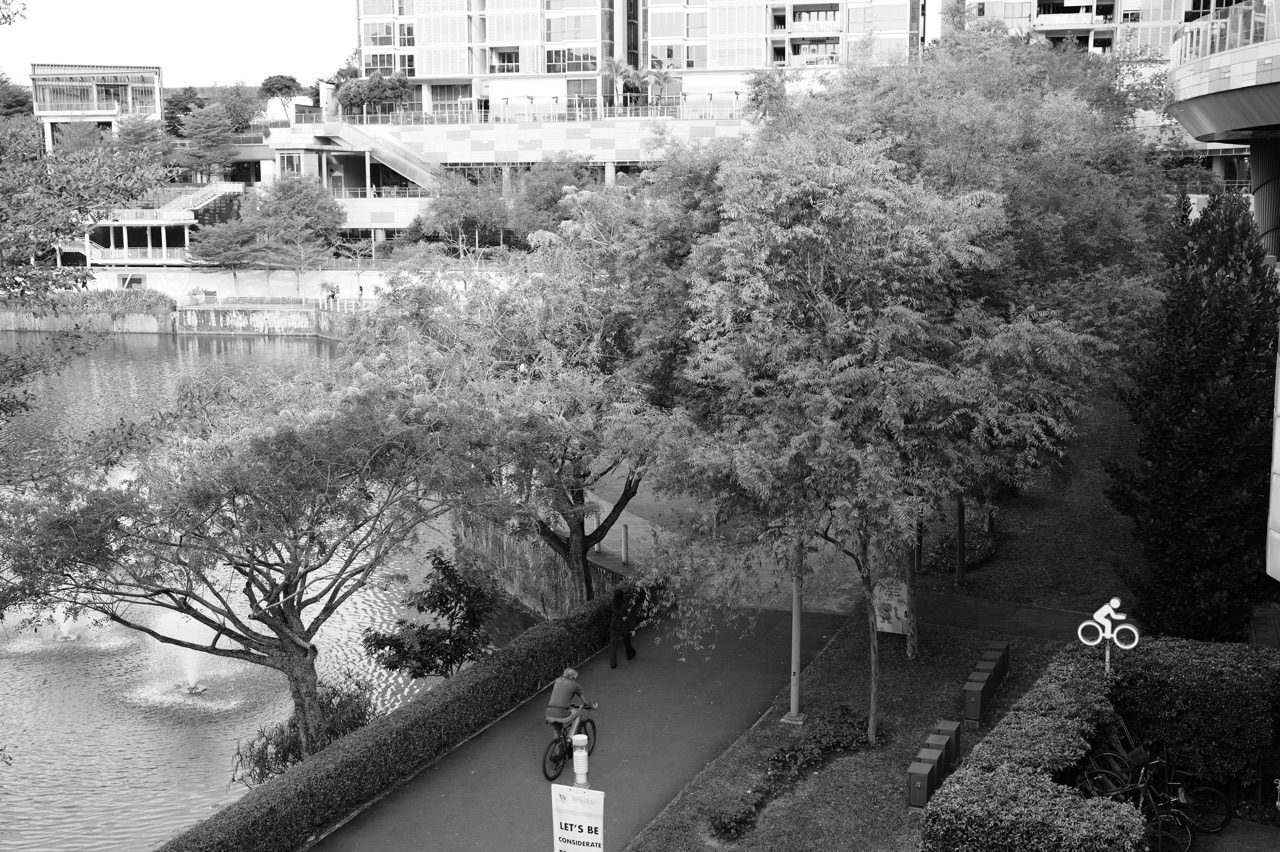
How should people share Punggol’s public spaces? Keep park connectors clear, give way and slow down around other users, supervise children near the Waterway, keep pets under appropriate control, avoid feeding wildlife and check the rules before holding a picnic or organised activity. NParks explicitly prohibits cycling on Punggol Waterway Park’s Kelong Bridge, Wave Bridge and Adventure Bridge, and its boardwalk. A public park or library can be free to enter without being a space you may reserve, alter or use for any kind of event.
Public-space etiquette in Punggol for walkers, cyclists, joggers, dog owners, photographers, families and picnic groups is about making ordinary leisure pleasant for everybody. One user may be cycling home, another is teaching a child to notice birds, another needs room for a wheelchair, and someone else wants a quiet library visit. These activities can coexist when people follow the actual rules and notice one another. This article brings together the main distinctions and sends readers to the detailed local guides for each type of activity.
18 October 2026: NEA’s 17 October advisory forecasts unhealthy to very unhealthy PSI for today. The park being open does not mean spending time outdoors is advisable. Read the latest one-hour PM2.5 guidance for immediate choices and the next-day PSI forecast for advance planning; children, older adults, pregnant people and those with chronic heart or lung disease may need additional restrictions. Outdoor activities should be shortened, changed or postponed as the current health guidance requires.
Punggol shared spaces: the quick etiquette chooser
| Activity | Do this | Do not assume |
|---|---|---|
| Walking or jogging | Keep to suitable paths, leave room to pass | The path is yours exclusively |
| Cycling or riding | Obey route and no-riding signs | Every bridge permits bicycles |
| Young children near water | Stay close and use safe viewpoints | A canal edge is a playground |
| Dog walking | Check leash, entry and waste rules | All parks and buildings allow pets |
| Picnic or barbecue | Confirm open space and cooking permits | Public lawn means unrestricted grilling |
| Wildlife observation | Keep distance, never feed or disturb | A sighting permits handling |
| Photography | Stop in a safe place, respect other visitors | Tripods or filming may obstruct paths |
| Public reading | Respect library zone and group rules | An open library gives free private meeting rooms |
| Organised event | Ask about permissions, capacity and setup | Casual park access covers ticketed events |
What makes Punggol’s shared-space rules important?
Punggol Waterway paths serve daily movement as well as leisure
Punggol Waterway Park is more than a scenic backdrop. Residents walk to transport, jog, cycle on permitted park connectors, bring children out and rest near the water. Different activities happen simultaneously, and the space is often narrow around bridges and planted edges. A family taking a slow photograph should not automatically obstruct someone trying to reach the LRT. A cyclist should likewise expect people ahead to move unpredictably.
NParks’ general sharing guidance emphasises consideration, keeping left where appropriate and slowing for other path users. The useful habit is to notice when your group is using more width than necessary. Move to a safe wider space before stopping to navigate or discuss what to do next. That is more constructive than an argument about who arrived first.
Three famous bridges have real cycling restrictions
Kelong Bridge, Wave Bridge and Adventure Bridge are listed by NParks among Punggol Waterway locations where riding is not allowed; the boardwalk is also restricted for cycling and specified active mobility devices. A bridge can look like a flat riding route in a photograph while still having clear no-riding rules. The design and popularity of a place do not replace legal signs.
If riding, use the current permitted route and dismount where required. Adults should model the rule rather than asking children to follow a cyclist who ignored it. For broader route selection and safety preparation, the Punggol Family Cycling Guide handles cycling-specific detail.
Pedestrians should not create surprise hazards either
It is easy to look at a phone, step sideways for a photo or spread across the entire path while talking. These behaviours can force cyclists, joggers and mobility-aid users into sudden evasive moves. A shared connector works through mutual predictability. Walking has its own responsibilities even where cyclists must slow or give way.
Before stopping, glance around and choose an appropriate public place that leaves circulation clear. Keep bags and strollers out of other people’s paths, especially near bridges or exits. At crowded moments, people should not be pressured to pose for a photo while the flow around them becomes unsafe.
Children need active supervision at canals and crossings
Punggol’s Waterway, bridges, landscaped edges and public paths provide interesting places for a family outing. They are not all fenced play areas. Water, steps, slippery surfaces and moving path users create hazards that young children may not recognise. A toddler excited by a bird or a boat-shaped structure can move quickly.
Choose a child-appropriate activity and keep a responsible adult near water and crossings. Redirect running games to suitable playgrounds instead of treating a park connector as an athletics track. A child can observe water from behind a safe barrier without attempting to touch it.
Wheelchairs, strollers and walking aids need genuine passing space
A person moving with a mobility aid may have fewer safe ways around people who have stopped to chat or take pictures. Blocking a ramp or a narrow bridge can turn a casual inconvenience into an accessibility obstacle. Other visitors should not have to explain private medical needs merely to use a public route.
Avoid leaving bicycles, tripods, shopping bags or picnic supplies across pedestrian passages. If the whole group must stop, move to an area designed for rest. For planning end-to-end access, see Punggol stroller and wheelchair routes: not every path inside a large park has the same surface or gradient.
Pet-friendly spaces still have boundaries
A dog owner may find some public walking routes appropriate, but individual parks, indoor public buildings, playgrounds and protected spaces have different access policies. A friendly dog is still an animal that can surprise somebody else. Some people are nervous around pets or need additional space; they should not have to prove that discomfort.
Follow the applicable leash and access conditions, clean up waste and do not allow a pet to chase wildlife or approach people uninvited. Check the specific location through Punggol Pet-Friendly Things to Do rather than assuming every waterfront path and retail unit has one universal pet policy.
Wild animals are not attractions to manipulate
The Waterway and nearby green spaces can support birds, insects and other wildlife. Spotting an otter or unusual bird can be exciting, but chasing, feeding or crowding wild animals may alter behaviour and create stress or risk. Photographers sometimes approach more closely for a better image; that is not a responsible reason to disturb an animal.
Observe from a safe distance and keep food away. If an animal appears sick or injured, follow official reporting guidance rather than touching it without training. A nature outing counts even if an animal moves away before anybody takes a picture. Punggol Nature Without Hiking offers simple observation alternatives.
Community gardens represent other people’s work
Punggol has public planting, community gardens, therapeutic areas and residents’ plots. A raised bed visible from a park path may be maintained by an individual or an organised community. Visitors are welcome to appreciate public greenery where permitted, but should not harvest vegetables, cut branches, move plant labels or offer ‘help’ without authorisation.
Use designated public paths, look carefully and ask a coordinator about legitimate volunteering opportunities. A school project or family activity does not automatically confer entry to a plot. The Punggol Garden Explorer explains the distinction between public viewing and managed gardening.
A picnic and a barbecue are different activities
An ordinary small picnic may be possible in an appropriate open public area, but cooking introduces fire, waste and site rules. A group with a portable stove or charcoal grill should not conclude that all waterfront spaces are available because a park appears open. A larger organised party may also need event permissions or a booked venue.
Check NParks’ specific BBQ and event-booking guidance, plus any local restrictions. Leave food and rubbish contained, and do not monopolise shared shelters. Refer to Picnic or BBQ in Punggol? for cooking-specific planning rather than relying on a social-media photograph.
Photography is a privilege to practise considerately
Punggol’s bridges, civic hubs and modern buildings attract people who like taking photographs. Personal photography can be enjoyable, but it should not obstruct a public bridge, reveal a child’s private routine or encourage stepping into a waterway or worksite. Commercial shoots and group filming may bring different approvals and equipment restrictions.
Take photographs from lawful safe positions with sufficient passing space. Ask before creating identifiable portraits where appropriate, especially of minors. For drones, consult CAAS regulations and airspace guidance; a park being publicly accessible is not permission to launch an unmanned aircraft.
Libraries are shared spaces with different noise expectations
Punggol Regional Library at One Punggol offers reading, collections, specialised facilities and programmes. Not every zone is intended for group discussion, children’s running games or eating. A reading area being free to enter is separate from formal rights to reserve a room or host a party. Staff may need to preserve conditions for all users.
Follow the specific room’s rules and use eligible group or community venues when organising a larger activity. A quiet book browse can be the entire family visit. The One Punggol guide owns more detailed facility and visitor information.
Organised public events are not simply big picnics
A few friends walking together is different from a publicly advertised ticketed event, sports meet, commercial workshop or party with staging, sound and equipment. Organisers may require permissions, safety arrangements, bookings or clear responsibilities. There is no single blanket rule in this guide that authorises every group size, because conditions depend on location and activity.
Read NParks’ current event-venue rules or the relevant private/community operator conditions before publicising or taking payment. The Punggol Group Outings Guide helps organise informal groups; it does not itself grant a venue permit.
Punggol’s northern closures are not polite suggestions
Punggol Point Park entered upgrading closure, and JTC currently lists the first 400m of Punggol Heritage Trail as open while the longer route is phased. Construction fencing, restricted works and campus spaces are not public detours simply because an old map shows a road continuing. Visitors should not invite friends along a route they have not verified.
Use the currently signed public paths and actual open facilities. When in doubt choose an alternative nearby destination rather than risk trespass or injury. See Punggol Point Park upgrading information for the local closure distinction.
Weather and haze may make the right answer ‘not today’
An exposed waterfront route can remain legally open in conditions when strenuous outdoor activity is not advisable. Air-quality effects depend on pollutants, duration, exertion and health status. Tropical lightning and sudden rain pose a different hazard. A person should never be pressured to finish a walk or attend an outdoor club to prove commitment.
Consult the latest NEA/MOH advice and MSS weather warnings. Switch to an appropriate safe indoor activity or postpone. The Punggol haze outdoor activity guide provides local alternatives and health-decision context.
Good public behaviour is easier when adults model it
Children learn consideration when they see adults step aside for a person with a stroller, return a tray, read a safety sign or ask before photographing a stranger. A lecture about respect is less persuasive when the adult then blocks an entire path with a bicycle or throws rubbish beside the water.
Choose one or two actual examples during a relaxed outing. Let children practise helping without making them perform for a camera. Everyday shared-space care can connect with eduKateSG’s Punggol green learning while remaining genuinely enjoyable leisure.
Eight Punggol moments where courtesy makes a difference
A cyclist approaches a group walking four abreast
The walkers should move into a compact formation where safe, and the cyclist should slow appropriately and follow the route’s rules. Neither needs to escalate the situation. Continue the conversation in a rest space instead of debating priority in the middle of a bridge.
This is a small everyday choice, but it affects everyone else sharing the same Punggol space. Courtesy works best when it is predictable, practical and calm, not a competition about who is most entitled to be there.
A child runs toward a Waterway edge
The responsible adult should intervene and return the child to a safe viewing point. If the child needs active play, choose suitable playground equipment rather than treating a waterway route as an open running area. The interesting view can be enjoyed without leaving the path.
This is a small everyday choice, but it affects everyone else sharing the same Punggol space. Courtesy works best when it is predictable, practical and calm, not a competition about who is most entitled to be there.
A pet wants to greet another family’s children
The owner should keep the pet under control and ask before an introduction. Parents and children may decline without needing an explanation. Respect any no-pet rules at the actual site, collect waste and keep wildlife safe.
This is a small everyday choice, but it affects everyone else sharing the same Punggol space. Courtesy works best when it is predictable, practical and calm, not a competition about who is most entitled to be there.
A group wants to barbecue near a scenic railing
First check whether the exact place allows barbecuing and whether a designated pit or permit is required. If it does not, select a lawful picnic without cooking or an approved venue. Do not treat the view as proof of permission.
This is a small everyday choice, but it affects everyone else sharing the same Punggol space. Courtesy works best when it is predictable, practical and calm, not a competition about who is most entitled to be there.
A photographer finds a narrow perfect viewpoint
If stopping would obstruct users or require leaning beyond railings, move to a safer wider position or skip the shot. A respectful image is more valuable than an avoidable collision. The same applies to tripods and large family group photographs.
This is a small everyday choice, but it affects everyone else sharing the same Punggol space. Courtesy works best when it is predictable, practical and calm, not a competition about who is most entitled to be there.
A visitor sees a community garden full of vegetables
Enjoy observing plants from the permitted path. Do not pick a tomato, water a bed or use a gardening tool without the authorised caretaker’s permission. A community plot is shared in visibility, not necessarily in ownership or management.
This is a small everyday choice, but it affects everyone else sharing the same Punggol space. Courtesy works best when it is predictable, practical and calm, not a competition about who is most entitled to be there.
A parent wants a loud games meetup in the library
Choose an appropriate book-browsing activity or use a venue where discussion and games are allowed. Some NLB spaces have clear quiet expectations. A scheduled programme may need registration. Ordinary access does not create a private group booking.
This is a small everyday choice, but it affects everyone else sharing the same Punggol space. Courtesy works best when it is predictable, practical and calm, not a competition about who is most entitled to be there.
A waterfront sunset walk meets haze or a storm
Check the current official advice and do not continue exposed walking out of habit. Go home or move to a safe permitted indoor alternative as appropriate. An open park does not mean the weather or pollution is suitable for everyone.
This is a small everyday choice, but it affects everyone else sharing the same Punggol space. Courtesy works best when it is predictable, practical and calm, not a competition about who is most entitled to be there.
Twenty-four quick public-space habits
1. Walk predictably
Do: Keep left where signed and pay attention. Avoid: Avoid sudden sideways steps into others’ way. That is the practical foundation of a pleasant shared Punggol day.
2. Pause safely
Do: Find a wide permitted place before stopping. Avoid: Don’t form a photo line across a bridge. That is the practical foundation of a pleasant shared Punggol day.
3. Give room to mobility aids
Do: Leave ramps and accessible paths clear. Avoid: Don’t require somebody to request passage. That is the practical foundation of a pleasant shared Punggol day.
4. Respect Waterway cycling restrictions
Do: Dismount on designated bridges and boardwalks. Avoid: Wide paving is not permission to ride. That is the practical foundation of a pleasant shared Punggol day.
5. Slow near children
Do: Younger users move unpredictably. Avoid: Don’t race through a busy family zone. That is the practical foundation of a pleasant shared Punggol day.
6. Supervise near water
Do: Keep children away from unsafe edges. Avoid: Canals are not playground pools. That is the practical foundation of a pleasant shared Punggol day.
7. Read actual dog-access rules
Do: Control pets and clean waste. Avoid: Do not assume all facilities welcome animals. That is the practical foundation of a pleasant shared Punggol day.
8. Ask before pet introductions
Do: Respect comfort and allergies. Avoid: A friendly animal does not guarantee consent. That is the practical foundation of a pleasant shared Punggol day.
9. Leave wildlife alone
Do: Watch without feeding or approaching. Avoid: Don’t chase animals for a photograph. That is the practical foundation of a pleasant shared Punggol day.
10. Protect public planting
Do: Stay on legal paths. Avoid: Do not harvest flowers or vegetables. That is the practical foundation of a pleasant shared Punggol day.
11. Keep picnics modest
Do: Use suitable space and remove rubbish. Avoid: Do not reserve a whole public shelter. That is the practical foundation of a pleasant shared Punggol day.
12. Separate barbecuing from picnic access
Do: Check approved pits and permits. Avoid: Open space is not fire permission. That is the practical foundation of a pleasant shared Punggol day.
13. Book events where required
Do: Use the correct operator’s application. Avoid: Ordinary park access is not commercial approval. That is the practical foundation of a pleasant shared Punggol day.
14. Use library rooms appropriately
Do: Observe quiet and specialised-space rules. Avoid: A public book corner is not a private party room. That is the practical foundation of a pleasant shared Punggol day.
15. Respect workers and stallholders
Do: Order and ask questions considerately. Avoid: Do not interrupt staff for entertainment. That is the practical foundation of a pleasant shared Punggol day.
16. Return trays responsibly
Do: Follow current hawker-centre arrangements. Avoid: Leave tables ready for others. That is the practical foundation of a pleasant shared Punggol day.
17. Keep phones from distracting crossings
Do: Stop safely to consult a map. Avoid: Do not step into a lane while scrolling. That is the practical foundation of a pleasant shared Punggol day.
18. Photograph responsibly
Do: Choose lawful public views and respect privacy. Avoid: Avoid identifiable child images without consent. That is the practical foundation of a pleasant shared Punggol day.
19. Check drone rules separately
Do: Consult CAAS and venue requirements. Avoid: Never treat a public park as blanket flight approval. That is the practical foundation of a pleasant shared Punggol day.
20. Follow works barriers
Do: Respect phased openings and closures. Avoid: Don’t improvise a shortcut. That is the practical foundation of a pleasant shared Punggol day.
21. Check haze advice
Do: Adapt outdoor duration to current guidance. Avoid: Visible clear sky is not a PM2.5 reading. That is the practical foundation of a pleasant shared Punggol day.
22. Check storms and lightning
Do: Choose safe shelter or postpone. Avoid: Don’t finish an exposed route during lightning. That is the practical foundation of a pleasant shared Punggol day.
23. Make the group compact
Do: Allow others to pass around families or friends. Avoid: A meeting is not private occupation of the path. That is the practical foundation of a pleasant shared Punggol day.
24. Leave each place ready for others
Do: Take belongings and litter away. Avoid: Other people will use the same space after you. That is the practical foundation of a pleasant shared Punggol day.
Frequently asked questions about Punggol park and public-space etiquette
Can I cycle across every Waterway bridge?
No. NParks prohibits cycling on Kelong, Wave and Adventure Bridges and at the boardwalk. Follow current signs.
Can people walk on park connectors?
Yes on appropriate public routes, following signs and respectful sharing. Move predictably and leave enough space for others.
What about cycling near small children?
Slow appropriately, observe route rules and give others space. Adults also need to supervise children and prevent sudden dangerous movement.
Are dogs allowed everywhere in Punggol?
No single rule covers every park, mall and public facility. Check the exact site’s dog-access, leash and control policies.
Can I feed birds or otters?
Do not feed or disturb wildlife. NParks guidance emphasises protecting animals and users by keeping a respectful distance.
Can we picnic in Punggol Waterway Park?
An ordinary small picnic may be appropriate in suitable areas subject to current park rules. Exclusive use, cooking or organised events are separate questions.
Can we barbecue at any public park table?
No. Barbecuing is limited by venue, designated pit and permit arrangements. Check official rules first.
Can I bring a portable stove?
Do not assume it is permitted. Cooking can have different restrictions from ordinary cold-food picnicking.
Can we hold a paid outdoor workshop?
Organised or commercial events may require approval, a venue booking and compliance with specific conditions. Public entry is not a licence to charge.
Are all Punggol bridges open during upgrading?
Open access differs by site. Punggol Point Park is under upgrading, and the Heritage Trail is phased. Follow on-site notices.
Is fishing allowed in Punggol Waterway Park?
NParks lists fishing as prohibited in the park. Other water areas have separate conditions; do not assume permission carries over.
Can I pick fruit or vegetables from a public garden?
Not unless authorised by the relevant caretaker. Managed plots may belong to residents or community groups.
Can we photograph people in public?
Follow laws, venue policies and respectful privacy practices. Ask before identifiable close portraits, especially of children.
Can we put a tripod in the middle of a park path?
Not where it blocks others or breaches site rules. Choose a safe permitted stopping area.
Can I use a drone at Punggol Waterway?
Only if the applicable CAAS airspace and operational rules and any site restrictions permit it. This guide grants no flight approval.
Are mobility-aid users allowed on shared paths?
Follow current route and device classifications, and keep ramps/passages clear for people using mobility aids. Do not assume all surfaces are equally accessible.
Can a large family use a public picnic shelter exclusively?
Not simply by arriving early. Public spaces are shared unless legitimate reservation terms grant specific use.
What if a stranger is upset about a pet?
Keep the animal controlled, allow space and avoid confrontation. No one has to interact with a pet.
What if a child wants to enter the canal?
Do not permit entry; choose a safe public viewing point or appropriate supervised play area.
Does park opening mean exercise is safe during haze?
No. Follow NEA and MOH guidance for the actual pollution, activity and individual health status.
What if there is lightning?
Do not continue exposed outdoor leisure during unsafe storm conditions. Use an appropriate shelter or postpone.
Can the Punggol library host our noisy game club?
Ordinary library spaces have use rules; a dedicated eligible venue or booked activity may be needed.
Can we organise a community cleanup anywhere?
Formal cleanups have organiser and safety requirements. Do not improvise access to sensitive nature areas or handle hazardous waste.
Where is the detailed park guide?
Use Punggol Waterway Park for routes and features and the town hub for broader lifestyle choices.
Connected eduKate Punggol reading
- Waterway Park Guide
- Punggol Family Cycling
- Pet-Friendly Activities
- Picnic Versus Barbecue
- Picnic and BBQ Spots
- Group Things to Do
- Stroller and Wheelchair Routes
- Nature Without Hiking
- Garden Explorer
- One Punggol Community Hub
- Punggol Point Upgrading
- Outdoor Haze Planning
- Punggol Lifestyle Planner
- eduKateSG Punggol Green Learning
Official sources and current rules
Read NParks: sharing our routes and trails safely, NParks Punggol Waterway Park, NParks parks etiquette, NParks event venue booking, NParks BBQ rules, JTC Punggol Digital District, NEA 17 October advisory for 18 October, and MSS weather portal. Updated 18 October 2026. Current venue rules, permits and site signs govern any specific activity.


