
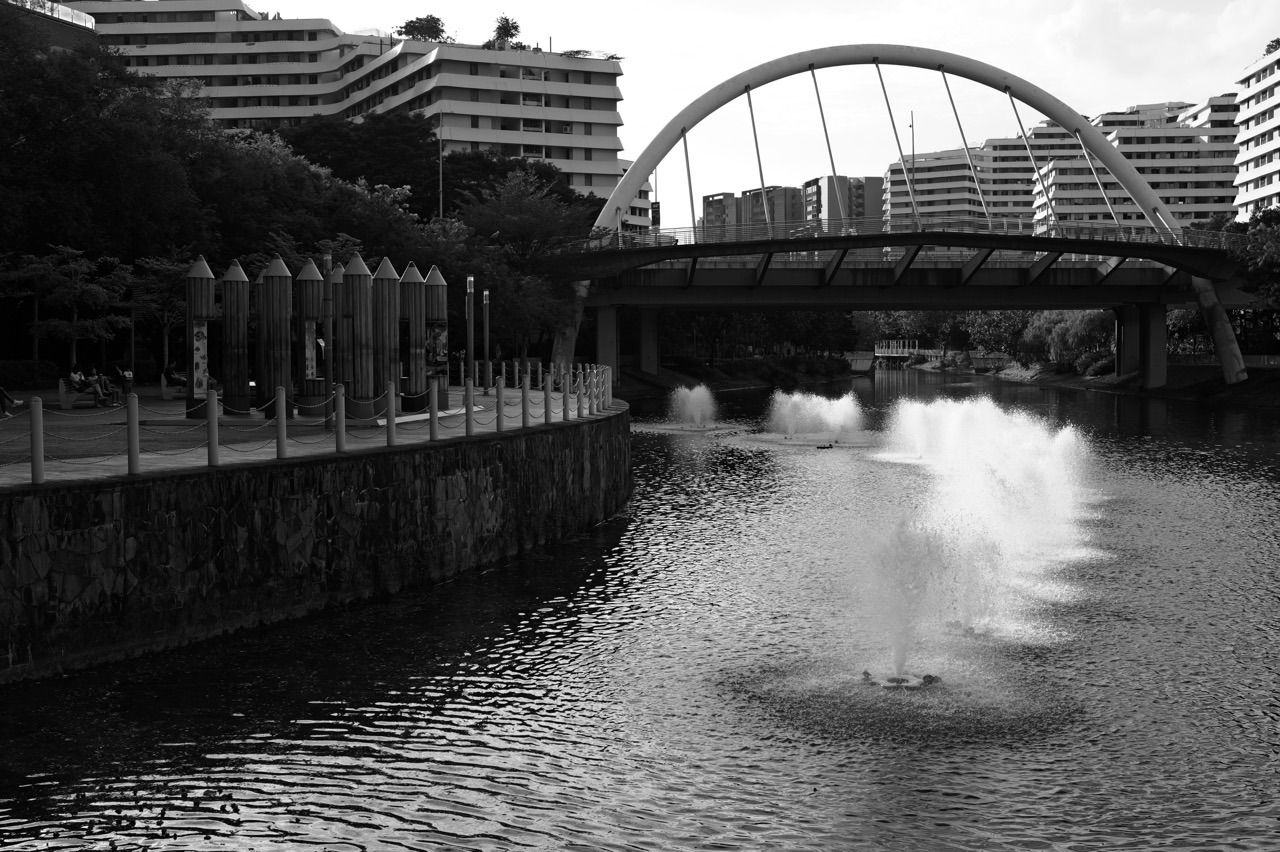
What can families do in Punggol when it is raining? Try a ten-minute weather journal from a safe indoor window. Write down the time, whether the sky is cloudy, whether you can see rain and how visibility changes across a familiar building or public landscape. Then compare your observation with Meteorological Service Singapore’s current rain, forecast and lightning information. A child can draw clouds or a water droplet; an adult can record the difference between observation and forecast. There is no need to go onto a balcony, open a window during wind-driven rain or walk into a storm to make the activity worthwhile.
Rain watching in Punggol from home can connect a typical Singapore afternoon to bigger questions: why thunderclouds develop, what northeast and southwest monsoons mean, how an HDB neighbourhood moves rainwater, and why a day with haze can still have showers. It is also a gentle way to pass a rainy weekend with children without buying a ticket or turning the Waterway into an exposed outdoor classroom. The purpose is curiosity and accurate notes, not amateur storm chasing or collecting unsafe samples from roofs and drains.
Updated 17 October 2026. NEA’s current haze advisory forecasts 24-hour PSI 150–220 for 18 October, unhealthy to very unhealthy, and provides separate one-hour PM2.5 guidance for immediate activities. Rain can influence local visibility and pollutant dispersion, but rain itself does not establish that air quality is safe. Check current NEA/MOH advice. During thunderstorms, remain indoors and follow MSS lightning warnings. This guide is for household observation, not a live weather forecast or a hazardous field experiment.
Punggol weather journal in one minute
| Time | Safe activity | What to note | Do not do |
|---|---|---|---|
| 2 minutes | Look at a familiar scene from indoors | Clouds, rain visible or not, local time | Lean out of a window |
| 5 minutes | Compare view with MSS updates | Observed rain versus reported conditions | Assume one window describes all Punggol |
| 10 minutes | Write three observations | Sky, rainfall appearance, visibility | Estimate millimetres from appearance |
| 15 minutes | Draw a weather sequence | Before, during and after a shower if observed | Wait outdoors under lightning |
| A rainy afternoon | Read about monsoons | Seasonal patterns, short-term weather | Call one shower ‘the monsoon’ without evidence |
| Haze period | Check NEA 1h PM2.5 and PSI forecast | Air quality alongside rain | Infer low pollution from wet roads |
| After the rain | Check home safely for standing water | Plant trays and household containers | Enter drains, rooftops or unsafe areas |
How weather really works around Punggol
The sky at one HDB window is a very small sample
Punggol’s position near the northeast coast means that families may be able to see open skies above the Waterway, high-rise blocks and clouds moving across the neighbourhood. But a single window has a limited field of view; a rain cloud can affect one part of Singapore while another has sunshine. Even people in the same town can see different conditions at the same time.
Record ‘rain visible from my window at 3.15pm’, not ‘all Singapore is raining’. To compare with official data, use MSS radar and current station-based information. A local observation is valid when its scope is stated accurately.
Rain is weather; monsoons describe broader seasonal wind patterns
MSS describes Singapore’s northeast monsoon from December to early March and southwest monsoon from June to September, with inter-monsoon periods around late March–May and October–November. These seasons reflect prevailing winds and patterns of rainfall, not a guarantee that every day of a season will be wet or dry. October is generally in a wetter inter-monsoon period when thunderstorms may occur.
Do not label an afternoon thunderstorm ‘northeast monsoon rain’ merely because it is heavy. Look up the actual season, current winds and official weather bulletin. A good child-friendly question is, ‘Does rain duration tell us the time of year by itself?’ The answer is no.
A dark cloud is not a reliable measurement of rain intensity
Large thunderclouds can produce heavy showers, gusty winds, lightning and rapidly changing conditions. But darkness in a photo depends on the cloud, camera exposure and time of day. A window view cannot provide a trustworthy numerical rainfall total. Official rain gauges and radar supply a more systematic measurement.
Write qualitative descriptions such as light, moderate or heavy-looking rain from your viewpoint, making clear they are impressions. When a number matters, use MSS data and record its station or map context. Avoid building an uncalibrated gauge on an exposed HDB balcony.
Thunder and lightning change the safety boundary
Lightning can occur even when the heaviest rain is elsewhere. For a family weather journal, remain in a safe indoor space, close windows when necessary and avoid exposed balconies, open rooftops, waterfront paths or metal structures during a thunderstorm. Singapore’s MSS provides lightning alerts to support immediate planning.
Do not send children outside to count seconds between lightning and thunder or search for a better sky view. You can describe a thunder sound from indoors without treating it as a precise distance measurement. Safety outranks completing the observation.
Water on a path and water in a catchment are different observations
Punggol Waterway is a planned part of Singapore’s urban water landscape. Rainwater moves through built drainage and catchment systems under engineering controls. A photograph of a swollen roadside drain does not explain the design of the entire waterway, and the flow that is visible from a window cannot be turned into a formal water-quality conclusion.
Use PUB’s public education material for the water-cycle and drainage context. Never enter a canal, drain, culvert or flooded path to take measurements or photographs. A household exercise should remain inside the home or on safe public routes after conditions have genuinely improved.
Rain may make the sky look clearer without making it healthy
A rainstorm can remove some particles from the air locally, and changes in wind or atmospheric mixing can affect haze. But the relation is complex: air pollution also depends on upwind fires, transport and weather. A window that looks clearer after rain does not constitute a PM2.5 reading. NEA’s one-hour guidance exists precisely because conditions can change over time.
Record ‘visibility improved’ as an observation if true, then check official pollutant concentrations before drawing conclusions. Never encourage a child with respiratory vulnerabilities to resume outdoor exertion based only on the appearance of the sky.
Indoor observation can still teach real science
A child can draw the outline of a cloud, note that raindrops move across the glass, or notice a distant building becoming less visible. Older learners can distinguish correlation from cause: two events occurring together do not automatically prove one caused the other. Adults can compare a weather forecast’s probability with the actual event without treating forecasts as promises.
Ask one clear question at a time. If the child prefers to play a board game during the rain, the family has not wasted an educational opportunity. Curiosity works best when the activity is manageable and enjoyable.
Water left behind after rain creates a practical household task
Rain watching may draw attention to plant pot plates, uncovered containers or other water-collecting items. NEA advises regular checks and removal of stagnant water to reduce mosquito breeding, especially around homes. A family can discuss why an uncovered pail collects water without deliberately creating a standing-water experiment.
Adults should handle any cleaning, reach or tools required. Do not ask children to climb windows, reach into an HDB scupper drain or handle unknown water. Empty, scrub and maintain suitable household containers according to NEA guidance rather than storing stagnant samples.
A dated weather journal has more value than a dramatic claim
A short record with date, time, location type and observed conditions can be compared with another day. The same view may change because of cloud cover, haze, time of day, rain intensity or camera exposure. A useful record does not need a ‘record-breaking storm’ headline. It can simply say what happened from that viewpoint.
When making a household archive, keep private addresses and identifiable neighbours out of public posts. If an official warning applies to a larger area than your particular window, label it as an official regional notice, not a direct observation.
The best way to use the journal is in small repeated sessions
Families rarely need more than ten minutes to record meaningful weather differences. A month of short notes can show a variety of conditions, but the activities need not be daily or consecutive. Someone who has no time one week can simply resume later. The diary is leisure, not a compulsory monitoring service.
A consistent structure helps: date, time, what I see, what MSS reports, what remains uncertain. If you do not understand an official weather symbol, look it up rather than inventing an explanation.
A ten-minute Punggol rainy-window activity
Minute 1: choose a safe indoor view
Sit or stand back from a closed window where a familiar building, tree or piece of sky is visible. Pick a location that does not require leaning outside, opening a balcony door into strong wind or stepping onto a ledge.
Young children should remain away from unsafe windows and heights. The exercise must be safe even if a storm intensifies unexpectedly.
Minutes 2–3: observe without naming a cause
Write down the visible conditions: cloud cover, rain or no rain, a building clearly visible or obscured, and whether plants or flags appear to be moving. Use simple descriptive words first.
Do not write that a monsoon, sea breeze or haze shift caused the observation until you have checked appropriate evidence.
Minute 4: note local time and date
Write the date and approximate Singapore time. A schoolchild can draw a clock. If the weather changes rapidly, another entry five minutes later can be compared without claiming to know precise rainfall.
Avoid posting an exact residential address online. ‘Punggol neighbourhood window’ can be enough for a family diary.
Minutes 5–6: check MSS information
Use Meteorological Service Singapore for the latest weather forecast, rain observations or lightning information. Read what the product actually reports; a broad forecast for Singapore may not perfectly describe your immediate block.
Do not substitute an unofficial viral screenshot for a current official alert. Forecasts describe probabilities and likely conditions, not a guarantee.
Minute 7: add one question
Ask ‘Why might this rain be heavier than earlier?’ or ‘How is a weather observation different from a weather forecast?’ If a child wants a simpler task, let them describe the colour and shape of the clouds.
A curious guess is welcome, but write ‘hypothesis’ when the mechanism has not been verified. Do not correct a child harshly for noticing a visual pattern.
Minutes 8–9: make a sketch or tiny chart
Draw two columns: what I observed and what the official information shows. An older student can plot an official time series if clearly sourced. A younger child may draw an umbrella and a cloud.
Do not invent numbers for rainfall, wind speed or PSI. Distinguish measurements from words such as ‘looks strong’ or ‘feels dark’.
Minute 10: choose what to do next safely
If weather is bad, return to a book, board game, meal or other suitable indoor activity. If rain has stopped but haze remains, official air-quality advice still controls the choice of outdoor activity.
The success criterion is having enjoyed an accurate observation and staying safe. Nobody needs to go outside to verify the diary immediately.
Eighteen short rainy-day observation prompts
1. Cloud colour
Try: Describe a cloud using colours you can see, not a predicted weather category. Keep it accurate: A dark cloud is not a rain gauge. This can be a two-minute activity and does not require specialist equipment.
2. Cloud movement
Try: Observe whether cloud edges appear to shift relative to a stationary building. Keep it accurate: You cannot reliably calculate wind speed from a casual glance. This can be a two-minute activity and does not require specialist equipment.
3. Visible rainfall
Try: Record whether you see drops, streaks or water on the ground. Keep it accurate: Do not infer a millimetre total. This can be a two-minute activity and does not require specialist equipment.
4. A familiar distant building
Try: Notice how clearly its outline is visible. Keep it accurate: Reduced visibility can have multiple causes. This can be a two-minute activity and does not require specialist equipment.
5. A tree in wind
Try: Observe movement from a safe indoor viewpoint. Keep it accurate: A moving tree does not prove a specific wind speed. This can be a two-minute activity and does not require specialist equipment.
6. Window droplets
Try: Look at how water forms beads or streams on safe indoor glass. Keep it accurate: Do not open windows or lean outside during storms. This can be a two-minute activity and does not require specialist equipment.
7. Rain on a roof
Try: Listen to how sound changes during an apparent shower. Keep it accurate: Sound intensity alone does not yield reliable rainfall amount. This can be a two-minute activity and does not require specialist equipment.
8. Thunder
Try: Record that thunder was heard without chasing a lightning view. Keep it accurate: Never go outdoors for a dramatic storm recording. This can be a two-minute activity and does not require specialist equipment.
9. Official lightning alert
Try: See whether MSS currently identifies nearby lightning risk. Keep it accurate: A weather map is a safety tool, not a challenge to race the storm. This can be a two-minute activity and does not require specialist equipment.
10. Forecast versus observation
Try: Compare a forecast statement with what occurred in your view. Keep it accurate: A broad forecast is not an exact address-level promise. This can be a two-minute activity and does not require specialist equipment.
11. A before-and-after sketch
Try: Draw the same cloud-facing view at two safe times. Keep it accurate: Light, camera exposure and rain can all change appearance. This can be a two-minute activity and does not require specialist equipment.
12. Water movement
Try: Notice whether surface water runs toward a drain from indoors. Keep it accurate: Do not enter drains or floodwater. This can be a two-minute activity and does not require specialist equipment.
13. Standing-water reminder
Try: Identify household containers that need adult attention after rain. Keep it accurate: Do not create stagnant water for an experiment. This can be a two-minute activity and does not require specialist equipment.
14. Season check
Try: Record whether the date falls in a monsoon or inter-monsoon period. Keep it accurate: One shower does not define an entire seasonal pattern. This can be a two-minute activity and does not require specialist equipment.
15. Haze check
Try: Compare the appearance of the sky with the actual NEA readings. Keep it accurate: A blue-looking sky is not proof of safe PM2.5. This can be a two-minute activity and does not require specialist equipment.
16. Photo caption
Try: Write a sentence describing exactly what one rain photo shows. Keep it accurate: Do not label the cause without evidence. This can be a two-minute activity and does not require specialist equipment.
17. Question for later
Try: Write one question about water, clouds or weather forecasting. Keep it accurate: Research it with a credible source rather than guessing. This can be a two-minute activity and does not require specialist equipment.
18. Comfortable indoor ending
Try: Finish with a hot drink, reading or a suitable creative activity. Keep it accurate: No additional outdoor trip is necessary. This can be a two-minute activity and does not require specialist equipment.
Four indoor weather journal plans for different ages
Preschooler: a cloud drawing and short conversation
Choose a safe indoor view or an existing photograph. Ask the child which shapes and colours they notice, then draw one cloud, sun or rain scene. Avoid expecting exact scientific names. If the child asks where the rain goes, explain that water moves through the environment and public drainage systems, without inviting them to visit a drain.
Finish in five to ten minutes. A child who becomes bored can return to ordinary play. The adult controls windows, balconies and all safety decisions.
Primary 1–3: describe then compare
Let the child record two observable details and one question. Read a current official MSS forecast together and discuss why a forecast is a prediction rather than a certainty. Distinguish seeing rain at the window from being told that rain is possible elsewhere.
Use simple words. A correct description is more useful than copying a paragraph about monsoons the child does not understand. This is an optional family Science activity, not a replacement for classwork.
Primary 4–6: make a two-column evidence log
Create a table for observed sky/rain and official data. Mark missing information with ‘unknown’. Discuss whether a hazy view can prove the PSI and why an accurate clock time is necessary for comparison. An older Primary student can compare two days or official hourly charts if interested.
Do not invent missing numerical rainfall readings or mislabel a subjective colour description as measurement. Parents can connect this to the Waterway Science Trail guide without taking children outdoors in poor conditions.
Secondary students and adults: explain the mechanism carefully
Use MSS background material on the inter-monsoon season, monsoon surges, Sumatra squalls or afternoon thunderstorms. Pick one actual reported condition and ask which mechanisms may plausibly relate, while noting what evidence you still need. If haze is also present, compare official PM2.5 with visual descriptions without treating their correlation as simple causation.
This is a better critical-thinking exercise than declaring that one rain shower ‘cleans Singapore’. Dates, station positions, meteorology and source quality matter. Stop when the reading ceases to be enjoyable.
A sample Punggol weather log without made-up measurements
| Entry | What you can record honestly | What needs an official source |
|---|---|---|
| Saturday 3.05pm | Clouds obscure part of a familiar building; no rain visible at this window | Island-wide rainfall and storm location |
| Saturday 3.10pm | Rain is visible against a nearby rooftop | Rainfall rate in mm/hour |
| Saturday 3.20pm | Rain looks weaker from this same viewpoint | Whether the nearest official rain station saw the same change |
| Saturday 3.35pm | Ground is wet; a distant object looks clearer than before | Actual local PM2.5 concentration |
| Next day | Different cloud cover at the same clock time | Explanation of larger-scale weather patterns |
These entries are illustrative writing examples, not actual weather observations made in Punggol on 17 October 2026. The distinction matters because a table can look scientific while containing invented data. Families should fill their own dates and observed conditions, and consult the current agency products for measured values. A clear uncertainty label is better than a confident number guessed from a photograph.
Punggol’s rainwater is worth understanding without visiting a drain
Punggol’s Waterway, canals and landscaped public spaces create visible reminders that urban life depends on managing rainfall. PUB’s flood and drainage explanations describe how catchments and infrastructure route rainwater. But standing at a window watching a wet path does not reveal the full engineering of the catchment. Reading a diagram of the public drainage system can be an excellent indoor follow-up.
The most useful household action after a safe-weather period may be ordinary dengue prevention. NEA advises removing stagnant water from flowerpot plates, uncovered pails and other containers; where relevant, follow the official Mozzie Wipeout guidance. Do not ask children to access roof gutters or scupper drains beyond safe household responsibility. A responsible adult should handle any maintenance requiring tools, reaching or exposure to unknown waste.
During an active storm, do not go to Punggol Waterway Park, a boardwalk, a bridge or a waterfront simply to see where the water flows. A planned outdoor Science observation can wait for safe conditions and an appropriate public route. The site already has Punggol Waterway Park detail and Waterway Science Trail for later outings.
Frequently asked questions about rain watching in Punggol
Can we observe rain from an HDB flat?
Yes from a safe indoor window with appropriate supervision. You do not need to go onto a balcony, roof or outdoor walkway.
What is the simplest family weather activity?
Write the time, describe whether rain is visible, look at one familiar distant feature and check a current MSS forecast. Ten minutes is enough.
Does October fall within a monsoon?
October and November are generally in an inter-monsoon period, rather than the main Northeast or Southwest Monsoon, according to MSS.
When is the Northeast Monsoon?
MSS describes the Northeast Monsoon as approximately December to early March, with a wetter early phase and a generally drier later phase.
When is the Southwest Monsoon?
The Southwest Monsoon generally runs from June to September, with common showers and possible Sumatra squalls.
Does heavy rain mean it is the Northeast Monsoon?
No. Thunderstorms and heavy rain can occur in different seasons. Use the broader weather pattern and reliable context, not intensity alone.
What is a Sumatra squall?
A line of thunderstorms that develops over the region to Singapore’s west and can move across the island, often bringing gusty conditions. Check MSS information rather than identifying one by guesswork.
Why do clouds look dark before rain?
Clouds can be dense enough to reduce sunlight reaching the observer. The visual darkness alone does not measure rainfall or lightning probability.
Can a child measure rain from how wet the window looks?
No. It is a qualitative observation, not a calibrated rainfall measurement. Use official rain gauge data for numerical amounts.
Can we make a rain gauge from a bottle?
Educational demonstrations exist, but this household guide does not encourage leaving containers exposed on an HDB balcony or creating stagnant water. Use official measured rainfall and a safe indoor chart instead.
Can we watch lightning from outside?
Do not go outdoors to watch or photograph lightning. Remain in appropriate indoor shelter and follow MSS warnings.
Can you tell exactly how far lightning is by counting thunder?
Simple rules of thumb are not reliable enough to justify exposure. A household safety decision should use official lightning advice and safe shelter, not a child standing outside with a stopwatch.
Does rain mean the haze is gone?
No. Rain may affect local particles and visibility, but current air quality must be checked through NEA measurements, not inferred from wet roads or a clearer sky.
What is the difference between PSI and PM2.5?
PSI is an index used for broader air-quality reporting and forecasts; one-hour PM2.5 reports a specific fine-particulate concentration over a shorter period. Use NEA’s corresponding guidance for the decision timeframe.
Can Punggol have sunshine when it rains elsewhere in Singapore?
Yes. Convective showers can be localised, so one neighbourhood’s conditions do not prove island-wide rainfall.
Why does the weather sometimes change so quickly?
Tropical convection, sea-breeze influences and regional weather systems can change local cloud and shower conditions. The exact cause of one event requires data beyond a window view.
Can children learn Science from a window observation?
Yes, by distinguishing what they observe, what they infer and what official data measure. Keep it enjoyable rather than a compulsory exam task.
Can we take photographs during rain?
From a safe indoor position, yes, subject to privacy considerations. A photograph should be labelled with its date and not used as a claim about measured PSI.
What happens after the rain?
Check household mosquito-breeding risks safely, such as plant pot plates and containers, following NEA’s prevention guidance. Do not approach unsafe drains or floodwater.
What if the window is dangerous for small children?
Choose a different safe room or use an existing weather photo and the MSS online information. No observation requires an unsafe window.
Can this be a weekly diary rather than every day?
Yes. A short repeated observation once or twice a week is perfectly useful and easier to sustain.
Where are current Singapore rainfall and lightning maps?
Use Meteorological Service Singapore’s weather portal and lightning information. Do not rely on an old blog screenshot for today’s conditions.
What if we prefer an indoor outing away from home?
See the Punggol rainy-day things-to-do guide for suitable library, mall or other options, checking travel safety and venue hours.
What is the role of the Punggol Waterway in water education?
It provides a visible public landscape linked to Singapore’s engineered water and drainage environment. Use PUB and NParks materials before making technical claims about flow or quality.
Does watching a storm improve health or learning automatically?
No such outcome is guaranteed. It can be an interesting and enjoyable observation activity for families, but its value depends on the individual and how it is used.
Related Punggol weather, water and learning articles
- Punggol Weather for Families — the broader local weather explainer.
- Punggol Rainy-Day Activities — indoor venues and alternatives.
- Punggol Waterway Science Trail — later safe outdoor learning.
- Punggol Haze Indoor Places — indoor substitutes.
- Punggol Haze Data Literacy — how to read PM2.5 and PSI.
- Four-Weekend Punggol Photo Diary — documenting change honestly.
- Punggol Family Map-Making Challenge — geography and access.
- Healthy HDB Home in Punggol — dengue and household safety.
- Screen-Free Family Activities — low-cost indoor creativity.
- Punggol Lifestyle Planner — time, weather and energy.
- eduKateSG Punggol Green Learning — wider sustainability lessons.
Primary official sources and date check
Official sources: Meteorological Service Singapore: Climate of Singapore, MSS weather and lightning alerts, MSS rainfall observations, PUB Flood and Drainage, NEA Dengue Prevention, NEA Haze Situation Update, 17 October 2026 and MOH Haze Health Advice. Updated 17 October 2026. Current weather and air quality are dynamic; no forecast or measured rainfall is claimed beyond official cited sources.


