
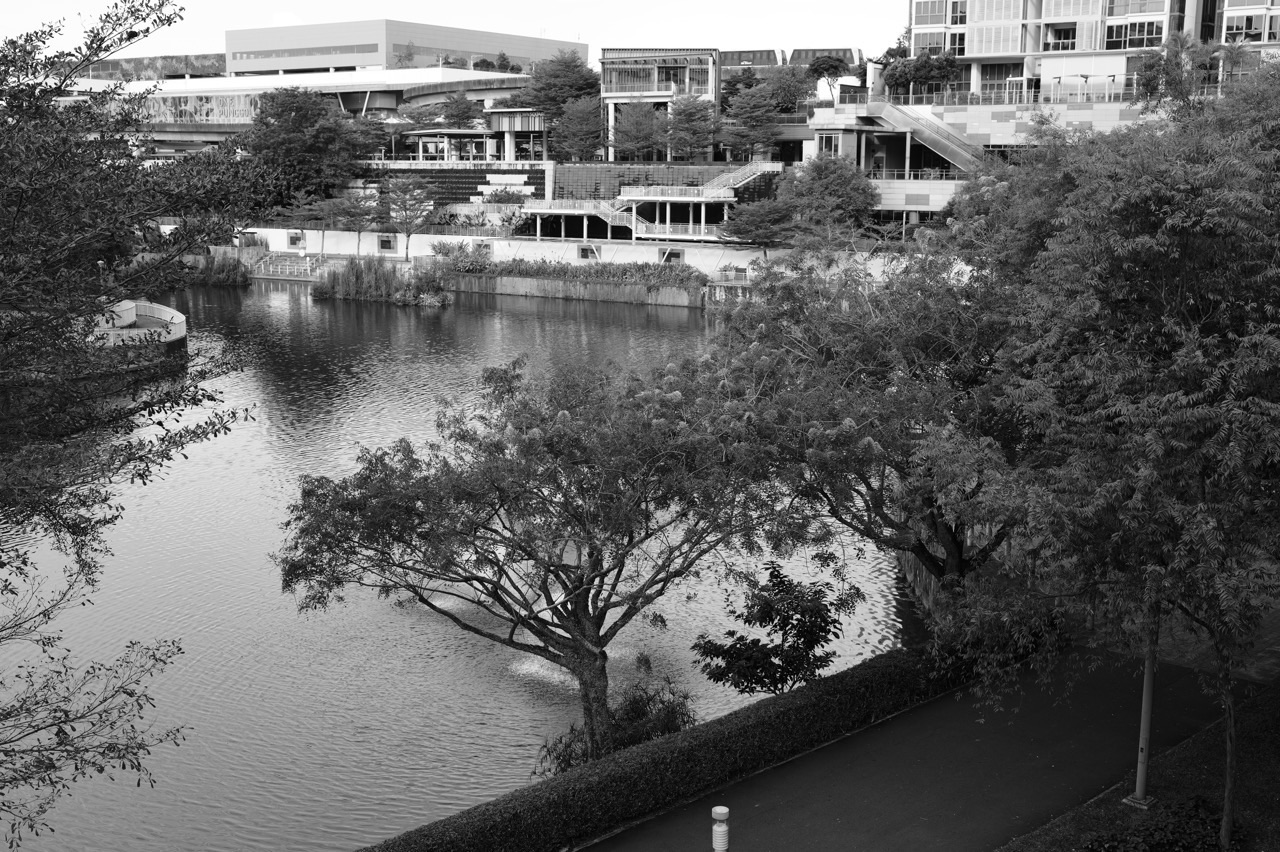
Does haze affect Punggol’s birds, mangroves and wetlands? Smoke particles and associated pollutants can reach natural spaces as well as housing estates, but the exact effect on an individual bird, tree, crab or wetland cannot be diagnosed from a hazy photograph. Coney Island Park, Lorong Halus Wetland and the Punggol Waterway remain valuable habitats whose ordinary ecology deserves protection before, during and after a smoke episode. Visitors should check the current NEA haze advisory and the applicable NParks or PUB access notices before planning outdoor nature activities.
For searches such as Punggol haze wildlife, Coney Island birds during haze, Lorong Halus Wetland air pollution, does haze damage plants, or how smoke affects biodiversity in Singapore, this guide separates what environmental science can explain from what local measurements have not established. For whether a family should go on a nature walk today, use the existing Punggol outdoor haze guide. Here the focus is the ecosystem itself.
Quick answer: the environment has several connected layers
Smoke from regional vegetation fires can carry fine particles and gases through the atmosphere. Some material may deposit on leaves, water and soil. Animals may experience altered air conditions, but their actual exposures, responses and health outcomes depend on species, the pollutant mixture, concentration, duration and habitat. One event cannot be used to announce that all Coney Island wildlife is harmed, or that the wetland has become toxic.
Coney Island Park is an 81-hectare NParks-managed landscape with coastal forest, grasslands, mangroves and other habitats. Lorong Halus Wetland, managed as part of PUB’s water infrastructure, uses engineered wetland processes to help treat water passing through a former landfill before it reaches Serangoon Reservoir. These are different environmental functions and should never be confused.
A third layer is people’s use of natural spaces. Birdwatching and nature photography are outdoor activities. If official advice calls for avoiding prolonged exposure, postpone the trip and learn from NParks’ online resources rather than exposing a child to smoke in order to observe its effect.
Why an urban coastal town still has significant biodiversity
Punggol can look like an HDB skyline from one angle and a patchwork of coastal and wetland habitats from another. The distinction matters because habitat ecology cannot be reduced to the number of trees beside a footpath.
Coney Island includes conserved or restored natural habitats. Its mangrove edges provide places for creatures adapted to tidal conditions; coastal forest and grassland support different plant and animal communities. Lorong Halus offers wetland and reservoir-edge habitats alongside an engineered water-treatment function.
Wildlife uses these spaces in ways residents may not see. Birds feed, rest, nest or migrate; insects pollinate and provide food; mangrove animals occupy tidal soils and roots. Pollution and disturbance may interact with their routines, but the strength of those effects needs evidence.
The mere fact that a park exists within an urban town does not guarantee pollution-free air during a regional smoke episode. A tree canopy is not a certified smoke filter for a trail.
Coney Island Park: what NParks actually documents
The official NParks Coney Island Park page describes an 81-hectare park with West and East entrances, located beside Punggol Promenade Nature Walk. It lists 7am to 7pm opening hours, subject to current notices, and describes mangroves, coastal vegetation and diverse wildlife.
NParks reports that more than 80 resident and migratory bird species have been spotted there. This does not mean every species will be visible on every visit or that 80 birds are counted daily; it describes recorded species across observations.
The official guide mentions animals such as giant mudskippers, tree-climbing crabs, common flamebacks and other creatures associated with different habitats. These details offer a better introduction to ecology than assuming every animal in the park responds to haze in one identical way.
The park’s management history also includes native plantings and habitat enhancement. It is a living ecological landscape, not a static outdoor exhibition that can be switched on or off for one photograph.
The habitats of Coney Island are not interchangeable
Coastal forest plants must cope with local light, wind, salt and soil conditions. Grasslands support different insects and seed-eating birds. Mangroves occur in tidal environments and have specialised root and salinity adaptations. Beaches and estuarine edges host animals adapted to shifting water and sediment.
A regional smoke plume may move above all these habitats, but the routes by which particles reach leaves, sediment or animal airways vary. Rain can wash some particles from leaves, while water movement and tidal dynamics influence where materials end up in the coastal environment.
We should not infer that a sea-facing mangrove receives exactly the same pollutant dose as a bird sheltering under forest canopy. Nor should we claim a favourite species has moved away because of haze without comparable observations.
The first ecological task is identifying the correct habitat and the organism’s usual behaviour. Only then can an investigation ask how pollution might alter it.
Lorong Halus Wetland: a water-treatment landscape, not an air purifier
PUB’s official Lorong Halus Wetland page describes its role in collecting and treating water passing through the former landfill, helping prevent that water from reaching Serangoon Reservoir untreated.
It is tempting to see the word “wetland” and conclude that Lorong Halus must also clean Singapore’s haze. That would confuse two distinct environmental processes. PUB’s engineered wetland function concerns water quality and leachate treatment, not a guarantee that Punggol’s outdoor air is protected from transboundary PM2.5.
The wetland also offers ecological and educational value. PUB provides learning-trail materials about water sustainability, the ABC Waters Programme and biodiversity. These can be used indoors during a severe haze day.
A strong learning question is: “How does the wetland help manage water, and why is that different from removing fine particles from a regional smoke plume?” The answer links engineering, ecosystems and careful source interpretation.
Lorong Halus Park Connector and its birds
NParks describes the Lorong Halus Park Connector as a 3 km connection between Pasir Ris and Punggol, with wetland and reservoir views. Its official guide mentions birdwatching opportunities and species including chestnut munias and little grebes.
A birdwatcher may visit because different bird species use the area’s water, reeds, trees and open patches. It would be wrong to infer that one hazy afternoon proves a local population decline merely because fewer birds were visible from the bridge.
Bird detection is affected by time of day, season, noise, observer effort, weather and habitat conditions. If haze changes how long people are willing to watch, the number of sightings may decline even without any change in the true bird population.
This distinction—fewer sightings versus fewer animals—is essential in ecological monitoring and also helps readers interpret social-media posts about local wildlife.
What happens when smoke particles reach leaves?
Airborne particles can settle on leaves and other exposed surfaces. The rate depends on particle properties, leaf texture, wind, rain and the local environment. In some circumstances, heavy deposits can influence leaf surfaces and physiological processes, but an effect observed in one species or experimental setting cannot automatically be applied to every Punggol tree.
Dust visible on a leaf may come from road activity, construction, soil or a mix of sources. A darkened leaf is not a laboratory analysis establishing that all the material was transported from a particular peat fire.
Rain may remove some deposited material and alter how plants appear. That does not prove a species is completely unaffected or that every chemical exposure has ended. Environmental evidence often requires repeated observations and proper controls.
For household plants and safe surface cleaning, use the Punggol Haze and Balcony Gardens guide rather than turning an ecological discussion into a home-cleaning manual.
Can greenery eliminate haze particles?
Urban trees and vegetation can provide shade, cooling, habitats, visual interest and other ecosystem services. Some vegetation can also interact with airborne particles through deposition. But that is not the same as an assurance that a forest path has safe air during a major regional smoke episode.
The concentration outdoors depends on emissions, atmospheric transport, mixing, deposition and weather across a wider scale. A relatively dense canopy does not create a sealed, mechanically filtered room.
This matters when a parent suggests moving from a Waterway path to Coney Island because “a forest will absorb all the haze”. Nature may make the setting pleasant, but the same official haze guidance still governs outdoor exertion and exposure.
Appreciating the value of trees and recognising their limits are not contradictory ideas. Responsible environmental education includes both.
What can haze mean for birds?
Birds breathe air and can be exposed to airborne pollutants. Research in other settings suggests that smoke can influence animal respiratory health and behaviour, but species, dose, duration and context vary substantially. Without local ecological measurements, it is not possible to declare how many Coney Island birds were affected by a specific Singapore haze event.
A bird seen resting is not necessarily suffering from smoke; birds normally rest. A bird flying away may be responding to a person approaching, a predator or many ordinary stimuli. Observers should avoid assigning a medical diagnosis from a photo.
Birdwatching records become scientifically useful when the observer documents date, location, species identification, duration and consistent methods over time. Even then, changes in sightings do not automatically establish the cause.
In Punggol, long-term habitat protection, responsible visitor behaviour and reliable ecological surveys remain more constructive than dramatic unsupported claims about one hazy week.
Migratory birds introduce another geographical scale
NParks reports both resident and migratory bird species at Coney Island. Migrants may travel across extensive routes, spending time in different countries and habitats. Their wellbeing is influenced by multiple ecological conditions along those routes.
A regional smoke episode may occur in one part of a bird’s life cycle, but a sighting in Punggol alone cannot reveal the individual’s total exposure, migration history or health. Understanding migratory species requires broader monitoring.
That provides a useful connection to haze geography: birds and air masses both cross borders, but they do so through different biological and physical processes. The shared idea is that local ecological issues often have wider contexts.
Do not turn this parallel into an unsupported claim that birds directly follow smoke plumes or that haze determines the route of every migratory species.
Mangroves, tidal organisms and the water connection
Mangroves are coastal ecosystems shaped by tides, salinity, sediments and living communities. Coney Island’s mangrove habitats support animals such as crabs and mudskippers. These organisms experience environmental conditions quite differently from a human jogging along the adjacent park connector.
Particles carried in air may be deposited on land or water, but whether this creates an ecologically meaningful water-quality change depends on the amount, chemical composition, processes after deposition and existing conditions. Do not claim that Singapore’s reservoirs or coastal habitats became contaminated by a specific haze episode without a water-quality investigation.
PUB and NParks have different monitoring and management responsibilities for the spaces they oversee. Haze data and water-quality data are also different datasets with different units and sampling methods.
A good Geography or Science essay describes a possible pathway and then identifies what would need to be measured to test it.
Smoke, sunlight and the temptation to invent a photosynthesis crisis
Photosynthesis depends on light, water, carbon dioxide, nutrients and the conditions of the plant. Smoke can scatter and absorb sunlight, affecting the quality of light reaching vegetation. Heavy particles deposited on leaves may also influence light interception under certain conditions.
But it would be irresponsible to conclude that every tree in Punggol stopped photosynthesising on a hazy day. Plants respond to varying light conditions routinely; actual physiological outcomes depend on species, exposure and other environmental factors.
A rigorous investigation might compare light measurements, leaf conditions and plant performance across time and sites, with controls for rainfall, heat and seasonality. A single picture of a dull afternoon cannot isolate the role of haze.
For home learners, drawing this chain is safer and more educational than conducting unnecessary outdoor particle sampling.
What about insects, butterflies and pollinators?
Insects play multiple roles in coastal and urban habitats: pollination, seed dispersal, decomposition and serving as prey for other animals. Some may be sensitive to air pollution, but species vary, and reliable effects should not be inferred from a single person’s short observation.
If a visitor sees fewer butterflies at noon than on an earlier sunny day, weather, temperature, wind, flowering and time of observation may all explain part of the difference. Haze could be considered as a hypothesis only with appropriate evidence.
This is a useful reminder of a broader scientific principle: correlation is not necessarily causation. A missing insect on one afternoon does not establish population decline, and a spectacular photograph is not a census.
Protection of pollinators and insects involves habitat quality, food plants, pesticide management, connectivity and many other factors beyond one atmospheric event.
How people can study these habitats without visiting during poor air
NParks publishes a self-guided Coney Island walking resource that introduces coastal forests, grasslands, mangroves and native flora. PUB provides Lorong Halus learning-trail resources on water quality and wetland design.
A student can use those sources indoors to compare habitats, sketch a food web, research plant adaptations or explain how engineered wetland treatment differs from natural ecological processes. That accomplishes more than a rushed visit when outdoor activity should be restricted.
For a family, the learning plan could be fifteen minutes of reading about one bird, fifteen minutes drawing a habitat diagram and ten minutes deciding what evidence would be needed to test a pollution claim.
Save the real nature visit for a day when official air quality, weather, opening notices and individual health needs support it.
A worked example: is a decrease in bird sightings evidence of harm?
Suppose two fictional groups record 18 bird sightings on a clear morning and 7 sightings during a hazy afternoon. The simple difference is 11 sightings, or approximately 61% fewer relative to 18.
Can we conclude that “haze killed 61% of Coney Island birds”? No. The data are sightings, not bird deaths or even unique individuals. The visits occurred at different times, and the teams may have spent different durations watching. Visibility and observer effort also affect detection.
A better research design would document the species, survey route, observation time, weather, number of observers and consistent observation effort, then repeat surveys. Even well-controlled sighting trends need careful interpretation and cannot alone prove a specific pollutant caused a change.
This example teaches why ecologists care about sampling methods, and why eye-catching numbers should be reported with their limitations.
A second worked example: water filtration versus air filtration
Imagine a student reads that Lorong Halus Wetland treats water and concludes: “If the wetland filters pollution, all the air above it must be cleaner.” The conclusion contains a category error.
Water treatment depends on water flowing through engineered systems and biological or physical processes that target specific substances. Air filtration depends on the movement of air through appropriate capture mechanisms, with performance evaluated using air-quality methods.
A wetland can be highly valuable for water quality while the air above it still reflects regional haze. Conversely, a portable HEPA air cleaner is not a device for treating reservoir water. Words such as “filter” and “clean” must always identify the medium being treated.
This principle extends to many environmental systems: what works for water does not automatically work for air, soil or noise.
Does haze affect wildlife more than people?
There is no simple universal ranking. Humans and wildlife differ in physiology, exposure, behaviour and vulnerability. People have access to public advisories, indoor spaces and healthcare; wildlife makes its own behavioural choices within the habitats available.
Some animals could experience smoke exposure differently from people, but the response cannot be generalised across every species in a mangrove, forest and grassland. We would need appropriate ecological and toxicological evidence to compare risks.
The right question for Punggol is therefore specific: which species, which pollutant, how much exposure, over what time, and what measurable outcome? Without those details, statements about “all wildlife suffering” cannot be treated as established findings.
Respectful uncertainty does not minimise concern. It helps direct attention to the measurements and conservation practices that would actually improve understanding.
What visitors should not do in a haze episode
- Do not walk into restricted areas to photograph smoke against wildlife habitats.
- Do not approach, capture, feed or handle animals to “check whether haze hurt them”.
- Do not burn material to demonstrate smoke near vegetation or wildlife.
- Do not remove leaves, nests, insects or other samples without relevant permission.
- Do not fly equipment or operate activities in ways that conflict with park rules.
- Do not assume an animal has died or become sick merely from its appearance in a photo.
- Do not use park shade as a reason to ignore NEA advice about prolonged outdoor exposure.
- Do not post precise sensitive nesting locations in pursuit of a dramatic story.
The most useful thing many visitors can do during poorer air is leave wildlife undisturbed and postpone optional long visits.
Why conservation still matters after the smoke clears
Habitat fragmentation, invasive species, human disturbance, water quality and climatic conditions are enduring environmental issues. A short haze episode draws public attention, but the daily work of conservation continues across the year.
Coney Island’s coastal habitats benefit from appropriate native-plant management and wildlife protection. Lorong Halus’ wetland systems combine ongoing water-infrastructure management with ecological value. Those responsibilities do not cease when the regional PSI falls.
A responsible response after haze is to return to nature respectfully when conditions allow, follow park rules and continue learning about the habitats. Do not assume that merely removing smoke restores every ecosystem issue or that haze is the only environmental threat worth discussing.
The best long-term story is about healthy connected habitats, good management and evidence-based environmental literacy.
Frequently asked questions
Does haze reach Coney Island even though it has many trees?
Regional smoke can affect natural spaces as well as built-up areas. A tree canopy does not guarantee filtered air. Check NEA’s current North-region readings and official health advice.
Did haze kill birds at Lorong Halus Wetland?
No verified mortality count or specific causal investigation is provided here. Do not infer bird deaths from a missing sighting or a hazy photo. Report genuinely distressed wildlife through appropriate channels.
How many bird species live at Coney Island?
NParks states that more than 80 resident and migratory bird species have been spotted there. That is an observation record, not a live count of birds present today.
Does Lorong Halus Wetland clean PM2.5 from the sky?
Its documented engineered function is water treatment involving the former landfill and Serangoon Reservoir. It is not an officially certified air-filtration installation for transboundary smoke.
Can haze particles settle on mangrove leaves?
Airborne particles can deposit on vegetation, but the rate, composition and effects vary. A visible deposit does not prove its source or its biological consequence.
Should I collect leaves and soil to check for haze toxins?
Not as a casual family activity. Reliable environmental testing requires appropriate sampling methods, permissions and laboratory analysis. Use published monitoring and safe learning resources.
Can I still visit Coney Island during haze?
Check the latest NEA health advice and NParks access information, and consider the length and intensity of your planned outdoor activity and each person’s health. An open park is not automatically a suitable long outing under every advisory.
Do the coastal breezes make Punggol wetlands safer than inland parks?
Wind may affect comfort and particle transport, but it does not establish a local air-quality guarantee. Avoid inventing a precise difference without suitable measurements.
What does haze have to do with the reservoir?
Some airborne material may deposit into water, but whether that causes an important water-quality change requires evidence. PUB’s existing wetland water-treatment role should not be confused with a claim about haze contamination.
How can children learn about Coney Island without going outside?
Use NParks and PUB learning materials to study habitats, food webs, bird behaviour, water treatment and the difference between observations and causal claims. The Punggol Haze Learning Activities article provides broader subject projects.
Related Punggol guides and eduKate references
For the immediate question of walking, running and cycling under haze, see Punggol Haze Outdoor Activities. For the source and transport of smoke, read Why Is Punggol Hazy?. For gardening and leaf-cleaning decisions, see Punggol Haze and Balcony Gardens.
The site’s Lorong Halus Wetland and Red Bridge Guide is useful for local place context, but verify current access details from the official manager. This page’s unique focus is ecology and evidence, not an itinerary.
Official sources and evidence boundary
Reviewed on 17 October 2026. This article does not claim local wildlife disease, mortality, reservoir contamination or habitat damage without a site-specific investigation. The hypothetical sighting data are illustrative only.
- NParks: Coney Island Park, Biodiversity and Visitor Information
- NParks: Coney Island Nature Walk and Coastal Habitats
- NParks: Lorong Halus Park Connector, Birds and Wetland Views
- PUB: Lorong Halus Wetland and Water Treatment
- NEA: Live Air-Quality Readings and Health Advisories
- NEA: Air Pollution FAQs and Reporting Regions
Punggol’s wetlands, birds and coastal vegetation are worth learning about in every season. A good haze guide respects the ecosystems, recognises uncertainty and keeps people from creating extra disturbance in the name of studying smoke.
Explore the Punggol Haze Reference Network
These related guides explain distinct parts of the haze problem, from historical episodes and regional governance to local nature and HDB household expenses. For decisions about today, consult NEA’s live advice.
- Punggol Haze History: 1997, 2013, 2015, 2019 and 2026
- How ASEAN, Singapore Law and Regional Fire Prevention Work
- Punggol Household Haze Costs: Electricity, Filters and Air-Con
- Punggol Haze Check: PM2.5, PSI and Official Advisories
- Why Is Punggol Hazy? Smoke, Winds and Rain
- eduKateSG: Singapore Haze and Transboundary Connectivity
- eduKateSG: How Singapore Connects—PSI and Haze Monitoring
Punggol Haze: Photography, Climate, Buildings and Local Dust
Explore linked guides on photographic evidence, El Niño and fire weather, Punggol building design, and distinguishing local dust from regional smoke. For current decisions use NEA’s live air-quality information.
Punggol Haze: Four New Complementary Guides
Explore the differences between air-quality myths, reservoir-water evidence, community access and wider economic costs. These articles have distinct reader purposes and link back to the existing Punggol haze library.


