
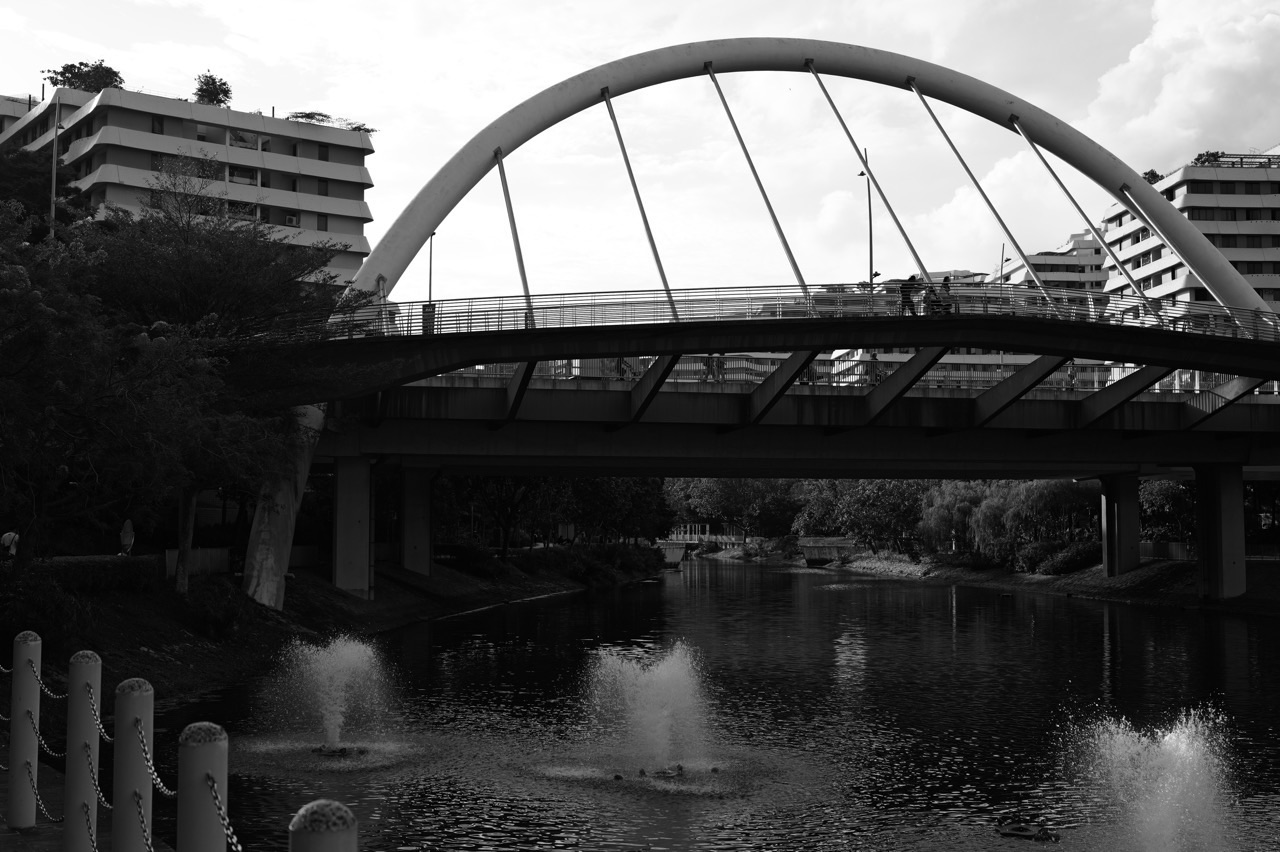
Does haze make the water in Punggol Waterway or Singapore’s taps unsafe? A regional smoke episode does not, by itself, establish that either water body is contaminated or that tap water is unsafe to drink. Smoke particles can deposit onto surfaces and water, but environmental effects depend on the type and quantity of material, dilution, chemistry and actual measurements. Singapore’s national water agency, PUB, runs monitoring and treatment systems for the water supply. A visible grey skyline is not a water-quality test.
For searches such as Punggol haze water quality, is Punggol Waterway polluted by smoke, does haze affect reservoir water, is Singapore tap water safe during haze, and Lorong Halus Wetland filtration, this guide separates what is physically possible from what has been measured locally. Use NEA’s live readings for outdoor-air decisions. For drinking water quality, use PUB’s official monitoring information, not a haze screenshot.
Quick answer: four different questions
Can smoke settle onto water? Yes; airborne particles can deposit on many surfaces. Could that affect water chemistry? Potentially, depending on the substances and amounts, but this requires data. Are regional wildfires draining directly into Punggol Reservoir? Not merely because smoke crosses the sea—overseas burned catchments and local Singapore catchments are different drainage systems. Is treated Singapore tap water the same as the outdoor Waterway? No; PUB monitors water at multiple stages and treats source water before supplying it.
The first mistake in many online discussions is to hear the word “pollution” and assume every environmental medium is affected to the same degree. Outdoor PM2.5, reservoir water quality and treated tap water are different measurements.
The second mistake is assuming that everything described in a scientific study of a burned river catchment abroad automatically occurs in Punggol. A fire that burns through the vegetation of a watershed can create ash and sediment runoff into nearby rivers; that is not the same pathway as fine smoke particles travelling through the air to Singapore.
Know Punggol’s two water landscapes
Punggol has the scenic Punggol Waterway through residential neighbourhoods and the wider Punggol and Serangoon reservoir network associated with Singapore’s water infrastructure. PUB’s educational materials explain the transformation of the Punggol and Serangoon rivers into reservoirs under the Punggol–Serangoon Reservoir Scheme, which was completed in 2011.
These water environments support more than views and park activity. They are part of Singapore’s urban catchment and water-management landscape. Rain falling on appropriate catchment surfaces is collected and managed through a network of waterways, drainage systems and reservoirs.
Lorong Halus Wetland, beside Serangoon Reservoir, has a specific engineered role in treating water passing through a former landfill. Its function should not be confused with Punggol Waterway generally, nor with air filtration.
The exact relationship between a local drainage area and a particular water body is a technical catchment question. Do not assume any roadside drain, coastal channel or water feature has the same management and supply function without checking PUB’s maps.
How smoke particles can reach a water surface
Particles suspended in air can reach land and water through dry deposition, when material settles or interacts with a surface, and wet deposition, when precipitation removes some particles from the air. Some gases can also dissolve in water or participate in chemical reactions.
This is a plausible environmental pathway, not proof of a dangerous dose in any particular Punggol canal. The quantity deposited depends on particle characteristics, concentrations, weather, water-surface area and exposure time, among other factors.
Once material reaches water, its behaviour depends on chemical solubility, mixing, settling, biological activity and reactions with other constituents. Some materials dissolve; others remain particulate or attach to sediments.
A general “haze deposits things” explanation is therefore useful background. It cannot replace sampling for actual concentrations of specific substances in the water.
Why airborne PM2.5 and water pollution use different units
An outdoor PM2.5 concentration is expressed in micrograms per cubic metre of air. Water-quality measurements may use milligrams per litre, micrograms per litre, pH, turbidity, dissolved oxygen or other parameters depending on the question.
A PM2.5 reading of 100 μg/m³ does not mean the water contains 100 μg/L of the same substances. The denominator is different, the medium is different, and the processes of deposition, mixing and treatment are different.
Similarly, PSI is an air-quality index, not a laboratory result for a pond or reservoir. It does not encode the concentration of ash, metals or nutrients in local water.
If a neighbour shares a screenshot of a “high PSI” as proof that the reservoir has been contaminated, the correct response is to ask for a source of water-quality data before making such a claim.
Two different fire-to-water pathways
Pathway A: smoke transport and deposition. A fire far from Singapore releases smoke. Some particles are carried into the atmosphere, travel with winds and may deposit onto land or water in Singapore. Whether any local water-quality change is meaningful depends on quantity, composition and measurement.
Pathway B: runoff from a burned watershed. Vegetation and soils burn inside the drainage basin of a river or reservoir. Later rain may carry ash, sediments, nutrients and other materials downhill directly into that basin’s streams and lakes.
The US Geological Survey documents major water-quality risks associated with the second pathway after wildfires, including erosion and altered runoff in burned catchments. Those observations are valuable science but should not be pasted into a Singapore article as if the Punggol catchment burned.
To make a claim about Punggol, an investigator would first establish which pathway is relevant and then obtain suitable local evidence.
Why post-fire sediment studies do not automatically describe Singapore haze
Imagine a forested catchment in which a large part of the land burns. When rain arrives, soils lacking protective vegetation may erode, and ash or sediment can move into streams. This direct hydrological connection can cause a significant and sometimes delayed water-quality change.
Now imagine a fire in a different country with smoke transported to Singapore across the atmosphere. Singapore’s waterways do not suddenly become part of that burned forest’s drainage basin. Only material that actually reaches Singapore through a relevant pathway can affect local water.
This distinction is easy to miss in a social-media post reporting that “wildfires can contaminate lakes”. That sentence can be true in a burned watershed, yet it does not establish that Punggol Waterway or PUB’s treated water has become unsafe because of a particular haze episode.
Good environmental reporting always identifies the pathway, destination, substance and evidence.
What PUB monitors in Singapore’s water supply
PUB states that its water-quality monitoring programme tests samples collected from reservoirs, waterworks or desalination plants, and distribution systems. The monitoring covers physical, chemical and microbiological characteristics with laboratory testing and online sensors.
PUB says close to 500,000 tests annually are carried out across physical, organic, inorganic, radiological and microbiological parameters. That is a national water-quality monitoring figure, not a count of tests conducted only at Punggol Waterway or only during haze.
PUB states Singapore’s tap water meets applicable drinking-water regulations and is suitable for drinking directly from the tap without further filtration under normal operations. These claims are based on its supply monitoring and treatment, not on how the outdoor reservoir looks to a passer-by.
If PUB issues a specific water-related public advisory, follow it. A haze article must not override such a notice, but it also should not invent a water-contamination warning unsupported by the agency.
Raw reservoir water is not treated tap water
Water in a reservoir is raw water within the supply system. Before water reaches taps, it undergoes the relevant treatment processes and monitoring. This means an observation about an outdoor pond, canal or reservoir should not automatically be treated as a statement about drinking-water quality at home.
Conversely, the fact that treated tap water meets quality standards does not prove that every outdoor water body can be drunk from directly. Do not consume untreated reservoir or canal water based on the assumption that the reservoir is part of a national water system.
These two corrections belong together. Some people panic about tap water when the sky looks grey; others assume water in a landscaped canal must be safe to drink because Singapore’s taps are safe. Both misunderstand the distinction between source water and supplied drinking water.
For water-supply information, PUB—not a photographed colour change on the Waterway—is the primary source.
Why a reservoir can look brown after rain
After heavy rain, suspended sediments and runoff may change the appearance or turbidity of water. Organic matter, algae and lighting can also influence colour. A brown-looking canal does not automatically mean smoke ash has contaminated it.
The cause of a visible change depends on local catchment conditions, rainfall, flow, biological activity and any actual incident. A photograph may help document appearance, but it does not measure dissolved pollutants.
Likewise, a clear-looking water surface does not prove the absence of all substances of concern. Water testing requires appropriate methods and specified parameters.
If you notice an unusual discolouration, apparent oil, suspected discharge or fish distress, report factual details through the relevant official channel rather than naming a haze source without evidence.
Lorong Halus Wetland: what it does and does not do
PUB’s Lorong Halus Wetland guide explains that the engineered wetland collects and treats water passing through the former Lorong Halus landfill, helping prevent untreated water from entering Serangoon Reservoir.
The wetland uses designed treatment stages and biological or physical processes. It is therefore part of local water-environment management and a valuable teaching site for sustainable infrastructure.
But it is not accurate to call it a giant HEPA filter for the sky. A wetland designed to treat water is not a certified system for removing transboundary PM2.5 from all air over Punggol.
The distinction connects beautifully to environmental science: “filtration” has to name which medium is filtered, which pollutant is targeted and what performance has been measured.
A worked example: rainfall volume is not pollutant mass
Consider a fictional flat roof measuring 10 metres by 10 metres, with rainfall of 10 millimetres. Its area is 100 m² and the rain depth is 0.01 m. The rainfall volume over that roof is therefore 100 × 0.01 = 1 m³, or 1,000 litres.
That calculation tells us how much rain fell on a simple horizontal area, ignoring losses. It tells us nothing about how many milligrams of smoke particles were deposited, whether any dissolved, or which water body eventually received the runoff.
A student who concludes “there were 1,000 litres of dirty haze water” has moved beyond the information given. We need separate measurements of deposition, surfaces, runoff and concentration to say anything about pollution.
This is an excellent Mathematics and Science example: a correct volume calculation does not automatically supply a missing chemical measurement.
Another worked example: why dilution assumptions matter
Imagine a strictly hypothetical experiment in which 20 milligrams of a known soluble substance are completely mixed into 1,000 litres of clean water. The resulting concentration would be 20 ÷ 1,000 = 0.02 mg/L, assuming complete dissolution, no losses and perfect mixing.
This is not a measurement from Punggol, and the example substance has not been identified as a haze contaminant. It only shows what additional information would be required to relate mass and water concentration.
Real environmental systems are more complicated: substances may stick to sediment, degrade, mix unevenly, or enter or leave through other flows. A real reservoir also has an entirely different volume and hydrology from this classroom beaker calculation.
The key lesson is to ask where the mass estimate came from before interpreting the result as a risk.
What about smoke and algae blooms?
Water bodies can support algae, which respond to light, nutrients, temperature and other conditions. Certain nutrient inputs can contribute to increased algal growth under suitable circumstances, but a hazy sky does not by itself establish a bloom or a causal relationship.
PUB’s local catchment water information describes nutrients and algae as part of reservoir water management, with monitoring of raw reservoir water quality.
For a claim that haze deposition triggered a bloom in Punggol, we would need relevant water-quality observations, timing and scientific analysis. Seeing green water after smoke is not enough to identify the cause.
Avoid telling residents that every bloom is caused by fires overseas or that any green canal is immediately toxic. Use the responsible agency’s observations and advisories.
Is haze-linked acid rain a proven problem at Punggol Waterway?
Atmospheric pollutants can participate in chemical reactions that influence precipitation chemistry. But “acid rain” is not a synonym for every rainfall event during regional haze, and the chemistry of smoke is not identical to that of industrial sulphur dioxide or nitrogen oxides.
To establish unusually acidic rainfall or a change in the pH of a particular water body, investigators need appropriate pH and chemistry measurements. A household cannot reliably infer these from the smell of rain or a grey skyline.
The existing Punggol atmospheric chemistry article explains the wider Science ideas. This page addresses the separate water-quality evidence required.
Avoid statements that a particular reservoir became acidic in October 2026 unless a reliable site-specific analysis is available.
Wildlife and aquatic life: don’t invent a fish-kill story
Fish, aquatic invertebrates and wetland plants depend on suitable water conditions. Changes to dissolved oxygen, pH, temperature, pollutants and other factors can affect them. However, an individual fish surfacing or a wildlife photograph does not establish a haze-caused ecological injury.
If fish deaths or an unusual visible water incident are observed, record the location, date and observation and report through the appropriate official channel. Do not touch dead animals or try to diagnose contamination with improvised household chemicals.
A real investigation might examine water samples, fish health, runoff, weather and other possible sources. Its conclusion should follow the evidence rather than a dramatic correlation with haze news.
For broader local biodiversity, read Punggol Haze and Nature.
Waterway exercise versus water-quality concerns
Haze can influence whether a family should run, cycle or spend hours outdoors. That is an air-quality and exposure decision. A separate warning about water use would require the relevant water or recreation authority and the specific activity in question.
Do not assume a safe outdoor air reading makes all water activities safe. Likewise, a suitable reservoir water-quality status does not automatically make a two-hour high-intensity waterfront run appropriate during unhealthy haze.
Separate the indicators and agencies. NEA provides haze guidance; PUB manages public water resources and monitoring, while operators and other authorities may regulate particular activities.
For exercise planning, see Punggol Haze Outdoor Activities.
How to read a water-testing chart
Start with the location, date, sampling method, parameter and unit. A pH reading is not a particle concentration; turbidity is not the same as the bacterial count; dissolved oxygen is not a legal verdict about a waterway.
Ask whether the result is a single grab sample or part of a trend. What is the reference range or standard? Was the same method used across dates? Was the water body a treated supply point, a reservoir or a stormwater drain?
A reading from a water body outside Singapore should not be relabelled “Punggol Reservoir”. A chart showing changes after a burned catchment overseas cannot be assumed to describe rainfall on an urban Singapore neighbourhood.
This is the water-quality equivalent of checking whether a haze screenshot shows PM2.5 or PSI: good interpretation begins with correct labels.
What Punggol residents can do if they see an unusual water incident
Record the specific water body, a safe approximate location, the date and what you observed. A photograph from a publicly accessible safe location can be helpful. Report an apparent spill, unusual discolouration or fish distress through PUB or appropriate government feedback channels.
Do not enter the water, collect samples without permission or approach dangerous drainage infrastructure. Do not post an accusation that a particular company “poisoned the reservoir” unless official evidence supports the statement.
A report saying “There appears to be a surface film at this location at 3pm” is more useful than “Haze destroyed Punggol’s water system.” It gives the authority a concrete observation to assess.
For ordinary water-quality concerns, PUB’s official contact channels and the OneService portal provide suitable starting points.
The indoor drinking-water question for families
During haze, households may spend more time indoors. People need ordinary safe hydration and should follow any relevant medical instructions. But water is not a substance that neutralises PM2.5 inhaled into the lungs.
There is no evidence here justifying a special haze-only water filter purchase for every Punggol flat. If PUB has not announced an issue with treated water, a family should not infer contamination from the outdoor air alert.
Households with their own plumbing or appliance concerns may need to resolve those separately. A dirty household water storage or plumbing issue is different from the effect of transboundary smoke on public water infrastructure.
Safe drinking water, comfortable indoor air and good health guidance are complementary topics, not interchangeable solutions.
A family-friendly three-column comparison
Create a table headed question, correct evidence and common mistake. For “Can we run by Punggol Waterway?”, the evidence is the current NEA air-quality advice and each participant’s health. For “Is reservoir water changing?”, the evidence is PUB monitoring or an official notice. For “Can we drink tap water?”, the evidence is PUB’s treated supply monitoring and any current drinking-water advisory.
The common mistake in every row is using the answer from one system to draw a conclusion about a different system. A PSI chart is not a reservoir-water test. A photograph is not a chemical analysis. A tap-water quality statement is not an invitation to drink untreated canal water.
This exercise works well for Primary and Secondary students studying water cycles, pollutants, measurement or environmental decision-making.
Frequently asked questions
Does regional smoke ever deposit material on water?
Yes. Airborne particles and some gases can interact with water surfaces or be removed by precipitation. The presence and magnitude of any local effect require measurements.
Has Punggol Waterway been proved contaminated by October 2026 haze?
This article does not identify an authoritative site-specific finding establishing that claim. Do not assume contamination or safety changes based only on a haze alert or photograph.
Does a US wildfire water-quality study show what happened in Singapore?
Not automatically. Direct ash runoff from a burned watershed is a different route from atmospheric smoke transported into Singapore from distant fires. The studies illustrate mechanisms, not measured Punggol outcomes.
Is Singapore tap water safe to drink during haze?
PUB states its treated tap water meets Singapore’s applicable drinking-water standards and is suitable to drink without additional filtration under normal operations. Follow any new official PUB advisory if one is issued.
Is raw reservoir water the same as drinking water?
No. Reservoir water is source water within a broader treatment and monitoring system. Do not drink untreated canal or reservoir water based on public tap-water standards.
Does Lorong Halus Wetland filter haze out of the atmosphere?
Its documented engineered function is to treat water from the former landfill before it enters Serangoon Reservoir. That is not certification of regional-air PM2.5 removal.
Does brown water prove smoke ash has arrived?
No. Rain, sediment, algae, lighting and other factors can alter colour. Water-quality evidence must come from suitable observations and testing.
What does PUB monitor?
PUB describes sampling from reservoirs through treatment and distribution systems, supported by laboratory tests and online monitoring for multiple water-quality parameters.
Can drinking lots of water remove inhaled particles?
Water supports ordinary hydration but does not act as a lung filter or replace exposure reduction and the official health advisory.
Should children collect water samples during haze?
No unsolicited or unsafe collection is needed. They can learn from PUB’s published resources and data, with authorised school activities following current guidance and safety requirements.
Continue reading across Punggol’s haze ecosystem
To understand the air, start with Punggol Haze Check and Why Is Punggol Hazy?. To understand the habitats, read Punggol Haze and Nature. To study data and units, see Punggol Haze Data Literacy.
The site’s Lorong Halus Wetland Guide provides local landscape context. This article’s unique job is to prevent confusion between air pollution, surface water and treated drinking water.
Primary sources and evidence boundaries
Reviewed 17 October 2026. The calculations are hypothetical teaching examples and not local contamination tests. No conclusion is made about a particular Punggol water body without an official analysis.
- PUB: Water Quality Monitoring from Source to Tap
- PUB: Local Catchment Water and Reservoir Monitoring
- PUB: Lorong Halus Wetland and Leachate Treatment
- USGS: Water Quality After Wildfire
- US EPA: Wildland Fire Research, Water and Ecosystems
- NEA: Current Haze Readings
- PUB: Official Home and Contact Information
The useful lesson is not “smoke has no interaction with water” or “every hazy day poisons a reservoir”. It is that a plausible physical pathway requires an appropriate measurement before it becomes a claim about public water safety.
Punggol Haze Reference Library: Choose Your Question
These connected articles answer different questions, including haze facts, reservoir water, social access and regional economics. Consult NEA’s live air-quality information for current decisions.
Punggol Haze: Myths, Water, Solar Energy and Waste
Use these connected guides to read environmental claims carefully and make practical household decisions. For today’s air quality, refer to NEA’s latest readings and advisories.
New Reference: Why Peat Fires Smoulder and How Restoration Works
Explore the upstream environmental repair behind regional haze: drained peatlands, underground smouldering, water-table restoration, revegetation, local fire prevention and ASEAN’s 2023–2030 strategy. This is a long-term source-prevention explainer, not a substitute for current air-quality advice.
Punggol Haze and Peatland Restoration | Why Underground Fires Smoulder and How Rewetting Helps


