
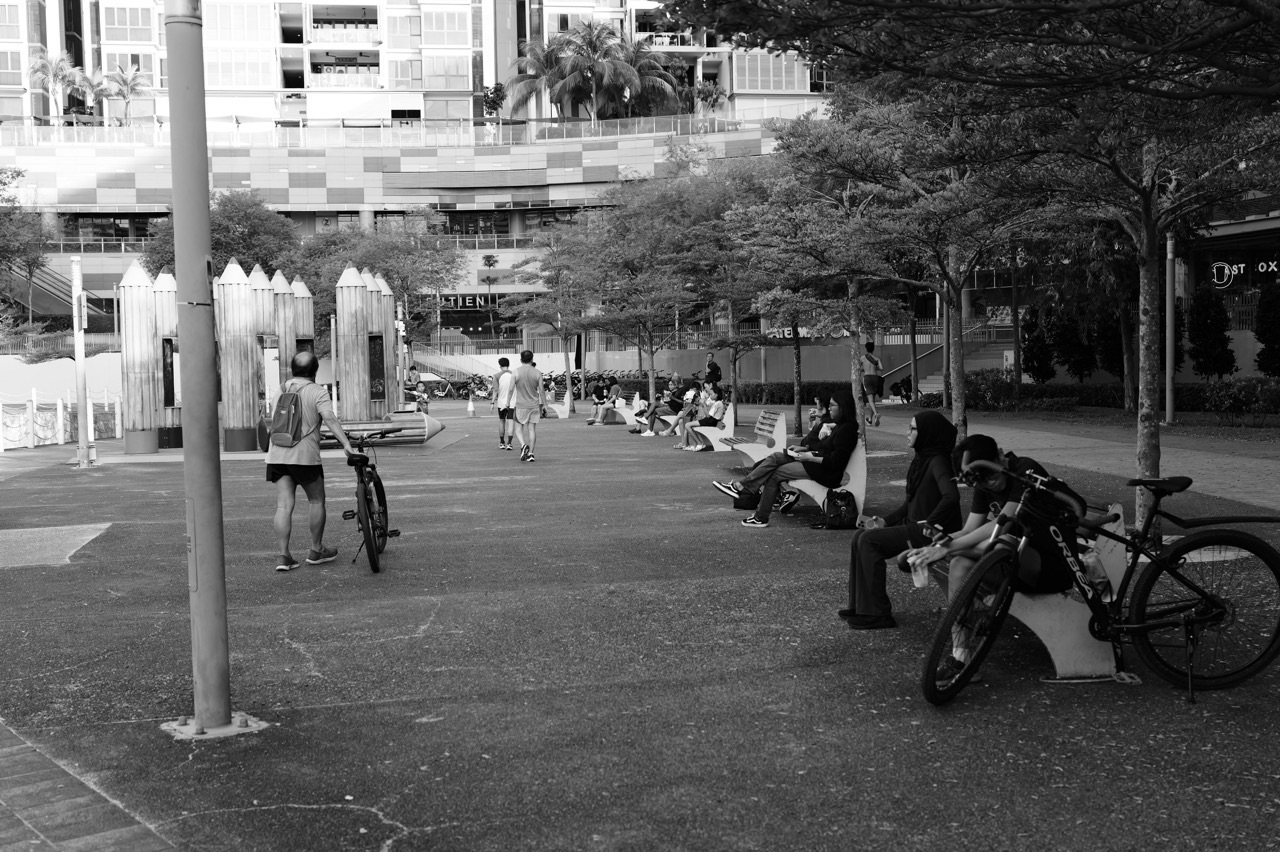
How can Punggol families help older residents during haze without taking away their independence? Check the newest NEA one-hour PM2.5 for any immediate outside journey and MOH’s 24-hour PSI forecast advice for the next day. Older adults are in a group needing additional precautions as haze worsens, especially when chronic lung or heart disease is involved. Help with optional groceries, keep regular prescribed medicine available, arrange necessary clinic travel and preserve safe contact with neighbours and family. A difficult walking day should not automatically become an isolated day.
This practical Punggol haze caregiver guide covers a grandparent who normally walks to One Punggol, an older resident with a wheelchair on the LRT, a neighbour living alone and a family organising an important medical appointment. The priorities are manageable routes, fall prevention, symptom reporting, access to healthcare and appropriate indoor movement or rest—not a generic rule that everyone above a certain age must stay in bed. We also distinguish official haze shelters and mask collection from everyday community spaces.

Find the answer: The first two minutes: check the person, not merely the number · Clinic visits: necessary healthcare is not an optional picnic · N95 masks for older people: fit and breathing comfort matter · Caregivers need an achievable plan too · Heat, hydration and a safer home environment · When to seek medical attention promptly · A caring town keeps its residents connected
The first two minutes: check the person, not merely the number
The starting point is the resident’s health and actual plan. Are they well today? Is the trip for something essential, such as a medical appointment or prescription, or an optional leisurely walk? What do the official current reading and forecast say? Someone with chronic heart or lung disease may be advised to avoid outdoor activity in conditions where a healthier adult would only reduce strenuous exertion. Personal clinician advice can be stricter than general tables.
An older person should participate in the decision whenever possible. Asking what matters to them builds a better plan than issuing unexplained orders. A useful opening is: ‘The air is poor today, so the long canal walk may not be right. Would you like me to bring your lunch, or shall we have tea indoors together?’ That keeps the resident at the centre of the plan while lowering avoidable exposure.
MOH guidance for older adults is not the same as for every healthy runner
Under MOH’s immediate one-hour PM2.5 advice, vulnerable people avoid strenuous outdoor activity when concentrations are Elevated and avoid all outdoor activity when readings are High or Very High. For next-day planning, the 24-hour PSI forecast also becomes more restrictive as categories worsen. Older adults, pregnant women and children form one advisory group, while individuals with chronic heart or lung disease may need even more restrictive guidance. These distinctions matter in a multigeneration household.
Do not use the region’s PSI value as a diagnosis for an older person’s cough, or assume the air is safe because the skyline looks clear. A forecast is about the next day, while a current one-hour PM2.5 reading informs the next few hours. The Punggol haze indicator guide can answer those numerical questions. Here the aim is translating advice into reasonable care and respectful independence.
Regular prescriptions and access to care matter more than gadgets
During haze, MOH advises people with chronic heart or lung conditions to keep their medication readily accessible. A carer can help check whether the resident has the normal prescribed supply and knows how to use it; they should not change dosage or stop treatment because of a general online article. If an inhaler is part of a written action plan, follow the clinician’s instructions. For a medication shortage or uncertainty, contact the pharmacist or treating team.
The practical list may be short: medicine available, clinic contact saved, appointment recorded, transport planned and a trusted person available to help. An expensive device is not automatically more urgent than a missed prescription. An air cleaner, where available and appropriately sized, may help indoor particulate exposure but does not replace care for chronic disease. The HDB indoor air guide covers filtration separately from clinical responsibility.
Clinic visits: necessary healthcare is not an optional picnic
An older resident may have an important outpatient appointment, test or treatment. A poor forecast is a reason to plan the route more carefully, not to cancel essential care independently. Contact the clinic or hospital if concerns about travel arise. Ask whether an appointment can be adjusted if clinically appropriate and whether an accessible arrival or waiting arrangement is available. Let the healthcare provider advise about the actual medical need.
Where help is available, use direct transport and shorter outdoor transfers. A family member might accompany the person, carry essential supplies and remain aware of fatigue. Some public transport assistance and accessible route options are available, but the actual lifts and paths must be checked. Avoid promising that an unverified neighbour or community worker will provide an escort; arrange the assistance explicitly before the appointment day.
Wheelchair users: a sheltered path does not always mean filtered air
A wheelchair journey involves more than the ride itself: an HDB lift, a path to the station, a platform, a transfer and a final route to the destination. During haze, shortening avoidable outdoor waiting may improve comfort. But a covered walkway does not automatically filter smoke particles, and a small road crossing should not be made less safe simply to reach indoors faster. Accessibility and traffic safety remain essential.
Punggol residents can plan lift access, station assistance and gates using the existing wheelchair train travel from Punggol guide, while confirming current LTA and transport operator arrangements. If someone cannot travel safely because of a health symptom or condition, ask for medical advice and appropriate support rather than forcing a hurried journey. A successful trip is one that remains calm and manageable from door to door.
Indoor mobility is valuable; a fall is not a worthwhile trade-off
HealthHub’s healthy-ageing advice encourages regular strength, balance and flexibility work, but it also makes clear that preventing falls is a major part of older-adult wellbeing. When outdoor conditions are poor, some people can continue a clinician-approved home routine in a clear, well-lit and comfortable space. Others may need rest or a programme adapted by a healthcare professional. There is no universal haze exercise quota that an older resident must meet.
Keep walkways free of clutter, use non-slip footwear, provide a stable chair and respect prescribed mobility aids. Do not turn an enclosed corridor into an obstacle course or ask someone with dizziness to perform single-leg balancing exercises. If the person’s condition permits gentle walking, accompany them at a comfortable pace and allow rest. The long-term benefit of remaining mobile is not served by a rushed effort that ends in a fall.
N95 masks for older people: fit and breathing comfort matter
MOH says N95 masks are not generally needed for ordinary short commutes or indoors. In poorer outdoor conditions when someone must be exposed, a properly fitted mask may reduce particle inhalation. But an older person with serious lung or heart problems and breathing difficulty at rest or during exertion should consult a doctor about whether a tight-fitting respirator is appropriate. Anyone who feels uncomfortable while wearing it should take a break.
Families can also check the People’s Association’s current mask collection information; eligible groups include Pioneer and Merdeka Generation members and other specified residents, with conditions stated on the official page. Eligibility does not mean the person must wear an N95 for every trip. The highest priority remains reducing unnecessary exposure, not collecting a product merely because it is offered.
Make one everyday indoor room comfortable and practical
A Punggol flat may have many different spaces: bedrooms, a living room, service yard and common corridors. When outdoor haze is poor, reducing infiltration into the most-used indoor room is practical. Close windows when appropriate and use existing suitable air-conditioning or a correctly sized air cleaner if available. Avoid adding smoke with indoor burning or smoking. A fan can make air feel cooler but does not necessarily filter fine particles.
Balance reduced smoke entry with comfort and ventilation when outdoor conditions permit. A space too hot or cluttered for an older resident creates new problems. Consider the actual room layout, whether the person needs a walking aid, and where medication and drinking water are kept. The aim is a room where someone can move, sit, talk and rest safely. No family needs to construct a medical facility in its living room to make helpful changes.
Social contact at One Punggol can have an indoor alternative
Older residents may enjoy a coffee, a class, a library visit or an informal conversation around One Punggol. These are meaningful routines. During poor-air periods, a long outdoor journey or roof-garden visit may need to wait. If a suitable indoor facility is available and the route is reasonable, a shorter visit may be possible according to the current advisory and the person’s health. Otherwise, a phone call, borrowed book or home meal can preserve connection.
Do not assume that every community club room is an official haze shelter or that it is open without registration. The People’s Association has an up-to-date list of designated shelters and mask distribution arrangements; check actual sites and hours when needed. The broader Things to Do in Punggol for Seniors describes ordinary-day destinations. Haze changes the method of socialising, not its importance.
Caregivers need an achievable plan too
A person looking after a parent, spouse or neighbour may be balancing work, children, medication, appointments and groceries. The most effective help is specific. Agree who picks up prescriptions, which meals can be prepared at home, who checks on symptoms and how to reach the medical team. Avoid a complicated family spreadsheet if one shared note can do the job. A backup contact is useful when the main caregiver must be at work.
Do not expect carers to spend hours outdoors queuing on behalf of others without considering their own exposure. Distribute errands appropriately and follow official workplace guidance where employment is involved. If the older person can safely participate in routine decisions, invite that participation. Caring for someone includes supporting their independence and privacy, not only reducing a numerical pollutant risk.
If a Punggol neighbour lives alone
A thoughtful neighbour might notice that an older resident has stopped taking their usual walk. That alone is not evidence that something is wrong. A respectful message—’Would you like a call or help picking up groceries?’—allows the person to decide. If there is a genuine welfare concern, use appropriate support channels rather than sharing the person’s private details in a building-wide group chat. Specific help is easier to accept than alarming instructions.
A simple check-in could cover meals, regular medicines and whether an urgent appointment or symptom needs attention. It should not become an amateur health assessment or a demand to reveal diagnoses. Where social support or designated haze shelter information is needed, consult the actual agency resources. Punggol’s community spirit works best when assistance is consent-based, practical and sustainable.
Haze shelters: selected spaces, not every indoor room
As of 16 October 2026, the People’s Association lists selected air-conditioned haze shelters in community clubs, integrated hubs and resident-network centres. The list and contact details are published on its official website. A resident who needs respite should check the current list and speak with the specific operator about availability and access before travelling. A nearby air-conditioned shop or community room is not necessarily an official shelter.
If a person has an urgent medical symptom, a haze shelter is not a substitute for medical care. Shelters are intended to offer respite from polluted outdoor air, not clinical treatment. An elderly resident who cannot travel without assistance may require a carefully arranged route or other support. This guide links to the detailed Punggol haze shelters and mask collection article, which is the right place for questions about eligibility.
Heat, hydration and a safer home environment
Poor haze can coincide with warm and humid weather. Older residents may experience discomfort from heat even if a room has less smoke. Keep the environment comfortably ventilated or cooled as appropriate to outdoor conditions and existing building arrangements. Support hydration according to any medical fluid restrictions; a person with heart or kidney disease should not be told to drink excessive amounts without individual advice.
Make water or usual beverages accessible, avoid leaving someone in a hot sealed room and review whether the person can manage a fan or air-conditioning controls. A mask cannot compensate for overheating or serious fatigue. Effective care considers the whole person: temperature, medicine, meals, movement, symptoms and connection. The aim is comfortable function, not a single perfect particle number.
Haze Subsidy Scheme: how to find help without inventing bills
Singapore’s Ministry of Health maintains a Haze Subsidy Scheme for eligible Singaporeans seeking haze-related treatment at participating Public Health Preparedness Clinics and all polyclinics, subject to current rules. It identifies participating PHPC clinics through official decals and the GPGoWhere directory. Do not assume every private clinic near a Punggol MRT stop provides the scheme, or that a quoted bill applies to every patient and every medication.
If a senior feels unwell, prioritise clinical assessment. The caregiver can help identify the nearest suitable actual clinic, relevant documents, travel support and prescribed medication list. The Punggol Haze Subsidy Scheme guide addresses eligibility and fees; this article remains focused on caregiving logistics, daily dignity and medical continuity. A subsidy is helpful only if people can actually access the right care when needed.
Worked case: a grandparent’s clinic appointment and usual canal walk
Imagine an older Punggol resident with chronic lung disease who usually walks along the canal before visiting friends. On a day when the official forecast is Very Unhealthy, the long outdoor walk is not appropriate under the advisory. But a scheduled clinical review still matters. A family member confirms the appointment with the clinic, arranges a more direct accessible journey, ensures prescribed medicine is available, and helps with groceries on the way home.
In the afternoon, the resident calls friends and enjoys a meal indoors. The family’s response is neither panic nor denial. They preserve essential care and social connection while removing unnecessary prolonged outdoor exposure. If breathing symptoms worsen, the resident seeks medical help rather than waiting for a better skyline. The postponed walk can return after a fresh official check and appropriate personal assessment.
When to seek medical attention promptly
Anyone with worsening breathing difficulty, chest pain, fainting or other serious symptoms needs urgent healthcare. For a life-threatening emergency in Singapore, call 995. A regional PSI or PM2.5 value cannot tell whether a particular symptom is harmless or caused by haze. Older adults can have health concerns that require assessment independent of the weather, so do not delay help because you assume the smoke must be the explanation.
For milder but persistent or changing symptoms, contact a healthcare professional and follow the individual’s established care plan. Keep a current list of prescriptions and a reliable contact number available. Families should avoid making unauthorised changes to medication based on internet advice. Good caregiving makes getting real help easier.
Respecting an older resident’s choices during environmental disruption
Some older people are active, independent and annoyed by excessive restrictions. Others appreciate help with everyday tasks. Neither group is defined solely by age. Explain the official reason for a suggested change and invite a choice where appropriate. An independent resident may prefer a shorter necessary journey, while someone with major illness may need assistance with every outdoor step. The public advisory provides a safety boundary, not a description of personality.
Offer alternatives that preserve what the person valued: a call instead of an outdoor meetup, shared breakfast at home, a borrowed library book or a future accessible park walk. Keep discussions respectful. The point is to protect long-term independence, not win a debate over whether the sky looks hazy enough to matter.
Frequently asked caregiving questions in Punggol
Can my grandparent still go downstairs? Assess the current hourly PM2.5, forecast, symptoms and individual medical advice; a short essential trip differs from a prolonged walk. Should every older resident wear an N95? No; MOH gives context-specific advice, and breathing problems may require medical consultation. Where can an older resident get clean-air respite? Check PA’s current designated haze shelter list, not an arbitrary indoor venue.
What if the clinic appointment is important? Contact the provider about appropriate travel or rescheduling; do not cancel care independently. Can home exercise continue? Suitable clinician-approved activity may continue in a comfortable indoor space, with fall prevention. Are medicines different during haze? Follow the prescribed regimen. Where is the health subsidy information? See the Punggol HSS guide and MOH’s current rules.
A caring town keeps its residents connected
The haze can make an ordinary Punggol day less convenient, especially for residents who enjoy outdoor routines or need regular healthcare. A good response combines measured environmental information with humane decisions: medicines on hand, essential appointments kept on track, safer routes, suitable indoor comfort and friendly contact. The point is to make people’s lives workable without pretending one category fits every person.
When the air improves, residents can return to waterway walks, community classes and everyday outings according to their health. Until then, respectful offers of help and well-organised care can make Punggol feel like home.
| Care question | First practical decision | Who has the authoritative answer |
|---|---|---|
| Outdoor morning walk | Check current hourly PM2.5 and person’s health | NEA, MOH and clinician for individual restrictions |
| Prescription refill | Confirm medicines and contact pharmacy or clinic | Treating provider or pharmacist |
| Wheelchair clinic trip | Plan accessible route and direct pickup | Transport operator and healthcare provider |
| Indoor exercise | Use a clinician-approved plan and prevent falls | Physio, clinician and HealthHub guidance |
| Mask or haze shelter | Check suitability, eligibility and site operation | MOH and People’s Association |
Where this guide fits in the Punggol haze reading library
The caregiving and active ageing article solves one specific question in eduKate Punggol’s wider local knowledge library. For real-time decisions, start with PM2.5 versus PSI in Punggol; for the broad health principles see Punggol Haze Health. Each supporting page answers a different intent rather than repeating the entire explanation.
- Keeping indoor air cleaner in a Punggol HDB home
- Outdoor activities and exercise during haze
- Official PA shelters and N95 collection
- Haze Subsidy Scheme and healthcare clinics
- Punggol school and childcare routines
- MOE air-quality and haze data literacy
- eduKateSG: Things to Do in Punggol
- This older-adult caregiving guide
- Ordinary-day Punggol activities for seniors
- Punggol MRT wheelchair access and station assistance
- Pregnancy and newborn haze guide
- eduKateSG: Punggol haze health companion
Official sources, medical boundaries and review date
Reviewed 17 October 2026. This is educational information, not clinical advice for a particular person and not a live air-quality reading. Before any exposure-related plan, use the newest NEA observations and forecast and MOH guidance, plus relevant instructions from your own healthcare provider. Medical appointments and diagnoses must be handled by clinicians. Stories and schedules are examples, not descriptions of a named individual’s health.


