
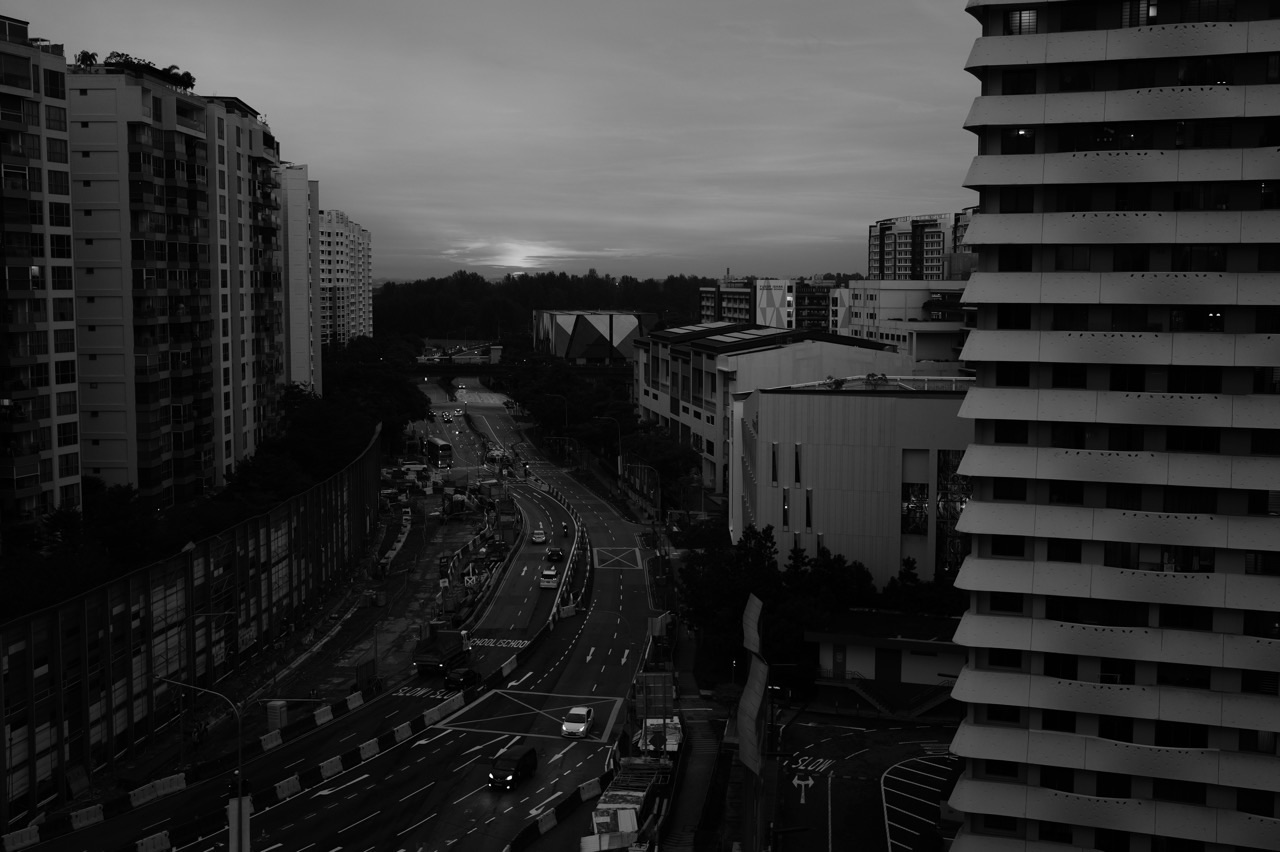
Can you tell Singapore’s haze level from the smell of smoke, an orange sunset or a neighbour’s screenshot? No. The useful answer begins with the latest official NEA measurements and the relevant health advice. Punggol is included in Singapore’s North reporting region, and the indicators serve different purposes: one-hour PM2.5 and its personal guide help with activities happening soon, while the 24-hour PSI forecast and accompanying health advisory help with planning ahead during haze season.
This Punggol haze myths and facts guide checks 25 recurring claims about air pollution, masks, indoor air, school life and regional smoke. It is intentionally a fact-checking companion, not a duplicate of the Punggol haze indicator explainer or the Punggol haze home guide. The goal is to help a parent recognise an unsupported claim in seconds and follow the right evidence.
The answer first: four rules that solve most confusion
Do not guess the number from the sky. Humidity, lighting and odour are imperfect indicators. Do not mix the measures. PSI is an index; PM2.5 is a fine-particle concentration. Do not make one rule for everyone. Exposure depends on the activity, duration and person’s health. Do not mistake planning for panic. Many activities can be adjusted rather than abandoned, but the current advisory takes priority.
The primary reference is NEA’s air-pollution FAQ, which covers measurements, practical home steps, common misconceptions and masks. Use haze.gov.sg for the latest readings. An old article is not a live health bulletin.
Myth 1: ‘If the sky looks clear, there is no haze’
False. Fine particles can be present even when distant buildings look reasonably clear. Visibility is shaped by humidity, rain, mist, light direction and particles that absorb water. A clear-looking Punggol Waterway photo is a visual observation, not a concentration measurement.
A better description is: “The skyline looks clearer than before; I will check NEA’s latest North-region reading before deciding on the run.” The visual change may be real, but the health-relevant number comes from calibrated monitoring.
Myth 2: ‘A smoky smell means the PSI must be hazardous’
False. Fires produce particles and a mixture of odour-causing gases. NEA says the smell may or may not coincide with an increase in the reported one-hour PM2.5 or PSI. Local burning activities can also produce unusual odours.
Smell deserves attention, particularly if there is a suspected local incident, but it cannot tell you which PSI category applies or where the smoke came from. If there is immediate danger, follow emergency procedures instead of debating whether the smell is “regional haze”.
Myth 3: ‘Punggol has a separate official PSI sensor for every estate’
False. NEA’s public measurements are reported for five regions: North, South, East, West and Central. Its area table places Punggol in North, along with Sengkang and other northern towns.
The regional value is useful public evidence, but it is not a certified reading from every void deck, balcony, bridge or school. Differences between homes and outdoor routes may exist, yet a region-wide value cannot establish which individual apartment has the higher personal exposure.
Myth 4: ‘One-hour PM2.5 and 24-hour PSI are the same number’
False. One-hour PM2.5 describes fine-particle concentration averaged over an hour, generally in micrograms per cubic metre. The 24-hour PSI is an index based on the highest pollutant sub-index calculated using measured pollutant concentrations over the applicable period.
The numbers have different units and interpretations. It is invalid to subtract a PSI of 150 from a PM2.5 concentration of 80 and announce that the difference is “70 pollution points”. Read the label before the number.
Myth 5: ‘A high reading screenshot from yesterday proves today’s air is unsafe’
False. Regional haze conditions can change within hours because winds, rain and emissions change. A screenshot without a visible timestamp can be particularly misleading.
A useful family message includes the source, time, region and measure. A direct link to NEA’s live service is better than repeatedly forwarding a chart that no longer reflects the current situation.
Myth 6: ‘Air pollution is always worst in the morning’
Unsupported. Some local pollution patterns vary through the day, but there is no guaranteed daily clock for regional smoke. Plume movement, weather, emissions and rainfall can change the concentrations.
An early run beside Punggol Waterway is not automatically safer merely because the sun has not risen fully. Check the official reading for the intended period rather than treating sunrise as a clean-air certification.
Myth 7: ‘Rain means the entire haze problem is finished’
False. Rain can remove some particles from the air, while rainfall over burning regions can sometimes help reduce fires. Yet smoke may return if the source continues and winds transport it toward Singapore.
A short Punggol shower is not proof of rainfall across Sumatra or Kalimantan. Recheck the public advisory after conditions change, rather than announcing an all-clear from the sight of wet pavements.
Myth 8: ‘A strong sea breeze makes Punggol haze-proof’
False. Breezes can improve comfort but can also transport smoke. Wind behaviour near a coastal walkway differs from transport at other altitudes.
The waterfront may be pleasant to walk along under normal conditions. During a smoke episode, the same location still requires current official air-quality guidance, especially for long or strenuous activity. Wind is not a filtration device.
Myth 9: ‘All haze comes from one country or one company every year’
Unsupported. Documented source regions, fire conditions and weather patterns vary by episode. Satellite hotspots are indications of possible fires, not automatic findings of legal responsibility.
For a particular date, use NEA and ASEAN Specialised Meteorological Centre updates. A regulatory notice is not automatically a court conviction, and a claim about an entire population is not a meaningful source attribution.
Myth 10: ‘El Niño directly produces smoke’
False. El Niño is a tropical Pacific ocean–atmosphere climate phenomenon. It can influence warmer or drier conditions in parts of Southeast Asia, which may raise fire susceptibility. Burning material, however, produces smoke, while prevailing winds may bring it to Singapore.
That gives a chain of interacting factors rather than a single cause. For more, see Punggol Haze and Climate Change.
Myth 11: ‘Plants can replace a HEPA air purifier’
False as a practical haze-control strategy. Houseplants have worthwhile aesthetic and wellbeing benefits, but a reasonable number has not been shown to deliver significant pollutant removal in an ordinary occupied home. A plant pot does not come with a tested smoke clean-air delivery rate.
If a room needs fine-particle filtration, examine appropriately specified air-cleaning equipment and the actual room volume. The Punggol Haze at Home guide explains the difference.
Myth 12: ‘Air-conditioning guarantees clean air’
False. A typical split-unit air conditioner may mainly control temperature and recirculate room air. Its standard filter is not necessarily equivalent to an appropriately specified high-efficiency particle filter.
Buildings can admit outdoor smoke through open doors, gaps or air intakes. Indoor sources such as cooking can add pollution too. Comfort and filtration need to be assessed separately; a cold room is not a certified low-PM2.5 room.
Myth 13: ‘Close every ventilation opening forever’
Unsafe as a blanket rule. Limiting outdoor smoke entry can be useful when conditions worsen, but occupied spaces still require safe ventilation and control of indoor-generated pollutants. Do not block essential mechanical ventilation, exhausts or fire-safety systems.
NEA advises closing windows and doors when outdoor smoke is worse and ventilating when air quality improves. The decision should be proportionate and compatible with the home or building’s design.
Myth 14: ‘A higher price proves an air cleaner is better’
False. Suitability depends on particle-filter performance, smoke CADR, room volume, fan settings, noise, filter availability and maintenance. An expensive machine that is undersized or never operated may not meet the household’s needs.
Compare the documented performance at the speed you will actually use. Electricity and filter expenses are separate costs; the Punggol Haze Household Costs guide gives transparent examples.
Myth 15: ‘A surgical mask is identical to a properly fitted N95’
False. An N95 respirator is designed for fine-particle filtration when it fits appropriately. A standard surgical mask has different design and fit characteristics and should not be described as an equivalent respirator for haze.
NEA also notes that respirators can make breathing feel more difficult. Choosing one should depend on the official guidance, duration of unavoidable exposure, fit and personal circumstances.
Myth 16: ‘Everyone must wear an N95 to take the LRT’
False. NEA says N95 masks are generally not needed for brief journeys, such as the commute between home, school, work and a shopping centre, or for ordinary indoor environments.
For people who must remain outdoors for several hours under certain high-pollution conditions, a properly fitting N95 may be considered under official guidance. It is not permission to ignore advice to reduce outdoor activity, particularly for vulnerable people.
Myth 17: ‘A child-sized product labelled N95 is automatically certified’
False. International N95 certification standards were developed for adult occupational respirators, and there is no directly equivalent general international N95 certification standard for children’s masks. Marketing labels do not establish suitable fit or performance for an individual child.
For children, the main approach under poor-air guidance is reducing or avoiding the relevant outdoor exposure. For a child with an existing condition, follow their clinician’s instructions.
Myth 18: ‘A mask makes vigorous outdoor sport safe at any PSI’
False. Filtration may reduce certain particle exposure when a respirator is properly fitted, but physical exertion and duration still matter. Respirators may also increase breathing effort.
During Unhealthy or worse periods, the official health framework may recommend reducing or avoiding prolonged or strenuous outdoor exertion depending on the group. Moving an intense activity indoors or rescheduling can be more appropriate than relying on a mask as the only control.
Myth 19: ‘Every school automatically closes at PSI 101’
False. Schools and preschools follow official operational guidance and institution-specific decisions. Outdoor sports, recess and PE may be adjusted while indoor lessons continue, depending on current circumstances.
Follow direct school and MOE or ECDA communications. A neighbourhood screenshot is not an authorised closure notice, and a 24-hour PSI forecast does not independently announce what every classroom will do.
Myth 20: ‘All people should follow the same outdoor plan’
False. The health guidance distinguishes healthy people from children, older adults, pregnant women and people with chronic heart or lung conditions. Exposure also varies with duration and exertion.
A short necessary walk, an hour of running and several hours of outdoor work are different activities. The correct plan depends on the person and the activity, not only the shared regional reading.
Myth 21: ‘If I feel fine, the public advisory does not matter’
False. People vary in how they experience pollution, and the absence of immediate discomfort does not replace public-health guidance. Some effects may not be noticed straight away.
Avoid panic, but do not use a lack of smell or symptoms as proof that prolonged strenuous exposure is suitable. People with existing conditions should continue their prescribed care plans and seek attention for concerning symptoms.
Myth 22: ‘A designated haze shelter is the same as any air-conditioned mall’
False. The People’s Association has a specific programme for designated community haze shelters, with named facilities and operational arrangements. An ordinary mall or community lobby is not automatically a formally activated shelter.
Check PA’s current community haze shelter information and contact the relevant centre before making a trip for respite.
Myth 23: ‘A satellite hotspot proves that one firm caused Punggol’s haze’
False. A hotspot is a thermal detection indicating possible burning, subject to sensor, cloud and timing limitations. Establishing smoke transport requires meteorological evidence; legal responsibility requires additional facts and applicable procedures.
For a grounded discussion of evidence, see Punggol Haze Data Literacy and Regional Law.
Myth 24: ‘Drinking extra water washes PM2.5 out of your lungs’
False. Hydration can help comfort and general wellbeing but is not an air-filtration mechanism and does not reverse inhaled particle exposure. Special drinks or “haze detox” products should not be presented as substitutes for exposure reduction.
Reduce prolonged or strenuous exposure according to official guidance, manage indoor particle sources and seek medical advice for persistent or severe symptoms. A child should not be told that a drink makes a smoky football session safe.
Myth 25: ‘The highest historical PSI predicts this year’s peak’
False. Historical episodes show what has happened, not a fixed upper bound or a forecast for tomorrow. The 2013 three-hour PSI of 401 and other records belong to different measurement periods and weather conditions.
The correct lesson from history is preparedness and sound interpretation. Read Punggol Haze History for dated records and use NEA’s current advisory for the actual day.
Worked example: a viral message with three errors
Suppose a fictional residents’ chat says, “The sunset looks orange, so Punggol PSI is 300. Everyone must wear an N95 to take the lift, and every school is closed tomorrow.” None of those conclusions follows from the photograph. The colour is not a reading, the lift journey is not a blanket N95 requirement, and school closures require institution-specific information.
A better message would say, “The skyline looks hazy this evening. Check NEA’s latest North-region reading and the appropriate advisory. Schools will communicate any changes through their official channels.”
This message may be less dramatic, but it tells readers where the evidence comes from and what action is useful. A good public-information message is one people can verify.
A practical checklist before forwarding a claim
Ask who published it, on which date and at which time. Does it name the reporting region, PM2.5 or PSI, averaging period and official source? Does it distinguish a forecast from an observed reading? Does it infer medical advice from a photograph? Does it allege wrongdoing without evidence? Does it claim that all people must take the same action?
If the message fails these checks, do not present it as verified. Link the official source instead. This protects families from wasted journeys, unnecessary purchases and premature conclusions about health or legal responsibility.
Frequently asked questions
Which official haze region represents Punggol?
NEA lists Punggol within North. It is not a certified value for every individual apartment or park.
What is the fastest way to check air quality before exercise?
Use haze.gov.sg for the latest one-hour PM2.5 concentration band and personal guide for immediate plans. Use the 24-hour PSI forecast and health advisory for planning ahead.
What if the outdoor smell is strong but the reading looks less alarming?
Smell can come from gases and local sources that do not map perfectly to the published particle indicator. If someone feels unwell, respond to symptoms; if there is a suspected local incident, use the appropriate official channel.
Is a window-open rule valid throughout the season?
No. Restricting smoky outdoor air and providing necessary indoor ventilation must be managed appropriately as conditions change. Avoid permanent unsafe sealing.
Can I use a photo to compare two haze episodes?
A photo can illustrate appearance but not provide an equivalent measured PM2.5 or PSI value. Camera settings, light and humidity differ. Pair pictures with accurately timestamped official data if making a factual comparison.
Should a caregiver use the healthy-adult advisory for a child with asthma?
No. Use the appropriate group-specific health advice and the child’s existing medical care plan, with clinical guidance for symptoms and concerns.
Does wearing N95 remove the need for a purifier indoors?
An N95 is a situational personal protection tool, not a substitute for appropriate indoor air management. NEA generally does not require N95 masks for ordinary indoor circumstances.
Why are there so many conflicting numbers online?
Different services may use alternative national AQI systems, low-cost sensor calculations, different units and averaging periods. Singapore’s PSI is not identical to every foreign AQI.
Who should I trust about whether school is open?
The school, MOE or the appropriate preschool operator and regulator through their official channels, not an undated chat message.
Can I report an unusually dusty Punggol worksite as haze?
Describe the actual observations and report through relevant official feedback channels. Do not assume a nearby project caused all regional haze. Our local dust guide explains a responsible approach.
Continue across eduKate’s Punggol haze ecosystem
For the science of transport, read Why Is Punggol Hazy?. For household protection, use Punggol Haze at Home. For practical exercise, see Punggol Haze Outdoor Activities.
The Punggol Haze Health Guide addresses vulnerable groups and symptoms. This page adds a fact-checking layer, so readers can reject wrong claims before they become family decisions.
Official sources and editorial standards
Reviewed 17 October 2026. The 25 statements are common illustrative claims, not quotations attributed to real residents. This is not a live report or personal medical diagnosis.
- NEA: Air Pollution FAQs and Common Misconceptions
- NEA: Live Air Quality and Haze Advisories
- NEA: Fact-Checking Haze and Visibility Claims
- MOH: Haze Health Advisories
- People’s Association: Community Haze Shelters
- US EPA: Improving Indoor Air Quality
- ASMC: Regional Smoke and Hotspot Monitoring
A useful correction is short, verifiable and actionable. If a haze claim cannot pass those three tests, treat it as a question to investigate—not a fact to forward.
Punggol Haze Reference Library: Choose Your Question
These connected articles answer different questions, including haze facts, reservoir water, social access and regional economics. Consult NEA’s live air-quality information for current decisions.
Punggol Haze: Myths, Water, Solar Energy and Waste
Use these connected guides to read environmental claims carefully and make practical household decisions. For today’s air quality, refer to NEA’s latest readings and advisories.
New Reference: Why Peat Fires Smoulder and How Restoration Works
Explore the upstream environmental repair behind regional haze: drained peatlands, underground smouldering, water-table restoration, revegetation, local fire prevention and ASEAN’s 2023–2030 strategy. This is a long-term source-prevention explainer, not a substitute for current air-quality advice.
Punggol Haze and Peatland Restoration | Why Underground Fires Smoulder and How Rewetting Helps


