
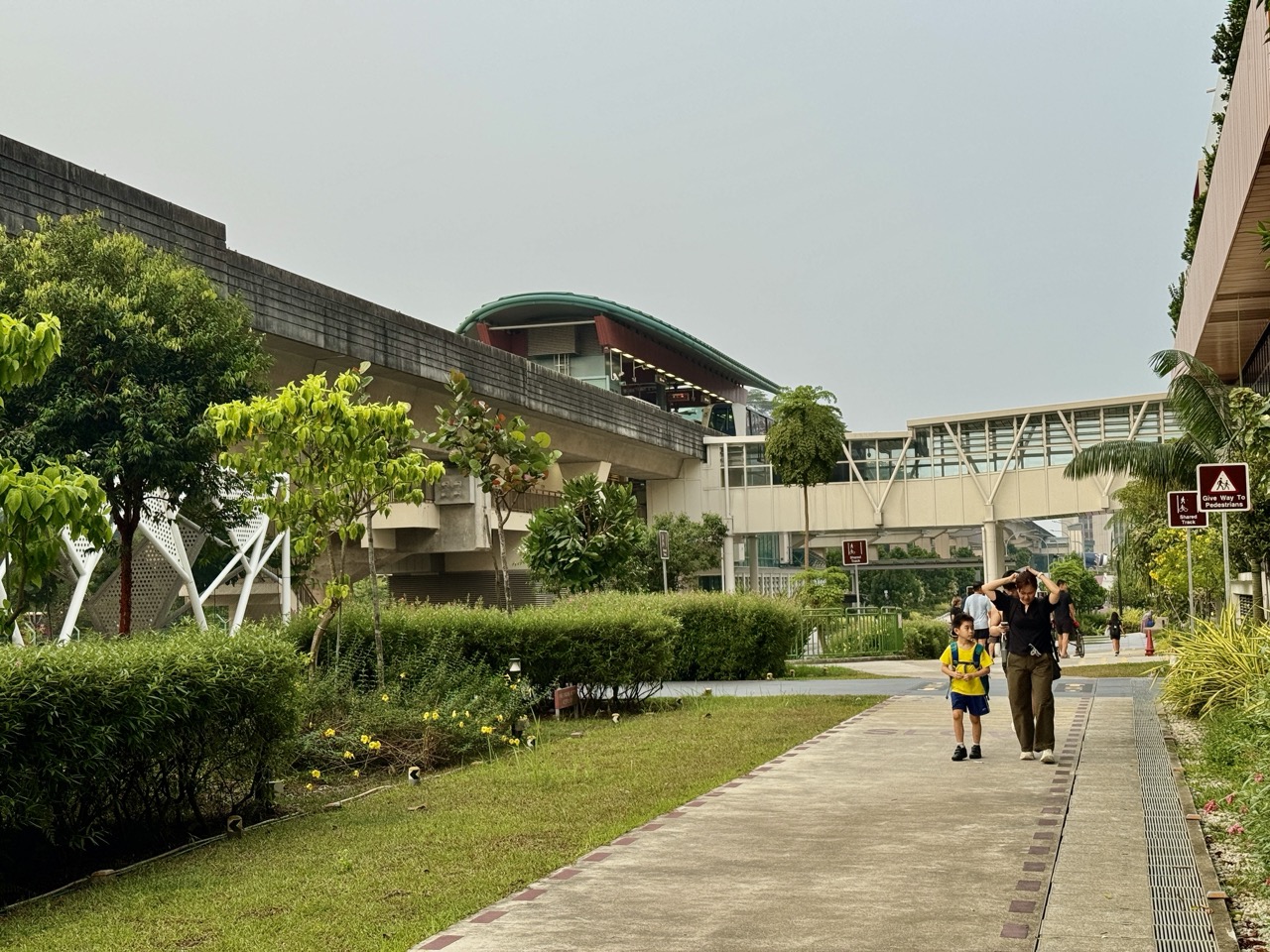
Can walking around Punggol count as exercise? Yes. A brisk walk to the LRT, a short Waterway detour after shopping, or a comfortable extra stretch on a school run can make daily life more active. The best Punggol walking routine is one you can repeat without missing your train or exhausting the family. Choose one existing journey, add five to ten comfortable minutes when conditions allow, and keep the direct route as your fallback.
This walking in Punggol guide for errands, school runs and active commuting is designed for busy residents around Punggol MRT, Waterway Point, One Punggol, Oasis, Matilda, Northshore and Punggol Coast. It explains what to walk, when to avoid extra outdoor exertion, and how to fit regular movement around school, work, shopping and family care. Start with Life in Punggol 2026 for the wider town lifestyle picture, and use the four-week beginner exercise plan when you want a dedicated fitness programme.
Quick answers for an ordinary Punggol day
| Situation | Useful starting action | When to choose differently |
|---|---|---|
| Commuting to an MRT or LRT station | Add one manageable walking segment before boarding, if time permits. | If you are late, tired or the weather is unsafe, travel normally. |
| School collection | Walk a familiar safe stretch together without rushing. | Prioritise arrival times, crossings and the child’s wellbeing. |
| Shopping or errands | Combine the visit with a short walk to another nearby useful stop. | Avoid long walks with heavy or bulky groceries. |
| Older adults or beginners | Choose a flat path with a seating point and an easy route home. | Reduce distance or ask a clinician if symptoms or mobility limitations make exercise uncertain. |
| Heat, storms or haze | Postpone optional outdoor movement or choose suitable indoor activity. | Official weather and air-quality advice overrides a step target. |
Singapore’s Health Promotion Board encourages adults to aim for 150–300 minutes of moderate-intensity aerobic physical activity each week, together with at least two muscle-strengthening days. That is an eventual weekly reference, not a command to double today’s walking. A leisurely stroll may be gentle movement; brisk walking may be moderate-intensity for someone whose fitness makes it suitably challenging. Read the official HealthHub guidance for the distinction.
1. Everyday movement has a different job from a weekend fitness session
A Punggol resident can appreciate the park connector network yet still struggle to exercise. The usual obstacles are not lack of destinations. They are the school bag that must be packed, the train that leaves in minutes, the grandparent waiting at home and the need to buy dinner before the shops close. A separate hour of exercise can feel impossible. Building a little movement into a necessary journey removes one scheduling barrier.
This does not make an errand identical to an organised workout. A walk with stops, heavy bags and a restless toddler serves a different purpose from sustained brisk walking. Both can be valuable. The error is demanding that every errand become a fitness test. A parent who has a safe, calm ten-minute conversation with a child on the way home may have gained connection and light movement, even if the pace never becomes aerobic training.
Try the three-part journey rule. The necessary route is the safe direct way to your destination. The optional movement is an additional pleasant stretch. The escape route gets you home quickly if it rains or someone tires. If you cannot identify all three, choose a simpler journey. Sustainability grows from options, not from forcing one rigid route through every day.
2. Punggol neighbourhoods need different walking plans
The town is not one convenient point on a map. A household near Punggol MRT may naturally visit Waterway Point after work. A resident close to Oasis LRT might rely more on Oasis Terraces. Northshore residents have neighbourhood facilities that reduce the need to cross town for small purchases. Matilda, Punggol Field and Punggol Coast create yet more combinations of shops, schools, paths and public transport. A long walk that looks efficient for one family may be a needless detour for another.
Start by writing the three places you visit most: perhaps your nearest LRT station, a convenient supermarket and the school gate. Use a map to identify legal crossings, shelter and access points. Then check the actual route, not just a line measured on a screen. An overhead bridge, roadworks, a steep ramp or a crowded junction can change what is practical. Our Punggol neighbourhoods guide helps distinguish the districts; our OneMap walking-route guide helps with route planning.
For people who dislike complicated schedules, make your regular station the only anchor for two weeks. Walk a comfortable extra few minutes once or twice. If that works, add one shopping trip or weekend nature walk later. The aim is to establish a positive association with the local route. If the route becomes a source of lateness, shorten it. If you enjoy it, you may discover that a part of Punggol previously seen only from the train is an enjoyable place to spend time.
3. Using Punggol Waterway Park in short, repeatable pieces
NParks describes Punggol Waterway Park through four themed areas: Nature Cove, Recreation Zone, Heritage Zone and Green Gallery. Its official park listing currently describes the park as open 24 hours, subject to any local notices and maintenance. Punggol Waterway Park Connector is described as an 8.4 km route along the waterway. These facts make the area a valuable local asset; they do not mean every beginner should walk the entire connector.
The most useful beginner route is an out-and-back segment with a clear turnaround. Choose a bridge, sheltered bench or familiar meeting point as the farthest point, walk comfortably and return. A person who wants to sit and watch birds has a perfectly valid reason to visit. The same path can support a short family outing, a relaxed evening break or a longer run; it does not have to do every job for everyone.
Check NParks’ park information and the Waterway park connector details before assuming every segment is accessible. Our Punggol Waterway walking-distance guide explains shorter routes and why map distances vary. If you take children, stay attentive near water, slopes, bends and cycle crossings. A river view is not a substitute for adult supervision.
4. School runs: protect safety and calm before steps
Families sometimes overdesign a healthy school morning. They imagine early waking, long walks and a serene arrival. Reality may involve a missing workbook, sudden rain or a child who is understandably not in the mood for extra distance. Start with a route that reliably gets everyone to the correct gate. Only after arrival times are stable should you experiment with an optional walking segment.
Young children benefit from a consistent crossing routine. Pause before kerbs, use the correct signalised crossing, stay on the designated pedestrian side, and never suddenly cut across a cycling track. Older children learning independent travel need a different conversation: which entrance to use, what to do when the usual bus is late, how to contact a trusted adult, and why they should not improvise shortcuts through worksites or unfamiliar blocks.
The best result may be more relaxed conversation, predictable journeys and a child who feels confident about the route. That is a better family measure than an impressive daily step number. For more on choosing routes around a real household timetable, see Family Life in Punggol. Late CCA and tuition days deserve a separate decision, covered in Punggol’s after-school evening routine.
5. Share walking and cycling routes safely
As Punggol’s active-mobility network grows, surface markings matter. The Land Transport Authority has designated certain footpaths next to cycle paths as pedestrian-only; the rules were enforced from July 2025. Cyclists must use permitted paths and follow signs. Pedestrians are encouraged to use marked pedestrian-only sections where available. Standalone footpaths and shared paths have their own conditions. Read LTA’s current active-mobility rules rather than assuming all pathways have the same designation.
Good neighbourhood etiquette is pleasantly unremarkable. Do not block the entire path while chatting. Hold hands with young children near bends. Step aside to consult a map. Keep phones out of your hand at crossings. Cyclists should slow in busy areas, use lights when appropriate and make their presence clear without startling pedestrians. If a mobility aid user or older walker needs more space, give it willingly.
For a bike-specific discussion, use Cycling in Punggol 2026. This page has a different purpose: making short walking journeys more practical, particularly when the same footpath is shared with commuters, caregivers, children and older people.
6. A seven-day walking-and-errands sample
| Day | Existing journey | Extra option | Safe fallback |
|---|---|---|---|
| Monday | Station commute | Five comfortable minutes before boarding. | Take the usual quickest route. |
| Tuesday | Neighbourhood grocery purchase | Walk to a familiar shop and carry a manageable bag. | Shop closer or arrange delivery. |
| Wednesday | Lunch, coffee or a small errand | Choose a short flat stretch before returning. | Keep the errand only. |
| Thursday | School or family collection | Walk a safe section together without hurrying. | Use normal transport. |
| Friday | A service, community or library visit | Add a short loop around the destination if appropriate. | Finish the visit and go home. |
| Saturday | Waterway or park connector | Try an out-and-back scenic stretch. | Choose indoor leisure or rest. |
| Sunday | Household planning | Review the two best routes and prepare for Monday. | Rest without targets. |
This is a menu, not a demand to complete seven active days. For week one, pick only two options. In week two, repeat the ones that actually fitted your timetable. In week three, add a comfortable weekend outing if the weather cooperates. In week four, check whether the routine survives an unusually busy day. A habit that needs perfect weather, no school deadlines and empty calendars is fragile.
Different people need different starting points. Someone already walking long shifts at work may benefit more from strength and recovery than extra steps. A person with joint pain, impaired balance, recent illness, pregnancy complications or a chronic condition may need individual advice before increasing exertion. Children should not be pressured into fitness metrics based on adult recommendations.
7. Heat, wet weather, haze and the stop rule
A breezy waterfront does not guarantee comfortable exercise conditions. In hot weather, plan shorter routes, take water when appropriate and use shade or indoor alternatives. Heavy rain, lightning and slick surfaces are reasons to drop the optional activity. Feeling dizzy, faint, unusually breathless, confused or unwell is a reason to stop and seek suitable medical attention. There is no value in meeting a step goal while ignoring warning signs.
For haze, check Singapore’s official haze information instead of guessing from whether distant buildings look visible. The relevant advisory, your health and the intended intensity should determine outdoor activity. Our Punggol haze outdoor-activities guide addresses running, cycling, school and park decisions in depth. Here the rule is simpler: the errand may be necessary; the extra walk is optional.
Do not try to substitute a crowded mall for an indoor running track. Ordinary movement indoors is still movement, but other visitors should be able to shop safely. On an uncomfortable day you might take a short stretch break at home or simply rest. The weekly plan is meant to be flexible enough for Singapore, not designed for a climate with guaranteed cool evenings.
8. Measuring progress without becoming a prisoner of the tracker
Start with a two-column record: ‘Walked comfortably?’ and ‘Did the journey remain practical?’ A yes in both columns is a success. If you also monitor activity duration, distinguish purposeful brisk walking from waiting at traffic lights. A very high step count is not inherently better if it comes with discomfort, fatigue or an unnecessarily long trip carrying groceries.
Some residents want cardiovascular fitness; others want less stress, time outside or more conversation with their children. Choose measurements that serve your actual goal. A retired resident might count enjoyable, accessible trips. A commuting adult might notice fewer sedentary stretches in the week. A family might decide that a short after-dinner walk reduces the sense of rushing from one task to another. None of these require expensive equipment.
Make a route easier before making it longer. Check whether good shoes, lighter bags, a pre-packed umbrella, a known restroom and a realistic return time remove friction. Then repeat. The habit is working when walking becomes a normal choice on suitable days, not an activity you must motivate yourself to perform with a speech.
Practical deep dive: three everyday Punggol journeys
The best way to judge a lifestyle suggestion is to test it against a difficult ordinary day. Imagine three residents who all want to walk more but have different obligations. Their stories are illustrative rather than real case reports. Notice how the successful choice is not always the longest walk. It is the option that combines useful movement with reliable access, safety and enough energy for the rest of the day.
Example A: the Oasis household with a primary-school child
An adult living near Oasis wants to walk more while managing a school journey and a morning commute. The obvious temptation is to plan an ambitious loop before school. That adds uncertainty precisely when the timetable is least flexible. A better beginning is to time the ordinary journey on two unhurried days and observe where the family must pause: the lift, a junction, the school entrance and the connection to the LRT. Only if the ordinary route is consistently comfortable should they add a few optional walking minutes on a suitable day.
There are several sensible outcomes. The family may walk a slightly longer section after school instead of before it. They may decide to enjoy a short neighbourhood walk on a weekend, when no one is carrying a heavy bag. Or they may discover that the morning already includes plenty of movement and that their real problem is late packing. Better preparation is a legitimate health-and-wellbeing improvement because it reduces rushing and creates a calmer start.
The two-week check is practical: Did the child arrive on time? Did anyone feel pressured to hurry at crossings? Did the adult still catch the intended train? Did the walk make conversation more pleasant? If the answer to any safety question is no, redesign or remove the extra segment. An attractive exercise idea should never override the purpose of getting a child safely to school.
Example B: the Northshore resident with an unpredictable working day
A working adult near Northshore may have irregular end times and little interest in formal exercise after dinner. Their best opportunity might be a small walk attached to a grocery stop on selected weekdays, not a compulsory Waterway outing every night. They can choose a nearby shop, buy a carryable amount and take a safe, familiar return route. When work runs late or heavy rain begins, the normal direct journey is still a complete and successful day.
It is also worth considering the hidden load: a laptop, a water bottle, supermarket bags and perhaps a family member waiting for care. More walking with heavy bags can increase discomfort and trip risk. A small basket and a reusable bag may work one day; home delivery, a nearer shop or a second person to help may be better on another. The plan should reduce friction, not celebrate carrying more weight.
For this adult, a useful weekly outcome might be two comfortable extra walks of ten minutes and one longer enjoyable weekend outing. The number is an example, not a prescription. If the person already walks extensively at work, they should consider whether sleep, suitable strengthening or recovery are more important than further distance.
Example C: an older relative who wants the library, not an exercise target
A senior may want to visit Punggol Regional Library at One Punggol and meet a friend over a simple meal. A family member sees an opportunity to walk beside the Waterway first. But the trip already involves transit, a building entrance, corridors, lifts and perhaps a wait for a seat. An additional scenic stretch may be unwelcome or unsafe. Ask what the senior wants from the visit and plan an accessible route around that answer.
A thoughtful companion checks where to sit, whether the lifts and ramps suit the person’s mobility, how they will return if tired and how much walking the planned visit already requires. The older person may welcome five gentle extra minutes after lunch, or prefer to go straight home. Neither choice is a failure. Maintaining confidence to visit places independently is an outcome worth protecting.
If dizziness, recent falls, unusual breathlessness or new pain have become an issue, the decision is not which scenic path to select. The next step is appropriate professional guidance. Lifestyle writing can help with logistics and questions to ask; it cannot assess an individual person’s exercise safety.
A ten-minute route audit before making a habit
You can test a Punggol errand route with pencil and paper. Write down the purpose of the trip, the person who will take it, the most direct safe route and the return transport option. Then check five friction points: a crossing with a difficult signal, a narrow or mixed-use section, an exposed stretch with little shade, a place where fatigue may set in and a time pressure that makes the extra distance stressful. The route does not need to be eliminated because of one obstacle; it needs a realistic alternative.
Now ask whether the walking time is genuinely optional. If the extra segment means skipping breakfast, rushing a young child, arriving late or reducing sleep, it may be the wrong time of day. Move it to a weekend or choose a smaller amount. For residents who work from home, the anchor might be a lunchtime errand rather than a commute. For caregivers, a nearby shop may be easier than a scenic circuit. The personal route is the one that works repeatedly.
Finally, check whether the route is appropriate for everyone using it. LTA path designations and the presence of cyclists, pedestrians and mobility aids all matter. Walking in a group does not give anyone the right to block a narrow path. When everyone has room and knows the crossing rules, even a short errand can feel calmer. Courtesy is part of making Punggol a place where many generations can move around confidently.
A four-question decision check at the lift lobby
1. Do I need to make this journey today? If not, an extra outdoor trip is optional. 2. Is the weather and route suitable now? Check the real conditions rather than an earlier forecast. 3. Do I have time and energy for the added walk? Do not steal time from work, sleep or essential family care. 4. How will I get home if I change my mind? Know the direct route or transport option before setting out.
This check should take less time than choosing shoes. The purpose of an active town is to give residents possibilities. It is not to make every person take the longest route available. When a household discovers two or three journeys that are slightly more active, safe and genuinely enjoyable, it has created a habit that can survive ordinary life.
Punggol’s streets as a lesson in practical geography
The shape of a neighbourhood influences whether active commuting feels easy. A short distance on a map can be inconvenient when the route crosses several roads, lacks shelter or has an awkward access point. Conversely, a slightly longer connection may feel simpler when crossings are predictable, paths are wider and errands lie directly along the way. This is one reason Punggol residents in different precincts can report such different experiences of the same town.
Try observing your most common journey through the eyes of three people: a child heading to school, an older person carrying a small bag and a commuter arriving home tired. Does each have an appropriate crossing? Can someone using a mobility aid reach the same destination without an unexpected staircase? Is there a reliable return if the weather changes? The exercise is not about declaring Punggol better or worse than another estate. It identifies the precise constraint that affects your own walking decisions.
These observations also connect to school Geography. eduKateSG’s Punggol transport geography and accessibility guide explores how movement networks shape urban life. A pupil can learn to distinguish accessibility from straight-line distance by comparing two routes to the same facility. A parent can apply the same reasoning to a real commute. The education question and the lifestyle question reinforce each other without needing duplicate articles.
One simple comparison is to measure a familiar journey twice: first by the route suggested by a digital map, then by the safe route you actually take. Record crossing points, shelter and any delay caused by lifts or road signals. Do not collect personal data or photograph strangers. The point is to learn why the route feels longer or shorter than the figure on a screen. A useful habit can emerge when you choose the most comfortable lawful route instead of the shortest theoretical one.
Finally, remember that accessibility can change with temporary works, peak-hour crowding and altered services. A route used comfortably in September might require a different approach later. Review critical journeys occasionally and keep a fallback. The best active-travel habit is built on good local information and the freedom to adjust, not on repeating a route simply because it once worked.
9. Frequently asked questions
Is walking to Punggol MRT enough exercise?
It adds physical activity and, at a brisk enough personal pace, may contribute to moderate-intensity activity. Your full week still needs an appropriate balance of aerobic activity, strength and recovery.
Must I complete the entire Waterway loop?
No. Many useful walks use a short out-and-back segment with a planned turnaround. Choose time and distance to match your circumstances.
Does an indoor walk count when it rains?
Yes, walking indoors is still movement. Whether it reaches moderate intensity depends on pace and effort. Do not move unsafely through crowded indoor spaces.
Can pedestrians use cycling paths?
Pedestrians may use them, although LTA encourages using designated pedestrian-only routes where available. Check on-site signage and pay attention to other users.
What if the school run is already stressful?
Keep the normal safe route first. Improve punctuality, route knowledge and schoolbag preparation before considering any extra walking.
How do I help an older relative begin?
Pick a short level route, accessible resting places and a dependable return plan; get professional advice where health or falls risks make exercise uncertain.
How fast should I walk?
The appropriate pace depends on your health and goal. A conversational stroll is fine for social connection; brisk walking has a different fitness role. Progress gradually.
What if I simply dislike walking?
Choose a different enjoyable activity or pair a very short walk with a purpose you value. Long-term movement should fit your life rather than punish you for not liking a particular hobby.
Four practical preparations for everyday Punggol walking
Once a school run or MRT errand has become an active commuting habit, use these guides to address sun exposure, outdoor insects, foot comfort and what to do if an emergency interrupts a route.
- Punggol Sun Protection and UV Index. Read NEA UVI categories, SPF 30+ guidance and Waterway family timing without confusing ultraviolet exposure with heat stress.
- Mosquito Protection on Punggol Nature Walks. Use NEA-registered repellents responsibly, protect younger children and distinguish bite prevention from removing breeding sites at home.
- Walking Shoes, Socks and Blister Prevention. Decide what footwear suits paved Waterway paths versus rustic Coney Island trails, and how to respond to painful rubbing.
- Park Emergency Readiness: 995 and myResponder. Prepare location landmarks, understand SCDF’s emergency geolocation and AED registry, and choose qualified first-aid training.
Continue through eduKate’s Punggol lifestyle library
- Life in Punggol 2026 — master lifestyle guide
- Healthy Living in Punggol — food, sleep and preventive care
- Exercise in Punggol — four-week beginner activity plan
- Family Life in Punggol — school runs and care
- Healthy Hawker and Grocery Choices in Punggol
- Active Ageing in Punggol
- After-Work Wellbeing in Punggol
Official sources and review date
- HealthHub — physical activity guidance
- NParks — Punggol Waterway Park
- NParks — Punggol Waterway park connector
- LTA — active mobility paths and rules
- Official Singapore haze information
Reviewed 17 October 2026. This is educational lifestyle guidance, not a personalised exercise or medical prescription. Routes, access, facilities and official advisories may change; check live information before setting out.


