
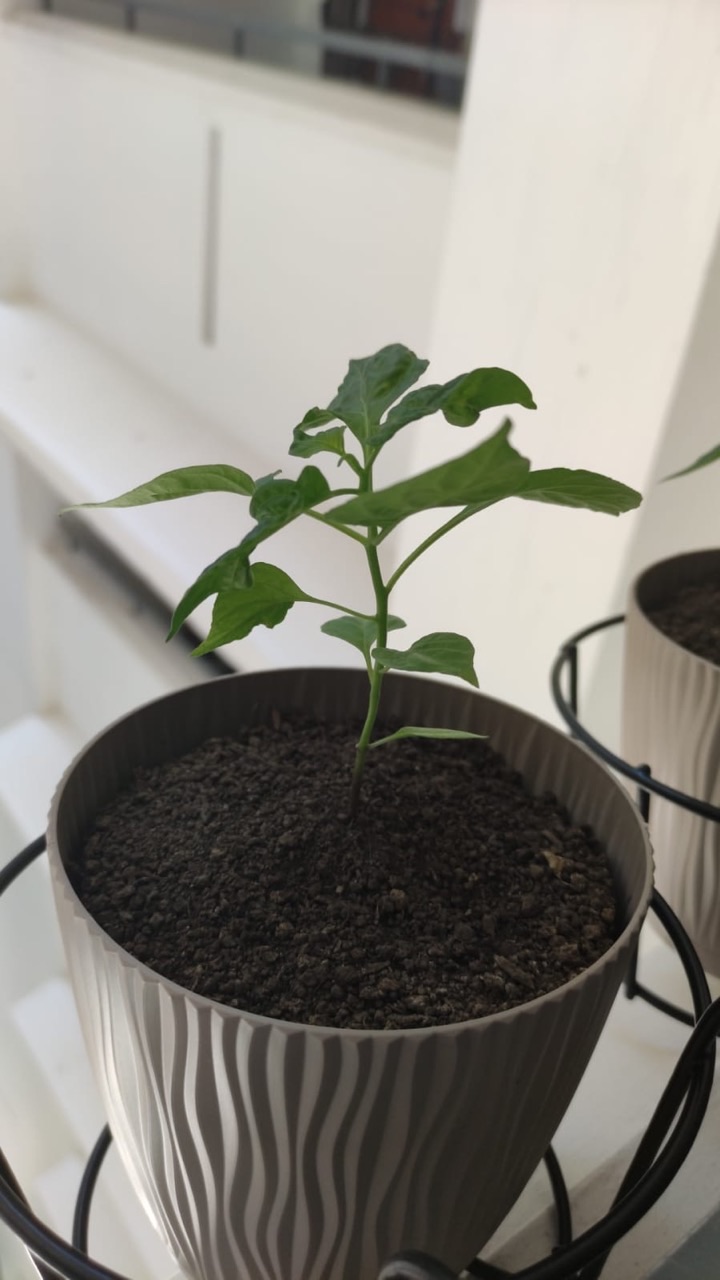
Can Punggol residents keep balcony plants and dry laundry outdoors during haze? Usually the sensible approach is to reduce unnecessary time outdoors when air quality is poor, clean visible dust from suitable surfaces with damp methods, and wash any home-grown vegetables properly before eating. A normal number of houseplants cannot be relied on to filter smoke particles out of a flat. Keep gardening enjoyable, but use NEA’s current haze readings and the official health advisory for exposure decisions.
If you are searching Punggol haze balcony garden, plants remove PM2.5, laundry smell after haze, can I eat balcony vegetables during smoke, or how to clean haze dust in an HDB flat, this guide answers those narrow practical questions. It connects to the Punggol indoor-air guide for windows, air-con and air cleaners, and to the Punggol haze health guide for precautions based on the person doing the gardening.
The quick answer for balcony and plant owners
- Plants can stay plants. A brief regional haze event is not automatic evidence that a favourite potted plant must be discarded, brought into the bedroom or sprayed with special products.
- Do not use plants as a substitute for real filtration. Real rooms exchange air, and the number of ordinary houseplants needed to remove meaningful amounts of pollutants is not practical.
- Keep necessary plant care brief when outdoor air is poor. Water and inspect pots when appropriate, while reducing optional long gardening sessions if the advisory calls for it.
- Wash edible produce properly. Singapore Food Agency food-safety advice covers soil, contaminants, clean water and hygiene; do not use a special chemical wash just because a grey day occurred.
- Clean deposited dust gently. NEA recommends damp wiping or mopping rather than dry dusting that resuspends settled material.
- Decide about laundry by condition and comfort. If textiles have an obvious smoke odour or visible grime, washing again may help; do not invent a rule that every fabric exposed outdoors is hazardous.
This is not a botanical emergency. It is a household maintenance problem mixed with an outdoor-air decision.
Why balconies feel different from interior rooms
A Punggol balcony may face the sea, the Waterway, a street or a sheltered courtyard. Wind, rain and the building’s shape change the way dust lands on a railing, window ledge or leaf. None of these observations creates a certified “Punggol balcony PM2.5 value.” NEA reports Punggol as part of Singapore’s North air-quality region.
Some terraces are semi-enclosed. They may look and feel like part of a living room but are still exposed to outdoor air through large openings. Sliding glass panels, even when closed, do not make an outdoor planter zone equivalent to a well-filtered indoor room.
A warm breeze is not proof of clean air. Regional smoke can be transported by wind. Conversely, a dusty shelf or leaf can reflect ordinary urban dust as well as material that arrived during haze. You cannot identify a particle’s origin by looking at it.
Use the balcony as a garden, not as a laboratory instrument. For actual outdoor planning, check the Punggol PM2.5 and PSI guide and the official live source.
Can houseplants clean haze from a Singapore flat?
Houseplants take up carbon dioxide and make their own food through photosynthesis. Some laboratory experiments have reported removal of selected volatile chemicals by plants, soil or associated microorganisms in small experimental chambers. But that is not the same as removing enough airborne particles in an occupied HDB living room.
The US Environmental Protection Agency states there is no evidence that a reasonable number of houseplants removes significant quantities of pollutants in real homes and offices. Air exchange, source control and suitable filtration dominate the practical outcome.
A potted peace lily, snake plant or fern may be pleasant to look after, but it does not have a tested smoke CADR comparable with an appropriately sized particle air cleaner. Nor does keeping twenty plants on a shelf automatically make a room safer for someone with asthma.
This distinction does not devalue greenery. Plants can provide interest, beauty and a sense of routine when outdoor exercise is limited. It simply means buying more pots should not be presented as a health intervention for fine-particle haze.
Why the famous ‘plants purify the air’ claim gets overstated
A commonly repeated claim traces back to space-related research in controlled environments. In a chamber, the amount of air, chemical source, exposure time and airflow may differ dramatically from those in an occupied apartment with doors, windows and cooking.
The leap from ‘a plant removed some measured vapour under particular conditions’ to ‘three plants solve Singapore haze’ skips the question that matters: how much cleaner air is delivered per hour in the real room? Haze protection involves a concentration, air movement and filtration performance, not merely whether a plant has some potential to absorb a compound.
Smoke also contains different pollutants from the vapours tested in many older plant experiments. A result about one chemical cannot automatically be used to claim removal of all PM2.5, smoke odours or combustion gases.
The correct message is not ‘plants are useless’. It is ‘plants are not a practical substitute for managing outdoor infiltration, indoor sources and effective filtration’. You can still enjoy your garden for the reasons gardens have always mattered.
What should you do with potted plants when haze arrives?
Check whether the plant actually needs watering or care. A short necessary visit to the balcony is different from spending two hours pruning, repotting and moving heavy pots. If official guidance recommends reducing prolonged outdoor exertion, postpone nonessential chores.
Do not automatically drag every outdoor plant into an air-conditioned bedroom. Moving plants can create clutter, spill soil, introduce pests, or put them under unsuitable light and humidity. A plant that tolerates outdoor conditions may fare better if left in its normal safe position until the air improves.
If leaves show visible settled dust, you may gently wipe suitable leaves with water and a soft cloth or rinse plants in an appropriate way once conditions and plant requirements allow. Fragile, fuzzy or water-sensitive leaves need different care. Avoid abrasive brushing, harsh detergents or untested leaf sprays marketed as ‘anti-haze’.
Prioritise safe access. Do not lean over balcony railings, move heavy planters into unsafe positions, block drainage or obstruct required walkways. No plant is worth a fall from height or interfering with building safety.
Can smoke particles settle on leaves?
Yes, airborne particles can deposit on outdoor surfaces, including leaves. Leaf texture, size, wind, rain, humidity and local sources influence how much material is retained. The visibility of a dusty leaf, however, does not provide a quantitative measurement of hazardous PM2.5 in the air.
Fine particles are defined by their aerodynamic diameter, not by whether they leave a noticeable black mark. A plant can look clean even when the official regional PM2.5 level is elevated. A dusty leaf can also be covered in ordinary soil or construction dust while the regional haze indicator is moderate.
Anecdotal evidence from a balcony can be useful for deciding when to wipe a surface. It cannot establish whether smoke originated in Sumatra, Kalimantan, a local vehicle or a nearby worksite. That requires separate atmospheric evidence.
For the geography of cross-border smoke, see Why Is Punggol Hazy?, which explains sources, winds and satellite limitations.
Is it safe to eat home-grown herbs and vegetables after haze?
There is no universal scientific basis to declare every balcony herb unfit for consumption because haze was reported. Food safety depends on the crop, its growing conditions, water, soil, handling and any specific contamination incident. Do not rely on a general neighbourhood article to certify an individual harvest.
The Singapore Food Agency advises washing fruits and vegetables and gives detailed guidance for safely growing food: use clean water, clean growing media and hygienic harvesting. Produce can collect dirt and other residues in ordinary conditions too.
For leafy vegetables, remove visibly soiled parts and wash carefully with clean water, following SFA’s food safety directions. SFA includes soaking and rinsing steps. For harder vegetables, gentle scrubbing where appropriate helps remove surface dirt. Special chemical washes are not generally required.
If an actual contamination notice or unusual chemical deposition affects a garden, follow the relevant public agency or professional advice rather than assuming ordinary washing solves every problem. Haze alone does not establish the presence or absence of a particular contaminant on an individual leaf.
Watering plants during haze: care without unnecessary exposure
Plants still need water according to species, weather and growing medium. Haze does not automatically mean watering should stop. Overwatering can cause root problems and is not an air-quality treatment; underwatering can harm plants that normally need regular moisture.
If conditions are poor and a family member is more susceptible to smoke, assign essential watering to someone for whom the official outdoor guidance allows a brief task, or choose a safer time when possible. Avoid long, strenuous rearrangements or pressure washing when a quick watering will do.
Use clean water for edible plants, as SFA advises. Do not use water collected from questionable sources or improvised ‘smoke-cleansing’ mixtures without evidence they are safe for plants and food.
After a rain shower, check soil moisture rather than guessing. Rain may wet leaves without delivering enough water to every pot under a roof. The right horticultural decision is still based on the plant, not the headline.
Balcony laundry: must you wash it all again?
There is no official rule that every shirt or bedsheet dried outdoors during a haze period is automatically unsafe. Fabric can collect odours and particles, however, and some people may notice smoke smell on clothes dried outside. The practical response should fit what actually happened.
If freshly dried laundry has a persistent smoky smell or obvious deposited dirt, washing it again with ordinary laundry methods may improve comfort. If a clean load was briefly exposed and has no noticeable issue, automatically discarding it or applying strong disinfectants is not supported by evidence.
A family may choose to dry clothes in a suitable indoor area when outdoor smoke is elevated, but do not create new moisture and mould problems by shutting wet laundry into a poorly ventilated cupboard. Consider airflow, humidity and the household’s available drying equipment.
An outdoor service yard or covered rack is not necessarily protected from haze particles merely because rain cannot reach it. Conversely, a fabric that smells clean is not a calibrated air-quality test. Use current outdoor readings to guide exposure, and household judgment for laundry comfort.
Does haze dust require bleach or disinfectant?
Fine particles on a floor or railing are a cleaning issue, not automatically a microbial infection-control issue. NEA recommends wet methods such as damp wiping and mopping because they generally avoid stirring up settled dust compared with vigorous dry dusting.
For a washable table, use a damp cloth and an ordinary suitable cleaner. For tiled floors, mopping may be practical. Follow surface manufacturer’s care instructions and avoid soaking electrical equipment, wooden finishes or electronics.
Bleach is not needed merely because the surface was exposed to haze particles. Strong chemicals may introduce their own irritating fumes, and mixing cleaners can be dangerous. Do not try to ‘sterilise haze’ through chemical spraying.
A vacuum can be appropriate for household dust when it has suitable filtration and is used properly, but not every model captures fine particles equally. If dry sweeping creates visible clouds of dust, damp cleaning is the more sensible first approach during a smoke episode.
The practical order for cleaning an HDB balcony
First, wait until the latest outdoor air-quality advice is compatible with the time and exertion needed, especially for people in a vulnerable group. Second, remove obvious loose debris safely without shaking it into the air. Third, wipe railings, ledges and washable furniture surfaces using damp methods suited to the materials. Fourth, rinse or wipe plant leaves only if their species and condition allow it.
Do not hose dusty material into a neighbour’s balcony or a common corridor. Keep drainage routes clear and avoid slippery floors. If the task requires ladders, working at height or moving heavy objects, treat that as a separate safety risk.
You do not need to scrub an entire balcony after every slightly grey afternoon. Focus on actual accumulation, hygiene and how the space is used. A five-minute targeted clean can be more sensible than an unnecessary day-long chore.
If a surface repeatedly becomes dirty, investigate local dust sources and maintenance needs separately. A haze season may coincide with local construction, road dust or pollen; not all deposition has the same origin.
What about windowsills, curtains and bedroom surfaces?
A windowsill can collect settled dust over time from several sources. Wipe with an appropriately damp cloth if it is suitable for the material. Avoid shaking dusty curtains vigorously while people remain in the room. Follow the fabric-care label if washing is needed.
If the household has kept windows temporarily closed due to poor outdoor air, remember to ventilate appropriately when the official air-quality situation improves. The objective is not a permanently sealed flat. Indoor cooking, cleaning chemicals, moisture and occupancy also influence air quality.
Do not assume cleaning curtains is equivalent to removing airborne PM2.5. Once particles are suspended in the room, reducing new indoor sources and using suitable filtration are different tasks from wiping settled dust.
For ventilation and purifier decisions, use the Punggol Haze at Home reference, which includes a room-volume and smoke-CADR calculation.
What should families do with a community garden plot?
Punggol residents may participate in home gardening or a Community in Bloom-type garden. NParks GardeningSG explains the difference between home, community and allotment gardening spaces.
Community gardens can require travel, watering, weeding and physical effort. During poor air conditions, organisers can focus on essential plant care and defer optional long outdoor workshops or maintenance sessions when the advisory calls for limiting exposure.
Communicate any changed schedule to participants, especially older gardeners or groups involving children. Avoid assuming every gardener has the same health needs or that one confident volunteer can decide for everyone.
Food-growing plots should follow the Singapore Food Agency’s guidance on clean water, safe soil, hygiene and pest control. Those rules apply during ordinary weather as well as haze.
How rain changes the problem without solving everything
Rain can wash some deposited particles from leaves and surfaces, and rainfall may affect airborne pollution. But a shower over Punggol does not guarantee no new smoke will arrive if regional fires and winds continue to transport pollution.
Rainwater collected from an exposed surface is not automatically a safe irrigation or food-preparation source. For edible crops, SFA recommends clean water. The origin and quality of collected water matter separately from whether the sky appears less hazy afterward.
Rain also introduces a very practical balcony problem: slippery tiles, drainage and pot stability. If thunder or lightning is present, outdoor chores raise weather hazards that have nothing to do with PM2.5.
The useful question is always what the most recent official air-quality information shows, not whether one particular cloud passed overhead.
Why a green roof or garden cannot make a Punggol block ‘haze-proof’
Urban greenery offers ecological, aesthetic and thermal benefits, and may affect the local environment in various ways. Those benefits should not be confused with a guarantee that a roof garden or planted facade removes all incoming transboundary smoke.
Airborne fine particles can be transported across urban green spaces. Effects of vegetation on pollution depend on species, geometry, wind and pollutant. The visual presence of greenery is not a substitute for a regional measurement.
A strong green neighbourhood can still have days when outdoor exertion should be reduced. Protecting people’s health and appreciating a planted town are compatible ideas.
Do not use photographs of a green, clear-looking estate as evidence that official haze health guidance does not apply there.
A worked example: an evening after visible dust appears
Suppose a family notices dust on a balcony table and a faint smoky odour on a towel. One adult immediately wants to discard the towel and spray the table with disinfectant; another wants to carry every plant into the living room.
A better sequence is to check the latest NEA air-quality information, consider whether cleaning now requires avoidable outdoor exposure, and separate three tasks. The table needs ordinary suitable damp cleaning; the towel may be washed again if smell or soiling bothers the household; the plants need care according to their condition and growing requirements.
None of those tasks proves the identity or toxicity of every particle. If a specific chemical spill, unusual odour incident or local fire is suspected, that is a different reporting and safety issue needing official guidance.
The household gets a clean table and usable laundry without turning a regional environmental episode into a costly, frightening home intervention.
Common mistakes to avoid
- Treating potted plants as a replacement for filtration with a tested smoke CADR.
- Washing edible herbs with harsh detergents or claiming all balcony crops are unsafe after haze.
- Spending hours on optional balcony chores while the latest guidance says to limit outdoor exertion.
- Dry sweeping particles into the room instead of using suitable damp methods.
- Mixing disinfectants or bleach with other chemicals to ‘neutralise’ haze.
- Using a dusty leaf as a precise PM2.5 monitor.
- Ignoring slips, falls, electrical safety and drainage while cleaning balconies.
- Keeping the home sealed indefinitely after outdoor air improves.
Each mistake confuses a practical maintenance need with either an unsupported scientific claim or an unnecessary health measure.
Frequently asked questions
Do houseplants absorb haze PM2.5?
Plants may interact with some pollutants, but ordinary potted plants are not an effective substitute for mechanical particle filtration in occupied homes. The US EPA says a reasonable number of houseplants has not been shown to remove significant indoor pollutant levels.
Should I throw away herbs after a smoky day?
Not automatically. Follow Singapore Food Agency guidance for safe growing, washing and handling of vegetables, and any specific contamination advisories. A general haze notice does not measure residues on an individual plant.
Can I dry baby clothes on the balcony during haze?
Assess actual outdoor conditions, exposure and household needs. An indoor drying arrangement may be preferable during poorer smoke conditions if it can be managed without moisture and mould problems. Washing again may help with persistent smoke odour; avoid blanket claims of contamination.
Can I spray plants to wash away smoke?
Gentle cleaning with water may be appropriate for some plants, but species differ. Do not use aggressive sprays or chemicals and avoid unnecessary prolonged outdoor care when the haze advisory calls for reducing exposure.
Does dust on the window prove the PSI is high?
No. Settled dust has many sources, and PSI is an air-quality index based on monitored pollutants and defined periods. Use NEA’s timestamped measurements.
What is the safest way to clean surfaces?
For ordinary haze dust, NEA advises damp wiping or mopping as useful methods that avoid stirring up settled dust. Use appropriate methods for each material and keep safety routes clear.
Can rain clean my balcony plants?
Rain may rinse some surfaces, but it does not guarantee all residue is removed or that regional smoke will not return. Check plant needs and updated air-quality guidance.
Is a balcony with glass panels indoors?
A balcony may be partly enclosed, but its actual ventilation, gaps and use determine exposure. Do not treat a semi-open planter area as an officially monitored filtered room.
Is gardening useful for wellbeing even if it does not clean the air?
Yes, many people find caring for plants enjoyable and calming. That benefit is separate from an unproven claim that plants meaningfully filter haze in ordinary rooms.
Where can I learn about ordinary gardening in Singapore?
The official NParks GardeningSG introduction covers home, community and allotment gardening. Use SFA for food safety and NEA for haze.
Reading next in the Punggol haze collection
The Punggol Haze Check explains the live air-quality reading. Punggol Haze at Home covers windows, HEPA and purifier sizing. Why Is Punggol Hazy? explains why particles arrive from regional fires. For an indoor afternoon away from home, see Punggol Haze Indoor Places.
These guides have different jobs. This one concerns balcony plants, laundry, food-growing and settled dust rather than deciding whether to run a race or which numerical index applies.
Official references and editorial update
Reviewed on 17 October 2026. The advice here is general household and gardening information, not a test result for anyone’s plants, produce or balcony.
- NEA: haze practical tips for households
- NEA: live air-quality readings and advisories
- US EPA: improving indoor air quality and houseplants
- US EPA: indoor air pollution and limits of plant studies
- Singapore Food Agency: safe food practices and home growing
- NParks GardeningSG: Gardening 101
A little realism goes a long way: the plants can remain beautiful, the household can remain comfortable, and cleaning can stay ordinary. Use reliable air-quality readings, a gentle maintenance routine and the right evidence for the right question.
Punggol Haze: Connected Reading Library
These reader-first guides answer different questions about Punggol and Singapore haze. For a decision about today, check the official NEA live readings and advisories rather than using an old article as a real-time report.
- Indoor destinations and verified PA haze shelters
- Reading PM2.5 graphs, PSI, satellite hotspots and wind maps
- Indoor Science, Geography, Mathematics and English learning projects
- Punggol Haze Check: one-hour PM2.5 and 24-hour PSI
- What happens in Punggol during haze: family routines
- eduKateSG Singapore Haze: transboundary smoke and connectivity
- eduKateSG Punggol Haze Lifestyle: work, school and daily errands


