
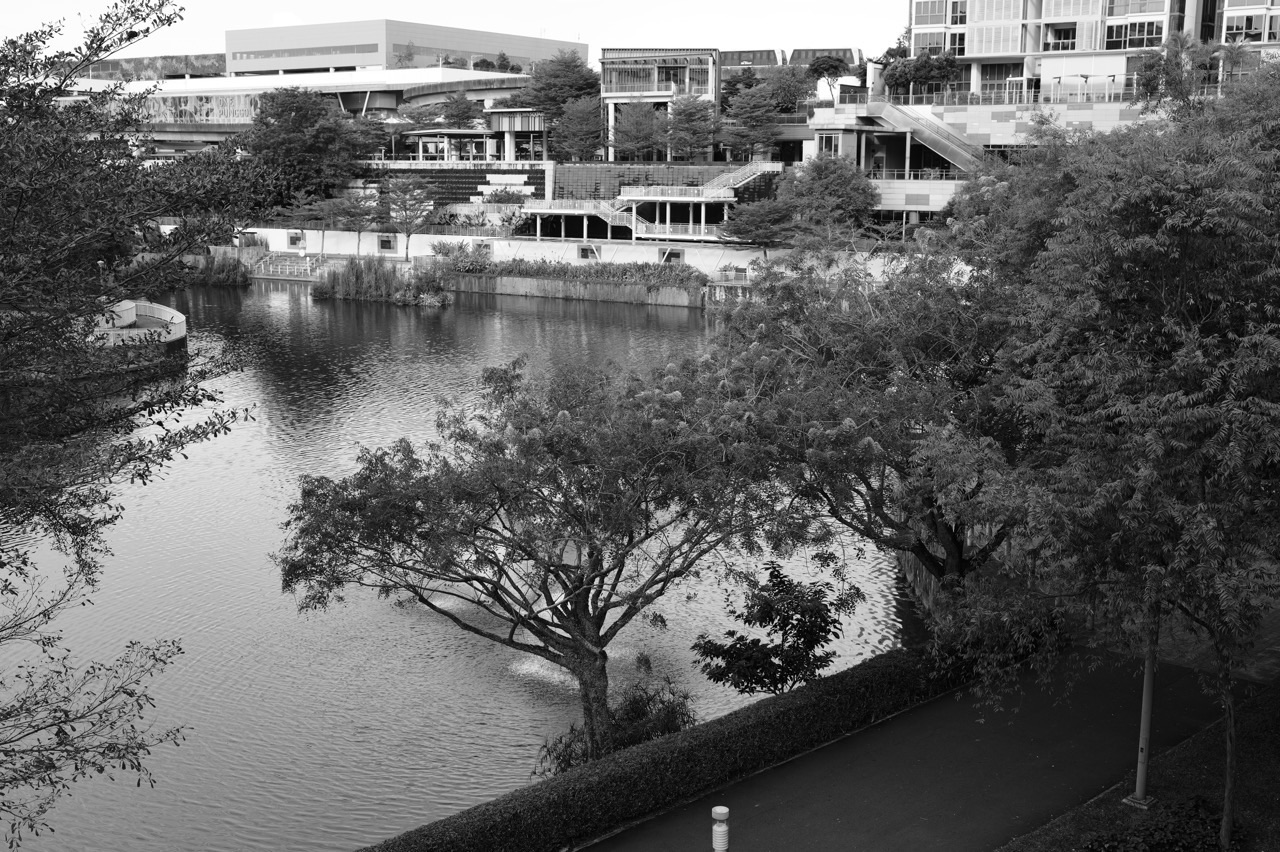
Want to build a miniature version of Punggol with your children? Use a clean cardboard base, paper, washable drawing materials and a few lightweight packaging shapes to create a pretend Punggol neighbourhood. Mark a Waterway, one bridge, a few HDB-style blocks, a public library or community hub, and a station. Give each part a simple label and let children explain how someone might move between places. The goal is to understand how a town connects housing, water, transport and everyday life—not to reproduce every Punggol road or build an engineering-accurate replica.
A Punggol cardboard-town activity for families, Primary school children and creative adults can be done entirely indoors with safe available materials. It is a hands-on counterpart to the site’s family map-making guide and Waterway Science Trail. This article explains what to include and why, provides an original worked scale example, shows a step-by-step 60-minute build and separates the different goals of a pretend craft, a geography model and an accurate planning map. A good model helps people explain connections clearly; it does not need expensive architectural supplies.
18 October 2026: Because of the regional haze affecting Singapore, this home activity is an alternative to an unnecessary public park visit. For child safety, the Consumer Product Safety Office advises caregivers to avoid sharp edges, exposed wires, small magnets and loose choking-size parts, and to follow age guidance. Use only clean, dry non-hazardous packaging with tools appropriate to the child. Do not use damaged lithium-ion batteries, sharp hobby blades, hot glue guns with unsupervised children, or items found in unknown public bins.
Mini Punggol at a glance: what to build
| Model piece | Simplest safe representation | Real Punggol connection | What it is not |
|---|---|---|---|
| Waterway | Blue line or strip drawn on paper | Punggol Waterway Park | Real hydrological cross-section |
| Bridge | Folded paper strip across the blue line | Actual pedestrian connections | Permission to cross a closed bridge |
| Housing | A few small boxes marked homes | HDB and residential blocks | Exact approved building plan |
| Station | Simple square marked Punggol MRT or LRT | Transport connections | Working model of rail equipment |
| Library/community | One labelled public building | One Punggol hub | Guarantee of current room access |
| Greenery | Drawn trees and park symbols | Park and landscaped areas | Identified real plant species |
| Punggol Coast | Separate marked district, optionally | Digital District with phased amenities | Promise all future infrastructure is open |
The five practical chapters
- 1. Turn Punggol’s town systems into a craft
- 2. Safe materials, map copyright and geography
- 3. Original 60-minute build and worked map-scale maths
- 4. Four versions, model testing and common mistakes
- 5. FAQs and the connected eduKate Punggol ecosystem
Chapter 1. A model is a way to explain how Punggol works
Build relationships between places, not a list of landmarks
Punggol’s best-known images include its Waterway, bridge designs, HDB blocks, LRT tracks and the northern Digital District. A craft with these objects placed randomly may look colourful but teach little about why the town functions. A better model asks where people live, how they reach services and what a public crossing connects. A small area with clear relationships can be more useful than a whole-town replica that no one can explain.
Choose just five symbols: homes, water, transport, food or library, and a green public space. Let each symbol have a simple meaning. A child can point to the route from home to the library, while an adult checks that this is an invented model unless based on a verified real map.
The Waterway gives the model a natural central story
NParks describes Punggol Waterway Park along Sentul Crescent as a public park with themed areas and public paths. A model can use a blue strip to represent that a waterbody divides or links parts of the neighbourhood and that bridges allow permitted crossing. This helps children understand why a line drawn across a map cannot be treated like a road.
Make the bridge a simple safe folded paper arc. The child can move a paper character to the legal crossing rather than walking through the blue strip. Do not claim every actual Punggol bridge permits cycling or that a particular public path is currently open; real site signs govern.
Homes and shops represent different needs
A family might mark three model houses, one food place and a library. That allows a child to explain that people move for groceries, learning, work and leisure. It also introduces an important urban planning idea: residents don’t need an attraction at every doorstep; good connections to everyday services matter. A model can capture that principle without recreating thousands of real flats.
Label the boxes by function rather than using a real person’s private address. A child’s imagined version can be fun, while a more factual model may draw selected locations from official current maps. Keep the distinction visible in the caption.
Transport is a system of connections, not just a toy train
Central Punggol MRT/LRT and Punggol Coast MRT are separate North East Line stations; the Punggol LRT has East and West Loops serving residential neighbourhoods. A cardboard station square can show where a person transfers, and a coloured line can indicate a service connection. But the map-like line is schematic; it should not be used to infer real distances or train timings.
Use LTA’s published rail map for actual station sequence and codes. If younger children create a fictional loop with invented names, call it a pretend transport design. Do not mix future Cross Island Line plans with presently operating service without labels.
A new-town model can include future ideas without presenting them as current facts
Punggol Digital District is developing in phases, with public amenities and current SIT/business spaces already present but further projects planned. The Punggol Heritage Trail’s initial public stretch is not the same as the planned complete alignment. A model can mark current and future features in different colours, which teaches children to distinguish built reality from proposals.
Mark ‘current in October 2026’ versus ‘planned or imagined’ clearly. Do not encourage visiting construction zones to gather craft inspiration. A public operator’s current details and safety boundaries always outrank the model.
People can interpret the same town differently
A child may include a playground, a student may prioritise the library, and a grandparent may care most about a comfortable route to shops. The model becomes more interesting when each person chooses a small activity that reflects their daily life. It can accommodate personal priorities without trying to rank them as the most important landmarks in all Punggol.
Ask each person to explain what they need from the town. A model can show those different uses without inventing residents or exposing private routines. Keep discussion voluntary and age appropriate.
The first model can stay deliberately fictional
A craft need not be a technical geographic reconstruction. A pretend Waterway with two paper bridges and a small station is enough to start. The trouble comes when someone publishes that craft as an accurate map or scale model. Making the label explicit protects the difference between creativity and geographic fact.
Give the creation a title such as ‘Our Imaginary Punggol-Inspired Town’. If it uses actual official data, cite the source and date. Never claim exact floor counts, building heights or route access from a child’s drawing.
Reusing packaging needs clean material, not collected waste
Households may have clean cardboard from deliveries or packaging. It can be reused for a temporary craft before being responsibly recycled if suitable. NEA asks residents to flatten clean cardboard boxes before placing them in the blue recycling stream. Packaging contaminated by food, oil or unknown waste is a poor craft material and may not be recyclable in the ordinary way.
Use only safe, clean items already available at home. Do not ask children to collect discarded boxes from public bins, workplaces or corridors without permission. The green learning goal should not increase injury or leave more waste in the estate.
Chapter 2. Materials, child safety and truthful maps
The safest beginner model is drawn rather than constructed with sharp tools. Start with an A3 sheet or a clean cardboard base, coloured pencils, a ruler, washable glue used according to instructions, and a few pre-folded paper shapes. An adult can prepare more complex pieces separately if the child is old enough and the tools are suitable. This is not a craft for unsupervised toddlers surrounded by tiny magnets, staples, sewing pins or cut-off pieces.
Small parts are a serious design constraint
The Consumer Product Safety Office’s updated May 2026 advice says caregivers should choose age-appropriate toys, examine sharp and detachable components, and prevent children from swallowing small parts or magnets. A town model made with tiny beads for people, magnets for cars or button batteries for lights may be visually attractive but inappropriate in a home with young children.
Represent people with drawn circles, not swallowable counters, where there is a toddler or anyone at risk of mouthing objects. Keep scissors, glue and unused material secure and never leave a half-built craft unattended in reach of young children.
Cutting and gluing belong within a responsible adult’s plan
Even ordinary cardboard can have sharp edges, staples or packing tape. A child should not be handed a utility knife or hot glue gun simply to make a model look professional. Age-appropriate blunt-tip tools and pre-cut material may reduce risk, and an adult should manage any necessary difficult cutting.
Read craft material instructions. Avoid fumes, strong solvents and adhesives unsuitable for the people or venue. A simple drawing of the station is a perfectly good substitute for a three-dimensional box.
No batteries, wiring or electrical experiments required
Children may ask to make the station light up. This introduces batteries, wires, connections and potentially heat, which are unnecessary for a beginner model. Damaged lithium-ion cells or loose coin batteries are particularly hazardous and should never be treated as craft supplies.
Use drawn lights and paper symbols. Do not dismantle electrical toys for parts. The separate Punggol repair-and-reuse guide explains why broken electrical objects need proper safety and e-waste decisions.
OneMap and published rail maps are evidence, not automatically free artwork
SLA’s OneMap is a useful official tool for locating streets and amenities, with legal terms for use and reuse of datasets or map services. A paper model based loosely on learning from a map differs from reproducing a copyrighted map screenshot in a public commercial article. The source of the information and the exact licence can matter.
For a family craft, draw your own simple route and label it as approximate. If a business publishes derived geographical data or map images, review SLA terms and use required attribution. Do not remove official logos or imply that SLA endorses your model.
A scale has a precise meaning when it is stated
A true map or model scale compares a unit on the representation with the same unit in reality. A 1:1,000 plan means one centimetre represents ten metres. But if a family moves buildings around to fit a small table, it is no longer a consistently scaled model. That is perfectly acceptable when labelled an illustrative craft.
Do not use a scale bar copied from a digital map and place it onto a hand-drawn board with different proportions. If precision matters, work from proper sourced dimensions; otherwise use ‘not to scale’ and focus on relationships.
A three-dimensional building can deliberately exaggerate height
At a small horizontal scale, an accurately scaled HDB block might be only a few centimetres tall in a model, making a child find it uninteresting or hard to build. A playful cardboard town may use taller boxes so the purpose of each is visible. That is a legitimate design choice as long as it is described correctly.
Call the model illustrative with exaggerated vertical height, not a survey or official building elevation. A map-reading activity can explain the difference between a symbol that communicates function and a technically accurate geometric replica.
An official closed route stays closed in the real world
The planned Punggol Heritage Trail, Punggol Point upgrading areas and construction around developing neighbourhoods make it tempting to draw a complete connector that does not yet exist. A model can imagine such a connection, but the family should not plan an actual visit using it without current verification.
For real outings use the latest LTA, NParks and JTC access notices. A paper bridge that connects two model places is a thought experiment, not evidence of a public path.
The completed model belongs in a safe household space
A 3D craft may need a table or shelf while drying or being photographed. Leaving it in an HDB common corridor can block paths and expose other people to loose pieces. SCDF’s residential common-area guidance emphasises keeping staircases and emergency access clear.
Store the model inside a suitable private area, not in a shared stairwell, riser area or corridor. If space is tight, photograph it for a private family album and recycle safe clean materials appropriately rather than keeping a bulky board indefinitely.
Chapter 3. An original 60-minute mini-Punggol build with real Mathematics
Minutes 0–8: define the model’s area and purpose
Choose a small story: a family lives near a Punggol-inspired canal and must reach a library across a bridge. Draw a rectangle for the base, a blue line for water, a station on one edge and a public building on the other. If a child wants every tourist site in Singapore, agree to save those ideas for another model.
This is a fictional small area inspired by Punggol, not a verified street plan. Mark the title ‘illustrative neighbourhood’ so a future viewer understands that houses and bridges were deliberately arranged for the activity.
Minutes 8–16: prepare a clear safe material kit
Use the clean cardboard base, paper shapes, crayons or pencils and an age-appropriate safe adhesive. An adult removes staples or unsuitable sharp material. Give each participant a simple task such as colouring water, drawing trees or folding a safe bridge strip.
Keep small cut-offs, loose parts and sharp tools out of reach of young children. Skip any step requiring unsafe cutting. Drawing a building is an acceptable alternative to building it in three dimensions.
Minutes 16–25: place housing, food and library pieces
Make two or three small house symbols and one distinct public service symbol. Let the child decide which part of the model shows the nearest ordinary food shop and which represents a community/library space. Give each a readable label. Discuss why housing and services need a route connecting them.
Do not attach real household addresses or school labels to a public model. The model can be based on general types of places without identifying specific residents.
Minutes 25–34: draw roads and public routes, then add a bridge
Ask how a person can get from housing to the library without crossing the water directly. The child may choose a crossing point and make a folded paper bridge. Check that the drawn path and bridge actually connect; if they do not, adjust the model and explain the decision.
This is an invented routing challenge. Actual Punggol routes require LTA/OneMap and on-site verification before anyone uses them for travel. Do not encourage a child to walk through a construction zone to see whether the model is right.
Minutes 34–42: add the transit station
Mark the station as Punggol MRT, Punggol Coast MRT or an imaginary LRT stop, and decide whether the activity is representing real service or a fictional network. Older children can look at the official rail map and distinguish the current North East Line from the LRT East/West Loops. Younger children may simply draw a station door and an arrow.
Do not draw a future planned Cross Island Line connection as if it is operating in 2026. A conceptual connection should be labelled planned or imaginary, with real services verified from LTA.
Minutes 42–50: work a simple scale example
Imagine the board is 20 cm wide and 30 cm long and you want it to represent an idealised 200 m × 300 m local area. At scale 1:1,000, 1 cm on the board stands for 10 m on the ground. Thus 20 cm corresponds to 200 m and 30 cm to 300 m. The represented area is 200 × 300 = 60,000 square metres, or six hectares, in this purely illustrative rectangle.
This is an original mathematical model, not a statement that the real Punggol Waterway, library, station or HDB blocks occupy that specific rectangle. If the child placed tall boxes by eye, vertical dimensions are not necessarily at 1:1,000. Explain why a fun model can be not to scale.
Minutes 50–60: tell the story and clear up
Let each person take a turn describing a journey using the model: start at a house, follow a public path, cross the bridge, reach the library or food stop and return. Test whether someone who did not build it understands the labels. Then put away tools and small pieces safely. Photograph the model privately if the household wants a keepsake.
A finished photo can join the Punggol one-minute film activity or a family time capsule, but there is no need to post it publicly. Do not leave the cardboard in a common HDB corridor.
The worked scale example at a glance
| Quantity | Calculation | Result or condition |
|---|---|---|
| Horizontal scale | 1:1,000 | 1 cm represents 10 m |
| Board width | 20 cm × 10 m per cm | 200 m represented |
| Board length | 30 cm × 10 m per cm | 300 m represented |
| Ground rectangle | 200 m × 300 m | 60,000 m² |
| Ground hectares | 60,000 ÷ 10,000 | 6 ha |
| Actual Punggol location | Not measured | Illustrative; not an official site map |
| Building height | Box size chosen for play | May be deliberately exaggerated |
A younger child need not work the scale calculation at all. The practical question ‘Can we get from home to the library using the bridge?’ may be enough. For older learners, comparing a 1:1,000 scaled drawing with an intentionally oversized building illustrates the difference between a faithful model and a visual symbol. The site’s eduKateSG map-scale guide owns the deeper formal reasoning.
Chapter 4. Four mini-town projects and twenty design prompts
The smallest paper-only town
A child draws one Waterway curve, two houses, a bridge and a public building on a single sheet of paper. An adult asks how a person might cross safely and why the bridge was placed there. This version needs no scissors, adhesives or three-dimensional parts. It is a better choice than a complex cardboard construction for younger children.
Label the result imaginary unless derived from verified official map information. The goal is connecting symbols clearly, not reproducing actual Punggol geography. A parent can join without buying craft supplies.
A family model of one weekly journey
Choose a general familiar real-life journey, such as visiting a public library, and draw an illustrative version without private addresses. Include home-like blocks, a transport stop, a suitable crossing and a destination. Let everyone describe one choice in the route. Where a real map is used, check the facts separately and cite the public data source.
This is ideal for new Punggol residents who want to understand how services and movement fit together. It should not be shared as an authoritative accessible pedestrian route unless actual access has been verified.
A pretend future Punggol design
Invite an older child or teenager to design a fictional extension with more shade, a public reading room, a safer crossing or another imagined amenity. Use different-coloured paper for current and proposed features. The model can help discuss why public amenities require space, routes and maintenance, but it does not assert government plans.
Mark every invented feature plainly as a personal idea. Do not claim a planned community centre, train line or waterfront structure has official approval. The Punggol Digital District guide supplies current documented context.
A recycled-material urban design day
Use available clean packaging for houses, public transport symbols and gardens, and discuss why a household might reuse safe material before recycling it. Give children an age-appropriate sorting role while adults handle any cutting. When the model has served its purpose, separate suitable clean cardboard and other materials appropriately.
NEA asks residents to flatten clean cardboard for recycling. Contaminated packaging or mixed-material pieces may need a different disposal stream. The Punggol eco-friendly guide handles wider low-waste habits.
A stop-motion film made with the cardboard town
Using the model at home, capture a few privately owned photographs showing a paper figure moving from house to bridge to library. Add original captions or consenting narration and arrange them into a short sequence. No park filming is required, and nobody must show their face.
Use the one-minute Punggol film guide for the rights, sequencing and editing reader job. A fictional model should not be presented as video proof of real streets or current facility access.
A bridge-engineering conversation without weight tests
A paper bridge can be folded into different shapes and compared visually. A child may notice that an arch looks different from a flat strip and ask why real bridges use particular structures. That is a sensible introductory question, but a casual paper model is not an engineering assessment.
Avoid loading a homemade model with heavy objects or interpreting its behaviour as a proof of real bridge safety. Use an age-appropriate safe discussion and official engineering resources where the technical reason matters.
An accessibility-aware pretend neighbourhood
Ask how a wheelchair user, stroller-pushing parent or older visitor might reach the public building in the model. Draw continuous paths and avoid sudden drawn stairs. A child can explain why a route should have an accessible connection, while an adult notes that real-world suitability depends on detailed measurements and facilities.
Do not claim an actual Punggol route is accessible based on the model. Use current operator information and individual preferences for real visits. The exercise is about empathy and design thinking, not certifying infrastructure.
An original Punggol local-history display
A family interested in history may add two separate cards: ‘documented historical Punggol’ and ‘our 2026 imaginary model’. NLB’s Punggol Stories and NHB material explain earlier farms, fishing communities and redevelopment. The child can ask how land use changes over time without pretending their cardboard scene is an archaeological reconstruction.
Keep source facts and creative design distinct. The Punggol history-lovers guide owns dates and historical accounts; this craft offers a way to express what has been learned.
Twenty mini-town design decisions to try
1. Base orientation
Try: Draw an arrow for north if using a real oriented source. Accuracy or safety check: A random page top isn’t inherently north. A small clear decision makes the model more understandable than adding another unconnected building.
2. Water line
Try: Place blue to show a waterbody. Accuracy or safety check: Not an actual drainage drawing. A small clear decision makes the model more understandable than adding another unconnected building.
3. Bridge
Try: Draw one safe crossing. Accuracy or safety check: A paper crossing doesn’t prove a real path exists. A small clear decision makes the model more understandable than adding another unconnected building.
4. Station
Try: Use a clear transit icon. Accuracy or safety check: Station names must be checked if factual. A small clear decision makes the model more understandable than adding another unconnected building.
5. HDB homes
Try: Use two distinct housing shapes. Accuracy or safety check: Don’t publish private household details. A small clear decision makes the model more understandable than adding another unconnected building.
6. Library
Try: Mark one public reading place. Accuracy or safety check: Actual special rooms may need booking. A small clear decision makes the model more understandable than adding another unconnected building.
7. Food centre
Try: Add a place for everyday meals. Accuracy or safety check: Don’t promise vendor hours. A small clear decision makes the model more understandable than adding another unconnected building.
8. Greenery
Try: Draw trees in a permitted public space. Accuracy or safety check: Avoid claiming real species. A small clear decision makes the model more understandable than adding another unconnected building.
9. Walking path
Try: Connect people to destinations. Accuracy or safety check: Routes should avoid impossible barriers. A small clear decision makes the model more understandable than adding another unconnected building.
10. Bus stop
Try: Add a stop only if it serves the story. Accuracy or safety check: Live buses must be verified externally. A small clear decision makes the model more understandable than adding another unconnected building.
11. Return route
Try: Show a way back to housing. Accuracy or safety check: A map requires two-way planning. A small clear decision makes the model more understandable than adding another unconnected building.
12. Shade
Try: Consider one shaded space. Accuracy or safety check: Real comfort depends on weather. A small clear decision makes the model more understandable than adding another unconnected building.
13. Seat
Try: Make an optional rest point. Accuracy or safety check: No guarantee it exists at the real site. A small clear decision makes the model more understandable than adding another unconnected building.
14. Toilet
Try: Mark a model facility. Accuracy or safety check: Actual facilities need operator checks. A small clear decision makes the model more understandable than adding another unconnected building.
15. School
Try: Include an abstract educational building. Accuracy or safety check: School grounds are not tourist venues. A small clear decision makes the model more understandable than adding another unconnected building.
16. Healthcare
Try: Differentiate a clinic from leisure. Accuracy or safety check: Waiting rooms aren’t public attractions. A small clear decision makes the model more understandable than adding another unconnected building.
17. Old and new
Try: Use two colours for historical versus current. Accuracy or safety check: Label years and sources. A small clear decision makes the model more understandable than adding another unconnected building.
18. Future
Try: Use dashed paper for an imaginary connection. Accuracy or safety check: Don’t call it operating rail. A small clear decision makes the model more understandable than adding another unconnected building.
19. Safety
Try: Keep model tools and pieces age suitable. Accuracy or safety check: No magnets, sharp blades or batteries for kids. A small clear decision makes the model more understandable than adding another unconnected building.
20. Story
Try: Explain one useful journey aloud. Accuracy or safety check: Clear communication is the final test. A small clear decision makes the model more understandable than adding another unconnected building.
How to decide whether to keep or recycle the model
Some households enjoy displaying the result for a week; others need the table back at once. Photographing it privately can preserve the memory without keeping a bulky object. If discarding, separate clean cardboard and other permitted recyclable material and flatten boxes as NEA advises. Do not put glue-laden contaminated mixed waste into a blue bin indiscriminately. The success of the activity does not depend on storing it permanently.
Chapter 5. Family mini-Punggol FAQs and official sources
Can I build a miniature Punggol at home?
Yes. A simple paper or cardboard model with a Waterway, bridge, homes, station and one public facility can be a complete indoor activity.
Do I need professional architectural materials?
No. Clean cardboard, paper and age-appropriate drawing tools are enough for a basic model.
Is this a real Punggol survey map?
Not unless built from reliable measurements and scale. The suggested family version is illustrative and should be labelled accordingly.
How should I represent Punggol Waterway?
A blue line or strip, with public crossing symbols, can explain the relationship between water and routes without copying technical hydrological dimensions.
Does a cardboard bridge prove a real bridge is open?
No. Public route availability must be checked through actual operator and site information.
Can toddlers build it?
Use only age-appropriate safe materials and adult supervision. Small pieces, sharp tools, magnets and batteries can create hazards.
Can I use hot glue with a child?
Avoid hot glue guns as an unsupervised child tool; choose safer appropriate materials and let adults handle difficult steps.
Should I add lights and batteries?
They are not needed. Loose batteries, exposed wires and electrical parts introduce unnecessary safety risks.
Can I use packaging from a public recycling bin?
Do not collect unknown or contaminated waste for a child’s craft. Use safe clean materials already available at home.
Can I reuse a clean delivery box?
Yes, if safe and appropriate. NEA recommends flattening clean boxes when eventually recycling them.
What is the scale 1:1,000?
It means one unit on a properly scaled model represents 1,000 of the same units in the real world; 1 cm represents 10 m.
How big is the worked model?
An illustrative 20 cm × 30 cm board represents 200 m × 300 m at 1:1,000, or 60,000 m² / six hectares.
Is that the actual size of part of Punggol?
No. It is an invented rectangular example showing scale arithmetic, not measurements of a real public district.
Can the buildings be taller than scale?
Yes in a creative model if labelled not-to-scale or with exaggerated vertical dimensions. Do not call them exact heights.
Does Punggol Coast MRT exist today?
Yes. It is separate from central Punggol MRT on the North East Line. Use LTA’s current map for actual stations.
Are the LRT East and West Loops imaginary?
No, they are real Punggol services; the craft should copy their actual station order only if based on a current official map.
What about the Cross Island Line at Riviera?
That is future infrastructure, not an operating passenger interchange in October 2026. Label it planned if included.
Can I draw the full Punggol Heritage Trail as open?
No. Current JTC information identifies a first open segment and phased future development.
Where can I check a real town map?
Use Singapore Land Authority’s OneMap and LTA’s current rail map, respecting applicable map use and attribution terms.
Can I publish a screenshot from OneMap?
Check its specific terms, data rights and attribution conditions. A hand-drawn illustration is not necessarily the same as republishing SLA site material.
Do we need to go to Waterway Park?
No. The entire craft can be built at home from existing memories and authorised reference material.
What if haze remains unhealthy?
The indoor craft requires no optional outdoor journey. Follow current NEA/MOH guidance for other activities.
Can children make an imaginary town instead?
Yes. Label it a Punggol-inspired fictional neighbourhood and enjoy designing original public services.
Can we use the model for a school project?
Only if it fits the actual teacher’s assignment and safety rules. This article does not claim syllabus endorsement or guaranteed grades.
Does it teach Geography?
It offers a chance to think about maps, routes, scale, public services and land use, though no academic outcome is guaranteed.
Can we include family photos?
Use images you own and have permission to include, especially when children or private household details appear.
Can we leave the model in an HDB corridor?
Do not obstruct common property or fire escape routes. Keep it in a suitable private household area.
Can we recycle it afterward?
Separate clean accepted recyclable components and flatten cardboard, following NEA’s instructions.
Can we film a stop-motion version?
Yes at home with safe materials and authorised original content. The separate short-film guide covers privacy and copyright.
Where do I find more Punggol activities?
Use the site’s family map, urban sketching, Waterway Science, repair and creative guides.
Link this Punggol model to the wider eduKate ecosystem
- Make Your Own Punggol Map
- Punggol Waterway Park
- Punggol Waterway Science Trail
- Make a One-Minute Punggol Film
- Four-Weekend Punggol Photo Diary
- Urban Sketching in Punggol
- Eco-Friendly Punggol Activities
- Punggol Repair and Reuse Afternoon
- Punggol LRT Guide
- Punggol Digital District
- One Punggol Community Hub
- Punggol Haze Indoor Options
- Punggol Lifestyle Planner
- eduKateSG Map Scale and Geographical Thinking
- Punggol Master Town Guide
Official reference links and date accuracy
SLA OneMap; OneMap Terms of Use; SLA Open Data Licence; LTA Rail Network Map; NParks Punggol Waterway Park; JTC Punggol Digital District; Recycle.gov.sg Cardboard Box Guidance; NEA Household 3Rs; Consumer Product Safety Office: Child Toys; SCDF HDB Common Area Safety; NEA Haze Information. Updated 18 October 2026. All proposed model dimensions, routes and building representations are illustrative unless explicitly linked to a verified official source. This activity does not certify engineering, town planning, route access or child-product safety.


