
What can history lovers do in Punggol? Begin at Punggol Regional Library, where the permanent Punggol Stories exhibition uses old photographs, memories, literature and interactive displays to explain life before the waterfront town. Then visit a suitable public stretch of Punggol Waterway Park, where a section of Old Punggol Road and a recreated bus-stop feature preserve a connection to earlier Punggol. For a modern contrast, take the North East Line to Punggol Coast MRT and explore the first open 400-metre section of Punggol Heritage Trail or the Our Punggol Story mural in the Digital District.
A self-guided Punggol history day does not require a full coastal trek, paid private tour or invented old buildings. The most rewarding way to explore is to use documented sources, observe publicly accessible places and distinguish things that remain from things remembered in exhibitions. Punggol’s story includes fishing communities, plantations, pig farms, old roads, seafood and water sports, land reclamation, HDB development, and today’s university and technology district. You can enjoy the story in two hours inside the library, or make it a more leisurely half-day trip across two connected neighbourhoods.
Updated 17 October 2026. Punggol Point Park is closed for upgrading, and Punggol Heritage Trail has opened in phases. This guide deliberately does not send visitors behind construction barriers or claim a historical farm, kampung or old sea-facing attraction still exists as a public venue. Where a date or story matters, use the National Library Board, National Heritage Board, HDB, NParks and JTC sources linked at the end.
Punggol history day: pick the length of your visit
| Available time | One good plan | What it teaches | Main access check |
|---|---|---|---|
| 30 minutes | One section of Punggol Stories, Level 4 Singaporium | Kampongs, farming or coastal leisure | NLB exhibition opening |
| 60–90 minutes | Punggol Stories plus a library reading or oral-history question | How evidence and memories complement each other | Level-specific hours |
| About two hours | Library exhibition plus a short central Waterway visit | Old road beside a planned modern town | Public Waterway route, weather |
| Half day | One Punggol, lunch and Punggol Coast heritage/public art | Rural-to-waterfront-to-digital transformation | PDD access, rail transfer |
| With young children | One short exhibition area and one question outside | History without overloading the day | Breaks, toilets, supervision |
| Wet or hazy day | Library-based Punggol Stories visit only | History can remain an indoor activity | Travel safety and entry rules |
First stop: Punggol Stories at the Regional Library
The National Library Board describes Punggol Stories as a permanent exhibition at Punggol Regional Library in One Punggol. Its main heritage exhibition, Singaporium, is on Level 4. The official exhibition information gives 10am–9pm for the relevant exhibition areas, while the Words That Move room on Level 1 has the narrower 5pm–7pm window. Treat the exhibition hours as facility-specific: a visitor should not assume a special room operates for the whole library opening period.
Singaporium divides the story into four themes: Punggol Pioneers follows the early kampongs and plantations; Seaside Solace recalls waterfront leisure and food; Farm to Fable covers the agricultural period, notably pig farming; and Winding Waterways follows the changes that created present-day Punggol. An interactive Memory Map helps connect historical recollections with locations. This gives readers a real, evidence-based starting point before they step outside.
Level 3’s Lens of Literature brings in poems, novels and stories, including writing about kampong life, wartime upheaval, urban change and imagined futures. Level 1’s Words That Move animates multilingual poetry about the transition from kampongs to HDB. That matters because history is more than a timeline of concrete works: it includes what people remembered, feared, enjoyed and lost as their town changed. Try one of these experiences when accessible, and keep the day flexible if a room is unavailable.
For directions and gallery-by-gallery practical details, follow the site’s Punggol Stories exhibition guide. This article focuses on connecting those indoor stories to the town outside.
Four documented chapters of Punggol’s transformation
Before the modern new town: coast, villages and fishing
NLB’s Punggol history material discusses the Orang Seletar maritime presence and the development of Kampung Wak Sumang near Tanjong Punggol. NHB’s Roots account similarly records Punggol’s early coastal and rural character. These are important human stories, not merely a dramatic backdrop for contemporary condominiums. Names such as Wak Sumang preserve memory even where former village buildings no longer stand.
At the library, look for the difference between an oral recollection, a historic photograph and an official date. If you are with a child, ask which piece of evidence tells them that fishing or family life mattered. Avoid treating every old place name as the location of a surviving building to visit.
Farms, food production and changing environmental needs
Punggol supported plantations, poultry and pig farming. The National Heritage Board and NLB describe how large-scale farms transformed the area and how environmental and land-use pressures later led to policy changes. NLB records the final 22 pig farms closing by November 1989. A farm’s disappearance does not erase the lives of the workers and families who made livelihoods there.
Use the Singaporium farming section to understand the difference between a family livelihood and an industrial farming system. Do not organise a tour to an imaginary surviving farm. The eduKatePunggol archive includes the history of farmways and plantations for a deeper documented reading.
Reclamation, Punggol 21 and the Waterway town
HDB traces the modern Punggol 21 vision to the 1996 waterfront-town blueprint, followed by revised Remaking Our Heartland plans announced in 2007. Development changed coastlines, roads, transport and housing. NParks’ Waterway Park and the retained road feature offer a way to see that a contemporary landscape can preserve traces of an older one while serving new residents.
At the Waterway, compare a present-day public path with the historical images or maps you saw indoors. Ask what is original, recreated or newly built. Those categories are not interchangeable: a replica bus stop is useful interpretation, not an untouched survival from the kampong era.
Punggol Digital District and heritage inside a new landscape
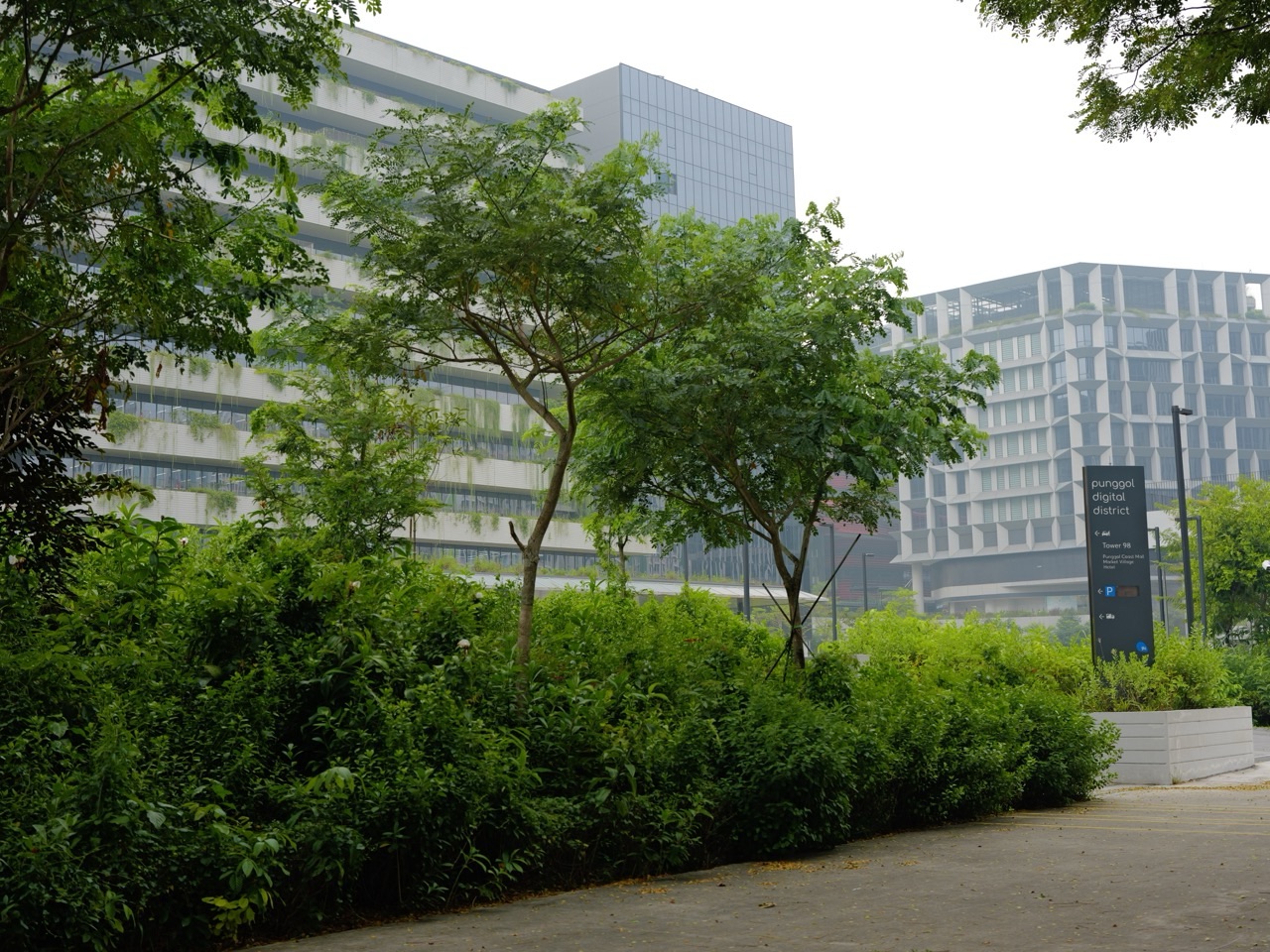
Punggol Digital District brings SIT, businesses and public amenities into the northern town. NParks and JTC opened the first 400m of Punggol Heritage Trail in August 2025, retaining features of Old Punggol Road, including undulating terrain and coastal vegetation. The full future 1.3km route remains a phased development. Public art such as Our Punggol Story brings past and present into the same civic space.
Choose a short lawful public trail section and one architectural or mural detail. Consider what it means to retain an old road’s feel within a new district. Stay within the open area; site hoardings are not optional. For the district’s details, use the Punggol Digital District guide.
Three real places make a good self-guided heritage day
One Punggol: begin with evidence, not guesswork
A visitor can use One Punggol Regional Library as the indoor archive-and-literature anchor. It is close to the central Punggol transit network and has food or rest options in the larger civic hub. The ideal first hour uses one or two sections of Punggol Stories carefully rather than rushing through every level. Record two facts, one memory or literary interpretation, and one question to explore outdoors.
Do not assume the reading rooms or interactive installations share identical schedules. If you require a particular feature, check the current official exhibition page and age/access requirements before travelling. The history journey is still useful even if a temporary interactive component is unavailable.
Punggol Waterway Park: look for the old-road memory
NParks lists Old Punggol Road’s former bus-stop design and a preserved 160m stretch of road among the park’s heritage features. Punggol Waterway Park is a 24-hour public park spread across four themed areas; not all of them are beside the same MRT exit or an easy twenty-minute loop. Pick a current mapped public path suited to the group and weather.
Ask how an old transport route became part of a leisure landscape. Compare straight lines, bridges and planting with historical descriptions. Fishing is prohibited in the park, and waterways require safe distance and supervision. A person with a mobility aid should check the entire path, not rely solely on the park’s overall accessibility label.
Punggol Coast: see heritage beside a university and modern town
Punggol Coast MRT is a North East Line station distinct from Punggol MRT. JTC’s current community page identifies the first publicly open Heritage Trail stretch from Punggol North Avenue to Campus Boulevard and commercial public areas nearby. The Our Punggol Story mural at the Community Promenade is a separate, documented art stop.
It is best to begin from a current signed entry route and end at a confirmed open food or transport point. The mural is an interpretation of history by named contemporary artists; the heritage trail preserves elements of physical landscape. Those are complementary forms of remembering, not equivalent historical sources. Do not assume every campus or business interior is public.
A historically thoughtful Punggol day: 20 small things to notice
1. One old place name
Look for: Find Wak Sumang, Punggol Road or another older name in a documented source. Evidence check: Do not assume the named historic structure survives on the current street. This is an optional historical observation, not a task visitors have to complete before enjoying the day.
2. A fishing photograph
Look for: Examine a historic image for boats, people and landscape. Evidence check: Notice what the photo proves and what it cannot show. This is an optional historical observation, not a task visitors have to complete before enjoying the day.
3. A memory versus a record
Look for: Compare a former resident’s recollection with a documented date. Evidence check: Neither should be misquoted as the other. This is an optional historical observation, not a task visitors have to complete before enjoying the day.
4. A kampong story
Look for: Read a short account of village life and ask whose voice is heard. Evidence check: Avoid treating an entire diverse community as one stereotype. This is an optional historical observation, not a task visitors have to complete before enjoying the day.
5. A market or farm photograph
Look for: Observe a documented historical food-production practice. Evidence check: Do not describe a present-day supermarket as a surviving farm. This is an optional historical observation, not a task visitors have to complete before enjoying the day.
6. A historic coastline
Look for: Compare an old map with a newer public map of Punggol. Evidence check: Changes in shoreline can reflect reclamation and engineering. This is an optional historical observation, not a task visitors have to complete before enjoying the day.
7. A road name
Look for: Ask why the place kept a name when its land use changed. Evidence check: Use documented etymology rather than inventing an explanation. This is an optional historical observation, not a task visitors have to complete before enjoying the day.
8. An old-road segment
Look for: Visit a public area identified by NParks as preserving old Punggol Road. Evidence check: Remain on a legal open path and read local signage. This is an optional historical observation, not a task visitors have to complete before enjoying the day.
9. A recreated bus stop
Look for: Discuss why planners might recreate a historic design. Evidence check: Distinguish reconstruction from original untouched material. This is an optional historical observation, not a task visitors have to complete before enjoying the day.
10. A bridge
Look for: Observe why the Waterway town needed new crossings. Evidence check: Do not treat bridge dates as known unless sourced. This is an optional historical observation, not a task visitors have to complete before enjoying the day.
11. A new-town housing view
Look for: Compare a present HDB streetscape with older village descriptions. Evidence check: Avoid photographing residents invasively. This is an optional historical observation, not a task visitors have to complete before enjoying the day.
12. A transport map
Look for: Notice when and why stations became important. Evidence check: Dates of openings need operator evidence. This is an optional historical observation, not a task visitors have to complete before enjoying the day.
13. A farming term
Look for: Look up how pig farming worked and why practices changed. Evidence check: Avoid assuming every economic change had one cause. This is an optional historical observation, not a task visitors have to complete before enjoying the day.
14. A migrant or maritime story
Look for: Notice the different people who shaped coastal Punggol. Evidence check: Do not generalise one memory to all communities. This is an optional historical observation, not a task visitors have to complete before enjoying the day.
15. One poetic image
Look for: Compare a literary response to a factual exhibition description. Evidence check: The poem is art, not a substitute for archival evidence. This is an optional historical observation, not a task visitors have to complete before enjoying the day.
16. A historic building absence
Look for: Recognise that some former sites are now roads or homes. Evidence check: A site not surviving can still be historically significant. This is an optional historical observation, not a task visitors have to complete before enjoying the day.
17. Heritage Trail terrain
Look for: Observe Old Punggol Road’s undulating ground where safely accessible. Evidence check: Do not assume all of the planned route is open. This is an optional historical observation, not a task visitors have to complete before enjoying the day.
18. The mural’s story
Look for: Pick one passage of Our Punggol Story showing change. Evidence check: Credit the artists and treat symbols as interpretation. This is an optional historical observation, not a task visitors have to complete before enjoying the day.
19. A current public amenity
Look for: Ask why new districts include libraries, food and open space. Evidence check: Do not claim a facility is bookable without checking. This is an optional historical observation, not a task visitors have to complete before enjoying the day.
20. One unresolved question
Look for: Write a question to research from NHB or NLB after returning home. Evidence check: Honest uncertainty is better than a confident invention. This is an optional historical observation, not a task visitors have to complete before enjoying the day.
Three ready-made Punggol heritage itineraries
The 60-minute museum-style visit
Meet at Punggol Regional Library, find the currently open Singaporium exhibition and choose two of its themes. Spend a few minutes with a map or an oral recollection, then compare what the exhibit says about early communities and modern town development. Finish with a meal or simple library browse if time permits.
This is the easiest weather-resistant plan. You do not need to travel to the northern heritage trail at all. If the group has children, one theme and one good question may be a complete visit. Check library opening and exhibition areas in advance.
The two-hour central Punggol history-and-Waterway outing
Begin with the library’s Punggol Stories exhibition, then select a manageable public route toward a Waterway Park heritage feature using current map and signs. Look for the way an old road or recreation memory sits within a planned waterfront town. Return to a familiar central transport point rather than attempting the entire park.
The two-hour plan includes travel, rest and finding the actual heritage point; do not promise a fixed walking time without a map. Rain, heat and haze may require ending at the library instead.
The half-day transformation journey
Use One Punggol as the history anchor, have food, then travel by North East Line to Punggol Coast for currently accessible public Digital District spaces. Look at the first open Heritage Trail section and/or the Our Punggol Story mural, depending on actual access and group energy. Finish at Punggol Coast rather than requiring everyone to walk back to central Punggol.
This route deliberately uses transport between clusters. It does not claim the unfinished longer Heritage Trail can link every destination on foot. Check maintenance or work notices and give visitors with mobility needs an appropriate alternative.
Why careful history writing makes Punggol more interesting
History in Punggol is sometimes simplified into ‘once a village, now a smart town’. That sentence is not wholly wrong, but it skips the people, industries and decisions that shaped the change. The Orang Seletar maritime presence, Kampung Wak Sumang, farming economies, waterfront restaurants, land reclamation, HDB planning and present-day education all matter. A curious reader is better served by a linked series of documented questions than an exaggerated single story of progress.
The same principle applies to negative experiences. Land-use change can bring transport, amenities and housing while also ending particular livelihoods or social spaces. Remembering loss does not require hostility toward modern development, and appreciating new public facilities does not require erasing rural history. The National Library’s combination of records and memories provides a practical method: separate the date, the recollection, the physical trace and the interpretation.
For students, this is also a powerful everyday lesson in source evaluation. An old photograph gives visual evidence of one moment. A government planning statement explains a goal or decision. Oral history explains a person’s perspective. A mural expresses a contemporary artistic interpretation. You learn more by identifying their different roles than by treating them as identical documents.
Frequently asked questions about the history of Punggol
What is the best first place for Punggol history?
Punggol Stories at Singaporium, Level 4 of Punggol Regional Library. It covers early settlements, seaside recreation, farming and the modern Waterway. Check NLB’s current opening details.
Is Punggol Stories free?
NLB lists free admission for the exhibition. Individual room and interactive-feature hours may differ, so check the relevant official page.
Where is the exhibition?
At Punggol Regional Library inside One Punggol, with heritage-related features on Levels 1, 3 and 4. The Singaporium exhibition itself is on Level 4.
What are the four main parts of Singaporium’s Punggol Stories?
Punggol Pioneers, Seaside Solace, Farm to Fable and Winding Waterways.
Was Punggol formerly a fishing village?
Yes, documented Punggol history includes maritime communities and fishing villages, notably Kampung Wak Sumang near Punggol Point. It also later supported various farms and leisure activities.
Who was Wak Sumang?
An early community figure associated with the founding of Kampung Wak Sumang. NLB’s BiblioAsia account provides more detailed, sourced historical context.
Were there pig farms in Punggol?
Yes. Farming was a major part of Punggol’s history. NLB records the final group of pig farms ceasing operation in 1989.
What happened to the old farms?
Land-use changes, environmental policy and redevelopment transformed the area. Individual farms did not all follow an identical story; use documented history rather than assuming one simple cause.
When was Punggol 21 announced?
HDB identifies the 1996 blueprint as an important announcement for the modern waterfront-town vision, with revised initiatives announced in 2007.
Is there an old bus stop to see?
NParks describes a recreated old Punggol Road bus stop and retained road stretch in Punggol Waterway Park. Check the park map and current access before visiting.
Is Punggol Heritage Trail fully open in October 2026?
NParks and JTC identify the first 400m stretch as open. Later phases have different projected completion timing; do not assume the full 1.3km route is already accessible.
Can I visit the old pig farms today?
The historic farms are not functioning visitor attractions merely because archives mention them. Use documented photographs, maps and exhibitions rather than entering private or redeveloped sites.
Can I walk to Punggol Point Park?
The park entered upgrading closure in August 2026. Follow current NParks notices and distinguish nearby open businesses and pathways from the closed park itself.
What is the Our Punggol Story mural?
A 132m hand-painted public mural in Punggol Digital District that interprets the town’s changes. It is contemporary artwork, not a literal archival record.
Is the mural by one anonymous artist?
No. Named contributors include artists involved with Shaping Hearts and creative collaborators. Consult the dedicated mural guide and official SIT/JTC credits.
Can I visit the whole Digital District?
Public amenities and certain streets are open, but not all university or business interiors are unrestricted public attractions. Follow current maps, signs and access rules.
How do children learn history without a worksheet?
Ask them to notice one difference between a historical image and a present-day view, and explain what evidence supports it. Then let the visit continue as leisure.
What if the weather is bad?
Choose the library-based exhibition option and skip exposed outdoor stops. Weather and haze can change whether a Waterway or Heritage Trail segment is suitable.
What is the difference between Punggol Park and Punggol Waterway Park?
Punggol Park is in Hougang; Punggol Waterway Park is in Punggol. Similar names make accurate destination naming important.
Where can I find a longer chronological Punggol history?
Use the complete Punggol history timeline and official NLB/NHB resources. This article is designed as a visitor activity rather than a full scholarly history.
Is this trip suitable for elderly relatives?
An exhibition-only visit may be easier than a long outdoor route. Check actual lifts, facilities and walking requirements rather than assuming all visitors need the same arrangement.
Can students use this for Social Studies or Geography?
It can supply authentic examples of land use, memory, urban planning and evidence. School syllabuses and assignments remain separate; do not invent exam questions or claim automatic curriculum endorsement.
Related eduKate Punggol history and lifestyle guides
- Punggol Stories exhibition guide — rooms, themes and practical visiting.
- Punggol history timeline — documented chronological reference.
- Old maps, Poongul and the changing coastline — cartographic history.
- Punggol Farmways and plantations — rural economic history.
- Punggol Heritage Trail with Kids — current public heritage visit.
- Punggol Waterway Park Guide — park access and landmarks.
- Our Punggol Story mural guide — artists and location.
- Public Art and Creative Walks in Punggol — creative day rather than historical research.
- Punggol Point Park closure guide — avoid an outdated route.
- Punggol Lifestyle Planner — choose by time, weather, budget and energy.
- eduKateSG Punggol Digital District subjects and careers — education connection.
Primary sources and update date
Historical and current official sources: NLB Punggol Stories exhibition, NLB Roots History of Punggol, NLB BiblioAsia Kampong Wak Sumang, HDB history of Punggol, NParks Punggol Waterway Park, NParks Punggol Heritage Trail, and JTC Digital District community information. Updated 17 October 2026. Site access and exhibition components may change; consult the official operator before a time-sensitive visit.


