
How Punggol Haze Helps Primary 3–6 Social Studies: Answer First
How do Primary school pupils understand Singapore haze in Social Studies? They learn how places, people and the environment are connected: a change in air quality may affect a Punggol family, while smoke transport and fire prevention involve weather, land use and cooperation across Southeast Asia. Students should practise reading maps and official sources, comparing perspectives and explaining sensible choices—not memorising a made-up PSI number.
The MOE 2020 Primary Social Studies teaching and learning syllabus, updated July 2024 gives each primary year a different emphasis. Primary 3 studies *Singapore’s Environment and Challenges*; Primary 5 includes *Southeast Asia’s Diversity and Interconnectedness*. Primary 4 focuses on Singapore’s past, and Primary 6 studies features and legacies of civilisations; haze can serve as an extension or comparison but should not replace those actual emphases.
This guide provides 18 original source-based questions with full teaching explanations, four levels of learning routes, map-reading steps and a safe, family-friendly inquiry plan. For actual outdoor conditions check NEA’s live Singapore haze guidance and the North reporting region that includes Punggol. All numbers and invented messages in the exercises are labelled fictional.
The Primary Social Studies Road Map: Match the Year Level
Primary 3: Begin with the natural and built environment of Singapore, how it supports daily life and how people respond to environmental challenges. Ask which people and places are affected when conditions change, without claiming every school or park automatically closes.
Primary 4: Focus on Singapore’s past. Use historical haze events only as a careful comparison of what happened at a dated time and what sources can tell us, rather than turning the entire history syllabus into environmental science.
Primary 5: Explore Southeast Asia, its diversity and interconnections. Maps of Singapore, Sumatra and Borneo can help students understand that air crosses borders while decisions about land, fire and prevention involve communities and institutions.
Primary 6: Make an extension into how communities organise systems, manage common resources and learn from human legacies. The year’s actual focus remains civilisations, not an invented mandatory “haze diplomacy” chapter.
The purpose of differentiation is relevance. One theme can prompt four different questions without misrepresenting the curriculum or pushing younger pupils into advanced atmospheric modelling.
Punggol: A Familiar Place with Connections Beyond It
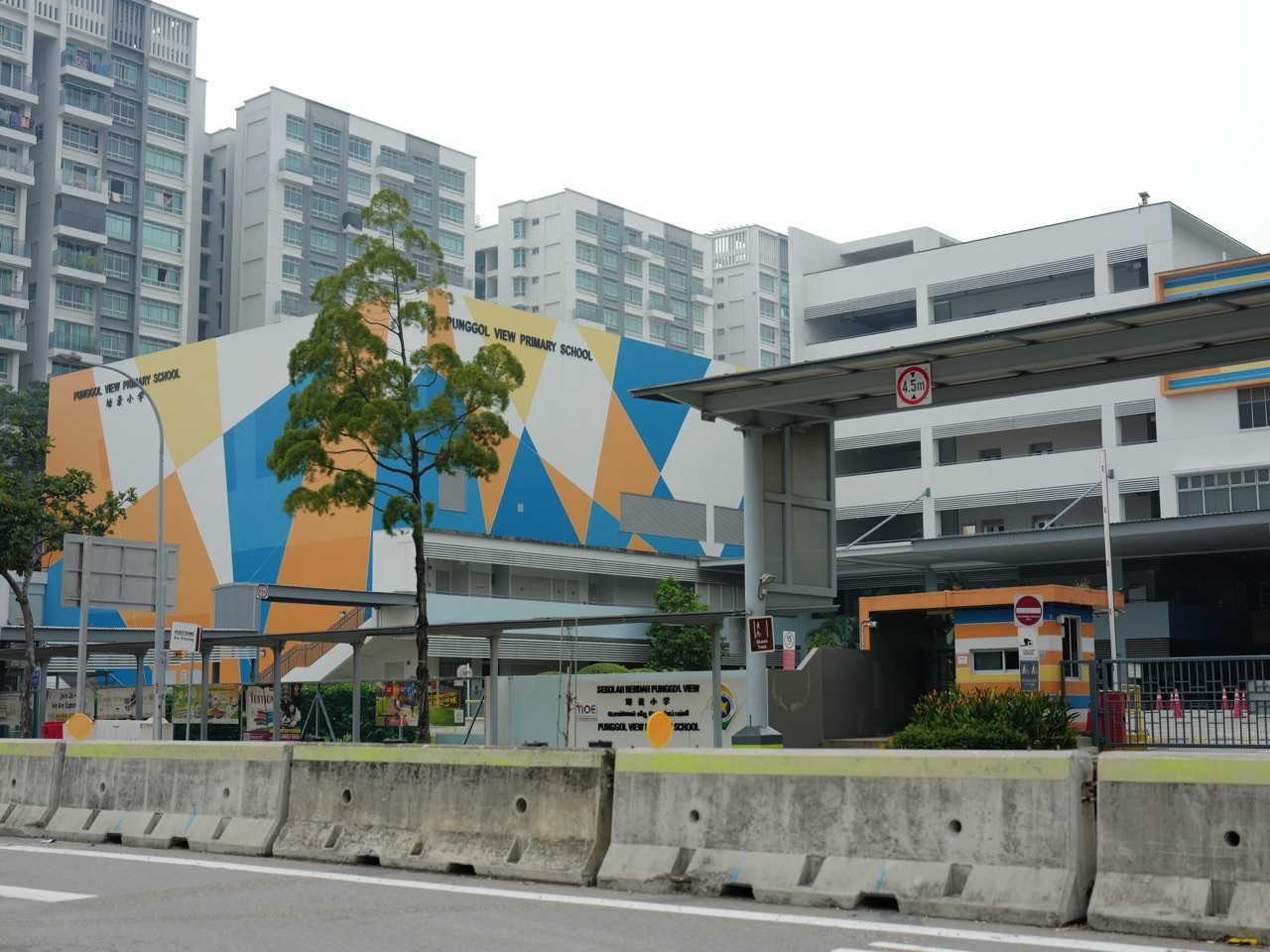
Punggol has homes, schools, transport, Punggol Waterway, parks and coastal spaces. A child may recognise how a planned Waterway ride, outdoor CCA or family visit involves people interacting with their neighbourhood environment.
A change in regional outdoor air quality may affect some of these routines. But a local observation—such as distant HDB blocks appearing pale—cannot identify a particular fire, pollution concentration or legal source. The correct starting point is a measured, dated source, rather than guessing from a photograph.
Punggol is part of Singapore and the region. Regional wind patterns and overseas burning can be relevant to Singapore haze, showing that a place can experience consequences of events far outside its town boundaries.
For the local physical explanation, the site already has Why Is Punggol Hazy?. This Social Studies page takes a different angle: people, decisions, community roles and cross-border interdependence.
Reading a Southeast Asia Map Without Reversing Wind Directions
Start by locating Singapore at the southern tip of the Malay Peninsula, then identify neighbouring Malaysia and nearby parts of Indonesia. An actual historical fire map may show hotspots in Sumatra or Kalimantan, but the location of a hotspot alone does not prove smoke from it reached Punggol.
Next find the map date, north arrow, scale, legend and wind information. In meteorological convention, a southeasterly wind comes from the southeast and blows towards the northwest. Students often reverse arrows if they think the name describes the destination.
A real smoke journey depends on atmospheric winds over a period and different heights, emissions and rain. A classroom map should not draw a definitive smoke route simply by connecting the nearest hotspot to Singapore with a ruler.
Map skills help the student ask good questions: *Where did the source appear? When was the image taken? Does an official meteorological explanation support the route?*
What Is Transboundary Haze?
Transboundary means crossing a boundary between jurisdictions or countries. Smoke from vegetation or peatland fires can be transported on winds and affect air quality beyond the source territory.
A child can understand this by contrasting an ordinary local smell, such as smoke from an accidental nearby fire, with widespread regional haze. Both can concern people, but their source attribution and response systems differ.
ASEAN’s Agreement on Transboundary Haze Pollution is an example of regional cooperation. It encourages monitoring and collaborative action, but its existence does not mean all fire and haze problems have already been eliminated.
This is a useful Primary 5 lesson about interconnection: air can cross borders, while prevention requires long-term local and regional decisions. It should not become a statement that any named person or community has been found legally responsible without evidence.
Five Stakeholders, Five Different Questions
A child may ask whether a school outdoor activity will continue. A parent may ask how to interpret the official health advice. An older neighbour may ask for help finding an updated community notice. An outdoor worker may need employer arrangements for prolonged exposure. A land manager in a regional source area may be concerned about land use and preventing fires.
These are different positions and constraints. A simple “everyone should stay home” rule may ignore essential workers, healthcare appointments or the fact that exposure depends on the kind of activity.
Social Studies asks learners to appreciate varied perspectives without pretending all claims have equal evidence. A stakeholder can have a legitimate need and still be mistaken about what a screenshot proves.
A strong answer identifies the person’s concern, the constraint, the responsible source of information and a proportionate action. That structure works in multiple neighbourhood and civic issues.
Original Social Studies Inquiry 1 · P3 Observation and Inference
Question. A photograph shows distant flats looking pale over Punggol Waterway. A pupil says “the official PSI must be 300”. Is the second statement supported?
Worked model response. No. The photograph shows appearance, but a numerical air-quality index must come from appropriate measurements. Lighting, humidity and camera processing can also affect visibility.
Why the answer is responsible. The question is about evidence, not whether the pupil’s worry is sincere. A Social Studies explanation names what was actually seen and what remains unknown.
Extension for the appropriate Primary level. Ask what additional information would improve the answer, whose perspective may be missing, and which organisation or source could provide that information. The pupil should be able to explain a claim in straightforward language without memorising advanced weather models.
Evidence note. This is an original classroom scenario. It does not report a particular Punggol school’s closure, a real-time North-region reading or a legal finding against a named party.
Original Social Studies Inquiry 2 · P3 Natural and Built Environment
Question. Identify two natural features and two built features a child might describe in a fictional Punggol neighbourhood account.
Worked model response. Natural examples could include trees and water; built examples include housing blocks and bridges.
Why the answer is responsible. Explain that a waterway may include engineered features, so classifying real landscapes can involve both natural processes and human design.
Extension for the appropriate Primary level. Ask what additional information would improve the answer, whose perspective may be missing, and which organisation or source could provide that information. The pupil should be able to explain a claim in straightforward language without memorising advanced weather models.
Evidence note. This is an original classroom scenario. It does not report a particular Punggol school’s closure, a real-time North-region reading or a legal finding against a named party.
Original Social Studies Inquiry 3 · P3 Family Decision
Question. A child wants to cycle for two hours while an adult is checking an official health advisory. What should the child do?
Worked model response. Discuss the plan with the responsible adult, follow the current official guidance and consider a suitable indoor alternative if the intended exertion is inappropriate.
Why the answer is responsible. The activity’s duration and participants’ health matter. A child should not independently decide from an old screenshot.
Extension for the appropriate Primary level. Ask what additional information would improve the answer, whose perspective may be missing, and which organisation or source could provide that information. The pupil should be able to explain a claim in straightforward language without memorising advanced weather models.
Evidence note. This is an original classroom scenario. It does not report a particular Punggol school’s closure, a real-time North-region reading or a legal finding against a named party.
Original Social Studies Inquiry 4 · P3 Communities and Help
Question. An older neighbour needs a current community-centre notice. How can a pupil help responsibly?
Worked model response. With suitable adult involvement, help locate the official source or contact the venue. Avoid forwarding an undated photograph as a confirmed announcement.
Why the answer is responsible. Being helpful includes respecting privacy and admitting when opening hours have not been verified.
Extension for the appropriate Primary level. Ask what additional information would improve the answer, whose perspective may be missing, and which organisation or source could provide that information. The pupil should be able to explain a claim in straightforward language without memorising advanced weather models.
Evidence note. This is an original classroom scenario. It does not report a particular Punggol school’s closure, a real-time North-region reading or a legal finding against a named party.
Original Social Studies Inquiry 5 · P4 Timeline
Question. Put these historical years in chronological order: 2015, 1997, 2013, 2019.
Worked model response. 1997 → 2013 → 2015 → 2019.
Why the answer is responsible. Ordering years is historical literacy. It does not establish that every episode had identical causes or measurements.
Extension for the appropriate Primary level. Ask what additional information would improve the answer, whose perspective may be missing, and which organisation or source could provide that information. The pupil should be able to explain a claim in straightforward language without memorising advanced weather models.
Evidence note. This is an original classroom scenario. It does not report a particular Punggol school’s closure, a real-time North-region reading or a legal finding against a named party.
Original Social Studies Inquiry 6 · P4 Historical versus Current Source
Question. A news photograph is labelled “June 2013”. Can it prove current October 2026 air quality?
Worked model response. No. It is evidence about a historical event at its date, not a live measurement. Use current NEA data for today’s conditions.
Why the answer is responsible. Historical evidence can be valuable without becoming a forecast or a present-day public-health notice.
Extension for the appropriate Primary level. Ask what additional information would improve the answer, whose perspective may be missing, and which organisation or source could provide that information. The pupil should be able to explain a claim in straightforward language without memorising advanced weather models.
Evidence note. This is an original classroom scenario. It does not report a particular Punggol school’s closure, a real-time North-region reading or a legal finding against a named party.
Original Social Studies Inquiry 7 · P4 Change and Continuity
Question. What is one possible change in household communication between a historical haze episode and a modern one?
Worked model response. Families may now be able to check official digital services and time-stamped readings quickly, rather than relying mainly on older broadcast or newspaper updates.
Why the answer is responsible. Do not assert that no digital information existed in a given historical year without evidence. The claim is about a possible evolution in access.
Extension for the appropriate Primary level. Ask what additional information would improve the answer, whose perspective may be missing, and which organisation or source could provide that information. The pupil should be able to explain a claim in straightforward language without memorising advanced weather models.
Evidence note. This is an original classroom scenario. It does not report a particular Punggol school’s closure, a real-time North-region reading or a legal finding against a named party.
Original Social Studies Inquiry 8 · P4 Source Reliability
Question. A poster copied by hand says “all schools closed”, while the student’s school has not announced this. Which evidence should be checked?
Worked model response. The official school or relevant government notice. A copied poster without date, authority or verification is insufficient to establish school operations.
Why the answer is responsible. A genuine-looking message may still be outdated. The responsible institution controls its own announcements.
Extension for the appropriate Primary level. Ask what additional information would improve the answer, whose perspective may be missing, and which organisation or source could provide that information. The pupil should be able to explain a claim in straightforward language without memorising advanced weather models.
Evidence note. This is an original classroom scenario. It does not report a particular Punggol school’s closure, a real-time North-region reading or a legal finding against a named party.
Original Social Studies Inquiry 9 · P5 Locate Singapore
Question. Which two nearby Southeast Asian countries would be useful to identify on a map when studying regional haze transport?
Worked model response. Malaysia and Indonesia, while recognising that many other regional places may matter to the broader discussion.
Why the answer is responsible. Identify geographical location before drawing hypothetical transport routes.
Extension for the appropriate Primary level. Ask what additional information would improve the answer, whose perspective may be missing, and which organisation or source could provide that information. The pupil should be able to explain a claim in straightforward language without memorising advanced weather models.
Evidence note. This is an original classroom scenario. It does not report a particular Punggol school’s closure, a real-time North-region reading or a legal finding against a named party.
Original Social Studies Inquiry 10 · P5 Map Legend
Question. A fictional map marks red dots as satellite hotspots. Do ten red dots prove ten separate illegal peat fires?
Worked model response. No. A hotspot is a thermal detection with sensor limitations; it does not by itself establish fuel type, complete event counts or legal responsibility.
Why the answer is responsible. Read the legend and method carefully. An image is evidence with limits, not a verdict.
Extension for the appropriate Primary level. Ask what additional information would improve the answer, whose perspective may be missing, and which organisation or source could provide that information. The pupil should be able to explain a claim in straightforward language without memorising advanced weather models.
Evidence note. This is an original classroom scenario. It does not report a particular Punggol school’s closure, a real-time North-region reading or a legal finding against a named party.
Original Social Studies Inquiry 11 · P5 Wind Convention
Question. A wind arrow is labelled “southeasterly”. Which direction does the wind originate from?
Worked model response. It comes from the southeast and generally moves towards the northwest.
Why the answer is responsible. The actual transport of a smoke plume still depends on its location and winds over time and altitude.
Extension for the appropriate Primary level. Ask what additional information would improve the answer, whose perspective may be missing, and which organisation or source could provide that information. The pupil should be able to explain a claim in straightforward language without memorising advanced weather models.
Evidence note. This is an original classroom scenario. It does not report a particular Punggol school’s closure, a real-time North-region reading or a legal finding against a named party.
Original Social Studies Inquiry 12 · P5 Regional Cooperation
Question. Why might ASEAN countries cooperate on transboundary haze even when a fire starts within only one country?
Worked model response. Because smoke can affect people and activities across borders, while fire prevention, monitoring and response may benefit from coordinated information and action.
Why the answer is responsible. This is a reason for cooperation, not proof every country has equal responsibility for every episode.
Extension for the appropriate Primary level. Ask what additional information would improve the answer, whose perspective may be missing, and which organisation or source could provide that information. The pupil should be able to explain a claim in straightforward language without memorising advanced weather models.
Evidence note. This is an original classroom scenario. It does not report a particular Punggol school’s closure, a real-time North-region reading or a legal finding against a named party.
Original Social Studies Inquiry 13 · P5 Two Perspectives
Question. A Punggol family wants cleaner air; a land-use community wants stable livelihoods. Can a good response consider both?
Worked model response. Yes. Long-term prevention can consider environmental protection, safe land management and feasible livelihoods. The two concerns should be investigated rather than dismissed.
Why the answer is responsible. Understanding perspectives does not require treating unsupported factual claims as equally true.
Extension for the appropriate Primary level. Ask what additional information would improve the answer, whose perspective may be missing, and which organisation or source could provide that information. The pupil should be able to explain a claim in straightforward language without memorising advanced weather models.
Evidence note. This is an original classroom scenario. It does not report a particular Punggol school’s closure, a real-time North-region reading or a legal finding against a named party.
Original Social Studies Inquiry 14 · P5 Climate and Ignition
Question. Does El Niño automatically ignite peatlands?
Worked model response. No. Climate patterns can influence the chance of hot or dry conditions, while ignition and land management are additional causes. A climate label is not a fire detection.
Why the answer is responsible. Use a causal chain: climate influence → fire susceptibility → actual ignition → emissions → transport.
Extension for the appropriate Primary level. Ask what additional information would improve the answer, whose perspective may be missing, and which organisation or source could provide that information. The pupil should be able to explain a claim in straightforward language without memorising advanced weather models.
Evidence note. This is an original classroom scenario. It does not report a particular Punggol school’s closure, a real-time North-region reading or a legal finding against a named party.
Original Social Studies Inquiry 15 · P6 Societal Organisation Extension
Question. Why might a community establish rules or institutions to manage a shared environmental problem?
Worked model response. Coordination helps people share reliable information, allocate responsibilities and take collective action where one household alone cannot solve the wider issue.
Why the answer is responsible. This is a civic extension, not a claim that modern ASEAN haze treaties are themselves a P6 civilisations topic.
Extension for the appropriate Primary level. Ask what additional information would improve the answer, whose perspective may be missing, and which organisation or source could provide that information. The pupil should be able to explain a claim in straightforward language without memorising advanced weather models.
Evidence note. This is an original classroom scenario. It does not report a particular Punggol school’s closure, a real-time North-region reading or a legal finding against a named party.
Original Social Studies Inquiry 16 · P6 Resource Stewardship Extension
Question. What is one reason managing water in regional peatlands might reduce future fire risks?
Worked model response. Naturally wet peat is generally less susceptible to sustained burning than badly drained, dry peat. Responsible water and land management can contribute to prevention.
Why the answer is responsible. This is an extension linking environmental stewardship to collective decisions, not a mandatory ancient-civilisations question.
Extension for the appropriate Primary level. Ask what additional information would improve the answer, whose perspective may be missing, and which organisation or source could provide that information. The pupil should be able to explain a claim in straightforward language without memorising advanced weather models.
Evidence note. This is an original classroom scenario. It does not report a particular Punggol school’s closure, a real-time North-region reading or a legal finding against a named party.
Original Social Studies Inquiry 17 · Multi-source Check
Question. Source A is an undated photo. Source B is a dated official NEA reading. Source C is a school notice about PE. Which source answers each of these: current pollution; whether PE changes; what the sky looked like in a photo?
Worked model response. Use B for the measured regional value, C for the school’s actual activity notice and A only for the photograph’s appearance, with its date limitation.
Why the answer is responsible. Source relevance depends on the question. One source cannot perform every function.
Extension for the appropriate Primary level. Ask what additional information would improve the answer, whose perspective may be missing, and which organisation or source could provide that information. The pupil should be able to explain a claim in straightforward language without memorising advanced weather models.
Evidence note. This is an original classroom scenario. It does not report a particular Punggol school’s closure, a real-time North-region reading or a legal finding against a named party.
Original Social Studies Inquiry 18 · Evaluate an Action
Question. A fictional residents’ group proposes “plant more trees, and all regional haze will disappear.” What is missing from the proposal?
Worked model response. It ignores the regional fire sources, atmospheric transport and the lack of evidence that neighbourhood planting alone can remove a broad smoke plume. Greenery has benefits but does not replace fire prevention or suitable air-quality guidance.
Why the answer is responsible. Evaluate both a proposal’s potential benefit and its limitations rather than choosing a simplistic yes/no. Haze requires multiple types of response.
Extension for the appropriate Primary level. Ask what additional information would improve the answer, whose perspective may be missing, and which organisation or source could provide that information. The pupil should be able to explain a claim in straightforward language without memorising advanced weather models.
Evidence note. This is an original classroom scenario. It does not report a particular Punggol school’s closure, a real-time North-region reading or a legal finding against a named party.
Source-Based Inquiry: First Describe, Then Judge
A good Social Studies investigation begins with a clear question. For example: “How do families in a Singapore town respond to changing regional haze conditions?” Next identify sources likely to answer different parts of that question.
Official NEA readings answer the measured regional air-quality part. Dated Meteorological Service information helps explain weather. A school’s current notice answers its own activity arrangements. Interviews might reveal families’ experiences, but a convenience sample of three neighbours does not represent the entire town.
Once evidence has been gathered, a pupil can compare sources, identify disagreements and state what cannot be concluded. This is more thoughtful than assuming that the longest webpage must be the most trustworthy.
The final judgement should link back to the question and acknowledge the limitations of the evidence rather than becoming a general speech about environmental responsibility.
Fieldwork Without Deliberate Haze Exposure
Students do not need to go outdoors during unhealthy air to collect a “genuine” haze sample. Safe fieldwork alternatives include map-reading, studying published official data, analysing archived photographs with dates and discussing community choices indoors.
A pupil could create a map showing a home, a school and an indoor public destination as a fictional route-planning exercise. The task might ask which route has fewer exposed segments, while clearly acknowledging that the map alone does not determine actual PM2.5 exposure.
If an in-person visit is planned on a normal day, normal park rules, weather and the relevant school’s safety procedures apply. Do not enter restricted wetlands or collect samples from drains without authorisation.
Social Studies field inquiry depends on an ethical research question and relevant evidence, not on making children inhale smoke to create a memorable lesson.
The Difference Between a Photo, a Hotspot Map and a Health Advisory
A photograph shows how an environment appeared through the camera at a particular moment, influenced by lighting and processing. A satellite hotspot map displays detections of possible fire activity using a particular sensor and time range. A health advisory tells members of the public how to make decisions under defined air-quality conditions.
These are different genres of information. A hotspot map alone cannot establish legal responsibility. An orange sky does not give a PSI value. A health advisory is not a school-specific notice of cancellation.
Students can make a three-column table: source, what it supports, what it does not establish. That exercise encourages careful conclusions without requiring complex chemistry.
The habit transfers to many Social Studies questions involving historical documents, maps, newspaper articles and public statements.
How Cross-Border Connections Become a Primary 5 Learning Opportunity
The P5 topic on Southeast Asia’s interconnectedness gives students a natural reason to ask why actions in one place can affect another.
Smoke is a visible example, but the region is interconnected through many other systems: trade, travel, shared ecosystems, weather and social relationships. The point is not to reduce Southeast Asia to one environmental problem, but to see how geography influences mutual dependence.
An accurate explanation can say that some regional fires release smoke and winds may carry particles to Singapore. It should not conclude that every Indonesian farmer, village or company caused the latest episode. Source attribution requires evidence.
Students should also recognise positive cooperation: ASEAN institutions, monitoring programmes, land-management initiatives and exchanges of technical knowledge are ways countries can work together. Implementation and success still need evaluation.
Civic Choices, Community Resilience and Fairness
Families do not all have identical choices during haze. A student can move a recreational plan indoors more easily than some outdoor workers can leave their jobs. An older resident may need help finding a public notice; a school organiser must follow institutional guidance for a group.
A balanced response considers practical constraints without dismissing health concerns. It asks whether information is accessible to people who may not use smartphones and whether community arrangements are actually available.
Fairness is not simply giving everyone the same instruction. It may involve recognising differing needs and ensuring credible information and suitable options can reach those who need them.
This can be discussed with everyday language at Primary level: *Who is affected? What is difficult for them? What would help? Who is responsible?*
A 40-Minute Home Inquiry Lesson
Minutes 0–8: Introduce a fictional Punggol family scenario and locate Singapore on a map of Southeast Asia. Ask what the child already knows and separate observations from assumptions.
Minutes 8–18: Provide three short sources: an archived photo with its date, a labelled fictional PM2.5 table and a fictional school notice. Ask what each source can and cannot establish.
Minutes 18–28: Choose four inquiry questions from the relevant Primary level and answer them using direct evidence. Encourage the child to explain, not merely tick a box.
Minutes 28–36: Ask for one reasonable family or community response, with a sentence explaining the responsible source of information.
Minutes 36–40: Let the child identify one question still unresolved and where they would look next.
This is a voluntary teaching sequence, not an MOE-required lesson plan or an actual government incident drill.
Common Primary Social Studies Mistakes to Repair
Mistake: turning a single photograph into a numerical PSI reading. Correct it by separating appearance from measured air quality.
Mistake: identifying a satellite hotspot as a convicted source. Explain that detection, attribution and legal determination are different processes.
Mistake: treating Primary 4 and Primary 6 as though their entire curricula cover haze. Return to the official historical and civilisations emphases, using haze only where the extension is relevant.
Mistake: giving one rule for every family member. Ask about the person’s activity, constraints and current advisory.
Mistake: forward an undated screenshot as breaking news. Practise checking date, origin, unit and appropriate authority.
Mistake: assuming a proposed policy has already achieved its outcome. Distinguish a target from an implemented and evaluated result.
Each correction should improve reasoning, not just add more facts to memorise.
Frequently Asked Questions
Is haze a named compulsory Primary Social Studies examination topic?
This page makes no such claim. It uses the environment and regional interconnectedness as applications of the curriculum.
Which primary level studies Singapore’s environmental challenges?
MOE’s 2020 Social Studies syllabus names Primary 3: Understanding Singapore’s Environment and Challenges.
Which year studies Southeast Asian interconnectedness?
Primary 5, in the cluster including Southeast Asia’s diversity and interconnectedness.
Does Primary 4 have to study the modern haze treaties?
No. P4 focuses on understanding Singapore’s past. A dated haze event can be a historical-source extension, not a replacement syllabus.
Is a photo enough to know today’s Punggol PSI?
No. Use the official NEA North-region measurements and time-stamped guidance.
Do students need to visit smoky locations for fieldwork?
No. Safe map-reading, archived data and source evaluation are appropriate alternatives.
Is an ASEAN treaty the same as proof all haze is solved?
No. A cooperation framework expresses commitments; outcomes require implementation and assessment.
Can the family make its own policy for a school outing?
Families can follow health advice, but actual school arrangements are communicated by the institution. Avoid inventing closure announcements.
Are these eighteen questions from an official exam?
No. They are original Social Studies inquiry practice with fictional scenarios.
What is the most important transferable skill?
Use evidence relevant to the question, recognise different perspectives and make a well-reasoned, proportionate judgement.
Related Punggol Geography, History and Community Reading
For the regional science, use Why Is Punggol Hazy?. For a dated timeline, read Punggol Haze History. For safe source work, visit Punggol Haze Data Literacy.
The Punggol Haze Complete Guide links the broader library. Older pupils can continue to Punggol Haze Geography Case Study for SEC G2/G3.
This page’s reader job is Primary 3–6 Social Studies curriculum-aware inquiry, not the 2027 secondary examination format or live family medical guidance.
Official Sources and Editorial Note
Compiled 18 October 2026. All invented classroom situations are clearly teaching examples. The grade-level themes follow MOE’s published primary Social Studies syllabus, and the official sources below govern any real public-health or regional monitoring claims.
- MOE: 2020 Primary Social Studies Teaching and Learning Syllabus, updated July 2024
- MOE: Primary School Curriculum Information
- NEA: Live Haze Readings and Health Advice
- NEA: Air-Pollution FAQs and Regional Reporting
- ASEAN: Agreement on Transboundary Haze Pollution
- ASMC: Regional Fire and Haze Monitoring
Students learn citizenship and place by understanding how people are connected, considering different needs and interpreting evidence fairly. Haze provides one real-world example of those relationships, not a reason to forget the actual primary syllabus.
Punggol Haze Geography and Humanities: New 2027 Learning Guides
Continue from Primary Social Studies into 2027 SEC G2 Geography K226, G3 Geography K329 or combined Social Studies and Geography K229. These are different syllabuses with original worked questions, not official examination papers. For real air-quality decisions consult NEA’s latest North-region readings.


