
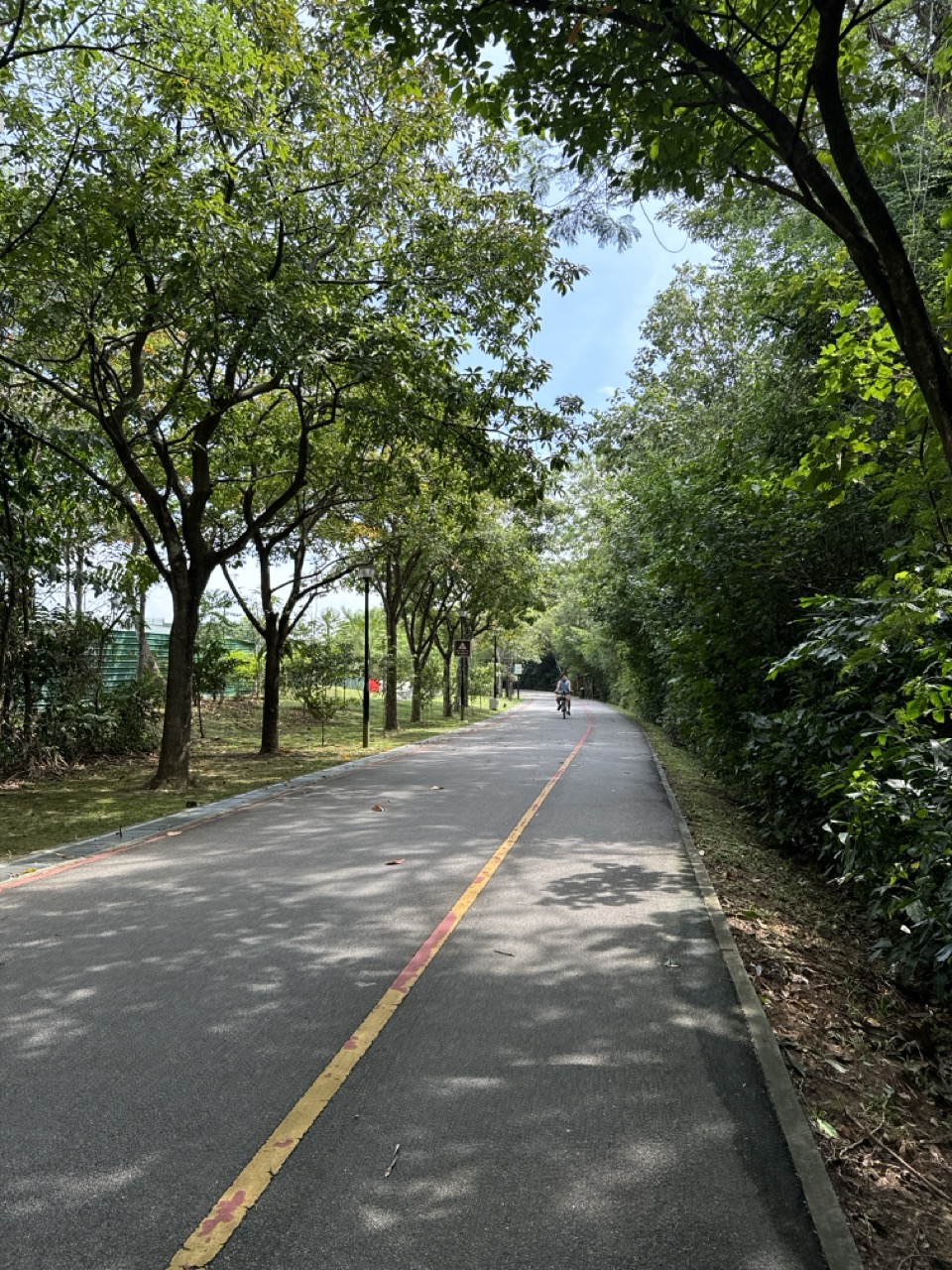
Want to cycle with your family around Punggol? Start with a short, familiar legal cycling path, properly fitted bicycles and helmets, and a plan that respects the slowest rider. Teach children to stop, dismount and walk whenever the path becomes crowded or uncertain. Punggol Waterway can be a wonderful place for an easy family outing, but not every bridge and boardwalk allows cycling, and an 8.4 km connector does not mean children should ride the whole distance.
This family cycling in Punggol guide for 2026 covers first rides, route decisions, helmets, shared-path rules, child seats and passengers, bicycle checks, weather, rest, rentals and ways to keep weekend cycling enjoyable. It is separate from the existing Cycling in Punggol: Routes, Rentals and Rules guide, which helps visitors discover routes and services. Here the focus is the family: how adults and children can learn to ride together without making the outing unsafe or exhausting. For the wider neighbourhood, start with Life in Punggol 2026.
Family cycling in Punggol: the quick answers
| Question | Direct answer | What you must check |
|---|---|---|
| Where should a family begin? | A short legal cycling path near the household, not an unfamiliar long route. | On-site markings, child capability and a safe return. |
| Do helmets matter? | Strongly advisable on paths and compulsory for cyclists on roads. | Correct fit and condition; replace damaged helmets. |
| May I cycle on pedestrian-only paths? | No. Bicycles are prohibited on converted Pedestrian-Only Paths. | Observe pedestrian symbols and cycling-path markings. |
| Can we ride everywhere in Waterway Park? | No. NParks specifically prohibits cycling on selected bridges and the Waterway boardwalk. | Walk the bicycle in signed no-riding sections. |
| What about a child seat? | Use only suitable, securely fitted equipment with verified weight limits and lawful passenger arrangements. | Do not improvise carriers or ignore the bicycle manufacturer’s instructions. |
| Can young children use a power-assisted bicycle? | LTA imposes 16+ age rules for PAB riders and prohibits carrying passengers under 16 on PABs. | Do not confuse a conventional bicycle with a PAB. |
| How far should children ride? | As far as is safe, comfortable and age-appropriate, with frequent breaks. | No universal distance or race target. |
| What about haze, heat or lightning? | Adjust, postpone or cancel outdoor cycling according to official guidance. | Environmental safety outranks the plan. |
1. A family ride is not the same as adult sport cycling
Experienced cyclists may enjoy long park connectors, steady speeds and measuring distance. A child learning to balance, brake or signal needs a very different environment. An enjoyable family outing leaves time to stop, look at the scenery and turn home before fatigue changes behaviour. The slower participant should determine the pace, while adults manage route knowledge, supervision and safety.
Punggol is a convenient place to explore because its Waterway Park connector, neighbourhood cycling paths and nearby green spaces provide different options. But the network serves many people: walkers, runners, commuters, older residents, wheelchair users, children and delivery riders. Families cannot assume every wide-looking strip of pavement is a cycling path. Learning to notice markings is part of becoming a responsible rider.
An appropriate first outing might cover a short local stretch you can see clearly from end to end. Adults should know the nearest safe exit, whether a child’s bike is easy to stop, and what to do if someone becomes tired. The purpose is to build skill and shared enjoyment, not finish a particular number of kilometres before lunch.
2. Know the three basic path types in Singapore
The Land Transport Authority introduced Pedestrian-Only Paths on qualifying footpaths beside dedicated cycling paths, with enforcement from 1 July 2025. These paths are marked for pedestrians and are not for bicycles. Other areas include cycling paths and shared paths that allow the designated types of users. The labels matter more than how the path looks in a photograph. Check LTA’s Rules and Code of Conduct for the current distinctions.
| Path type | Family cycling decision | How to behave |
|---|---|---|
| Pedestrian-Only Path | Do not ride a bicycle there. | Use an appropriate cycling path; dismount when required for a transition. |
| Dedicated cycling path | Cycling is generally permitted according to signs and rules. | Keep left, follow crossings and stay aware of pedestrians. |
| Shared path / park connector | Different permitted users share the route. | Slow down, give way, keep distance and respond to attention zones. |
| No-riding bridge or boardwalk | Cycling is prohibited on the identified section. | Dismount and walk your bicycle through the area. |
| Road | Different traffic and legal requirements apply. | Road helmets are mandatory; beginners should use suitable safer routes and training. |
NParks’ October 2026 Using Our Routes and Trails Safely guidance asks riders to keep left, maintain distance, ride in single file, slow down for pedestrians and comply with no-riding signs. Its park connector material describes attention zones and shared paths. For family rides, these are not merely courtesy tips. A child who can pedal competently may still be learning how to react when someone suddenly crosses their intended line.
The correct response to a busy section may be to stop and walk the bicycle. That is not a defeat or loss of exercise benefit. It protects a child’s confidence and makes the public space more comfortable for everyone. Teach children to follow an adult’s pre-agreed stop instruction, and avoid shouting last-minute directions that cause unpredictable steering.
3. Punggol Waterway has designated no-cycling bridges and boardwalks
The official NParks park connector rules specifically prohibit cycling on selected bridges—Kelong Bridge, Wave Bridge and Adventure Bridge—and the boardwalk at Punggol Waterway Park. The Waterway park connector remains a legitimate cycling destination on permitted sections, but riders must dismount and comply with local markings where cycling is not allowed.
This distinction is especially important when families arrive at an attractive bridge and see people taking photographs. A child may assume any path over water is intended for bicycles. Explain in advance that a cycling outing sometimes involves walking the bike through special areas. You can still enjoy the bridge view without riding on it.
NParks lists the Punggol Waterway park connector as 8.4 km long, with opportunities for jogging and cycling along the waterway. That distance describes the route, not the length every family should cover. For a first outing, a much shorter section with a familiar return is usually more manageable. See Punggol Waterway Park Connector and the NParks restrictions and safety guide.
4. Helmets: what is compulsory and what is sensible
LTA requires helmets when cycling on roads. It also encourages helmets for safety when riding on paths. A family-focused rule can be simpler than the minimum law: choose suitable helmets for all riders and wear them correctly. A helmet should fit, be securely fastened and be replaced after relevant damage or an impact according to the manufacturer’s guidance. An oversized bicycle helmet worn loosely is not a substitute for proper fit.
The LTA safer cycling checklist also addresses lights, visibility and path behaviour. Night cycling requires appropriate lighting and extra care, but a beginner family does not need to plan its first rides in darkness. Daytime with suitable weather, manageable crowds and good sightlines is often an easier learning setting.
Do not promise that a helmet makes any cycling route safe. Traffic decisions, route quality, rider control and supervision still matter. The most important beginner skill is the ability to stop and remain in control before increasing speed or distance.
5. Child seats, trailers and passenger rules: ask before carrying anyone
A family with a toddler may consider a child seat or another bicycle attachment. These products vary in their suitability for particular bicycle designs, passenger size and weight, mounting points and safe handling. Do not assume a generic seat fits every bicycle, or that a household bicycle can safely carry a passenger merely because a seller advertises an attachment. Check the manufacturer’s compatibility, load and installation instructions and the applicable LTA rules before use.
A conventional pedal bicycle and a power-assisted bicycle are not legally interchangeable. LTA states that PAB riders must be at least sixteen, and that PAB riders must not carry a passenger under sixteen on cycling paths and roads. PAB registration and other conditions also apply. This is particularly relevant when families see large delivery-style bicycles and assume the same passenger arrangement is suitable for children. Consult LTA’s current active-mobility requirements before buying or using a device.
For a child who is not ready to ride independently, another age-appropriate family activity may be more suitable. A stroller walk beside the Waterway can provide fresh air and time together without the risks of improvised passenger carriage. The Family Life in Punggol guide and Punggol New Parents guide cover family routes that do not require cycling.
6. A simple pre-ride bicycle check
- Brakes: confirm the rider can stop the bicycle predictably.
- Tyres: inspect condition and appropriate inflation according to the manufacturer.
- Steering: check that handlebars and controls are secure and the bike is suitable for the rider.
- Helmet: use a properly fitted helmet in suitable condition.
- Bell or alert: ensure an appropriate way to gently warn other path users without startling them.
- Lights: comply with applicable visibility rules, particularly after dark.
- Child’s comfort: ensure the bicycle size and controls fit the child.
- Passenger attachments: verify compatibility, installation, limits and legal suitability when relevant.
- Route knowledge: know where cycling is permitted and where walking the bike is required.
- Weather: check heat, haze, rain and lightning information as necessary.
- Return route: know when and how to end the outing.
- Adult supervision: agree who leads, who follows and what signals mean stop.
A bicycle that is poorly fitted or difficult for a child to brake can undermine the entire outing. If the bike is unfamiliar, practise basic handling in an appropriate safe location under competent guidance before heading onto a busy park connector. Do not learn to brake for the first time on a narrow bridge or beside a water edge.
7. A family cycling skills progression without race targets
| Stage | Skill to practise | Suitable setting | What to check |
|---|---|---|---|
| 1: Equipment | Fit, brakes and simple bike handling. | A safe permitted practice area. | The rider can control and stop the bicycle. |
| 2: Predictability | Straight-line movement and gentle turning. | Uncrowded appropriate path. | No sudden swerves toward others. |
| 3: Group communication | Starting, stopping and following an adult’s signals. | Short family practice route. | Everyone understands the stop instruction. |
| 4: Shared-path behaviour | Slowing, giving way and dismounting when needed. | A familiar legal cycling section. | Pedestrians and other users have adequate space. |
| 5: Short outing | Ride out and return before fatigue. | Neighbourhood path with easy exit. | The child remains comfortable and attentive. |
| 6: New route | Try a slightly different suitable section. | Verified path with legal access. | The outing remains enjoyable and safe. |
This table is a framework, not a promise that a child becomes an independent cyclist after six lessons or days. Skills and confidence develop differently. Some children need more practice at balancing and braking; others are physically competent but inexperienced around pedestrians and junctions. Adult guidance should respond to the actual risk instead of simply extending the distance.
For a first family ride, do not plan several destinations across Punggol. Choose one permitted path segment, turn around at a familiar marker and return. If everyone has energy afterwards, you can enjoy food or a library stop without needing to ride farther. The best sign of progress is that the child wants to ride again and knows when to stop safely.
8. What should the adults do when riding together?
For a group with more than one adult, agree on how to supervise the less experienced cyclist. One adult may lead at a manageable pace while another follows, depending on sightlines and ability. Choose safe spacing rather than tightly surrounding a child. Do not force an adult to ride while distracted by phone navigation or photography. If directions are uncertain, stop in an appropriate location and consult the map.
When approaching a crossing, curve or crowded spot, slow early. A beginner may need time to process verbal instructions. Keeping the outing calm is more useful than repeatedly urging a child to pedal faster to avoid holding up other cyclists. On public paths, slower and more vulnerable users deserve consideration. Dismount and walk through a crowded or signed area as required.
If riding with a child seat or other lawful passenger arrangement, the adult bicycle’s handling and stopping characteristics can differ. Obtain suitable professional fitting and safety advice, practise with the approved equipment in an appropriate setting and respect all weight and passenger restrictions. Never improvise a passenger seat using ropes, bags or unsecured accessories.
9. Route planning: short loops before longer park connectors
The Waterway connector can link to other routes, but the wide park connector network should not tempt a family into an outing beyond its youngest rider’s capacity. A route planned on a computer may hide shared crossings, steep approaches, no-riding bridges or temporary maintenance. Review official maps, check current signage and keep the return distance in mind. A straightforward out-and-back route often allows more confident planning than an unfamiliar circuit.
The separate Cycling in Punggol guide gives broader routes and rental context. You can also consult NParks’ Types of Paths and park connector etiquette guidance. These are stronger sources for present path rules than a social-media photograph showing a cyclist on a bridge.
Remember that Punggol Park, despite its name, is located in the Hougang Avenue 8/10 area. Punggol Waterway Park lies within Punggol Town. Distinguish them when setting a meeting point, booking bike rental or entering a destination into a map. A family event can go wrong before it starts if half the participants travel to the wrong park.
10. Heat, haze and storms: what changes a family ride
Singapore’s humidity makes sustained activity more demanding, particularly for children and less experienced riders. MSS uses WBGT for its heat-stress advisory. When heat stress rises, reduce prolonged outdoor activity as advised and plan cooling and rest. A Waterway breeze may feel pleasant but is not a guarantee of safe conditions. Use MSS heat-stress readings and our Punggol Heat Stress Guide for context.
During haze, use official haze advice rather than judging smoke from visibility alone. During thunderstorm and lightning risk, stop the outing and seek appropriate indoor shelter, not a tree or an open-sided park shelter. The MSS Lightning Information Service is relevant. A family cycling plan should have no difficulty accepting cancellation when conditions are unsuitable.
Heat, haze and rain may affect children differently from adults. Make a route choice according to the most vulnerable participant, not the fittest cyclist. A visit to a suitable indoor family space or simply a rest day may be better than trying to force a planned ride into a dangerous weather window.
11. Renting versus owning bicycles: family cost and convenience
Renting can be useful if the household rides only occasionally, but it requires checking available sizes, suitable child equipment, pickup and return terms, opening hours and charges. Ownership brings storage, maintenance and security responsibilities. Do not assume a rental operator has suitable children’s bicycles or passenger equipment until confirmed. An unsuitable rental is not made safe because the price is attractive.
For residents with little storage space, an occasional rental may be appealing. For those who ride frequently, ownership might be practical if there is appropriate storage and the family can maintain the bicycles. Our Low-Cost Fitness in Punggol guide compares the total cost of activities instead of looking only at the entry price. The cycling-specific decision is whether the bicycle fits the person and route reliably.
Do not buy a bicycle purely because a child expresses interest after one outing. A suitable trial or class can help assess confidence. A used bicycle may save money but still requires appropriate condition and fitting checks. Helmets, lights and maintenance should be included in the real cost, not treated as optional luxuries after purchase.
12. A low-pressure family cycling weekend plan
| Part of outing | Decision | Reason |
|---|---|---|
| Before leaving | Check route, equipment, weather and participant needs. | Prevent avoidable problems. |
| First few minutes | Use a safe, known path and conservative pace. | Let riders settle into the activity. |
| Early rest point | Stop at a suitable location without obstructing others. | Check comfort, fatigue and hydration. |
| Optional next stretch | Continue only if every rider is comfortable. | Children should be able to decline an extension. |
| Turnaround | Return before anyone becomes exhausted. | The route back still requires energy. |
| Afterwards | Eat, rest or enjoy another simple activity. | Keep leisure pleasant and repeatable. |
The length of each part is deliberately unspecified because a family with a new cyclist differs from a group of experienced teenage riders. If someone is learning, one short session may be enough. If the weather turns, end early. An enjoyable family ride should not require a stopwatch or a competition over kilometres.
13. Three common Punggol family cycling situations
Two adults with one child who can pedal but struggles to stop
The adults want a scenic Waterway outing, but the child’s braking is inconsistent. They choose a safe practice area first and postpone the busy route. Once the child can reliably stop and respond to directions, they plan a shorter legal path with a clear turnaround. That may take multiple sessions. A beautiful Waterway view is not worth ignoring a basic control skill.
A family with a toddler considering an adult bicycle seat
The parent is considering an attachment advertised online. Instead of purchasing immediately, they check whether the bike is designed for the seat, the child’s size and weight, mounting requirements and current passenger rules. They seek competent fitting guidance and do not improvise. If the arrangement is unsuitable, a stroller outing may be better. Family leisure should not depend on stretching a bicycle beyond its intended use.
An experienced cyclist riding with elderly relatives and children
The adult usually cycles far and fast, but the family group includes different endurance levels. They choose a brief route everyone can enjoy, agree on resting points and avoid crowded bridges where riding is forbidden. The successful outing is measured by safety and shared enjoyment, not the distance that the strongest person could cover alone.
14. Common family cycling mistakes
- Choosing the longest route on the map. Use a short, familiar legal section first.
- Assuming every park bridge permits riding. Observe NParks no-riding restrictions.
- Using a child bicycle that is the wrong size. Check control, fit and brakes.
- Forgetting helmets and visibility. Use appropriate safety equipment and follow legal requirements.
- Assuming an adult can carry a child on any bicycle. Verify attachment, design and passenger rules.
- Riding on Pedestrian-Only Paths. Follow current LTA markings and designations.
- Pushing a child to match adult pace. The least experienced rider sets the limit.
- Ignoring changing heat, haze or lightning conditions. Keep a safe backup.
- Blocking shared paths while taking pictures. Stop somewhere appropriate and leave room for others.
15. Frequently asked questions
Is Punggol Waterway good for family cycling?
Permitted sections of the Waterway park connector can suit appropriate family rides, but the route, shared paths, crowding and individual skills must be checked.
Is the whole Waterway connector 8.4 km?
NParks lists the Punggol Waterway park connector as 8.4 km, but that is not a requirement for a family or beginner.
Can bicycles cross all bridges at Punggol Waterway Park?
No. NParks prohibits cycling on selected bridges including Kelong, Wave and Adventure bridges and the park’s boardwalk.
Are cyclists allowed on Pedestrian-Only Paths?
No. LTA’s converted pedestrian-only paths prohibit bicycles; follow markings.
Are helmets compulsory on all paths?
LTA requires helmets on roads and encourages them on paths. A family can choose helmets consistently as a safety precaution.
Can my child ride a PAB?
LTA requires PAB riders to be at least 16 and prohibits PAB passengers under 16 on cycling paths and roads.
Can I attach a child seat to any bicycle?
No. Check compatibility, legal rules, manufacturer limits, correct fitting and the child’s suitability.
Should we ride at night to avoid heat?
Not automatically. Consider lighting, route visibility, shared-path traffic, humidity and personal safety.
Do children need to finish the full family route?
No. Choose a distance and pace they can manage, and allow an early return.
What about bicycle rentals in Punggol?
Check current operator availability, bike sizes, charges and return conditions before going.
Can we stop and walk our bicycles?
Yes, and do so wherever no-riding signs or safety conditions require it.
What if a family member becomes dizzy, overheated or unwell?
Stop cycling, seek an appropriate safe location and obtain suitable medical attention; do not continue for a distance goal.
Explore Punggol’s lifestyle, exercise and travel library
- Life in Punggol — master neighbourhood guide
- Family Life in Punggol — care and activity
- Exercise in Punggol — beginner plan
- Cycling in Punggol — Routes, Rentals and Rules
- Punggol Route Planning
- Heat Stress and Outdoor Exercise in Punggol
- First 5K Running in Punggol
- Strength Training in Punggol
- Adult Swimming in Punggol
- eduKateSG — Punggol Geography, Access and Urban Mobility
- eduKateSG — Punggol Waterway Park and Student Life
Inline skating is not the same activity or path category as cycling
Families exploring Punggol on wheels should understand that inline skates, skateboards, kick-scooters and bicycles differ in handling and LTA path treatment. The skating guide explains beginner stopping, protective gear, park safety and the pedestrian-status footnote in the official POP rules.
- Inline Skating in Punggol — Waterway Routes and LTA Rules. Plan safe beginner practice and learn why inline skates and skateboards are classified differently for Pedestrian-Only Paths.
A parent who cannot yet cycle has a different first task
Family cycling assumes the adults can control their bicycles. If a parent is a complete learner, start with the separate adult cycling guide: reliable stopping and LTA path rules come before trying a scenic ride with children.
- Learn to Cycle as an Adult in Punggol. Start with controlled stopping and bicycle fit, then learn 2026 LTA path and Waterway rules.
Adult learners and children need different supervision on a family ride
An adult who cannot confidently stop a bicycle should not accompany a learning child as the family’s only supervising cyclist. A scenic Waterway ride has crossings, shared paths and places where people must dismount. Both the adult and child need reliable control and a clear understanding of how to stop or turn. If the adult is a beginner too, arranging separate instruction is often a more responsible first step than hoping that a slow group pace will solve the problem.
The dedicated Adult Learn-to-Cycle in Punggol guide explains what a first adult lesson should verify: a suitable bike, brake function, controlled balance and Singapore’s current path classifications. LTA’s Pedestrian-Only Paths initiative means that someone who learnt to cycle years ago may still need to refresh where riding is allowed. Do not assume every pavement or waterfront bridge permits bicycles.
A family outing can therefore have a sensible Plan B. One adult might take the children on a suitable walk while the other attends a proper adult beginner class. Later, when riding control is reliable, they can choose a short legal cycling segment together. Nothing is lost by postponing the full family cycling goal until everyone can participate safely. A family photograph is not worth putting pedestrians or young riders at risk.
An original family checklist: what to verify before setting a route
Picture a household near Punggol Coast preparing for a weekend ride. The parents first check each bicycle’s fit and brakes, then choose a familiar route with a legal turnaround rather than the longest trail on a cycling app. They review the NParks restriction on riding across selected Waterway bridges, plan where to dismount and check the weather. The parent responsible for navigation keeps their phone safely away while moving and stops somewhere appropriate before consulting the map.
If a child becomes tired near the first bridge, the group returns rather than insist on completing the whole park connector. If haze, heat or lightning makes the route unsuitable, they postpone or enjoy another safe activity. This approach makes cycling a repeatable part of Punggol life rather than a weekend challenge where safety must compete with a predetermined distance.
Before a family cycling outing: first pedals and kick-scooter rules
This family ride guide assumes at least some bicycle control. If a child is still learning, these two focused guides explain a safe first-pedal pathway and the distinct rules for non-motorised kick scooters. Neither a busy park connector nor a long route is a compulsory beginner target.
- Teach Your Child to Cycle in Punggol. Balance bikes, safe braking, helmets and a child-paced first-pedal pathway.
- Kick Scooters for Kids in Punggol. Manual scooter classifications, LTA paths, prohibited bridges and family safety.
Official sources and editorial note
- NParks — Punggol Waterway Park Connector
- NParks — Using Routes and Trails Safely (October 2026)
- NParks — Types of Park Connector Paths
- NParks — Path Etiquette
- LTA — Active Mobility Rules and Code of Conduct
- LTA — Safer Cycling Checklist
- MSS — Heat Stress
- MSS — Lightning Information
- Official Singapore Haze Guidance
Reviewed 17 October 2026. This is an educational family cycling and public-path safety guide, not a live map, a device legal-certification service or individual cycling instruction. Check current LTA and NParks rules, on-site signs, bicycle compatibility and weather conditions. Young riders require suitable adult supervision.


