
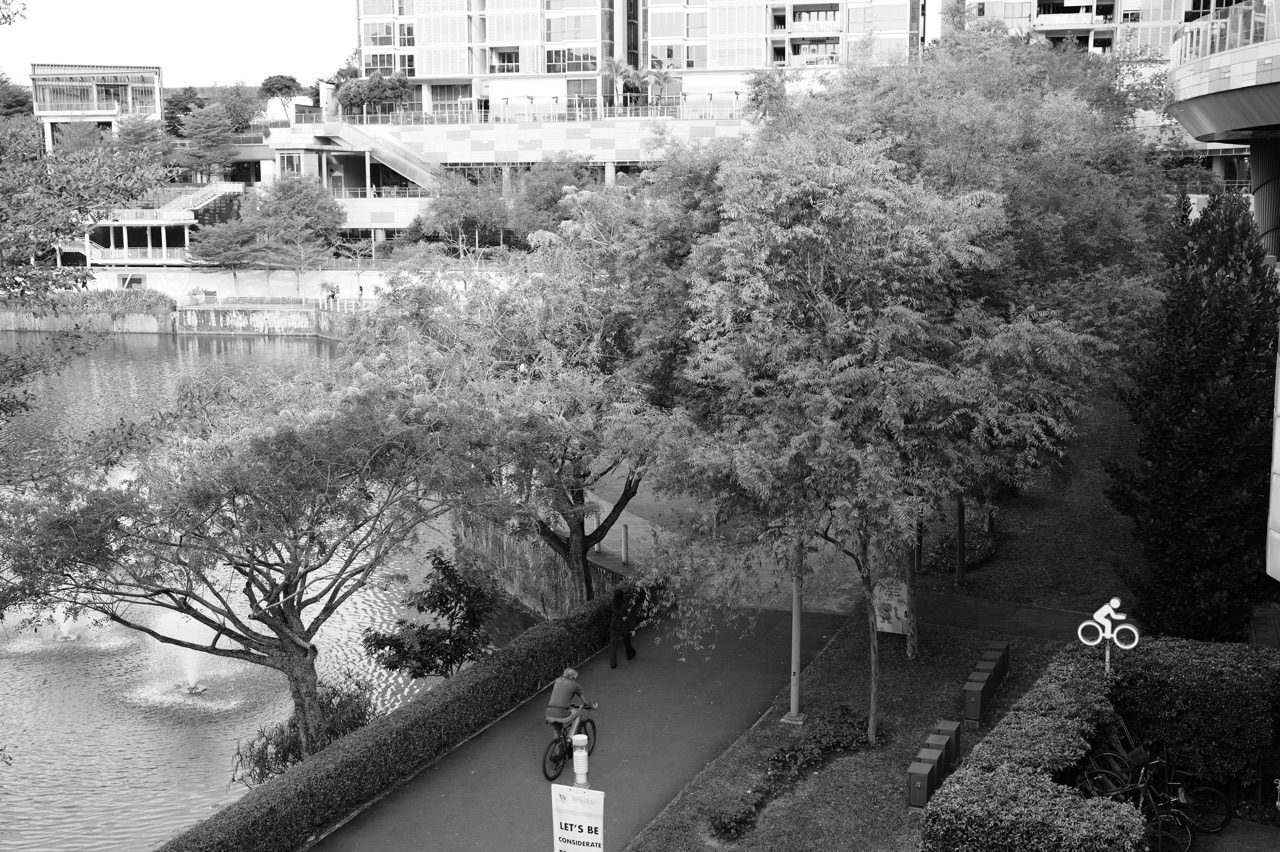
The short answer: Punggol is one of the best places to cycle in Singapore. The town sits on the North Eastern Riverine Loop of the Park Connector Network, so you can ride along the Waterway, across to Coney Island, along the Punggol Promenade and out to Lorong Halus Wetland without ever sharing a road with cars. Keep to 25km/h on park connectors and cycling paths, 10km/h on footpaths, and wear a helmet if you ride on the road.
There is a particular Punggol sound on a Sunday morning: the tick of bicycle wheels on the boardwalk, a bell, a child shouting “wait for me!” Many families here bought their first bicycles within a month of getting their keys. If you are new to cycling in Punggol, or looking for a longer ride than your usual loop, this guide is for you.
Quick Facts
- Main network: the North Eastern Riverine Loop of the Park Connector Network, about 26km in total
- Speed limits: 25km/h on park connectors and cycling paths; 10km/h on footpaths
- Helmets: required by law on roads; strongly recommended everywhere
- Lights: front white and rear red lights are required when riding at night
- Bike rental: bike-sharing apps work across the town
- Heads-up: Punggol Point Park is closed for upgrading until the end of 2027, so check for path diversions on the northern coast
Five Punggol Cycling Routes, From Easy to Epic
1. The Waterway Loop (Easy, Great for Children)
The Punggol Waterway is about 4.2km long, with promenades on both banks and bridges to cross over whenever little legs get tired. Ride one side, cross a bridge, ride back the other side. It is flat, scenic and never far from a toilet or a drink.
- Distance: choose your own; a full loop of both banks is roughly 8 to 9km
- Best for: young children, first rides, evening spins
- Start from: Punggol Waterway Park, near Damai or Sam Kee LRT
2. Coney Island (Easy to Moderate, Wild and Shady)
Coney Island is Punggol’s favourite escape: a rustic island park with a gravel trail through casuarina woodland, mangroves and quiet beaches. The paths are unpaved in places, so hybrid or mountain bikes are more comfortable than road bikes.
- Best for: families with older children, nature lovers, a slower ride
- Remember: there is no food on the island, so bring water
- Read first: our Coney Island Park Guide for hours and entrances
3. The Punggol Promenade (Moderate, Big Sea Views)
The Punggol Promenade follows the coast and the reservoir edges in three stretches: the Nature Walk, the Riverside Walk and the Punggol Point Walk. It is the prettiest ride in town at sunrise and sunset. With Punggol Point Park closed for upgrading, look out for temporary footpaths and diversion signs near the old park.
- Best for: sunset rides, photography, confident young riders
- Watch out for: NParks notices about wildlife on the coastal paths, including wild boars
- Check: what is closed at Punggol Point
4. Lorong Halus Wetland and the Red Bridge (Moderate)
Head east from Punggol towards Lorong Halus Wetland, a former landfill turned into a reed-bed wetland. The red bridge over Sungei Serangoon is a favourite photo stop, and the park connector continues towards Pasir Ris if you want to go further.
- Best for: birdwatching, a quieter ride, linking to Pasir Ris
- Tip: go early in the morning for cooler air and more birds
5. The North Eastern Riverine Loop (Long, About 26km)
For stronger riders, the full North Eastern Riverine Loop links Punggol with Sengkang, the Serangoon river parks and Lorong Halus in one big circuit of about 26km. It is mostly flat, but long and exposed in places, so plan water stops and avoid the midday sun.
- Best for: adults and teenagers building fitness, weekend training rides
- Plan: check the NParks Park Connector Network map for current closures before you go
Renting a Bike in Punggol
- Bike-sharing apps: the simplest option. Download a licensed bike-sharing app, find a bike near your block, and park it only in designated parking areas at the end of your ride.
- Buying your own: if you ride weekly, a basic hybrid bike quickly pays for itself. Many residents also use foldable bikes, which can go on trains and buses when folded.
- Parking: Punggol Coast MRT alone has more than 300 bicycle parking lots. See our Punggol Coast MRT Guide.
Rules Every Punggol Cyclist Should Know
- Speed: 25km/h on park connectors and cycling paths; 10km/h on footpaths. Enforcement officers do check.
- Helmets: compulsory on roads. On paths they are not required by law, but they are the best thing you can do for a child’s safety.
- Lights at night: a white front light and a red rear light.
- Give way to pedestrians: always, and slow down near playgrounds, bus stops and blind corners.
- Keep left, ring your bell, and dismount on crowded bridges and at crossings.
Cycling With Children in Punggol
- Start on the Waterway loop, where you are never far from shade, toilets and a bridge back.
- Ride early. Paths are quieter and cooler before 9am.
- Put young children on the side away from the water.
- Teach one rule at a time: stop at every crossing, keep left, bell before overtaking.
- Finish with a treat. One Punggol Hawker Centre and Punggol Coast Hawker Centre are both close to the park connectors.
Looking for more ways to spend the weekend? See Outdoor Things to Do in Punggol and our School Holiday Guide.
Frequently Asked Questions
Where can I cycle in Punggol?
Along the Punggol Waterway, on Coney Island, along the Punggol Promenade, out to Lorong Halus Wetland, and around the full North Eastern Riverine Loop of the Park Connector Network.
What is the speed limit for bicycles in Punggol?
25km/h on park connectors and cycling paths, and 10km/h on footpaths, the same as the rest of Singapore.
Can you cycle on Coney Island?
Yes. The trails are unpaved in places, so a hybrid or mountain bike is more comfortable. Bring water, as there is no food on the island.
Where can I rent a bike in Punggol?
Licensed bike-sharing apps operate across Punggol. Park the bike only in designated areas when you finish.
Is Punggol Point open for cycling?
Punggol Point Park and its carpark are closed for upgrading until 31 December 2027. Follow the temporary footpaths and NParks signs on the northern coast.
Last updated: 25 September 2026. Sources: NParks Park Connector Network, LTA Active Mobility rules. Paths close for works from time to time, so check NParks before long rides. Part of The Complete Punggol Guide by eduKatePunggol.
Cycling in Punggol: Route-Continuity and Safety Operating Guide
This Future Build section deepens the existing canonical transport owner rather than creating a competing URL. The reader job is cycling routes, park connectors, rentals and family riding. route access, works, cycling rules, shared-path conditions and rental availability can change; current official/operator information owns changing facts.
Current-source boundary
Treat current-source boundary as an operational transport variable. Separate stable geography from routes, frequencies, works, prices and rules that can change. A transport guide should show the structure of the journey while making clear which details must be rechecked.
Build from door to door. Include the walk or ride to the station, waiting, transfers, the final mile and the return trip. The fastest observed journey is not the same as a reliable planning time; use realistic ranges and add margin where the consequence of delay matters.
When safety, legality, current service or payment rules are involved, use the current authority or operator. If conditions change, update the route rather than defending an old itinerary. The useful Punggol skill is not memorising one route forever; it is knowing how to reconstruct a good route from current information.
Date stamp
Treat date stamp as an operational transport variable. Separate stable geography from routes, frequencies, works, prices and rules that can change. A transport guide should show the structure of the journey while making clear which details must be rechecked.
Build from door to door. Include the walk or ride to the station, waiting, transfers, the final mile and the return trip. The fastest observed journey is not the same as a reliable planning time; use realistic ranges and add margin where the consequence of delay matters.
When safety, legality, current service or payment rules are involved, use the current authority or operator. If conditions change, update the route rather than defending an old itinerary. The useful Punggol skill is not memorising one route forever; it is knowing how to reconstruct a good route from current information.
Route continuity
Treat route continuity as an operational transport variable. Separate stable geography from routes, frequencies, works, prices and rules that can change. A transport guide should show the structure of the journey while making clear which details must be rechecked.
Build from door to door. Include the walk or ride to the station, waiting, transfers, the final mile and the return trip. The fastest observed journey is not the same as a reliable planning time; use realistic ranges and add margin where the consequence of delay matters.
When safety, legality, current service or payment rules are involved, use the current authority or operator. If conditions change, update the route rather than defending an old itinerary. The useful Punggol skill is not memorising one route forever; it is knowing how to reconstruct a good route from current information.
Shared paths
Treat shared paths as an operational transport variable. Separate stable geography from routes, frequencies, works, prices and rules that can change. A transport guide should show the structure of the journey while making clear which details must be rechecked.
Build from door to door. Include the walk or ride to the station, waiting, transfers, the final mile and the return trip. The fastest observed journey is not the same as a reliable planning time; use realistic ranges and add margin where the consequence of delay matters.
When safety, legality, current service or payment rules are involved, use the current authority or operator. If conditions change, update the route rather than defending an old itinerary. The useful Punggol skill is not memorising one route forever; it is knowing how to reconstruct a good route from current information.
Park connectors
Treat park connectors as an operational transport variable. Separate stable geography from routes, frequencies, works, prices and rules that can change. A transport guide should show the structure of the journey while making clear which details must be rechecked.
Build from door to door. Include the walk or ride to the station, waiting, transfers, the final mile and the return trip. The fastest observed journey is not the same as a reliable planning time; use realistic ranges and add margin where the consequence of delay matters.
When safety, legality, current service or payment rules are involved, use the current authority or operator. If conditions change, update the route rather than defending an old itinerary. The useful Punggol skill is not memorising one route forever; it is knowing how to reconstruct a good route from current information.
Cycling rules
Treat cycling rules as an operational transport variable. Separate stable geography from routes, frequencies, works, prices and rules that can change. A transport guide should show the structure of the journey while making clear which details must be rechecked.
Build from door to door. Include the walk or ride to the station, waiting, transfers, the final mile and the return trip. The fastest observed journey is not the same as a reliable planning time; use realistic ranges and add margin where the consequence of delay matters.
When safety, legality, current service or payment rules are involved, use the current authority or operator. If conditions change, update the route rather than defending an old itinerary. The useful Punggol skill is not memorising one route forever; it is knowing how to reconstruct a good route from current information.
Pedestrians
Treat pedestrians as an operational transport variable. Separate stable geography from routes, frequencies, works, prices and rules that can change. A transport guide should show the structure of the journey while making clear which details must be rechecked.
Build from door to door. Include the walk or ride to the station, waiting, transfers, the final mile and the return trip. The fastest observed journey is not the same as a reliable planning time; use realistic ranges and add margin where the consequence of delay matters.
When safety, legality, current service or payment rules are involved, use the current authority or operator. If conditions change, update the route rather than defending an old itinerary. The useful Punggol skill is not memorising one route forever; it is knowing how to reconstruct a good route from current information.
Children cycling
Treat children cycling as an operational transport variable. Separate stable geography from routes, frequencies, works, prices and rules that can change. A transport guide should show the structure of the journey while making clear which details must be rechecked.
Build from door to door. Include the walk or ride to the station, waiting, transfers, the final mile and the return trip. The fastest observed journey is not the same as a reliable planning time; use realistic ranges and add margin where the consequence of delay matters.
When safety, legality, current service or payment rules are involved, use the current authority or operator. If conditions change, update the route rather than defending an old itinerary. The useful Punggol skill is not memorising one route forever; it is knowing how to reconstruct a good route from current information.
Teen cycling
Treat teen cycling as an operational transport variable. Separate stable geography from routes, frequencies, works, prices and rules that can change. A transport guide should show the structure of the journey while making clear which details must be rechecked.
Build from door to door. Include the walk or ride to the station, waiting, transfers, the final mile and the return trip. The fastest observed journey is not the same as a reliable planning time; use realistic ranges and add margin where the consequence of delay matters.
When safety, legality, current service or payment rules are involved, use the current authority or operator. If conditions change, update the route rather than defending an old itinerary. The useful Punggol skill is not memorising one route forever; it is knowing how to reconstruct a good route from current information.
Adult commuting by bike
Treat adult commuting by bike as an operational transport variable. Separate stable geography from routes, frequencies, works, prices and rules that can change. A transport guide should show the structure of the journey while making clear which details must be rechecked.
Build from door to door. Include the walk or ride to the station, waiting, transfers, the final mile and the return trip. The fastest observed journey is not the same as a reliable planning time; use realistic ranges and add margin where the consequence of delay matters.
When safety, legality, current service or payment rules are involved, use the current authority or operator. If conditions change, update the route rather than defending an old itinerary. The useful Punggol skill is not memorising one route forever; it is knowing how to reconstruct a good route from current information.
Bike rental
Treat bike rental as an operational transport variable. Separate stable geography from routes, frequencies, works, prices and rules that can change. A transport guide should show the structure of the journey while making clear which details must be rechecked.
Build from door to door. Include the walk or ride to the station, waiting, transfers, the final mile and the return trip. The fastest observed journey is not the same as a reliable planning time; use realistic ranges and add margin where the consequence of delay matters.
When safety, legality, current service or payment rules are involved, use the current authority or operator. If conditions change, update the route rather than defending an old itinerary. The useful Punggol skill is not memorising one route forever; it is knowing how to reconstruct a good route from current information.
Bike parking
Treat bike parking as an operational transport variable. Separate stable geography from routes, frequencies, works, prices and rules that can change. A transport guide should show the structure of the journey while making clear which details must be rechecked.
Build from door to door. Include the walk or ride to the station, waiting, transfers, the final mile and the return trip. The fastest observed journey is not the same as a reliable planning time; use realistic ranges and add margin where the consequence of delay matters.
When safety, legality, current service or payment rules are involved, use the current authority or operator. If conditions change, update the route rather than defending an old itinerary. The useful Punggol skill is not memorising one route forever; it is knowing how to reconstruct a good route from current information.
Rain
Treat rain as an operational transport variable. Separate stable geography from routes, frequencies, works, prices and rules that can change. A transport guide should show the structure of the journey while making clear which details must be rechecked.
Build from door to door. Include the walk or ride to the station, waiting, transfers, the final mile and the return trip. The fastest observed journey is not the same as a reliable planning time; use realistic ranges and add margin where the consequence of delay matters.
When safety, legality, current service or payment rules are involved, use the current authority or operator. If conditions change, update the route rather than defending an old itinerary. The useful Punggol skill is not memorising one route forever; it is knowing how to reconstruct a good route from current information.
Lightning
Treat lightning as an operational transport variable. Separate stable geography from routes, frequencies, works, prices and rules that can change. A transport guide should show the structure of the journey while making clear which details must be rechecked.
Build from door to door. Include the walk or ride to the station, waiting, transfers, the final mile and the return trip. The fastest observed journey is not the same as a reliable planning time; use realistic ranges and add margin where the consequence of delay matters.
When safety, legality, current service or payment rules are involved, use the current authority or operator. If conditions change, update the route rather than defending an old itinerary. The useful Punggol skill is not memorising one route forever; it is knowing how to reconstruct a good route from current information.
Heat
Treat heat as an operational transport variable. Separate stable geography from routes, frequencies, works, prices and rules that can change. A transport guide should show the structure of the journey while making clear which details must be rechecked.
Build from door to door. Include the walk or ride to the station, waiting, transfers, the final mile and the return trip. The fastest observed journey is not the same as a reliable planning time; use realistic ranges and add margin where the consequence of delay matters.
When safety, legality, current service or payment rules are involved, use the current authority or operator. If conditions change, update the route rather than defending an old itinerary. The useful Punggol skill is not memorising one route forever; it is knowing how to reconstruct a good route from current information.
Night riding
Treat night riding as an operational transport variable. Separate stable geography from routes, frequencies, works, prices and rules that can change. A transport guide should show the structure of the journey while making clear which details must be rechecked.
Build from door to door. Include the walk or ride to the station, waiting, transfers, the final mile and the return trip. The fastest observed journey is not the same as a reliable planning time; use realistic ranges and add margin where the consequence of delay matters.
When safety, legality, current service or payment rules are involved, use the current authority or operator. If conditions change, update the route rather than defending an old itinerary. The useful Punggol skill is not memorising one route forever; it is knowing how to reconstruct a good route from current information.
Visibility
Treat visibility as an operational transport variable. Separate stable geography from routes, frequencies, works, prices and rules that can change. A transport guide should show the structure of the journey while making clear which details must be rechecked.
Build from door to door. Include the walk or ride to the station, waiting, transfers, the final mile and the return trip. The fastest observed journey is not the same as a reliable planning time; use realistic ranges and add margin where the consequence of delay matters.
When safety, legality, current service or payment rules are involved, use the current authority or operator. If conditions change, update the route rather than defending an old itinerary. The useful Punggol skill is not memorising one route forever; it is knowing how to reconstruct a good route from current information.
Town Centre
Treat town centre as an operational transport variable. Separate stable geography from routes, frequencies, works, prices and rules that can change. A transport guide should show the structure of the journey while making clear which details must be rechecked.
Build from door to door. Include the walk or ride to the station, waiting, transfers, the final mile and the return trip. The fastest observed journey is not the same as a reliable planning time; use realistic ranges and add margin where the consequence of delay matters.
When safety, legality, current service or payment rules are involved, use the current authority or operator. If conditions change, update the route rather than defending an old itinerary. The useful Punggol skill is not memorising one route forever; it is knowing how to reconstruct a good route from current information.
Waterway
Treat waterway as an operational transport variable. Separate stable geography from routes, frequencies, works, prices and rules that can change. A transport guide should show the structure of the journey while making clear which details must be rechecked.
Build from door to door. Include the walk or ride to the station, waiting, transfers, the final mile and the return trip. The fastest observed journey is not the same as a reliable planning time; use realistic ranges and add margin where the consequence of delay matters.
When safety, legality, current service or payment rules are involved, use the current authority or operator. If conditions change, update the route rather than defending an old itinerary. The useful Punggol skill is not memorising one route forever; it is knowing how to reconstruct a good route from current information.
Northshore
Treat northshore as an operational transport variable. Separate stable geography from routes, frequencies, works, prices and rules that can change. A transport guide should show the structure of the journey while making clear which details must be rechecked.
Build from door to door. Include the walk or ride to the station, waiting, transfers, the final mile and the return trip. The fastest observed journey is not the same as a reliable planning time; use realistic ranges and add margin where the consequence of delay matters.
When safety, legality, current service or payment rules are involved, use the current authority or operator. If conditions change, update the route rather than defending an old itinerary. The useful Punggol skill is not memorising one route forever; it is knowing how to reconstruct a good route from current information.
Punggol Coast
Treat punggol coast as an operational transport variable. Separate stable geography from routes, frequencies, works, prices and rules that can change. A transport guide should show the structure of the journey while making clear which details must be rechecked.
Build from door to door. Include the walk or ride to the station, waiting, transfers, the final mile and the return trip. The fastest observed journey is not the same as a reliable planning time; use realistic ranges and add margin where the consequence of delay matters.
When safety, legality, current service or payment rules are involved, use the current authority or operator. If conditions change, update the route rather than defending an old itinerary. The useful Punggol skill is not memorising one route forever; it is knowing how to reconstruct a good route from current information.
Coney Island boundary
Treat coney island boundary as an operational transport variable. Separate stable geography from routes, frequencies, works, prices and rules that can change. A transport guide should show the structure of the journey while making clear which details must be rechecked.
Build from door to door. Include the walk or ride to the station, waiting, transfers, the final mile and the return trip. The fastest observed journey is not the same as a reliable planning time; use realistic ranges and add margin where the consequence of delay matters.
When safety, legality, current service or payment rules are involved, use the current authority or operator. If conditions change, update the route rather than defending an old itinerary. The useful Punggol skill is not memorising one route forever; it is knowing how to reconstruct a good route from current information.
Punggol interchange
Treat punggol interchange as an operational transport variable. Separate stable geography from routes, frequencies, works, prices and rules that can change. A transport guide should show the structure of the journey while making clear which details must be rechecked.
Build from door to door. Include the walk or ride to the station, waiting, transfers, the final mile and the return trip. The fastest observed journey is not the same as a reliable planning time; use realistic ranges and add margin where the consequence of delay matters.
When safety, legality, current service or payment rules are involved, use the current authority or operator. If conditions change, update the route rather than defending an old itinerary. The useful Punggol skill is not memorising one route forever; it is knowing how to reconstruct a good route from current information.
Punggol Coast interchange
Treat punggol coast interchange as an operational transport variable. Separate stable geography from routes, frequencies, works, prices and rules that can change. A transport guide should show the structure of the journey while making clear which details must be rechecked.
Build from door to door. Include the walk or ride to the station, waiting, transfers, the final mile and the return trip. The fastest observed journey is not the same as a reliable planning time; use realistic ranges and add margin where the consequence of delay matters.
When safety, legality, current service or payment rules are involved, use the current authority or operator. If conditions change, update the route rather than defending an old itinerary. The useful Punggol skill is not memorising one route forever; it is knowing how to reconstruct a good route from current information.
MRT transfer
Treat mrt transfer as an operational transport variable. Separate stable geography from routes, frequencies, works, prices and rules that can change. A transport guide should show the structure of the journey while making clear which details must be rechecked.
Build from door to door. Include the walk or ride to the station, waiting, transfers, the final mile and the return trip. The fastest observed journey is not the same as a reliable planning time; use realistic ranges and add margin where the consequence of delay matters.
When safety, legality, current service or payment rules are involved, use the current authority or operator. If conditions change, update the route rather than defending an old itinerary. The useful Punggol skill is not memorising one route forever; it is knowing how to reconstruct a good route from current information.
LRT transfer
Treat lrt transfer as an operational transport variable. Separate stable geography from routes, frequencies, works, prices and rules that can change. A transport guide should show the structure of the journey while making clear which details must be rechecked.
Build from door to door. Include the walk or ride to the station, waiting, transfers, the final mile and the return trip. The fastest observed journey is not the same as a reliable planning time; use realistic ranges and add margin where the consequence of delay matters.
When safety, legality, current service or payment rules are involved, use the current authority or operator. If conditions change, update the route rather than defending an old itinerary. The useful Punggol skill is not memorising one route forever; it is knowing how to reconstruct a good route from current information.
Bus transfer
Treat bus transfer as an operational transport variable. Separate stable geography from routes, frequencies, works, prices and rules that can change. A transport guide should show the structure of the journey while making clear which details must be rechecked.
Build from door to door. Include the walk or ride to the station, waiting, transfers, the final mile and the return trip. The fastest observed journey is not the same as a reliable planning time; use realistic ranges and add margin where the consequence of delay matters.
When safety, legality, current service or payment rules are involved, use the current authority or operator. If conditions change, update the route rather than defending an old itinerary. The useful Punggol skill is not memorising one route forever; it is knowing how to reconstruct a good route from current information.
Service changes
Treat service changes as an operational transport variable. Separate stable geography from routes, frequencies, works, prices and rules that can change. A transport guide should show the structure of the journey while making clear which details must be rechecked.
Build from door to door. Include the walk or ride to the station, waiting, transfers, the final mile and the return trip. The fastest observed journey is not the same as a reliable planning time; use realistic ranges and add margin where the consequence of delay matters.
When safety, legality, current service or payment rules are involved, use the current authority or operator. If conditions change, update the route rather than defending an old itinerary. The useful Punggol skill is not memorising one route forever; it is knowing how to reconstruct a good route from current information.
Frequency variability
Treat frequency variability as an operational transport variable. Separate stable geography from routes, frequencies, works, prices and rules that can change. A transport guide should show the structure of the journey while making clear which details must be rechecked.
Build from door to door. Include the walk or ride to the station, waiting, transfers, the final mile and the return trip. The fastest observed journey is not the same as a reliable planning time; use realistic ranges and add margin where the consequence of delay matters.
When safety, legality, current service or payment rules are involved, use the current authority or operator. If conditions change, update the route rather than defending an old itinerary. The useful Punggol skill is not memorising one route forever; it is knowing how to reconstruct a good route from current information.
Peak hour
Treat peak hour as an operational transport variable. Separate stable geography from routes, frequencies, works, prices and rules that can change. A transport guide should show the structure of the journey while making clear which details must be rechecked.
Build from door to door. Include the walk or ride to the station, waiting, transfers, the final mile and the return trip. The fastest observed journey is not the same as a reliable planning time; use realistic ranges and add margin where the consequence of delay matters.
When safety, legality, current service or payment rules are involved, use the current authority or operator. If conditions change, update the route rather than defending an old itinerary. The useful Punggol skill is not memorising one route forever; it is knowing how to reconstruct a good route from current information.
Off peak
Treat off peak as an operational transport variable. Separate stable geography from routes, frequencies, works, prices and rules that can change. A transport guide should show the structure of the journey while making clear which details must be rechecked.
Build from door to door. Include the walk or ride to the station, waiting, transfers, the final mile and the return trip. The fastest observed journey is not the same as a reliable planning time; use realistic ranges and add margin where the consequence of delay matters.
When safety, legality, current service or payment rules are involved, use the current authority or operator. If conditions change, update the route rather than defending an old itinerary. The useful Punggol skill is not memorising one route forever; it is knowing how to reconstruct a good route from current information.
First mile
Treat first mile as an operational transport variable. Separate stable geography from routes, frequencies, works, prices and rules that can change. A transport guide should show the structure of the journey while making clear which details must be rechecked.
Build from door to door. Include the walk or ride to the station, waiting, transfers, the final mile and the return trip. The fastest observed journey is not the same as a reliable planning time; use realistic ranges and add margin where the consequence of delay matters.
When safety, legality, current service or payment rules are involved, use the current authority or operator. If conditions change, update the route rather than defending an old itinerary. The useful Punggol skill is not memorising one route forever; it is knowing how to reconstruct a good route from current information.
Last mile
Treat last mile as an operational transport variable. Separate stable geography from routes, frequencies, works, prices and rules that can change. A transport guide should show the structure of the journey while making clear which details must be rechecked.
Build from door to door. Include the walk or ride to the station, waiting, transfers, the final mile and the return trip. The fastest observed journey is not the same as a reliable planning time; use realistic ranges and add margin where the consequence of delay matters.
When safety, legality, current service or payment rules are involved, use the current authority or operator. If conditions change, update the route rather than defending an old itinerary. The useful Punggol skill is not memorising one route forever; it is knowing how to reconstruct a good route from current information.
CBD commute
Treat cbd commute as an operational transport variable. Separate stable geography from routes, frequencies, works, prices and rules that can change. A transport guide should show the structure of the journey while making clear which details must be rechecked.
Build from door to door. Include the walk or ride to the station, waiting, transfers, the final mile and the return trip. The fastest observed journey is not the same as a reliable planning time; use realistic ranges and add margin where the consequence of delay matters.
When safety, legality, current service or payment rules are involved, use the current authority or operator. If conditions change, update the route rather than defending an old itinerary. The useful Punggol skill is not memorising one route forever; it is knowing how to reconstruct a good route from current information.
Changi commute
Treat changi commute as an operational transport variable. Separate stable geography from routes, frequencies, works, prices and rules that can change. A transport guide should show the structure of the journey while making clear which details must be rechecked.
Build from door to door. Include the walk or ride to the station, waiting, transfers, the final mile and the return trip. The fastest observed journey is not the same as a reliable planning time; use realistic ranges and add margin where the consequence of delay matters.
When safety, legality, current service or payment rules are involved, use the current authority or operator. If conditions change, update the route rather than defending an old itinerary. The useful Punggol skill is not memorising one route forever; it is knowing how to reconstruct a good route from current information.
Jurong commute
Treat jurong commute as an operational transport variable. Separate stable geography from routes, frequencies, works, prices and rules that can change. A transport guide should show the structure of the journey while making clear which details must be rechecked.
Build from door to door. Include the walk or ride to the station, waiting, transfers, the final mile and the return trip. The fastest observed journey is not the same as a reliable planning time; use realistic ranges and add margin where the consequence of delay matters.
When safety, legality, current service or payment rules are involved, use the current authority or operator. If conditions change, update the route rather than defending an old itinerary. The useful Punggol skill is not memorising one route forever; it is knowing how to reconstruct a good route from current information.
School commute
Treat school commute as an operational transport variable. Separate stable geography from routes, frequencies, works, prices and rules that can change. A transport guide should show the structure of the journey while making clear which details must be rechecked.
Build from door to door. Include the walk or ride to the station, waiting, transfers, the final mile and the return trip. The fastest observed journey is not the same as a reliable planning time; use realistic ranges and add margin where the consequence of delay matters.
When safety, legality, current service or payment rules are involved, use the current authority or operator. If conditions change, update the route rather than defending an old itinerary. The useful Punggol skill is not memorising one route forever; it is knowing how to reconstruct a good route from current information.
SIT commute
Treat sit commute as an operational transport variable. Separate stable geography from routes, frequencies, works, prices and rules that can change. A transport guide should show the structure of the journey while making clear which details must be rechecked.
Build from door to door. Include the walk or ride to the station, waiting, transfers, the final mile and the return trip. The fastest observed journey is not the same as a reliable planning time; use realistic ranges and add margin where the consequence of delay matters.
When safety, legality, current service or payment rules are involved, use the current authority or operator. If conditions change, update the route rather than defending an old itinerary. The useful Punggol skill is not memorising one route forever; it is knowing how to reconstruct a good route from current information.
PDD commute
Treat pdd commute as an operational transport variable. Separate stable geography from routes, frequencies, works, prices and rules that can change. A transport guide should show the structure of the journey while making clear which details must be rechecked.
Build from door to door. Include the walk or ride to the station, waiting, transfers, the final mile and the return trip. The fastest observed journey is not the same as a reliable planning time; use realistic ranges and add margin where the consequence of delay matters.
When safety, legality, current service or payment rules are involved, use the current authority or operator. If conditions change, update the route rather than defending an old itinerary. The useful Punggol skill is not memorising one route forever; it is knowing how to reconstruct a good route from current information.
Door-to-door timing
Treat door-to-door timing as an operational transport variable. Separate stable geography from routes, frequencies, works, prices and rules that can change. A transport guide should show the structure of the journey while making clear which details must be rechecked.
Build from door to door. Include the walk or ride to the station, waiting, transfers, the final mile and the return trip. The fastest observed journey is not the same as a reliable planning time; use realistic ranges and add margin where the consequence of delay matters.
When safety, legality, current service or payment rules are involved, use the current authority or operator. If conditions change, update the route rather than defending an old itinerary. The useful Punggol skill is not memorising one route forever; it is knowing how to reconstruct a good route from current information.
Waiting time
Treat waiting time as an operational transport variable. Separate stable geography from routes, frequencies, works, prices and rules that can change. A transport guide should show the structure of the journey while making clear which details must be rechecked.
Build from door to door. Include the walk or ride to the station, waiting, transfers, the final mile and the return trip. The fastest observed journey is not the same as a reliable planning time; use realistic ranges and add margin where the consequence of delay matters.
When safety, legality, current service or payment rules are involved, use the current authority or operator. If conditions change, update the route rather than defending an old itinerary. The useful Punggol skill is not memorising one route forever; it is knowing how to reconstruct a good route from current information.
Transfer penalty
Treat transfer penalty as an operational transport variable. Separate stable geography from routes, frequencies, works, prices and rules that can change. A transport guide should show the structure of the journey while making clear which details must be rechecked.
Build from door to door. Include the walk or ride to the station, waiting, transfers, the final mile and the return trip. The fastest observed journey is not the same as a reliable planning time; use realistic ranges and add margin where the consequence of delay matters.
When safety, legality, current service or payment rules are involved, use the current authority or operator. If conditions change, update the route rather than defending an old itinerary. The useful Punggol skill is not memorising one route forever; it is knowing how to reconstruct a good route from current information.
Wet-weather commute
Treat wet-weather commute as an operational transport variable. Separate stable geography from routes, frequencies, works, prices and rules that can change. A transport guide should show the structure of the journey while making clear which details must be rechecked.
Build from door to door. Include the walk or ride to the station, waiting, transfers, the final mile and the return trip. The fastest observed journey is not the same as a reliable planning time; use realistic ranges and add margin where the consequence of delay matters.
When safety, legality, current service or payment rules are involved, use the current authority or operator. If conditions change, update the route rather than defending an old itinerary. The useful Punggol skill is not memorising one route forever; it is knowing how to reconstruct a good route from current information.
Disruption backup
Treat disruption backup as an operational transport variable. Separate stable geography from routes, frequencies, works, prices and rules that can change. A transport guide should show the structure of the journey while making clear which details must be rechecked.
Build from door to door. Include the walk or ride to the station, waiting, transfers, the final mile and the return trip. The fastest observed journey is not the same as a reliable planning time; use realistic ranges and add margin where the consequence of delay matters.
When safety, legality, current service or payment rules are involved, use the current authority or operator. If conditions change, update the route rather than defending an old itinerary. The useful Punggol skill is not memorising one route forever; it is knowing how to reconstruct a good route from current information.
Work shifts
Treat work shifts as an operational transport variable. Separate stable geography from routes, frequencies, works, prices and rules that can change. A transport guide should show the structure of the journey while making clear which details must be rechecked.
Build from door to door. Include the walk or ride to the station, waiting, transfers, the final mile and the return trip. The fastest observed journey is not the same as a reliable planning time; use realistic ranges and add margin where the consequence of delay matters.
When safety, legality, current service or payment rules are involved, use the current authority or operator. If conditions change, update the route rather than defending an old itinerary. The useful Punggol skill is not memorising one route forever; it is knowing how to reconstruct a good route from current information.
Late return
Treat late return as an operational transport variable. Separate stable geography from routes, frequencies, works, prices and rules that can change. A transport guide should show the structure of the journey while making clear which details must be rechecked.
Build from door to door. Include the walk or ride to the station, waiting, transfers, the final mile and the return trip. The fastest observed journey is not the same as a reliable planning time; use realistic ranges and add margin where the consequence of delay matters.
When safety, legality, current service or payment rules are involved, use the current authority or operator. If conditions change, update the route rather than defending an old itinerary. The useful Punggol skill is not memorising one route forever; it is knowing how to reconstruct a good route from current information.
Driving
Treat driving as an operational transport variable. Separate stable geography from routes, frequencies, works, prices and rules that can change. A transport guide should show the structure of the journey while making clear which details must be rechecked.
Build from door to door. Include the walk or ride to the station, waiting, transfers, the final mile and the return trip. The fastest observed journey is not the same as a reliable planning time; use realistic ranges and add margin where the consequence of delay matters.
When safety, legality, current service or payment rules are involved, use the current authority or operator. If conditions change, update the route rather than defending an old itinerary. The useful Punggol skill is not memorising one route forever; it is knowing how to reconstruct a good route from current information.
Expressway access
Treat expressway access as an operational transport variable. Separate stable geography from routes, frequencies, works, prices and rules that can change. A transport guide should show the structure of the journey while making clear which details must be rechecked.
Build from door to door. Include the walk or ride to the station, waiting, transfers, the final mile and the return trip. The fastest observed journey is not the same as a reliable planning time; use realistic ranges and add margin where the consequence of delay matters.
When safety, legality, current service or payment rules are involved, use the current authority or operator. If conditions change, update the route rather than defending an old itinerary. The useful Punggol skill is not memorising one route forever; it is knowing how to reconstruct a good route from current information.
HDB parking
Treat hdb parking as an operational transport variable. Separate stable geography from routes, frequencies, works, prices and rules that can change. A transport guide should show the structure of the journey while making clear which details must be rechecked.
Build from door to door. Include the walk or ride to the station, waiting, transfers, the final mile and the return trip. The fastest observed journey is not the same as a reliable planning time; use realistic ranges and add margin where the consequence of delay matters.
When safety, legality, current service or payment rules are involved, use the current authority or operator. If conditions change, update the route rather than defending an old itinerary. The useful Punggol skill is not memorising one route forever; it is knowing how to reconstruct a good route from current information.
Mall parking
Treat mall parking as an operational transport variable. Separate stable geography from routes, frequencies, works, prices and rules that can change. A transport guide should show the structure of the journey while making clear which details must be rechecked.
Build from door to door. Include the walk or ride to the station, waiting, transfers, the final mile and the return trip. The fastest observed journey is not the same as a reliable planning time; use realistic ranges and add margin where the consequence of delay matters.
When safety, legality, current service or payment rules are involved, use the current authority or operator. If conditions change, update the route rather than defending an old itinerary. The useful Punggol skill is not memorising one route forever; it is knowing how to reconstruct a good route from current information.
PDD parking
Treat pdd parking as an operational transport variable. Separate stable geography from routes, frequencies, works, prices and rules that can change. A transport guide should show the structure of the journey while making clear which details must be rechecked.
Build from door to door. Include the walk or ride to the station, waiting, transfers, the final mile and the return trip. The fastest observed journey is not the same as a reliable planning time; use realistic ranges and add margin where the consequence of delay matters.
When safety, legality, current service or payment rules are involved, use the current authority or operator. If conditions change, update the route rather than defending an old itinerary. The useful Punggol skill is not memorising one route forever; it is knowing how to reconstruct a good route from current information.
Drop-off
Treat drop-off as an operational transport variable. Separate stable geography from routes, frequencies, works, prices and rules that can change. A transport guide should show the structure of the journey while making clear which details must be rechecked.
Build from door to door. Include the walk or ride to the station, waiting, transfers, the final mile and the return trip. The fastest observed journey is not the same as a reliable planning time; use realistic ranges and add margin where the consequence of delay matters.
When safety, legality, current service or payment rules are involved, use the current authority or operator. If conditions change, update the route rather than defending an old itinerary. The useful Punggol skill is not memorising one route forever; it is knowing how to reconstruct a good route from current information.
Pickup
Treat pickup as an operational transport variable. Separate stable geography from routes, frequencies, works, prices and rules that can change. A transport guide should show the structure of the journey while making clear which details must be rechecked.
Build from door to door. Include the walk or ride to the station, waiting, transfers, the final mile and the return trip. The fastest observed journey is not the same as a reliable planning time; use realistic ranges and add margin where the consequence of delay matters.
When safety, legality, current service or payment rules are involved, use the current authority or operator. If conditions change, update the route rather than defending an old itinerary. The useful Punggol skill is not memorising one route forever; it is knowing how to reconstruct a good route from current information.
School pickup
Treat school pickup as an operational transport variable. Separate stable geography from routes, frequencies, works, prices and rules that can change. A transport guide should show the structure of the journey while making clear which details must be rechecked.
Build from door to door. Include the walk or ride to the station, waiting, transfers, the final mile and the return trip. The fastest observed journey is not the same as a reliable planning time; use realistic ranges and add margin where the consequence of delay matters.
When safety, legality, current service or payment rules are involved, use the current authority or operator. If conditions change, update the route rather than defending an old itinerary. The useful Punggol skill is not memorising one route forever; it is knowing how to reconstruct a good route from current information.
Parking rates
Treat parking rates as an operational transport variable. Separate stable geography from routes, frequencies, works, prices and rules that can change. A transport guide should show the structure of the journey while making clear which details must be rechecked.
Build from door to door. Include the walk or ride to the station, waiting, transfers, the final mile and the return trip. The fastest observed journey is not the same as a reliable planning time; use realistic ranges and add margin where the consequence of delay matters.
When safety, legality, current service or payment rules are involved, use the current authority or operator. If conditions change, update the route rather than defending an old itinerary. The useful Punggol skill is not memorising one route forever; it is knowing how to reconstruct a good route from current information.
Grace periods
Treat grace periods as an operational transport variable. Separate stable geography from routes, frequencies, works, prices and rules that can change. A transport guide should show the structure of the journey while making clear which details must be rechecked.
Build from door to door. Include the walk or ride to the station, waiting, transfers, the final mile and the return trip. The fastest observed journey is not the same as a reliable planning time; use realistic ranges and add margin where the consequence of delay matters.
When safety, legality, current service or payment rules are involved, use the current authority or operator. If conditions change, update the route rather than defending an old itinerary. The useful Punggol skill is not memorising one route forever; it is knowing how to reconstruct a good route from current information.
Season parking
Treat season parking as an operational transport variable. Separate stable geography from routes, frequencies, works, prices and rules that can change. A transport guide should show the structure of the journey while making clear which details must be rechecked.
Build from door to door. Include the walk or ride to the station, waiting, transfers, the final mile and the return trip. The fastest observed journey is not the same as a reliable planning time; use realistic ranges and add margin where the consequence of delay matters.
When safety, legality, current service or payment rules are involved, use the current authority or operator. If conditions change, update the route rather than defending an old itinerary. The useful Punggol skill is not memorising one route forever; it is knowing how to reconstruct a good route from current information.
EV charging questions
Treat ev charging questions as an operational transport variable. Separate stable geography from routes, frequencies, works, prices and rules that can change. A transport guide should show the structure of the journey while making clear which details must be rechecked.
Build from door to door. Include the walk or ride to the station, waiting, transfers, the final mile and the return trip. The fastest observed journey is not the same as a reliable planning time; use realistic ranges and add margin where the consequence of delay matters.
When safety, legality, current service or payment rules are involved, use the current authority or operator. If conditions change, update the route rather than defending an old itinerary. The useful Punggol skill is not memorising one route forever; it is knowing how to reconstruct a good route from current information.
Road works
Treat road works as an operational transport variable. Separate stable geography from routes, frequencies, works, prices and rules that can change. A transport guide should show the structure of the journey while making clear which details must be rechecked.
Build from door to door. Include the walk or ride to the station, waiting, transfers, the final mile and the return trip. The fastest observed journey is not the same as a reliable planning time; use realistic ranges and add margin where the consequence of delay matters.
When safety, legality, current service or payment rules are involved, use the current authority or operator. If conditions change, update the route rather than defending an old itinerary. The useful Punggol skill is not memorising one route forever; it is knowing how to reconstruct a good route from current information.
Weekend traffic
Treat weekend traffic as an operational transport variable. Separate stable geography from routes, frequencies, works, prices and rules that can change. A transport guide should show the structure of the journey while making clear which details must be rechecked.
Build from door to door. Include the walk or ride to the station, waiting, transfers, the final mile and the return trip. The fastest observed journey is not the same as a reliable planning time; use realistic ranges and add margin where the consequence of delay matters.
When safety, legality, current service or payment rules are involved, use the current authority or operator. If conditions change, update the route rather than defending an old itinerary. The useful Punggol skill is not memorising one route forever; it is knowing how to reconstruct a good route from current information.
Public holiday
Treat public holiday as an operational transport variable. Separate stable geography from routes, frequencies, works, prices and rules that can change. A transport guide should show the structure of the journey while making clear which details must be rechecked.
Build from door to door. Include the walk or ride to the station, waiting, transfers, the final mile and the return trip. The fastest observed journey is not the same as a reliable planning time; use realistic ranges and add margin where the consequence of delay matters.
When safety, legality, current service or payment rules are involved, use the current authority or operator. If conditions change, update the route rather than defending an old itinerary. The useful Punggol skill is not memorising one route forever; it is knowing how to reconstruct a good route from current information.
Normal Tuesday
Treat normal tuesday as an operational transport variable. Separate stable geography from routes, frequencies, works, prices and rules that can change. A transport guide should show the structure of the journey while making clear which details must be rechecked.
Build from door to door. Include the walk or ride to the station, waiting, transfers, the final mile and the return trip. The fastest observed journey is not the same as a reliable planning time; use realistic ranges and add margin where the consequence of delay matters.
When safety, legality, current service or payment rules are involved, use the current authority or operator. If conditions change, update the route rather than defending an old itinerary. The useful Punggol skill is not memorising one route forever; it is knowing how to reconstruct a good route from current information.
Fastest trip fallacy
Treat fastest trip fallacy as an operational transport variable. Separate stable geography from routes, frequencies, works, prices and rules that can change. A transport guide should show the structure of the journey while making clear which details must be rechecked.
Build from door to door. Include the walk or ride to the station, waiting, transfers, the final mile and the return trip. The fastest observed journey is not the same as a reliable planning time; use realistic ranges and add margin where the consequence of delay matters.
When safety, legality, current service or payment rules are involved, use the current authority or operator. If conditions change, update the route rather than defending an old itinerary. The useful Punggol skill is not memorising one route forever; it is knowing how to reconstruct a good route from current information.
Time range
Treat time range as an operational transport variable. Separate stable geography from routes, frequencies, works, prices and rules that can change. A transport guide should show the structure of the journey while making clear which details must be rechecked.
Build from door to door. Include the walk or ride to the station, waiting, transfers, the final mile and the return trip. The fastest observed journey is not the same as a reliable planning time; use realistic ranges and add margin where the consequence of delay matters.
When safety, legality, current service or payment rules are involved, use the current authority or operator. If conditions change, update the route rather than defending an old itinerary. The useful Punggol skill is not memorising one route forever; it is knowing how to reconstruct a good route from current information.
Family cost
Treat family cost as an operational transport variable. Separate stable geography from routes, frequencies, works, prices and rules that can change. A transport guide should show the structure of the journey while making clear which details must be rechecked.
Build from door to door. Include the walk or ride to the station, waiting, transfers, the final mile and the return trip. The fastest observed journey is not the same as a reliable planning time; use realistic ranges and add margin where the consequence of delay matters.
When safety, legality, current service or payment rules are involved, use the current authority or operator. If conditions change, update the route rather than defending an old itinerary. The useful Punggol skill is not memorising one route forever; it is knowing how to reconstruct a good route from current information.
Editorial review
Treat editorial review as an operational transport variable. Separate stable geography from routes, frequencies, works, prices and rules that can change. A transport guide should show the structure of the journey while making clear which details must be rechecked.
Build from door to door. Include the walk or ride to the station, waiting, transfers, the final mile and the return trip. The fastest observed journey is not the same as a reliable planning time; use realistic ranges and add margin where the consequence of delay matters.
When safety, legality, current service or payment rules are involved, use the current authority or operator. If conditions change, update the route rather than defending an old itinerary. The useful Punggol skill is not memorising one route forever; it is knowing how to reconstruct a good route from current information.
Evidence review
Treat evidence review as an operational transport variable. Separate stable geography from routes, frequencies, works, prices and rules that can change. A transport guide should show the structure of the journey while making clear which details must be rechecked.
Build from door to door. Include the walk or ride to the station, waiting, transfers, the final mile and the return trip. The fastest observed journey is not the same as a reliable planning time; use realistic ranges and add margin where the consequence of delay matters.
When safety, legality, current service or payment rules are involved, use the current authority or operator. If conditions change, update the route rather than defending an old itinerary. The useful Punggol skill is not memorising one route forever; it is knowing how to reconstruct a good route from current information.
Source routing
Treat source routing as an operational transport variable. Separate stable geography from routes, frequencies, works, prices and rules that can change. A transport guide should show the structure of the journey while making clear which details must be rechecked.
Build from door to door. Include the walk or ride to the station, waiting, transfers, the final mile and the return trip. The fastest observed journey is not the same as a reliable planning time; use realistic ranges and add margin where the consequence of delay matters.
When safety, legality, current service or payment rules are involved, use the current authority or operator. If conditions change, update the route rather than defending an old itinerary. The useful Punggol skill is not memorising one route forever; it is knowing how to reconstruct a good route from current information.
Refresh trigger
Treat refresh trigger as an operational transport variable. Separate stable geography from routes, frequencies, works, prices and rules that can change. A transport guide should show the structure of the journey while making clear which details must be rechecked.
Build from door to door. Include the walk or ride to the station, waiting, transfers, the final mile and the return trip. The fastest observed journey is not the same as a reliable planning time; use realistic ranges and add margin where the consequence of delay matters.
When safety, legality, current service or payment rules are involved, use the current authority or operator. If conditions change, update the route rather than defending an old itinerary. The useful Punggol skill is not memorising one route forever; it is knowing how to reconstruct a good route from current information.
The Final Transport Principle
The intended return is a ride chosen for continuity, rider ability, weather and a known return route. Keep current services, rules and rates with their owners; keep geography and route logic clear; test the real first and last mile; and refresh when the network changes.


