
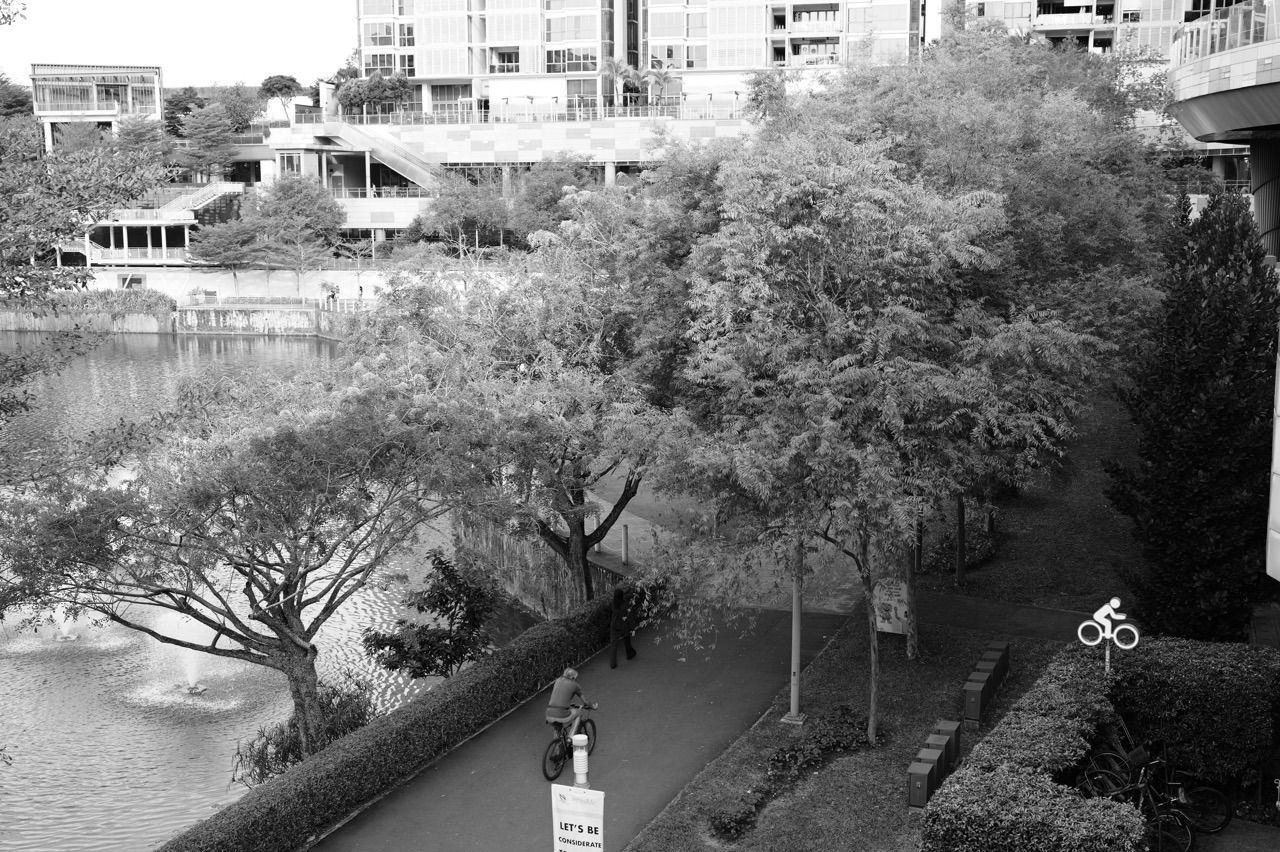
Can children ride a kick scooter along Punggol Waterway in 2026? A non-motorised kick scooter is an active-mobility device with different rules from a bicycle and a motorised e-scooter. LTA generally permits compliant non-motorised scooters on ordinary footpaths, cycling paths and shared paths, subject to the relevant speed limits and safety duties. They are not permitted on marked Pedestrian-Only Paths or roads. In Punggol Waterway Park, NParks also restricts PMDs on selected bridges and the boardwalk. Teach your child to recognise signs, slow near pedestrians and get off and walk the scooter whenever an area requires it.
This Kick Scooter Safety for Kids in Punggol 2026 guide answers parents’ everyday questions about manual scooters, three-wheel versus two-wheel models, correct handlebar fit, helmets, stopping, LTA path categories, Waterway Park’s special no-riding areas, HDB common-space etiquette, weather, a realistic first outing and the difference between children’s kick scooters and registered electric scooters. It complements Family Cycling in Punggol without treating different devices as legally interchangeable.
Punggol children’s kick scooters: quick information
| Question | Short answer | What to check |
|---|---|---|
| Can a child use a manual kick scooter? | Suitable non-motorised scooters can be used on designated permitted paths. | Fit, control, supervision and posted restrictions. |
| Is a scooter a bicycle under LTA rules? | No. A non-motorised kick scooter is classified as a non-motorised PMD. | Do not apply bicycle-only rules blindly. |
| Ordinary footpath? | Generally permitted for compliant non-motorised PMDs. | Path maximum 10 km/h and yielding to pedestrians. |
| Dedicated cycling path? | Generally permitted. | Path maximum 25 km/h, but children should go much slower. |
| Shared path? | Generally permitted. | Yield to pedestrians and observe markings. |
| Marked Pedestrian-Only Path? | Not permitted. | Do not ride on converted POPs beside cycling paths. |
| Road? | Non-motorised PMDs are not allowed on roads. | Use the correct legal paths and crossings. |
| Waterway prohibited bridges? | NParks restricts PMDs on selected bridges and the boardwalk. | Dismount and use only permitted routes. |
| Do manual scooters require e-scooter registration? | They are a different category from motorised e-scooters. | Do not confuse manual and electric devices. |
| Are helmets a good idea? | Properly fitted helmets and suitable protection are prudent for children. | Protection cannot make an unsafe path or speed safe. |
| Is a child’s scooter a mobility scooter? | No; PMAs for mobility impairment are a separate legal category. | Do not mix device terminology or 2026 PMA medical rules. |
1. A kick scooter is not an e-scooter—and that changes the legal answer
A manual kick scooter moves through the rider’s foot pushing on the ground. A motorised electric scooter uses a motor and falls under different LTA rules, including motorised-device registration and technical requirements. Parents sometimes ask “Can scooters go on the pavement?” without specifying which type. That makes a direct answer unreliable. The device category must be identified before the path rules can be applied correctly.
The LTA’s Rules and Code of Conduct expressly lists kick-scooters among non-motorised PMDs. Such devices are not road vehicles and do not share all the bicycle or e-scooter rules. The right answer also depends on whether the path is an ordinary footpath, converted Pedestrian-Only Path, dedicated cycling path or shared path.
The distinction has become more important as Singapore’s active-mobility regulations evolve. In 2026, separate new requirements apply to some powered personal mobility aids used by people with mobility limitations, and specific UL2272 requirements affect motorised e-scooters. Those measures should not be misrepresented as an obligation to register a small non-motorised child’s kick scooter. A parent should first establish the correct device classification and follow the applicable guidance.
If a product has a battery, throttle, motor or powered attachment, do not assume it remains a manual kick scooter under the law. Consult the actual LTA device criteria and ask an appropriate retailer or authority when uncertain. Purchasing a new gadget should follow the rules, not the seller’s casual use of words like “kids scooter” or “electric balance scooter”.
2. What the official 2025–26 Singapore path rules mean
| Path classification | Manual kick scooter | Practical family decision |
|---|---|---|
| Ordinary unmarked footpath | Generally permitted, subject to device requirements and 10 km/h path limit. | Travel at a safe slow pace and give pedestrians priority. |
| Converted Pedestrian-Only Path | Not permitted for non-motorised PMDs. | Dismount and use the correct nearby path where available. |
| Dedicated cycling path | Generally permitted, maximum 25 km/h for permitted devices. | For children, ride far below the legal maximum. |
| Shared path | Generally permitted, with 25 km/h maximum. | Slow around walkers, strollers and crossings. |
| Road | Not permitted. | Never treat the road as a scooter practice track. |
| Restricted NParks boardwalk/bridge | PMD riding may be expressly prohibited. | Observe signs and walk the device if permitted. |
These classifications are based on LTA’s Where Devices Are Allowed chart and current active-mobility page. A 25 km/h maximum is not a safe children’s target. It is a ceiling for qualifying devices in the relevant place. Actual safe speed can be much lower, depending on foot traffic, visibility, supervision, the child’s ability and the path surface.
Pedestrian-Only Paths are a particular 2025 initiative for footpaths beside dedicated cycling paths. They are not simply another name for every footpath in Singapore. Ordinary footpaths can still permit certain non-motorised devices, while converted POPs exclude them. Families should learn to read signs and surface markings rather than use a blanket phrase like “all scooters can ride on pavements”.
The practical behaviour is often simple: when unsure or approaching a crowded crossing, reduce speed, stop and walk. This is not a failure to scooter well. Public active mobility works because device users respect more vulnerable road and path users, including older pedestrians, wheelchair users and toddlers.
3. What is different at Punggol Waterway Park?
NParks’ Using Routes and Trails Safely page, updated in October 2026, identifies no-riding locations including Kelong Bridge, Wave Bridge, Adventure Bridge and the Waterway Park boardwalk. Its prohibitions include PMDs as well as cycling in those places. Children should not assume an attractive bridge or boardwalk is a suitable place to roll a scooter simply because they see people walking there.
The Punggol Waterway park connector spans 8.4 km, but that is not a child’s scooter objective. A short legal path may be more appropriate than a complete stretch through busier recreational areas. The Waterway hosts walkers, cyclists, runners, wheelchair users, strollers and people taking photographs. A child who rides unpredictably among them creates risk even at a modest speed.
A parent can enjoy the scenery without keeping their child on the scooter for every metre. Stop at an appropriate place to look at bridges, sit on a bench or talk about water management. When a segment is marked for pedestrians only or riding prohibited, get off and follow the signage. A family should avoid obstructing other users while consulting a map or adjusting equipment.
Our Walking for Everyday Errands in Punggol article explains why ordinary journeys can provide movement. The key additional concern with a scooter is managing the device itself: speed, stopping distance, balance, path permission and the risk of the deck striking a pedestrian’s leg.
4. Three-wheel and two-wheel kick scooters: match ability, not fashion
Some children’s scooters have two wheels and rely on balance and steering, while many early-childhood models use three wheels for a different kind of stability. A three-wheel scooter may feel reassuring to some learners, but it still requires the ability to steer, stop and respond to others. A two-wheel model may suit a child with more developed control. Neither design is universally safe or appropriate for a particular age.
Check the manufacturer’s height and weight specifications, handlebar adjustment, deck stability, wheel condition and braking system. Children’s body sizes and abilities vary. An oversized model bought for future years may be difficult to control now, while a very small model can become awkward as the child grows. The right fit is the one the child can handle comfortably under appropriate supervision.
Do not assume foldable mechanisms are harmless. Check that latches are secure and that fingers cannot be trapped during folding. A damaged wheel, unstable steering tube or malfunctioning brake is a reason to stop using the scooter until it is properly serviced. Children should not be expected to fix mechanical defects or make unsafe equipment modifications.
A responsible parent can involve the child in basic inspection: “Are the wheels turning properly? Is the handlebar secure? Are your shoes tied?” These are awareness questions, not instructions for a young person to dismantle the device. Maintenance beyond the family’s competence should be handled by a suitable provider.
5. Helmet, shoes, brakes and visibility
| Safety layer | What to examine | What it cannot solve |
|---|---|---|
| Properly fitted helmet | Size, correct position, secure straps and condition. | Unsafe speed, poor judgement or prohibited riding. |
| Secure shoes | Grip and protection without dangling laces. | A damaged scooter or wet surface. |
| Brake | Whether the child can use the installed mechanism. | Every sudden obstacle at higher speed. |
| Wheel and deck | Condition, traction and stability. | Crowded or inappropriate paths. |
| Visibility | Clothing and lighting if the route/time requires it. | Poor supervision or riding in prohibited areas. |
| Adult attention | Clear route, suitable guidance and boundaries. | All environmental or mechanical risks. |
LTA’s cycling safety materials encourage suitable protective gear and good riding behaviour. A helmet should be the correct size and in good condition, but do not assert that a helmet eliminates all consequences of a fall. It must also be worn properly. Check the scooter manufacturer’s protective-gear recommendations and any specific activity rules in addition to Singapore’s public-path requirements.
A child may say that they can stop simply by dragging a foot behind the scooter. Whether that is appropriate depends on the device, footwear and the actual brake design. The learner needs reliable control before entering a shared path, and a qualified instructor or manufacturer instructions can help. Avoid trying to teach advanced tricks or jumping onto a moving scooter in busy public space.
When travelling later in the day, plan around daylight and safe visibility rather than using a short scooter ride as an excuse to be outdoors after dark. A Punggol family can return for another outing; the evening is not a test of courage. Do not rely solely on a tiny decorative light to make a crowded route safe.
6. Why the first scooter session should happen away from the Waterway crowds
A child’s very first outing should emphasise learning the start, balance, steer and stop sequence in a suitable authorised low-traffic setting. That is different from joining an already busy leisure connector. A beginner can veer unexpectedly, get distracted by scenery or need more space to stop than an adult anticipates. A Waterway bridge or narrow path beside the water is not an appropriate place to discover these limits.
An HDB void deck, lift lobby or fire escape corridor may look smooth, but it serves important access and safety functions. It is not automatically a permitted scooter practice area. Follow estate rules, avoid blocking exits or residents and do not ride through congested entrances. Choose a legitimate appropriate setting where supervision and control are possible.
If you cannot find a suitable place on a given weekend, it is reasonable to postpone. A child can still enjoy ordinary walking, a playground or a supervised non-riding activity. The aim of learning is confidence and independence, not completing one more activity regardless of conditions.
7. A flexible four-stage kick-scooter learning approach
| Stage | What the learner needs | Appropriate practice focus | What success looks like |
|---|---|---|---|
| 1: Orientation | Fit, equipment and simple rules. | Get comfortable with the device in suitable space. | Understands when to stop and where riding is allowed. |
| 2: Control | Starting, balancing and slowing. | Gentle controlled movement with close adult attention. | Reliable safe slowing or stopping. |
| 3: Awareness | Looking ahead and responding to people. | Practise recognising a stop and keeping space. | No unpredictable rushing toward other users. |
| 4: Route judgement | Signs, crossings and prohibited segments. | Very short supervised permitted outing. | Chooses to slow or dismount when needed. |
This is an educational progression framework, not a guarantee that a child becomes ready for public paths after four lessons or weeks. Some learners may need more practice or adapted devices. Others may enjoy a three-wheel scooter but not yet have the awareness needed for a crowded route. The family should respond to actual capability rather than a fixed timetable.
A child who falls or becomes reluctant should not be shamed into continuing. Check whether equipment, surface, supervision or tiredness caused difficulty. A coach may help if the parent cannot identify the problem. Taking a break is often more useful than insisting on another attempt in front of other people.
8. A parent-and-child first outing checklist
- Identify the device as a manual non-motorised kick scooter rather than an electric model.
- Choose a safe, permitted and low-traffic location for the learner’s ability.
- Inspect the steering tube, wheels, deck, brake and folding latch.
- Confirm correct handlebar fit and the manufacturer’s weight guidance.
- Use suitable protective gear, including a properly fitted helmet.
- Choose secure shoes and keep laces clear of moving parts.
- Agree on a simple stop instruction and boundaries before beginning.
- Keep close adult supervision appropriate to the child’s judgement.
- Never let the child cross roads or crowded junctions unexpectedly.
- Read Pedestrian-Only Path, cycling-path and shared-path signs.
- Get off the scooter at Waterway restricted bridges or boardwalk segments.
- Check weather, haze, heat and daylight before planning the outing.
- Carry or walk the scooter when the surroundings are unsuitable.
- Respect strollers, wheelchairs, elderly pedestrians and other users.
- End the activity before fatigue, frustration or unsafe conditions take over.
9. The practical difference between a scooter and a balance bike
A balance bike resembles a small bicycle and teaches particular two-wheeled balance, steering and future pedal-bike readiness. A kick scooter typically uses a standing deck and handlebars with the rider pushing one foot on the ground. Both involve coordination but do not teach identical skills. A child who enjoys one will not necessarily be immediately proficient at the other.
Our Teach Your Child to Cycle in Punggol guide discusses balancing and the move to pedalling. This page is about the legal identity of non-motorised scooters and safe family use. Parents should not buy several devices solely to speed up learning. Choose activities the child enjoys, that fit the family budget and can be used legally and appropriately.
Similarly, an electric e-scooter is not a faster version of a children’s manual scooter for the same purpose. It has separate registration, technical and rider requirements and may be unsuitable or unlawful for a child under certain conditions. Do not encourage a child to try an electric model simply because they already understand a manual scooter.
10. Original case: a child beside Punggol MRT learns path markings
A parent and child begin with a short permitted route near their neighbourhood. The child is confident on a three-wheel kick scooter. At one point, they reach a footpath beside a dedicated cycling path, marked for pedestrians only. The parent explains that manual scooters may be used on certain other paths but not on this converted POP. They dismount and move to the correct legal connection or continue walking, rather than arguing that the child is travelling slowly enough to make an exception.
The lesson is a practical form of citizenship: signs and rules protect all users. A child who accepts walking the scooter through the restricted section has made a safe and responsible decision. A future outing may include learning more path symbols, but it is unnecessary to teach every regulation while moving through a busy area.
11. Original case: the Waterway bridge photo opportunity
A family rides on a permitted section of a Punggol cycling or shared path and approaches one of the Waterway bridges. Someone suggests continuing on the scooter to make a video with the bridge behind the child. The parent checks the NParks restrictions and on-site sign, then stops and walks the device where required. The family can still enjoy a view or photograph from a lawful safe position without riding through a prohibited segment.
The parent also avoids stopping in the middle of the path with several adults filming. Instead, they find a place where pedestrians and cyclists can pass. The outing remains pleasant because the family treated public space as something everyone shares, not as a private backdrop. This is the sort of small judgement that matters more than the distance covered.
12. Original case: two siblings want different scooters
One child prefers a three-wheel model and the older sibling wants a two-wheel kick scooter. The family does not assume the two-wheel model is automatically better because it looks more grown-up. They check fit, current skill, braking and where each would actually be used. They may choose separate practice activities rather than making the younger child keep up on the same route.
At home, storage also matters. Scooters should not obstruct corridors, stairwells or fire routes and should be handled safely when folded. An HDB flat with limited room may make owning several different devices impractical. Borrowing or delaying a purchase can be sensible. The experience of moving together is more valuable than collecting equipment.
13. How scooting contributes to physical activity
A child riding a kick scooter is engaging in movement and balance, but the intensity can vary considerably. Slow pushing and coasting for a short period may be light activity, while longer sustained participation can demand more effort. Do not automatically treat a scooter ride as equivalent to a school sports CCA or the full youth activity recommendation. Children also need varied movement, appropriate meals, sleep and unstructured play.
The Health Promotion Board’s youth guidance encourages an average of sixty minutes of moderate-to-vigorous aerobic activity per day across the week for ages seven to seventeen, plus suitable vigorous and strengthening activities. Scooter use may be one enjoyable part of the bigger picture, but it should never become a rigid performance score for a young child.
The Primary School Active Play in Punggol guide explains this broader balance. If the child is already tired from school, PE and CCA, a gentle family walk or a quiet indoor hobby may be preferable to another demanding outdoor session.
14. Weather, haze, rain and the visibility problem
Singapore’s thunderstorms and wet surfaces make scooter control more difficult. A learner may slip during a turn or experience a longer stopping distance on wet ground. Do not insist on practising during rain just because the weekend activity was scheduled. Follow MSS lightning guidance and choose suitable safe shelter rather than riding beneath a tree or open-sided park structure when a storm threatens.
Heat and humidity also matter. The official WBGT heat-stress service informs prolonged outdoor activity, while Singapore haze advisories address smoke-related exposure. Air temperature, heat stress and PM2.5 are different measures. A child should not be encouraged to ride hard or stay outdoors simply because the Waterway feels breezy.
If the outdoor plan fails, use a suitable indoor family activity, not an improvised scooter session in a confined home or shared corridor. Delaying one ride is a small adjustment. Maintaining safe participation and adequate recovery matters much more than completing a weekly streak.
15. Costs, ownership and a buying decision without unnecessary pressure
A child’s kick scooter may appear inexpensive, but the real ownership cost includes a suitable helmet, regular inspection, repair or replacement and safe storage. A model that does not fit or has a faulty brake is poor value even if heavily discounted. The family should also consider whether the child will use it regularly and whether there is an appropriate legal route near home.
Some scooters have folding frames, adjustable handlebars or special features that require careful inspection. Accessories such as decorative lights do not automatically improve stopping or steering. A parent should prioritise controllable fit and safety over branded appearance. The final purchase decision belongs with the family and should be based on the actual product’s instructions, not a generic list of fashionable equipment.
If a child is uncertain whether they enjoy scooting, a suitable supervised trial or borrowing a properly fitting device when safe and permissible may be more useful than buying a premium model. Storage may be particularly important in compact Punggol HDB homes. No family should feel that active living requires multiple expensive wheeled products.
16. A simple path-rules memory exercise for children
| When you see… | What the child should remember | Family response |
|---|---|---|
| Pedestrian symbol only | This may be a designated pedestrian-only path. | Stop and do not ride there. |
| Bicycle-path marking | Some permitted active devices may use the route. | Follow the correct legal path cautiously. |
| Shared pedestrian/cyclist markings | More than one type of user is present. | Slow, give room and watch carefully. |
| No-riding sign | Riding is prohibited in the signed area. | Get off and obey the sign. |
| Road crossing | Traffic and pedestrian signals take priority. | Stop and follow appropriate crossing rules. |
| Crowded group of walkers | Even a legal path may be unsafe for riding now. | Walk the scooter until clear. |
Teaching path literacy through real signs can be a useful Punggol Geography and citizenship activity. A child learns that a place’s function is more important than whether the pavement looks smooth. But keep the exercise short; the adult remains responsible for safe supervision. The goal is recognition and good judgement, not expecting a primary-school child to interpret every clause of active-mobility legislation independently.
17. Common mistakes in Punggol family scooting
- Treating manual and electric scooters as the same legal device. Check classification.
- Riding on a marked Pedestrian-Only Path. LTA prohibits non-motorised PMDs there.
- Using roads as a practice area. Kick scooters are not allowed on roads.
- Attempting the entire Waterway connector as a beginner. Choose a short safe route.
- Riding on no-riding bridges and boardwalks. Follow NParks restrictions.
- Buying an oversized scooter for future growth. Fit and control matter today.
- Ignoring damaged brakes or loose folding latches. Inspect before riding.
- Assuming a helmet makes higher speeds safe. Slow near others.
- Using common corridors or lift lobbies for practice. Respect estate and fire safety.
- Letting children race near water edges. Choose a controlled learning environment.
- Continuing through wet surfaces, heat or haze. Adapt or postpone.
- Pressuring a reluctant child into long sessions. Keep the habit enjoyable.
18. Frequently asked questions
Are manual kick scooters allowed in Punggol?
On suitable permitted paths under LTA rules, with on-site restrictions and appropriate supervision.
Can children ride manual kick scooters on ordinary footpaths?
Compliant non-motorised PMDs are generally permitted on ordinary footpaths, subject to rules and a 10 km/h limit.
Can they ride on Pedestrian-Only Paths?
No. LTA prohibits non-motorised PMDs on converted marked POPs.
Can a kick scooter use a cycling path?
Generally yes for a qualifying non-motorised PMD, under applicable rules and safety duties.
Can scooters travel on roads?
Non-motorised PMDs are not permitted on roads.
Is a kick scooter the same as an e-scooter?
No. A manual kick scooter and a motorised e-scooter have different classifications and requirements.
Does my child’s manual scooter need e-scooter registration?
No automatic e-scooter registration requirement applies to a genuine non-motorised kick scooter.
Can kids ride on Punggol Waterway bridges?
Check specific signs; NParks prohibits PMDs on selected bridges and the Waterway boardwalk.
Does a child need a helmet?
A properly fitted helmet is a prudent safety measure, but route choice and supervision remain essential.
Is a three-wheel scooter always safest?
Not for everyone. Fit, control, braking and individual ability determine suitability.
Can an older child teach a younger sibling?
Siblings can help under appropriate adult supervision, but should not become solely responsible for safety.
How fast can a child scoot?
Travel at a safe speed appropriate to surroundings; legal maximums are not children’s targets.
Is a busy shared Waterway path suitable for first learning?
Usually a controlled low-traffic permitted practice area is preferable for a beginner.
Can children ride at night?
Consider light, visibility, safety, personal ability and permitted routes; avoid exposing beginners to unnecessary risk.
What if it rains?
Postpone or choose another safe activity rather than using wet slippery surfaces or HDB corridors.
Can a motorised mobility scooter follow the same rules?
No. Personal Mobility Aids are a separate legal device category with different eligibility and technical rules.
Can scooter rides contribute to exercise?
Yes, depending on actual movement and intensity; children also benefit from varied physical activity.
What if the scooter’s brake is broken?
Do not use it until suitably repaired or replaced.
Can families use Punggol Waterway for a leisurely scooter trip?
Only on permitted suitable paths and when each rider has adequate control, with no-riding signs obeyed.
Where can parents check current rules?
Use the LTA active-mobility code and NParks park-connector safety guidance.
Read next in eduKate’s Punggol activity library
- Life in Punggol — Master Lifestyle Guide
- Family Cycling — Helmets and Waterway Routes
- Teach Your Child to Cycle — Balance Bikes and First Pedals
- Inline Skating in Punggol for Beginners
- Bicycle Maintenance in Punggol
- Active Play for Primary School Children in Punggol
- Walking for Everyday Errands
- Futsal for Beginners at One Punggol
- Disc Golf for Beginners from Punggol
- eduKateSG — Waterway Park Student Life
Official sources and editorial note
- LTA — Active Mobility Device Classes and Current Path Rules
- LTA — Device and Path Permission Chart
- NParks — 2026 Park Connector No-Riding Locations
- NParks — Punggol Waterway Park Connector
- HPB — Youth Physical Activity Guidelines
- MSS — Heat Stress
- MSS — Lightning
- Singapore Haze Information
Reviewed 18 October 2026. This is general family safety and Singapore path-rules education, not certification that a specific scooter or child is safe to ride or individual medical advice. LTA and NParks signs govern real places, and current restrictions may change. Children require appropriate adult supervision. Fictional examples illustrate common decisions.


