
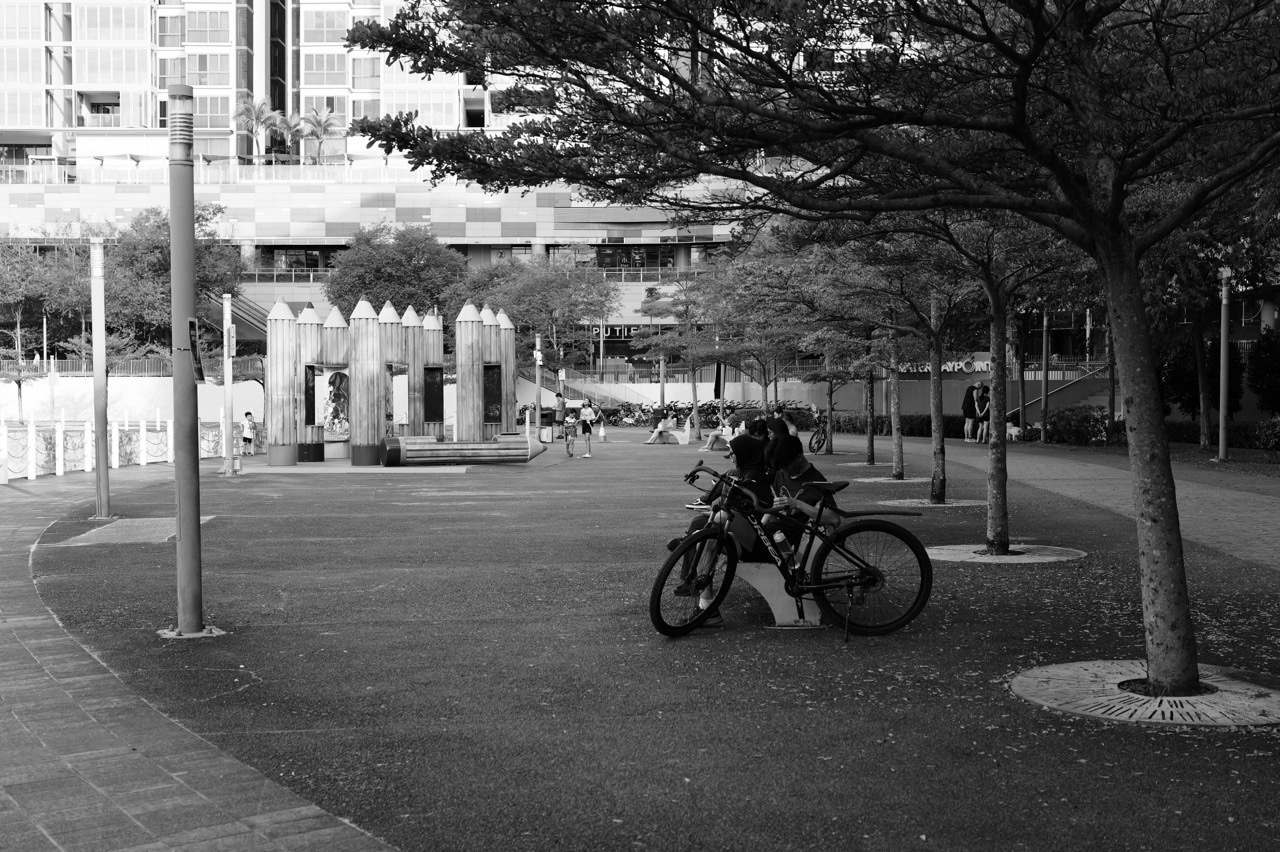
How can a child in Punggol move from a balance bike to a pedal bicycle? Begin in a suitable safe permitted practice space away from traffic, with a correctly fitted bike, a properly adjusted helmet and close adult supervision. Let the child become comfortable balancing, steering and stopping before adding a more complicated task. A balance bike can help some children learn those foundations, but there is no universal age or time by which every child must pedal independently. The first priority is a confident and predictable stop, not completing a Waterway Park circuit.
This Learn to Cycle in Punggol for Children 2026 guide covers balance bikes, training wheels, first pedals, equipment fit, helmet checks, braking, LTA path rules, Waterway safety, children with different abilities, independent instruction, a four-stage learning menu, original family scenarios and parent FAQs. It differs from the existing Family Cycling in Punggol article, which assumes the family is planning an actual ride. Here the question comes earlier: how can a child learn enough control to participate safely at all?
Punggol first-pedal learning: quick answers
| Question | Practical first answer | What to avoid |
|---|---|---|
| What is a balance bike? | A small pedal-free bicycle propelled with the feet, used to practise balance and steering. | Assuming every child needs a particular branded model. |
| Does a child have to use training wheels? | No. Different children learn through balance bikes, supported methods or adapted instruction. | Turning one approach into a mandatory requirement. |
| When should pedals be introduced? | When balance, stopping and basic control are sufficiently reliable for the child’s ability and suitable instruction. | Using a birthday as a readiness test. |
| Where should a child practise? | A clear, appropriate low-traffic authorised practice area. | Roads, busy park connectors, bridges and crowded HDB corridors. |
| Are helmets compulsory? | Singapore requires cycle helmets on roads and encourages them on paths; a family can use properly fitting helmets consistently. | Assuming a helmet makes a dangerous route safe. |
| May children ride on any pavement? | LTA distinguishes normal footpaths, cycling paths, shared paths and pedestrian-only paths. | Riding on a marked Pedestrian-Only Path. |
| Is the 8.4 km Waterway route a training target? | No. NParks publishes the connector length for general users. | Forcing a beginner to ride the whole distance. |
| Are there lessons? | SportSG and community providers may have cycling or balance-bike instruction in Singapore. | Assuming a 2026 course in Toa Payoh is physically in Punggol. |
| What if a child keeps falling or refuses? | Review fit and skills; pause, adapt or ask a qualified instructor. | Shaming the child or forcing practice. |
| Can children with disability learn? | Some may benefit from adapted cycles and specialist support. | Using an unadapted generic internet method as clearance. |
1. The goal is independent control, not a particular age milestone
Children learn physical skills at different rates. One may enjoy walking a balance bike confidently before school age; another may prefer a scooter, tricycle or simply ordinary active play. Parents sometimes feel competitive pressure when a classmate learns to pedal earlier. But a child who can steer safely, stop reliably, follow adult instructions and enjoy movement is developing valuable skills, even if they are not yet riding a two-wheeled pedal cycle.
A sensible learning plan asks what the child actually can do now. Do they feel comfortable with the helmet? Can they use the brakes or their feet appropriately for their device? Are they able to look ahead rather than down at the front wheel? Do they follow a clear stop instruction? These questions help determine what to practise next without assuming that age alone establishes readiness.
The Sport Singapore Active Parents movement-skills library emphasises the value of coordination, balance and fundamental movement skills for children. Cycling can provide an enjoyable opportunity for those skills, but it should remain one choice among many. Not every family has space to store a bicycle or a child who wants to ride. Safety and personal preference come first.
The parent is also learning. Adults may need to practise giving a calm instruction, watching where others are walking and avoiding sudden physical pushes. An excited adult who runs beside a child and shouts multiple commands can make learning more confusing. Simple explanations and predictable support usually make a first outing easier to manage.
2. What a balance bike teaches, and what it does not
A balance bike has no conventional pedals, so the learner propels it by walking or gliding with their feet. When the device fits properly, the child can explore what happens when the body and wheels move together. Turning, looking ahead and stopping are part of the experience. A child who becomes comfortable with gliding may be better prepared to add pedalling later, but the transition still involves new skills and equipment.
A balance bike does not automatically teach pedal control, all braking systems or the judgement needed around shared paths. A parent should avoid assuming the child is road-ready simply because they can glide quickly along a playground. Steering a lightweight small bike in a clear area is different from responding to pedestrians, junctions, bicycles and changes in weather.
OnePA’s October 2026 Balance Bike Training course in Toa Payoh illustrates how a community provider teaches basic fundamentals such as helmet fit, bicycle adjustment, steering, mounting and dismounting. Its registration was closed and the location was Toa Payoh, not Punggol. The programme description offers useful teaching categories, not a current Punggol class place.
The onePA page uses more than one age range in its general description and requirements, reminding readers to check a particular provider’s exact eligibility rather than copying a number from a summary. A course may be for absolute beginners, advanced balance-bike racers or a specific community age bracket. Choose the real learning objective and instructor, not merely the words “bike class”.
3. Training wheels versus balance: choose without a family argument
Training wheels can provide support to a child practising pedalling, but they alter how a bicycle balances and leans. Some families begin with a balance bike, while others use a properly fitted pedal bicycle and appropriate coaching methods. There is no need to claim that one sequence works for every child. The best approach is one that matches the learner, their device and a suitable teaching environment.
When parents are deciding whether to remove training wheels, the question is whether the learner can manage balance and stopping with appropriate support. It is not simply how many days the child has owned the bicycle. Suddenly removing support without preparation or pushing the child into a busy route can create fear or falls. A competent cycling instructor can help a family identify safe next steps.
Do not adjust or remove bicycle safety-critical parts without understanding the equipment. Some children use adapted tricycles or other support devices that are appropriate to their needs. Their goal might be enjoyable independent movement rather than transitioning to a conventional two-wheel bike. Treat those arrangements with respect rather than labelling them a temporary failure.
4. Bicycle size, fit and controls matter before the first attempt
| Equipment decision | What to check | Why it matters |
|---|---|---|
| Seat height | Child’s comfort and ability to manage the chosen device as directed. | Oversized or unstable bicycles undermine control. |
| Handlebars | Reach and the ability to steer without straining. | Awkward reach may cause unsafe movement. |
| Brakes | Correct condition and a control the child can use. | A rider who cannot stop is not ready for shared routes. |
| Tyres | Condition, suitable inflation and tread for the surface. | Underinflation or damage can affect handling. |
| Helmet | Appropriate size, position, straps and condition. | An oversized or damaged helmet may not protect as intended. |
| Pedals or footrests | How the learner places feet during the current stage. | Confusion can disrupt stopping and balancing. |
| Footwear | Secure shoes appropriate to activity. | Open loose footwear can slip or get caught. |
| Bicycle condition | Wheels, frame, chain and other applicable features. | Defects need repair before use. |
The LTA Safer Cycling checklist gives practical prompts for visibility, equipment and courteous riding. A parent may also ask a qualified bicycle shop or instructor to confirm fit rather than relying solely on online frame-size tables. Children grow at different rates, and comfort and control matter more than a marketing age label on the box.
For a very small child, a bicycle that is too tall may be difficult to mount and stop. Purchasing a much larger model so they can “grow into it” can create a problem now. Equally, a bike that has become too small can be awkward. Check fit and follow the specific manufacturer’s instructions. Avoid improvised seat clamps, unsecured accessories or unsafe adjustments.
A helmet is best viewed as one layer of protection, not a replacement for suitable environment and supervision. Singapore’s road-cycling rules include helmet requirements, but a child beginner should not be practising on a road merely because they are wearing one. The family should select a controlled permitted area and teach safe behaviour before joining more complex routes.
5. Where to practise in Punggol: choosing a suitable area
Punggol’s paths and public spaces offer opportunities to enjoy cycling, but not every path is appropriate for a child’s first attempt. A newly pedalling child may wobble, stop suddenly or steer unpredictably. That makes a busy Waterway connector, crowded promenade or bridge a poor training site. Choose a suitable open permitted surface away from traffic, drop-offs, dense pedestrian flows and other hazards, with enough room for the child’s ability and close adult attention.
Some HDB common areas are unsuitable because they are entrances, lift lobbies, fire escape routes or pedestrian corridors. The presence of a smooth floor does not grant permission for cycling or riding. Follow town council and on-site rules, and avoid blocking others. A legitimate park or cycling practice area should have clear access and be used for the activity under its applicable restrictions.
NParks describes the Punggol Waterway park connector as an 8.4 km route for cycling, jogging and leisure. That length and general use apply to ordinary users, not a recommendation that first-time riders begin on the connector. Use such a route only when the child has adequate control and the path’s current markings, crowding and rules make the intended participation appropriate.
Punggol also has park features with no-riding rules. NParks restricts cycling on Kelong Bridge, Wave Bridge, Adventure Bridge and the Waterway Park boardwalk, among other locations. A parent planning a later family ride should teach that bicycles may need to be dismounted and walked through designated areas. Learning the rule now avoids treating every attractive bridge as a cycling shortcut.
6. LTA’s path categories are part of the learning journey
| Path | General cycling rule | What parents should teach |
|---|---|---|
| Ordinary footpath | Bicycles may be allowed under applicable criteria. | Yield and ride appropriately; beginners may need to walk. |
| Pedestrian-Only Path | Bicycles are prohibited on converted marked POPs. | Recognise the signs and do not ride there. |
| Dedicated cycling path | Bicycles may use it under current regulations. | Look out for crossings and permitted users. |
| Shared path | Cyclists and pedestrians share permitted access. | Slow down and give adequate room. |
| Road | Different traffic laws and helmet obligations apply. | Not a suitable first-learning area for children. |
| Waterway prohibited bridge/boardwalk | Cycling is not permitted on selected segments. | Dismount and follow posted restrictions. |
LTA’s active-mobility rules distinguish bicycles from motorised vehicles, ordinary footpaths and the Pedestrian-Only Paths introduced beside dedicated cycling paths. Since July 2025, the converted POPs have prohibited bicycles and non-motorised personal mobility devices. Families must observe actual path markings rather than rely on an older memory of where cycling used to be allowed.
LTA also publishes general path speed limits. Those are maximum limits for qualifying devices, not targets for young children. A parent should not encourage a learner to approach a posted limit. Riding at a walking pace or dismounting may be necessary when people are nearby. The slower and more vulnerable user deserves particular consideration.
Children should be taught to stop at crossings, pay attention and obey applicable signals, but this does not mean a few practice sessions make them ready to navigate junctions alone. Independent travel calls for separate judgement and maturity. A family can enjoy supervised cycling without setting an age at which road cycling becomes compulsory.
7. A four-stage route from balance to pedals
| Stage | Skill focus | Suitable supervised activity | Move on when |
|---|---|---|---|
| 1 — Comfortable control | Helmet, fit, mounting and stopping. | Explore the chosen device in a permitted clear area. | The child understands stop instructions. |
| 2 — Balance and steering | Controlled forward movement and gentle changes of direction. | Balance-bike glides or adapted coaching. | Movement remains stable and predictable. |
| 3 — Pedal coordination | Learn how pedalling and braking work together. | Appropriate guided first-pedal practice. | The child can manage a suitable short attempt safely. |
| 4 — Everyday path literacy | Learn signs, yielding and when to walk. | Very short, familiar permitted supervised route. | The child responds reliably to conditions and adult guidance. |
This is not a four-week guarantee. One child may progress through some stages quickly; another may repeat the same safe foundation over many sessions. Children also differ in motivation. A child who wants to stop after ten minutes does not need to be pushed through another hour because a parent has reserved a weekend for learning. Willingness to return is an important outcome.
Learning may require specific support for a child with sensory or motor challenges. A specialist instructor, adapted cycle or other professional advice could be more useful than attempting the same generic stages repeatedly. The goal is meaningful independent movement within the child’s capacity, not a fixed form of two-wheeled performance.
8. A first-session preparation checklist
- Choose a permitted, clear, low-traffic practice area appropriate to the learner.
- Inspect the bicycle’s fit, brakes, tyres and general condition.
- Use a well-fitted helmet and suitable shoes.
- Identify which adult is actively supervising and how a stop instruction works.
- Explain where the child can go and which boundaries they must not cross.
- Keep other siblings and pedestrians clear of the practice line.
- Allow a short orientation without demanding immediate pedalling.
- Offer water, shade or rest appropriate to weather and participant needs.
- Do not practise near deep water edges, busy cycle paths or road crossings.
- Stop if the child becomes frightened, distressed or unusually tired.
- Pause and seek suitable advice for pain, injury or other concerning symptoms.
- End the session positively, even if no new skill was mastered.
- Plan where the bike will be stored safely at home.
- Recheck LTA and NParks markings before any later family route.
9. Adults also have to learn how to give useful feedback
A child may receive several contradictory commands: “pedal faster,” “look ahead,” “don’t fall,” “turn left,” all delivered in two seconds. This is confusing and can increase anxiety. A better teaching habit is to choose one appropriate focus, explain it simply and give the child an opportunity to practise safely. A qualified instructor can provide individual technique guidance, especially when family coaching is becoming frustrating.
Praise effort and safe decisions rather than only announcing successful independent rides. A child who chooses to stop before hitting a pedestrian has demonstrated judgement. A child who asks for another attempt after a fall may be building confidence. Avoid filming failures for public entertainment or comparing a child with siblings and classmates.
Do not pull, push or hold a learner in a way that introduces extra instability or places adult and child in the path of another rider. The correct physical support depends on bike type, learner and circumstances, and a trained instructor may be best placed to demonstrate it. If the family cannot practise calmly, a break or structured lesson can be more helpful than another attempt in a crowded location.
10. Should Punggol parents buy a balance bike, bicycle or lessons?
A new bicycle is a physical product, but the real decision is whether the learner needs equipment, qualified instruction or just more opportunities in a safe environment. A balance bike that the child already enjoys may be sufficient for initial balance practice. If the child is ready for pedal coordination, an appropriately fitted pedal bike may become useful. If the learner struggles to understand braking or is fearful after repeated falls, coaching might add value.
Singapore providers such as Saddlewerkz advertise age-adapted cycling lessons, typically at the National Stadium or another arranged location. The operator says it can discuss alternatives nearer to a learner, but that is not evidence that a particular Punggol session is currently available. Ask about exact venue, coach, participant needs, equipment, fees and current times before registering.
Community courses also vary. The October 2026 onePA Toa Payoh balance-bike listing is a real example of an advertised course, but its registration is closed and it is not physically in Punggol. It would be misleading to promote it as a live Punggol weekend lesson. A credible local page distinguishes the family’s home town from the provider’s actual training location.
Buying equipment before understanding the need can waste money, particularly while a child is growing. Borrowing, renting or testing suitable gear under proper guidance may be helpful when available and permitted. Ask a reputable shop or instructor about fit and safety before paying, and consider storage in a flat. A cheap bicycle that is poorly fitted can be poor value.
11. Original family example: a five-year-old who loves balancing but avoids pedals
A child near Oasis is happy using a balance bike but becomes anxious when offered a pedal bicycle. The family initially interprets the reluctance as a lack of effort. They change approach by asking what feels difficult and arranging a calm introduction with appropriate equipment and supervision. They do not force the child to ride on the crowded Waterway connector to prove independence.
After a few comfortable practice opportunities, the parent can discuss with a qualified instructor whether the bicycle fit, pedalling coordination or fear needs attention. The outcome may be a small safe pedal attempt, more balance-bike practice or a choice to wait. The child remains entitled to enjoy movement without being measured against classmates.
That decision helps the household too. Instead of purchasing multiple gadgets to solve a problem they have not identified, the family focuses on one learnable issue. This resembles good educational diagnosis: look for the exact gap rather than assume more practice of every skill will fix it.
12. Original example: siblings with very different abilities
Two siblings, aged six and nine, want to go cycling at Punggol Waterway. The older child can pedal confidently while the younger one still uses a balance bike. A poor plan is to insist both travel the same long route at the same speed. A better family arrangement uses a suitable practice setting for the younger child or separates activities under appropriate supervision, and then chooses a short permitted outing all can enjoy safely.
Adults need to coordinate supervision explicitly. A child learning to steer cannot safely be left behind while the other family members cycle away. Nor should the confident sibling become solely responsible for rescuing or managing a younger rider. The household can treat different stages of learning as normal and design a flexible weekend around them.
13. Original example: learning changes when paths become busier
A family practises at a quiet permitted area, and a child becomes confident pedalling in a straight line. The next weekend the parent suggests an evening Waterway ride. On arrival the path is busy with runners, families and other cyclists. The parent recognises that controlling a bike in a quiet area is not the same as using a shared path with unpredictable movement. They choose to walk the bikes or postpone the ride rather than force a situation beyond the child’s current judgement.
Later, they can return when conditions are suitable and practise recognising legitimate path markings and safe crossing decisions at an age-appropriate pace. The child learns that responsible cycling includes dismounting and letting other people pass. Confidence is supported through correct risk decisions, not by treating every path as a challenge to be conquered.
14. Rain, heat, haze and the indoor alternative
Singapore’s heat and humidity affect children at play. For prolonged outdoor activity, the Meteorological Service provides heat-stress information using WBGT. During haze consult official haze guidance; during thunderstorms follow lightning alerts. A shaded Waterway path may be pleasant but is not proof that conditions are suitable for a long practice.
Learning to ride should not take place on wet, slippery surfaces or during severe weather simply because the bicycle is new. An indoor explanation of a route map or a quiet child-selected activity can be enough on an unsuitable day. Do not ride in common HDB corridors or emergency routes merely because it is raining outside. A safe fallback is better than an improvised risk.
A child with an injury or health condition may need individual advice before outdoor cycling. A family should not use a general activity guideline as permission to ignore pain or distress. Suitable breaks, meals and sleep matter more than completing a learning streak regardless of conditions.
15. How bicycle learning fits the school-week routine
A Punggol family may have PE, CCAs, swimming, tuition, siblings’ schedules and work. A short child-led practice once or twice when circumstances suit may be more sustainable than a demanding daily training plan. There is no fixed homework-like requirement to learn pedalling by a particular school term. If the child enjoys the process, practice may become a fun family activity rather than an additional obligation.
The Active Play for Punggol Primary School Children guide outlines the broader movement and sleep balance. Cycling can contribute to activity when appropriate, but a few minutes of slow balance-bike gliding will not necessarily meet every youth aerobic activity recommendation. Children benefit from varied play, sufficient rest and opportunities to make choices.
For parents interested in educational transfer, learning to cycle has the same principle as learning a difficult Mathematics topic: identify the foundation, work through a manageable next skill, receive useful feedback and repeat without rushing. But learning to bike should still be enjoyable, not a lesson in school-style grading. A child’s confidence matters.
16. Common mistakes during first-pedal learning
- Buying a bicycle far too big. Safety and controllable fit come first.
- Demanding pedalling before balance and stopping. Choose a sensible foundation.
- Using a busy park connector as the first classroom. Find a suitable clear permitted setting.
- Assuming helmets solve every risk. Supervision and route choice remain essential.
- Riding on marked Pedestrian-Only Paths. Observe current LTA rules.
- Forcing a child to complete 8.4 km. Connector length is not a beginner target.
- Removing training wheels suddenly to prove a point. Use suitable support and guidance.
- Giving several shouted commands simultaneously. Focus on one clear skill.
- Ignoring the child’s fatigue or fear. Pause without shame.
- Leaving bicycles in shared corridors or fire routes. Respect storage and access rules.
- Assuming a Toa Payoh class is in Punggol. Verify the actual venue.
- Confusing skill in a quiet area with independent road ability. Different judgements are required.
17. Frequently asked questions
What is the best age to learn to cycle?
There is no universally correct age; size, motor ability, interest, judgement and suitable support matter.
Is a balance bike necessary?
No. It is one useful option for some learners, while other approaches may also work.
Can a child go directly to a pedal bicycle?
Some can, with suitable equipment and appropriate instruction. Assess current skills and safety.
Should we remove training wheels immediately?
Not as a fixed rule. Consider the child’s control and appropriate coach or equipment advice.
Where should children first practise in Punggol?
Choose a genuinely permitted clear and quiet practice space away from traffic and crowded shared paths.
Is Punggol Waterway Park suitable for first attempts?
Its popular connector can be busy; a brand-new learner may need a different controlled setting.
Can bicycles ride on Pedestrian-Only Paths?
No. LTA prohibits bicycles and non-motorised PMDs on converted marked POPs.
Are there no-riding bridges at Punggol Waterway?
Yes. NParks restricts cycling on selected bridges and the boardwalk.
Do children need helmets?
A correctly fitting helmet is a strong family safety choice; LTA requires helmets for cycling on roads and encourages them on paths.
What if the child cannot brake?
Stay in an appropriate learning environment and develop safe stopping with qualified help before joining shared routes.
Is an expensive bike safer?
Not automatically. Suitability, fit, maintenance and appropriate supervision are more important than price.
Are balance-bike classes available in Singapore?
Yes; onePA lists programmes in some towns, and specialist instructors offer sessions. Check actual dates and locations.
Is the October 2026 Toa Payoh course in Punggol?
No. It is a Toa Payoh offering with closed registration and different eligibility details.
Can children with disability-related needs learn?
Some can with adapted devices or specialist guidance. Choose suitable individual support.
What if siblings learn at different rates?
Adjust each child’s activity and avoid comparisons or forcing the same route.
When is a child ready for a public shared path?
When control, stopping, awareness and the actual conditions are appropriate under adult supervision.
Can kids practise in HDB lift lobbies?
Do not obstruct or ride in unsuitable common areas; respect estate rules and emergency access.
Is a child ready for roads after learning to pedal?
Not automatically. Traffic judgement and road safety are separate and complex.
What if it rains or becomes hazy?
Postpone or choose a suitable indoor activity; follow official environmental guidance.
Connected reading in Punggol’s family and activity ecosystem
- Life in Punggol 2026 — master hub
- Family Cycling in Punggol — Helmets and Waterway Rules
- Bicycle Maintenance in Punggol — Brakes and Tyres
- Primary School Active Play in Punggol
- Life in Punggol for New Parents
- Cycling in Punggol — Locations and Routes
- Futsal for Beginners in Punggol
- Kick Scooters for Children in Punggol
- Disc Golf for Beginners near Punggol
- eduKateSG — Waterway Park and Student Life
Official sources and review date
- LTA — Active Mobility Rules and Pedestrian-Only Paths
- LTA — Safer Cycling Checklist
- NParks — Park Connector Rules and No-Riding Bridges
- NParks — Punggol Waterway 8.4 km Connector
- SportSG — Children’s Fundamental Movement Skills
- OnePA — Dated 2026 Toa Payoh Balance-Bike Training
- Cycling Instructor Example — Actual Training Locations and Enquiries
- MSS — Heat Stress
- MSS — Lightning
- Singapore Official Haze Advisories
Reviewed 18 October 2026. General family cycling education, not individual cycling instruction, medical clearance or live Punggol class availability. Learning progression varies, and actual path and venue rules apply. Dated onePA course examples are not Punggol booking confirmations. Fictional family stories illustrate planning decisions.


