
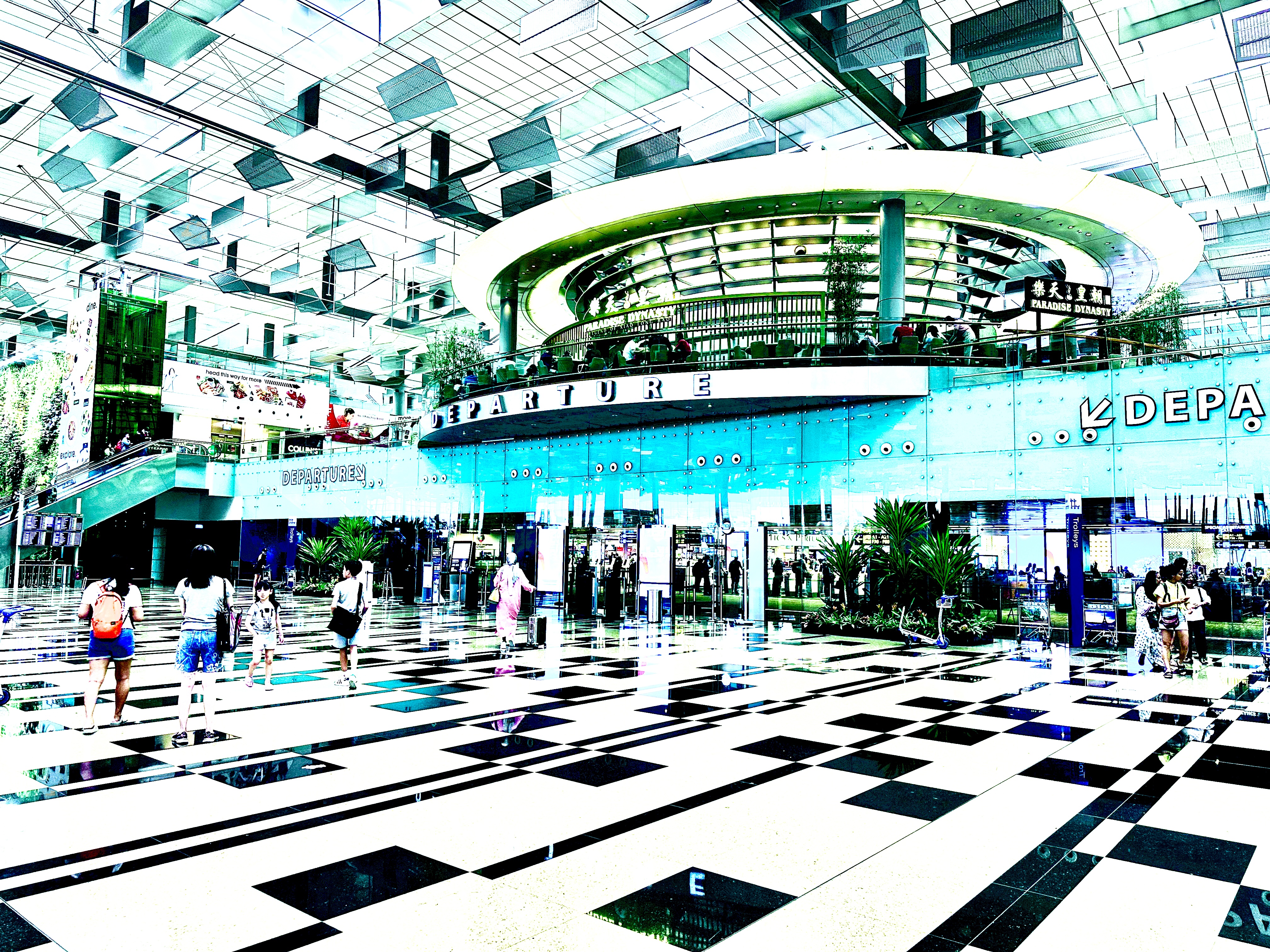
Can haze delay flights at Changi or Seletar Airport, and what should a Punggol traveller do? Yes, reduced visibility can affect some aviation operations, but haze does not mean every flight is cancelled or that the airports automatically close. The best action is to check your specific flight with the airline and the airport’s official flight-information service, confirm any changes directly with the carrier, and plan the journey from Punggol using real travel and check-in requirements—not a social-media claim about the PSI.
This is especially relevant in October 2026. According to a 13 October 2026 CNA report quoting the Civil Aviation Authority of Singapore and Changi Airport Group, 16 flights were diverted from Seletar Airport between 5 and 11 October as precautionary measures when haze reduced visibility. As of that statement, both Seletar and Changi remained operational. This is a dated report, not a claim about every flight operating now.
Quick answer: check four different things
Check air quality with NEA if you must spend time outdoors. Check airport status with Changi Airport or the relevant Seletar operator. Check your individual booking with your airline, because airline decisions can differ. Check your rights and refunds under the actual fare conditions and insurance policy.
A regional air-quality number is not a real-time flight status. A flight scheduled to depart from Changi may be on time while another flight affected by visibility or downstream operations is delayed. A Seletar diversion does not prove every Changi departure is disrupted.
The useful travel plan is therefore specific: flight number, date, terminal or airport, latest status, check-in instructions, rebooking options and a realistic route from home.
What happened to Seletar flights in October 2026?
On 13 October 2026, CAAS and Changi Airport Group reported that 16 flights had been diverted from Seletar between 5 and 11 October because of low visibility associated with the haze. They described the diversions as precautionary safety measures.
The authorities also said some airlines had adjusted or cancelled flights based on prevailing conditions. The important qualifier is that airlines made operational decisions, and different services could be affected differently.
At the time of the statement, Changi and Seletar remained operational, with additional measures available if conditions worsened. The report referred to lighting airfields during daytime and allowing greater separation between aircraft movements if needed.
These details show that aviation safety uses operating procedures and professional judgement. They do not supply a permanent threshold at which every Singapore flight automatically stops.
Changi Airport versus Seletar Airport
Changi is Singapore’s principal international hub for commercial passenger and cargo flights. Seletar serves a different mix of operations and aircraft. The airport, flight operator and operational requirements matter when weather or visibility changes.
The October 2026 diversion count was specifically reported for Seletar. Do not move that count to Changi or write that 16 Changi flights were diverted if the source did not say so.
Punggol residents may use Changi for international travel and could also encounter itineraries involving Seletar, depending on the airline and destination. The booking confirmation—not what a neighbour calls “Singapore airport”—identifies the actual airport.
If a transfer is proposed, confirm whether it changes the airport, check-in process, ground transport and travel documents. Changi and Seletar are not different terminals in the same building.
Why visibility matters to pilots and airport operations
Aircraft approaches, departures and taxiing require defined safety procedures. Aviation operators use weather observations, airfield lights, navigation systems, instrument procedures and air-traffic management to operate safely under various conditions.
Smoke haze can reduce horizontal visibility. But aircraft operations do not depend on a passenger merely seeing the runway from a terminal window. Different aircraft, approaches, runways and operator approvals can have different requirements.
The Civil Aviation Authority of Singapore’s historical 24 June 2013 haze statement explained measures such as enhanced runway and approach lighting to support safe aircraft operations during reduced visibility.
That older statement illustrates the operational response without proving that every identical measure is active on a particular October 2026 afternoon.
PSI and runway visibility are not the same measurement
PSI is Singapore’s public air-quality index. One-hour PM2.5 measures the concentration of fine particles averaged over an hour. Aviation visibility describes how far objects or lights can be perceived under defined observation methods and conditions.
These indicators may be related during haze, but they are not interchangeable. A PSI number cannot be divided by a constant to obtain the allowable runway visibility in metres.
Humidity, mist and other atmospheric conditions can also affect visibility. The relevant aviation assessment is made through specialised observations and procedures, not an air-quality screenshot from Punggol.
For the environmental-data version, see Punggol Haze Data Literacy, which explains why units and averaging periods matter.
Why two flights can have different outcomes
Suppose two fictional services are scheduled at similar times. Flight A uses a particular arrival approach and operates under a combination of suitable aircraft equipment, airport procedures and conditions. Flight B faces an operational constraint or a knock-on delay from an earlier disrupted journey.
The outcome may differ even though both travellers see the same hazy skyline. Airline fleet, routing, crew scheduling, aircraft position, airfield conditions and traffic management can all matter.
This is why a single airport headline is not enough to answer “Will my flight be on time?” You need the individual flight status and current airline information.
An airline can also reschedule for reasons unrelated to haze. Do not assume the cause without written confirmation, especially if considering an insurance claim.
What to do the night before travelling
Retrieve the booking and record the correct airport, flight number, airline, departure time and check-in rules. Save the airline’s official contact or app link and check whether it has published a notice for your service.
If the itinerary includes a connection, note whether you have a single through-ticket or separate bookings. The protections and rebooking arrangements may differ significantly.
Check the airline’s advice for your luggage and travel documents rather than inventing an early arrival recommendation tied to haze. Normal immigration, passport and baggage rules still apply.
Use a flexible ground-transport plan from Punggol. If your flight is delayed, that may change when you should leave; if you have already checked in or dropped a bag, the instructions may differ.
How to check a flight properly
The Changi Airport flight information page lets passengers view arrivals and departures and directs them to the airline for the most current booking or compensation details. The Changi App also provides status information.
Check the exact flight number and operating date. Codeshare flights can have more than one displayed airline number, so make sure you are viewing the relevant operating service.
A status screen is a helpful snapshot, but it may change. Confirm with the airline before making a major change to your journey, particularly if check-in deadlines or passenger reporting instructions remain in force.
Do not assume a flight is cancelled simply because it is not visible in a short airport display window. The date, airport or flight number may have been entered incorrectly.
For Punggol families travelling to Changi
Families travelling from Punggol may take public transport, book a taxi or use another appropriate route to the airport. The best choice depends on luggage, children’s needs, accessibility, weather, actual journey conditions and budget.
Haze may influence comfort while waiting outdoors, but it does not automatically suspend MRT, LRT or bus services. Treat transport status as a separate question to confirm through operators where needed.
For a school-age child, prepare normal travel items and a realistic indoor waiting plan. For an older relative or someone with an existing lung or heart condition, consult the official health advice and any individual care instructions.
This guide does not invent an exact duration or fare from every Punggol HDB block to Changi, because starting points, routes and traffic conditions differ.
What if the flight is delayed before you leave home?
Read the airline’s actual notice and reporting instructions. A delayed departure time does not always mean the latest permissible check-in time also shifts by exactly the same amount.
Some carriers may ask passengers to report at the original check-in time unless otherwise informed. Others may provide revised instructions. Contact the airline rather than guessing.
If you have not left Punggol, you may be able to avoid unnecessarily long waiting at the airport—but do not risk missing a still-required check-in deadline to save a short journey.
Keep any official change notice, especially if you need to rearrange onward accommodation, a pickup or a connected flight.
What if your arriving relative’s flight is diverted?
A diversion means the aircraft lands at an airport other than its originally planned destination, subject to the actual operation. It does not automatically tell you whether passengers will be transferred by air, ground transport or another arrangement.
If a relative is arriving from overseas, use the airline and airport’s official information. Confirm whether the passenger is actually at the diverted airport and what arrangements are being made before travelling to collect them.
Do not drive to a different airport based only on a social-media report that “some flights diverted to Changi”. The relevant flight may not be among them.
An international diversion can also involve immigration and baggage arrangements that passengers cannot settle through informal assumptions. Wait for the carrier’s instructions.
A connection is more than one flight
Suppose a fictional traveller leaves Punggol for a trip with a connecting flight overseas. The first leg is delayed, making the onward connection tight. Whether the airline will rebook the traveller depends on the ticketing arrangement, carrier rules and actual operations.
If the flights are on one protected itinerary, the airline may have particular responsibilities under its conditions. If booked as separate tickets, the outcome can be different. This is why travel planning should distinguish a single itinerary from separately purchased services.
A connection buffer is a planning variable, not a guarantee. A large delay can exceed even a generous buffer.
Contact the relevant carrier promptly and retain the revised itinerary. Avoid buying expensive new tickets without first checking the available official options.
Worked example: a delayed flight and check-in confusion
Imagine a fictional flight originally scheduled at 9:00am, then displayed as departing at 1:30pm. The scheduled time has moved 4 hours and 30 minutes.
A parent concludes, “We can leave home four and a half hours later.” That does not follow unless the airline explicitly adjusts check-in instructions. The passenger might still be required to follow the original reporting time.
The arithmetic is correct about the displayed departure change, but it does not answer the operational question. The correct next step is to read the airline’s message or contact its service channel.
This is a useful example of how a real number can be misapplied to the wrong decision.
Worked example: which disruption caused the loss?
Imagine a fictional traveller misses an overseas hotel check-in because the arrival flight changes. The hotel charges an extra S$120, and a replacement transfer costs S$35, for a total potential additional expense of S$155.
That is an arithmetic total, not proof that the airline or travel insurer must reimburse it. The traveller needs to investigate the carrier’s conditions, any waiver or refund, actual reason for the change and the insurance policy’s insured events and exclusions.
A separate Punggol Haze and Insurance Claims article explains how claims require evidence and contract interpretation.
Do not use a general airport report as substitute proof that a particular service met a delay threshold.
What are the airline’s responsibilities?
The applicable response depends on the carrier, route, fare, local laws and nature of the disruption. Airlines may provide rebooking, refunds, accommodation or other arrangements under relevant policies and obligations. None can be promised here for every haze event.
Check the airline’s current passenger guidance rather than relying solely on a third-party forum. If the itinerary has changed, obtain a written record of what the carrier offered and what you accepted.
Before paying for replacement transport or accommodation, verify whether the airline has an arrangement already available. A hurried separate purchase may be unnecessary or nonrefundable.
The airport operator provides status information, but it is generally the airline that controls your booking and responds to the ticket-specific question.
What about travel insurance?
A flight disruption could potentially fall under a travel-delay or trip-disruption benefit, but the General Insurance Association cautions that policies cover only certain reasons and minimum durations.
An insurer may request an airline letter identifying the reason and both original and actual flight times. A photograph of Punggol’s grey sky or an article about other diverted flights will not prove the relevant insured event.
“Known event” exclusions, policy commencement dates, unrecovered costs and different benefit structures may also matter. Check the actual contract and the insurer’s instructions.
This airport guide answers what to check while travelling, while the separate insurance guide answers what evidence and clauses to inspect if considering a claim.
Passenger safety inside an airport
A large airport contains indoor air-conditioned areas, outdoor or semi-open access routes and operational zones. The conditions in an indoor waiting area should not be inferred solely from the outdoor regional PSI.
If you have a health vulnerability, plan the journey and waiting period with the current official health advice in mind. Changi provides passenger facilities, but individual needs should be communicated to the carrier or relevant assistance provider as appropriate.
There is no reason to go outside to watch aircraft operating in smoke. A departure board and direct flight-status update are more useful than standing on a viewing area trying to determine runway visibility by eye.
An airport can be operational while some outside activities or staff duties are adjusted. Those are separate operational decisions.
The airport worker perspective
The 13 October 2026 CAAS/CAG statement also discussed precautions for aviation workers performing outdoor duties. It referred to reviewing nonessential airside work and protecting personnel under relevant occupational guidance, with measures adaptable as the situation changed.
This matters because airport operations involve many people beyond passengers: ground handlers, ramp staff, refuelling teams, baggage operations, maintenance and transport staff. Some are exposed outdoors for much longer than a traveller crossing from a taxi to the terminal.
Their employers have relevant workplace safety responsibilities. A passenger should not infer that a worker’s experience is identical to a brief terminal transfer.
For a wider discussion of outdoor occupational exposure, see Punggol Haze Workplace Guide.
Why airfield lights may be used in daytime
Airfield lighting helps pilots identify relevant airport surfaces and approach information under the approved operating procedures. During reduced visibility, operators may use lighting even in daylight as an additional safety measure.
Both the historical CAAS 2013 haze statement and the October 2026 CAAS/CAG account identify enhanced lighting as an operational measure. It should not be misinterpreted as evidence that the airport has stopped functioning or that every runway has become unsafe.
Air traffic managers may also increase separation between aircraft movements when conditions require. This can affect capacity and schedules without implying that a specific flight is cancelled.
The relevant decisions are made under aviation procedures, not a casual conversion from NEA PSI to an imagined landing threshold.
Haze, fog and the limits of a runway photograph
A photograph of a misty or smoky runway cannot tell you exactly which visibility procedure was in use. Camera exposure, lens length, lighting and humidity influence appearance.
Visibility can be affected by different atmospheric phenomena. Operational aviation observations and meteorological reports address those conditions more precisely than a mobile phone photo taken through terminal glass.
Likewise, a picture of an aircraft landing against a smoky background does not demonstrate that safety rules were bypassed. It shows one visual moment; operational compliance requires other evidence.
For the optics and photo-evidence question, see Punggol Haze Photography.
Punggol neighbours collecting family from the airport
If someone is arriving from abroad, confirm the flight number, actual arrival time, airport, terminal and baggage or immigration arrangements. A scheduled landing time does not always equal the time the passenger is ready to meet a driver.
A delay or diversion may require a new pickup plan. Avoid keeping a driver waiting in an airport car park for many hours based on the original itinerary. But do not change arrangements based on an unverified general haze rumour.
Ask the passenger to communicate when safe and appropriate, and use official airline or airport information in the meantime. If the traveller is elderly or needs accessible assistance, coordinate with the airline where necessary.
The priority is clear, correct communication rather than guessing how the aviation system will respond.
A 12-hour travel checklist
The night before: Verify the flight and boarding documents; bookmark the airline and airport status page. Before leaving Punggol: Check the latest notice, check-in requirement and realistic travel route. At the airport: Follow airline staff instructions and watch the official status rather than relying on general social posts.
If disrupted: Save the written airline update, clarify rebooking or refund options, preserve receipts and inform anyone meeting or hosting you. If the itinerary changes airports: Confirm passenger transfer and baggage procedures before making ground arrangements.
For personal outdoor exposure, continue using the NEA advisory. For a possible insurance claim, keep dates and evidence without assuming the cause meets your policy.
The checklist works for haze, heavy rain, equipment disruption or other travel problems because it focuses on the actual flight rather than a headline.
Common aviation-haze myths
- “PSI 200 automatically closes Changi.” There is no general rule established here that translates that single number into an airport closure.
- “Seletar diverted flights, therefore my Changi flight is cancelled.” They are different airports and services.
- “My flight is delayed, so check-in must move by the same number of hours.” Confirm with the airline.
- “A grey runway photo proves an unsafe landing.” It does not disclose operating procedures or actual runway visibility measurements.
- “The airport must pay all my extra costs.” The applicable fare, contract, law and circumstances determine responsibilities.
- “Every haze delay is insured.” Travel policies have defined covered causes, durations and exclusions.
- “A live airport board is sufficient to settle my ticket.” The airline remains the source for booking-specific changes.
The correction in each case is the same: find the appropriate operational source and identify exactly which flight and decision are involved.
Frequently asked questions
Did haze divert flights in Singapore in October 2026?
Yes. CAAS and CAG reported, through CNA on 13 October, that 16 flights were diverted from Seletar Airport between 5 and 11 October as precautionary measures when haze reduced visibility.
Was Changi Airport closed on 13 October 2026?
CAAS and CAG said Changi and Seletar remained operational at the time of their 13 October statement. Do not treat that historical report as confirmation of operations at a later moment.
Can reduced visibility delay commercial flights?
Yes. Aviation operations may be adjusted under the applicable visibility and safety procedures. The effect varies by airport, flight and conditions.
Does PSI tell me whether a plane may land?
No. PSI is a public air-quality index; aviation decisions use specialised meteorological and operational criteria. No simple conversion is valid.
How do I check my flight from Punggol?
Use the Changi Airport flight information page, the relevant airport service and your airline, with the correct flight number and date.
Should I leave for Changi later if the flight is delayed?
Only after checking the airline’s reporting and check-in instructions. A revised departure time may not change all deadlines.
What if a flight is diverted to another airport?
Follow the operating airline’s instructions on passenger transfers, baggage and the revised itinerary. Do not assume a particular ground transfer is provided without confirmation.
Can I claim travel insurance for a haze flight delay?
Possibly under some policies if the covered reason, qualifying delay, contract conditions and required evidence align. See the insurance guide.
Are airlines and airport employees affected in the same way?
Some airport employees work outdoors for extended periods and require workplace exposure management; passengers may spend most of their time inside. Their activities and protections are different.
Does a Seletar diversion mean the entire Singapore airport system failed?
No. Diversion can be a precautionary operational safety measure. Different airports and services may continue operating under the procedures applicable to them.
Continue through the Punggol haze ecosystem
For the current air-quality indicator, see Punggol Haze Check. For the commute to and from local transport, see Punggol Haze Commuting Guide. For the claims process, see Punggol Haze Insurance.
For why regional smoke can change visibility, read Why Is Punggol Hazy? and Punggol Haze Data Literacy. This article’s distinct question is airline and airport operations, not parks, schools or household filtration.
Official sources and dated reporting
Reviewed 17 October 2026. The diversion figure refers specifically to 5–11 October and was reported 13 October 2026. This article does not claim any live flight cancellation or operating status without a current individual-airline notice.
- Changi Airport: Official Flight Information
- Changi Airport: Contact and Airline Information
- CAAS: Assuring Safe Aircraft Operations During Haze, 24 June 2013
- CNA: CAAS/CAG Report of 16 Seletar Diversions, 13 October 2026
- GIA: Travel Delay Insurance Guidance
- NEA: Live Haze Readings
Airport operations during haze are an example of systems adapting to measured conditions. The useful travel response is to respect those procedures and act on your own flight’s verified information, not on an assumed national cancellation rule.
Punggol Haze: Connected Guide Collection
Explore related guides about comfortable HDB living, planning renovations, travel insurance and airport operations. These are different practical questions; for current air-quality decisions check NEA’s live advisories.
- Haze, humidity, mould and closed HDB windows
- Haze and home renovation: paint, formaldehyde, VOCs and dust
- Haze insurance claims: flight delays, medical bills and exclusions
- Punggol Haze Check: One-Hour PM2.5 and 24-Hour PSI
- Why Is Punggol Hazy? Regional smoke and weather
- eduKateSG: Singapore Haze and Regional Connectivity
Related Johor, Batam and Bintan Weekend Plans
Related Punggol haze articles with quick practical decisions and official reference links:


