
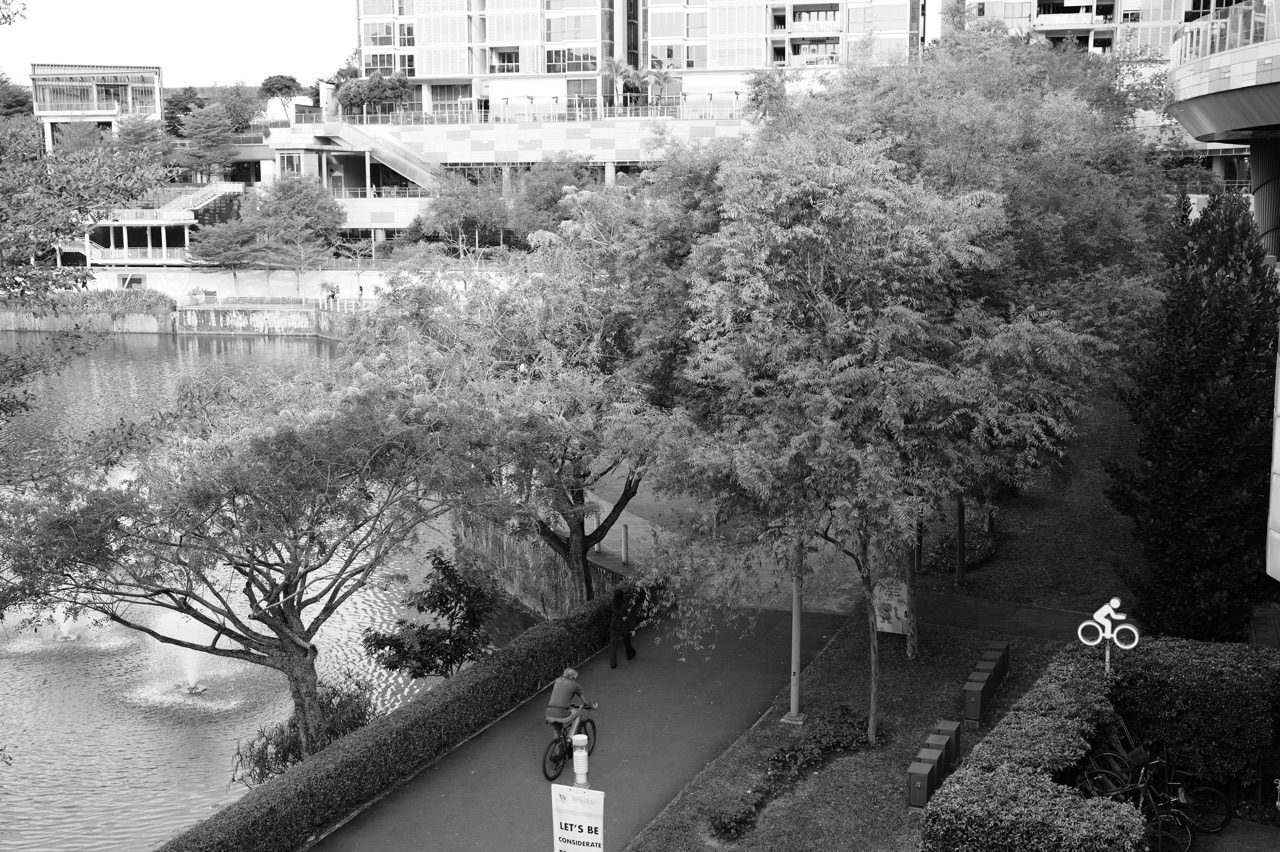
Can an adult who has never cycled learn in Punggol? Yes, but begin in an authorised suitable practice area with a properly fitted bicycle and a competent instructor or experienced supervisor who can teach balance, braking and controlled stopping. Do not make the busy Punggol Waterway Park Connector your first balancing lesson. Once you can reliably stop, look and turn without losing control, learn Singapore’s path markings before taking a recreational ride. LTA’s Confidence on Wheels programme covers rules and practical safe riding, but should not be assumed to provide a full zero-to-riding course or a current walk-in Punggol class.
This Learn to Cycle as an Adult in Punggol 2026 guide is for new riders, people returning after decades and residents who want to understand safe cycling before using public paths. It covers instructor selection, bicycle fit, braking, balance, helmet use, pedestrian-only markings, Waterway bridges, short route progression, equipment budgeting, heat and haze, and how to build confidence without creating risks for others. For the separate question of taking children cycling, read Family Cycling in Punggol; for the broader neighbourhood lifestyle, see Life in Punggol 2026.
Adult cycling in Punggol: quick answers
| Question | The useful first answer | Safety boundary |
|---|---|---|
| Can I learn as an adult? | Yes, with an appropriate beginner lesson and fitted equipment. | No fixed number of sessions guarantees competence. |
| Should I begin on a busy Waterway shared path? | No. Learn basic control in a suitable permitted practice setting. | Other path users should not bear a learner’s risk. |
| What is the key skill? | Control and reliable stopping before distance or speed. | A long scenic ride is not a substitute for safe braking. |
| Are helmets compulsory? | On Singapore roads, yes. LTA encourages helmets on paths. | Fit and condition still matter. |
| Can bicycles use Pedestrian-Only Paths? | No, not for ordinary travel on LTA’s converted Pedestrian-Only Paths. | Observe pedestrian-only logos and adjacent cycling-path markings. |
| What is Confidence on Wheels? | LTA programme covering active-mobility rules and practical safe riding. | Check current organisers and whether it suits complete non-riders. |
| Can I ride every Punggol Waterway bridge? | No. NParks restricts cycling on specific bridges and its boardwalk. | Read current signage and dismount where required. |
| Can I use a public shared bike for first lessons? | Only if permitted and suitable, with a properly fitted bike and safe practice environment. | App rental and parking conditions apply. |
| Must I ride 8.4 km? | No. The number describes NParks’ Waterway connector length. | Begin with short familiar sections after competence. |
| When should I cancel? | Unsafe weather, illness, equipment issues or insufficient control. | No commitment overrides safety. |
1. Why learning to cycle as an adult is a different task from family cycling
A child often learns bicycle balance during play with an adult supervising, while an adult beginner may be worried about falling, embarrassed about being new or concerned about using an unsuitable rented bicycle. Those feelings can affect learning. A calm competent instructor should take them seriously rather than dismissing questions or asking for a high-speed demonstration in front of strangers.
Adults also bring different needs: a resident may have worn glasses, past knee injuries, limited mobility, little experience with traffic or anxiety after a childhood fall. A lesson should begin by identifying those circumstances, checking equipment and deciding whether cycling is appropriate. Anyone with a significant balance disorder, recent injury or another relevant medical concern should seek individual advice before training.
Learning to steer and stop safely is the immediate goal; scenic travel can come later. The town’s cycle network is useful once a rider has control, but an 8.4 km connector with pedestrians and cyclists is not a teaching track. Practising where a child, wheelchair user or senior must suddenly dodge a wobbling learner creates unnecessary risk. A beginner should use a suitable authorised area and then progress under supervision.
The site’s Cycling in Punggol page explores the general route landscape. This article addresses the person who cannot yet ride—or whose current balance and braking skills are uncertain. These are different search questions and should not be solved with the same list of attractive waterfront bridges.
2. A basic fit-and-safety check before beginning
| Bicycle component | What a beginner should check | Why it matters |
|---|---|---|
| Frame size | Is the bicycle broadly suitable for the rider’s height and reach? | Poor fit can undermine steering and confidence. |
| Seat | Can the instructor adjust it appropriately for learning? | Balance and safe stopping need a suitable setup. |
| Handlebars | Can the rider hold and turn them comfortably? | Excessive reach can make control difficult. |
| Brakes | Do both work, and can the rider use them without confusion? | Stopping is essential before entering public paths. |
| Tyres | Are they sound and appropriately inflated? | Damaged tyres can affect handling. |
| Pedals and chain | Are moving parts functioning without defects? | Avoid sudden mechanical surprises. |
| Helmet | Does it fit snugly and fasten securely? | A loose helmet is not reliable protection. |
| Clothing | Could loose fabric catch in a chain or wheel? | Snagging can cause loss of control. |
| Practice location | Is it lawful, clear, level and suitable for a learner? | Prevents exposing other users to avoidable falls. |
LTA’s active-mobility guidelines specifically ask riders to check brakes, tyres, lights, handlebars and seats before setting off. SportSG’s bicycle safety guide similarly emphasises fitting equipment and wearing appropriate clothing. Those checks are not a guarantee against falling, but they remove avoidable problems that are especially significant for learners.
Do not pick a bicycle solely because it is inexpensive or available at the rental rack. A person may feel unable to stop comfortably on a bike that is too large. A beginner who is unable to use the brakes reliably should not move to a public cycling path. Ask the instructor to review suitability first. Equipment purchased for a future fitness routine may be wasted when the fit is wrong.
3. What a responsible first adult cycling lesson should teach
The instructor should explain how the bike balances and moves, how to mount or dismount appropriately, how the brakes work, how to remain in control at very low speed and how to stop when asked. The exact drills depend on the learner and equipment. This article deliberately avoids prescribing a universal sequence of pushing off, lifting feet or turning, because a qualified instructor should evaluate the person and practise in a controlled environment.
For a person with no riding experience, the first learning outcome may simply be confidence using the brakes and understanding a stable starting position. It is not a failure if no long ride happens. A returning adult may already know the balancing skill but still need to refresh safe path behaviour and controlled stopping. Such a person should not assume that childhood riding automatically qualifies them for Punggol’s modern path markings and rules.
Some learners feel discouraged when others progress faster. A capable teacher adjusts the practice demand and offers feedback without pressure. The goal is to become predictable and safe, not to win a race around a carpark. The best first lesson is one that ends with a realistic assessment of what the participant can do independently and what still needs supervision.
A cyclist should never train with a passenger, child seat or heavy shopping load until they can manage the bicycle appropriately. Different loads affect stability, steering and stopping. For a family’s legitimate child-passenger arrangements and safety rules, use the separate family cycling guide.
4. LTA Confidence on Wheels: what it is and what it is not
LTA’s Confidence on Wheels factsheet describes a refreshed programme launched in December 2021. It covers active-mobility rules and practical riding skills, with a stated 45-minute format and differentiated activity for participants. The programme grew from the earlier Safe Riding Programme. Its purpose includes helping people understand path use and develop safer riding habits.
That description is useful, but it is not evidence of a permanent public beginner class at Punggol Waterway on every weekend, nor a promise that a complete non-rider will learn to balance independently in 45 minutes. LTA has partnered organisations and volunteers for community sessions, while the published factsheet is historical background. Ask the current organisers about eligibility, actual venues and whether practical riding content suits someone who has never learnt balance.
LTA’s Active Mobility Community Ambassadors information describes outreach and community safe-riding initiatives, including Confidence on Wheels. That may help a neighbourhood group identify an appropriate enquiry route, but a brochure or prior event does not create a live reservation. If a person needs thorough zero-to-cycle instruction, they should also consider a suitable current coaching provider and confirm credentials and safe practice arrangements.
Do not confuse “Confidence on Wheels” with power-assisted bicycle certification. A conventional pedal bicycle, PAB and other devices have different legal and technical requirements. An adult learning to balance should start with a suitable ordinary bicycle and relevant training rather than attempting to learn on a more complicated powered device.
5. Singapore’s Pedestrian-Only Paths changed what new cyclists must notice
From 1 July 2025, LTA enforced the converted Pedestrian-Only Paths alongside dedicated cycling paths. These have pedestrian logos and wording, while permitted cycling routes have appropriate device/cycling markings. Ordinary bicycles must not be ridden along the converted Pedestrian-Only Path as their normal route. This may be unfamiliar to adults who learnt decades before these marked lanes existed.
LTA says standalone footpaths and shared paths retain their own permitted user arrangements. The difference is not “all pavements are banned forever” or “a bicycle may ride wherever a red lane exists”. The rider must observe signs, path type and applicable rules at the actual location. In circumstances such as crossing an adjacent pedestrian-only section to access a lawful junction, LTA recognises limited practical exceptions under its enforcement guidance; do not interpret these as permission to ride down the pedestrian path.
Walking is the correct response when an area is crowded or riding is prohibited. LTA’s code asks riders to give way to pedestrians, move slowly around vulnerable users, keep left, signal when turning and dismount or walk the bicycle where appropriate. A beginner who must stop and walk through a difficult section has demonstrated sound judgement rather than failed their fitness goal.
For confidence, ask a qualified instructor to explain the specific markings on a safe route after basic riding ability is established. At an LRT access path, a pedestrian-only section and cycling path may run side by side. The user must follow the correct one even if another cyclist is ignoring the signs. Public space is shared by children, seniors and people with disabilities who depend on predictable behaviour.
6. Punggol Waterway Park has particular no-riding sections
NParks’ Waterway park connector is an 8.4 km public leisure route used by walkers, runners and cyclists in designated areas. However, NParks’ current park connector safety and restrictions page identifies sections where cycling is prohibited, including Kelong Bridge, Wave Bridge, Adventure Bridge and the Waterway boardwalk. Observe on-site signs and walk the bicycle in prohibited sections.
A beginning adult should not assume every scenic bridge is safe for riding just because it has a broad-looking deck. The Waterway is a shared family destination with children playing, people photographing the bridges and older residents walking. An unfamiliar cyclist who approaches a crowded bridge at speed creates risk for everyone. Learn control and dismounting etiquette before planning long routes.
The nearby Punggol Park Connector and other park networks have their own signs and links. Use the official NParks Waterway page for orientation and current notices, not an old cycling video showing a rider crossing a no-riding bridge. Temporary works can affect access. The correct response to a closed or crowded route is to choose a suitable legal alternative.
7. Shared bicycles and the temptation to start immediately
A shared bicycle may be convenient for someone who already knows how to ride but does not own a bike. For an absolute learner, it may not have the ideal fit or a suitable practice setting. Shared-bicycle operators have registration, parking, payment and other terms. A rental unlock does not certify that you can control the bicycle. Ask whether a professional learning session offers properly fitted teaching bicycles before using a public fleet.
LTA reminds users that shared bicycles must be parked at designated zones and properly returned through the operating app. Ending a ride in an unauthorised location can create penalties or obstruct pedestrians. A cyclist who leaves a bicycle across the path to photograph the Waterway has violated the purpose of responsible active mobility even if the person has cycled safely until then.
If you choose to own a bicycle later, consider suitable storage and maintenance. An HDB corridor must not be obstructed by a bike. The purchase cost is only one part of cycling: appropriate helmet, lights, servicing, lock and possibly instruction all matter. Our Low-Cost Fitness in Punggol guide explains the difference between no-fee park access and the real ownership costs of a sport.
8. Helmet, visibility and route choice
LTA requires helmets when cycling on Singapore roads and encourages helmets on paths. A new rider may choose a helmet consistently rather than switching habits based on a route change. The helmet should be the right size, securely fastened and in serviceable condition. An impact-damaged or ill-fitting helmet is not adequate simply because it looks like protective gear.
Cycling after dark also requires appropriate lights and visibility under applicable rules. But someone learning from scratch may be better served by a suitable supervised daytime practice slot with good visibility and fewer path users. The learner does not need to make a night ride part of the first week. A daylight session can simplify observation of markings, crossings and equipment.
When using earphones or a phone navigation app, remain able to hear and respond to traffic, bells and people. Do not hold a phone while riding in a way that impairs control. LTA encourages cyclists to stay alert, signal intentions, keep appropriate spacing and give way to pedestrians. These habits matter more than accumulating kilometres for a tracker.
9. Adult cycling compared with walking and running
| Your objective | Cycling may be useful when… | Another activity may fit better when… |
|---|---|---|
| Enjoy Punggol outdoors | You have safe bike control and a permitted route. | You are still learning balance and stopping. |
| Build an everyday habit | Bike travel fits time, weather and parking. | A short walking route is simpler. |
| Increase aerobic activity | Your exertion and recovery are appropriate. | Cycling skill or health conditions make it unsuitable. |
| Spend time with children | Adults can supervise riders at suitable speeds. | The adult is a complete novice who cannot yet control the bike. |
| Use a device-free activity | You enjoy cycling without tracking every kilometre. | A social walk is more relaxing or accessible. |
| Try a low-cost sport | You have a suitable bicycle and maintenance budget. | Purchasing gear would be a financial strain. |
Cycling can contribute aerobic activity when performed at a suitable effort. But a short leisurely ride is not automatically equal to a vigorous workout. Singapore’s HealthHub guidelines describe weekly aerobic and strengthening activity; step counts and cycling distance are different measures. For the numbers-versus-health issue, read Walking Steps and Healthy 365 in Punggol.
A new cyclist should not choose biking solely because a tracker awards points for movement. The practical motivation may be reaching a local shop, enjoying Punggol Waterway on a weekend or cycling with friends. Those are valid goals, but the first step remains skill and responsible road or path use. Safety is part of a good exercise habit.
10. A five-stage adult cycling learning plan
| Stage | Question | A suitable coached focus | What allows progress |
|---|---|---|---|
| 1 — Fit and orientation | Is cycling suitable for me and the bike? | Check equipment, helmet and practice environment. | The setup is controlled and comfortable. |
| 2 — Basic control | Can I handle the bicycle and stop predictably? | Practise appropriately under competent supervision. | No need to expose public-path users to risk. |
| 3 — Confidence | Can I remain in control during gentle direction changes? | Learn controlled manoeuvres in a permitted area. | Brake and balance without panic. |
| 4 — Path literacy | Do I understand LTA and NParks markings? | Study shared/cycling paths, crossings and dismount points. | Can select a lawful safe route. |
| 5 — Short outing | Can I ride a familiar segment responsibly? | Try a modest permitted path under suitable conditions. | A safe return with room for other users. |
This is a learning framework, not a five-week guarantee or an invitation to perform drills without supervision. Each stage can take different amounts of time. Some adults already know how to balance but need safety education, while others need several sessions for basic control. A competent instructor should decide when public-path riding is appropriate. Learning should not be rushed because a family has booked a scenic cycling day.
If the learner discovers cycling is not currently suitable—perhaps because of ongoing medical concerns, severe balance difficulty or an unsuitable training environment—there are other valid ways to enjoy Punggol’s parks. A comfortable Waterway walk, guided indoor activity or adapted exercise option is not an inferior result. The aim is a healthier, more enjoyable life, not proof of riding ability.
11. Weather and fatigue change beginner safety
A person concentrating hard on balance and braking may tire in a different way from an experienced cyclist. Singapore’s heat and humidity can add to the demand. Check MSS heat stress guidance before prolonged outdoor sessions and seek suitable times, breaks and shade. The Waterway breeze cannot guarantee low WBGT. A learner who is overheated should not attempt a longer route merely to finish the plan.
During haze, use official air-quality advice and adapt outdoor activity to personal health and official guidance. When lightning or thunderstorms threaten, stop outdoor cycling and seek appropriate shelter. Use MSS lightning information. Do not continue under a tree or exposed park shelter merely because the practice area is close to home.
Fatigue after a night shift or school commitments also matters. Someone too tired to make safe decisions should postpone practising a new physical skill. Cycling while unwell, dizzy or experiencing concerning pain is not a productive way to gain confidence. Rest and appropriate professional advice can be the better choice.
12. Original worked scenario: an adult who cannot yet stop
A returning cyclist near Punggol Waterway
The adult used to ride as a teenager but has not cycled for twenty years. They rent a bike for a family outing and realise they are unsure how to operate its brakes. Rather than enter the crowded Waterway path, they stop and choose a competent instructor or appropriate practice setting. They ask whether the bicycle fits and when it is safe to return to shared routes. Their decision protects both family members and strangers. A past skill is useful history, not automatic present competence.
A complete beginner near Oasis
The learner has never balanced independently. A friend suggests practising on the connector because the path looks wide. The learner instead finds a suitable authorised environment with supervision and begins by learning basic control. Only once the ability to stop and handle the bike is reliable do they consider an easy legal route. There is no deadline for a full Waterway circuit, and nothing is gained by falling in front of pedestrians.
A parent who wants to accompany a child
The adult wants to ride beside a school-age child but has never been confident cycling. Instead of relying on the child to lead a joint ride, they take appropriate adult lessons first and review path rules. Later, the family chooses a shorter legal path where both can ride safely at the slower person’s pace. Until then, a walking outing remains a suitable way to enjoy the waterfront together.
13. How route and travel times affect a cycling habit
Cycling looks convenient on a map because Punggol has several park connectors, but actual access depends on path markings, crossings and temporary maintenance. A route may require dismounting at a bridge or entering a different path type. The shortest apparent line is not necessarily a legal or safe bicycle route. Use NParks’ and LTA’s guidance, and check on-site signs before choosing a journey.
The journey home matters too. If a rider becomes uncomfortable halfway along a Waterway path, they need a safe return. Someone using a rental must also know where and how to end the trip legally. When planning a first independent outing after appropriate instruction, choose a short familiar out-and-back, leaving flexibility to end early. Long distances should wait until the person has actual skill and stamina.
Cycling can eventually make some local errands easier, but not every destination permits bicycle parking or easy entry. A supermarket near an LRT station may have designated bike racks, while an indoor community area may prohibit bringing bicycles through certain spaces. Follow operator signage and do not park where a wheelchair or stroller user needs access.
14. The practical enquiry checklist for an adult first lesson
- Is the provider teaching complete non-riders or only people who already balance?
- Who is the competent instructor or responsible organiser?
- Where exactly is the lawful practice area, and is it suitable for a beginner?
- Are appropriately fitted training bikes and helmets available?
- Can the instructor explain the brakes and assess controlled stopping?
- What age or health conditions affect eligibility?
- Is the course an LTA safe-riding programme, a full learn-to-cycle class or a casual guided ride?
- How many participants share an instructor, and how is individual feedback given?
- Does the provider cover current pedestrian-only, cycling and shared-path rules?
- How does the class respond if someone is frightened, tired or unable to progress?
- Will the coach advise when it is safe to enter an ordinary public path?
- What are the fees, cancellations, equipment inclusions and actual dates?
- Can I reach the location and return comfortably?
- Do weather and haze conditions permit the planned session?
- Am I free to repeat a stage without embarrassment or pressure?
15. Common mistakes that create unsafe first rides
- Learning balance on a crowded Waterway path. Use a suitable supervised practice environment.
- Riding a bike with uncertain brakes. Stop and check equipment first.
- Choosing a frame too large because it is available. Fit matters.
- Assuming every footpath allows cycling. Follow LTA’s current classifications.
- Riding across signed no-cycling bridges. Dismount and walk through them.
- Assuming one 45-minute safety course teaches everyone to ride. Ask about the real programme’s scope.
- Buying expensive gear before a habit. Confirm fit and useful need.
- Taking a child passenger before learning safely. Learn personal control first.
- Chasing a tracker distance or speed number. Safe returns matter more.
- Ignoring haze, heat stress, lightning or fatigue. Postpone.
- Leaving a rented bicycle across a footpath. Park legally.
- Continuing after dizziness or an injury. Obtain appropriate care.
16. Frequently asked questions
Can an adult learn to ride a bicycle in Punggol?
Yes, through suitable instruction and a safe lawful practice environment, with progression determined by ability.
Where should a complete beginner practise?
In a suitable permitted uncrowded learning area with competent supervision, not on a busy Waterway path.
What should a first lesson teach?
Bike fit, balance concepts, safe control, braking and stopping before public-path riding.
Does Confidence on Wheels teach every adult from zero?
Not guaranteed. It is an LTA safety-and-practical-skills programme; confirm the specific session’s scope.
Is Confidence on Wheels currently available in Punggol?
The LTA factsheet confirms the programme, not a current weekly Punggol walk-in session. Check organisers.
Do I need a helmet?
Helmets are compulsory on roads and strongly encouraged on public paths, with proper fit.
Are bicycles allowed on Pedestrian-Only Paths?
Generally no, under LTA’s converted path rules; use permitted cycling or shared paths.
When did converted Pedestrian-Only Path enforcement begin?
1 July 2025.
Can I ride on the Wave Bridge at Waterway Park?
NParks prohibits cycling on the Wave Bridge and some other Waterway bridges and boardwalk sections.
Is Punggol Waterway a good first long route?
Not for someone without reliable control. Start with appropriately short familiar segments after learning.
Can I rent a shared bike for my first lesson?
Only if the bike is appropriate and the operator permits such use; a suitable training bike may be safer.
Must I buy a bicycle?
No. First establish whether the activity suits you, and ask about training equipment.
Does cycling count as exercise if my step counter stays low?
Yes, it can contribute to aerobic activity at suitable intensity; steps and MVPA are different.
Can I teach myself entirely from a video?
Videos may explain concepts but cannot assess live control, risk or the surrounding path; suitable coaching is valuable.
What about a recent balance issue?
Seek medical guidance before riding; do not treat a public pathway as a diagnostic test.
Can I cycle during haze?
Follow official air-quality advice and your healthcare needs; postpone when inappropriate.
Can the family cycle before I am confident?
Choose a suitable walking or alternative outing instead of forcing an unsafe ride.
Is road cycling required?
No. A resident can enjoy permitted cycling paths without choosing road traffic as an immediate goal.
When should I move from practice to a public path?
When a competent instructor or suitable assessment establishes reliable stopping and path awareness for that setting.
Related reading across eduKate’s Punggol ecosystem
- Life in Punggol — Master Lifestyle Guide
- Cycling in Punggol — Routes and Rules
- Family Cycling in Punggol — Children and Legal Paths
- Walking for Everyday Errands
- Low-Cost Fitness in Punggol
- Heat Stress and Outdoor Exercise
- Walking Steps and Healthy 365 in Punggol
- Resistance Band Training in Punggol
- Chair Exercises for Older Adults in Punggol
- eduKateSG — Punggol Transport Geography and Urban Mobility
Official sources and editorial note
- LTA — Confidence on Wheels Programme
- LTA — Active Mobility Community Ambassadors
- LTA — Current Path Rules and Safety
- LTA — July 2025 Pedestrian-Only Path Enforcement
- SportSG — Bicycle Safety and Equipment
- NParks — 8.4 km Punggol Waterway Connector
- NParks — Park Connector Restrictions and Etiquette
- MSS — Heat Stress
- MSS — Lightning
- NEA — Haze Advisories
Reviewed 18 October 2026. This is general local cycling and active-mobility education, not a live instruction course, personal ability certification or current class booking. The LTA Confidence on Wheels factsheet is background, not guaranteed present Punggol availability. New riders need suitable supervision and must observe actual path signs and current safety rules.


