
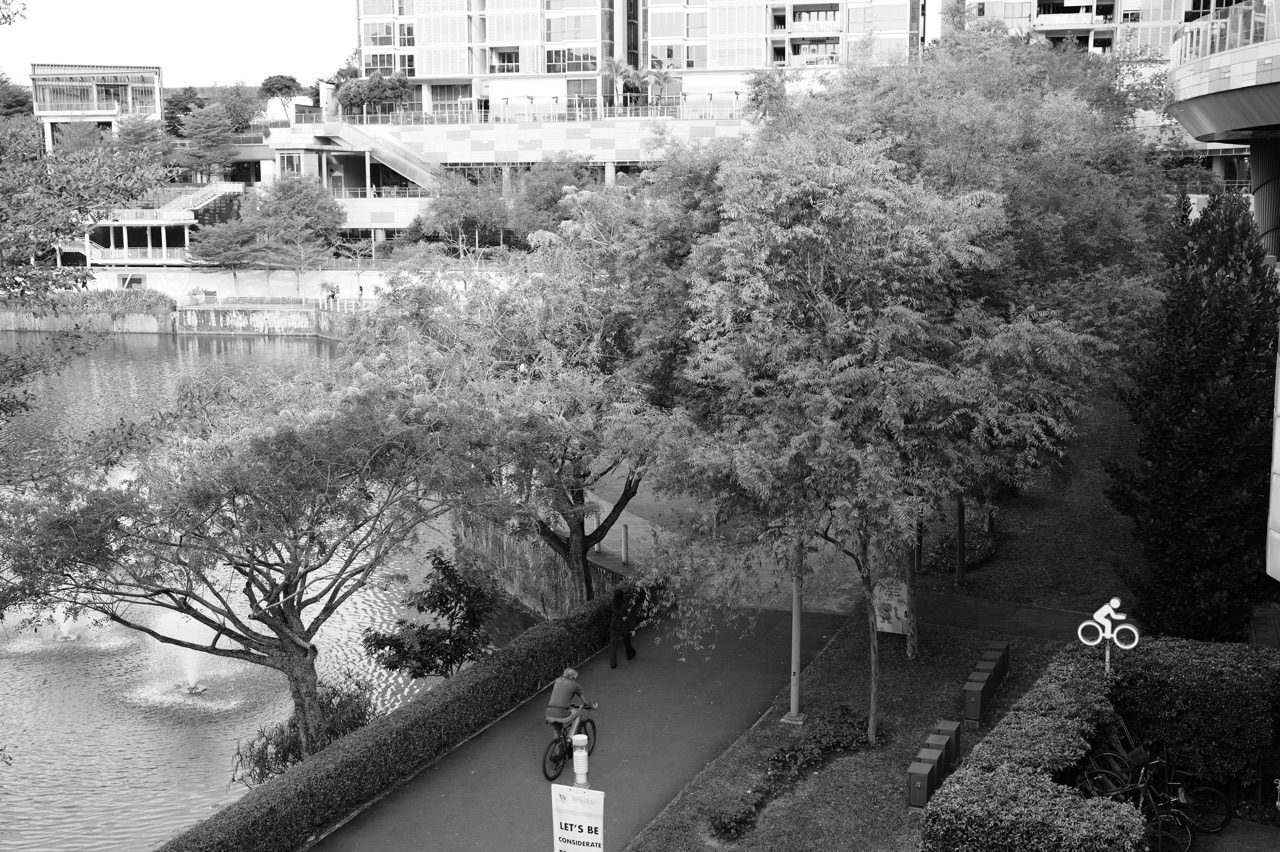
How should you warm up and cool down before a Punggol Waterway run, a family cycling outing or a weekend ball game? Begin with about five to ten minutes of light-to-moderate movement that gradually prepares you for the activity, then make the main session appropriate to your current fitness. At the end, reduce effort gradually for another five to ten minutes, with comfortable movement and suitable gentle stretching. This follows Singapore Health Promotion Board (HPB) safety guidance. It does not mean that five minutes makes an otherwise unsafe run, injury, lightning storm or high-heat condition safe.
This Punggol Warm-Up and Cool-Down Guide 2026 is a companion to the town’s established running, cycling, badminton, strength and Waterway walking articles. It explains what warm-up actually changes, dynamic versus sustained stretching, which ideas transfer across activities and which do not, why a cool-down is not an injury-proof shield, how to respond to Singapore’s heat and haze, and four realistic household worked examples. The goal is not a complicated routine. It is a simple preparation-and-recovery system a reader can actually use.
Warm-up and cool-down in Punggol: quick reference
| Situation | Useful general answer | Important boundary |
|---|---|---|
| Before moderate exercise | HPB recommends 5–10 minutes of light-to-moderate preparation. | Adapt to personal health and the actual activity. |
| Before an easy walk | Begin comfortably and gradually increase pace if appropriate. | A demanding pre-walk routine is not always necessary. |
| Before running | Walk easily, then increase pace gradually and use suitable sport-specific preparation. | Don’t jump from sitting on the MRT into sprinting. |
| Before badminton or basketball | Gradually move, then rehearse appropriate changes of direction and controlled sport skills. | No aggressive lunges before readiness. |
| Before strength training | Use easier movements and controlled technique before demanding resistance. | An unloaded example does not certify technique. |
| After exercise | Gradually reduce movement and consider gentle appropriate stretching. | Stop for dizziness, chest pain or concerning symptoms. |
| During haze or thunderstorms | Follow official environmental warnings and operator instructions. | Warm-up cannot offset hazardous conditions. |
| During high heat stress | Adjust or postpone activity using MSS WBGT guidance. | A breeze beside the Waterway is not a safety measurement. |
The official HealthHub Physical Activity Safety Factsheet explicitly advises 5–10 minutes of warm-up at light to moderate intensity, then 5–10 minutes of lower-intensity movement as a cool-down. It recommends increasing activity gradually and stopping if chest discomfort, unusual pain, dizziness or other concerning symptoms occur. These are population-level guidelines, not a replacement for an individual exercise or medical assessment.
1. Warm-up, main exercise and cool-down serve different purposes
A warm-up is the transition from the activity you were doing before—perhaps sitting at home or travelling on the Punggol LRT—into the effort you are about to attempt. It gradually increases movement, circulation and breathing. A main workout is the running, cycling, ball sport or strength practice you intended to perform. A cool-down is the transition back to lighter activity, allowing the change in exertion to happen more gradually. Treating them as three phases is simpler than memorising dozens of random stretches.
Consider a worker who spends nine hours at a desk and meets friends for badminton in the evening. They may feel mentally ready to play a match, but their body has spent most of the day moving very little. Starting immediately with explosive court sprints and deep reaching is an abrupt change. Spending a few minutes walking, moving comfortably and practising gentle racket-specific actions makes more sense. However, the warm-up does not magically remove the chance of injury; technique, footwear, fatigue and the playing surface still matter.
Another person may already have walked briskly for ten minutes to reach Waterway Park. Their preparation begins from a different physiological state, so an identical additional routine may be unnecessary. The point is to understand the transition, not protect a fixed ritual. A suitable coach or healthcare professional can advise when a participant needs a more specific preparation.
At the other end of a session, do not confuse cool-down with a competitive stretch contest. After a run, walking at a comfortable pace can be useful; after a strength workout, gentle movement and recovery may fit. The purpose is a considered transition rather than immediately collapsing onto a bench after hard exertion. Severe symptoms should lead to stopping and seeking care, not simply walking a few more laps.
2. Why Singapore’s HPB emphasises gradual activity
HealthHub’s Finding Your Way Back to Exercise Safely advises beginners to start slowly and increase the intensity and duration of activity as fitness develops. It also recommends warm-ups and cool-downs, choosing appropriate exercise levels, and building sustainable habits. This is important because the person returning after inactivity may have a different starting point from the friend who runs regularly.
It is tempting to make a resolution such as “I’ll run five kilometres every morning from tomorrow.” But a large change in weekly load cannot be compensated for solely by a warm-up. The body still needs time to adapt. A sensible plan might begin with short comfortable walks or appropriate walk–run sessions, then develop as suitable. The site’s First 5K Running in Punggol guide addresses distance progression separately.
Warm-ups are useful for experienced participants too, but experience should not encourage false confidence. Someone who regularly trains may be especially tempted to rush from a car directly into a match because they believe their fitness guarantees safety. Physical preparation, correct equipment, an appropriate venue and attention to fatigue are still relevant.
3. The difference between dynamic movement and held stretching
| Method | Everyday meaning | How it may fit |
|---|---|---|
| Easy dynamic movement | Repeated controlled movement through an appropriate range. | Often suitable during gradual pre-sport preparation. |
| Activity rehearsal | A slower version of a movement used in the actual sport. | May help preparation when done under safe technique. |
| Sustained gentle stretching | Holding a comfortable position without bouncing. | Often included after activity or separately for flexibility. |
| Forceful or ballistic stretching | Bouncing or forcing a joint into a greater range. | Not a beginner requirement; can create risk. |
| Maximal exercise | Sprinting, high-load lifting or aggressive jumps. | Not an appropriate replacement for a gradual warm-up. |
“Dynamic” does not mean fast, dramatic or difficult. Controlled walking, gentle arm movements and suitable sport-specific preparation can qualify without putting joints at extremes. “Static” means a position is held rather than moved through repeatedly. Both ideas have uses in appropriately designed programmes, but neither should be applied without considering a participant’s ability. An internet list of stretches cannot assess an individual shoulder, knee or back.
HealthHub’s Healthy Ageing exercise page includes a stationary march for warm-up and supported gentle stretching in the cool-down. It specifically warns against bouncing stretches and advises normal breathing. Those examples illustrate controlled progression, not a mandatory protocol for every teenager, athlete or person living with a disability.
If a stretch produces sharp pain, tingling, dizziness or unusual discomfort, do not force it. Some readers cannot safely do standing stretches without support, while others have health needs that require individual assessment. The most useful decision is selecting an appropriate version, not trying to perform the same pose as a high-level athlete on a video.
4. A Waterway walk or jog: what changes with the activity?
Punggol Waterway Park offers paths for walking, running and appropriate cycling, but a leisurely family stroll and an interval-running session demand different effort. Before an easy walk, simply start at a comfortable pace and build it gradually if desired. A novice runner might begin with walking, then small relaxed jogging intervals when appropriate. A more experienced runner may need an activity-specific progression, but that should reflect the planned intensity.
The NParks Punggol Waterway Park reference confirms the park’s recreational setting. The park’s 8.4 km connector is not a warm-up distance or a required training loop. You can use a short familiar segment with an easy return. Don’t select a long unfamiliar route that leaves you forced to finish when tired.
A new runner’s most common mistake is not a missing stretch; it is beginning too fast. If the first minute already feels like a sprint, warm-up cannot rescue the entire session. Slow down and choose an effort suited to your current ability. Talk-test descriptions can help discuss intensity in broad terms, while individual medical considerations still matter. See How Much Exercise Is Enough in Punggol?.
On return, choose a safe place to slow or stop without blocking the shared path. You may find that an easy walk for several minutes makes the transition more comfortable. You are not required to complete another scenic bridge or run a fixed distance to prove the cool-down counts. When weather deteriorates, shorten the plan rather than prolonging outdoor exposure just to finish a ritual.
5. Badminton, pickleball and other stop–start Punggol sports
Racket sports involve short bursts, reaching, lateral movement and sudden changes of direction. A relaxed rally session is not identical to a competitive doubles match. Before playing, begin with suitable easy movement and then practise gentle strokes rather than jumping straight into maximal smashes or lunges. Court shoes, dry surfaces, space awareness and correct booking all matter.
A family might be attending Badminton for Beginners in Punggol at an authorised One Punggol court. If new players have not learnt how to move safely around their partner, more powerful hitting is not the solution. They first need control, familiarity with court boundaries and a suitable pace. Similarly, Pickleball for Beginners has different rules and the kitchen zone, which should be explained before a vigorous game.
Ball sport needs recovery too. A working adult who has already played a demanding session might want a calm walk after leaving the hall, but they should not interpret every minute walking back to the MRT as a formal rehabilitation technique. Listen to fatigue and personal symptoms. If someone has repeated ankle sprains, for example, a professional assessment and appropriate training may be more important than copying a generic ankle-roll warm-up from a video.
6. Strength training: preparing for resistance safely
Resistance exercise requires the participant to understand the movement and control the intended load. A warm-up may use comfortable lower-intensity activity, then an appropriately easier version of the exercise or lighter load under correct technique. Do not attempt a maximum lift simply because you have marched for five minutes. HealthHub’s Injury-Proof Your Moves advises people to learn correct form, choose a manageable difficulty and seek suitable professional coaching.
In an HDB living room, space and neighbour considerations also matter. Avoid selecting large jumping movements or dropping heavy equipment if that creates hazards or unreasonable noise. The site has a distinct Strength Training in Punggol article and HDB Stair-Climbing guide for the specific settings.
An older adult may need adapted exercise and stable support, especially with falls risk. HPB’s healthy-ageing page illustrates supported options. A teenager using a school gym should follow coach and school guidance. A person with recent surgery or a significant chronic condition may require individual medical or rehabilitation instructions. One size does not fit all simply because the heading says “beginner warm-up”.
7. Cycling: a bike route is not a safe place to stretch
A family cycling outing in Punggol requires fitted bicycles, braking confidence, awareness of path markings and a route suited to the least experienced rider. Before riding, people may benefit from gentle movement and a short easy start under appropriate safety guidance. A child learning to balance needs control and supervision, not a pre-ride flexibility challenge. Families should not gather across a busy cycling path to perform exercises or block a bridge while waiting.
The Family Cycling in Punggol guide explains helmet choices, pedestrian-only restrictions and selected no-riding bridges in Waterway Park. These are route rules that a warm-up cannot override. A well-prepared cyclist still needs to dismount where required and be alert around pedestrians and other path users.
After the ride, slow down and dismount in an appropriate place. Don’t suddenly stop in the middle of a shared path or carry out floor stretches on a narrow promenade. A suitable quiet space or home may be better for any flexibility work. The cool-down should make the end of the activity calmer, not create a new risk for everyone nearby.
8. Children, PE and CCAs need an age-appropriate approach
Schoolchildren may already receive PE and supervised training through CCAs. A parent does not need to impose a separate adult warm-up before every ordinary playground visit. However, a child starting a demanding organised sport should receive suitable instruction and a gradual introduction under the school or club’s programme. The correct movements depend on the activity and the child’s maturity, experience and needs.
The site’s Active Play for Primary-School Children in Punggol explains why movement should be enjoyable, varied and coordinated with sleep. For older students, Healthy Teenage Life in Punggol places physical activity alongside training load, homework and school travel. These considerations often matter more than a rigid adult pre-exercise checklist.
A coach may ask the team to move gradually, practise basic patterns and learn safety calls. Parents can support the programme by ensuring suitable clothing, punctual arrival and appropriate rest, rather than insisting on advanced flexibility drills from social media. If a child reports persistent pain or recurring fatigue, seek appropriate guidance rather than telling them to stretch harder.
9. A simple decision table for common Punggol situations
| Starting situation | General preparation idea | Sensible finish | Watch for |
|---|---|---|---|
| Waterway walk | Begin comfortably and increase pace if wanted. | Slow naturally and rest. | Heat, path crossings and individual energy. |
| First 5K walk–run | Easy walk before modest run intervals. | Easy walking and recovery. | Overfast starts and pain. |
| Badminton or pickleball | Gradual movement then controlled familiar strokes. | Lower-intensity movement after play. | Slippery court, sudden lunges. |
| Strength workout | Comfortable movement and appropriately easier technique. | Gentle motion, rest and suitable stretches. | Poor form and excess load. |
| Family cycling | Check bikes, then begin slowly on permitted paths. | Slow safely and dismount away from traffic. | Rider control, helmets and signs. |
| Seniors’ adapted movement | Health-appropriate gentle preparation with suitable support. | Controlled, accessible finishing movements. | Falls risk or dizziness. |
| After a night shift | Evaluate tiredness and whether exercise is appropriate. | Prioritise adequate recovery. | Drowsiness and unsafe exertion. |
This is a general planning matrix, not a medical exercise prescription. It is meant to prevent the error of treating all movement as the same. A person who is medically advised to avoid a particular motion should not use a public guide to override that restriction. Qualified coaches and healthcare professionals can adapt warm-up and cool-down activities to individual needs.
10. Heat, haze and lightning are gates, not minor inconveniences
Punggol Waterway has attractive open views, but a coastal breeze does not establish safe conditions for prolonged outdoor activity. The Meteorological Service Singapore publishes a Wet-Bulb Globe Temperature heat-stress advisory. When it advises reduced or minimised prolonged activity, adjust the actual main session; do not attempt to make it safe by stretching longer. Refer to MSS Heat Stress and Punggol Heat Stress and Exercise.
Haze is a different exposure. Air quality needs to be considered using official Singapore haze information, especially when exertion increases breathing rate or participants have health vulnerabilities. A person cannot warm up pollution out of the air. A safe alternative may be a suitably ventilated indoor movement activity or rest depending on prevailing advice.
Lightning is a separate and potentially acute risk. Stop outdoor activities during relevant thunderstorm and lightning warnings and seek appropriate safe shelter, following MSS Lightning Information. Do not keep walking or stretching under a tree or open-sided park shelter merely because the cool-down has not finished. An exercise routine must remain subordinate to urgent environmental safety.
A good family plan therefore has a gate before the warm-up: check health, location and environmental conditions; only when the activity itself is suitable should the preparation begin. This prevents the common error of perfecting a five-minute routine while ignoring an unsafe venue or severe weather.
11. An original example: the Waterway 5K runner’s three mistakes
Imagine a Punggol resident who has decided to run five kilometres after months of sitting at a desk. They step off the LRT, sprint towards the Waterway immediately and become breathless within minutes. After turning back, they stand still for an extended period and feel unwell. Then they blame the problem on failing to stretch their calves. This diagnosis misses the bigger issues: abrupt exertion, possibly excessive pace for current readiness, and inadequate attention to symptoms and gradual transition.
A better approach begins with recognising the actual fitness starting point. The resident chooses a short route with an easy return, checks environmental conditions and begins with comfortable walking. If they are medically suitable to jog, short relaxed intervals can follow. At the end they reduce intensity appropriately rather than forcing a dramatic finish. If alarming symptoms recur they obtain medical advice. The cause was not necessarily a missing special stretch.
The lesson transfers to other sports. A competitive badminton player returning after inactivity may need to reduce session intensity, not simply lengthen their warm-up. A family cyclist who feels unsteady needs braking practice and an appropriate route, not an aggressive hip stretch. Identifying the real bottleneck prevents the wrong solution from becoming a ritual.
12. An original example: a parent and child at Punggol Waterway Park
A parent brings a Primary 4 child for an afternoon scooter-free walk and gentle outdoor play. The parent has seen a social-media video of adult sprint drills and wants the child to complete it before any movement. But the child is planning ordinary comfortable play, not a competitive match. The more useful action is to check heat and weather, make sure the route is safe, begin naturally and keep the outing enjoyable. If the child later joins a demanding organised sport, the coach can teach a relevant warm-up.
The parent also needs to avoid teaching that body discomfort must be ignored. If the child becomes dizzy or unwell, the outing ends and appropriate care is sought. A young person’s activity habit grows through enjoyment and confidence; transforming every outing into a compulsory drill may undermine the very goal of being more active.
13. An original example: four friends renting a badminton court
Four working adults book a badminton court near Punggol and arrive at different times. Two have been active all week and two have been sitting at desks. One proposes starting immediately with a competitive game because the booking is only an hour. Instead, they use a brief suitable preparation and a few gentle practice rallies, recognising that different members may need different effort. They also check court footwear and playing surface before increasing pace.
The group finishes when everyone still has a safe return journey and adequate recovery. No one must add a harder game to compensate for preparation time. If someone has recurrent ankle pain, they pause and seek appropriate advice. The social experience is more likely to be repeated when members feel welcome and physically safe rather than embarrassed about slower readiness.
14. An original example: a worker returning from a night shift
A shift worker arrives home in Punggol in the morning and sees a gym plan reminding them to train. They have slept little and feel drowsy. A motivational message says no excuses. But a warm-up cannot replace missed sleep or make unsafe exertion acceptable. The responsible choice may be to eat appropriately, secure a realistic sleep period and choose a lighter activity later when rested. Fitness is not a race against the clock.
For a different roster where the worker has slept sufficiently and feels well, a suitable session may be possible. They can use the same gradual preparation and recovery principles as other adults, adapted to available time. The companion Life in Punggol for Shift Workers explains how schedule, transport and sleep interact. Context determines the right decision.
15. A four-week habit experiment
| Week | One question | Small test | What to keep |
|---|---|---|---|
| 1 | Do I begin too quickly? | Notice how the first few minutes feel during an appropriate activity. | A controlled gradual start. |
| 2 | Is my activity-specific preparation sensible? | Compare the session’s actual movement demands with the warm-up. | Useful rehearsal, not unnecessary complexity. |
| 3 | How do I end the session? | Leave time for a comfortable gradual transition. | Finishing without abrupt overexertion. |
| 4 | Is the routine working in real life? | Review enjoyment, recovery and any recurring symptoms. | A repeatable practice, adjusted as needed. |
This is not a four-week medical programme or a guarantee against injury. If the routine does not feel suitable, adapt with appropriate professional guidance. The experiment’s purpose is to identify the recurring friction point: perhaps someone consistently starts too fast, arrives late, feels pressured by friends or ignores unsafe weather. Fixing that constraint can make preparation simpler and more effective.
16. A clear checklist before a Punggol weekend sport session
- Check whether you are healthy and appropriately rested to exercise.
- Choose a permitted venue and current safe route.
- Check MSS heat stress, lightning and official haze advice as applicable.
- Use suitable footwear and sport equipment.
- Begin with approximately five to ten minutes of appropriate lower-intensity movement, adapting to the activity.
- Move in control rather than copying advanced stretches or explosive drills.
- Increase the main activity only as suitable for current readiness.
- Use breaks, hydration and support as appropriate to individual needs.
- Stop if serious symptoms or sharp pain appear.
- Finish with an appropriate gradual decrease in effort, usually five to ten minutes under HPB guidance.
- Consider comfortable gentle stretching if suitable, without bouncing or forcing joints.
- Leave shared paths and courts clear for other people.
- Plan food, travel, rest and the next day’s obligations.
- Review recurring pain or unusually poor recovery with an appropriate professional.
17. Frequently asked questions
How long should I warm up before exercise in Singapore?
HPB’s safety fact sheet advises five to ten minutes of light-to-moderate warm-up.
How long should a cool-down take?
HPB similarly advises around five to ten minutes at reduced intensity.
Must I stretch before every walk?
Not necessarily. A comfortable gradual start may be appropriate for an easy walk, depending on health and activity.
Is a warm-up enough to prevent every injury?
No. It is one part of safety alongside suitable load, equipment, technique, venue and individual health.
Are dynamic movements better than holding stretches?
They serve different purposes. Appropriate warm-up often uses controlled movement; gentle sustained stretching can be part of a cool-down.
Should I bounce while stretching?
Avoid forceful bouncing; HPB’s older-adult stretching guidance advises gentle supported movement.
Can I run 5K immediately after a warm-up?
Only if that effort suits your current fitness and health; a warm-up does not replace gradual training progression.
What should I do before badminton?
Use an appropriate easy movement phase followed by controlled sport-specific preparation, with correct shoes and safe court use.
Does strength training need a different preparation?
Yes, technique and suitable progressive resistance matter; ask a qualified coach when needed.
What if it is too hot on Punggol Waterway?
Use MSS WBGT guidance and change or postpone activity as indicated.
Will stretching make haze exercise safe?
No. Follow official air-quality guidance and reduce or avoid inappropriate outdoor exertion.
Can I finish my cool-down during a thunderstorm?
Do not stay outside for a routine if lightning conditions are unsafe; seek appropriate shelter.
Do schoolchildren need adult warm-up circuits?
Not automatically. Age-appropriate movement and sport-specific school or coach guidance should determine preparation.
What if I have recent knee surgery?
Follow individual medical and rehabilitation guidance instead of generic routines.
Is soreness a sign that my warm-up worked?
No. Soreness is not a required benefit and persistent or worrying pain warrants assessment.
Can I cool down by simply sitting?
A gradual decrease in activity is often recommended; severe symptoms require urgent appropriate response, not a routine.
What if I work night shifts?
Protect sleep and assess fatigue; warming up cannot substitute for adequate rest.
Do I need to buy special equipment?
Usually not for general comfortable movement, but different sports and conditions may require suitable gear.
Can I use public paths for stretching groups?
Not if the group obstructs other users. Choose an authorised suitable clear space.
What is the best overall rule?
Prepare gradually, choose appropriate effort, respond to conditions and finish thoughtfully.
Related eduKate Punggol guides for an active, safe week
- Life in Punggol 2026 — master lifestyle guide
- Exercise in Punggol — Beginner Plan
- First 5K Running in Punggol
- Strength Training in Punggol
- Badminton for Beginners in Punggol
- Family Cycling in Punggol
- Weekend Sport and Recovery
- Heat Stress and Outdoor Exercise in Punggol
- Exercise Intensity and Weekly Minutes in Punggol
- eduKateSG — Punggol Waterway and Student Life
Official sources and editorial note
- HPB — Physical Activity Safety: Warm-Up and Cool-Down
- HealthHub — Finding Your Way Back to Exercise Safely
- HealthHub — Exercise Form and Injury Awareness
- HealthHub — Healthy Ageing Warm-Up and Cool-Down
- HPB — Move It: Four-Minute Warm-Up and Six-Minute Cool-Down Videos
- NParks — Punggol Waterway Park
- MSS — Heat Stress
- MSS — Lightning Information
- Singapore Haze Guidance
Reviewed 21 October 2026. This is general physical-activity education, not an individual warm-up prescription, rehabilitation plan or medical clearance. Appropriate preparation depends on health, activity and experience. Stop for concerning symptoms, seek suitable professional guidance and follow official environmental advisories. Worked cases are fictional illustrations.


