
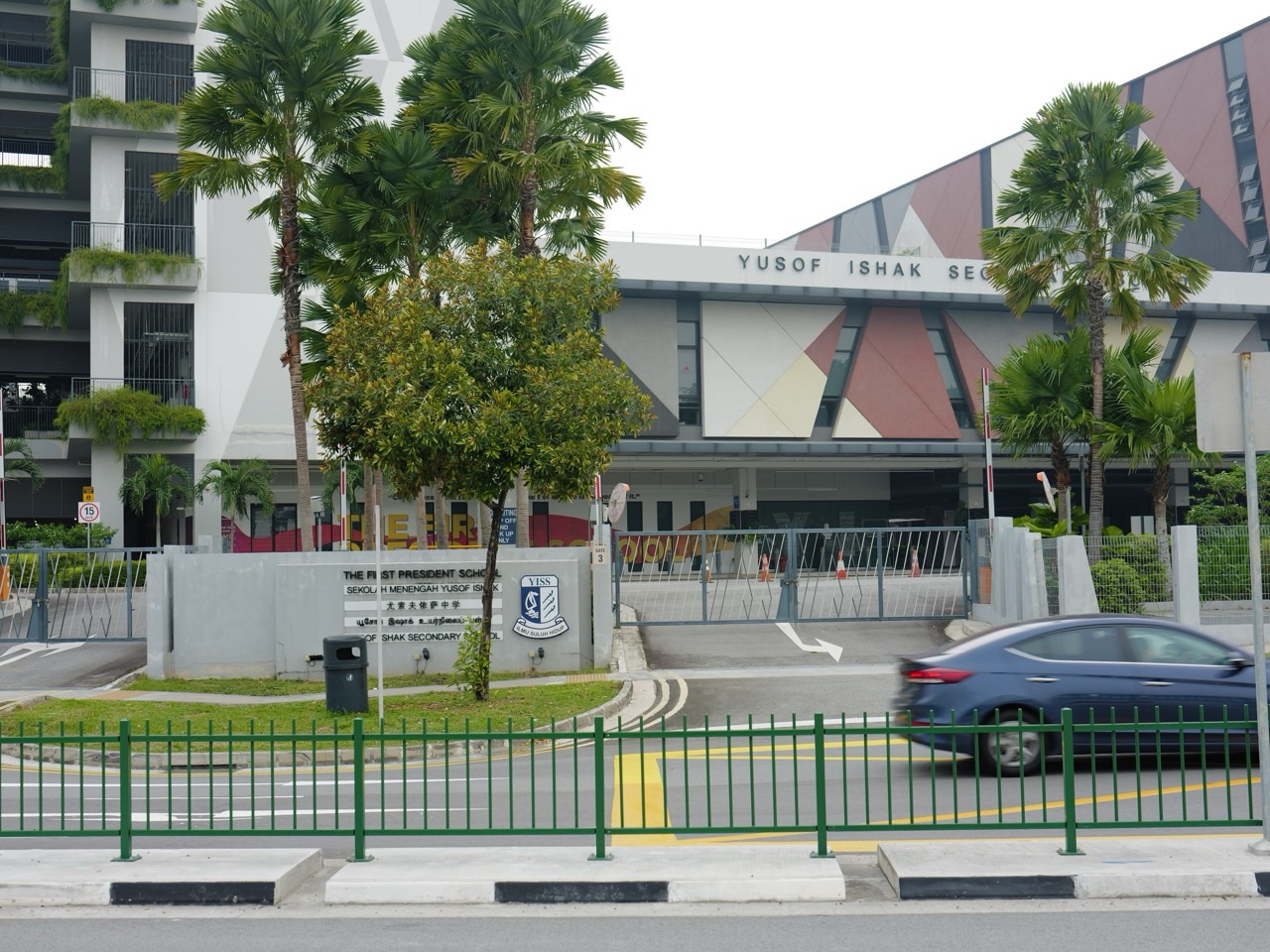
Quick answer. Singapore schools plan lessons, Physical Education (PE), CCAs, outdoor camps and national examinations around the latest government weather and environmental guidance—not an automatic rule that a single bad reading always closes school. In the 4 September 2026 haze response, the National Environment Agency (NEA) reported a 24-hour Pollutant Standards Index (PSI) of 101 in central Singapore, entering the Unhealthy category. The interagency statement confirmed that MOE schools were prepared to adjust activities, that classrooms had air purifiers, and that national examinations would proceed as scheduled unless a formal closure or rescheduling decision was made.
Parents should distinguish 24-hour PSI, which NEA uses with its forecast and health advisory for next-day planning, from 1-hour PM2.5 concentration, which helps inform more immediate decisions. Heat is another measurement: Singapore’s heat-stress advisory uses wet-bulb globe temperature (WBGT), not simply the ordinary air temperature on a phone’s weather display. Lightning and thunderstorms demand immediate attention to actual meteorological and organiser warnings, regardless of whether haze and heat readings are benign.
For children, the safe response is neither to insist that all outdoor activities continue nor to cancel every school day without instruction. Schools and professional organisers follow risk-management plans and make operational changes where necessary. Children and students with relevant health conditions may need individual precautions, arranged through their school and healthcare providers. NEA’s September 2026 advisory says N95 masks are generally unnecessary for short commuting exposure and should not be treated as a substitute for reducing risky outdoor activity.
This guide explains how the school safety system works, which authority controls information, how parents should interpret haze, heat and lightning warnings, and what happens to outdoor PE, camps, student care and national exams. It includes original data-reading tasks and realistic Punggol family scenarios, practical checklists, 27 FAQs and authoritative sources reviewed 21 October 2026. It does not make any current local weather forecast.
Weather and air-quality indicators compared
| Indicator | What it means | Use |
|---|---|---|
| 24-hour PSI forecast | Overall air quality category over relevant period | Next-day or longer haze planning |
| 1-hour PM2.5 | More immediate fine-particle concentration | Near-term air-quality decisions |
| WBGT | Heat-stress index, not ambient temperature | Outdoor heat-exposure precautions |
| Lightning information | Detected/forecast thunderstorm electrical activity | Immediate outdoor safety response |
| Official school notice | Current authorised programme decision | Attendance, CCA, pickup and exam arrangements |
Quick reading routes
- PSI, PM2.5 and real September 2026 haze
- What happens to school and national exams
- Heat/WBGT and lightning
- Punggol transport, CCA and home decisions
- FAQs and primary sources
1. Safety decisions use more than the visible sky
A clear-looking sky can still have environmental risks, while a dramatic dark cloud does not by itself establish a school’s precise programme decision. Teachers and organisers need current weather information, official advisories, participants’ needs and the nature of the activity.
A one-minute walk between covered buildings differs from a strenuous outdoor camp. A pupil with an existing respiratory condition may require different support from another learner. The child’s school can communicate relevant instructions.
Families should avoid using their own informal visibility test to overrule current NEA, MOE, MetService or provider guidance. Responsible decisions are contextual, not based on a single photograph.
2. Which authority supplies which information?
NEA provides air-quality and haze guidance, while the Meteorological Service Singapore provides weather and lightning information. Sport Singapore publishes guidance for organised physical activity, and MOE works with schools on operational safety and education.
School principals, staff and approved trip organisers apply their actual procedures to a lesson, CCA, camp or examination. Individual healthcare professionals advise on personal conditions.
A private tuition provider or parent-group administrator cannot declare a national school closure. The relevant authority should be named whenever a significant schedule or health claim is made.
3. What PSI measures in the haze context
Singapore’s Pollutant Standards Index is an official air-quality indicator combining relevant pollutants under NEA’s methodology. It is not the same thing as the amount of dust a person can see near a bus stop.
When authorities describe an Unhealthy PSI range, they are discussing an environmental exposure indicator and associated health advisory. The effect of exposure also depends on duration, intensity and individual vulnerability.
Parents should use the official haze.gov.sg or NEA service rather than a crowdsourced screenshot without a timestamp and region. The same number reported on another day may no longer reflect the situation.
4. The five official PSI categories
The general PSI bands are Good: 0–50; Moderate: 51–100; Unhealthy: 101–200; Very Unhealthy: 201–300; and Hazardous: above 300. These categories are a useful starting point for interpreting air-quality information.
The category does not independently determine all physical activity decisions. A student’s health and how long or intensely they exert themselves matter, and the actual government advisory should be consulted.
A family can teach children to read the category and source date rather than assume that a value of 99 and 101 are identical just because the two digits look close.
5. September 2026 gives a real example
On 4 September 2026 NEA reported that the 24-hour PSI had reached 101 in Singapore’s central region. It said this was the first move into the Unhealthy range from haze since October 2023 and activated the relevant interagency responses.
The event demonstrates that Singapore schools have active haze procedures, not merely a theoretical handbook. The government provided guidance for preschools, national schools, healthcare, sport and other activities.
The historical PSI of 101 is not a measurement for Punggol today. It should only be used as a dated example to explain the system.
6. The 24-hour PSI is used for forward planning
NEA’s FAQ explains that its 24-hour PSI forecast and accompanying health advisory are suitable for planning extended outdoor activity or an event over the following day. A school organising a field trip or sports activity needs more than an instant snapshot.
An organiser may check the forecast, relevant health categories and possible alternatives. The planned itinerary can be adjusted if conditions worsen.
The fact that a school planned outdoors yesterday does not mean it must proceed unchanged tomorrow. Forecasts express expected conditions and should be monitored as circumstances evolve.
7. The 1-hour PM2.5 reading serves a different purpose
NEA distinguishes the more immediate 1-hour PM2.5 concentration from the 24-hour PSI forecast. PM2.5 refers to fine airborne particles, and the shorter-term reading can help inform immediate decisions about shorter outdoor activities.
The two quantities are not interchangeable numbers. A parent cannot subtract one from the other or calculate a simple average and call it the official forecast.
Good interpretation starts with metric, region, time and the associated advisory. The actual school or event organiser retains responsibility for its activity decision.
8. Original data-reading task: 98 and 105
Imagine a fictional dashboard showing a 24-hour PSI of 98 at one observation and 105 later. Under the published categories, 98 is Moderate and 105 is Unhealthy. The numerical difference is seven index points, but the category changes across the boundary at 101.
It would be incorrect to conclude that the school’s camp must be cancelled automatically at 105. The relevant advisory, planned activity and participant needs still matter.
This educational example teaches how to read a threshold carefully without inventing an operational school rule. No value here represents live Punggol air quality.
9. PSI is not a simple arithmetic average of phone readings
A pupil may collect five 1-hour particle readings and attempt to average them to recreate NEA’s 24-hour PSI. That is not the official index calculation. The pollutant, averaging periods and published methodology matter.
A mean may describe the child’s small sample, but it cannot automatically replace the government PSI service. A data project should label its quantity and avoid making a claim beyond the actual measurement.
This is the difference between correct arithmetic and correct scientific interpretation. Educators should reward both forms of accuracy.
10. How the September 2026 interagency plan treats schools
NEA’s September 2026 statement said MOE and schools had haze management plans, including air purifiers in classrooms across the relevant education sectors. Teachers would watch for pupils who are unwell or have existing lung or heart conditions.
It also explained that schools remained open and national examinations proceeded according to the then-current arrangements, with enclosed, air-purified examination environments when air quality was Unhealthy or worse.
This is a statement about that official episode. Future extreme conditions or national decisions may require different action, so parents should not turn a dated response into an eternal closure guarantee.
11. School closure is an official decision
Parents may see an alarming message saying every Punggol school has closed because PSI passed a particular number. Before changing a child’s day, they should verify it through MOE, the school’s official channel and current NEA information.
A generic public health category does not automatically create a school closure order. During the September 2026 haze response, the government explicitly stated schools were still open.
If closure is formally announced, school candidates and private national-examination candidates may receive instructions through different channels. Follow the actual authority rather than a forwarded rumour.
12. National examinations have separate contingency plans
School national examinations involve SEAB and MOE in addition to the individual campus. The September 2026 interagency statement explained that examinations continued with suitable indoor air-purifier arrangements, and that papers would be rescheduled if a formal school closure affected the examination.
A parent should not assume an individual school can unilaterally reschedule a national paper for every candidate. Likewise, a private candidate cannot rely on an ordinary classroom chat for their formal examination venue.
Read official notices and preserve the relevant entry proof. Exam administration and health safety have to be coordinated rather than improvised.
13. Physical Education can be adapted when needed
PE includes learning outcomes beyond running outside at full intensity. Schools can use suitable indoor spaces, change duration or choose different activities within applicable professional and safety instructions.
A parent should not interpret a moved PE lesson as laziness or an automatic loss of curriculum. Responsible adaptation can preserve learning goals while reducing environmental risk.
The actual teacher and organiser decide the safe activity under school procedures. A parent can ask what the class learned and how the programme will continue.
14. CCAs involve different exposure patterns
A marching activity, outdoor sports competition and indoor music rehearsal can have very different exposures to haze, heat or lightning. The same environmental warning can therefore require different operational responses.
School and CCA organisers should evaluate the relevant activity, intensity, duration and participant health needs. A blanket online claim that “all CCAs are cancelled” may be wrong without a current official notice.
Families should verify the activity’s actual status and collection time. A change to CCA can affect transport, student care and caregiver responsibilities.
15. Sports competition decisions have distinct organisers
A National School Games fixture or external sports event may involve organisers beyond the home school. Sport Singapore advises events to monitor current air quality and conduct risk management against government advisories.
Parents should not assume a venue’s public opening means the competition must proceed, or that a school CCA decision settles every external tournament.
The team’s teacher-in-charge or official organiser communicates the authoritative event plan. Pupils should follow that guidance rather than travel to a venue based on another team’s message.
16. What is wet-bulb globe temperature?
Wet-bulb globe temperature, or WBGT, is a heat-stress measure incorporating more than ordinary shade air temperature, including effects relevant to radiant heat and humidity. It is used in Singapore’s heat-stress guidance.
A phone’s forecast of 33°C ambient temperature is not necessarily a WBGT of 33°C. Comparing the two values without their metric names is a technical mistake.
Parents should use the official heat-stress advisory and school instructions for physical activity. A bare air-temperature number is insufficient to override a professional event safety decision.
17. The public heat-stress advisory has three levels
Sport Singapore’s public heat-stress guidance describes Low WBGT below 31°C, Moderate from 31°C to below 33°C, and High at 33°C or above. The associated advice includes adjusting outdoor activity, rest, hydration and shade under relevant conditions.
These are general public-health guidance bands, not a universal permission for every pupil or every sport to proceed until an exact threshold. The document itself says students follow their school’s instructions.
An organiser must also consider current illness, participant vulnerability and the actual activity. Treat the table as a health advisory, not a substitute for supervision.
18. Why a child’s fever changes activity decisions
A student who is unwell or recovering from illness may need different precautions from a healthy peer even on a day with no official extreme-heat announcement. The Sport Singapore public advisory explicitly cautions that its general guidance does not apply in the same way to people currently ill or recently recovered.
Parents should inform the school about relevant health limitations and follow suitable healthcare advice. Do not send a sick child to strenuous activities merely because classmates are participating.
The child’s wellbeing takes priority over competition performance or proving that they can handle discomfort.
19. Heat stress is more than feeling warm
Possible heat-related warning signs can include dizziness, nausea, headache, unusual weakness or confusion. The severity and appropriate response require judgement, and significant or worsening symptoms deserve prompt professional assistance.
Parents should not diagnose heatstroke using a simple online checklist or prescribe individual fluid quantities from a generic exercise plan. School staff and healthcare providers have distinct roles.
A safe educational response is to notice concerning changes, stop risky exertion and follow the school’s medical and emergency process where appropriate.
20. Hydration and rest belong to the organiser’s plan
Outdoor activity safety can involve access to water, rest breaks, shade and suitable activity duration. The exact measures should reflect conditions and the participants, not a fixed universal plan written for every school level.
For a Punggol student attending PE or sports, the family can ensure the child has any permitted water bottle and understands how to tell an adult when unwell.
School and sports organisers should communicate what pupils need to bring and how they will manage changing conditions. Parents should not purchase supplements or special cooling products based on speculative claims.
21. Punggol’s waterfront does not remove heat exposure
An open waterfront may feel breezier than a built-up street, but a pupil can still experience sun exposure, humidity and heat stress. A family should not equate a pleasant view or sea breeze with safe strenuous activity.
The organiser needs actual conditions and appropriate rest arrangements. A casual public walk and a competitive run differ in exertion and duration.
This illustrates why location descriptions are not health measurements. Singapore’s broader advisories and a student’s individual condition remain relevant.
22. Lightning is a different kind of immediate hazard
The Meteorological Service Singapore explains that lightning can occur near thunderstorm clouds and that strikes may sometimes reach a place more than ten kilometres away from the main storm. The absence of rain directly overhead does not establish safety.
School staff and authorised organisers should use their lightning procedures and current warnings, not simply wait until everyone is wet. A pupil should follow adult instructions immediately.
Thunderstorm safety is not interchangeable with haze PSI or heat WBGT. It is a separate weather hazard requiring a separate response.
23. Where to check lightning information
MetService says Singapore’s lightning detection network supports services including myENV and its lightning information pages. These tools provide relevant situational data.
A parent can consult the official source, but an instructor still controls the school activity. A public map cannot grant an individual pupil permission to continue outdoor sport or enter a restricted area.
The family should also know which school contact communicates changes. An unofficial screenshot with no timestamp may become obsolete within minutes.
24. Heavy rain can change transport, not just PE
A sudden downpour can affect visibility, walking routes, school bus timing, cycling, field activities and the route between a school and student care. This creates logistical as well as curriculum issues.
A family should rehearse safe covered routes and have an authorised caregiver contact if the normal pickup is delayed. Do not tell a young child to cross floodwater or take an unfamiliar shortcut to save time.
The school and transport provider should communicate their own procedures. A weather alert does not automatically mean every bus follows one identical route change.
25. Lightning risk and thunder are not a stopwatch game
Students sometimes repeat simplified rules about counting seconds between lightning and thunder. These can be misleading if treated as permission to remain outside until a personally chosen number is reached.
A school should follow its professional safety protocol, current warnings and authorised supervisors. Children must not use an improvised countdown to overrule the adult responsible for an activity.
Teaching should focus on recognising a thunderstorm concern and following safe instructions rather than turning the situation into an unsupervised experiment.
26. A school’s air purifiers do not make all activities safe
The September 2026 government statement confirmed air purifiers in classrooms to support school haze preparedness. That does not mean an air-purified room eliminates every health concern or guarantees that any vigorous indoor activity is appropriate for all pupils.
The child’s actual symptoms, the condition being managed and clinical advice still matter. Teachers should have a way to identify pupils who need further attention.
Parents should not interpret an air purifier as a reason to disregard official health advisories or existing prescribed medication.
27. Masks are not a universal substitute for avoiding risk
NEA’s September 2026 advisory said N95 masks were generally not required for short exposure such as commuting to school. Mask use for longer exposure can depend on the health category and vulnerability, but reducing exposure remains important.
A family should not assume an N95 is appropriate for every child, especially when fit and breathing tolerance can vary. Seek suitable healthcare advice for children with relevant respiratory conditions.
The correct school response cannot be reduced to “wear a mask and continue everything”. Activity design and environmental decisions remain central.
28. Asthma and existing conditions require prior planning
For children with asthma or other relevant heart or lung conditions, the September 2026 NEA statement advised parents to ensure prescribed medication, such as inhalers, was available where required, and to seek medical attention if the child became unwell.
The actual school should know relevant functional needs through its authorised health-information procedures. A parent should not post a complete medical record to the class WhatsApp group.
Individual medical advice comes from the child’s healthcare professionals. This article cannot determine the appropriate medication or activity level for any particular pupil.
29. Preschool haze procedures are not identical to secondary
The September 2026 interagency plan described ECDA guidance for preschools, including reducing prolonged outdoor activity in the Unhealthy range and protecting children with relevant chronic conditions. MOE school operations follow their own preparedness arrangements.
A parent whose younger child attends preschool and older child attends secondary school may receive different notices on the same day. That is not automatically inconsistent; age and activity differ.
Ask the correct institution about its operational decision. A national advisory needs to be interpreted through the service responsible for the child.
30. A school may adapt outdoor camps without cancelling learning
A planned field exercise can sometimes be moved indoors, shortened or rescheduled to preserve learning outcomes more safely. That does not automatically mean the camp was educationally useless.
Navigation, planning and responsible risk evaluation can be taught through appropriate alternative tasks. A child can learn why a programme changed and what should be considered next time.
The school and trained provider decide whether an alternative is suitable. Parents should not demand an unsafe trip solely because the original date was announced.
31. A Punggol pupil’s dismissal can change unexpectedly
When a CCA, competition or outdoor lesson changes, collection time and location can change. A family with school bus, student care and working caregivers may need a clear communication chain.
Ask which official channel the school uses for urgent changes and which adult is authorised to collect the child. The student should know the fallback contact and should not leave campus on a rumour.
An operational change is best managed before the child is waiting alone at an unfamiliar location. Practical safety includes communication, not merely understanding the weather forecast.
32. Parent communications should name the source
A helpful school message states which activity is affected, the new arrangement, timing, responsibilities and a contact for questions. It need not disclose individual pupils’ medical circumstances.
Parent groups can forward the official notice but should not invent additional closures, medical advice or travel instructions. A message attributed to “MOE says” requires actual verification.
Families benefit from keeping one trusted channel for important school updates. Clear communication reduces confusion and unnecessary absences.
33. Worked example: which metric should an organiser use?
Imagine a fictional student sees “24-hour PSI forecast 120”, “1-hour PM2.5 level high” and “ambient temperature 32°C” in separate reports. These refer to different quantities and time windows. The child cannot add them or average them to create one school safety score.
Instead, identify the source and purpose of each: forward haze planning, immediate particulate conditions and temperature information. For heat stress, a WBGT reading or relevant advisory provides different information again.
This task tests correct data interpretation, not the actual right to proceed with an outdoor event. The organiser must follow the responsible authority’s safety plan.
34. Worked example: category labels and limits
Suppose a fictional 24-hour PSI reading rises from 100 to 101. The first is at the upper end of Moderate; the second begins the Unhealthy band. The index increases by one point while the category label changes.
A child should recognise the threshold but avoid claiming the health effect changes infinitely or that a particular school closes automatically at exactly 101. A public advisory also considers duration, intensity and personal vulnerability.
This example illustrates why precise language matters. Threshold literacy is useful in Mathematics, Science and everyday information checking.
35. Worked example: timetable adjustment
A class planned 40 minutes of supervised outdoor exploration and 20 minutes of reflection. The organiser moves 25 minutes of the exploration to an appropriate indoor map task after a weather warning. The total intended study time can remain 60 minutes while the activity structure changes.
The calculation is simple, but the educational question is whether map interpretation and reflection still meet the learning aims. A timetable is not proof of safety by itself.
This invented example explains adaptation without pretending to design the school’s actual emergency plan.
36. Weather forecasts have uncertainty
Forecasts describe expected conditions, not certainty about the exact minute a cloud will pass over a school. An organiser may plan alternatives and recheck the situation before an activity.
Students can learn the difference between prediction, observation and decision. It is legitimate to revise a plan when new information arrives.
Parents should avoid demanding that a school justify every weather change by a perfect prediction. The correct standard is a reasonable, evidence-based response to the information and responsibilities available.
37. Rumours about haze can cause unnecessary panic
A parent may receive a screenshot showing red numbers without a region, metric or timestamp. It might refer to another day’s air quality or a different pollutant. Forwarding it as a school closure announcement can create confusion.
Ask what the indicator actually represents, where it was measured and whether the official school or government has issued an instruction. If those elements are missing, the message is not a reliable operational notice.
Teaching children this verification habit supports both cyber wellness and scientific literacy.
38. A family scenario during the September 2026 haze
Imagine a fictional Punggol family hearing that a central-region PSI has crossed 100. Their Secondary 2 child has outdoor CCA that afternoon and a younger sibling is due for student care.
The family checks the current NEA advisory and the two institutions’ actual notices, rather than assuming every activity has been cancelled. If a child has relevant prescribed treatment or symptoms, they follow healthcare and school instructions.
This hypothetical example uses the real 2026 haze event as context but does not claim a particular Punggol school cancelled or continued its CCA.
39. Four-week readiness plan for schools and families
Week 1: identify the official school communication channel and emergency contact, and ensure relevant child health information is current.
Week 2: practise recognising PSI, PM2.5, WBGT and lightning advisories as different forms of information. Use official source links rather than unsourced screenshots.
Week 3: rehearse safe rain-day travel and an authorised pickup backup, including student care and CCA changes.
Week 4: review what the child understands about seeking adult help and following activity instructions, without creating risky outdoor trials or self-directed treatment.
40. Common mistake: declaring a closure from PSI alone
The September 2026 interagency release said schools remained open and national examinations proceeded, with appropriate haze protections. Therefore “PSI above 100 always means every school closes” is not a valid universal rule.
A later emergency could lead to an official closure, so “schools never close for haze” would also be inaccurate. The relevant authority decides according to current conditions.
The parent should verify the actual date and school notice before changing attendance or examination arrangements.
41. Common mistake: treating air temperature as WBGT
Ordinary air temperature and the official heat-stress WBGT represent different measurements. A forecast of 33°C does not mean the heat-stress index must also equal 33°C.
Use the named official advisory and school instructions rather than converting one to the other through a made-up formula. The appropriate response also depends on what activity the pupils will do.
Correct interpretation protects both safety and scientific understanding; attractive numbers without context can mislead.
42. Common mistake: using a mask to bypass a safety decision
Parents may assume that purchasing N95 masks means the child can ignore activity restrictions, or insist every student wear one during a short commute. NEA’s 2026 public guidance does not make either blanket claim.
The child’s age, fit, health and environmental conditions matter, and exposure reduction remains important. An organiser may need to modify an activity independently of mask use.
Follow professional advice for individual concerns and the actual school’s instructions instead of implementing a universal homemade rule.
43. The school and parent share different responsibilities
The school and authorised provider plan and supervise educational activity. Government agencies issue relevant environmental and health guidance. Parents communicate individual functional needs and ensure the child follows suitable healthcare advice.
A student contributes by listening to instructions, reporting discomfort and making responsible choices within the activity. None of these roles can be replaced by a forwarded parent-group message.
Accurate role separation helps families ask the right question of the right authority, especially when weather changes quickly.
44. Environmental safety can be a learning outcome
Reading official haze data, interpreting maps and evaluating a risky plan offer opportunities for Science, Mathematics and Character and Citizenship Education. A pupil learns that a good decision is supported by evidence and can change with new information.
The lesson should not require students to expose themselves to haze, lightning or extreme heat to collect exciting data. Public official datasets provide safer contexts for classroom reasoning.
An education system that teaches cautious, evidence-based decisions develops independence without pretending that young people must manage real emergencies without adults.
45. Final Punggol parent checklist
Check current NEA air quality, MetService lightning and heat advisories when relevant, but follow your child’s actual school or event organiser for operational changes. Keep medical information and prescribed emergency arrangements up to date with authorised staff.
Confirm safe transport, student-care handover, CCA dismissal and official examination instructions. Do not rely on screenshots without source, region and timestamp.
The practical objective is continued learning under suitable conditions. School safety is not about one dramatic number; it is about informed decisions, professional supervision and clear communication.
Frequently asked questions
Did haze occur in Singapore in September 2026?
Yes. NEA reported central-region 24-hour PSI reaching 101 on 4 September 2026, entering Unhealthy.
Does PSI 101 automatically close school?
No. The September 2026 statement explicitly said schools remained open; official operational decisions control.
What are the PSI bands?
Good 0–50, Moderate 51–100, Unhealthy 101–200, Very Unhealthy 201–300, Hazardous above 300.
Is PSI the same as 1-hour PM2.5?
No. They use different metrics and time windows for different planning decisions.
Where can families see official air quality?
NEA’s haze.gov.sg, NEA website and the official myENV app.
How are schools prepared for haze?
MOE and schools have management plans; the September 2026 government statement reports classroom air purifiers and relevant student monitoring.
Does an exam always get cancelled when haze is Unhealthy?
No. September 2026 national exams continued under protective arrangements; an official closure could cause rescheduling.
Who informs school exam candidates about rescheduling?
MOE stated school candidates would be told through their schools, with private candidates informed by SEAB.
Can parents keep a child home based on a forwarded screenshot?
Verify official instructions, actual health needs and attendance rules rather than treating rumours as closure orders.
What is WBGT?
Wet-bulb globe temperature, a heat-stress measure distinct from ordinary air temperature.
What are the general heat-stress guidance bands?
SportSG’s public guidance uses below 31°C WBGT, 31 to below 33°C, and 33°C or above, with different activity precautions.
Does 33°C air temperature equal 33°C WBGT?
No. These are distinct measurements and cannot be interchanged.
Should pupils follow a sport-fraternity heat plan instead of school rules?
No. SportSG says students follow their school’s instructions, with appropriate individual precautions.
Where can I check lightning?
MetService references myENV and its official lightning information services.
Can lightning strike when it isn’t raining over the school?
Yes. MetService describes distant lightning possibilities; trained organisers should follow warnings.
Is thunderstorm safety determined by PSI?
No. Lightning is a separate meteorological hazard requiring appropriate precautions.
Are PE lessons cancelled for all children during haze?
No universal statement applies; schools may modify intensity, duration or location in line with guidance.
Can school CCAs and external sports competitions decide differently?
They may have different risk, duration and organisers; verify actual event instructions.
Are N95 masks generally needed for a short commute?
NEA’s September 2026 guidance says they generally are not required for short home-to-school exposure.
Do masks remove the need to adjust outdoor activities?
No. Exposure reduction and suitable activity planning remain important.
What if a child has asthma?
Use the child’s prescribed plan, inform authorised school staff and seek medical advice when needed.
Can a school camp be changed because of weather?
Yes. Organisers may adjust activities as conditions require, according to their procedures.
What if heavy rain changes school pickup?
Use official school and caregiver communication and agreed authorised handover arrangements.
Is NEA’s September 2026 PSI of 101 today’s Punggol weather?
No. It is a dated historical event, not a current local reading.
Can pupils collect risky outdoor data for a Science project?
Safer official datasets can support learning without deliberate exposure to hazardous conditions.
What’s the best parent action?
Verify current official advisories and the actual school’s instruction, then coordinate health and safe pickup.
Official sources and related Punggol education
- NEA September 4 2026 whole-of-government haze response
- NEA haze FAQ – 24-hour PSI and 1-hour PM2.5
- NEA official haze information
- MOE emergency preparedness and haze management
- MetService weather systems and lightning detection
- Sport Singapore Heat Stress Management Plan
- Sport Singapore sport safety overview (October 2026)
- Sport Singapore personal sports safety guidance
- MOE 2024 Physical Education and Outdoor Education syllabus
- Punggol MOE outdoor camp and OBS guide
- Punggol school health screening 2026
- Punggol school attendance and early dismissal
- Punggol school student care and pickup rules
- Immutable eduKate Clementi diagnostic teaching benchmark
Editorial verification, 21 October 2026. NEA’s September 2026 haze event is historical, not a current Punggol observation. Government advisories and school risk-management policies are described separately; invented numbers and family examples demonstrate reasoning only. Seek clinical help when indicated and follow actual authorised school/event instructions.


