
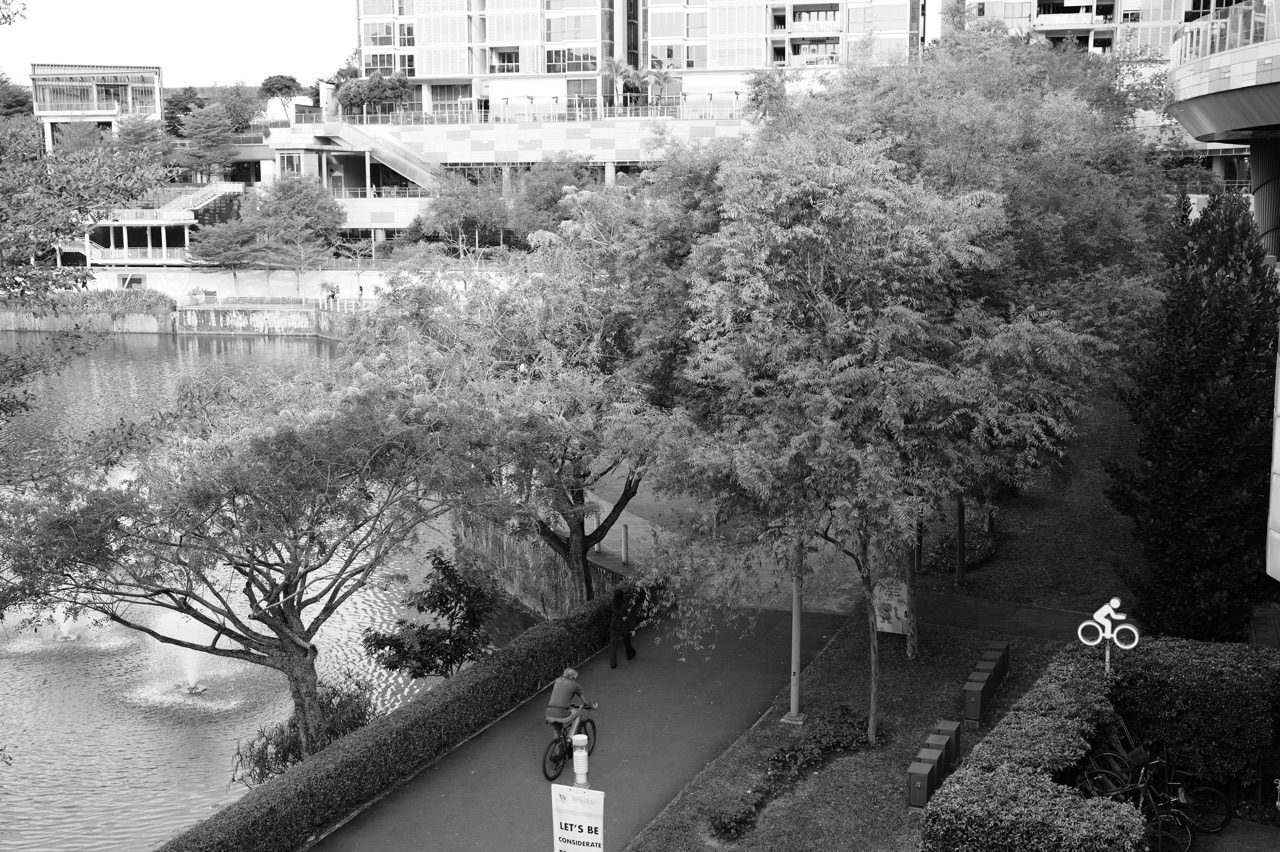
How much exercise is enough in Punggol, and does a Waterway walk count? For healthy adults, Singapore’s Health Promotion Board recommends 150–300 minutes of moderate-intensity aerobic activity per week and muscle strengthening on at least two days. A brisk walk can contribute when its effort is moderate for you. The simplest guide is the talk test: you can usually speak in short sentences but not sing during moderate effort. If you can sing comfortably, movement is probably light; if speaking is very difficult, effort may be vigorous.
This Punggol Exercise Intensity Guide 2026 explains why steps, minutes, heart-rate numbers and actual exertion are different; how to apply HealthHub recommendations to Waterway paths, school runs, errands, sports and shift work; and how to avoid overheating or exercise pressure. It includes original calculations, family examples, a week-planning method and clear distinctions between adult and youth recommendations. For routes use Exercise in Punggol: Four-Week Beginner Plan; for step-count questions use Walking Steps in Punggol and the 10,000-Step Myth.
Quick answers: light, moderate and vigorous intensity
| Effort category | What the talk test suggests | Everyday Punggol example | Important reminder |
|---|---|---|---|
| Light | Can speak in full sentences and sing. | Comfortable slow walk to a shop. | Beneficial movement, but not automatically moderate. |
| Moderate | Can talk in phrases; cannot comfortably sing. | Purposeful brisk walk on a suitable route. | Speed differs by person and environment. |
| Vigorous | Speaking normally becomes difficult. | A suitably prepared person’s jog or demanding sport. | Beginners need not force vigorous work. |
| Strengthening | Muscles work against appropriate resistance. | Controlled bodyweight or supervised gym activity. | A separate part of weekly guidelines. |
| Recovery | No requirement for sustained hard effort. | A rest day or comfortable easy activity. | Vital when fatigued, ill or recovering. |
HealthHub’s activity intensity guide defines the talk test and provides broad examples. These are descriptive patterns, not individual medical thresholds. Someone with an illness, high fatigue, disability, relevant medication or another health concern may experience a different response. Never increase effort to make a watch display a desired zone when the body is signalling distress.
1. Activity duration is not the same thing as activity intensity
Imagine a Punggol resident walking slowly through Waterway Point for sixty minutes while shopping. Another goes on a purposeful twenty-minute neighbourhood walk, breathing a little harder and speaking only in phrases. The first moved for longer, but the second may have spent more time at moderate aerobic intensity. That does not make the shopping invalid or pointless. It simply means the two activities provide different kinds of movement.
This distinction matters because residents commonly count the time spent outside home as exercise time. A family may spend two hours at Punggol Waterway Park, including photos, sitting, children playing and a short walk. The whole outing is valuable as leisure and connection, but it is inaccurate to claim two uninterrupted hours of moderate aerobic exertion. Activity tracking should serve understanding, not manufacture credit.
The same logic applies to a one-hour badminton court booking or a group fitness class. Participants take breaks, learn skills and pause between rallies. Actual effort varies with ability and format. An honest approximate activity log can include movement minutes without inflating every scheduled minute into an equivalent workout. Good health literacy starts by separating what happened from what the calendar says.
2. Why a step counter cannot determine your exercise intensity
Phone and watch step counts are useful for noticing movement patterns, but they do not directly establish how hard an activity felt. Someone taking 10,000 light steps through a physically active day may have a different aerobic workload from someone taking fewer steps with sustained brisk sections. Neither number alone establishes whether a person has a complete exercise and strength routine.
The Punggol Steps and Healthy 365 guide explains why 10,000 is not a medical rule that everyone must achieve every day. It also shows why counting methods, stride length and device placement can differ. This article answers the next question: once you know you are moving, which parts are light, moderate or vigorous for your present capability? That is not answered by a higher step count alone.
Do not turn a personal tracker into a moral judgement about someone else’s health. A wheelchair user, parent who has recently given birth, person with chronic illness or older adult with balance needs may require adapted movement and cannot fairly be compared with a healthy runner’s step goal. Choose an appropriate movement measure and seek tailored advice when required.
3. The talk test during a Punggol Waterway walk
For a healthy beginner who is appropriate for independent walking, choose a familiar route with a safe return. Start at a comfortable pace; you should be able to talk easily. If you gradually move more purposefully and breathing rises, check whether you can still speak in short sentences but would find singing uncomfortable. That pattern suggests moderate effort. If conversation becomes difficult, reduce effort rather than treating the hard breathing as an achievement.
This is observation, not a demand to test until exhaustion. Do not attempt a conversation test if it distracts from a busy crossing, narrow bridge or shared path. Stay alert to cyclists and other park users. If you are uncomfortable, return to a slower pace or stop. The test gives a rough real-world sense of relative intensity; it cannot tell you whether your heart, lungs or joints are safe for a particular exercise.
Heat, slopes, recent fatigue and stress can alter breathing. Punggol’s waterfront breeze can feel cooling, but it does not prove the Wet-Bulb Globe Temperature is low. If normal speech becomes difficult at an effort that is usually comfortable or you have alarming symptoms, do not try to push through. Seek appropriate professional assessment instead of inventing a training interpretation.
4. What 150–300 moderate minutes mean mathematically
The adult guideline concerns the week, not one gigantic workout. If you complete thirty suitable moderate-intensity minutes five times, that totals 30 × 5 = 150 minutes. Twenty-five minutes on six days also totals 150. Two forty-five-minute sessions and three twenty-minute sessions produce 90 + 60 = 150. Many ordinary schedules can work; the important question is whether the activity and intensity are appropriate.
HealthHub’s 150-minute recommendation encourages a mix of aerobic movement and strengthening. A person who is new to activity may begin well below the target and build up progressively. It would be unwise to insist on five thirty-minute brisk sessions immediately for someone who has been inactive, experienced illness or has not received relevant medical clearance.
| Illustrative weekly pattern | Calculation | Moderate minutes | Interpretation |
|---|---|---|---|
| 30 minutes, five suitable days | 30 × 5 | 150 | One way to approach the guideline. |
| 25 minutes, six days | 25 × 6 | 150 | Shorter repeatable sessions can accumulate. |
| 45 minutes twice + 20 minutes three times | 90 + 60 | 150 | Mixed durations need not be uniform. |
| 10 minutes on four comfortable days | 10 × 4 | 40 | A useful beginning below the general target. |
| One hour of court hire with many breaks | Not directly equivalent | Depends | Actual effort matters more than booked duration. |
A vigorous activity has different physiological demands and the Singapore guidelines give equivalence guidance for certain adult categories, but a novice should not turn that into a command to substitute high-intensity bursts for gentle activity. The goal is long-term health, not performing a mathematical trick that increases injury risk. If you have individual health considerations, follow the relevant professional’s recommendations.
5. Muscle-strengthening is a separate recommendation
Brisk walking, cycling or jogging can challenge the cardiovascular system, but the general guidelines also recommend strengthening major muscle groups on at least two days each week. This may involve suitable bodyweight resistance, machines, bands or adapted exercise. People should choose movements that fit capability and injury history. Completing three hours of walking does not automatically eliminate the need to think about strength.
The Strength Training in Punggol for Beginners guide covers foundational movement categories such as squatting, pushing, pulling, carrying and trunk stability without implying that everybody must lift heavy weights. A small appropriate routine may fit within a home or a public fitness corner, while qualified instruction can be helpful for people learning unfamiliar resistance work. Avoid unsafe makeshift equipment in HDB corridors.
Conversely, an intense strength workout is not necessarily sixty minutes of aerobic activity. Different activities have distinct purposes. A balanced week includes suitable movement, muscular conditioning, meals, sleep and rest. The easiest plan may be modest rather than glamorous; a routine you can maintain across normal workdays is more useful than a complex schedule performed once.
6. How HealthHub’s heart-rate examples are calculated
Some exercise devices display ranges using estimated maximum heart rate. HealthHub gives a simplified illustration based on 220 minus age. For a hypothetical forty-year-old, the calculation is 220 − 40 = 180 beats per minute. Multiplying 180 by 0.64 and 0.75 gives approximately 115 and 135 bpm as a general illustrative moderate-intensity band under HealthHub’s published scheme.
This is a population-level teaching example and does not measure someone’s actual maximum heart rate. Individual physiology, medicines and health conditions can make the calculation inaccurate. Wrist-based optical sensors also have limitations, particularly with movement, fit and skin contact. A number on a smartwatch is not enough to assess clinical safety or prescribe intensity. If personal heart-rate limits matter to your health, discuss them with a relevant professional.
For everyday Punggol walkers, a simple handwritten note may be sufficient: route, approximate time, how comfortable it felt, whether you could talk and whether you recovered normally. If the device becomes a source of pressure or comparison, simplify. The purpose of measurement is better choices, not constant monitoring of every pulse.
7. The same walking speed feels different to different people
A steady five-kilometre-per-hour walk may be moderate for one adult and light or demanding for another. Relative intensity depends on conditioning, disability, terrain, weather, fatigue and age. A public-health page may use five kilometres per hour as an example, but that should not be read as a minimum mandatory speed for every Punggol resident. Some participants reach a meaningful effort while moving more slowly.
Suppose a group of neighbours walks together. One person is training for a run, another is recovering after inactivity and a third simply wants conversation. The group does not need to push all three to the same talk-test state. They can agree on a shared comfortable pace, allow rests and leave individual training goals for separate sessions. This preserves connection and safety.
The actual Punggol Coast AAC Brisk Walk Group has a published age minimum and meeting pattern. A person interested in that community programme should ask the organiser about route difficulty and pace rather than assuming every member must walk like a trained athlete. Community fitness is most useful when it is genuinely inclusive within its stated eligibility.
8. Local Punggol routes are tools, not standardised laboratory tests
Punggol Waterway Park, the neighbourhood links around Oasis and Matilda, and suitable Northshore paths offer different opportunities for movement. Surface, shade, crowded sections and travel time all affect what someone can do. An out-and-back route near home may be easier to use consistently than a long circuit that forces a participant to finish at an unfamiliar MRT or LRT stop.
NParks’ Punggol Waterway Park and Waterway park connector provide official context. The published 8.4 km connector length is not a target a beginner must complete. A ten- or fifteen-minute section can still be a meaningful starting point, especially for someone rebuilding a routine.
A school run or grocery trip can contribute to activity, but the intensity changes when someone stops to cross a road, waits for a lift or carries heavy bags. Read Walking for Everyday Errands for detailed local decisions. Do not encourage residents to rush across road crossings or use cycling-only sections simply to preserve a continuous exercise graph.
9. Heat stress changes the decision before it changes the pace
Wet-Bulb Globe Temperature is used by Singapore’s Meteorological Service to describe outdoor heat-stress conditions. It considers more than ordinary air temperature. Someone may feel a pleasant breeze beside the Waterway while the conditions remain unsuitable for prolonged vigorous exercise. Use the current MSS heat-stress service and adapt activity rather than assuming sweat and discomfort prove a productive workout.
The Punggol Heat Stress and Outdoor Exercise guide explores the local consequences. At unsafe heat-stress levels, shorten or postpone prolonged outdoor activity as recommended. A child or older adult may need special caution; someone with a medical condition may also require individual guidance. The physical activity minutes can be built on other days rather than forcing a fixed daily target in hazardous weather.
Haze is a separate problem measured through official air-quality guidance. Check Singapore haze information for relevant health recommendations rather than judging from visibility. Lightning is separate again, with MSS lightning information governing storm awareness. A robust activity plan knows when not to go outdoors.
10. Easy exercise choices have different intensity profiles
| Local activity choice | Potential effort | What the reader should know |
|---|---|---|
| Waterway sightseeing walk | Often light with frequent stops. | Enjoyable nature time need not be moderate exercise. |
| Brisk neighbourhood walk | Moderate for some people. | Use appropriate talk-test response and rest. |
| Beginner run–walk | Varied, often vigorous during jogging portions. | Progress carefully; avoid injury pressure. |
| Aqua aerobics or swim lesson | Varied by format and actual movement. | Pool entry and skill learning are not uniform exercise. |
| Badminton social doubles | Light through vigorous periods. | Court booking hours are not exercise minutes. |
| Suitable home resistance session | Muscle-strengthening focus. | It is counted separately from aerobic activity. |
| Relaxed cycling | Varied from light to moderate or vigorous. | Follow legal paths and actual weather restrictions. |
A named sport is not a uniform intensity classification. One person’s doubles badminton may involve frequent movement while another pair mostly practises gentle rallies. A swim lesson may include instruction and standing near a teaching wall. A community dance class may be low-impact or energetic. An honest activity record reflects what the participant actually did.
11. Worked example: a desk worker returning home from Punggol MRT
A hypothetical office worker plans a gym session every evening but frequently arrives home late. The plan collapses because it competes with dinner and adequate sleep. They review the week and choose two short brisk walks near their block, one longer suitable walk on a free day and appropriate strength practice that does not require travelling again. They accept a gradual increase instead of demanding the full population target in the first week.
The important skill is diagnosing the obstacle. If the issue is limited time, shortening the session may help. If the issue is an unsafe route after dark, change time or location. If illness or fatigue is the issue, rest may be necessary. Fitness improves when the plan responds to everyday constraints, not when the resident feels guilty for failing a perfect schedule.
12. Worked example: the resident with ten thousand steps
Another adult reaches a high daily step count through a physically active job and household errands. They assume no further fitness planning is needed. On review, much of the movement may be low intensity, while some periods involve heavier work. They examine what moderate activity and suitable strengthening already occur without assuming they must add more. The answer may be that recovery is the missing element, not another exercise class.
This case shows why numerical tracking can mislead in both directions. A high step number does not automatically prove guideline completion, and a low step number does not prove someone failed, especially for adapted activity. The better question is what movement, intensity, muscle work and rest actually make sense for that person.
13. Worked example: a family walking together
Two adults and a young child choose a Waterway outing. One adult wants a brisk aerobic session, the other prefers a slow stroller walk and the child wants to stop at every interesting bridge. Instead of calling the outing unsuccessful, they enjoy the shared activity and arrange a separate brisk session when it fits. Family time and exercise can overlap without being identical.
A child should not be required to follow the adult 150–300 minute benchmark. Singapore’s youth guidelines for ages 7–17 use an average of 60 minutes of appropriate moderate-to-vigorous activity per day across the week, with other developmental recommendations. The Punggol Primary School Active Play guide and the teenage lifestyle series cover those differences.
14. Worked example: a walker using an assistive device
A resident with reduced mobility wants to enjoy appropriate exercise but does not use a standard step-count approach. They consult relevant professional guidance and choose suitable accessible movement. The effort may be moderate for their current ability without matching another person’s distance or speed. A public path that looks flat in a photograph may still contain slopes, crossings and other access constraints.
The Accessible Exercise in Punggol page provides local and SportSG routes to consider. An activity’s benefit should not depend on having the same equipment or walking gait as someone else. Individual choices and qualified adaptations make a healthier ecosystem.
15. An illustrative seven-day movement diary
| Day | Observed activity | Effort category | How to interpret |
|---|---|---|---|
| Monday | Brisk walk before dinner. | Moderate if talk test fits. | Record actual suitable minutes. |
| Tuesday | Bodyweight or supervised strength. | Strengthening focus. | Count separately from aerobic time. |
| Wednesday | Shopping and errands. | May be light and variable. | Still valuable movement. |
| Thursday | Brisk walk or suitable cycle. | Moderate if appropriate. | Choose weather-safe route. |
| Friday | Social sport and travel. | Mixed intensity with pauses. | Do not automatically count total booking. |
| Saturday | Nature walk with family. | Often light with stops. | Leisure and connection matter. |
| Sunday | Rest, suitable walk or group activity. | Depends on health and recovery. | A flexible week is sustainable. |
This diary is a teaching template, not an automated prescription. A person who works shifts may need entirely different day names and activity windows. Some weeks will be interrupted by illness or family responsibilities. Keep the record simple enough that it helps rather than controlling your life. If precise time logging becomes compulsive or distressing, a broad weekly review is often sufficient.
16. A four-stage progression for an exercise beginner
| Stage | What to learn | Practical action | Useful result |
|---|---|---|---|
| 1 — Notice | What activity do I already do? | Observe normal walking and rest. | A baseline without judgement. |
| 2 — Understand | Which effort seems light or moderate? | Use safe talk-test awareness when appropriate. | Better self-knowledge. |
| 3 — Balance | What about strength and recovery? | Add appropriate choices gradually. | Avoid overloading one exercise. |
| 4 — Sustain | Can the week repeat without strain? | Adjust routes, minutes and timing. | A habit that works beyond a challenge. |
Some beginners may remain at the first stage for several weeks, and others already have enough fitness to take more demanding action. Nothing in this table promises improvement by a particular date. An adult recovering from illness, managing heart or lung conditions or taking relevant medication should seek personal advice before changing intensity. The best progression is the one the person can perform appropriately and continue.
17. Misunderstandings worth correcting
- Every 10,000-step day equals a moderate workout. Steps and effort are separate.
- Anyone walking below 5 km/h is inactive. Relative effort varies.
- More sweat means better results. Heat exposure is not a performance score.
- A smartwatch knows your exact maximum heart rate. Common formulas are estimates.
- One hour of badminton automatically means one hour of moderate exertion. Pauses matter.
- Adults must run vigorously every day. Suitable moderate options exist.
- Cardio replaces strength training. Both appear in adult recommendations.
- Every child should use adult exercise-minute targets. Youth guidance differs.
- Missed minutes must be repaid by doubling tomorrow. Recovery and safety matter.
- All fitness questions can be answered by pace alone. Environment and health also matter.
18. Frequently asked questions
How much moderate-intensity exercise is recommended for adults?
HealthHub recommends 150–300 aerobic minutes weekly, with muscle-strengthening on at least two days.
What is the talk test?
A rough guide to effort: moderate intensity commonly allows short sentences but not singing.
Does a slow walk count as movement?
Yes. Light activity can be beneficial even when it does not meet moderate-intensity criteria.
Is 10,000 steps compulsory?
No. It is not a universal fitness prescription and does not prove exercise intensity.
How do I count Waterway walks?
Consider actual movement, intensity, pauses and recovery rather than the whole outing duration.
Is running required?
No. Suitable brisk walking, cycling, swimming and other aerobic options can contribute.
What about weight training?
Appropriate resistance activity is a separate guideline component.
Is a 30-minute walk five days weekly enough?
It totals 150 minutes if the effort is moderate and the plan suits your health; strength work also matters.
Do I need a heart-rate watch?
No. The talk test and simple records can help, though individual safety requires professional advice when indicated.
Is 220 minus age an exact heart-rate limit?
No. It is a rough formula, not a personalised medical threshold.
Can two friends have different moderate walking speeds?
Yes. Relative effort differs by fitness, health and circumstances.
Is a paid fitness class necessary?
Not universally. Public paths and suitable home activity may provide options.
Does an hour of badminton equal an hour of cardio?
Not necessarily; effort and breaks vary.
Can seniors use the talk test?
It can be a general clue, but health, falls risk and medical conditions may require tailored guidance.
What about wheelchair users?
Appropriate adapted activity may contribute to aerobic effort; standard step metrics are not universal.
Should students use the adult weekly target?
No. Singapore’s youth guidelines use age-specific recommendations.
Can heat make normal walking harder?
Yes. Check official WBGT and adjust prolonged outdoor activity as appropriate.
What if haze makes outdoor exercise unsuitable?
Follow official air-quality guidance and use an appropriate alternative or rest.
What symptoms mean I should stop?
Chest discomfort, severe dizziness, unusual breathlessness or sharp pain warrant stopping and appropriate care.
Does missing a workout ruin the week?
No. The plan should be flexible and sustainable rather than punitive.
Where to go next in eduKate’s Punggol ecosystem
- Life in Punggol — Master Guide
- Exercise in Punggol — Beginner Plan
- Punggol Walking Steps and Healthy 365
- OnePA Punggol Brisk Walking Groups
- Strength Training for Beginners in Punggol
- Stretching and Mobility in Punggol
- First 5K Running in Punggol
- Heat Stress in Punggol
- Eating Before and After Exercise in Punggol
- Triathlon Beginner Planning from Punggol
- Healthy Picnic Planning in Punggol
- eduKateSG — Punggol Transport Geography
Official reference sources and editorial note
- HealthHub — Types and Intensities of Physical Activity
- HealthHub — Weekly Adult Activity Guidelines
- HealthHub — Getting Active and Minute Accumulation
- HealthHub — How Much Exercise Is Enough?
- NParks — Punggol Waterway Park
- MSS — Heat Stress
- MSS — Lightning
- Singapore — Haze Guidance
Reviewed 20 October 2026. General physical-activity education only; talk tests and estimated heart-rate equations do not determine clinical clearance or an individual’s safe threshold. Medical conditions, medicines, age, disability, environmental conditions and fatigue may affect the appropriate exercise plan. Consult relevant professionals for personal concerns. Worked examples are fictional.
19. Deeper weekly-planning example: a parent managing three conflicting priorities
A parent living near the Waterway wants to improve aerobic fitness but also needs to supervise a child after school and prepare dinner. They write down three non-negotiable commitments first, then identify the realistic activity windows that remain. Instead of setting a blanket thirty-minute goal every night, they choose shorter suitable sessions on busy days and a longer walk when someone else can help with family responsibilities. The parent does not treat childcare as a failure of discipline.
If a brisk session is interrupted by a necessary school call or sudden rain, the routine can pause. Not every five-minute segment needs to be recombined into an artificial continuous workout. The useful principle is gradually accumulating appropriate activity while maintaining safe care, food and sleep. Someone under pressure may gain more from a simple workable plan than from a complicated smart-device dashboard.
They also notice that the weekly total does not describe everything. The child’s outdoor play has a different health guideline; the partner’s physically demanding job changes recovery needs; and a grandparent’s mobility considerations require adaptations. A family cannot fairly use one fitness number for all its members. Teaching the distinctions makes everyday health decisions more accurate.
At the end of four weeks, a sensible review asks whether the household is moving more comfortably, whether the plan is sustainable and whether anybody’s wellbeing suffered through unrealistic demands. If the answer is uncertain, changing the schedule is not failure. It is using evidence from real life to improve the plan.


