
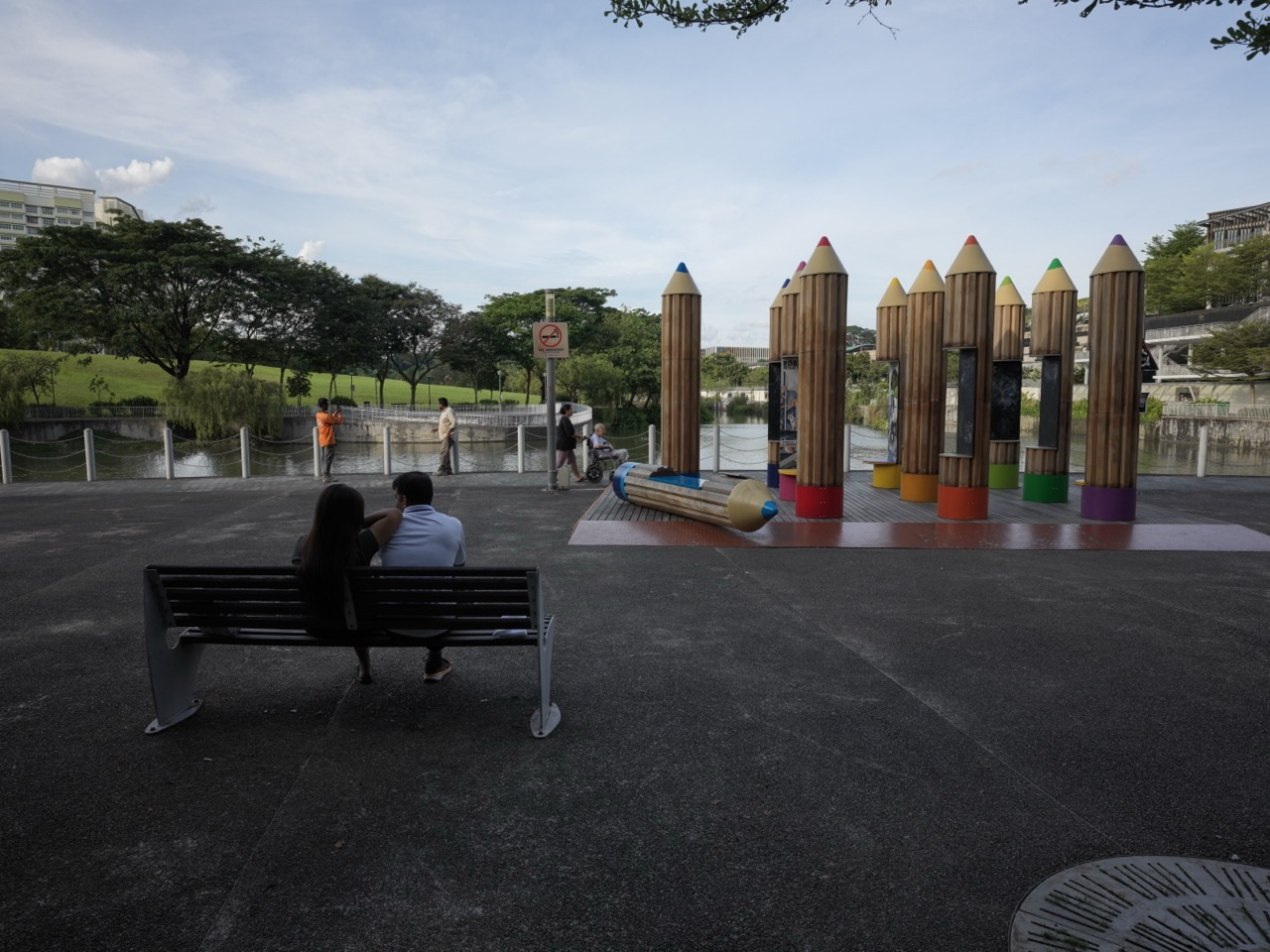
What is the easiest way to help a primary-school child stay active in Punggol? Let movement fit the real school day. PE, walking to a station, games with friends, play at a neighbourhood playground and family activities can all contribute. Children do not need another paid class on every free afternoon. First protect sleep, meals, safe travel and time to play, then help them discover kinds of movement they genuinely enjoy.
This 2026 Punggol primary-school physical activity and active-play guide is for families of roughly 7–12-year-olds, including children who love team sports and those who prefer quiet or non-competitive activities. It covers activity and sleep guidance, playgrounds, Punggol Waterway Park, school CCAs, screen time, weather, rain, inclusion and family routines. For lists of actual destinations, use Things to Do in Punggol With Kids; this article answers how to build a healthy week without turning childhood into an extra timetable.
Punggol primary-school activity: quick answers
| Parent question | Practical answer | Keep in mind |
|---|---|---|
| How much activity is recommended? | The Singapore youth guidelines recommend averaging 60 minutes of moderate-to-vigorous aerobic activity per day across the week, for ages 7–17. | An average is not a requirement for exactly one uninterrupted hour daily. |
| How much sleep? | For ages 7–13, the youth guideline recommends 9–12 hours per night. | Work backward from the child’s actual morning wake-up. |
| What is a good first venue? | A convenient nearby playground or short part of Punggol Waterway Park. | Choose safe routes and age-appropriate facilities; supervise as needed. |
| Does school PE count? | Suitable activity during PE contributes to movement. | Attendance alone cannot tell you how active the child was. |
| What if my child avoids organised sport? | Offer alternatives: walking games, dance, casual cycling, active playground play or inclusive movement. | Do not equate preferring non-competitive play with laziness. |
| What if it rains? | Adapt to safe indoor movement or a rest period. | Do not continue outdoor play under lightning risk. |
| Should I pay for more lessons? | Only where the child enjoys them and the family can maintain them. | Extra paid sport should not crowd out sleep, school and friendship. |
The Singapore Physical Activity Guidelines explain that ages 7–17 should average 60 minutes of moderate-to-vigorous aerobic activity each day across the week, with suitable vigorous, muscle- and bone-strengthening activity on at least three days. The same source recommends 9–12 hours’ sleep at ages 7–13. It also encourages breaking up sedentary time. Parents should interpret this as balanced public-health guidance, not a fitness score to impose on a particular child.
1. Why play is more useful than a second performance target
Primary school is already full of structure: arrival times, homework, spelling tests, assessments, CCAs and family logistics. Adding a fitness programme can be helpful for some children, but it can also create overload if the child has almost no unplanned time. Movement becomes a more sustainable habit when it feels like a normal part of life, not another examination the child must pass.
A child who loves badminton may want coaching and practice. Another may find joy in skipping games, nature observations, dance or exploring a playground with friends. Both can benefit from physical movement. The intensity will differ, and the child’s broader activity routine still matters. Avoid telling a child that the only healthy movement is a sport that produces medals or school recognition.
Sport Singapore’s Active Parents guidance emphasises how adult participation and a supportive environment can encourage movement. A parent joining in a simple game can sometimes do more for a child’s willingness than standing at the side shouting instructions. The best habit is the one that makes the child keen to return next time.
2. How Punggol’s neighbourhood geography changes family play
Punggol has a distinctive waterway, park connectors, neighbourhood playgrounds and spaces around One Punggol and Waterway Point. But a family near Oasis has different everyday routes from one in Matilda, Northshore or Punggol Coast. The nearest usable playground may be the best answer on a school night, while a Waterway outing suits a weekend. Local convenience matters because children get tired and adults have other responsibilities.
NParks identifies four areas of Punggol Waterway Park—Nature Cove, Recreation Zone, Heritage Zone and Green Gallery—and describes the broader Waterway park connector as 8.4 km. That is not a target for children to complete. Pick a short segment, notice a bridge or bird, return before everyone becomes tired and let the outing remain enjoyable. The official NParks page is the source for facilities and visitor information.
For a destination shortlist, the site’s Best Playgrounds in Punggol and Punggol Waterway Park guide are more appropriate than assuming this article can describe every playground’s current equipment or closures. This page stays focused on daily behaviour and safety, not a venue database.
3. Turn a school day into opportunities for movement
A primary-school day may already include walking, PE, recess play and, on some days, sports-related activities. Ask the child what they actually did rather than assuming the timetable proves the activity dose. One PE lesson might involve vigorous games; another could involve instruction and waiting. That is not a criticism of the school. It simply means activity should be understood over the week, not calculated from lesson titles.
When a child comes home, a short period of safe unstructured play may be more welcome than an adult-led circuit. If homework is heavy, a movement break can interrupt prolonged sitting. Stand up, move comfortably, stretch without forcing joints and return to a manageable study task. The break should support attention and wellbeing, not become a disguised punishment for slow homework.
Families who want to coordinate the week can review Punggol Family Calendar System. A practical calendar includes school, transport, sleep and unscheduled time, not just tuition and sport. Children should have opportunities to influence their activity choices and tell adults when they are tired.
4. Movement literacy: running, balancing, throwing and coordination
Children gain confidence when they have chances to practise fundamental movement skills. Sport Singapore’s Active Parents movement-skills library explains how foundational skills support daily life and participation in varied sports. These skills can be explored through games and play rather than rigid instruction. A child who feels uncertain catching a ball may enjoy a slower cooperative throwing game before entering a competitive match.
Parents can offer variety without claiming every game is an evidence-based therapy. A suitable playground can involve climbing and balancing; a safe open space can support running and simple games; dancing can involve rhythm and coordination. Choose equipment and activities for the child’s age, capacity and environment. Follow posted rules, avoid unsafe improvised obstacles and provide appropriate supervision.
If a child has a disability or medical condition that affects participation, adapt movement to their needs. The aim is inclusion and enjoyment, not forcing the same task as other children. The site’s Accessible Exercise and Inclusive Sport in Punggol identifies relevant Singapore programme directories and questions to ask providers.
5. Rain, haze and heat do not mean childhood stops moving
Punggol’s outdoor routes are not always suitable for a play session. During thunderstorms, follow MSS lightning information and stop outdoor activities. An open park shelter is not an appropriate place to keep exercising during a lightning hazard. When heat stress is elevated, reduce prolonged outdoor exertion according to the official MSS heat-stress advisory. During haze, use official Singapore haze guidance rather than judging air quality by how the skyline looks.
An indoor alternative need not be expensive. In a safely cleared space, supervised movement games, simple dancing or an age-appropriate activity can provide variety. Keep noise reasonable in HDB homes, especially in the evening, and avoid repeated jumping near neighbours or fragile furniture. The Punggol Rainy-Day Exercise guide offers more detail on low-impact alternatives.
Sometimes rest is the right alternative. A child who is unwell, injured or exhausted should not be required to make up all missed sport on the next day. Listen to symptoms and seek medical advice for concerning or persistent problems. Consistency is measured across time, not through completing a rigid streak regardless of conditions.
6. Screen-time boundaries without blaming the child
Screens are part of modern childhood. Some use is for schoolwork, some for connection and entertainment, and some may crowd out sleep or movement. The useful family conversation separates these purposes. Ask which screen activities the child values and which habits create difficulty. A blanket ban can turn the question into an argument while doing little to improve the child’s actual schedule.
HealthHub’s youth guidelines encourage reducing excessive sedentary time, particularly recreational screen time, and replacing some sitting with movement of any intensity. That does not mean screens and movement must be treated as moral opposites. A child may finish a school assignment, take a movement break, then have a reasonable amount of leisure time. Consistency and positive family modelling matter.
Try linking activity to something the child already enjoys. A child who likes drawing might visit a local park to observe colours and shapes; a child interested in games might help invent a treasure hunt with safe boundaries. These activities include learning and movement without pretending that every child must love organised football.
7. Meals, hydration and recovery after play
After a school day and physical activity, children need appropriate food, rest and fluids. Individual energy requirements differ by age, development, activity and health. Avoid calorie counting, restricted eating rules and body comparisons for children. Offer varied meals and convenient food when the family returns from school or CCA, and follow medical guidance when dietary or hydration restrictions apply.
The Healthy Hawker and Grocery Choices in Punggol guide makes everyday local food planning practical. For children, the important point is reliable meal timing and access to appropriate food, not creating a photograph-perfect plate at every snack. Healthy eating should remain enjoyable and culturally familiar.
Sleep deserves equal attention. Nine to twelve hours is the youth guideline range for ages seven to thirteen; it may be difficult for a child to meet if the evening contains tuition, a late meal, unfinished homework and extended digital entertainment. Work backward from the actual morning school routine. Academic preparation is not improved by exhausting the learner night after night.
8. A realistic seven-day Punggol family play menu
| Day | Possible activity | What to watch | Safe fallback |
|---|---|---|---|
| Monday | Comfortable neighbourhood play after school. | Weather and homework load. | Short indoor movement or rest. |
| Tuesday | School PE or CCA, if on the timetable. | Actual effort and fatigue. | Ordinary play if no active lesson. |
| Wednesday | A family walk along a short Waterway stretch. | Crossings and route length. | A quiet indoor activity. |
| Thursday | Child-selected playground or active game. | Age suitability and supervision. | Play at home if outdoors is unsafe. |
| Friday | Move with a friend or family member. | Shared paths and crowding. | Another enjoyable low-impact option. |
| Saturday | A longer recreational outing if everyone wants one. | Sun, heat, rain, hydration and return. | Shorten or postpone. |
| Sunday | Flexible leisure and school-week preparation. | Sleep and emotional recovery. | Rest without pressure. |
This is not a compulsory daily training plan. Many children have CCAs on different days, and some already reach activity goals easily while others are beginning from a lower baseline. The family should identify where movement already occurs, then choose one or two areas to make it easier or more enjoyable. A busy day may not need an additional session.
9. A simple four-week experiment
| Week | Question | Family action | Measure |
|---|---|---|---|
| 1 | Which activities does the child already enjoy? | Listen and list PE, play, journeys and sports. | A realistic picture of the week. |
| 2 | Which convenient Punggol activity would they repeat? | Try one safe nearby option chosen together. | Enjoyment and confidence. |
| 3 | What prevents activity? | Adjust a route, time, equipment or family arrangement. | Less friction; no guilt. |
| 4 | Is the plan sustainable alongside school and sleep? | Keep useful habits and drop unrealistic demands. | A calmer, more active routine. |
A small experiment lets parents learn without placing the child under constant surveillance. You can ask whether play was fun, whether the journey was safe and whether the child still had energy for the evening. A step counter may be one optional tool, but children should not be judged by adult-style metrics or compared publicly with classmates.
10. Worked family examples
A child who enjoys nature more than team sport
The child loves birds and drawing, dislikes competitive games and often refuses football invitations. The parent arranges a short Waterway observation walk and allows the child to choose one bird or plant to sketch at home. The pace may be light; that is fine. This activity supports curiosity, connection and some movement, while other opportunities across the week may provide more vigorous play.
A child already attending many enrichment classes
A Primary 5 student has tuition on several evenings and active PE on other days. The parent initially plans another paid sports lesson, then sees how little free time remains. They keep the activity the student likes most and protect one evening for relaxed play or family time. The choice is not anti-fitness. It recognises that activity, study, food, friendship and sleep must coexist.
A child who needs an adapted activity
The child wants to play with friends but a medical or mobility consideration makes a specific playground unsuitable. The family consults relevant advice, asks about an accessible facility or activity and chooses games matched to the child’s ability. Success is meaningful participation and choice, not replicating the movements of every other child.
An actual parent decision: organised sport or free play?
Take a Punggol household with two children in primary school. One child loves organised badminton, and the other prefers building stories with friends in a playground. The family is tempted to buy two identical sports programmes to be fair. But equal spending is not necessarily equal benefit. Ask what each child enjoys, which activities are suitable, and how the cost and travel affect meals, sleep and other family obligations. A free playground visit may be the better choice for one child, while a well-chosen class helps the other develop a valued interest.
A useful comparison includes four factors beyond price: whether the child genuinely wants to attend, whether age and physical development fit the activity, whether travel and lesson timing are manageable, and how much unstructured play remains. An additional lesson that requires a long ride across Punggol after a tiring school day may reduce rather than improve family wellbeing. Do not use a class as a reward for exam scores or withhold ordinary play as a routine punishment.
The same logic applies to school holidays. Parents may feel pressure to enrol in enough programmes to fill every weekday, but children also benefit from rest, family connection and creative play. A few reliable local activities supported by safe supervision can be more practical than driving from one attraction to another. Use the current official SportSG programme listings when exploring organised options and check age requirements, coaches and safety instructions.
Make play inclusive, even when abilities differ
Some children are comfortable with running, climbing and team games. Others have mobility, sensory, coordination or health differences that require adjustments. Start with the activity’s purpose. Is the child seeking fun, friendships, new skills or physical challenge? Ask the relevant provider what support and adapted options exist. Do not assume that every child with a particular diagnosis has the same abilities or preferences. A child’s enjoyment and sense of belonging are not minor issues; they are central to participation.
A parent can also adapt a family outing without singling anyone out. Choose a shorter Waterway path where the whole group can return comfortably, or use a quieter park section if crowded equipment is overwhelming. Discuss the outing with the child rather than making them a passenger in someone else’s fitness plan. When medical fitness is uncertain, professional assessment should guide the activity choice.
Punggol as an outdoor classroom without making it homework
A nature outing can teach observation, language and science incidentally. A child may notice the difference between sun and shade, discuss how cyclists share a path with walkers or describe the colours of a bridge. That experience can support curiosity without requiring a worksheet. The eduKateSG Punggol Waterway Park and Student Life guide connects this local environment to learning, while this article remains about active play and family wellbeing.
If you want a quick learning game, ask a child to spot three different natural textures or identify a safe route on a simple map. Do not collect wildlife, remove plants or ask children to cross shared cycling paths for a better photograph. Children who prefer simply playing or relaxing need not convert every trip into formal education.
A parent check-in that takes one minute
After an outing, ask: Did you enjoy that? Was anything uncomfortable? Would you choose it again? What would make next time easier? These answers tell you more than comparing the child’s step count with a sibling or classmate. If a child says they are exhausted, review sleep, nutrition and total commitments before assuming they lack discipline. If they ask to repeat a low-cost neighbourhood game, take that interest seriously.
Over a month, the best signal is that movement feels more ordinary and the family can repeat it safely. That may look like weekend play, short weekday walks and school PE without extra pressure. Healthy childhood is not a competition to collect activities. It is a foundation for confident movement, adequate rest and the pleasure of belonging in the neighbourhood.
11. Questions Punggol parents often ask
Does play at a neighbourhood playground count?
It can contribute to activity, although intensity and duration vary. Focus on varied, age-suitable opportunities across the week.
Does the child need exactly 60 minutes every day?
The Singapore guideline is an average of 60 minutes of moderate-to-vigorous aerobic activity per day across the week for ages 7–17.
Is school PE enough?
It contributes, but the overall week and the child’s actual activity matter.
Should every Primary 6 pupil stop sport for PSLE?
There is no universal reason to remove all activity. Balance revision with health, sleep and appropriate movement.
Are paid sports lessons necessary?
No. School, play, walking, community options and suitable recreational activities can contribute.
What if my child only likes arts and books?
Offer walking, dance or nature activities linked to those interests without devaluing them.
Should my child finish the whole Punggol Waterway route?
No. Choose a safe segment that fits their age and energy.
What do we do during haze or lightning?
Follow official air-quality and weather guidance, postpone outdoor activity as appropriate and use safe indoor alternatives.
How can grandparents help?
They can join suitable short walks or play activities within their own mobility and preferences; do not assume they should supervise a demanding outing.
What if my child has recurring pain or fatigue?
Stop pushing activity and obtain appropriate healthcare advice.
Related eduKate Punggol learning and lifestyle paths
- Life in Punggol — Master Lifestyle Guide
- Family Life in Punggol
- Punggol New Parents and Toddlers
- Punggol Teenagers, CCA and Sleep
- Accessible Exercise in Punggol
- Nature and Mental Wellbeing in Punggol
- Things to Do in Punggol With Kids
- eduKateSG — Waterway Park and Waterfront Student Life
- eduKateSG — Punggol CCAs and LEAPS 2.0
- eduKateSG — Exam Week and Sleep
Other safe family movement options in the Punggol ecosystem
Children do not have to enjoy one organised team sport. Suitable introductory games and supervised activities may include dance, table tennis or skating, while tai chi can interest some family members. Always choose age-appropriate instruction and legal, safe practice spaces.
- Dance Fitness in Punggol — Zumba and Line Dancing. Compare music-led classes, beginner versus intermediate sessions, actual Punggol venues and dated onePA terms.
- Table Tennis for Beginners Near Punggol. Learn the first rally, legal serve and doubles while checking SportSG tables and the neighbouring Sengkang TTX location.
- Inline Skating in Punggol — Waterway Routes and LTA Rules. Plan safe beginner practice and learn why inline skates and skateboards are classified differently for Pedestrian-Only Paths.
- Tai Chi and Qigong in Punggol. Understand gentle movement, balance, proper class levels, and the difference between Punggol 21 CC and Hougang-based Punggol CC.
Official references
- Singapore Physical Activity Guidelines (HPB)
- SportSG Active Parents — Leading by Example
- SportSG — Fundamental Movement Skills
- NParks — Punggol Waterway Park
- Meteorological Service Singapore — Heat Stress
- Singapore Haze Advisories
Reviewed 17 October 2026. This is general family lifestyle education, not personal paediatric or sports medicine advice. Child development, disability, medical conditions and school timetables may require individual planning; verify weather, facilities and programmes with relevant providers.


