
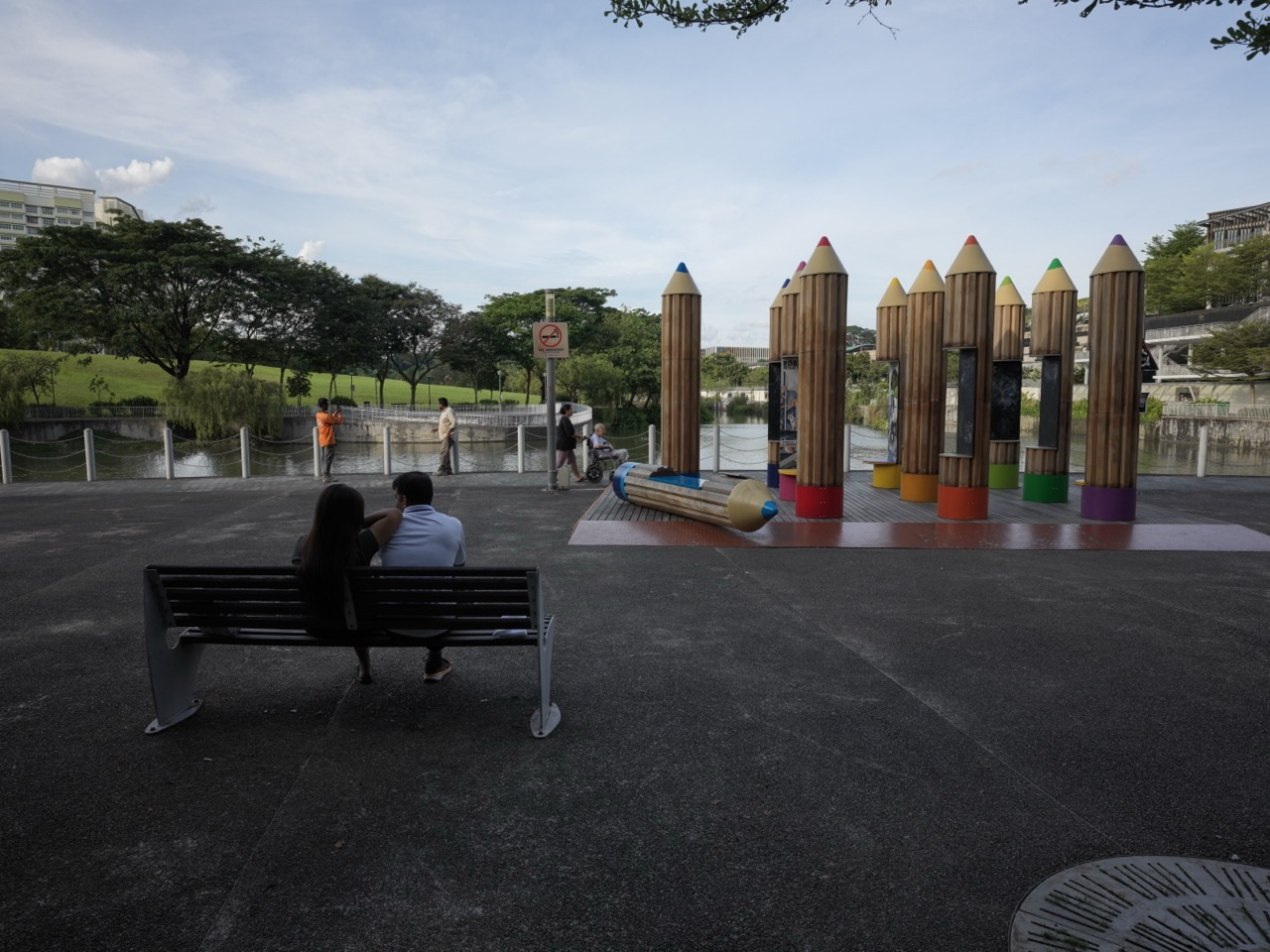
Screen-free things to do in Punggol include short games at Punggol Waterway Park, a family reading challenge at Punggol Regional Library, nature observation on appropriate designated routes, a sketchbook outing, a simple heritage walk in Punggol Coast and creative activities at home when the weather changes. None requires an elaborate kit. Choose one place, one small idea and enough time to stop while everybody is still enjoying themselves.
For Punggol families looking for outdoor activities for kids, free weekend ideas, educational walks, rainy-day activities and alternatives to phone or tablet time, this guide organises playful options by age, energy and conditions. It is not an argument that technology is bad. Screens can be valuable for learning and connection; the goal here is to enjoy hands-on attention, conversation, movement and creativity when a family actively wants time away from devices.
Updated 17 October 2026. The practical limits matter: Coney Island opens 7am–7pm and has uneven terrain in places; Punggol Point Park is undergoing upgrading; the whole planned Punggol Heritage Trail is not yet open; and special library programmes have age and booking requirements. Use the official venue rules and keep the activity gentle, accessible and safe for the group.
Choose the best screen-free idea in ten seconds
| Who is coming? | Start with | A simple prompt | Plan B |
|---|---|---|---|
| Toddlers and preschoolers | Library age-appropriate spaces or short supervised play | Name three colours, listen to a story | Quiet indoor toy or picture-book activity |
| Primary-age children | Waterway Park or library | Spot shapes, compare plants, invent a character | Storytelling, reading or drawing |
| Teenagers | Punggol Coast public spaces or chosen hobby | Sketch a building, interview a relative, write a mini review | Board game, reading or a booked workshop |
| Adults | Comfortable walking or a hobby | Make an observation or enjoy uninterrupted conversation | Journal, book or indoor creative time |
| Grandparents and children | Easy central route with seats | Tell one memory or notice one change | Shared photo album or family storytelling |
| Mixed ages | One Punggol and a nearby outdoor option | One observation chosen by each person | Short meal and flexible reading |
The secret is not banning screens; it is giving the hands and mind something good to do
Build the outing around curiosity, not a lecture
Children often respond better to a real question than to a long set of instructions. ‘Which bridge shape looks strongest?’ invites observation. ‘Name every type of bridge and explain its engineering’ may turn play into a test. Invite the child to point, compare, wonder and explain, then allow silence. The adult does not need to know the answer to every question. You can record an unknown fact and check it later, after the outing.
This is particularly useful at Punggol Waterway Park because the setting offers shapes, plants, water, birds, people using public space and familiar town features. A short walk can produce a dozen ideas, yet the purpose remains enjoyment. Keep prompts optional and choose the smallest one that catches the person’s interest.
Make the rules kind enough for an ordinary child
A screen-free afternoon should not become a punishment for using a phone earlier. Decide as a family whether the goal is ten minutes without phones, a meal with devices put away or an entire short outing where adults also participate. If an adult must remain contactable or somebody uses a device for accessibility, navigation or essential support, that is perfectly compatible with the spirit of the activity.
The most useful agreement is shared rather than imposed. Adults can put their own phones away for the chosen period; older children can help select the activity; younger children can choose between two safe options. The reward is a more interesting shared experience, not a point scored against screens.
Carry very little and still be ready
The smallest useful activity kit is usually water, weather-appropriate clothing and one optional lightweight item: a notebook, crayons, a book or a small magnifier used responsibly. You do not need a full art set, collecting jar or pile of worksheets. Leave nature where it is. Avoid picking leaves, collecting animals or taking materials from protected planting areas.
When planning Coney Island, prioritise sensible footwear, insect protection, water and the route back over hobby equipment. For a library visit, bring what your child needs for comfort and any membership information relevant to borrowing. The kit should make the day easier, not create another bag somebody has to carry.
Give the outing a small ending
A family activity is easier to repeat when it has a natural finish. Decide in advance: two bridges, one chapter, one drawing, a short story, three observations or a snack. A child who wants to keep going can ask to extend, but a reluctant child should be able to finish without feeling they failed. Remember that travelling home is still part of the experience.
A useful ending conversation is, ‘What should we try again?’ rather than, ‘What did you learn?’ The first asks about preference and future choices; the second may sound like homework. If a child spontaneously shares what they learnt, enjoy that moment without demanding a report.
Treat accessibility as part of the activity design
A nature plan is not automatically suitable for a stroller or a person using a mobility aid. Coney Island’s access is more manageable at its western and eastern ends than on all rustic sections, according to NParks, and some routes may have rough terrain. Families should choose an accessible segment or swap to central Punggol instead of insisting everyone participate in the same way.
The same principle applies to sensory needs. Some children enjoy busy indoor spaces; others prefer quieter times, simpler prompts or a short activity outdoors. Do not assume a designated ‘quiet’ or ‘sensory-friendly’ space unless the operator actually identifies it. Adjust noise, duration and group size to the person’s experience.
Be careful with heat, rain and haze
An educational activity is never a good reason to ignore unsafe conditions. Use early or late daylight when weather allows, seek comfortable shade, check for lightning, and consult NEA air-quality guidance when haze affects outdoor plans. For children, older adults and people with respiratory conditions, the practical decision may differ from what a healthy adult chooses.
Keep a truly indoor option ready: reading, drawing, building with household materials, inventing stories or joining an appropriately scheduled library programme. A cancelled nature walk can become a good afternoon without needing to travel. The Punggol rainy-day guide and local haze outing guide are the dedicated owners for changing conditions.
Where to go for genuinely different kinds of play
Punggol Waterway Park
The Waterway is a flexible canvas rather than a single attraction. Its nature, recreation, heritage and green areas make it useful for observation games, sketching and very short walks. A family can begin in a convenient central section and leave before the children are tired. Distinguish a walking route from a cycling route; several bridges and boardwalks do not permit riding.
Try a ‘bridge and reflection’ game. Look at a bridge from a safe position and ask what its shape reminds you of. Then compare the bridge with its reflection when the water is calm. The two images do not need to be identical. This opens a conversation about perspective without asking the child to memorise technical language.
Punggol Regional Library at One Punggol
The library is particularly useful when the weather is unsuitable for extended outdoor play. The Toy Library and TinkerTots cater to children aged six and below; other spaces have different age guidance. Storyteller Cove and Spark!Lab are associated with seven-to-twelve-year-old experiences. The MakeIT space has separate safety and training arrangements, including age guidance for older users.
Plan around the actual space and session. A library’s normal opening hours do not guarantee a facilitated workshop will run. The best screen-free family visit might simply be reading picture books, looking at a graphic novel together or discussing a story. Follow the Toy Library guide, Storyteller Cove guide, Spark!Lab guide and MakeIT guide for detail.
Punggol Coast and the current Heritage Trail section
The northern Digital District offers modern buildings, public spaces, food and a first open stretch of Punggol Heritage Trail that retains features of Old Punggol Road. JTC describes 400m of the planned 1.3km heritage route as already open, not the entire connection. A short heritage activity can compare what looks old and what looks deliberately new.
Invite children to ask whose decisions shape a town: who designs paths, plants trees, plans transit or protects older road features? Those questions can lead to good conversations without turning the public area into a classroom. Remain in open accessible public spaces, follow signs and do not enter incomplete sections.
Coney Island Park
Coney Island is an option when the family wants an immersive nature outing and has enough daylight, preparation and energy. It opens from 7am to 7pm. Wildlife should be observed without feeding, chasing or handling. NParks advises staying on marked routes and not camping or fishing. The island is best approached as a nature habitat, not a collection of objects to take home.
Try a listening interval: everyone stops in a suitable spot and notices three different sounds without shouting their findings immediately. Afterwards compare observations. If children are distracted or hot, let them choose to finish early. Nature observation is more successful when it respects real attention spans.
At home after returning from Punggol
A local outing can continue indoors without more travel. Use a receipt to make a simple budget, a memory of the Waterway to sketch a scene, or one story heard during a walk to invent a new ending. Children can create a cardboard bridge using safe household materials. These activities deepen the outing but do not require a phone or new purchase.
Keep it optional. A child who has already walked and chatted may be finished for the day. The activity should add a little pleasure, not a compulsory project. If an adult wants to document a family memory, one sentence can be enough.
Community spaces and course venues
A community club, public programme or workshop can offer social screen-free activity, but not every listing means a casual drop-in is possible. OnePA is the appropriate source for actual dates, fees, age requirements and registration. Courses range across interests and may suit different groups at different times.
The screen-free element comes from the activity itself: dancing, drawing, sport, volunteering, conversation, cooking or a practical course. Choose a class because the participant wants it and can attend consistently, not simply to fill the calendar. For an occasional afternoon, a walk or book may be easier.
25 screen-free games with exactly what to do
1. Bridge-shape detective
How to play: At a permitted stopping point on the Waterway, find arches, straight beams or railings. Ask which lines seem to carry weight. Make it safe and pleasant: Observe, do not climb barriers or obstruct pedestrians. A child’s interpretation can be imaginative without being described as an engineering fact. Stop when the game has served its purpose; the next observation is optional, not a target to be completed.
2. Three-colour hunt
How to play: Choose three colours and spot them in plants, structures and clothing. Discuss how the same colour looks different in shade. Make it safe and pleasant: Never pick flowers merely to prove the answer. Point from the path and move on. Stop when the game has served its purpose; the next observation is optional, not a target to be completed.
3. One-minute listening challenge
How to play: Stay quiet in an appropriate safe place and count the distinct sounds you notice before speaking. Make it safe and pleasant: Avoid standing in the flow of bicycles or blocking others’ access. There is no competition to hear more sounds. Stop when the game has served its purpose; the next observation is optional, not a target to be completed.
4. Draw without looking at the paper
How to play: Look closely at a tree or bridge for a few seconds and try one uninterrupted line drawing. Make it safe and pleasant: Laughter is allowed. The purpose is attention, not a polished drawing. Stop when the game has served its purpose; the next observation is optional, not a target to be completed.
5. Invent a Waterway character
How to play: Choose a real feature of the neighbourhood and invent a fictional character who might pass through the scene. Make it safe and pleasant: Make clear which details are fiction. This is ideal for oral storytelling and playful vocabulary. Stop when the game has served its purpose; the next observation is optional, not a target to be completed.
6. Map the route home
How to play: Ask older children to locate a station, identify a public crossing and explain the return direction. Make it safe and pleasant: Adults remain responsible for decisions, and map games should never delay safe road crossing. Stop when the game has served its purpose; the next observation is optional, not a target to be completed.
7. Count patterns, not people
How to play: Look for repeated windows, pavement tiles, railings or leaf shapes and describe the pattern. Make it safe and pleasant: Choose built features or plants instead of categorising strangers without consent. Stop when the game has served its purpose; the next observation is optional, not a target to be completed.
8. Rhyme the neighbourhood
How to play: Take a place word such as ‘park’, ‘bay’ or ‘way’ and invent a short, silly rhyme. Make it safe and pleasant: Rhymes can be approximate in play; no one needs a perfect poem before leaving. Stop when the game has served its purpose; the next observation is optional, not a target to be completed.
9. Three words for the breeze
How to play: Ask each person to describe the air using three adjectives and explain one choice. Make it safe and pleasant: This is sensory observation, not a reliable indicator of air quality. Check NEA data for smoke. Stop when the game has served its purpose; the next observation is optional, not a target to be completed.
10. Compare two bridges
How to play: Observe two accessible bridge structures from safe viewpoints and name one similarity and one difference. Make it safe and pleasant: Do not assume all bridges are open to cycling or all are within one short loop. Stop when the game has served its purpose; the next observation is optional, not a target to be completed.
11. Find the quietest sound
How to play: Listen for a soft sound beneath louder traffic or conversation and discuss what made it hard to notice. Make it safe and pleasant: Move away from crowded areas rather than forcing the game in a noisy or unsafe location. Stop when the game has served its purpose; the next observation is optional, not a target to be completed.
12. A leaf-shape comparison
How to play: Point out differences in leaf outline, size or arrangement without collecting samples. Make it safe and pleasant: Avoid guessing a species from one feature. Use NParks resources later if identification matters. Stop when the game has served its purpose; the next observation is optional, not a target to be completed.
13. Story in three scenes
How to play: Pick a beginning at an MRT station, a middle at a waterfront and an ending at the library or home. Make it safe and pleasant: Let children choose the ending. This is creative play, not an assessment of narrative structure. Stop when the game has served its purpose; the next observation is optional, not a target to be completed.
14. Water reflection detective
How to play: When conditions are safe, compare the reflected colour and shape of a feature with the object itself. Make it safe and pleasant: Stay behind barriers. Never lean over a rail or approach water edges for an experiment. Stop when the game has served its purpose; the next observation is optional, not a target to be completed.
15. Pretend travel reporter
How to play: Ask a child to introduce Punggol to an imaginary first-time visitor in three sentences. Make it safe and pleasant: Keep the report light and allow funny details. Avoid making the child perform in front of strangers. Stop when the game has served its purpose; the next observation is optional, not a target to be completed.
16. Ten-minute sketch-and-swap
How to play: Two people sketch different views and explain what each decided to include. Make it safe and pleasant: Compare choices, not ability. Different drawings may show different interests. Stop when the game has served its purpose; the next observation is optional, not a target to be completed.
17. An architecture question
How to play: At Punggol Coast, find a public building feature that helps people move, rest or find shade. Make it safe and pleasant: Stay in accessible areas. Guessing a design intention is a question for further investigation, not a verified fact. Stop when the game has served its purpose; the next observation is optional, not a target to be completed.
18. One-page reading picnic
How to play: Read a few pages in a comfortable permitted setting, then discuss a favourite line or picture. Make it safe and pleasant: Respect food and noise rules at the library; use a suitable eating area when sharing snacks. Stop when the game has served its purpose; the next observation is optional, not a target to be completed.
19. A memory interview
How to play: Ask a grandparent or older relative what Punggol looked like when they first knew it. Make it safe and pleasant: A memory is a personal account, not a historical record. Listen with interest and check public archives later. Stop when the game has served its purpose; the next observation is optional, not a target to be completed.
20. Budget-without-buying game
How to play: Compare three visible types of activity: park, library and paid attraction. Ask which costs money and why. Make it safe and pleasant: Include transport and food in the thought experiment; do not encourage children to approach vendors without adults. Stop when the game has served its purpose; the next observation is optional, not a target to be completed.
21. Bring-a-book swap
How to play: Family members select an appropriate book each and tell one another why it looks interesting. Make it safe and pleasant: Nobody must read another person’s choice. The aim is sharing interests. Stop when the game has served its purpose; the next observation is optional, not a target to be completed.
22. Three safe textures
How to play: Describe what you can see—smooth railing, rough bark, patterned path—without touching unknown plants or unsafe surfaces. Make it safe and pleasant: Visual description is enough; avoid touching animal habitats or areas not meant for public handling. Stop when the game has served its purpose; the next observation is optional, not a target to be completed.
23. A family word collector
How to play: Each person contributes one local word: ‘waterway’, ‘promenade’, ‘wetland’ or ‘heritage’, then explains it in plain language. Make it safe and pleasant: If a definition is uncertain, phrase it as a hypothesis and investigate later. Curiosity can be more valuable than quick certainty. Stop when the game has served its purpose; the next observation is optional, not a target to be completed.
24. Design a new neighbourhood bench
How to play: Ask what would make a rest area comfortable and inviting to different people, then sketch a bench. Make it safe and pleasant: Consider shade, space, accessibility and maintenance. The idea helps children see design as a response to real needs. Stop when the game has served its purpose; the next observation is optional, not a target to be completed.
25. The ending-you-choose story
How to play: Finish the trip by letting each child describe one small activity they would like to try another time. Make it safe and pleasant: Do not promise an unavailable venue or immediate booking. Save the idea for a future day. Stop when the game has served its purpose; the next observation is optional, not a target to be completed.
Ages and family combinations: five genuinely different approaches
Under six: explore in small bursts
For preschoolers, make the activity concrete, supervised and short. A colour search, picture book, gentle outdoor play or age-appropriate library space can be plenty. Young children may become overloaded by loud crowds or a long transfer. Keep food, toilets, shade and the return route in the plan. The Punggol Toy Library’s toys are for use on site; they are not a take-home borrowing collection.
Seven to twelve: discovery with choices
Primary-age children can compare bridge shapes, tell imaginative stories, keep a sketchbook or join a confirmed age-appropriate library experience. Invite them to plan a short route or ask one scientific question, but do not turn every activity into a quiz. Spark!Lab and Storyteller Cove have their own purpose and programme arrangements, so check availability separately from the library’s general opening.
Thirteen to seventeen: independence with boundaries
A teenager may prefer drawing, a group board game, a shared meal or volunteering rather than a parent-led treasure hunt. Involve them in choosing what feels enjoyable, agree on spending and exact return arrangements, and respect their wish for quiet. For MakeIT equipment and workshops, follow NLB’s specific age, certification and booking rules; do not assume a teenager can use every machine on arrival.
Adults: creative leisure without needing to teach anyone
A screen-free activity can belong to adults too. Spend twenty minutes sketching the skyline, read a novel in a suitable place, walk while talking with a friend, join a community art session, or spend an hour observing public design and heritage. Avoid judging the activity by productivity. An interesting hour is a worthwhile outcome even if it creates nothing to post online.
Grandparents, relatives and mixed-age groups
Choose a short accessible destination with seats, toilets and a clear stopping time. Oral storytelling and simple observation let people take part without needing to run, cycle or buy anything. Someone who remembers older Punggol may share a personal account of its changes; younger relatives can compare that memory with present-day features. Treat both as contributions, not a competition.
Families with differing sensory and mobility needs
A child who dislikes crowds may enjoy a quiet brief outdoor route; another may prefer a predictable indoor activity. Check stroller-friendly paths, lighting, noise, seating and building access. Avoid presenting Coney Island’s entire rugged terrain as universally easy. A shorter activity that preserves comfort and dignity is often the better family choice.
Four plug-and-play outings
The central Punggol 45-minute nature-and-book outing
Begin with a short comfortable Waterway observation, let the child choose one optional game, then visit a suitable library area if timing allows. Agree on a return point first. There is no need to cover the park’s four themed zones in one short session.
Rain or haze alternative: skip the outdoor part and use an indoor reading or drawing activity. If the special library programme is full, enjoy books instead.
The 90-minute Punggol Coast heritage-and-sketch outing
Take the MRT to Punggol Coast, identify the current public route and look at one architectural feature and part of the open Heritage Trail. Make one sketch or short oral story, then finish with a simple meal or travel home. This is an observation outing, not a promise to access every project in the district.
Alternative: use a confirmed indoor public or retail area and draw from memory. Never enter unfinished trail sections.
The mixed-age storytelling afternoon
Start at One Punggol or a comfortable central meeting point. Invite each generation to contribute one story: a memory, an imagined future or something noticed on the journey. A child may draw instead of speaking. Keep one quiet or seated option always available.
If an older visitor needs to leave early, end the outing there. The shared story is the activity; completing a long walking loop is unnecessary.
The safe nature-morning challenge
For families suited to a longer walk, visit Coney Island within the park’s opening hours. Choose designated routes, wear appropriate footwear and observe wildlife from a respectful distance. Use only a few curiosity prompts and finish with enough daylight, water and energy to return.
If terrain, weather or mobility needs make this unsuitable, substitute an accessible Waterway Park segment. Nobody needs to ‘complete’ Coney Island.
What makes this educational without making it homework?
The same ordinary activity can support several kinds of thinking. A child uses English when describing observations or retelling a walk, Mathematics when estimating a route or recognising patterns, Science when noticing living things and habitats, and Social Studies when discussing how shared public spaces work. These connections do not require a worksheet or a teaching speech. Read eduKateSG’s family learning along Punggol school journeys, sustainability and green learning, oral communication practice and map-scale and distance estimation for subject-specific pathways.
There is a difference between an activity that creates learning opportunities and an outing deliberately scheduled as tuition. The former gives people room to notice and ask. The latter has learning objectives and assessment. Both have their place, but a family afternoon deserves its own identity. The best transfer often happens later when a student remembers something real while reading a school question.
Frequently asked questions about screen-free Punggol activities
What is the best free screen-free activity in Punggol?
A short Waterway Park observation walk or a library book-browse is a flexible starting point. The ‘best’ depends on weather, age and mobility. There may still be transport, food or optional activity costs.
Can I do a screen-free activity without leaving home?
Yes. Draw a remembered view, build a cardboard bridge, invent a story or play a family word game. A screen-free plan should remain possible when weather, illness or fatigue makes travel unwise.
What can I do with a toddler at Punggol Regional Library?
Look at the Toy Library and age-appropriate children’s areas. Toys are for on-site use and specific spaces or programmes have different rules. Follow the current NLB information for age, access and timing.
Can a Primary school child use Spark!Lab?
Spark!Lab was developed for children aged seven to twelve, but availability of a specific workshop is separate from general library hours. Check the relevant programme listing before planning around it.
Can teenagers use MakeIT equipment whenever the library is open?
No. MakeIT has its own operating schedule, age guidance and certification or booking requirements for some machines. Its space and workshop rules differ from general library access.
Can I collect leaves or shells from Coney Island for crafts?
Do not treat public nature areas as sources of free craft materials. Observe and sketch plants and wildlife without collecting or disturbing them. Follow NParks restrictions and stay on designated routes.
Do we have to go all the way around Punggol Waterway Park?
No. A small accessible segment can provide an excellent screen-free activity. Use the nearest suitable entry, decide on one stop and return while everybody is comfortable.
Can I cycle across Waterway bridges as part of a family game?
Not all bridges or boardwalks permit riding. NParks prohibits cycling at several named Waterway Park bridges and boardwalk areas. Obey signs, dismount where required and prioritise pedestrian safety.
Is the full Punggol Heritage Trail available?
No. JTC identifies the first 400m as open; the remainder is being developed in phases. Use confirmed accessible sections rather than relying on conceptual masterplan maps.
Can we visit Punggol Point Park for this activity?
Do not rely on pre-2026 access descriptions. The park entered an upgrading closure in August 2026. Check NParks’ latest notices and choose another confirmed open public space if the site remains closed.
How long should a preschooler’s nature game last?
There is no universal duration. Many young children enjoy short prompts with breaks more than a long prescribed route. Let comfort, attention and the weather determine the stop time.
What if my child refuses to draw or read?
Offer a small choice between two age-appropriate activities or let the outing be unstructured. The aim is enjoying shared time, not measuring compliance with a creative assignment.
What should I bring?
Water and basic comfort items come first. A notebook and pencil are optional. For nature outings follow the operator’s guidance about footwear, insects and staying on trails.
Can adults enjoy screen-free outings alone?
Certainly. Reading, sketching, slow walking, observing urban design and journaling all work without a companion. Choose an activity that feels genuinely enjoyable and leave room for rest.
What if it rains during a nature game?
Stop the outdoor activity when weather becomes unsuitable. Avoid lightning exposure and switch to a confirmed open indoor venue or home-based drawing and storytelling. Do not continue merely to finish a challenge.
What if air quality is poor?
Follow NEA’s current 1-hour PM2.5 and 24-hour PSI guidance for the intended activity and personal health status. Move strenuous or prolonged outdoor play indoors when advised.
How can grandparents participate without walking far?
Choose an accessible seated or short-route version: a conversation, book, memory story or view from a suitable public rest area. The outing should fit the person rather than demanding they complete a route.
Does screen-free mean no use of a phone for emergencies?
No. Keep necessary communication, navigation and accessibility tools available. A screen-free activity is a voluntary leisure choice, not a prohibition on responsible technology.
Can I make this a weekly family tradition?
Yes. Rotate one small nature game, one library activity, one creative session and a rest week. Keep sessions light and let children influence the choices.
Where can I find more Punggol family ideas?
Use the existing Punggol with-kids guide for destination options and lifestyle planner to choose by time, budget and weather. This page specifically owns the screen-free activity methods.
Follow the detailed guides rather than repeating every attraction here
- Punggol lifestyle planner — overall decisions by time, cost and weather.
- Punggol after-school and after-work micro outings — weekday timing.
- Punggol with kids — age-oriented destination options.
- One Punggol community hub — venue guidance.
- Punggol Waterway Park — park areas and rules.
- Rainy-day Punggol — indoor fallback choices.
- Family learning walkthrough — eduKatePunggol learning without overload.
- School journeys and family learning — eduKateSG educational connections.
Sources, safeguards and current access
Primary references: NParks Waterway Park, NParks Coney Island Park, NParks shared-path rules, JTC Punggol Digital District community facilities, OnePA Punggol community activities, and NEA haze guidance. Check dates, eligibility and access with each operator. Activities are suggestions, not a promise of specific equipment, programmes, openings or availability. Updated 17 October 2026.
Continue the Punggol lifestyle series
Some screen-free activities naturally become social. Once a family enjoys drawing, nature observation, reading or making things, the next step can be a suitable local class or interest group. That is a separate decision: organised activities bring booking rules, participant expectations and recurring commitments. The companion community guide explains how to move from an enjoyable hobby to an optional local connection without losing the low-pressure spirit of play.


