
Where can you see public art in Punggol? Start at the Community Promenade in Punggol Digital District, where the 132-metre Our Punggol Story mural tells a visual story of the town’s transformation. This documented collaborative artwork is a stronger starting point than a vague online list of supposedly permanent sculptures. You can combine it with completed public spaces at Punggol Coast, a short look at the first open part of Punggol Heritage Trail, and a sketch or photography activity. Keep the outing in one area; there is no need to cross Punggol to collect every background.
Things to do in Punggol for art lovers and creative families can be simple and low-cost: view one artwork, ask one thoughtful question, draw one detail, take three photographs or join a properly registered class. This guide is for residents, parents, children, teenagers and visitors who want a practical creative afternoon, not just a gallery directory. It explains where the verified art is, how to read it, which cultural experiences have ended and what to check before visiting.
Updated 17 October 2026. JTC and Singapore Institute of Technology document the mural and its inclusive creators. eduKatePunggol already has a dedicated Our Punggol Story artwork guide covering the mural’s exact location and background. This article owns a different search question: how do you turn public art, neighbourhood design and your own creativity into an enjoyable local outing? The district remains under phased development, so verify paths and current facilities.
Choose the right Punggol creative activity in one glance
| You want | Start here | What to do | Confirm |
|---|---|---|---|
| A public artwork | Our Punggol Story at PDD Community Promenade | Look at two sections and compare visual themes | Access and district signage |
| Art history and attribution | Documented SIT/JTC mural story | Read the artists’ collaboration and examine one motif | Use named official sources |
| A sketchbook trip | A safely accessible public viewpoint | Draw a pattern, shape or visual contrast | Safe stopping place |
| A photography outing | Public mural or completed public district space | Make wide, medium and close frames | Photography and path rules |
| Heritage plus visual design | First open Heritage Trail section | Compare older road elements with new landscape | Phased route, accessibility |
| An organised lesson | One Punggol CC or verified local organiser | Read current course listing and register if eligible | Age, price, vacancies |
| A quiet creative afternoon | Library or at-home visual prompt | Discuss and draw from a credited image | Library opening and use conditions |
The confirmed anchor: Our Punggol Story is art with real creators
Unveiled in November 2025, the 132-metre hand-painted mural in Punggol Digital District was a collaboration involving JTC, Design Factory at SIT, North East CDC, artists in the Shaping Hearts inclusive arts programme and creative studio Tell Your Children. Artists Simeon Tan and Ezra Chan Yi provided original visual ideas. The mural depicts Punggol’s changing identity, from older waterfront and village layers toward today’s learning-and-technology district. This is a documented public artwork, not a temporary advertisement relabelled as public art.
SIT also describes People of PDD, a digital component through which visitors can create avatars inspired by the artists’ motifs and, where the service is operating, explore QR-triggered augmented-reality elements. Seeing a mural and participating through a phone are different choices. A family can enjoy the artwork without using the QR experience at all, and should inspect the current linked service and privacy information before involving children. This distinction keeps the visit respectful to the artists and sensible for visitors.
Why the inclusive creator story matters more than the record length
It is tempting to tell a child only that a mural is 132 metres long. Yet scale is just one characteristic. The deeper story is that different contributors worked together to make an artwork that people passing through a new district could share. Artists with disabilities contributed their own creative ideas; the supporting organisations and studio helped translate those ideas into a public surface and digital participation. Discuss that collaboration without speculating about anyone’s personal experiences or speaking for the artists.
A useful question is: which part looks most like one person’s detailed idea, and which part feels connected to the rest of the picture? There is no need to guess the official interpretation of every colour. First describe what is actually visible, then discuss possibilities. When you need factual artist names, the exact project timeline or its launch history, the specific mural article and official SIT account are stronger authorities than an uncredited social-media caption.
How to reach the art without inventing a trail
Punggol Coast MRT is a convenient gateway to the wider Digital District. The current JTC district map should guide how to reach Community Promenade using permitted public routes. Do not assume every path seen on an old artist’s impression is open: university rooms, offices, construction compounds and tenant spaces have their own access rules. A pedestrian corridor connected in a future planning image may still be incomplete today.
Treat the artwork as one anchor. If energy and weather permit, add a public area within the currently open district or the first confirmed part of Punggol Heritage Trail. Avoid scheduling central Punggol Waterway Park, One Punggol, Coney Island and the mural all into the same hour. Good local travel writing needs to respect walking times, the actual MRT station, rest points and the possibility of an early exit.
What can you learn from a very long painting?
A long composition changes what a viewer can see. Standing close reveals texture and small figures. Stepping back can show rhythm: shapes, colours and events repeated over a long surface. Choosing one section lets visitors notice how an artist leads the eye, creates contrasts or suggests movement. The viewer’s first job is to describe evidence: a painted object, its position, colour and relationship to the neighbouring parts.
Children might say that a particular area looks ‘busy’. Instead of calling that answer wrong or right, ask what makes it look busy: perhaps more figures, shorter spaces between shapes or overlapping colours. Older students can distinguish historical allusions from verifiable historical events. Adults can make the same observations without an academic agenda. The mural is a real public place for conversation, not a free substitute for a formal exam worksheet.
Public art, architecture, and events are three different things
An artwork such as Our Punggol Story has documented makers, collaborators and a specific site. The geometry of the Digital District’s architecture can be visually interesting, but that does not automatically make every building a commissioned public artwork. Likewise, an Arts in Your Neighbourhood performance is a dated event, not necessarily a permanent installation. Readers need those categories separated or they may arrive expecting something that no longer exists.
Punggol has a history of neighbourhood arts programming, including 2019 Five Stones-related activities. That history is worth reading through the dated local arts-history account. However, the festival’s old timetable must not become a 2026 event announcement. To see whether an exhibition or class is taking place this week, use current onePA, venue and organiser listings rather than the dates in a historical article.
A short heritage extension without claiming the full route is open
The first 400 metres of Punggol Heritage Trail opened in 2025, incorporating retained features of Old Punggol Road. JTC describes the longer 1.3-kilometre connection as a phased plan. That difference matters for a parent or visitor attempting an art-and-history walk. A short section offers a real chance to notice contrasts between earlier landscape forms, new paving, planted spaces and contemporary buildings.
Choose one lawful and accessible viewpoint and ask how the district has been made to tell a story about old and new Punggol. Sketch the contrast between a retained element and a newer building line, but keep observations separate from assumptions about what was originally built or when. The Punggol heritage walk with children owns the detailed family heritage route. This article uses the location as an optional art observation.
Make the outing enjoyable rather than a compulsory lesson
Not every visitor wants to discuss public policy, architecture or artist statements. Some want a photo, a short conversation or simply a change of scenery. Ask what would be fun: looking, sketching, photographing, trying the digital element or reading about it later. A child who has just finished a school day may prefer ten minutes of drawing and a snack to a formal history lecture.
A useful plan has a single focus and an easy finish. Begin by finding the mural, invite each person to choose one favourite detail and end with a nearby permitted food or rest option. If rain or haze makes the outdoor part unsuitable, use a library, class or at-home drawing prompt instead. The Punggol lifestyle planner helps decide by weather, time and energy.
Photograph respectfully: the artwork is in a working public place
Public artworks exist alongside commuters, workers and other visitors. Do not block active pedestrian connections, cycle lanes or doors while making photographs. Follow site notices, keep tripods and commercial setups within permitted rules and avoid including identifiable strangers unnecessarily. It is safer to choose a wider stopping point than to step backwards toward moving people while framing a large composition.
Try three distinct images: a wide view showing the setting, a medium frame showing how two scenes connect, and one close-up of a visual detail. Each explains something different. When sharing photographs, name the work and its credited creators rather than presenting the image as unattributed street decoration. For more photography ideas consult the site’s Punggol photo spots guide.
When a visitor wants a real class instead of a self-guided visit
One Punggol Community Club publishes classes through onePA, including children’s drawing and art activities. Such listings have start dates, enrolment deadlines, fees, age requirements and sometimes separate material costs. They are not always open for walk-in participation; a course appearing in a search result may already have closed registration. Treat the official listing as an enquiry and booking source, not a promise that tomorrow’s workshop has vacancies.
Families can try the free, independent visual prompts in this article first. If a child repeatedly enjoys colour, drawing or crafts, then a structured programme may be worth exploring. The Punggol community hobbies guide discusses joining activities more broadly. Art appreciation and art production can both belong in local life without converting every interest into tuition.
Weather, access and the difference between safe and ambitious plans
A long outdoor mural wall may be exposed to sunshine or rain depending on the path, and tropical lightning can make an otherwise pleasant walk unsafe. Haze adds a different concern because the suitability of outdoor activity depends on current air quality and a person’s health. There is no reason to force a creative afternoon outside when conditions are unsuitable. An indoor book or at-home response is a legitimate alternative.
Ask about step-free access, route gradients, available seats and toilet needs rather than assuming all visitors have the same mobility. A district can be generally pedestrian-friendly while particular connections remain under construction. The calm Punggol activity guide provides lower-pressure choices if the group wants to stay in one place for a shorter period.
Eighteen art observation prompts that fit in a short visit
1. One repeated shape
Try: Look for a visual element that appears more than once. What changes each time? Keep it grounded: Do not invent an artist’s intended symbolism. You can complete this exercise in a minute or spend longer if you genuinely enjoy it. The outcome is a more attentive visit, not a correct answer to a test.
2. Two contrasting colours
Try: Choose two colours and describe where they appear. Keep it grounded: Use specific examples instead of simply saying ‘nice’. You can complete this exercise in a minute or spend longer if you genuinely enjoy it. The outcome is a more attentive visit, not a correct answer to a test.
3. A story sequence
Try: Find two adjacent scenes that appear connected. Keep it grounded: Treat interpretation as a possibility, not certified history. You can complete this exercise in a minute or spend longer if you genuinely enjoy it. The outcome is a more attentive visit, not a correct answer to a test.
4. Scale
Try: Look close, then step back from a safe public spot. Keep it grounded: Do not walk backwards into a busy route. You can complete this exercise in a minute or spend longer if you genuinely enjoy it. The outcome is a more attentive visit, not a correct answer to a test.
5. Composition
Try: Notice which part first catches the eye. Keep it grounded: Ask what visible feature makes it noticeable. You can complete this exercise in a minute or spend longer if you genuinely enjoy it. The outcome is a more attentive visit, not a correct answer to a test.
6. Texture
Try: Describe the surface visually without touching it. Keep it grounded: Avoid leaning on painted walls. You can complete this exercise in a minute or spend longer if you genuinely enjoy it. The outcome is a more attentive visit, not a correct answer to a test.
7. Movement
Try: Trace the direction a painted line or figure suggests. Keep it grounded: A photo can preserve the observation. You can complete this exercise in a minute or spend longer if you genuinely enjoy it. The outcome is a more attentive visit, not a correct answer to a test.
8. Old and new
Try: Choose imagery that might refer to different periods. Keep it grounded: Research history separately if it matters. You can complete this exercise in a minute or spend longer if you genuinely enjoy it. The outcome is a more attentive visit, not a correct answer to a test.
9. Nature motifs
Try: Look for painted plants, birds or water. Keep it grounded: Do not confuse a painted species with an actual sighting. You can complete this exercise in a minute or spend longer if you genuinely enjoy it. The outcome is a more attentive visit, not a correct answer to a test.
10. People and community
Try: Notice how figures appear to interact. Keep it grounded: Do not guess real people’s identities. You can complete this exercise in a minute or spend longer if you genuinely enjoy it. The outcome is a more attentive visit, not a correct answer to a test.
11. Artist credit
Try: Read the official artwork story. Keep it grounded: Name creators rather than only sponsors. You can complete this exercise in a minute or spend longer if you genuinely enjoy it. The outcome is a more attentive visit, not a correct answer to a test.
12. One favourite section
Try: Pick a detail and explain why you like it. Keep it grounded: Different preferences need not be debated away. You can complete this exercise in a minute or spend longer if you genuinely enjoy it. The outcome is a more attentive visit, not a correct answer to a test.
13. Phone panorama
Try: Test how a longer subject is recorded. Keep it grounded: Avoid distortion or cropping that misleads. You can complete this exercise in a minute or spend longer if you genuinely enjoy it. The outcome is a more attentive visit, not a correct answer to a test.
14. A sketchbook square
Try: Draw a small section using simple lines. Keep it grounded: Drawing talent is not a prerequisite. You can complete this exercise in a minute or spend longer if you genuinely enjoy it. The outcome is a more attentive visit, not a correct answer to a test.
15. A family diptych
Try: Draw one older and one newer imagined scene. Keep it grounded: Label imagination separately from observation. You can complete this exercise in a minute or spend longer if you genuinely enjoy it. The outcome is a more attentive visit, not a correct answer to a test.
16. Place and art
Try: Include the public setting in a photo. Keep it grounded: Stay in permitted public areas. You can complete this exercise in a minute or spend longer if you genuinely enjoy it. The outcome is a more attentive visit, not a correct answer to a test.
17. Digital participation
Try: Check whether an official QR feature is active. Keep it grounded: Review privacy and age suitability. You can complete this exercise in a minute or spend longer if you genuinely enjoy it. The outcome is a more attentive visit, not a correct answer to a test.
18. A one-sentence memory
Try: Write what you would tell a friend about the artwork. Keep it grounded: Use your own words and credit the art. You can complete this exercise in a minute or spend longer if you genuinely enjoy it. The outcome is a more attentive visit, not a correct answer to a test.
Three realistic Punggol art itineraries
Thirty minutes: mural only
Start from a current confirmed public approach near Punggol Coast, locate the mural and look closely at a small sequence. Choose one detail each, take a photograph from a safe position and head home or to your next appointment.
This works for a quick creative break. Do not add several large parks or a full heritage trail to the same short slot.
Ninety minutes: mural plus district design
Visit the mural, walk within one additional completed public area and choose a current operating food venue. Discuss how public art changes the experience of an everyday passage through the district.
Check access, current tenant operation, weather and the group’s return journey. Avoid private university and business-building areas.
Bad weather: art indoors or at home
Read the credited SIT artwork account, draw one colour-and-shape study, or browse a current arts class on onePA. A family can create a small collaborative picture using separate paper squares.
A historical event flyer does not guarantee a live class. Official courses need their own registration, and family activities can be enjoyable without one.
What does this teach a student without turning leisure into tuition?
English starts with accurate description before moving toward interpretation. History asks whether a painted image is evidence or an artistic representation. Mathematics can explore scale, repeated patterns and the way a longer artwork changes a photographic frame. Art involves shape, colour, rhythm and collaboration; Social Studies asks how community narratives are told. Children can simply enjoy a walk, but these ideas provide natural answers when curiosity appears.
A powerful habit is the sentence frame: ‘I see __, so I think __, but I would need to check __.’ It separates observation, inference and verification. That skill transfers to science, reading comprehension and daily media literacy. Explore eduKateSG’s clear location descriptions around Punggol for a language connection. Never claim that visiting a mural substitutes for an official curriculum or guarantees academic outcomes.
Frequently asked questions about Punggol public art
What public art should I see first in Punggol?
Start with Our Punggol Story, the documented 132-metre mural at Punggol Digital District’s Community Promenade. Check the official district map and signs.
Where is the Punggol Digital District mural?
At Community Promenade within Punggol Digital District. The site has a dedicated location and history guide to help you reach the correct public area.
Who made the mural?
The project involved JTC, Design Factory at SIT, North East CDC, Shaping Hearts artists and creative studio Tell Your Children. Artists include Simeon Tan and Ezra Chan Yi.
Is the artwork 132 metres long?
Yes, the documented mural is approximately 132 metres. Use official project reporting for exact measurements and credits.
Was it created in 2026?
No. Its unveiling was in November 2025. The mural can be visited as a 2026 cultural stop but the launch is not a future event.
Is it free?
It is a public artwork, and no artwork admission fee is established in the official mural description. Use public routes and respect current site access rules.
Can children use the interactive features?
The project includes digital participation. Parents should check the live QR destination and privacy details before allowing a child to use it.
What if the QR effect does not work?
View the physical artwork, which remains meaningful without digital participation. Technical availability must not be assumed.
How long does an art walk take?
Thirty to ninety minutes depending on the chosen stops, weather, photography and mobility. One mural section is enough for a short visit.
Is the Heritage Trail fully open?
No. Its first 400 metres are open, while the longer 1.3-kilometre planned route is phased. Follow current public signage.
Is Punggol Coast MRT the same as Punggol MRT?
No. They are distinct North East Line stations. Choose the one nearer the intended public-space starting point.
Can I bring a stroller?
Check the exact public pedestrian route, slopes and lifts before leaving. New district development does not guarantee every link is identically step-free.
Can I photograph the mural?
Respect the site’s current photography notices and other visitors. Commercial setups may require permission; never obstruct an active path.
Is every public sculpture in a social post still installed?
No. Some works are temporary. Verify the current operator and date rather than turning past festival exhibits into permanent venue claims.
What about Arts in Your Neighbourhood in 2019?
It is part of Punggol’s cultural history. A dated 2019 programme does not mean the performance or object is present in 2026.
Where can a child draw in Punggol?
A safe public rest area or home setting can support a small sketch. Do not sit in the way of commuters, and follow venue rules.
Are there art classes at One Punggol?
One Punggol CC publishes children’s and other arts courses via onePA. Eligibility, fees and availability need current confirmation.
Can visitors enter SIT classrooms during the art walk?
No public right of entry follows from nearby public art. University and business facilities have their own access rules.
What if rain or haze makes the outdoor route unsuitable?
Use an indoor art book, independent drawing or a properly booked course. Follow current weather and health guidance.
Why does artist attribution matter?
It recognises the creators’ choices and avoids reducing inclusive art to a publicity slogan or an anonymous decorative wall.
Can I link the outing to school learning?
Yes, through visual evidence, description, proportion or history questions, without turning the visit into a compulsory worksheet.
Where can I find broader Punggol attractions?
The Punggol lifestyle planner and Digital District guide cover other venues; this article focuses on creative observation and public art.
Related guides throughout eduKate’s Punggol ecosystem
- Our Punggol Story mural: location and artists
- Punggol Digital District guide
- Things to Do for Architecture and Design Lovers
- Punggol Heritage Trail with Kids
- Arts in Your Neighbourhood 2019 historical guide
- Punggol photography spots
- Screen-Free Family Activities in Punggol
- Punggol Community Lifestyle and Hobbies
- Punggol Lifestyle Planner
Continue exploring Punggol: Eco-friendly Punggol weekend · Punggol market-to-table family day · Punggol creative hobbies and MakeIT. Each article covers a different practical way to spend time around the neighbourhood.
Official sources and current-access policy
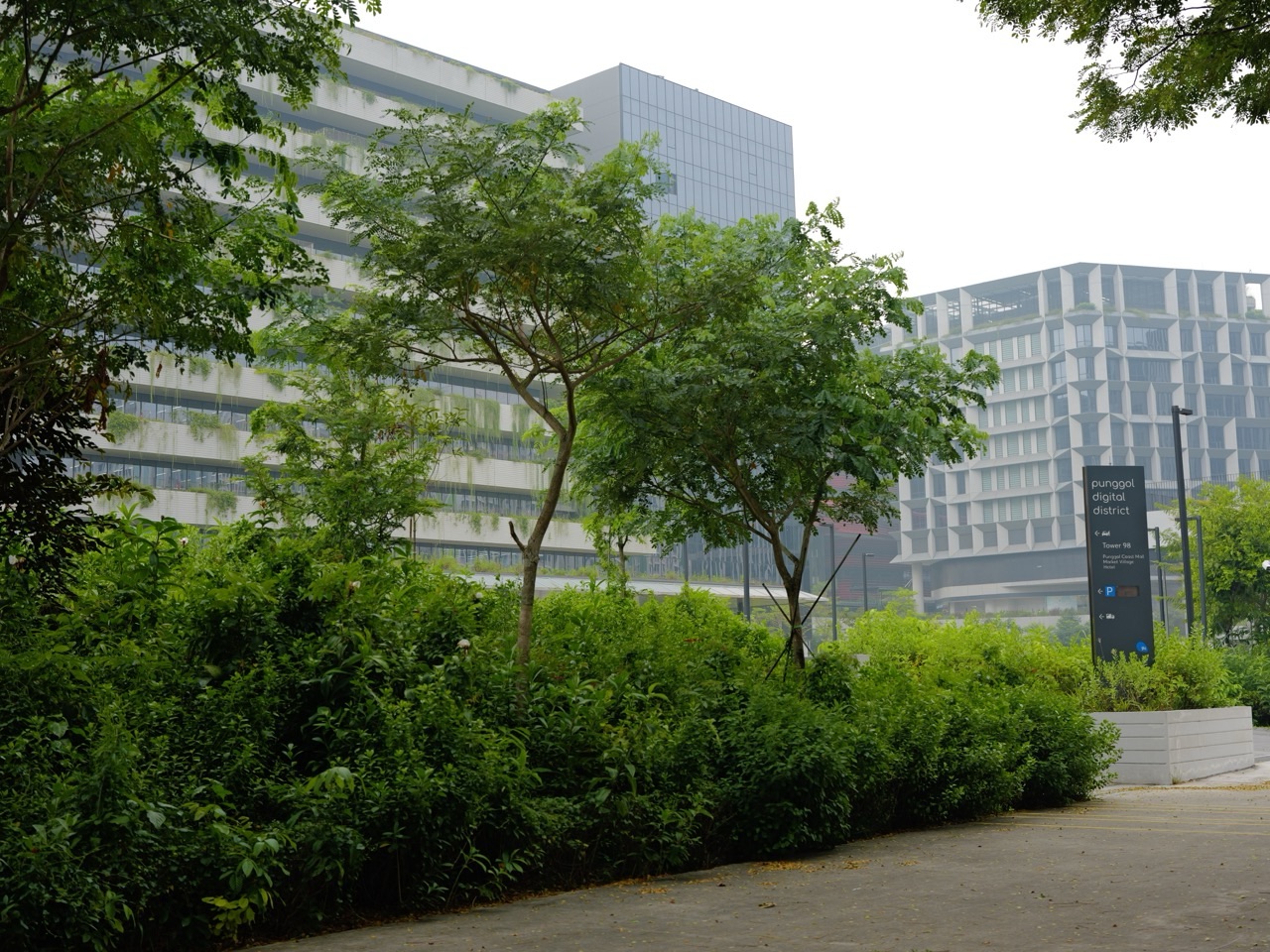
Primary sources: SIT’s inclusive mural project account, JTC’s current Punggol Digital District map, JTC community amenities, URA urban design context and One Punggol CC listings. Updated 17 October 2026. Public-art viewing must follow current access, weather and organiser rules. The featured photograph depicts the Punggol Digital District entrance, not the mural itself.


