
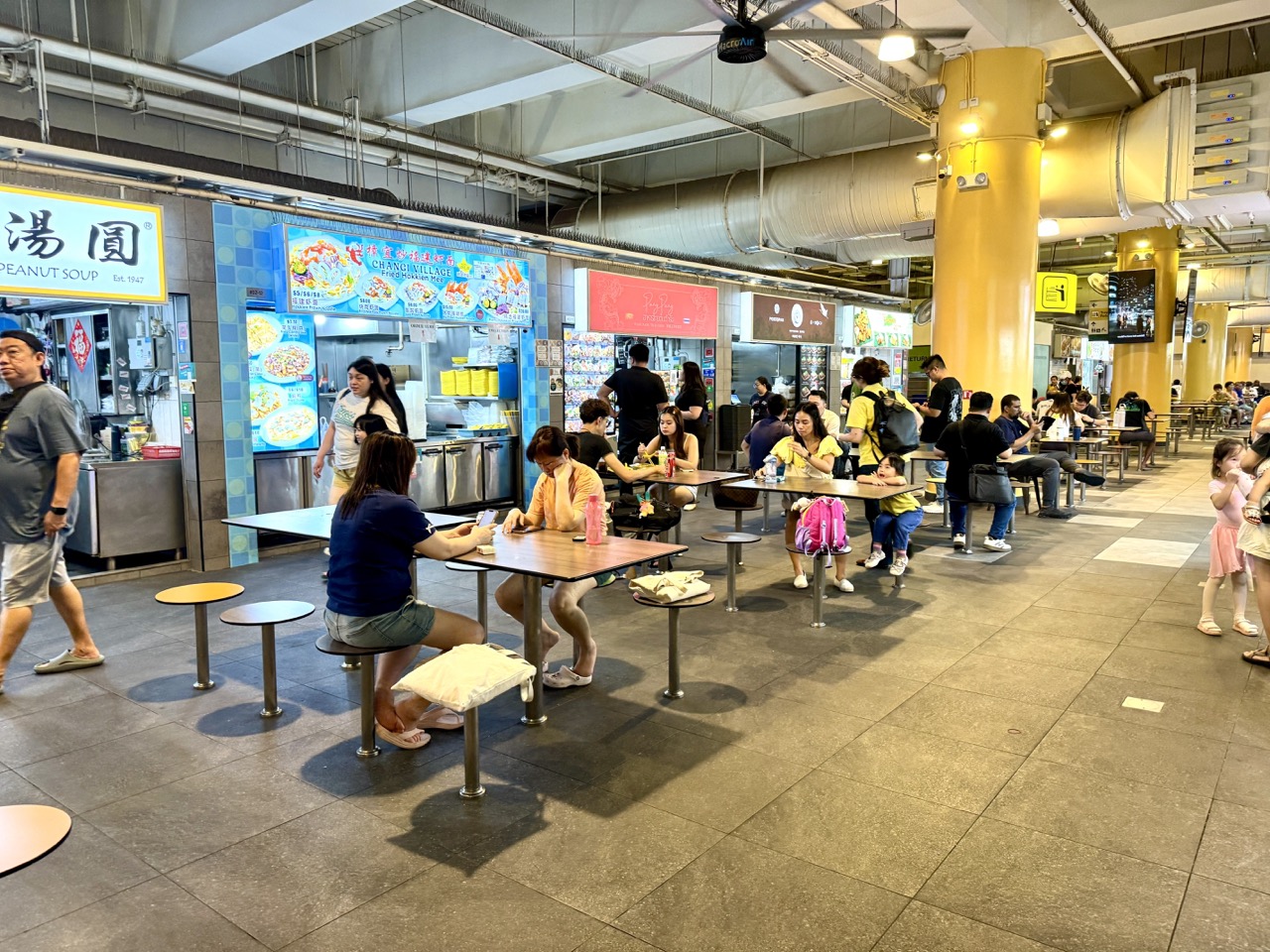
Want a food-and-history day in Punggol? Start with the Punggol Stories exhibition at Punggol Regional Library, where visitors can learn about fishing villages, farming, seafood restaurants and the town’s transformation. Then choose one real current food destination: One Punggol Hawker Centre for an easy central-town meal, Punggol Plaza for market-and-neighbourhood food, or Punggol Coast Hawker Centre for a newer district that deliberately celebrates hawker heritage. A food heritage day is not a requirement to eat ten dishes; one historical story, one thoughtful meal and one small conversation are enough.
Punggol’s food heritage stretches beyond restaurant recommendations. The old coast was home to seafaring and fishing communities, later Punggol became an important farming district, and seaside dining helped establish its leisure identity. Redevelopment transformed the coastline and neighbourhood, while modern hawker centres and shops serve the people who live, work and study here now. This guide connects those layers through a self-guided indoor-first experience, without pretending that a dish served at a contemporary stall must be the same recipe eaten in Kampung Wak Sumang decades ago.
Updated 17 October 2026: NEA has issued haze advisories, and the forecast for 18 October is unhealthy to very unhealthy. The most reliable version of this outing can take place indoors at the library and a current food venue, with a short public-space stroll only when official air-quality and weather guidance make it appropriate. Punggol Point Park remains affected by upgrading works; this food-history itinerary does not send readers to a closed coastal park or assume former seafood establishments are still trading.
Punggol food-heritage options at a glance
| What you want to explore | Visit or read | Simple experience | What not to claim |
|---|---|---|---|
| Fishing villages and the early coast | Punggol Stories / Roots Punggol history | Read one fishing or Wak Sumang story | A historic village survives as an open attraction |
| Seaside restaurants and leisure | Singaporium’s Seaside Solace section | Learn why eating by the coast drew visitors | A 1960s restaurant remains in the same form |
| Pig and poultry farming | Farm to Fable exhibition | Compare agricultural labour and modern land use | All former Punggol farms are visitable |
| Market and ingredient knowledge | Punggol Plaza via Coral Edge | Browse a current open market or shop | Every old rural ingredient comes from Punggol today |
| Everyday hawker meal | One Punggol Hawker Centre | Choose one affordable meal suited to the family | A specific stall is always open |
| Hawker food in a smart district | Punggol Coast Hawker Centre | Explore current food offerings and district design | The launch-day tenant list is permanent |
| Waterfront and food memory | A documented photo or open Waterway view | Compare old shoreline and new public landscape | Closed Punggol Point access is open |
The evidence before the meal: how Punggol became a food town
Coastal communities and the importance of the sea
The National Heritage Board’s Roots Punggol account describes the Orang Seletar, a maritime community that used the northern coastal region, and Wak Sumang’s establishment of Kampung Wak Sumang near Tanjong Punggol. Fishing, boats and family networks helped shape the early area’s economy. NLB’s Punggol Stories also tells histories through photographs and memory rather than treating the coast as an empty place awaiting modern development.
A visitor can read about these communities and ask how food reached homes, how local knowledge of tides and fishing mattered, and how changing land use affected their livelihoods. But an exhibit about a historical fishing village is not proof that its former buildings still exist or that visitors can access the original site today.
The food economy included farming, not just fishing
Punggol later supported plantations, fisheries, poultry businesses and industrial pig farms. NLB and NHB record the importance of farming to Punggol’s identity in the twentieth century. The period involved workers, families, animals, land-use pressures and policy decisions. Its story is richer than a nostalgic joke about pigs being replaced by HDB flats.
When viewing farm photographs, notice equipment, work conditions, transport and the scale of production. Do not assume all the old farms produced one food, used one labour model or closed for exactly the same reason. For deeper local reading, the poultry-farm history guide documents one part of the agricultural economy.
Kupang, seafood and the memory of a working waterfront
NHB’s account of Punggol agriculture and wildlife describes a kupang, or mussel, trade linked with skilled fishermen who settled in the Kampung Wak Sumang area. The species and work practices mattered to local livelihoods. A historically informed food day can explore this without making any modern restaurant claim about serving mussels caught at the old Punggol coastline.
A visitor should not harvest shellfish from a local waterbody or treat a historic seafood story as a current food-safety endorsement. Learn the documented origin, then distinguish it from today’s regulated seafood supply. The Kupang mussels and Kampung Wak Sumang article owns the detail.
Seaside seafood as a leisure experience
Punggol became a destination for seaside recreation and seafood dining. NLB’s Singaporium section called Seaside Solace specifically recalls the waterfront food and water-sports scene that grew in the 1960s. A restaurant was not only a place to eat; travelling to the coast for a meal formed part of the area’s social and leisure identity.
The names and memories of old seafood establishments can be studied through credible archives, but a former restaurant should not be advertised as though it still has a menu and booking system. The eduKatePunggol Ponggol Rest House history gives one historical example.
Punggol 21 changed the physical setting for food and daily life
The modern waterfront-town development altered roads, housing, transport and coastlines. New neighbourhood centres and hawker offerings serve a different resident population from the old coastal villages. This is not a claim that present-day dining is a direct continuation of a specific historic seafood menu; the continuity is that food remains a way people gather and experience the town.
A current meal can invite conversation about what changed and what stayed familiar: food as a livelihood, food as a family ritual, and the role of public places. Use maps, rather than a vague assertion that the entire historic shoreline matches today’s one.
Today’s Punggol is a neighbourhood of several food anchors
One Punggol brings a hawker centre into a civic hub, Coral Edge has Punggol Plaza with everyday market facilities, and Punggol Coast Hawker Centre opened in 2025 as part of the Digital District. This means modern Punggol offers both practical residents’ food and destinations tied to redevelopment and work-life patterns.
A food heritage day should choose one or two food anchors instead of crossing the town for five lunches. Stall hours, hygiene notices, exact dishes and individual businesses change. Use current operator directories when the meal itself is essential.
Start indoors at Punggol Stories: four historical themes that belong together
Punggol Pioneers
This section of Singaporium introduces early Punggol’s kampongs, plantations and communities. Rather than treating the earliest period as one picturesque fishing village, look for the diverse groups and livelihoods that shaped the coastline. Ask whose words, photographs or official records are being used to tell the story.
A family can choose one historical person or community, then explain what a particular source actually demonstrates. This is a thoughtful start before the meal, not an exam exercise.
Seaside Solace
This is the section most obviously connected to a Punggol food history day. NLB describes how the seafood and water-sports scenes attracted people from the 1960s. The key question is not just what diners ate, but why eating at the waterfront became a memorable excursion.
Ask how transportation, scenery and sociability formed the experience. Do not announce that an old seaside restaurant is still trading simply because a photograph shows a dining hall.
Farm to Fable
This section describes Punggol’s agriculture, notably its industrial pig-farming years. It is a chance to compare the work behind food production with how most residents encounter food today at stalls and supermarkets.
A child can look for signs of labour, animal husbandry or transport in the pictures. Separate observations from guessed motives or unsupported dates.
Winding Waterways
This section follows Punggol’s later development, including the changing role of water in town design. It makes a logical bridge to a contemporary food stop near the Waterway or in the Digital District.
Connect the exhibition to a current map of Punggol without assuming that every older road and coast feature survives unchanged.
The NLB Punggol Stories exhibition page describes the permanent exhibition and gives 10am to 9pm for its main listed areas. Some special installations have narrower access windows. Check current room hours before travelling. The existing Punggol Stories local guide handles the venue details; this page is about connecting those historical stories to a present-day food experience.
Choose just one modern food destination and understand its role
One Punggol Hawker Centre: food as ordinary civic life

One Punggol combines a community club, regional library, hawker centre and public services. A meal here can sit directly after the Punggol Stories exhibition without a long transfer. For many households, this is the most practical version of a food-heritage day because the evidence and the meal belong to the same civic cluster.
Look for a food option that fits your actual budget and dietary needs. Consider how a hawker centre supports people using the surrounding library and services. Do not treat current individual stall names or menus as permanent facts. Read the One Punggol guide before relying on a particular venue feature.
Punggol Plaza and its market: ingredients rather than restaurant history
Near Coral Edge LRT, Punggol Plaza provides a neighbourhood shopping and market setting. This is useful for a conversation about modern ingredient supply, household budgets and the difference between fresh produce shopping and prepared food. It is not a replica of the former Punggol farm economy.
Choose one item to compare or identify by its label, then ask where it comes from now. Do not claim it was locally grown, caught or processed without reliable supplier information. The Punggol Plaza market guide is responsible for practical access.
Punggol Coast Hawker Centre: heritage and modern innovation in one place
JTC’s 25 July 2025 opening release describes Punggol Coast Hawker Centre as a project bringing established ‘lost and found’ hawker flavours together with newer vendors. The official venue information lists 40 stalls and 576 seats, at 84 Punggol Way, Level 2. Its wider Digital District setting also features modern business and educational infrastructure.
A visitor can compare how heritage recipes are presented with current food culture, but only if the actual vendor is trading and offering the dish on the day. Do not copy the July 2025 stall list into an October 2026 claim of live availability. Consult JTC’s Punggol Coast Hawker Centre announcement and the current directory.
Northshore Plaza: a newer housing community’s food-and-shopping spine
Northshore Plaza offers retail and food within a new-generation HDB neighbourhood setting, linked with Samudera LRT and open public pedestrian routes. This can provide a different everyday view of Punggol food from the older history exhibited in the library. The connection to housing and transport is part of its real significance.
Punggol Point Park’s upgrading closure affects nearby park plans; do not promise a former coastal dining route is open. Individual shops and promenade connections should be verified before a visit.
Punggol Coast and the restored heritage landscape
A person interested in the Digital District may add a short look at the first open Punggol Heritage Trail section or contemporary public art after eating, where current access and weather permit. The trail retains features of Old Punggol Road in a new urban setting. It is not a complete historic seafood street.
The full future 1.3km trail is not automatically open. Keep heritage interpretation and commercial dining as distinct components of the outing, and do not enter campus or business areas restricted to authorised users.
Eighteen questions that make a Punggol food-history visit worth remembering
1. What did early fishing communities produce?
Explore: Read NHB’s documented history of coastal livelihoods. Remember: Do not invent a menu for a village household. A small curiosity can be more rewarding than an elaborate dining itinerary.
2. What is a kupang?
Explore: Identify it as a mussel linked to documented Punggol trade. Remember: Do not claim a current stall’s mussels come from the old village. A small curiosity can be more rewarding than an elaborate dining itinerary.
3. Who was Wak Sumang?
Explore: Use credible history of Kampung Wak Sumang and local fishing life. Remember: Do not use a romanticised stereotype as a historical fact. A small curiosity can be more rewarding than an elaborate dining itinerary.
4. Why did people travel to the coast to eat?
Explore: Study the seaside leisure and seafood-dining period in NLB’s exhibition. Remember: Food and recreation together shaped some memorable outings. A small curiosity can be more rewarding than an elaborate dining itinerary.
5. How were farm products transported?
Explore: Look at photographs and maps for clues about roads and vehicles. Remember: Do not infer precise transport methods from one image alone. A small curiosity can be more rewarding than an elaborate dining itinerary.
6. Why did Punggol’s land use change?
Explore: Compare farming, environmental decisions, housing and planning records. Remember: Avoid describing a decades-long transformation as one event. A small curiosity can be more rewarding than an elaborate dining itinerary.
7. Where did the coastline change?
Explore: Compare historical and current maps of Punggol. Remember: Land reclamation complicates simple place matching. A small curiosity can be more rewarding than an elaborate dining itinerary.
8. What does a present hawker centre provide?
Explore: Observe seating, food types, access and public amenities. Remember: Do not interfere with food workers or customers. A small curiosity can be more rewarding than an elaborate dining itinerary.
9. Which dishes have documented heritage?
Explore: Read the actual provider or archival story behind a dish. Remember: Do not assume every ‘traditional’ label has the same history. A small curiosity can be more rewarding than an elaborate dining itinerary.
10. Who prepares today’s food?
Explore: Consider the skill and labour of hawkers and suppliers. Remember: Ask before photographing or interviewing staff. A small curiosity can be more rewarding than an elaborate dining itinerary.
11. How does a menu communicate value?
Explore: Look at portion, ingredients, cost and dietary suitability. Remember: A large price tag alone does not describe quality. A small curiosity can be more rewarding than an elaborate dining itinerary.
12. How does food bring people together?
Explore: Notice the role of shared tables, family stories and conversation. Remember: Respect other diners’ privacy. A small curiosity can be more rewarding than an elaborate dining itinerary.
13. What is different about Punggol Coast Hawker Centre?
Explore: Study JTC’s current district information and 2025 opening design. Remember: Launch facts do not guarantee live stall availability. A small curiosity can be more rewarding than an elaborate dining itinerary.
14. What has stayed important across generations?
Explore: Compare community, work, affordability and enjoyment. Remember: Recognise that personal experiences differ. A small curiosity can be more rewarding than an elaborate dining itinerary.
15. What can a family learn from a market?
Explore: Identify one ingredient’s label, source and safe handling. Remember: Do not infer origin from appearance. A small curiosity can be more rewarding than an elaborate dining itinerary.
16. Where can history be observed outdoors?
Explore: Choose a confirmed open public Waterway or Heritage Trail segment. Remember: Do not enter Punggol Point Park during upgrading. A small curiosity can be more rewarding than an elaborate dining itinerary.
17. Which stories are memories rather than documented facts?
Explore: Use NLB’s oral histories and historical records carefully. Remember: A person’s perspective need not describe everyone’s life. A small curiosity can be more rewarding than an elaborate dining itinerary.
18. Which meal would you choose again?
Explore: Enjoy one suitable present-day dish, without making it a reenactment. Remember: You do not need to eat everything to learn from a visit. A small curiosity can be more rewarding than an elaborate dining itinerary.
Three realistic Punggol food-and-history plans
90 minutes: food memories under one roof
Begin at Punggol Regional Library and spend a manageable time at the Singaporium Punggol Stories exhibition, focusing on Seaside Solace and Farm to Fable. Then choose a current open food option inside the One Punggol cluster. Talk about one difference between the old industries and today’s dining life, and finish near the central transport connection.
This is the best option when a family needs an indoor-oriented outing or does not want a long walk. Do not force an extra waterfront segment. The meal is a contemporary experience, not a reconstructed historic recipe.
Two hours: library plus a short Waterway observation
Explore one or two exhibition themes, have a simple meal nearby and, only when conditions are suitable, walk a short public Punggol Waterway Park segment. Ask how water and roads function in modern Punggol compared with the older photographs. Use a signed route that can end easily; do not attempt every themed park area.
A child may enjoy a bridge detail more than a long explanation. If haze, heat or lightning is a concern, remain in a suitable indoor location and end the history day comfortably.
Half day: old food memories to a new hawker centre
Begin at the One Punggol library exhibition, take a transport break, then use the North East Line to Punggol Coast MRT. Enjoy a meal at Punggol Coast Hawker Centre if it is operating and the chosen food suits your group. Look at currently accessible public district space, optionally adding a short Heritage Trail or mural experience when weather and access permit.
This is a deliberate two-zone itinerary, not a claim that the historic waterfront and modern hawker centre are next door. Check current operator maps and restaurant information. The same-day programme is optional, not a compulsory culinary marathon.
A worked family conversation: the same word, a different food world
Imagine a Primary-age child asking, ‘Did the people who lived at Punggol in the past eat at this hawker centre?’ The accurate answer is not simply yes or no. The current building and its businesses did not exist in the original kampong era. People lived within a different coastal and agricultural economy; today’s hawker centres serve residents in a planned new town with different transport, food supply and regulations. Yet gathering to eat, preparing food with skill and feeding a community are enduring human activities.
This conversation invites several subjects without making the child take a test. Geography examines how land use changed. History asks what evidence survives. Mathematics can compare a family’s chosen meal budget with alternatives. English can develop precise sentences: ‘The exhibition describes a former seafood destination; the present hawker centre is part of the Digital District.’ Science can explore where ingredients come from and how food is safely prepared. These are examples of everyday learning, not an official MOE worksheet.
What matters is the distinction between continuity and identity. A modern dish may continue a culinary tradition while still being prepared by a different person, in a different place, with ingredients sourced differently. Being careful with that distinction respects both history and present-day hawkers.
Food and history etiquette: keep the outing pleasant for everybody
Ask before telling somebody else’s story
A hawker, elderly resident or family member may have wonderful memories. But people do not owe a visitor an interview. Ask whether they have time, respect their decision and do not publish their face or personal details without consent.
A family can keep a private conversation without turning it into content for a website.
Distinguish an archive photo from a current business
NLB’s photographs and stories document particular dates and settings. They do not automatically endorse a restaurant or guarantee that a historic building is still operating. Cite their provenance and respect reproduction rights.
For a public article, seek permission or use appropriately licensed archival assets instead of downloading any image without checking rights.
Respect the food venue as a workplace
Hawker centres are places where people earn a living and customers eat. Avoid blocking queues, filming cooking processes up close without permission, or turning a vendor into an unwilling model. Return trays and dispose of rubbish correctly.
Your historical curiosity should not disrupt present-day work.
Keep food safe and suitable
Ask about allergies, dietary needs and any medical restrictions. Do not assume a dish’s heritage label reveals all ingredients. Use current hygiene guidance and the vendor’s actual information; historic seafood collection practices are not instructions for modern recreational harvesting.
Do not collect shellfish from public waters to imitate the past.
Follow current park and heritage access
A modern historical outing can include open public paths, but construction and upgrading closures matter. Punggol Point Park is not an open park attraction during its published closure. The Punggol Heritage Trail is phased.
If the group wants the coast, select a confirmed accessible current place and a safe return route.
Keep the budget and pace reasonable
The aim is to learn one useful story and enjoy one meal, not to buy multiple expensive dishes or crowd a family’s schedule. An ordinary hawker lunch can be a complete Punggol experience when chosen thoughtfully.
Use the Punggol food-and-walk pairings guide for a separate leisure itinerary after the historical activity.
Frequently asked questions about Punggol food heritage
Was Punggol once a fishing village?
Punggol had documented maritime and fishing communities, including Kampung Wak Sumang near Punggol Point. Its history later included farms and seaside leisure venues.
Who was Wak Sumang?
A figure associated with the establishment of Kampung Wak Sumang. NHB and NLB records provide context about the historic community.
What is kupang in Punggol history?
Kupang refers to mussels. NHB describes a mussel trade associated with skilled fishermen who settled in the Kampung Wak Sumang area.
Can we harvest mussels from the Punggol waterfront?
Do not use a historical account as permission to harvest or consume shellfish from local public waters. Fishing and food-safety regulations differ by location and purpose.
Did Punggol have pig farms?
Yes. Pig farming was an important part of the region’s agricultural history in the twentieth century, described by NLB and NHB.
What is Seaside Solace at Punggol Stories?
A Singaporium exhibition section about Punggol’s seaside leisure, seafood and water-sports culture, particularly the popular scene from the 1960s.
Where is Punggol Stories?
Punggol Regional Library at One Punggol, with heritage-related sections at Levels 1, 3 and 4. Singaporium is on Level 4.
Is the Punggol Stories exhibition free?
NLB describes the permanent exhibition as free admission, with published operating hours and specific room conditions. Check before visiting.
Where can we eat after the exhibition?
One Punggol Hawker Centre is in the same civic hub. Choose a current open stall that meets the group’s dietary and budget needs.
What is special about Punggol Coast Hawker Centre?
JTC’s 2025 launch describes 40 stalls, 576 seats and a mix of heritage-themed hawker offerings and emerging entrepreneurs within Punggol Digital District.
When did Punggol Coast Hawker Centre open?
25 July 2025, according to JTC’s official opening release.
Where is Punggol Coast Hawker Centre?
84 Punggol Way, Level 2, serving the Punggol Coast Digital District near Punggol Coast MRT.
Are all forty opening-day hawker stalls still operating?
The original launch numbers describe the opening arrangement, not a real-time 2026 tenant audit. Check the current operator directory and individual stalls before travel.
Is Punggol Plaza a historic market?
It is a contemporary neighbourhood centre near Coral Edge LRT, useful for seeing current food supply and shopping. It is not a surviving farm or fishing-village market.
Can a visitor eat at a place where the old seaside restaurants stood?
The historical sites and present-day businesses do not necessarily match. Punggol Point Park is undergoing upgrading, so avoid trying to reach former viewpoints via closed routes.
Is modern hawker food identical to historic Punggol seafood?
No such general claim is supported. Individual culinary traditions may be remembered or adapted, but recipes, ingredients, sellers and locations can differ.
What can a child learn from this outing?
The difference between a historic livelihood, a present-day food business and the source evidence that supports each description. A budget or menu comparison can be a light optional activity.
What is the easiest 90-minute food heritage itinerary?
Punggol Stories at Regional Library, followed by a meal at One Punggol Hawker Centre. Skip outdoor additions if the group has limited time or poor weather.
Can the food-history day be completely indoors?
Yes. The exhibition plus a suitable food venue forms a complete visit. Outdoor waterfront stops are optional.
What if haze is unhealthy?
Follow NEA and MOH guidance. The indoor-first version is more appropriate than a lengthy outdoor waterfront tour, especially for susceptible individuals.
Can I book a restaurant or hawker table through this guide?
No live reservations are confirmed here. For a specific restaurant booking, use the provider’s actual reservation service.
Where can I find a full Punggol restaurant list?
See the Punggol Food Guide. This article covers food history and a self-guided experience, not current restaurant rankings.
Where can I read more about Punggol’s old farms and coast?
Start with NHB’s agriculture and wildlife account and the Punggol history lovers guide.
Related eduKate Punggol history and lifestyle articles
- Things to Do in Punggol for History Lovers — the wider documentary heritage outing.
- Punggol Stories Exhibition Guide — levels, themes and opening details.
- Kupang Mussels and Kampung Wak Sumang — historic fishing economy.
- Punggol Poultry Farms History — one part of farming heritage.
- Ponggol Rest House History — old coastal leisure.
- Punggol Food Guide — current dining discovery.
- Punggol Food and Walk Pairings — meal-plus-public-path routes.
- Punggol Market-to-Table Family Day — ingredients, budgets and cooking.
- One Punggol Hub Guide — central library and food cluster.
- Punggol Coast Digital District — the modern northern town.
- Punggol Point Park Closure Guide — current access restrictions.
- eduKateSG Punggol School Journeys — learning through daily life.
Primary official sources and date discipline
Core references: NLB Punggol Stories exhibition, NHB Roots History of Punggol, NHB Agriculture and Wildlife of Punggol, JTC Punggol Coast Hawker Centre opening, JTC current Hawker Centre information, NParks Punggol Waterway Park, NEA Haze Situation Update 17 October 2026 and MOH Haze Health Advice. Updated 17 October 2026. Historical accounts, opening-day descriptions and current stall availability are different kinds of information; check the relevant provider before making a time-sensitive visit.


