
Can you compost kitchen scraps in a Punggol HDB flat without creating smells or pests? Sometimes. A suitably managed container, proper aeration and a careful mix of uncooked “greens” with dry “browns” can turn some household plant scraps into mature compost. NParks suggests one part greens to two parts browns as a starting balance. But no Punggol resident needs to compost everything: NEA says the first priority is preventing avoidable food waste. If a compost bin would obstruct a corridor, attract pests or create standing water, choose a safer way to reduce waste.
This Punggol HDB composting guide for 2026 covers practical food-waste prevention, NParks green/brown materials, traditional composting, vermicomposting with specialist worms, moisture and odours, compost maturity, dengue prevention, building permission and approved community gardens. It is a different task from planting herbs or getting an allotment: see Community Gardening in Punggol for that. Our Life in Punggol master guide connects healthy food, homes and everyday living.
Quick information before starting an HDB compost bin
| Question | Practical answer | Important caution |
|---|---|---|
| What belongs in a beginner bin? | Suitable raw plant trimmings, soft peels and small amounts of brown plant matter. | Avoid cooked salty/oily food and diseased plant parts. |
| What are greens? | Fresh nitrogen-rich materials such as uncooked vegetable peels. | Too many can make the bin wet and smelly. |
| What are browns? | Dry leaves, twigs, plain cardboard and suitable paper. | Contaminated or coated packaging is unsuitable. |
| What ratio can beginners use? | NParks suggests approximately 1:2 greens to browns. | Adjust for moisture and the chosen method. |
| How wet should a compost bin be? | Generally damp, comparable to a wrung-out sponge. | Dripping water and stagnant trays are problems. |
| How long does it take? | NParks estimates around 3–6 months for a sufficiently large aerobic system. | Smaller setups may take longer. |
| Can worms do the work? | Vermicomposting uses specially adapted composting worms. | They need suitable care, bedding and temperature. |
| Can it be kept in an HDB corridor? | Do not use common space without permission or obstruct fire access. | Neighbours’ safety comes first. |
| What about dengue? | NEA’s weekly Mozzie Wipeout applies to all water-collecting containers. | A worm-bin tray cannot become a mosquito nursery. |
| What if it smells rotten? | Check for excess wet greens, lack of air or unsuitable food. | Don’t mask the source with fragrance. |
| When is compost mature? | NParks describes fine, soft, earthy-smelling material. | Do not use slimy, foul, actively rotting material. |
| What if I have no safe space? | Reduce waste and dispose of residual material correctly. | Composting is optional. |
1. Prevent food waste before considering compost
NEA’s food waste hierarchy begins with prevention. Buy what you can finish, make a practical meal plan and store perishables appropriately. Composting is a useful option for unavoidable trimmings, not permission to let edible vegetables spoil or to cook excessive portions just to provide material for a new hobby. This distinction can save more money than the price of a composting container.
In Punggol, shopping at neighbourhood groceries or eating at a hawker centre produces many small decisions. A family that repeatedly throws away half a bag of greens should first learn to buy a manageable quantity. If edible food is safe for another meal, follow proper storage and handling; if it is suitable for approved redistribution, check actual donation conditions. None of these choices requires a balcony or a compost bin.
The Punggol Healthy Hawker and Grocery Guide covers meals, shopping and families. This companion starts later in the chain: what should happen after there are unavoidable scraps? NEA distinguishes reducing waste, distributing usable food and treating remaining material. Good household environmental habits follow that order.
2. What the compost process actually does
Composting is the controlled decomposition of organic materials through microorganisms and other soil life. It can produce organic matter that benefits soil when the material is mature and properly used. A bag of fresh peels is not the same as ready-made compost; the process takes time, air, suitable moisture and an appropriate mix. The most responsible starting question is whether the household can maintain those conditions.
NParks’ GardeningSG Composting guide explains the distinction between nitrogen-rich greens and carbon-rich browns. Nitrogen-rich material tends to be fresher and wetter. Carbon-rich brown material often helps structure the pile and prevents everything from becoming soggy. When the balance is wrong, microorganisms cannot operate in a suitable aerobic environment and the contents may sour.
Composting therefore works less like putting something into a rubbish chute and more like maintaining a small biological system. Children can learn from that concept without handling decomposing scraps themselves. They can classify materials and discuss why air, time and moisture matter, while adults manage hygiene and any required equipment.
3. Greens and browns without a complicated recipe
NParks lists uncooked leafy vegetable trimmings, suitable soft fruit peels, tea leaves and certain coffee grounds as green materials. It warns against coffee grounds roasted in oil because the oil can turn rancid. Browns include dry leaves, small twigs, plain cardboard egg trays, paper and suitable chopped woody material. Large woody material may take much longer to break down than soft scraps.
The common 1:2 guidance refers to a practical starting relationship, not a rigid laboratory formula for every possible mix. If you use one small container of suitable raw scraps, the illustrative balance is roughly two similar volumes of suitable dry browns. Then assess moisture and aeration according to the system’s instructions. Different materials pack differently, and tropical humidity changes the response.
Don’t collect dry leaves from NParks planted habitat or shared estate landscaping without permission merely because your bin needs more brown material. Choose legally obtained supplies or an authorised community-garden arrangement. Do not add plastics, coated containers or packaging simply because some have the word biodegradable printed on them; their treatment requirements may be different.
4. What to leave out of a small residential compost system
Cooked food with salt and oil, meat-related leftovers, weeds or diseased plants should not be treated as harmless feed for every household setup. NParks explicitly cautions against weeds, diseased parts and cooked oily or salty food in its traditional compost guidance. These can introduce pests, pathogens, unwanted seeds or problems in the finished material. A family should obey the selected method’s accepted-material list rather than invent a universal everything-goes recipe.
Keep food-safety concerns separate from composting. A leftover cooked meal does not become safe for redistribution simply because it appears fresh, nor does a failed edible-food storage decision automatically create good compost. Singapore Food Agency hygiene guidance still applies. If material is not appropriate for a household system, use the lawful waste route and reduce the upstream cause next time.
Avoid hazardous chemicals, batteries, cigarette ends, pet waste and other contaminants. The household needs clean, distinct collection streams: food scraps, dry household recycling, e-waste and ordinary general waste each have different rules. Accurate sorting is the skill; adding everything to one bin is not sustainable living.
5. Is a kitchen countertop bin a complete composting unit?
A small caddy can be useful for temporarily collecting suitable trimmings while preparing food. But a sealed container where scraps sit indefinitely without appropriate oxygen or controlled treatment may simply become rotting food. Do not assume that a pleasant-looking countertop product, electric machine or covered pail always creates finished compost. Ask exactly what process it uses and what comes out.
An aerobic system needs appropriate airflow and protection from insects or rodents. NParks describes containers designed to provide aeration while containing material. A system kept in a Punggol flat also needs sensible cleaning, a place to manage moisture and a household member willing to check it regularly. If the setup depends on an unsuitable humid kitchen corner, consider whether composting should instead be done in an approved larger garden or not at all.
Small HDB homes combine cooking, dining, study and sleep. A strong smell from the kitchen affects more than the person running the project. A system is not a success if it saves a handful of scraps while causing distress to family members or neighbours. Environmental intentions must coexist with normal household comfort.
6. HDB balconies, shared corridors and legitimate space
A private balcony may seem a natural place for a compost container, but strong sun, rainwater, weight, drainage, pests and neighbouring units matter. Vermicomposting worms can overheat, while an open tray can collect water. A compost pile kept in full rain may become soggy and anaerobic. The place must be appropriate for the bin’s design and the household’s actual building conditions.
Do not position private containers in common corridors, stairways, lift lobbies or estate garden beds without the relevant approval. Common spaces serve neighbours, emergency routes, cleaning and accessibility. Blocking a passage or creating an odour in a shared corridor is not excused by a sustainability label. Consult the responsible estate or building manager for applicable rules rather than treating an empty corner as personal storage.
Our Healthy HDB Home in Punggol addresses shared-space safety and household moisture. Compost belongs inside that larger framework. If no genuinely suitable and permitted space exists, reducing food waste and participating in an authorised community programme can be better options.
7. Humidity and the source of compost odours
Singapore’s humid climate means compost can easily become too wet. When excess green material releases liquid that blocks oxygen, the system may undergo anaerobic decomposition, producing a sour, slimy or unpleasant result. NParks recommends adding more appropriate browns and mixing or aerating where the chosen method allows it. Decomposition also slows if the system dries excessively.
A familiar comparison is a wrung-out sponge: damp but not dripping. That is the moisture concept NParks uses for healthy compost. It does not mean leaving water pooled in a saucer under the bin. Residents should understand the difference between a moist organic mix and actual stagnant water that creates a dengue risk. The latter must be prevented under NEA guidance.
If an odour persists, stop adding scraps and identify the cause rather than spraying fragrance. A badly contaminated bin or one attracting pests may need appropriate disposal and a redesign, not indefinite experimentation. Good practice is noticing a problem early and correcting it without allowing a private hobby to become a building sanitation problem.
8. Aerobic composting and realistic maturation times
NParks describes traditional aerobic composting as a relatively straightforward approach that still requires time and enough material for suitable breakdown. A large, well-managed pile can take around three to six months to mature, while smaller setups may take longer rather than finishing in a single week. The time varies with material size, airflow, moisture and maintenance.
The guide recommends mixing and aerating traditional systems regularly where appropriate, while preventing them from being too wet. A resident should follow the specific container’s safe management instructions and avoid unsafe improvised power tools or machinery. A composting system is not judged by how quickly a bin becomes empty: what matters is whether the organic material turns into stable, properly matured compost.
The term compost can be used too casually in product marketing. A dehydrated or chopped output is not necessarily mature soil amendment. Ask the operator or manufacturer to distinguish a preliminary processed material from fully mature compost. This is especially important for a beginner planning to apply the output to food plants.
9. Vermicomposting: live worms need care
Vermicomposting introduces specialised composting earthworms that consume appropriate organic material and produce worm castings. NParks notes that these worms are not simply any earthworms dug from ordinary garden soil. Their environment requires oxygen, an appropriate substrate, correct feeding, humidity and protection from heat and predators. A worm bin is an animal-care responsibility as well as a recycling system.
NParks cautions that composting worms can be sensitive to citrus peels, strong-smelling onion and garlic, high temperature, excessive wetness and dryness. Worms may try to leave an unsuitable bin or die if it becomes too hot. A resident with only a fully sun-exposed balcony should not buy a colony and hope that Singapore’s heat will somehow improve their productivity.
If interested, learn from recognised horticulture materials and consider attending a supervised workshop first. Worm bins may be smaller than traditional heaps, but that does not remove the need for monitoring and pest exclusion. Someone who is uncomfortable handling worms can choose an aerobic method or not compost at home at all. No household must keep worms to claim an environmentally responsible lifestyle.
10. Mature compost versus rotting scraps
NParks describes mature compost as a soft, fine, stable material with a pleasant earthy smell. Material that remains chunky, sour or unpleasant is not ready for use. Its Soil Amendments guide cautions that actively decomposing material can use up nitrogen and negatively affect plants nearby. A dark colour alone is not a reliable maturity test.
This matters for Punggol residents growing herbs. Placing unfinished compost directly into a small pot does not guarantee better harvests. The pot already has limited soil volume and drainage, and adding unstable material can create further problems. Ask an experienced gardener or horticultural source how to use genuinely mature material safely rather than mixing kitchen waste into the roots of food plants.
If a batch becomes contaminated or seriously pest-infested, the responsible solution may be lawful disposal rather than applying it to a shared community garden. A sustainability activity should never expose neighbours or crops to unnecessary sanitary hazards. Learning to abandon an unsuitable batch is an important maintenance skill.
11. Dengue: an HDB compost project cannot create standing water
NEA’s Prevent Aedes Mosquito Breeding guidance emphasises that Aedes mosquitoes can breed in very small collections of stagnant water. Compost and gardening setups may create risk if trays, buckets, balcony corners or drainage receptacles collect rainwater. A weekly Mozzie Wipeout inspection is not optional simply because a container is intended to support nature.
A worm-bin drainage system should be managed according to its safe design and should not have exposed reservoirs of water. A compost container kept on a balcony needs attention after rain. Check nearby plant-pot trays as well as the bin itself. If the container cannot be managed without stagnant water, it is unsuitable in that form. No amount of environmental enthusiasm justifies making mosquito breeding easier for the neighbourhood.
Compost moisture and mosquito control are distinct concepts. Organic material may need controlled dampness, while containers should never hold open pools of water. Children can learn this distinction, but adults remain responsible for inspecting and maintaining the system. If unsure, seek NParks or NEA guidance before proceeding.
12. Insects, rodents and responsibility toward neighbours
Fruit flies and other insects may be attracted when food is left exposed or the bin is mismanaged. Rodents can also become a concern if an outdoor pile is accessible. NParks describes secure compost containers as a way to protect materials while permitting aeration. Do not create an open heap in a communal area or assume pest control can be managed by an unapproved chemical spray.
When an odour or pest issue affects others, deal with it promptly. A Punggol neighbour has a right to a clean shared environment even when another resident has admirable sustainability goals. If your compost method repeatedly creates problems, reduce the inputs, improve the approved container arrangement or discontinue it. Do not force others to accept an ongoing nuisance.
Some community gardens deliberately limit the materials they accept because volunteers must maintain the pile. Respect their instructions rather than leaving bags of waste outside a garden gate. A personal project becomes collective only when the people responsible have agreed to handle the extra work.
13. Community gardening and approved compost locations
NParks Community in Bloom and related gardening programmes support community horticulture, but a garden plot is not automatically a public scraps drop-off site. Contact the named garden organiser before bringing material or installing a heap. Volunteers may already have an approved compost method or may prefer not to manage food scraps for sanitary reasons.
The Punggol Community Gardening guide addresses allotments, volunteer roles and dengue. For composting specifically, ask what green and brown materials are accepted, who will maintain the system and whether there is enough space and secure access. A neighbourhood group should not encourage residents to deposit scraps without a clear material list and responsibility plan.
NParks has separately publicised community composting volunteering at Jurong Lake Gardens, which is elsewhere in Singapore. That official example shows what an authorised educational programme can look like; it is not permission to bring scraps to an unverified Punggol park. Always check current events, locations and any registration requirements.
14. A four-stage household trial rather than a speed challenge
Stage one is prevention: reduce avoidable edible food waste. Stage two is suitability: determine whether a permitted, maintainable compost setup truly exists. Stage three is a modest start with approved raw scraps and dry browns, observing odours, moisture and pests. Stage four is an honest review: can this household continue safely for months, or is waste prevention alone the better choice?
The plan is not a promise that compost will mature by the end of four weeks. Traditional processes can take substantially longer. The experiment is about understanding whether people can maintain the system. If one person travels frequently for work or several relatives share a very small kitchen, a complicated scheme may fail for practical reasons. It is better to learn this early than to let a bin decay unattended.
Success can include deciding against composting. A family that reduces wasted cooked food, keeps its recycling clean and avoids unsafe common-area storage is already making sensible environmental changes. The goal is measured behaviour that lasts, not an impressive first-week photograph of a new compost container.
15. Worked scenario: an HDB resident with potted chilli
A resident has a small chilli plant and wants to use vegetable peels to produce free fertiliser. A shop suggests a compact worm bin. Before buying, the resident notices that the only possible location receives direct afternoon sun, while the balcony has rainwater collecting in a tray. NParks says composting worms are sensitive to heat and moisture extremes, and NEA warns about stagnant water. The resident first corrects the drainage and asks whether a safe shaded location exists.
If not, the family may decide to purchase appropriate mature compost from a supplier and reduce kitchen waste rather than keep worms. That is a reasonable gardening decision, not a failure. The plant’s health and neighbours’ safety are better served by a practical system than by pushing a recycling technology into an unsuitable location.
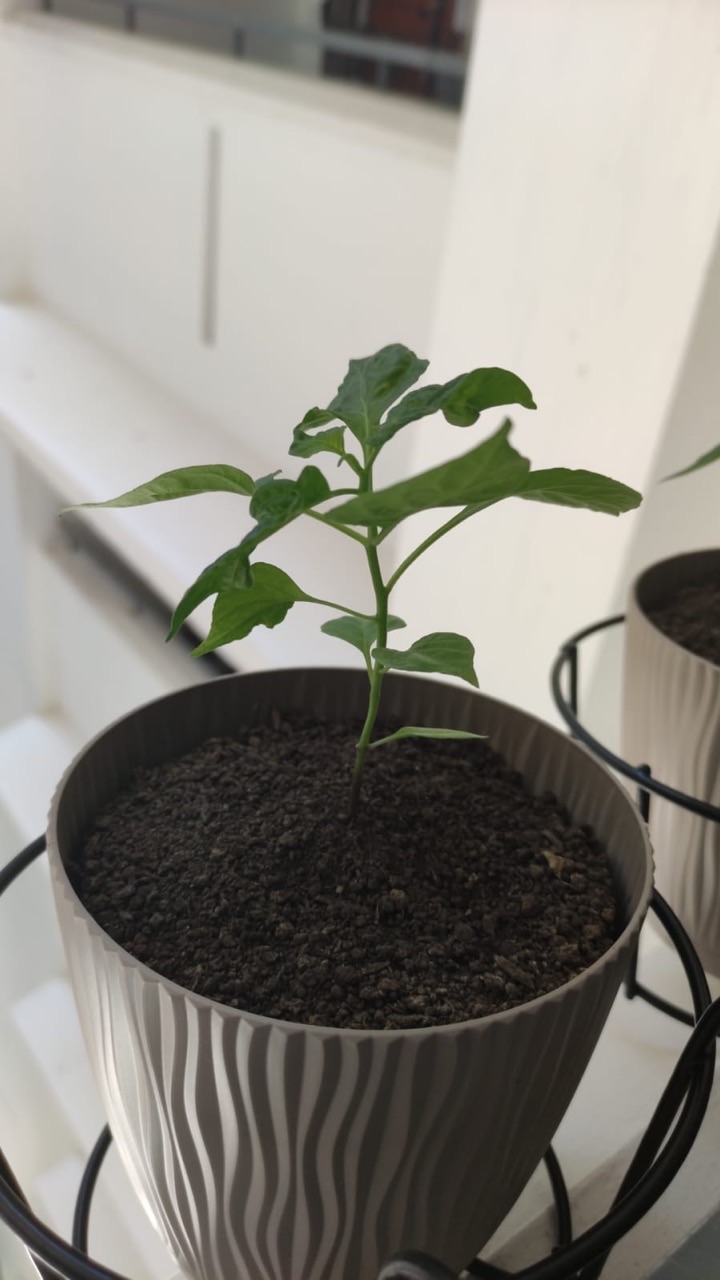
The photographed small potted chilli example is relevant to many HDB homes: a small growing space can encourage environmental curiosity, but it does not automatically create enough room for compost production. Match the process to the place.
16. Worked scenario: a school waste audit without unsafe handling
A Primary 5 student wants to investigate how much food the household wastes in a week. The family makes a supervised record separating edible food left uneaten from unavoidable raw trimmings. They discuss shopping portions, refrigerator storage and meals before considering a compost system. The student then categorises examples as greens, browns or unsuitable materials using NParks guidance.
The project can include a simple ratio illustration: one cup of suitable green plant scraps would require around two comparable cups of appropriate dry browns at the starting guidance, subject to method and moisture. That demonstrates proportional reasoning without requiring the child to handle rotting food or set up an unsupervised experimental bin. The family can assess what they learned even if they never produce compost.
A clear school explanation states that one household’s results cannot establish the town’s entire food-waste output. Sample size, measurement conditions and shopping patterns matter. This is first-principles Science and Mathematics applied to healthy local living.
17. When composting is the wrong answer
Composting may be unsuitable when there is no approved space, when a household member has a relevant health or allergy concern, when pest management cannot be maintained, when children or pets could reach unsafe contents, or when the only location obstructs shared access. A person who works irregular shifts may also be unable to care for a biologically active system reliably. These are legitimate constraints that must be considered before buying equipment.
NEA’s reduce-first advice remains available to everyone. More careful food shopping and storage can prevent waste without adding a sanitation risk. A community programme with a trained organiser may offer a learning experience without requiring home maintenance. If a purchased system fails, address it responsibly instead of pretending it works because of the money already spent.
Environmental progress should be judged by safe, sustainable habits, not a requirement that every household run its own waste treatment facility. A good Punggol lifestyle offers many ways to contribute without sacrificing normal family life.
Common composting mistakes to avoid
- Buying too much food because scraps feel useful. Prevent avoidable waste first.
- Using mainly wet peels with no dry brown material. Review NParks balance guidance.
- Adding cooked salty or oily food. Check accepted materials.
- Collecting public park leaf litter without approval. Respect managed landscapes.
- Sealing kitchen waste without a real composting process. A caddy is not automatically a composter.
- Putting a bin in a shared corridor. Do not block access or impose on neighbours.
- Leaving standing water below a container. Prevent dengue.
- Buying worms before checking heat and care. They are living organisms.
- Assuming all dark matter is mature compost. Check its smell and stability.
- Ignoring pests or odour. Stop and correct the underlying cause.
- Dumping scraps at a community garden without permission. Ask the organiser.
- Believing the entire process finishes in one week. Maturation usually takes longer.
Frequently asked questions about Punggol home composting
Can I compost while living in an HDB flat?
Possibly, if a suitable permitted, secure, manageable setup exists and does not cause sanitation or neighbour issues.
Do I have to compost to be environmentally responsible?
No. NEA prioritises preventing food waste and other sound waste practices.
What does 1:2 greens to browns mean?
NParks’ starting guidance is roughly one part fresh green material to two parts suitable dry brown material.
What are typical greens?
Suitable uncooked vegetable trimmings, soft peels, tea leaves and certain coffee grounds.
What are typical browns?
Dry leaves, small twigs, plain paper or cardboard and suitable woody matter.
Are leftover cooked noodles suitable?
Do not add cooked salty or oily leftovers to the traditional system described by NParks.
Can I include citrus peels in worm composting?
NParks warns compost worms can be sensitive to acidic citrus; follow specialist care guidance.
Can I use earthworms from my garden?
NParks differentiates composting worms from ordinary garden soil earthworms.
Why does my compost smell sour?
Excess moisture and lack of oxygen may be causing anaerobic decomposition.
Should compost be dripping wet?
No. NParks uses a damp wrung-out sponge as the moisture comparison.
How long is traditional composting?
NParks describes around three to six months for sufficiently large aerobic heaps, with variation.
Can I put the bin outside the HDB unit door?
Do not use shared corridors without required permission or block access.
Does compost create dengue risk?
Poorly maintained trays and containers can hold stagnant water; weekly prevention checks are essential.
Can compost improve potted herb plants?
Properly matured material may be useful as a soil amendment, with suitable plant and hygiene guidance.
What if my compost is slimy?
Review excess wet feed and lack of oxygen; do not apply foul material to plants.
Does an electric machine always produce mature compost?
Do not assume so. Check the actual output and its subsequent treatment requirements.
Are community gardens obliged to take my scraps?
No. Ask the organiser and follow its accepted-material and maintenance rules.
Can children participate?
They can learn through supervised classification and observation without unsafe waste handling.
Can I put paper into compost?
Certain suitable plain paper/cardboard can be brown material; avoid contaminated or coated material.
Can food scraps go into the blue recycling bin?
No. Food residue contaminates household dry recycling.
Can I compost batteries or electronic waste?
Never. These require separate designated e-waste disposal.
What if my neighbours complain of pests?
Address the cause promptly and suspend or close the system when necessary.
How do I recognise mature compost?
NParks describes fine, soft, earthy-smelling material without active unpleasant rotting.
What if I have no plants?
Waste prevention may be more appropriate than processing compost you have no use for.
The household eco-living connection: plants, butterflies, bicycles and waste
Composting is only one possible environmental habit. These companion articles connect garden ecology with practical Punggol transport and recycling, while keeping the topics’ instructions distinct.
- Butterfly Watching in Punggol. Waterway and Coney Island observations, nectar versus host plants, NParks Butterfly Watch and responsible wildlife notes.
- Bicycle Parking in Punggol. Punggol Coast MRT racks, police anti-theft advice, shared-bike parking and safe last-mile commuting.
- Recycling and E-Waste in Punggol. NEA blue bins, batteries, authorised e-waste, Waterway Point bottle returns and the October 2026 10-cent scheme.
Further reading across eduKate’s Punggol lifestyle ecosystem
- Life in Punggol 2026 — Lifestyle Hub
- Community Gardening in Punggol
- Punggol Gardens and Allotments
- Plant-Cutting Swap and Propagation
- Healthy Hawker and Grocery Choices
- Healthy HDB Home in Punggol
- Punggol Environmental Volunteering
- Punggol Birdwatching for Beginners
- eduKateSG — School Gardens and Green Learning
Official references and editorial note
- NParks GardeningSG — Composting, Materials, Ratios and Worm Systems
- NParks — Mature Compost and Soil Amendments
- NEA — Reduce, Redistribute and Treat Food Waste
- NEA — Prevent Mosquito Breeding
- NEA — Recycling at Home
- NParks — Volunteering and Community Composting Activities
- Singapore Food Agency — Food Safety
- Official Singapore Haze Advisory
Reviewed 22 October 2026. Educational home-waste and gardening advice, not permission to place private equipment in shared HDB spaces, a fast compost guarantee or individual food-safety clearance. Follow current NParks and NEA guidance and your property’s rules; discontinue any system creating pests, nuisance or standing water.


