
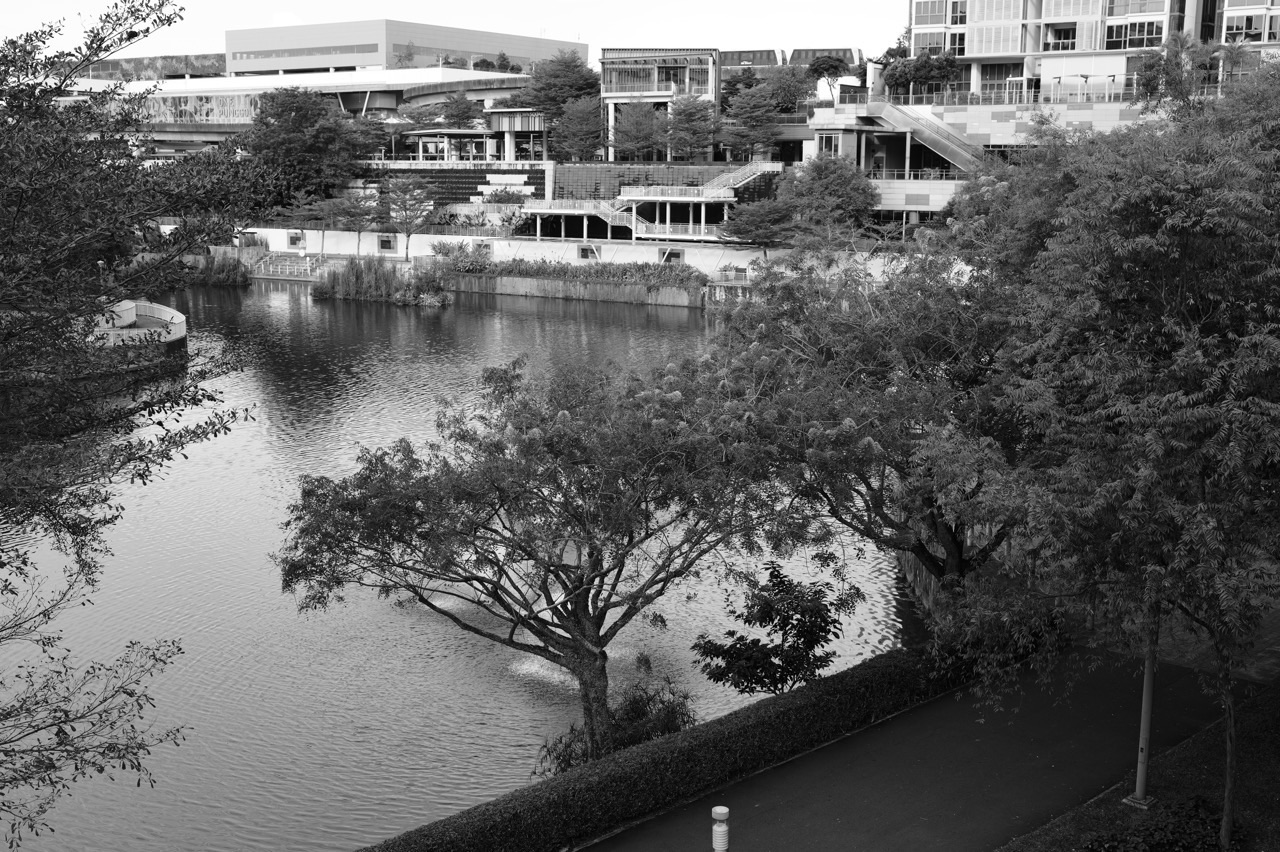
What is a Punggol sound walk? It is a short, slow outing in which you notice the sounds of one public place: footsteps on a path, birds calling from trees, distant trains, the movement of leaves or everyday neighbourhood activity. On a future day with suitable weather and air quality, try 10–20 minutes along a familiar permitted section of Punggol Waterway Park or a nearby public neighbourhood route. Stop somewhere safe, listen for a minute, then record a few words about what you heard. A microphone is optional. There is no need to identify every bird, buy specialist equipment or walk the entire Waterway.
Things to do in Punggol for sound and listening enthusiasts include making a handwritten sound map, comparing two everyday neighbourhood settings, learning how background and foreground sounds differ, or producing a private audio postcard of a short non-identifying ambient recording where it is lawful and appropriate. This article is the sound-led counterpart to the site’s Punggol photo diary and Punggol nature without hiking. The aim is to appreciate the town attentively, not collect strangers’ conversations or claim professional acoustic measurements from a phone.
18 October 2026 update: NEA’s 17 October advisory forecasts PSI 150–220, unhealthy to very unhealthy, for 18 October. Children and older people should minimise outdoor activity for next-day planning; people with chronic heart or lung disease should avoid it under the forecast. For immediate decisions use the latest one-hour PM2.5 guidance. Begin indoors: listen safely from a suitable home window, revisit an existing authorised nature recording, or write a sound diary from memory. A sound walk is optional leisure, not a reason to spend time outside during unhealthy haze.
Punggol sound-walk quick chooser
| Your interest | Good starting experience | What you can record | What to avoid |
|---|---|---|---|
| Listening without gadgets | Short public Waterway stop on a suitable future day | Birds, water, footsteps as descriptive notes | Dangerous railings and cycle paths |
| Family creative activity | Indoor drawing with four sound symbols | A hand-drawn sound map | Compulsory homework |
| Audio postcard | Short non-identifying environment clip where permitted | Broad ambient sound with consent as needed | Strangers’ private conversations |
| Compare town areas | One public park and one civic hub, on separate days | Relative impressions with dates | Claiming official noise measurements |
| Urban nature curiosity | A legal public landscaped area | Observed sound types | Guessing species from a call |
| During haze or lightning | A safe indoor session | Sound diary or supplied recording | Going outside to fill a checklist |
| Teen media project | Short edited private audio essay | Own narration and permitted ambience | Uploading identifiable conversations |
Five chapters: listen, choose a route, try the method, make something, check the limits
- 1. What a sound walk is and what it is not
- 2. Punggol locations and respectful recording
- 3. Worked 10-, 20- and 45-minute sound activities
- 4. Sound maps, audio postcards and common mistakes
- 5. FAQs, related articles and official sources
Chapter 1. Why listening changes an ordinary Punggol outing
Sound carries information a photograph cannot
A photo of Punggol Waterway Park may show a bridge and trees, but it cannot tell you whether a bicycle bell rang, how nearby leaves sounded in a breeze, or whether people were talking beside you. Sound adds a second kind of local observation. However, it also changes from minute to minute, and a short listening moment is not a complete environmental survey.
A beginner can listen quietly for sixty seconds, then write three descriptions: something close, something far away and something that changed. This is enough to begin. There is no requirement to film a person or to collect an elaborate recording. Attention matters more than equipment.
Foreground and background can be described simply
In audio storytelling, a foreground sound is one that stands out, while background ambience forms part of the setting. A pedestrian’s steps may become prominent for a few seconds, with steady vehicle sound farther away. A bird call may cut through a wider hum. These descriptions are useful but remain subjective; one listener may notice something that another does not.
Write what is heard before explaining its cause. ‘Three short chirps from the trees’ is an observation; ‘a specific species is nesting’ requires stronger evidence. Sound walks work best when people are allowed to be curious without feeling pressured to invent scientific identifications.
A sound map is not a noise-pollution map
A family sound map might show where somebody heard leaves, conversation or a train on a particular afternoon. That is different from a calibrated sound-level measurement or government noise survey. A phone decibel app may give an approximate reading but its accuracy depends on hardware, calibration and method. The difference matters when a personal hobby is published online.
Label the map ‘what I heard at this time and place’, not ‘Punggol official noise ranking’. Do not claim one park is always quiet or a residential block is permanently noisy from a two-minute sample. The map can be a valid creative record while remaining modest about what it proves.
Sound walks are not necessarily silent walks
Some people enjoy talking about the sounds together; others prefer quiet observation. A family can agree to one minute of attentive listening followed by conversation, so nobody feels compelled to whisper for half an hour. A child may delight in explaining a sound, while another may be tired or uninterested. Both reactions are normal.
Choose the style that fits the group. The point is not a formal mindfulness treatment or a medical exercise. People seeking a calm outing can use the Punggol low-pressure guide and adapt the sound prompt without promising any health outcome.
Short routes make better first experiments
The Waterway spans multiple public paths and four park zones, so ‘walk all the way around and listen’ is not an efficient first task. An adult with twenty minutes, a family with toddlers or a visitor near One Punggol may be happier choosing a safe stop near the existing route. The more complicated the journey, the less time remains to notice anything.
Pick a route that can end promptly and a lawful safe stopping area. Avoid narrow bridges, crossing points or places where stopping obstructs pedestrians and cyclists. A ten-minute public observation is a complete sound walk.
The sound diary can be private
A personal listening notebook may be more appropriate than recording other people. Writing ‘birds, footsteps, a bus, moving leaves’ captures the experience without storing identifiable voices, phone numbers or someone’s private conversation. Recording can be useful for creative work, but it is not the default or the price of participation.
For family groups, start with words or drawings and decide later whether any audio is necessary. Children can draw icons instead of writing sentences. A private sound diary is still a finished outcome, and it avoids the pressure to post everything online.
Weather and haze can change what you hear and whether you should go
Rain can change the volume of traffic, footsteps and leaf movement; haze may reduce visibility and lead to altered outdoor routines. But hearing a different sound is not a reliable measure of air quality, rainfall, or species abundance. Lightning and current smoke guidance remain safety decisions that cannot be replaced by a creative observation.
The indoor version can use a memory of the Waterway or a trusted recording. During unhealthy haze, postpone any optional outdoor route. A future sound walk can be done when the environment and the people involved make it suitable.
Chapter 2. Punggol locations and respectful sound collection
NParks describes Punggol Waterway Park as a public landscaped park along Sentul Crescent with four themed areas. Its combination of greenery, canal, footpaths and nearby urban development can make it interesting for comparing everyday sounds. The specific observation point should be selected from actual public access and safety conditions, not a romantic description of an isolated bank. The same is true of One Punggol’s public community routes, a lawful Punggol Coast pedestrian area or a neighbourhood near an LRT stop.

The central Waterway: distinguish natural and built sounds
A convenient public part of Punggol Waterway near the town centre can contain leaves, birds, walkers, traffic and other sounds at the same time. A listener can note the mix without asserting any one source is permanent. Birds may be present on one visit and not on the next; the date, weather and time matter. The built landscape is part of the town’s sound identity.
Use a familiar public approach close to transport or home, remain on designated paths, and keep away from water edges. Do not block bridges or paths used by people cycling or using mobility aids. Read the Waterway guide for public park information.
One Punggol public approaches: community life, not private conversations
One Punggol is a civic and library hub where sounds vary with activity, arrival and the services in use. It can be interesting to compare an outdoor public walkway with a quieter indoor reading environment, but public services still have their own conduct, photography and audio recording rules. A library is not a field studio with unrestricted microphone access.
For a safe exercise, make a written impression of the public outdoor space and use an existing authorised recording for further analysis. Avoid recording identifiable conversations, patient details, transactions or children’s private speech. Do not disturb staff or people using the hub.
LRT neighbourhoods: listen to a journey without entering rail areas
Punggol’s East and West LRT loops help residents travel among neighbourhoods. A station can provide a useful sound-observation prompt: moving trains, announcements, public footsteps and urban noise. Yet the platform is a transport and safety environment, and stopping to record or gather a group may obstruct passengers.
Make actual journeys for a real purpose, pay the appropriate fare and follow operator rules. If the recording project requires special equipment, check permission first. For an ordinary child activity, a memory-based diary or description from a safe station waiting position is enough.
Punggol Coast: future-minded sound comparison
The Digital District combines current public commercial areas with university and business functions. Public-space sounds can differ from residential Waterway sections, which makes it interesting to compare broad impressions on separate dates. JTC describes public amenities including Punggol Coast Mall, food and publicly accessible heritage areas; development continues in phases.
Stay on completed permitted public paths and out of construction zones or campus interiors. A noisy public area is not evidence of a problem with the entire district. Record the date and approximate location, and avoid depicting people or organisations negatively based on a short fragment of sound.
Home: the best venue during current haze
A safe indoor spot can be a genuine sound project. Listen to the sound of rain against a closed window, a clock, a family cooking activity, pages turning or the difference between a quiet room and the ambience near a permitted window. These are ordinary household observations; they do not require paying for an attraction or travelling during unhealthy air.
Ask household members before recording them, and keep private audio private. The project does not need to include personal conversation. If rain is intense, keep windows and children safe and do not lean out to obtain a louder sample.
Privacy is an ethical and sometimes legal concern, not an afterthought
Singapore’s PDPC guidance states that an audio recording can contain personal data when an individual can be identified by their voice or accompanying information. The obligations for an organisation depend on the applicable PDPA context, while private household activities may be treated differently. This page does not claim that all recording in public is illegal; instead it encourages safe respectful practice.
Avoid aiming a microphone at private conversations or identifiable children, and ask permission for someone whose voice is central to a project. If publishing or distributing a clip, review the appropriate rights and privacy conditions. A short written sound diary often captures the interest without these complications.
Chapter 3. Three original sound-walk activities you can actually do
The 10-minute one-location listening game
Choose a safe public location during suitable conditions—or a safe indoor room during haze—and spend one minute simply listening. Then describe one sound that seems close, one distant sound and one sound that begins or ends. Take another minute to draw three symbols or write a short sentence. The rest of the time is for a calm discussion and returning to what you were doing.
For children, an adult can model ‘I heard a soft swishing sound from the leaves’ without insisting that every answer is right. The activity should not involve identifying strangers, entering restricted spaces or walking closer to water for a better recording. One location is enough.
The 20-minute Waterway sound map, for a later safe day
Select a familiar short out-and-back section of Punggol Waterway Park. At the start, pause in a permitted wide space and note three sound categories. Walk slowly for a limited period, then stop again at a safe turn-back point to note differences. Return by the same route. You can draw the two points on a simple map using a circle and triangle rather than exact coordinates.
The two places may sound different because of passing people, weather or time, not because one part of Punggol has a fixed noise level. Do not calculate a statistical trend from two observations. During the current unhealthy haze forecast, perform the map portion indoors and postpone the actual walk.
The 45-minute two-setting comparison
On separate appropriate days, compare a Waterway public section with an ordinary public approach to One Punggol or another neighbourhood civic area. Spend five minutes listening at each, with travel and rest in between. Ask how the presence of buildings, people and green space appears to relate to what was heard. A meal or reading activity can finish the outing.
Do not enter private or healthcare spaces to collect audio, and do not claim access to special library recording rooms. The best comparison is often a descriptive one: ‘more footsteps in the first place, more leaves in the second at that time’. It remains an observation rather than proof of permanent character.
The private family audio postcard
If there is a lawful suitable setting where ambient recording is permitted and no identifiable conversation is captured, record perhaps ten to twenty seconds of environmental sound, then add a separately recorded voice note made by a consenting family member. A possible script is, ‘This is our memory of a short Waterway visit; we heard leaves and footsteps.’ Keep the result in a private family album unless everybody agrees to wider sharing.
Avoid recording passers-by close to the microphone, publishing children by default or using copyrighted music without rights. If privacy or site rules are uncertain, substitute a written postcard describing sound. A good creative project should be easy to accomplish without infringing on anyone else.
An indoor recording made entirely from household objects
Choose three safe familiar objects: a book, a container with a lid and a sheet of paper, for example. Explore the differences in soft and sharp sounds, remembering not to create excessive noise for neighbours. Record only the objects or make a written description. An adult can ask whether the sound changes when the material or movement changes.
This is a creative listening task, not a physics laboratory with calibrated acoustic measurements. Do not use glass-breaking, heat, electricity or other risky equipment. No public outdoor exposure is required, so this version suits a haze day.
A sketchbook of sounds for a family with children
Let each child draw symbols for footsteps, leaves, traffic, rain and a bird, using current observations from a safe indoor position or a remembered previous outing. If different children heard different things, include both without ranking whose account is superior. Add the date and mark whether the picture came from a real moment, a past memory or an authorised recording.
For a child who dislikes sound sensitivity or crowded settings, do not force the project. Quiet drawing or reading can be a more comfortable choice. This is an optional creative family pastime, not a guaranteed therapeutic intervention.
A Punggol audio-history question
Use the National Heritage Board’s recorded history of Punggol’s fishing settlements and modern waterfront changes as a starting point, then ask how the sound environment may have differed between a historical kampong and a present-day MRT town. This is a thoughtful question, but it is speculative unless the household listens to an actual dated archival recording or an eyewitness account.
Explain what the source actually says and label any imagined soundtrack as creative fiction. A story that evokes motorboats, farms or old road traffic must not be presented as a verified surviving sound recording. Read the Punggol history guide for the historical evidence.
The ten-word sound poem
Write ten words inspired by the sound descriptions collected privately: a gentle rhythm, a sudden bird call, the hum of a train, or leaves moving by the Waterway. Arrange them into a short original poem or a line of prose. The words belong to your own experience; nothing has to be copied from songs or published texts.
This is especially useful indoors. A student can practise choosing accurate words while an adult helps distinguish a real observation from an invented effect. A poem is allowed to be imaginative, but a public description of the park should not use its imagined sounds as official environmental evidence.
A sample sound log—illustration, not a claimed live field recording
| Local time (example) | Description that might be observed | What it does NOT prove |
|---|---|---|
| 8:15am | Short bird calls above a steady distant road hum | Which bird species is present |
| 8:17am | Two distinct sets of footsteps near the observer | Who the walkers are |
| 8:19am | Rustling leaves and a short vehicle sound | Calibrated sound-pressure level |
| 8:25am | A quieter interval than five minutes earlier | That the whole location is always quiet |
This example is fabricated solely to demonstrate note-taking, not a report of real sounds in Punggol on 18 October 2026. If you publish your own work, include what was actually heard, the date, general location, duration and uncertainty. No numerical decibel reading should be invented. Real recordings may also require consent and location-specific approval.
Chapter 4. Turning listening into a map, a postcard or a small original story
A sound map with only five symbols
Choose perhaps a leaf, shoe, train, bird and raindrop as symbols. Place them next to an approximate public route or indoor room layout and note where you remember hearing the sound. The map can be drawn freely without pretending to be a scaled survey. For a school-age child, the most useful step is giving every symbol a clear meaning.
If you use a digital public map as a base, check map reuse rules and avoid publishing a private home address. A child should not walk independently to verify route points near a canal. The Punggol family map challenge covers route accuracy, while this activity is about sound.
The difference between hearing and identifying
Suppose you hear a fast repeating chirp at the Waterway. The sound is an observation; saying it must be a particular species is an identification hypothesis. You may later compare reliable NParks resources or ask a qualified guide, but field sound alone can be misleading. Urban sounds may include birds, electronic signals, equipment or other animals.
A diary can say ‘unidentified repeated chirp from vegetation’. That is honest and valuable. It avoids inventing a wildlife claim or disturbing animals to confirm the guess. The existence of birdwatching articles elsewhere on the site does not guarantee a particular bird on your visit.
A private audio postcard needs an audience decision
Before making a sound clip, decide who will hear it. A private postcard shared only within a consenting household is a smaller project than a public podcast or commercial travel guide. Publishing a recording introduces questions about identifiable voices, copyrighted music, venue rules and whether people gave permission.
Keep the creative material focused on ambient environmental sounds or your own narration. Where recording is not appropriate, use a written description. A sound walk should not become surveillance or an attempt to collect strangers’ speech.
An edited audio sequence is a representation
Choosing three clips, shortening silence and arranging the result changes what a listener hears. That can be a legitimate artistic choice, but it is not a continuous factual recording of the whole location. Someone might believe a dramatic sequence represents one constant sound environment unless the caption explains the edit.
If the goal is a creative postcard, label it as edited. If the goal is a documented field note, keep the raw original and record the actual time and place. The distinction mirrors responsible photo editing: improve clarity without inventing factual conditions.
Respect everyday people in the background
A recognisable voice may be personal data under relevant PDPC guidance for organisations, and public venues may have additional policies. An adult recording a family member’s voice should seek permission; recording other people’s conversations may be intrusive even if a particular scenario falls outside one statutory obligation.
Avoid creating lists of identifiable neighbours, posting their voice and location, or filming children on public paths. A respectful description of the Waterway can use sounds that do not reveal any individual. Ethics should guide the project before legal uncertainty has to be resolved.
Do not turn a phone into a calibrated noise meter by assertion
Phones and apps can display a decibel number, but that reading is not equivalent to an accredited acoustic survey. Microphones, automatic gain controls, background wind and software differences affect what is measured. For a family hobby, qualitative terms such as ‘steady distant hum’ or ‘brief sharp sound’ are usually more honest.
If you need objective noise information for a complaint, safety assessment or environmental study, seek official data and qualified methods. A hobbyist sound map has a different purpose: recording a personal experience of place.
Use a short indoor programme when outdoor conditions fail
The current haze is a good example of why a creative activity needs a non-exposed alternative. A family can draw a sound map of its home, compare a previous authorised recording with memory, or write a short narration about a familiar public place. These activities make no unsupported claim about today’s sound environment.
Use current NEA/MOH and MSS advice for any future outdoor plan. Do not wait in a public open area to record dramatic smoke, thunder or a storm. Safety and comfort are more important than completing a media project.
Use listening to start a conversation rather than prove educational gains
Children can practise descriptive language and distinguishing observation from inference. Adults can discuss how transport and landscape shape daily life. But a ten-minute sound game is not evidence of an automatic improvement in examination scores, concentration or mental health. Its immediate benefit is that it is a simple enjoyable activity.
The eduKateSG ecosystem includes place-description language and directional vocabulary. Use those pages only if deeper learning is desired. The sound walk itself should remain accessible to someone who just wants to listen.
Chapter 5. FAQ, related guides and trustworthy sources
What is a sound walk?
A short intentional period of listening to a place, with optional notes or drawings. You do not need a microphone or a long route.
Where can I try one in Punggol?
A safe designated public Waterway Park section can work during suitable conditions; a home-based listening session is a valid alternative.
Can I do the activity in ten minutes?
Yes. One minute of attentive listening, three descriptions and a brief reflection are enough for a simple activity.
Do I need to record audio?
No. Written sound notes are often easier, safer for privacy and still enjoyable.
Can I record other people’s voices without permission?
Be cautious. Identifiable voice recordings can be personal data and relevant laws and venue rules depend on context. Avoid intrusive recording and seek appropriate consent.
Is the sound walk a scientific noise survey?
No. A personal sound diary is not a calibrated sound-level measurement or official neighbourhood noise map.
Does a phone decibel app make it official?
No. Accuracy depends on calibration, microphone and measurement method. Use appropriate qualified methods for formal sound assessment.
Will I hear birds at Punggol Waterway Park?
You may, but a sighting or sound is not guaranteed on a particular visit. Stay on permitted paths and do not feed or disturb wildlife.
Can I identify birds by sound alone?
Sometimes experts can, but a beginner should record descriptive observations and verify identification with reliable guides.
Can a child do the exercise?
Yes with age-appropriate supervision, especially near water, roads and shared paths. A child may prefer drawing symbols to writing.
Can I do this with grandparents?
Yes if the location, energy level, hearing needs and comfort suit each person. A seated or home version may work better than a long public walk.
Is Punggol Waterway Park open all night?
NParks lists the park as open twenty-four hours, but route safety, lighting and current access still vary; a daytime visit may be easier.
Is Coney Island a better quiet sound location?
It is a separate rustic nature experience with 7am–7pm opening, not a guaranteed quiet sound studio or convenient first listening route.
What if it rains?
Move the activity to a safe indoor location or postpone. Avoid exposed waterfronts during thunderstorm and lightning risk.
What about October 2026 haze?
Follow the latest NEA/MOH advice. Under the 18 October forecast, choose an indoor version or postpone optional outdoor activity.
Can I post an audio postcard publicly?
Only after checking consent, privacy, copyright and site rules as appropriate. Your own narration and non-identifying ambience reduce unnecessary risks.
Can I record music from a nearby shop?
Incidental copyrighted music can create reuse and rights questions. Avoid posting clips containing recognisable commercial music without appropriate permission.
Can I share a picture of the sound map instead?
Yes when it does not reveal private information or use a copyrighted base map beyond permitted terms. Explain that it is a personal observation.
What can I learn about the town?
You may notice how leaves, people, transit and buildings coexist. A short experience cannot establish permanent district-wide sound patterns.
What is foreground sound?
The sound that draws attention in a particular listening or audio arrangement, compared with ambient background sound.
Can the audio be edited?
Yes for a clearly labelled creative postcard. Do not present an edited montage as a continuous unaltered field recording.
Can I bring a large group?
A small manageable group is easier. Formal events or equipment setups may have permission requirements; do not obstruct public paths.
Is it okay to listen inside Punggol Regional Library?
Follow library conduct rules. Ordinary quiet reading is different from setting up an unapproved recording session.
What if I hear private conversations accidentally?
Avoid capturing or sharing them. Move to a different observation subject or keep written non-identifying descriptions.
Is this a mindfulness treatment?
No. It is a leisure and creative observation activity, not a medical or therapeutic service.
Does it improve Science or English marks?
No outcome is guaranteed. It can provide occasions for careful description, but formal school instruction is separate.
Can sound be mapped without a precise scale?
Yes as a personal creative sketch. Do not use it to make formal location or distance claims.
What if I cannot hear some sounds clearly?
Choose a style and place that fits your preferences and hearing needs. Visual or written creative alternatives are equally valid.
Where are related Punggol sound and nature ideas?
Use the nature, Waterway, photo diary and public-space guides linked below for their own topics.
Connect to the eduKate Punggol ecosystem
- Punggol Waterway Park
- Punggol nature without hiking
- Calm Punggol outings
- Punggol community gardens and planting
- Punggol birdwatching
- Four-weekend Punggol photo diary
- Make a Punggol family map
- Punggol history day
- Punggol public art and creative walk
- Rain watching from home
- Punggol haze indoor places
- Punggol lifestyle planner
- Punggol complete guide
Official sources and publication limits
Primary references: NParks Punggol Waterway Park, NParks shared paths and etiquette, PDPC advisory guidelines on photography, video and audio recordings, National Heritage Board Punggol history, NEA haze update issued 17 October 2026, and MOH haze health advice. Updated 18 October 2026. This is a creative listening guide, not a certified acoustic survey, a record of actual October ambient sounds or legal advice about a particular recording.


