
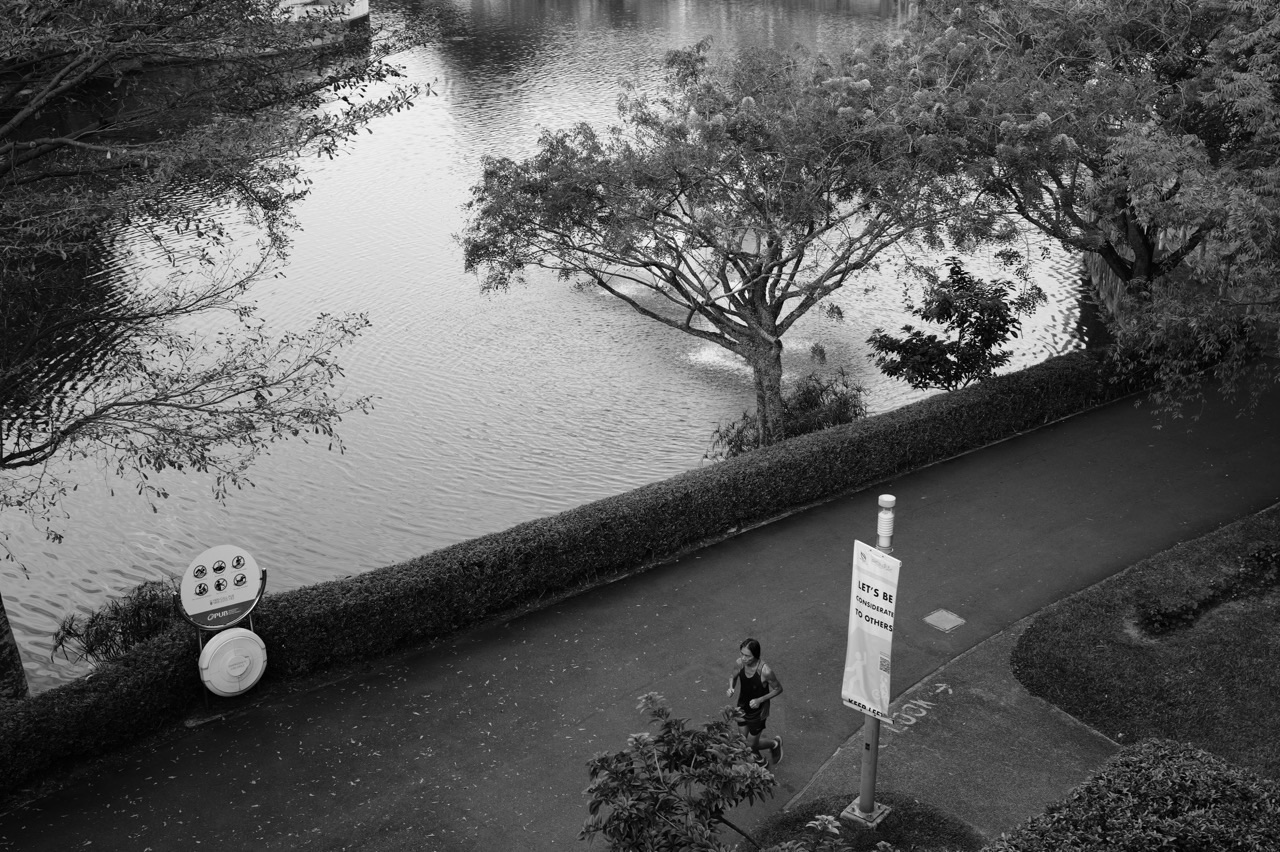
How should a beginner warm up and cool down before exercising at Punggol Waterway Park? Begin with a few minutes of comfortable low-intensity movement related to the activity you plan to do, increase effort progressively, then ease back to a gentle pace before finishing. For example, a new jogger can begin by walking and gradually move toward an easy jog, then finish by walking again. SportSG and HealthHub describe five to ten minutes of warm-up and cool-down as a useful general guide for structured workouts. This is not a fixed prescription for every person or a guarantee against injury.
This Punggol Warm-Up and Cool-Down Guide for Beginners 2026 explains the difference between warming up, stretching and cooling down; why workout intensity matters; how to adapt for walking, jogging, cycling, strength work and family play; what Singapore’s activity guidance recommends; and how to respond to haze, heat, lightning, pain and fatigue. The article concentrates on the minutes immediately before and after activity, rather than duplicating our Exercise in Punggol Four-Week Beginner Plan. For the town’s wider lifestyle, see Life in Punggol 2026.
Warm-up and cool-down: the quick decision table
| Question | Useful answer | Important boundary |
|---|---|---|
| What is a warm-up? | A gradual transition from rest to the activity you intend to do. | It is not maximum-effort training. |
| How long should it take? | SportSG and HealthHub commonly suggest 5–10 minutes for structured exercise. | Choose duration and content suited to intensity and individual needs. |
| How should I warm up for jogging? | Begin with comfortable walking, then progressively increase pace. | Do not start with all-out sprints. |
| How should I warm up for strength work? | Use gentle suitable movements and learn the intended exercise at low difficulty. | Technique and medical restrictions still matter. |
| What is dynamic movement? | Controlled movement through an appropriate range before exercise. | Avoid forced ballistic motions and painful positions. |
| What is a cool-down? | A gradual move to lighter effort after exercise. | Do not stop abruptly from demanding activity if unwell. |
| What about gentle stretching? | May fit a comfortable cool-down depending on the person. | Do not force a joint or treat stretching as pain therapy. |
| Are warm-ups injury-proof? | No. They support readiness but do not eliminate all injury risk. | Load, fatigue, technique, environment and health also matter. |
| Can children copy adult workouts? | Not automatically; use age-appropriate movement and supervision. | Different physical and learning needs apply. |
| What if haze or lightning occurs? | Adjust or postpone activity under official safety guidance. | A warm-up cannot make unsafe outdoor conditions safe. |
HealthHub’s Finding Your Way Back to Exercise Safely recommends starting slow, using a slower version of the activity to warm up and cooling down with gentle stretching. SportSG’s Am I Exercising Correctly? refers to warm-up and cool-down periods of five to ten minutes. These are sensible population-level principles, not personal rehabilitation instructions.
1. Why the first minutes of activity deserve attention
A Punggol resident might spend the morning at a desk, take the lift to the ground floor and begin running immediately along the Waterway. It is easy to forget the difference between being ready to leave home and being physically ready for a hard effort. Warming up allows a gradual change in movement and breathing and creates a moment to check how the body feels. It also provides time to notice unusual pain before an intense workout begins.
Another resident may already have walked for twenty minutes to reach the park. Their body is in a different starting state from the person who travelled there by car and sat for an hour. A rigid warm-up script cannot account for every journey. What matters is the progression from current activity to the intended effort, with attention to individual health and comfort.
A beginner often benefits from doing slightly less than they believe they could on day one. An enthusiastic start followed by severe soreness or a disrupted workday does not support a sustainable routine. HealthHub encourages beginning with manageable activity and progressing as ability develops. A proper warm-up is one part of that process, while sensible total exercise volume and recovery remain equally important.
The Waterway is a useful backdrop because its familiar public paths allow a comfortable start and return, provided the specific segment is safe and suitable. But a scenic view does not change the need for an appropriate pace, shared-path etiquette or environmental checks. Movement planning begins with both the person and the place.
2. Warm-up versus stretching versus cool-down
| Term | When it normally appears | What it is meant to accomplish |
|---|---|---|
| Warm-up | Before the main effort. | Gradually increase movement, attention and readiness. |
| Dynamic movement | Often during a suitable warm-up. | Use controlled comfortable joint movements related to the activity. |
| Main session | Between preparation and finish. | Walking, jogging, cycling, strength training or another chosen sport. |
| Cool-down | After the main effort. | Move gradually from stronger effort toward comfortable rest. |
| Gentle stretching | Often after activity where suitable. | Explore comfortable flexibility without forcing pain. |
| Recovery | Hours or days after activity. | Support rest, sleep, hydration, meals and adaptation. |
These terms overlap in everyday speech, but they are not interchangeable. Static stretching is not necessarily the whole warm-up. A cool-down is not the same thing as a recovery day. Someone who performs a brief stretch after running has not automatically managed all fatigue or injury risk, and someone who walks slowly before a jog may already be performing a useful activity-specific warm-up.
A common error is to assume that a stretch must feel painful to be effective. Pain is not a progress marker. If a movement causes sharp, worsening or unusual discomfort, stop rather than force a wider range. People with hypermobility, recent injuries, dizziness or other clinical concerns may need individual guidance about which movements are appropriate.
SportSG’s exercise safety advice includes warm-ups, cooldowns, proper form, hydration and rest days. The combination matters: no single mobility move can compensate for repeated overtraining, unsafe equipment or poor environmental conditions.
3. The talk test: a simple way to describe effort
HealthHub’s adult physical-activity guidance describes moderate intensity as effort where you can talk in phrases or short sentences but cannot sing, while vigorous effort makes conversation difficult. This is an approximate description, not a medical test. It helps a beginner recognise that a gentle warm-up should generally feel less demanding than the main exercise session.
For example, if you arrive at the Waterway and already find it difficult to speak comfortably after a few steps, do not try to force a fast run because a training app scheduled it. Consider your current wellbeing, health and environmental conditions. The right decision may be to walk more slowly, stop or obtain healthcare advice for concerning symptoms. Activity guidelines should inform decisions, not override warning signs.
On a normal day, a new runner might begin with a pace at which conversation is easy, then progress towards an appropriate effort. After the main session, they can ease back down until breathing becomes comfortable again. This general progression matters more than reaching an exact speed shown on a watch. Different ages, fitness levels and terrain change how effort feels.
4. A practical beginner jogging progression at Punggol Waterway
A beginner who has already been cleared for suitable activity and has no relevant symptoms can use a simple principle: start walking; progress gradually if comfortable; finish walking. For an organised run or more demanding exercise, a trained coach may add other appropriate movements. There is no need for a first-time runner to sprint, bounce aggressively or mimic competitive athletics drills on a busy promenade.
NParks lists the Punggol Waterway park connector as 8.4 km, but that is not a route a beginner must complete. Choose a familiar segment with a safe turnaround and access to rest. The First 5K Running in Punggol article uses gradual walk–run progression; this page explains the preparation and closing stages of any appropriate session.
| Phase | What to notice | Avoid |
|---|---|---|
| Before moving | Shoes, weather, route and how you feel. | Starting while ill or in unsafe conditions. |
| Initial easy movement | Walking at a comfortable pace. | An immediate maximal sprint. |
| Gentle progression | Increase pace only when movement feels settled. | Rushing to match faster friends. |
| Main workout | Effort suited to current training capacity. | Ignoring pain, dizziness or heat warnings. |
| Return to easy effort | Slow gradually to a comfortable walk. | Treating the finish line as permission to collapse. |
| Finish | Rest, fluids and appropriate recovery. | Forcing painful stretches or another intense session. |
A first 5K goal can be a reason to establish this habit, but warming up does not justify an excessive main session. If a person begins jogging for the first time, a shorter total outing may be better than a long route. The main achievement is returning home safely and willing to repeat it.
5. Warming up before cycling is different from preparing to run
Cycling involves different movement patterns and also depends on a mechanical device. A cyclist should first verify tyres, brakes, wheels, lights and accessories. A bicycle that cannot stop reliably is unsuitable regardless of how well the rider has warmed up. The Bicycle Maintenance in Punggol guide covers that pre-ride inspection separately.
Once the bike is safe and the rider is appropriately ready, a gentle opening pace may help transition towards a longer ride. A recreational family can begin conservatively on an authorised path and adapt according to the least experienced cyclist. Do not start by racing away from a child who is still learning to brake. Warm-up behaviour includes attention, communication and route control as well as muscular readiness.
During the ride, Punggol’s shared paths, attention zones and no-riding bridges require slowing, giving way or dismounting. A warm-up cannot justify cycling across Kelong, Wave or Adventure bridges where NParks prohibits riding. Safety rules remain the same at every effort level. During the cool-down, choose a legal appropriate route and do not suddenly stop in the middle of a busy connector.
6. Before resistance training, use skill readiness before load
Strength training is not primarily about covering distance. A beginner may be learning a sit-to-stand, wall push-up or other suitable resistance movement. Preparation can include controlled easier versions of the intended action and a check that the training area is clear. The goal is readiness for appropriate muscular effort, not trying a heavy lift to “see if the body wakes up”.
The Strength Training for Beginners in Punggol guide explains movement categories and the limits of outdoor fitness corners. If someone does not understand a particular machine, they should not use a warm-up set as an experiment with uncertain mechanisms. Choose suitable qualified instruction and equipment instead. Form and ability determine the safe progression.
A short low-impact movement routine at home may fit a rainy evening, but it still requires stable flooring and space free of obstacles. An HDB common corridor is not a private workout room. Avoid dropped weights, repeated jumps and movements that could disturb neighbours or damage property. A training habit should be compatible with the actual household setting.
7. Five to ten minutes: useful guidance, not a stopwatch command
Singapore’s HealthHub and SportSG materials commonly suggest five to ten minutes for structured warm-ups and cool-downs. That is not a requirement for every casual ten-minute walk or a claim that exactly five minutes makes vigorous exercise safe. A person doing demanding sport may need a more specific coach-led preparation; a person with low exercise tolerance may require a much gentler approach. Individual needs, age, medical history and intended effort all affect the decision.
An important misunderstanding is treating warm-up minutes as a separate competition. A beginner may attempt to “beat” a fitness app by rushing through the preparation and then completing the main session faster. That undermines the purpose. The opening period should give the person time to settle and assess comfort. A simple controllable progression is better than a complicated fixed routine performed carelessly.
HealthHub’s Lunchtime Office Workouts reference uses five to ten minutes of dynamic warm-up movements and five to ten minutes of cooldown activity. These are examples for a particular workout context. They should not be turned into a mandatory jumping-jack prescription for someone with balance problems, knee pain or a disability.
8. Static stretching: when it may help and when to stop
Some participants enjoy comfortable static stretching after exercise to work on flexibility. Others prefer a simple walk and rest. There is no reason to force a painful hamstring stretch after a short jog or believe that every muscle must be pulled to its maximum length. A person with a recent strain or significant joint problem should seek appropriate advice before stretching the affected area.
A general safety principle is to keep movement controlled and avoid sharp pain. If you feel numbness, unusual instability, dizziness or worsening symptoms, stop rather than deepen the stretch. An instructor may recommend modified movements based on goals and ability. This page is not a personal rehabilitation exercise list.
Stretching also should not be credited with preventing every type of post-exercise soreness or injury. Sport risk arises from many sources—training load, fatigue, technique, falls, equipment and environmental conditions among them. A suitable warm-up and cooldown are beneficial components of a broader programme but not an insurance policy.
9. Should children warm up like adults?
Children’s activity is often playful rather than structured around a race. They may arrive at a playground already moving, or begin a PE lesson with teacher-led movement and practice. Age-appropriate games and gradual activity can help, but the child’s actual school or coach should decide the appropriate routine for a specific sport. Adult strength and sprint drills should not be copied uncritically.
A parent leading a family cycling or running outing can begin with easy movement, confirm suitable footwear and route safety and ask children how they feel. Children should be able to stop when uncomfortable. The Singapore Physical Activity Guidelines for ages 7–17 encourage varied movement across the week alongside sufficient sleep. They do not require parents to turn ordinary play into a military warm-up routine.
If a teenager already trained hard in a school CCA, adding an intense evening workout may be inappropriate regardless of warm-up quality. Recovery, food, study and sleep matter. The Healthy Teenage Life in Punggol guide addresses this wider balance.
10. Warm-ups for older adults and people with mobility limitations
A suitable gentle movement session may be beneficial to an older person, but the format can differ greatly depending on balance, pain, medical history and the chosen activity. Someone who has had recent falls may need a trained professional’s input. A seated or supported alternative might be more appropriate than unsupported turning or standing exercises. The goal is confident safe participation, not matching a younger adult’s range or speed.
HealthHub encourages adults over fifty to include suitable multicomponent activity emphasising strength, functional balance and flexibility. That is a broad public-health recommendation. A group leader must still recognise individual conditions and arrange appropriate adaptations. A warm-up is not the place to test a new unstable balancing move or make a participant stand without required support.
Our Chair Exercises for Older Adults in Punggol and Active Ageing in Punggol pages deal with appropriate general movement settings and fall-prevention thinking. If a clinician has provided personalised exercises, follow that plan rather than replacing it with generic internet advice.
11. A real Punggol case: the after-work runner who begins too fast
A Punggol resident returns home after sitting through office meetings and decides to run a long Waterway section before dinner. At the first bridge, they realise their breathing is much harder than expected. Instead of trying to preserve a stopwatch target, they slow to a comfortable walk and reassess. On another day they choose a shorter out-and-back route and build gradually. The example shows how a warm-up also functions as a practical body-status check.
The point is not to declare every unexpected breathlessness harmless. Severe, disproportionate or concerning symptoms may require appropriate medical care. The runner should not use a longer warm-up to self-treat chest pain or dizziness. A blog cannot make a personal diagnosis.
After the outing, the resident chooses a gentle return walk, has an appropriate meal and protects sleep. The total routine may feel less spectacular than a rapid 5K social-media post, but it is easier to repeat with ordinary work responsibilities. A habit that survives a busy weekday has long-term value.
12. Another case: a family cycling to Punggol Point
Two adults and a child plan a Waterway outing. The adults have prepared their bicycles, but the child has not ridden in several weeks. They check basic controls and choose an easy start. The child learns to stop safely and to slow before a crossing rather than race to keep up. When the group reaches a no-riding bridge, they dismount. The session ends with a calm return rather than an exhausted sprint.
Their preparation includes mechanical checks, gradual effort and communication. Their cooldown may simply be returning at a comfortable pace and resting after the bicycles are parked. There is no need for a complicated stretch sequence on a crowded path. The family chooses a manageable day and understands that a bike ride with a child is not the same as an adult endurance workout.
13. Third case: someone joining a beginner strength class
An adult attends a beginner class at a community venue near Punggol. The session includes movements they have never tried. Rather than rushing to match the strongest participant, they tell the instructor they are new and ask about an appropriate lower difficulty. The coach demonstrates and checks technique. The person completes the session comfortably and ends with suitable lower-intensity movement.
A poor outcome would be selecting an advanced variation simply because other people are using it, then forcing painful stretches to “undo” the effort. Preparation, technique and recovery are connected. The appropriate challenge level is one that fits the individual, not the class’s highest performer.
14. Waterway geography, surfaces and shared users matter
Punggol Waterway Park is not an athletics track. Its paths serve walkers, cyclists, parents with strollers and others. A runner who uses an elaborate warm-up with large side steps or skipping movements should not block a narrow shared path or risk hitting another person. Choose a safe legal open area or use simpler movements that do not disrupt public flow. Give way at crossings and marked attention zones.
On some days the ground may be wet or uneven, particularly after rain. Footwear, visibility and an accessible return path matter. A warm-up cannot eliminate trip hazards, unsafe cycling speed or the need to follow park rules. If you cannot find suitable space for a planned movement, skip or adapt it rather than perform it beside a busy road or water edge.
Punggol’s park connector is 8.4 km, but the length is irrelevant to a short warm-up walk. You might begin and finish near your home without covering a measured segment. Walking to the park and back can itself form part of the easy opening and closing period. Good fitness planning often uses the neighbourhood intelligently rather than adding unnecessary travel.
15. Heat stress changes the exercise decision before warming up
Singapore’s Meteorological Service uses Wet-Bulb Globe Temperature to inform heat-stress guidance. If outdoor conditions are unsuitable for strenuous activity, extending a warm-up does not make a planned run safe. Reduce, change or postpone the main exercise according to current advice and individual needs. Check MSS Heat Stress rather than judging only from the waterfront breeze.
Haze creates another kind of exposure. PM2.5 and PSI information at haze.gov.sg is relevant to outdoor exertion, especially for vulnerable people. During poor air quality, a beginner may choose an appropriate indoor movement option or rest. Do not assume the park is suitable simply because another jogger is present.
Lightning is a separate hazard that can become urgent. Use MSS lightning information and do not begin or continue outdoor exercise when thunderstorms make it unsafe. A tree or open-sided shelter is not a suitable substitute for secure shelter. A sound warm-up plan starts only after the environment has been assessed.
16. A four-week learning framework for better activity transitions
| Week | Focus | Practical beginner experiment | What to observe |
|---|---|---|---|
| 1 | Notice your start and finish. | Begin chosen activity at an easier intensity; return gently. | Comfort and whether the pace felt controllable. |
| 2 | Make the routine consistent. | Use a similar preparation for comparable sessions. | Less rushed activity and better awareness. |
| 3 | Adapt by sport and setting. | Compare walking, cycling or strength transitions appropriately. | Which activities need different preparation. |
| 4 | Review the whole week. | Check energy, sleep, environment and recovery. | A routine sustainable with work or school. |
This is not a promised four-week injury-prevention programme. Some people need adaptations, supervised instruction or clinical assessment. A newcomer may take longer to discover a comfortable routine, and that is fine. The aim is to learn how to begin and finish physical activity thoughtfully without adding another complex tracking burden to daily life.
A useful journal entry can be as short as: “Started with a walk, jogged comfortably, slowed to a walk, no concerning symptoms, slept normally.” A person does not need to buy a heart-rate monitor to understand that they began too fast. If symptoms are troubling or repeated, the journal may help them describe the problem to an appropriate healthcare professional rather than interpret it alone.
17. What a warm-up cannot fix
- Broken bicycle brakes. Mechanical safety is not a muscular problem.
- A medically concerning symptom. Stop and obtain suitable care.
- Heavy haze or lightning risk. Change or postpone the session.
- Severe sleep deprivation. Recovery needs cannot be erased by movement.
- Incorrect strength-training technique. Use suitable instruction.
- An unsafe, crowded public path. Respect route and shared-space rules.
- Excessive workout duration. Preparation does not justify overloading.
- Recurring injuries. Generic stretching is not a personalised treatment.
- A child using an adult programme. Adapt to age and supervision.
- Insufficient food or hydration. Address broader wellbeing appropriately.
- An inaccessible venue. Choose a safe suitable setting.
- Unrealistic social comparison. Exercise at a level appropriate to you.
18. How to know whether to seek help
Some discomfort from unfamiliar activity may occur, but sharp or worsening pain, chest discomfort, unusual shortness of breath, faintness or neurological symptoms deserve serious attention. Stop the activity. Seek urgent help for severe symptoms and appropriate professional assessment for recurrent concerns. A beginner should not be persuaded that “it is normal” merely because the group is still exercising.
If you are returning after surgery, childbirth, illness or a long period of inactivity, or if you have a medical condition, ask a healthcare professional about suitable activity before starting a demanding programme. The public recommendations remain useful background, but they cannot assess individual risk. A qualified coach may also assist with sport-specific preparation when the person is appropriately cleared.
For activities at school, follow the school’s or coach’s instructions. For gym classes, check the instructor’s qualifications and ability to offer adaptations. An online article can explain terms and decision points, but it cannot watch your posture or diagnose a problem. That boundary protects readers.
19. Frequently asked questions
How long should a warm-up take?
SportSG and HealthHub commonly recommend around five to ten minutes for structured workouts, adjusted to activity and the individual.
What is the simplest warm-up for beginner jogging?
A comfortable walk progressing gradually towards the intended effort is a useful general approach.
Should I stretch before running?
Controlled dynamic movement may be suitable; a warm-up is more than holding static stretches. Individual needs vary.
What is a cooldown?
A gradual move from the workout’s effort back toward an easier pace, sometimes with suitable gentle stretching.
Is a warm-up guaranteed to prevent injury?
No. Load, technique, fatigue, environment, equipment and health also contribute to risk.
Can I jog the moment I reach Punggol Waterway?
Consider whether you need a gradual start, the route and current conditions rather than beginning at a hard effort.
Does a walk to the park count as warming up?
It may provide useful easy movement, depending on your activity and how the body feels.
Can children use the same warm-up as adults?
Not automatically. Use age-appropriate movement and school or coach guidance.
What about older adults with balance problems?
Seek suitable guidance and adapted movement; do not force unsupported balance challenges.
Can a cooldown cure muscle soreness?
It may help transition out of exertion, but no cooldown guarantees that soreness will be absent.
Should stretches hurt to work?
No. Stop when movement causes sharp or worrying pain.
Do I need equipment for warm-ups?
Many suitable forms of gentle movement require no purchases, subject to personal needs.
Can I warm up on a narrow Waterway path?
Choose movements that do not obstruct or endanger other shared-path users.
Can I keep exercising during haze if I warm up longer?
No. Follow official air-quality guidance; an extended warm-up does not make unsafe exposure safe.
Should I cool down after cycling?
A gentle appropriate finish may help transition from greater effort; mechanical and path safety still matter.
How should I prepare for strength work?
Use suitable easy movement and qualified technique guidance rather than testing an unfamiliar heavy load.
Is five minutes enough for everyone?
No universal number is guaranteed; sport intensity, experience and health affect needs.
What if I feel dizzy after stopping?
Stop, seek a safe position and appropriate help; severe or recurrent symptoms need medical assessment.
Does the warm-up count toward 150 minutes of weekly activity?
Activity contributions depend on intensity; not all easy warm-up minutes qualify as moderate-intensity exercise.
What if I only have ten minutes to be active?
Short safe activity can still be useful; avoid forcing a full high-intensity workout without appropriate preparation.
Can I exercise immediately after a night shift?
Consider alertness and recovery; significant fatigue may make rest more appropriate.
Where can I learn more about safe beginner movement?
Use HealthHub, SportSG and a suitably qualified trainer or healthcare professional.
Connected reading in Punggol’s fitness and lifestyle library
- Life in Punggol — Master Lifestyle Hub
- Exercise in Punggol — Four-Week Beginner Guide
- First 5K Running in Punggol
- Strength Training in Punggol for Beginners
- Family Cycling in Punggol
- Weekend Sport and Recovery
- Heat Stress and Outdoor Exercise
- Chair Exercises for Older Adults
- Rainy-Day Indoor Exercise in Punggol
- Punggol Community Clean-Up Walks
- Punggol Bicycle Maintenance
- Punggol Recycling and HDB Family Habits
- eduKateSG — Punggol Student Sleep and Recovery
Official references and review
- SportSG — Warm-Up and Cool-Down Guidance
- HealthHub — How to Begin and Finish Exercise Gradually
- HPB — Warm-Up and Cool-Down Examples in Office Workouts
- HealthHub — Adult Weekly Activity Targets
- HealthHub — Form and Injury Awareness
- HealthHub — Older Adult Movement
- NParks — Punggol Waterway Park Connector
- MSS — Heat Stress
- MSS — Lightning
- Official Singapore Haze Advisory
Reviewed 18 October 2026. This article is general fitness education, not a personal warm-up prescription, medical clearance, injury diagnosis or rehabilitation programme. Five-to-ten-minute suggestions are population-level guides and do not guarantee injury prevention. People with symptoms, recent surgery or relevant health restrictions need appropriate individual advice. Examples are illustrative.


