
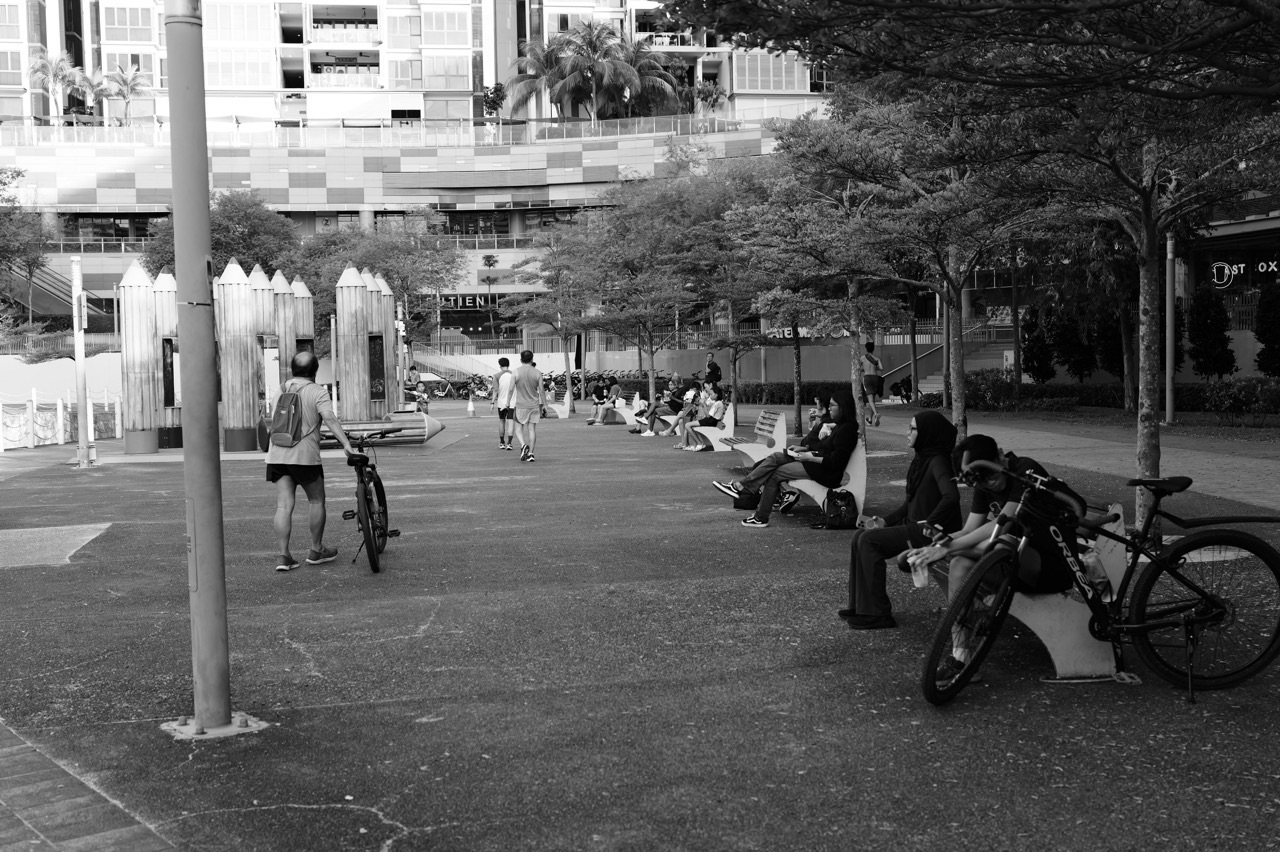
Where can you learn tai chi or qigong around Punggol? Start by checking a genuine beginner class or community interest group, then confirm its exact address, difficulty, registration and instruction. OnePA lists a taijiquan course at Punggol 21 CC, 80 Punggol Field, and a health-qigong interest group associated with Punggol CC. Be careful: Punggol CC is actually in Hougang Avenue 6, not inside Punggol Town. A good first session should feel controlled, comfortable and welcoming, not like a balance contest.
This 2026 Punggol tai chi and qigong beginners guide explains the differences between tai chi and qigong, how gentle movement may support balance and body awareness, what to ask about classes, where Punggol residents can enquire, and how to combine activity with neighbourhood walks. It is particularly useful for older adults and people looking for a lower-impact group activity, although these practices are not limited to seniors. The wider Life in Punggol 2026 article covers all lifestyle needs; this one is for making a specific first-class decision.
Punggol tai chi and qigong: quick answers
| Reader question | Useful answer | Important qualification |
|---|---|---|
| What is tai chi? | A movement practice rooted in Chinese martial arts, commonly involving flowing sequences and controlled weight shifts. | Classes differ by style, difficulty and teaching aim. |
| What is qigong? | Practices combining movement, breathing and attentive control, often using shorter repeated sets. | The class title alone does not establish intensity or safety. |
| Does tai chi require flexibility first? | No; suitable introductory instruction can begin from one’s current ability. | Movements still need adaptation for some people. |
| Where is Punggol 21 CC? | 80 Punggol Field, Singapore 828815, near Coral Edge LRT. | Confirm the class and its venue within the building. |
| Where is Punggol CC? | 3 Hougang Avenue 6, Singapore 538808, despite its name. | Do not travel to Punggol Town Centre by mistake. |
| Is the health-qigong group free? | OnePA lists free lifetime interest-group membership for Punggol CC SCEC Health Qigong. | A free registration listing does not guarantee a current session or vacancy. |
| Are these practices only for seniors? | No; adults of different ages can explore appropriate sessions. | Age limits and adaptations vary by course. |
| Will it prevent all falls? | No. It may contribute to suitable balance and movement practice. | Falls prevention has other components and individual risks. |
| Is the Waterway a class venue? | A pleasant location for suitable walking, not an automatic organised tai chi class. | Groups must follow public-space rules and current conditions. |
1. Tai chi and qigong are related, not interchangeable
People sometimes use the two names as though they describe exactly the same activity. There is overlap, particularly in slow movement, posture awareness and breathing. But tai chi—often called taijiquan—has roots in martial-art forms, while qigong is a broader category of practices involving breathing, movement and attention. A tai chi class may teach a long sequence of postures. A qigong session might use a set of repeated movements with a different learning rhythm.
What matters for a beginner is the teacher’s actual class content. Does it involve standing throughout? Are there turning movements? Does the group practise a memorised form, repeated exercises or a mixture? Does the instructor offer a simpler version when a participant is struggling? These questions are more useful than assuming one named system is always gentler than the other.
For an adult who enjoys the elegance of a moving form and likes learning sequences, tai chi may be appealing. For someone who prefers shorter, repeatable movements, a suitable qigong class may feel easier to follow. Neither choice proves superior health benefits for every person. Try a class that matches your interests, mobility and available time.
2. Actual local courses: why the community-club name matters
Punggol has similarly named community facilities that are easy to confuse. Punggol 21 CC is located at 80 Punggol Field, #01-01 and serves residents around Coral Edge. One Punggol CC is located at 1 Punggol Drive #04-05 in the One Punggol integrated hub near Punggol MRT/Sam Kee LRT. These venues are distinct.
OnePA has a Punggol 21 CC Taijiquan course listing for five sessions between 15 October and 26 November 2026. Its listed registration closed before the term began, and the page says the registration is closed. The existence of the listing proves a locally advertised programme format, not that new students can enrol in that specific term. The correct next step is to check Punggol 21 CC or search for a later suitable class.
Punggol CC has a misleadingly similar name but its official onePA page places it at 3 Hougang Avenue 6, Singapore 538808. It lists a Health Qigong interest group and describes Friday evening activity. The interest-group membership is displayed as free, but the session examples in that record are from 2025. Confirm a current gathering, organiser, eligibility and location before making the journey. Read the official Punggol CC directory instead of guessing from the name.
For someone specifically wanting a class physically inside Punggol Town, Punggol 21 CC is geographically the clearer first enquiry. For a resident near Hougang, the other Punggol CC may be practical. The best venue is the one that has suitable instruction, an accessible journey and a time that fits the person’s week.
3. Can tai chi and qigong support balance and ageing well?
HealthHub’s falls-prevention resources include tai chi and qigong among examples of strength and balance activity for older adults. This makes them relevant options when practised appropriately. However, an exercise category is not a guarantee: the intensity, type of movement, person’s health and risk of falling all affect suitability. Someone with recent falls or unexplained dizziness should seek appropriate healthcare advice before trying unsupported balancing movements.
Balance is not simply the ability to stand on one foot in a photograph. Everyday steadiness involves shifting weight, turning, stepping and responding to the environment. Suitable movement practice may help someone develop confidence, but a person with significant falls risk may require clinical assessment, supported activity or rehabilitation guidance instead of a generic community class.
Our Active Ageing in Punggol guide discusses the wider picture: safe paths, strength, falls prevention and social participation. Tai chi or qigong can be one part of this system. Walking, adequate nutrition, suitable strength work, vision care and home safety are also relevant.
4. What a good first class should feel like
| Before class | Helpful question | Why it matters |
|---|---|---|
| Current ability | Is this group genuinely intended for beginners? | Avoids entering a sequence that assumes prior learning. |
| Movement format | Will there be repeated simple movements or a long form? | Makes expectations clearer. |
| Individual restrictions | Can the instructor adapt turning, bending or standing? | Helps determine fit for participants with mobility needs. |
| Surface and location | Is the floor dry, level, non-slip and spacious? | Reduces avoidable trips and collisions. |
| Coaching style | Will the instructor demonstrate and correct gently? | Supports learning without embarrassment. |
| Group atmosphere | May a newcomer attend quietly and learn gradually? | Encourages confidence and repeat participation. |
| Fees and dates | Is the registration actually open, and what does it cover? | Prevents a wasted journey or misunderstanding. |
| Return journey | Can the participant reach home safely after class? | Especially relevant after evening sessions. |
A beginner may feel awkward following a sequence at first. That is normal. But being uncertain about a pattern is different from being pushed into a movement that feels unsafe. Do not continue with sharp pain, dizziness, chest discomfort or another concerning symptom. Ask for a simpler option when available, and seek professional healthcare guidance for symptoms or medical restrictions.
5. Footwear, clothing and the teaching environment
Choose comfortable clothes that allow movement and footwear suitable for the venue’s floor and rules. Avoid slippery soles or clothing that could catch during turns. Bring appropriate water, particularly if the class requires it. Some courses have attire requirements; the dated Punggol 21 taijiquan listing mentions purchasing a T-shirt from the trainer. Check current expectations before buying anything.
An outdoor hard court and an indoor community room can feel different. The outdoor surface may be uneven or slippery after rain, while indoor spaces can be crowded or have obstacles. Check space around you before practising. An elaborate movement form should not be attempted beside a busy bicycle path simply because the background is scenic.
If you use an assistive device or have difficulty rising from the floor, tell the instructor about relevant movement needs. A group may or may not provide seated or supported alternatives. Do not assume every slow movement class is suitable for every participant, and do not feel obliged to reveal unnecessary private medical details publicly.
6. Tai chi, qigong, walking and strength work do different jobs
Slow deliberate movement can be valuable, but it should not automatically replace all other weekly activity. Singapore’s general physical-activity guidance encourages a suitable mix of aerobic movement and muscle strengthening. A gentle class may challenge balance and control while producing less aerobic exertion than a brisk walk or run. It depends on the individual and the session.
Someone may enjoy a weekly taijiquan class and a few comfortable Punggol Waterway walks. Another person may prefer qigong as a quiet movement option alongside adapted strength work. There is no universal formula. For the general training balance, use Exercise in Punggol — Four-Week Beginner Plan and Strength Training in Punggol.
If the real goal is social contact, the group’s welcoming environment may be just as important as its exercise format. Friends and familiar faces can make activity enjoyable. However, joining a class is voluntary; some residents prefer home practice with professional guidance or a peaceful nature walk. Both can be meaningful choices.
7. How to approach an outdoor Punggol practice safely
Punggol Waterway Park offers a pleasant landscape for walking and observing nature. NParks lists its waterfront park and 8.4 km park connector, but these are public spaces shared with runners, cyclists, families and people using mobility aids. Do not claim a pathway or block a bridge for a private exercise group. Organisers should comply with any event or space-use requirements.
For solo gentle movement in a suitable open area, avoid narrow public passages, road crossings and busy cycling paths. If you feel unsteady or are practising unfamiliar turns, choose a safer controlled environment. Scenic views are not a substitute for an instructor or appropriate support.
Weather can change the plan. The MSS heat-stress advisory matters for prolonged outdoor activity, MSS lightning information matters during storms, and official haze guidance matters when smoke pollution rises. A calm-looking waterfront should not encourage someone to ignore current warnings.
8. A four-week discovery plan for beginners
| Week | Main decision | Possible action | What you should learn |
|---|---|---|---|
| 1 | Choose the practice that appeals to you. | Read the real tai chi or qigong class description and location. | Know what the group teaches. |
| 2 | Attend a suitable introduction, if available. | Practise controlled simple movements under appropriate instruction. | Understand effort and any safe adaptation. |
| 3 | Repeat at a manageable pace. | Learn familiar sections without chasing perfection. | More confidence and enjoyment. |
| 4 | Decide whether to continue. | Keep a workable group or explore another suitable activity. | A routine that respects health and time. |
This framework is not a claim that balance improves measurably in four weeks or that everyone can master a form within a month. Learning rate depends on experience, mobility, class format and health. A person who needs more time should be encouraged to progress without pressure. The useful outcome is knowing whether the activity is enjoyable, safe and practical.
9. Three Punggol neighbourhood examples
An active older resident near Coral Edge
This resident enjoys walking but wants a social form of movement that also challenges coordination. They check Punggol 21 CC’s address, confirm whether a suitable term is open, and ask about beginner level. They do not assume a dated closed registration can be bypassed. If the next class does not fit, they continue their usual comfortable walks and check later offerings.
A caregiver looking for a weekly personal activity
The adult helps with family responsibilities and needs an hour for themselves. They compare an indoor introductory session with a free community interest group. The choice depends on journey, scheduling, teaching and willingness to join. They agree on family care arrangements before registering, rather than treating the class as another stressful obligation.
A person with a recent balance concern
The resident has become unsteady on stairs and thinks tai chi will cure the problem. Instead, they seek appropriate assessment first because new or repeated imbalance needs more than generic fitness advice. If cleared for suitable activity, an adapted class may become part of a broader approach. Safety precedes enrolment.
10. How Punggol’s naming can mislead searchers
A reader searching ‘Punggol qigong’ might see Punggol CC and assume it is close to Punggol MRT. In fact, the official Punggol CC location is in Hougang Avenue 6. This is an important local search distinction because transport, travel time and accessibility can affect whether someone attends regularly. Always open the current onePA venue page, not merely the course’s club name.
Punggol 21 CC is on Punggol Field, near Coral Edge LRT, while One Punggol CC sits in the integrated hub near Sam Kee and Punggol MRT. A resident living in Northshore may find a neighbourhood interest group closer than any of them. Real local advice is about choosing a class the person can reach comfortably, not stuffing every page with the phrase ‘Punggol’ and assuming the venue must be nearby.
11. Common mistakes new learners can avoid
- Assuming tai chi and qigong are identical. Ask about the particular lesson format.
- Enrolling in an intermediate form class as an absolute beginner. Read prerequisites.
- Confusing Punggol CC with Punggol 21 CC. Check the address and transport.
- Assuming free membership guarantees a live session. Confirm dates and vacancies.
- Practising unsupported balance challenges after recent falls. Seek appropriate advice.
- Believing any slow exercise can never cause pain. Adapt movement and stop for symptoms.
- Treating a single class as all weekly fitness. Consider other suitable activity and rest.
- Using a public path as an exclusive practice studio. Respect park and other user rules.
- Comparing movement forms or age groups. Learn at your own comfortable pace.
12. Frequently asked questions
Is there tai chi in Punggol in 2026?
OnePA lists a dated Punggol 21 CC taijiquan programme, although that term’s registration is closed. Check for a new appropriate offering.
Where is Punggol 21 CC?
80 Punggol Field, Singapore 828815, near Coral Edge LRT.
Where is Punggol CC?
Despite its name, Punggol CC is at 3 Hougang Avenue 6, Singapore 538808.
Is there a free qigong group near Punggol?
OnePA lists free lifetime membership for Punggol CC SCEC Health Qigong; confirm current gatherings and eligibility before attending.
Are tai chi and qigong good for older adults?
They can be options for suitable balance and strength-related movement, but individual health and class design affect appropriateness.
Can an adult begin without martial arts experience?
Yes, when a true introductory class welcomes beginners.
Can someone with arthritis try tai chi?
Sometimes suitable adapted activity is possible; ask a relevant healthcare professional and instructor about personal restrictions.
Does qigong replace walking?
Not automatically. Gentle movement and aerobic walking serve overlapping but different purposes.
Must I wear special clothes?
Follow the provider’s actual attire requirements; do not purchase products before verifying them.
Can I practise in Punggol Waterway Park?
Suitable personal movement may be possible in permitted unobstructed areas, but follow park rules and do not block public paths.
Will tai chi prevent every fall?
No. Falls prevention also involves individual assessment, environment, vision, strength and other factors.
How much does a class cost?
OnePA prices vary by term and membership. A dated listing is not current booking confirmation.
Can someone younger than 60 join?
Some programmes may accept younger adults; check the actual course age rules rather than assuming all tai chi is seniors-only.
What if I dislike following a long sequence?
Explore a suitable qigong or another gentle movement option; participation is a personal choice.
Continue through the eduKate Punggol lifestyle and learning library
- Life in Punggol 2026 — master hub
- Active Ageing in Punggol
- Things to Do in Punggol for Seniors
- Nature and Mental Wellbeing in Punggol
- Yoga versus Pilates in Punggol
- Dance Fitness in Punggol — Zumba and Line Dancing
- Table Tennis in Punggol — First Rallies and Bookings
- Inline Skating in Punggol — Beginner Safety and Paths
- eduKateSG — Punggol Transport Geography and Accessibility
Official sources and review date
- OnePA — Punggol 21 CC
- OnePA — Dated Punggol 21 CC Taijiquan Course
- OnePA — Punggol CC, Hougang Avenue 6
- OnePA — Health Qigong Interest Group
- OnePA — Current Course Search
- HealthHub — Falls Prevention
- HealthHub — Physical Activity Guidance
- NParks — Punggol Waterway Park
- Official Singapore Haze Information
Reviewed 18 October 2026. This is general education about community activity, balance and local venues, not personal rehabilitation, medical clearance or a live class booking. Some onePA dates are historical or closed; check actual current registration and venue. Health needs, mobility and falls risks may warrant professional advice.


