
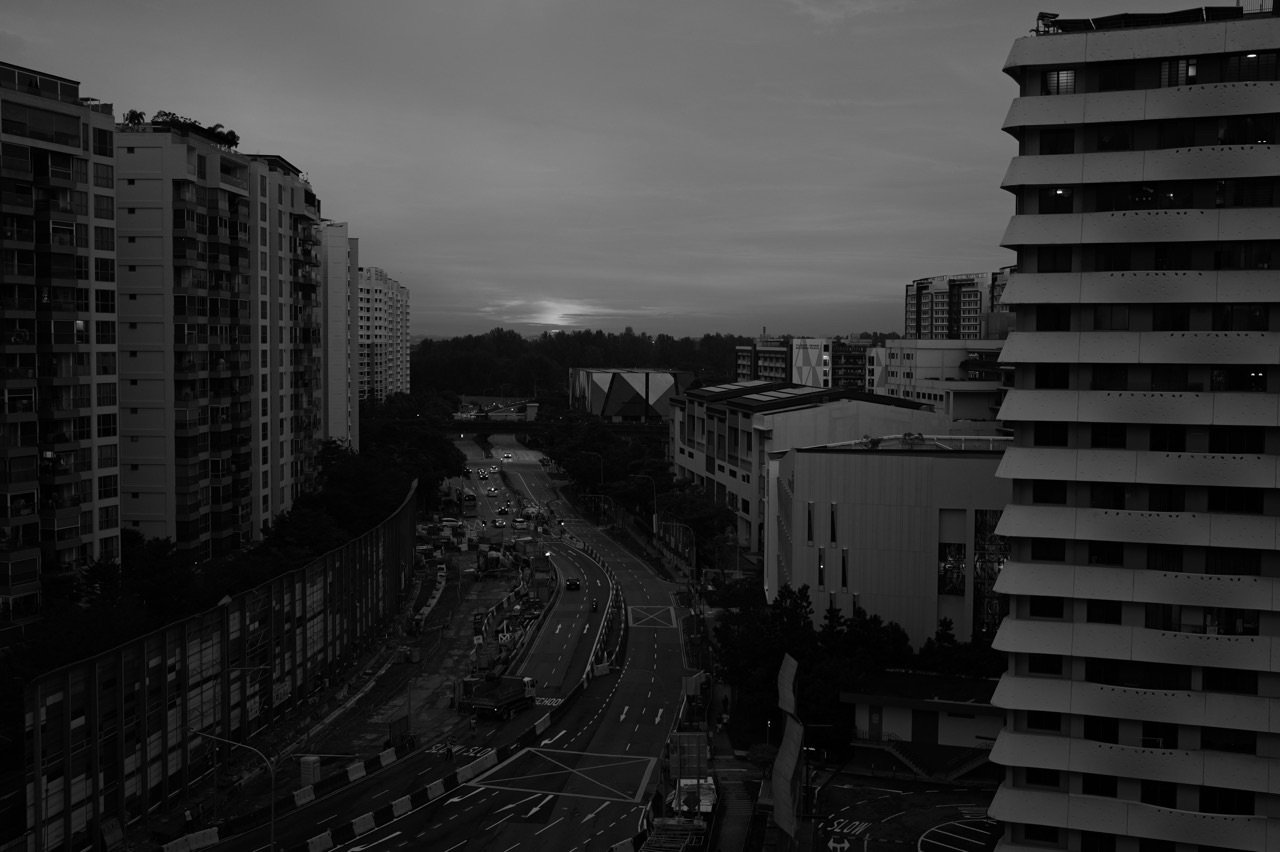
Sunrise and sunset in Punggol are unusually easy to enjoy because the town is built around open water. The Waterway, reservoirs, coast, Northshore and Punggol Coast all create longer sightlines than an ordinary dense housing estate. But the best sunrise spot and the best sunset spot are not the same place.
NParks’ own North Eastern Riverine Loop guide gives us two official anchors: Sunrise Bridge at Punggol Waterway is specifically described as a place to enjoy the sunrise, while Jewel Bridge is specifically highlighted for sunset views. Those two bridges make the easiest resident answer.
2026 note: Punggol Point Park is closed for upgrading until the end of 2027. Do not build a sunset plan around the old park/carpark route. The wider Promenade, Northshore and Punggol Coast still offer coastal light, subject to current access signs.
The quick light map
| Spot | Best for | Why |
|---|---|---|
| Sunrise Bridge | Sunrise | NParks specifically highlights the bridge for sunrise views |
| Jewel Bridge | Sunset | NParks specifically highlights the bridge for sunset |
| Waterway east / Riverside side | Morning light | Open water and eastern sky |
| Northshore waterfront | Sunrise / blue hour | Open coast and north-eastern exposure |
| Punggol Coast / PDD open spaces | Morning / evening urban light | Open northern sky, modern architecture and coast-facing district |
| Punggol Promenade Nature Walk | Golden hour | Long open waterfront with greenery |
| Coney Island | Morning / late afternoon nature light | Rustic beaches and tree-lined paths; island closes at 7pm |
Sunrise Bridge — Punggol’s most literal sunrise spot
Sunrise Bridge sits toward the eastern end of Punggol Waterway. NParks’ North Eastern Riverine Loop guide specifically says to use the elevated bridge for a good sunrise view.
That makes it the cleanest first recommendation if you simply want to wake early, walk to a known viewpoint and watch the sky change over the Waterway.
What time should you arrive for sunrise?
Sunrise time changes through the year, so a permanent article should not publish one fixed clock time. Check the day’s sunrise and arrive 20–30 minutes earlier for the blue/pink pre-sunrise sky.
Morning cloud cover matters more than the exact minute. A completely overcast morning can hide the sun while still producing soft light over the water.
Jewel Bridge — the official sunset anchor
NParks’ current Waterway Park page says visitors can catch the sunset at Jewel Bridge. The bridge’s open Waterway view and dome-like structure make it one of the most reliable easy-access sunset points inside the town.
It is especially useful because you can combine the sunset with:
- a Waterway walk;
- running;
- cycling;
- dinner at Town Centre / One Punggol / Oasis depending direction;
- bird and otter spotting before dark.
Northshore waterfront — sunrise without leaving the neighbourhood
Northshore’s coastal edge gives residents a different kind of sunrise: more sea and horizon, less Waterway architecture. Exact visibility depends on block position, coast access and weather.
The best method is to use the public waterfront route near your precinct rather than chase a single social-media pin. Northshore is long enough that one block can have a much cleaner horizon than another.
Punggol Coast / PDD — urban sunrise and evening light
Punggol Coast MRT and Punggol Digital District create a newer photography environment: campus buildings, business-park architecture, pedestrian streets and open northern sky.
Morning light works well around the open district. Evening light can reflect off building facades and Campus Boulevard before the area transitions into night lighting.
Use Punggol Digital District Guide 2026.
Punggol Promenade Nature Walk — golden-hour walking
The 2.4km Nature Walk has long open stretches beside water and greenery, making it more useful for golden-hour walking than a single “sunset lookout”.
NParks currently warns that wild boars have been spotted in the Nature Walk area. Do not move into vegetation for a better photo angle.
Use Punggol Promenade Guide 2026.
Coney Island — use the light, respect the gate time
Coney Island can be beautiful in early morning and late afternoon because of its beaches, boardwalks and tree cover. But the island is open 7am–7pm.
That means:
- you cannot enter before 7am for a pre-dawn sunrise shoot;
- you should not stay deep inside the island for a late sunset if it risks missing closing time;
- late-afternoon light is safer than making “sunset inside Coney Island” the plan.
Punggol Point — currently a closure story
Punggol Point is historically one of the town’s most obvious sunset/sea-view locations, but Punggol Point Park is closed for upgrading through 31 December 2027.
Do not drive there expecting the old park, jetty/carpark and viewing routine to work exactly as before. The Punggol Settlement remains open and sections of the wider promenade network remain relevant, but follow current closure boundaries.
Waterway reflections after sunset
The best Waterway photography often happens after the sun disappears. Bridges, HDB lighting and reflections create a blue-hour / night scene that is completely different from daytime Punggol.
Stay on lit routes and be considerate of runners, cyclists and residents using the same path.
Sunrise run
A sunrise run works especially well on the Waterway because the route is flat and continuous. Start before sunrise on a lit section, reach Sunrise Bridge near the light change, then continue the loop after the temperature rises.
Use Running Routes in Punggol.
Sunset cycle
Cycling makes it possible to move between Waterway, Promenade and Northshore viewpoints in one evening. But do not rush through mixed-use paths chasing light. A sunset photo is not worth clipping a pedestrian.
Use Cycling in Punggol.
Photography tips
- Arrive early enough to choose a legal, safe position.
- Use water reflections.
- Include bridges or skyline for scale.
- Do not step onto cycling lanes for a photo.
- Avoid flash around wildlife.
- Keep tripods out of the middle of shared paths.
- Respect residents’ privacy when photographing housing.
Weather beats location
No Punggol location can guarantee a spectacular sunrise or sunset. Cloud, haze, rain and humidity control the sky.
A modest viewpoint on a great-weather evening can outperform a famous spot under solid grey cloud. Check the weather, then choose the nearest good open horizon.
With children
For families with young children, Jewel Bridge / Waterway is usually easier than remote coastline:
- shorter access;
- food/toilets nearby;
- less pressure around park closing times;
- easier exit if the child gets tired.
With seniors
Choose accessible Waterway or neighbourhood waterfront routes with seating rather than a long Nature Walk. Punggol Waterway Park is wheelchair accessible and elderly-friendly under current NParks information.
Current official sources
- NParks — Punggol Waterway Park / Jewel Bridge sunset
- NParks — Punggol Waterway
- NParks — Coney Island opening hours
- NParks — current Punggol closures/notices
Last checked: 26 September 2026.
Continue the nature route
- Punggol Promenade Guide
- Punggol Waterway Park Guide
- Coney Island Park Guide
- The Complete Punggol Guide
Punggol gives you two official light cues for free: Sunrise Bridge in the morning and Jewel Bridge in the evening. Everything else is about the kind of horizon you want—Waterway, coast, greenery or the new skyline.
Punggol nature web: Coney Island · Waterway Park · Punggol Point / Closure · Lorong Halus · Punggol Promenade · Birds & Wildlife · Photo Spots · Picnic & BBQ · Accessible Routes · Punggol & Serangoon Reservoirs · Complete Punggol Guide.
Estate routing: Return to the eduKatePunggol Atlas for the full learning, family and town knowledge graph, or continue through the parks and nature routes above.
Sunrise and Sunset in Punggol: RFE Conditions, Access and Observation System
Standards + RFE gate: this Future Build extension preserves the canonical owner, keeps current facts with current authorities, distinguishes observation from guarantee, and uses RFE to define closure rather than merely lengthening the page.
RFE-0 | Current Problem
The current problem is planning a sunrise, sunset or golden-hour visit in Punggol without treating weather, cloud, haze, access or the view itself as guaranteed.
RFE-1 | Operational Job
The operational job is to gather only the evidence or current conditions needed to solve that problem, route changing facts to their proper owners, and stop when the reader can act or explain the topic accurately.
RFE-2 | Receiver
The receiver is the resident, family, walker, runner, cyclist, photographer or visitor actually making the outing. The amount and type of detail should fit that receiver rather than an abstract encyclopaedia target.
RFE-3 | Observable Closure
Closure is reached when the reader has a workable location, current access, safe arrival and return, and understands that the quality of light and sky remains conditional.
RFE-4 | Historical / Functional Hypothesis
waterfront and bridge locations can serve observation, recreation and movement at the same time; the viewing job is layered onto a place rather than defining the place permanently. This is a functional interpretation and remains subordinate to evidence.
RFE-5 | Cost, Conflict and Retirement
stop optimising once the outing has a workable location and route; retire a location from the plan when access, safety, travel or repeated conditions make it the wrong current choice. Costs include travel, time, uncertainty, safety exposure, interpretation risk and the cost of crowding the page with claims that do not improve understanding.
Authority boundary: relevant public agencies and facility operators own current access, closure and safety conditions; weather and air-quality conditions should be checked from current authoritative sources.
Canonical owner
Keep one article as the owner of this reader job. New observations or ordinary factual drift should deepen and refresh the same owner rather than fragmenting the subject across near-duplicate URLs.
Apply the same discipline to this sunrise or sunset outing: identify the evidence or current condition that could genuinely change the conclusion. If nothing new would change the decision or interpretation, more text is not automatically more useful.
Date discipline
Every changing condition or historical status should be anchored to a date or period. A dated fact is easier to update and less likely to be misread as permanent.
Apply the same discipline to this sunrise or sunset outing: identify the evidence or current condition that could genuinely change the conclusion. If nothing new would change the decision or interpretation, more text is not automatically more useful.
Source ownership
Send each claim to the source type that can genuinely support it. Access belongs to current public operators, wildlife safety to official agencies, weather to current authoritative services, and historical interpretation to documentary evidence.
Apply the same discipline to this sunrise or sunset outing: identify the evidence or current condition that could genuinely change the conclusion. If nothing new would change the decision or interpretation, more text is not automatically more useful.
RFE-0 problem
State the unresolved problem before adding detail. The article should answer a question that can close, not accumulate information indefinitely.
Apply the same discipline to this sunrise or sunset outing: identify the evidence or current condition that could genuinely change the conclusion. If nothing new would change the decision or interpretation, more text is not automatically more useful.
RFE-1 operational job
Define what the reader must be able to do after reading: plan an outing, observe safely, distinguish hypotheses, or read a planning timeline correctly.
Apply the same discipline to this sunrise or sunset outing: identify the evidence or current condition that could genuinely change the conclusion. If nothing new would change the decision or interpretation, more text is not automatically more useful.
RFE-2 receiver
Name the actual receiver. A photographer, child, runner, student, local-history reader and planning researcher can require different levels of detail and different closure conditions.
Apply the same discipline to this sunrise or sunset outing: identify the evidence or current condition that could genuinely change the conclusion. If nothing new would change the decision or interpretation, more text is not automatically more useful.
RFE-3 observable closure
Closure is not just finishing the article. It is the point at which the reader can act or explain the subject correctly without needing more speculative detail.
Apply the same discipline to this sunrise or sunset outing: identify the evidence or current condition that could genuinely change the conclusion. If nothing new would change the decision or interpretation, more text is not automatically more useful.
RFE-4 function
Ask what function the place, story or plan serves. A bridge can be both transport and viewing point; a wetland can be habitat and infrastructure; a planning concept can be both historical document and source of present-day context.
Apply the same discipline to this sunrise or sunset outing: identify the evidence or current condition that could genuinely change the conclusion. If nothing new would change the decision or interpretation, more text is not automatically more useful.
RFE-5 cost conflict retirement
Every information system carries cost: time, uncertainty, overclaiming risk, travel or interpretation burden. The article should know when to stop adding complexity.
Apply the same discipline to this sunrise or sunset outing: identify the evidence or current condition that could genuinely change the conclusion. If nothing new would change the decision or interpretation, more text is not automatically more useful.
Stable fact versus changing fact
Separate facts that are structurally stable from facts that can change tomorrow. This is the core defence against turning a useful 2026 guide into misleading historical residue.
Apply the same discipline to this sunrise or sunset outing: identify the evidence or current condition that could genuinely change the conclusion. If nothing new would change the decision or interpretation, more text is not automatically more useful.
Observation versus guarantee
A recommended environment can improve the chance of a useful experience, but cannot guarantee weather, wildlife, light or crowd conditions. The article should explain opportunity without promising outcomes.
Apply the same discipline to this sunrise or sunset outing: identify the evidence or current condition that could genuinely change the conclusion. If nothing new would change the decision or interpretation, more text is not automatically more useful.
Access versus attraction
A place can remain interesting while access changes. Closure, upgrading or partial restrictions should change the route advice without erasing the place from history.
Apply the same discipline to this sunrise or sunset outing: identify the evidence or current condition that could genuinely change the conclusion. If nothing new would change the decision or interpretation, more text is not automatically more useful.
Map versus lived route
A map can show distance, but not heat, rain, crowding, fatigue, lighting or the pace of a child or older adult. Real route fit should be tested from the receiver’s actual start point.
Apply the same discipline to this sunrise or sunset outing: identify the evidence or current condition that could genuinely change the conclusion. If nothing new would change the decision or interpretation, more text is not automatically more useful.
First mile
The first connection from home, MRT, LRT, bus stop or carpark often determines whether an outing is practical. Include it when it changes the decision.
Apply the same discipline to this sunrise or sunset outing: identify the evidence or current condition that could genuinely change the conclusion. If nothing new would change the decision or interpretation, more text is not automatically more useful.
Last mile
The last approach can contain the greatest weather exposure or access uncertainty. Treat it as part of the main route, not an afterthought.
Apply the same discipline to this sunrise or sunset outing: identify the evidence or current condition that could genuinely change the conclusion. If nothing new would change the decision or interpretation, more text is not automatically more useful.
Return path
Plan the end before beginning. The same conditions that make sunrise or wildlife observation appealing can leave the reader far from food, shelter or easy transport afterwards.
Apply the same discipline to this sunrise or sunset outing: identify the evidence or current condition that could genuinely change the conclusion. If nothing new would change the decision or interpretation, more text is not automatically more useful.
Morning conditions
Morning outings can offer cooler temperatures and different light or wildlife activity, but access, transport and weather still need current verification.
Apply the same discipline to this sunrise or sunset outing: identify the evidence or current condition that could genuinely change the conclusion. If nothing new would change the decision or interpretation, more text is not automatically more useful.
Evening conditions
Evening changes lighting, return transport, family timing and safety considerations. A location that works in daylight may need a different plan after sunset.
Apply the same discipline to this sunrise or sunset outing: identify the evidence or current condition that could genuinely change the conclusion. If nothing new would change the decision or interpretation, more text is not automatically more useful.
Rain
Rain changes visibility, surfaces, shelter, photography, wildlife behaviour and family comfort. A wet-weather plan should be an actual alternative, not a promise to continue regardless.
Apply the same discipline to this sunrise or sunset outing: identify the evidence or current condition that could genuinely change the conclusion. If nothing new would change the decision or interpretation, more text is not automatically more useful.
Lightning
Lightning is a hard safety boundary for outdoor plans. Current official guidance should replace sunk-cost thinking.
Apply the same discipline to this sunrise or sunset outing: identify the evidence or current condition that could genuinely change the conclusion. If nothing new would change the decision or interpretation, more text is not automatically more useful.
Heat
Heat changes pace, hydration and route length. It should influence the plan for children, older adults, photographers carrying equipment and runners.
Apply the same discipline to this sunrise or sunset outing: identify the evidence or current condition that could genuinely change the conclusion. If nothing new would change the decision or interpretation, more text is not automatically more useful.
Haze
Haze can reduce visibility and affect outdoor suitability. Current air-quality guidance should outrank the planned itinerary.
Apply the same discipline to this sunrise or sunset outing: identify the evidence or current condition that could genuinely change the conclusion. If nothing new would change the decision or interpretation, more text is not automatically more useful.
Cloud
Cloud can improve or flatten light depending on conditions. The article can explain variability without converting it into a forecast.
Apply the same discipline to this sunrise or sunset outing: identify the evidence or current condition that could genuinely change the conclusion. If nothing new would change the decision or interpretation, more text is not automatically more useful.
Wind
Wind can affect comfort, cycling effort, waterfront photography and bird observation. Treat it as a current condition rather than a permanent site characteristic.
Apply the same discipline to this sunrise or sunset outing: identify the evidence or current condition that could genuinely change the conclusion. If nothing new would change the decision or interpretation, more text is not automatically more useful.
Crowds
Crowds can change noise, photography, wildlife observation and family comfort. They are a variable to plan around, not an intrinsic flaw in the location.
Apply the same discipline to this sunrise or sunset outing: identify the evidence or current condition that could genuinely change the conclusion. If nothing new would change the decision or interpretation, more text is not automatically more useful.
Children
Children may value play and movement more than the adult objective of photography or history. A family outing should preserve that difference rather than forcing a single interpretation of the place.
Apply the same discipline to this sunrise or sunset outing: identify the evidence or current condition that could genuinely change the conclusion. If nothing new would change the decision or interpretation, more text is not automatically more useful.
Teenagers
Teenagers can use these places for independent exploration, photography, exercise and learning. Independence should grow with route knowledge, communication and return planning.
Apply the same discipline to this sunrise or sunset outing: identify the evidence or current condition that could genuinely change the conclusion. If nothing new would change the decision or interpretation, more text is not automatically more useful.
Older adults
Seating, shade, toilets and easy exits may matter more than total route coverage. Those are valid receiver constraints.
Apply the same discipline to this sunrise or sunset outing: identify the evidence or current condition that could genuinely change the conclusion. If nothing new would change the decision or interpretation, more text is not automatically more useful.
Mobility
Where accessibility is material, verify current official access rather than inferring from a general description or old photo.
Apply the same discipline to this sunrise or sunset outing: identify the evidence or current condition that could genuinely change the conclusion. If nothing new would change the decision or interpretation, more text is not automatically more useful.
Photography
Photography is an observation job. The article can help with orientation and conditions but should not guarantee colour, cloud shape, crowd level or unobstructed composition.
Apply the same discipline to this sunrise or sunset outing: identify the evidence or current condition that could genuinely change the conclusion. If nothing new would change the decision or interpretation, more text is not automatically more useful.
Birdwatching
Birdwatching depends on patience, habitat and respectful distance. A wildlife guide should never encourage disturbance in order to obtain a sighting.
Apply the same discipline to this sunrise or sunset outing: identify the evidence or current condition that could genuinely change the conclusion. If nothing new would change the decision or interpretation, more text is not automatically more useful.
Otters
Wildlife encounters should remain observational. Current official guidance should control what to do when animals are present.
Apply the same discipline to this sunrise or sunset outing: identify the evidence or current condition that could genuinely change the conclusion. If nothing new would change the decision or interpretation, more text is not automatically more useful.
Wild boars
Do not turn an animal’s presence into a tourist attraction. Safety, distance and official guidance take priority over photographs or curiosity.
Apply the same discipline to this sunrise or sunset outing: identify the evidence or current condition that could genuinely change the conclusion. If nothing new would change the decision or interpretation, more text is not automatically more useful.
Feeding
Feeding wildlife changes behaviour and creates risk. The article should follow official guidance and never treat feeding as a way to improve sightings.
Apply the same discipline to this sunrise or sunset outing: identify the evidence or current condition that could genuinely change the conclusion. If nothing new would change the decision or interpretation, more text is not automatically more useful.
Approach distance
The correct distance is governed by safety and respectful observation, not by camera ambition. If the animal changes behaviour because of the observer, the observer is already part of the event.
Apply the same discipline to this sunrise or sunset outing: identify the evidence or current condition that could genuinely change the conclusion. If nothing new would change the decision or interpretation, more text is not automatically more useful.
Sighting log
A dated sighting can be interesting evidence of one observation. It should not be rewritten as a permanent guarantee that the species will be found at the same place and time.
Apply the same discipline to this sunrise or sunset outing: identify the evidence or current condition that could genuinely change the conclusion. If nothing new would change the decision or interpretation, more text is not automatically more useful.
Habitat context
Describe habitat carefully and at an appropriate level. A local guide can point to wetlands, waterways, park edges and coastal zones without pretending to provide a full ecological survey.
Apply the same discipline to this sunrise or sunset outing: identify the evidence or current condition that could genuinely change the conclusion. If nothing new would change the decision or interpretation, more text is not automatically more useful.
Environmental change
Construction, vegetation change, water management and human activity can alter local observation conditions. Current access and current ecology should not be inferred solely from historical descriptions.
Apply the same discipline to this sunrise or sunset outing: identify the evidence or current condition that could genuinely change the conclusion. If nothing new would change the decision or interpretation, more text is not automatically more useful.
Historical spelling
Older spellings can be evidence of language, transcription and administrative practice. Their existence does not automatically prove a single etymology.
Apply the same discipline to this sunrise or sunset outing: identify the evidence or current condition that could genuinely change the conclusion. If nothing new would change the decision or interpretation, more text is not automatically more useful.
Language contact
Place names can pass through Malay, English, dialect, mapping and administrative systems. The article should acknowledge that transmission can complicate a neat origin story.
Apply the same discipline to this sunrise or sunset outing: identify the evidence or current condition that could genuinely change the conclusion. If nothing new would change the decision or interpretation, more text is not automatically more useful.
Folk etymology
A memorable local explanation can be culturally important while still remaining difficult to prove. Label tradition and hypothesis honestly rather than either dismissing or upgrading them without evidence.
Apply the same discipline to this sunrise or sunset outing: identify the evidence or current condition that could genuinely change the conclusion. If nothing new would change the decision or interpretation, more text is not automatically more useful.
Documentary evidence
Maps, official records, historical writing and institutional publications can help establish chronology. The article should distinguish what a source actually shows from what later readers infer.
Apply the same discipline to this sunrise or sunset outing: identify the evidence or current condition that could genuinely change the conclusion. If nothing new would change the decision or interpretation, more text is not automatically more useful.
Oral history
Oral history captures memory and lived meaning. It is valuable evidence of how people understood a place, but it may need corroboration for precise historical claims.
Apply the same discipline to this sunrise or sunset outing: identify the evidence or current condition that could genuinely change the conclusion. If nothing new would change the decision or interpretation, more text is not automatically more useful.
Uncertainty language
Use words such as ‘may’, ‘possibly’, ‘one interpretation’ and ‘the evidence is not conclusive’ when the source base does not support certainty. Precision about uncertainty is a strength.
Apply the same discipline to this sunrise or sunset outing: identify the evidence or current condition that could genuinely change the conclusion. If nothing new would change the decision or interpretation, more text is not automatically more useful.
Competing interpretations
Present plausible interpretations side by side when evidence does not decisively settle the question. The goal is not to manufacture a winner.
Apply the same discipline to this sunrise or sunset outing: identify the evidence or current condition that could genuinely change the conclusion. If nothing new would change the decision or interpretation, more text is not automatically more useful.
Historical plan
A planning document records intent at a specific time. It should not be treated as a guarantee that every feature would appear unchanged.
Apply the same discipline to this sunrise or sunset outing: identify the evidence or current condition that could genuinely change the conclusion. If nothing new would change the decision or interpretation, more text is not automatically more useful.
Plan revision
Later revisions are part of the town’s history. Explain what changed and why the distinction matters without implying failure merely because planning evolved.
Apply the same discipline to this sunrise or sunset outing: identify the evidence or current condition that could genuinely change the conclusion. If nothing new would change the decision or interpretation, more text is not automatically more useful.
Announcement versus completion
An announced project belongs to the future-status layer until the responsible owner confirms operation or completion. Tense is part of factual accuracy.
Apply the same discipline to this sunrise or sunset outing: identify the evidence or current condition that could genuinely change the conclusion. If nothing new would change the decision or interpretation, more text is not automatically more useful.
Construction versus operation
Construction can be visible while a facility remains unavailable. Do not convert physical progress into an opening claim.
Apply the same discipline to this sunrise or sunset outing: identify the evidence or current condition that could genuinely change the conclusion. If nothing new would change the decision or interpretation, more text is not automatically more useful.
Current operation
Once infrastructure is operating, move it out of speculative/future language and update the historical page so the chronology remains coherent.
Apply the same discipline to this sunrise or sunset outing: identify the evidence or current condition that could genuinely change the conclusion. If nothing new would change the decision or interpretation, more text is not automatically more useful.
Superseded plan
A superseded plan remains historically meaningful. Keep it as evidence of an earlier development phase rather than deleting it or presenting it as current.
Apply the same discipline to this sunrise or sunset outing: identify the evidence or current condition that could genuinely change the conclusion. If nothing new would change the decision or interpretation, more text is not automatically more useful.
Town identity
Residents can experience a town differently from the planning documents that shaped it. The article should allow present-day lived identity and historical planning history to coexist.
Apply the same discipline to this sunrise or sunset outing: identify the evidence or current condition that could genuinely change the conclusion. If nothing new would change the decision or interpretation, more text is not automatically more useful.
Waterfront identity
Waterfront design can influence movement, recreation and the visual identity of Punggol. Avoid reducing that identity to one project slogan.
Apply the same discipline to this sunrise or sunset outing: identify the evidence or current condition that could genuinely change the conclusion. If nothing new would change the decision or interpretation, more text is not automatically more useful.
Transport identity
MRT, LRT, buses, cycling and walking infrastructure change how the town functions. Current operational details should remain with transport owners rather than being frozen inside a history page.
Apply the same discipline to this sunrise or sunset outing: identify the evidence or current condition that could genuinely change the conclusion. If nothing new would change the decision or interpretation, more text is not automatically more useful.
Housing identity
Housing form, precinct design and amenities shape daily life. Historical context can explain sequence without making investment claims.
Apply the same discipline to this sunrise or sunset outing: identify the evidence or current condition that could genuinely change the conclusion. If nothing new would change the decision or interpretation, more text is not automatically more useful.
Education identity
Schools, SIT and other learning institutions can alter how families use the town. Institution-specific current facts should remain with their own owners.
Apply the same discipline to this sunrise or sunset outing: identify the evidence or current condition that could genuinely change the conclusion. If nothing new would change the decision or interpretation, more text is not automatically more useful.
PDD context
Punggol Digital District belongs in current/future town context where relevant, but its changing tenants, access and operational details should stay with current institutional owners.
Apply the same discipline to this sunrise or sunset outing: identify the evidence or current condition that could genuinely change the conclusion. If nothing new would change the decision or interpretation, more text is not automatically more useful.
Evidence hierarchy
Prefer primary or directly responsible sources for current status, and strong documentary sources for historical claims. Secondary summaries can help interpretation but should not silently become the source of record.
Apply the same discipline to this sunrise or sunset outing: identify the evidence or current condition that could genuinely change the conclusion. If nothing new would change the decision or interpretation, more text is not automatically more useful.
Contradiction check
When two sources appear to disagree, check dates, definitions and scope before deciding that one is wrong. Many apparent contradictions are different snapshots.
Apply the same discipline to this sunrise or sunset outing: identify the evidence or current condition that could genuinely change the conclusion. If nothing new would change the decision or interpretation, more text is not automatically more useful.
Missing evidence
Absence of evidence is not proof of the opposite. Mark the gap and continue only as far as the sources allow.
Apply the same discipline to this sunrise or sunset outing: identify the evidence or current condition that could genuinely change the conclusion. If nothing new would change the decision or interpretation, more text is not automatically more useful.
Editorial review
Remove detail that does not change understanding, action or evidence quality. A long article should become more precise, not more decorative.
Apply the same discipline to this sunrise or sunset outing: identify the evidence or current condition that could genuinely change the conclusion. If nothing new would change the decision or interpretation, more text is not automatically more useful.
Evidence review
Find the discriminating clue. For an outing, it may be access or weather. For a name-origin claim, it may be an early source. For planning history, it may be the dated document that changes status.
Apply the same discipline to this sunrise or sunset outing: identify the evidence or current condition that could genuinely change the conclusion. If nothing new would change the decision or interpretation, more text is not automatically more useful.
Source routing
Route current facts to current owners, historical claims to sourced chronology, safety to official guidance, and local synthesis to the Punggol owner. Do not let one page absorb every domain.
Apply the same discipline to this sunrise or sunset outing: identify the evidence or current condition that could genuinely change the conclusion. If nothing new would change the decision or interpretation, more text is not automatically more useful.
Refresh trigger
Refresh when current access, wildlife guidance, institutional status or a materially stronger historical source changes the conclusion. Ordinary stylistic updates are not enough reason to fork the canonical owner.
Apply the same discipline to this sunrise or sunset outing: identify the evidence or current condition that could genuinely change the conclusion. If nothing new would change the decision or interpretation, more text is not automatically more useful.
Retirement condition
Stop research or route comparison when the reader job is closed. More detail should be added only when it changes the decision, interpretation or evidence quality.
Apply the same discipline to this sunrise or sunset outing: identify the evidence or current condition that could genuinely change the conclusion. If nothing new would change the decision or interpretation, more text is not automatically more useful.
Worked RFE Scenarios
Sunrise outing with cloud
The family reaches a good location but the sky is overcast. The outing has not ‘failed’ if the route, walk or family time was still worthwhile. The article should never guarantee colour.
Re-run RFE-0 through RFE-5: define the problem, the job, the receiver, observable closure, the functional context, then the cost and retirement condition. This keeps the page testable and honest about uncertainty.
Sunset outing after rain
Wet surfaces and changing cloud can alter comfort and visibility. Re-run the access and weather plan rather than following the dry-weather itinerary mechanically.
Re-run RFE-0 through RFE-5: define the problem, the job, the receiver, observable closure, the functional context, then the cost and retirement condition. This keeps the page testable and honest about uncertainty.
Photographer chasing one composition
If one viewpoint is crowded or inaccessible, the receiver can change composition or location. Do not encourage bypassing closures for a photograph.
Re-run RFE-0 through RFE-5: define the problem, the job, the receiver, observable closure, the functional context, then the cost and retirement condition. This keeps the page testable and honest about uncertainty.
Family with young children
The adult may want golden hour while the child needs food, toilets and movement. The outing closes when the family has a good shared experience, not when the camera checklist is complete.
Re-run RFE-0 through RFE-5: define the problem, the job, the receiver, observable closure, the functional context, then the cost and retirement condition. This keeps the page testable and honest about uncertainty.
First wildlife sighting
A sighting should trigger observation and distance, not pursuit. The goal is to see without changing the animal’s behaviour.
Re-run RFE-0 through RFE-5: define the problem, the job, the receiver, observable closure, the functional context, then the cost and retirement condition. This keeps the page testable and honest about uncertainty.
No wildlife sighting
The absence of a sighting is normal. Do not treat a quiet visit as evidence that the species has disappeared from Punggol.
Re-run RFE-0 through RFE-5: define the problem, the job, the receiver, observable closure, the functional context, then the cost and retirement condition. This keeps the page testable and honest about uncertainty.
Wildlife near path
Follow official guidance, give space and adjust the route if needed. The route is secondary to safety and respectful behaviour.
Re-run RFE-0 through RFE-5: define the problem, the job, the receiver, observable closure, the functional context, then the cost and retirement condition. This keeps the page testable and honest about uncertainty.
Student researching the name Punggol
The student should be able to present competing explanations with confidence labels and sources, rather than picking the most colourful story as fact.
Re-run RFE-0 through RFE-5: define the problem, the job, the receiver, observable closure, the functional context, then the cost and retirement condition. This keeps the page testable and honest about uncertainty.
Family repeating a name-origin story
A locally repeated story can be included as tradition while the article separately states what documentary evidence can and cannot establish.
Re-run RFE-0 through RFE-5: define the problem, the job, the receiver, observable closure, the functional context, then the cost and retirement condition. This keeps the page testable and honest about uncertainty.
Reader comparing old maps
Spellings and boundaries may differ. The task is to understand chronology and transcription, not assume every variation represents a different place.
Re-run RFE-0 through RFE-5: define the problem, the job, the receiver, observable closure, the functional context, then the cost and retirement condition. This keeps the page testable and honest about uncertainty.
Reader studying Punggol 21
Treat the plan as a dated planning vision. Compare later development with it carefully, without assuming any difference means the earlier plan was false.
Re-run RFE-0 through RFE-5: define the problem, the job, the receiver, observable closure, the functional context, then the cost and retirement condition. This keeps the page testable and honest about uncertainty.
Project announced but not open
Keep future tense. The presence of construction, publicity or a target date does not justify writing as though the facility already operates.
Re-run RFE-0 through RFE-5: define the problem, the job, the receiver, observable closure, the functional context, then the cost and retirement condition. This keeps the page testable and honest about uncertainty.
Project opens
Update the current-status owner and adjust the history page chronology. Do not leave the page trapped in permanent future tense.
Re-run RFE-0 through RFE-5: define the problem, the job, the receiver, observable closure, the functional context, then the cost and retirement condition. This keeps the page testable and honest about uncertainty.
New evidence changes interpretation
If a stronger historical source changes the name-origin or planning interpretation, update the canonical page and explain the evidence shift rather than spawning a conflicting duplicate.
Re-run RFE-0 through RFE-5: define the problem, the job, the receiver, observable closure, the functional context, then the cost and retirement condition. This keeps the page testable and honest about uncertainty.
Successful research closure
Once the reader can distinguish evidence, interpretation and uncertainty, the historical job is complete. RFE retirement means stopping before speculation becomes filler.
Re-run RFE-0 through RFE-5: define the problem, the job, the receiver, observable closure, the functional context, then the cost and retirement condition. This keeps the page testable and honest about uncertainty.
Final RFE Publication Check
The canonical owner remains unique; current access, weather, safety and institutional status remain with their proper owners; historical evidence and uncertainty are explicit; observation is not guarantee; receiver and closure are clear; and the article has a reason to stop. Publication is a dated evidence state, not permanent validation.


