
PG3 is Posting Group 3, a Secondary 1 admission route under Full Subject-Based Banding (Full SBB). It does not create a separate PG3 Food and Consumer Education syllabus. Lower-secondary Food and Consumer Education (FCE) is part of the common curriculum, teaching students across different subject-level profiles to understand nutrition, food safety, culinary skills, budgeting, resource management and responsible consumption. The lessons are practical, but the underlying goal is independent and evidence-based decision-making.
At Yusof Ishak Secondary School, the official Design and Aesthetics curriculum page describes FCE as a lower-secondary subject involving food, nutrition, practical preparation, sustainability and informed consumer choices. Punggol Secondary School’s current Craft and Technology page also describes hands-on learning, including supervised food preparation. A parent considering Edgefield, Greendale, Punggol or Yusof Ishak Secondary should check the actual school’s current timetable and lesson arrangements instead of assuming that every campus operates the same kitchen programme or that PG3 determines the level of the common FCE class.
- PG3 is an admission Posting Group; FCE is taught within the common lower-secondary curriculum.
- MOE’s 2024 FCE syllabus document covers Food Studies, Consumer Studies and an applied module.
- Nutrition means balanced, sustainable habits—not crash diets, calorie competitions or moral judgements about food.
- Food safety includes hygiene, preventing cross-contamination, proper storage and following supervised cooking instructions.
- Consumer literacy means comparing prices, needs and wants, labels, payment methods and sustainability claims.
- FCE differs from upper-secondary Nutrition and Food Science (NFS), which has separate eligibility and school offerings.
- Check the receiving school’s 2027 requirements, practical equipment, assessed work and any AEP/MEP implications.
Definition lock: Food Studies, Consumer Studies and NFS
| Learning area | What students practise | Everyday application |
|---|---|---|
| Food Studies | Nutrition, food safety and culinary science | Balanced meals and responsible preparation |
| Consumer Studies | Needs, wants, unit prices, payment and sustainability | Informed shopping and basic budgeting |
| Applied Module | Integrate inquiry, planning and reflection | Justify a practical food or consumer decision |
| Upper-secondary NFS | Separate subject selected later | Depends on school offerings and criteria |

In this guide
- Why FCE matters for an ordinary secondary-school day
- Definition lock: Posting Group is not the FCE subject level
- What the MOE FCE syllabus actually includes
- Nutrition is a pattern of eating, not one perfect plate
- Understanding My Healthy Plate without treating it as a rulebook
- Food labels are information, not moral verdicts
- Allergens and medical needs require more than guessing
- Kitchen hygiene begins before the first ingredient
- Cross-contamination is a cause-and-effect problem
- Time and temperature affect food safety
- Reading a recipe is a comprehension task
- Culinary science explains why ingredients behave differently
- Budgeting belongs in FCE, not only in Mathematics
- Compare unit prices before trusting a promotion
- Digital payments and consumer responsibility
- Sustainability begins with a realistic shopping decision
- Punggol food culture is a real learning resource
- The common curriculum helps pupils learn from one another
- Food preferences and cultural needs should be treated respectfully
- How FCE practical work is assessed
- FCE and upper-secondary Nutrition and Food Science
- A sensible first-month learning routine
- What to ask each Punggol secondary school
- The lifelong value of being a discerning consumer
Why FCE matters for an ordinary secondary-school day
A pupil may begin Secondary 1 confident in Mathematics and English yet know very little about choosing lunch, storing a packed meal or comparing two advertised products. Those are real-life decisions that young people increasingly make independently. Food and Consumer Education gives school learning a practical setting: a student must read information, understand consequences, make choices and manage limited resources.
Imagine a Punggol teenager deciding what to buy for lunch after a long morning. The choice may involve hunger, price, convenience, cultural preferences and nutritional balance. A single purchase does not define whether the student is ‘healthy’ or ‘unhealthy’. FCE encourages the student to understand broader patterns and make sensible decisions rather than follow a rigid list of supposedly perfect meals.
Parents should treat this learning with respect. Practical literacy is not less demanding than memorising facts. A pupil who can plan, prepare safely, evaluate a claim and adjust a purchase to a realistic budget is learning to operate responsibly in everyday society.
Definition lock: Posting Group is not the FCE subject level
Under Full SBB, schools use Posting Groups for Secondary 1 admission and individual G1, G2 and G3 subject levels for appropriate academic learning. FCE sits among subjects taught at a common lower-secondary level. Therefore a pupil entering through PG3 should not expect a completely different FCE curriculum from classmates who entered through PG1 or PG2. School timetables and lessons can still vary in their arrangement.
Yusof Ishak Secondary states explicitly that lower-secondary students take a common curriculum including FCE. This creates opportunities for students with different strengths to learn together. A pupil who enjoys cooking can help discuss a preparation method while another may be strong at budgeting or evaluating a food label. Learning together does not mean every student already has the same experience.
Parents can help by asking what each lesson teaches rather than which Posting Group supposedly performs best. The aim is skill, understanding, cooperation and safe application—not turning a kitchen into another hierarchy of exam labels.
What the MOE FCE syllabus actually includes
MOE’s FCE teaching and learning syllabus, published in a 2024 Full SBB document, organises learning through Food Studies, Consumer Studies and an applied module. It aims to help students understand nutrition and food safety, apply basic culinary science, manage resources sustainably, and make responsible decisions. The learning framework describes students becoming informed consumers, advocates of health and thoughtful food innovators.
This is broader than following recipes. A cooking task may require planning time and resources, interpreting ingredients, preventing unsafe practices and adjusting a dish to meet a stated need. A shopping task may require distinguishing an attractive advertisement from a justified purchase. In each case, the student is practising reasoning in a familiar setting.
Parents should avoid reducing FCE to an easy subject whose only purpose is to produce something edible. Good practical work requires thinking before, during and after the activity. The student should be able to explain what was done and why it mattered.
Nutrition is a pattern of eating, not one perfect plate
Students benefit from understanding that different foods provide different nutrients, and that variety and balance matter across meals. Singapore’s Health Promotion Board uses the My Healthy Plate visual guide to encourage a practical mix of wholegrains, protein foods, vegetables and fruit. It is a general public-health illustration, not a personalised prescription for every adolescent or medical condition.
Parents sometimes turn nutrition learning into criticism of a child’s body or weight. That approach can make eating stressful and distract from the curriculum. A better discussion asks whether the student is eating regularly, enjoying a variety of foods and understanding how food supports ordinary activity and growth. Avoid severe restrictions, calorie-counting competitions or promises that one meal prevents disease.
Where a pupil has an allergy, health condition or specialised dietary need, follow professional medical guidance and inform relevant school staff appropriately. This article cannot determine an individual diet. Its purpose is to build respectful food literacy, not diagnose or prescribe.
Understanding My Healthy Plate without treating it as a rulebook
My Healthy Plate is often summarised as Quarter, Quarter, Half: a quarter of the plate with wholegrains, a quarter with healthier protein sources and half with vegetables and fruit. Parents can use it as a conversation starter about meal composition. It does not mean every snack, traditional dish or school meal must look exactly like the illustration.
Suppose a pupil orders a rice dish with protein and vegetables. Ask which components are present and whether the overall day includes a reasonable variety of foods. If a meal is missing a component, the family can consider it across subsequent meals. The lesson is thoughtful choice rather than guilt. Cultural food traditions are part of Singapore’s everyday life and can be explored respectfully.
Young people also need enough food to grow and participate in school. Do not use a general nutrition diagram to encourage under-eating. Teachers and health professionals can advise when an individual needs more specific support.
Food labels are information, not moral verdicts
A packaged-food label may provide serving size, ingredients, allergens, nutritional information and storage instructions. Students should read the label carefully before comparing products. A prominent front-of-pack slogan is not the same as a full explanation of composition. The child must identify what is being measured and how much of the product the numbers describe.
Imagine two drinks displayed as ‘lower sugar’. One label reports sugar per 100 millilitres and another reports sugar for a larger bottle. Comparing the numbers without aligning quantities can produce an invalid conclusion. The student should check serving sizes and units before deciding what the information means. This is a Mathematics lesson hiding inside a consumer decision.
Parents can practise with two ordinary packages at home, but should avoid turning the activity into a judgement of the child’s body or food preferences. The aim is interpreting labels accurately and noticing how advertising frames a choice.
Allergens and medical needs require more than guessing
Some people must avoid particular ingredients because of diagnosed allergies or other medical requirements. A label may list major allergens and cautionary statements, but the precise safety decision for a specific individual should follow medical guidance and school procedures. A student with a known allergy should not be encouraged to test tolerance casually at home or in an FCE kitchen.
Teach the distinction between preference and safety requirement. Someone may dislike a flavour; another may have an allergy that can be dangerous. Students should respect both while understanding that the safety implications differ. In a classroom, follow the teacher’s instructions about ingredients, shared equipment and disclosure of relevant conditions.
Where a student requires emergency medication or a specific action plan, the family should work with healthcare professionals and the school. FCE literacy complements, rather than replaces, qualified safety advice.
Kitchen hygiene begins before the first ingredient
Food safety starts with clean hands, suitable surfaces, appropriate equipment and clear supervision. Students should follow the school’s practical instructions rather than attempt unfamiliar knife, stove or electrical tasks without guidance. A recipe can be simple while the environment still requires care. Preparation is part of successful cooking, not a delay before the interesting work begins.
Ask the pupil to notice what can contaminate food. Raw ingredients, hands, cutting boards, utensils and storage containers can carry hazards if handled improperly. Cleaning and separating food appropriately reduces risk. The exact method should follow current SFA and school instructions, particularly for raw animal products and other high-risk ingredients.
Parents can encourage responsibility by inviting a teenager to clean a preparation area and understand why it matters. This teaches more than giving a list of kitchen rules without explanation.
Cross-contamination is a cause-and-effect problem
Cross-contamination occurs when harmful microorganisms or contaminants can move from one item or surface to another. For example, using an unclean board for ready-to-eat foods after handling raw poultry can transfer hazards. The issue is not visible neatness alone; a surface can appear clean while still require proper washing or separation.
Teach students to trace the route of contact. What touched the raw ingredient? What touched the handle? Was the utensil cleaned? Where was the ready-to-eat food placed? This reasoning resembles a Science investigation in which the learner follows a possible mechanism. It also avoids vague instructions such as ‘Just be careful’ that give no practical method.
Do not conduct hazardous demonstrations to prove a point. Use a diagram or hypothetical preparation scenario, then follow approved kitchen routines during actual school practical sessions.
Time and temperature affect food safety
Perishable foods can become unsafe when stored incorrectly. Students should learn why refrigeration, thorough cooking, safe handling and timely consumption matter. Exact temperature requirements and storage guidance depend on the food and current official safety recommendations; children should not invent a universal time limit from memory. The teacher or SFA guidance is the correct source for specific procedures.
A family may pack food for a child leaving home early and returning after CCA. That practical situation raises questions about storage, whether the food can remain chilled and when it will be eaten. A teenager should know when not to consume a meal that has been mishandled or appears unsafe, and how to seek appropriate help.
The lesson is prevention, not fear. With sensible routines, pupils can enjoy food confidently while learning why storage and handling are part of responsible preparation.
Reading a recipe is a comprehension task
A practical recipe involves quantities, sequence, timing and sometimes alternative steps. A student who begins cooking before reading the method may discover that an ingredient should have been prepared earlier or that equipment is missing. FCE can teach the habit of reading instructions completely, identifying the critical stages and planning the work before starting.
Ask the pupil to rewrite a short recipe into three phases: preparation, cooking and serving. They can mark what must be measured, which equipment is required and when adult or teacher supervision is necessary. Do not encourage unsupervised use of sharp implements or heat. Planning can be taught without exposing the child to unnecessary hazards.
After the practical, discuss what changed. If the mixture was too thick or the timing was off, the student should identify the possible cause and propose a safe adjustment. That reflection is closer to scientific problem-solving than simply judging whether the dish looks attractive.
Culinary science explains why ingredients behave differently
Cooking can demonstrate changes in texture, colour and structure. Heating, mixing and cooling can alter food in ways students can observe. An FCE lesson may ask what happens to a particular mixture and which ingredient or process produced the result. The goal is to connect an observable effect to a reasonable explanation, not memorise every culinary term in isolation.
Consider an original comparison between two batches of a simple mixture that differ in the amount of one ingredient. A good investigation would also consider whether other conditions were kept consistent. If the cooking time or temperature changed, the result could reflect more than that ingredient. This is the same fair-comparison thinking encountered in Science.
Only perform suitable practical activities under school instructions and safe supervision. Students can analyse a hypothetical comparison on paper without operating equipment or handling hot food themselves.
Budgeting belongs in FCE, not only in Mathematics
Consumer Studies introduces basic money management: distinguishing needs from wants, planning purchases, comparing alternatives and saving toward a realistic goal. A student may be capable of adding prices but still make a poor decision because they ignore future obligations. FCE asks the learner to connect arithmetic with priorities and consequences.
Suppose a teenager has a fixed amount for a school-day snack and a small stationery purchase. The calculation is straightforward, but the decision involves timing, need and value. Ask what must be bought, what could wait and how the student would handle an unexpected expense. A reasoned plan is better than either spending everything immediately or feeling guilty about every small treat.
Do not use the exercise to shame a child about family finances. Keep examples age-appropriate, hypothetical if needed, and focused on learning practical choices.
Compare unit prices before trusting a promotion
A large package can look cheaper because its total price is higher but the advertised discount is larger. To compare fairly, a student should check the cost per comparable unit and whether the quantity will actually be used. A deal is not automatically good if it results in food waste or exceeds a family’s needs.
Imagine one product contains 500 grams for $4 and another contains 800 grams for $6. The first costs $0.80 per 100 grams; the second costs $0.75 per 100 grams. The second has a lower unit price, but it may not be the best purchase if most of it will spoil before use. Mathematics provides one input to the decision, not the whole decision.
This is an ideal example of applied reasoning: define the comparison, calculate accurately, consider actual needs and explain the choice. The student learns to question promotion labels without assuming every discount is deceptive.
Digital payments and consumer responsibility
Young people increasingly encounter QR payments, online shopping and subscription offers. Consumer literacy therefore includes understanding payment records, privacy, scams and the difference between having spending access and having unlimited resources. A student may be technically skilled at tapping a payment button while still lacking the habit of reading the price and terms.
Ask the child to describe the purchase before approving it: what is being bought, what it costs, whether it repeats, which account is used and what evidence of payment will remain. For subscriptions or trials, pay attention to renewal conditions. The aim is cautious decision-making, not suspicion of every merchant.
Students should not share passwords or financial credentials in class exercises. Any real transactions should follow family and school rules, with appropriate adult supervision.
Sustainability begins with a realistic shopping decision
Sustainable consumption is one part of the FCE curriculum. A student can consider packaging, food waste, water and energy use, and whether a purchase is genuinely needed. The goal is to make evidence-based improvements, not to claim that one individual meal determines the future of the planet. Different choices can involve trade-offs that deserve honest discussion.
At home, a family can compare what was planned for the week with what was actually used. If food was wasted, ask whether the quantity purchased was too large, storage was unsuitable or plans changed. Look for a small correction that makes the next week easier. Avoid moralising or blaming the student for factors outside their control.
A useful student reflection names the action and likely benefit without inventing a precise environmental impact. ‘We planned smaller portions and used leftovers safely’ is grounded. ‘This saved an exact number of tonnes of carbon’ requires evidence the family probably does not have.
Punggol food culture is a real learning resource
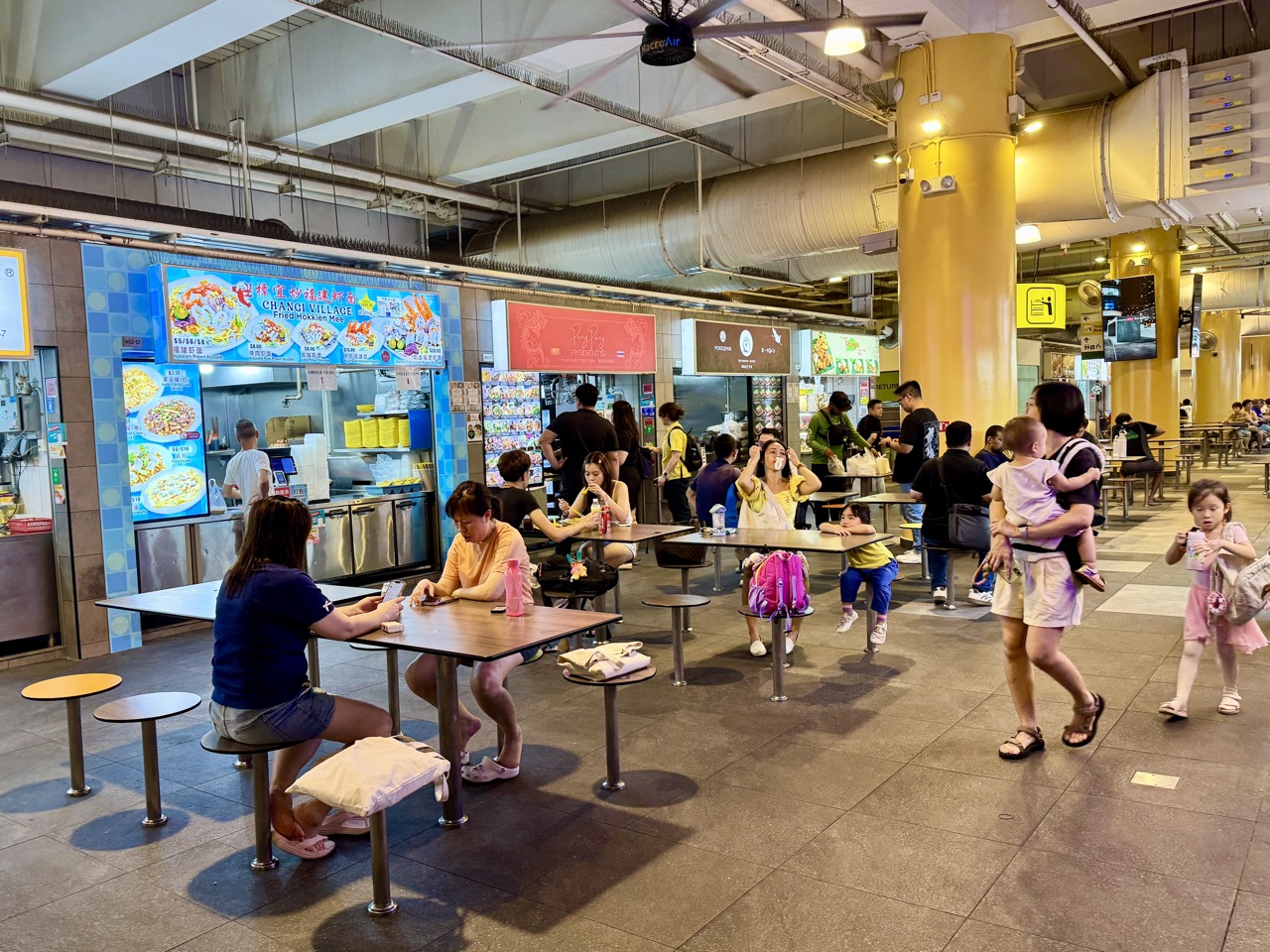
Punggol’s hawker centres and food stalls expose students to different cuisines, ingredients, service styles and prices. A family visit to One Punggol Hawker Centre can support observation and discussion about consumer choice, provided it is not presented as an official school excursion. The child can compare menu information, notice cultural diversity and plan a realistic purchase without disturbing vendors.
Ask what makes a meal appealing beyond price: flavour, portion, dietary needs, convenience and the setting in which it will be eaten. Encourage respectful questions and an appreciation that food practices carry cultural meaning. Students should not treat unfamiliar cuisines as objects of ridicule or judge an entire culture from one dish.
Keep the activity simple and enjoyable. Learning happens when the pupil can explain a sensible choice, not when an adult turns every visit into a long worksheet.
The common curriculum helps pupils learn from one another
Full SBB brings students with different academic profiles into shared lower-secondary learning experiences. In FCE, one pupil may be precise at measurement while another contributes a thoughtful recipe modification or a strong consumer comparison. Cooperative tasks create opportunities to practise listening, division of labour and responsibility.
Good group work requires clarity. Who reads the instructions? Who checks the ingredient list? Who records findings? How will equipment be handled safely? A pupil who takes over every task prevents peers from learning, while one who avoids participation misses the purpose. The teacher’s directions and safety procedures take priority.
Parents can discuss what the student personally contributed and what the group learned. These habits connect practical work to leadership without assuming every successful recipe produces formal LEAPS recognition.
Food preferences and cultural needs should be treated respectfully
Students come from households with different dietary practices, religious or cultural considerations, allergies and preferences. An inclusive FCE environment should take relevant needs seriously, with arrangements coordinated through the school’s actual procedures. A pupil should not be pressured to consume or handle food that conflicts with a documented safety requirement.
Parents can inform the school of relevant restrictions through authorised channels before a practical session and ask which alternative arrangements are suitable. Do not assume a teacher already knows a new student’s circumstances or that a general blog can prescribe a safe substitute. Specific medical issues require professional guidance.
At home, model respect: explain that different families make different choices and the classroom can still be a place to learn about nutrition, resources and food culture together.
How FCE practical work is assessed
The Full SBB FCE syllabus provides for assessment that is developmentally appropriate across students from different courses or Posting Groups. It cautions schools against importing upper-secondary examination formats wholesale into the common lower-secondary experience. Teachers may use different activities to evaluate knowledge, planning, safe practices and reflection according to the school’s scheme.
Parents should ask for the actual task and criteria rather than assume every dish is judged primarily on taste. A student who follows safety instructions, plans quantities well and explains a mistake has demonstrated learning even if the result looks imperfect. Conversely, an attractive dish prepared largely by an adult cannot show the pupil’s competence accurately.
Encourage honesty in process records and reflections. The child can say what went wrong and what would change next time. Assessment should guide improvement, not turn kitchen practice into a performance of perfection.
FCE and upper-secondary Nutrition and Food Science
Food and Consumer Education is a common lower-secondary subject. Nutrition and Food Science (NFS) is an upper-secondary examination subject that may be offered by particular schools under applicable selection criteria. These are connected but not identical courses. A pupil who enjoys FCE may become interested in NFS, but the interest does not guarantee that their eventual school combination will include it.
SEAB’s 2027 SEC G3 syllabus list includes Nutrition and Food Science under K346 for that graduating examination year. The code does not automatically apply to a child entering Secondary 1 in 2027. The school will advise pupils about subject options, prerequisites and the syllabus applicable when they reach the relevant stage.
Families should also note that students participating in some extended Art or Music programmes may have different lower-secondary D&T and FCE arrangements, which can affect later subject eligibility. Verify the current programme rules before applying.
A sensible first-month learning routine
During the first week, ask the child to read the school’s equipment and kitchen rules. Make sure they understand any material that must be brought and whether practical sessions require particular clothing or hair arrangements. Do not invent requirements from another school’s manual. The class teacher should be the source of those instructions.
In the following weeks, choose one safe food-label comparison, one budget exercise and one reflection on a supervised preparation task. Keep the exercises brief. The aim is to ask the child why a choice was made and what could be improved rather than add an unofficial homework programme to an already full timetable.
At the end of the month, the pupil should be able to explain one nutrition idea, one safety principle and one consumer decision. If the child can transfer those ideas to a new situation, FCE is beginning to work as intended.
What to ask each Punggol secondary school
When researching school options, ask how FCE is organised across Secondary 1 and 2, what the current practical facilities are, how safety and dietary needs are handled, and how tasks are assessed. Yusof Ishak Secondary publishes a detailed explanation of its Design and Aesthetics common curriculum; Punggol Secondary publishes its Craft and Technology overview. Use these as verified school-specific starting points.
Do not infer that Greendale or Edgefield uses the same rotation, recipe list or assessment format. If the child’s choice between schools depends significantly on applied learning, seek current official confirmation. Brochure images of kitchens are useful context, not promises of identical learning opportunities.
A good school comparison focuses on the quality and breadth of education across the timetable. FCE may be one of the most practical parts of that experience, but it is not an admissions shortcut or a substitute for overall school fit.
The lifelong value of being a discerning consumer
A young adult needs to choose food, understand basic health information, manage limited resources and recognise when an advertisement is incomplete. These are not skills that suddenly appear at eighteen. Lower-secondary FCE introduces them in a structured, age-appropriate environment and helps pupils test choices before the consequences become more significant.
The most durable learning involves a sequence: gather relevant information, compare alternatives, identify safety or financial constraints, decide responsibly and reflect on the outcome. That sequence can be used when purchasing groceries, planning a family meal or deciding whether an online offer is worthwhile. It has wider application beyond a specific recipe.
PG3 may describe how a child entered secondary school. FCE gives the child a chance to become more capable in daily life, alongside peers with many different strengths. That is education worth taking seriously.
Frequently asked questions
Does PG3 have a different FCE syllabus from PG2?
No separate PG3-only FCE course is implied. FCE belongs to the common lower-secondary Full SBB curriculum.
Is FCE just learning to cook?
No. It also includes nutrition, food safety, budgeting, consumer literacy, sustainable choices and applied reasoning.
Do schools teach identical recipes?
No. Check each school’s current learning sequence and practical requirements.
Does a child need expensive equipment at home?
Do not buy specialist equipment unless the school requires it. Many skills can be discussed through labels, planning and simple safe activities.
Is My Healthy Plate an individual medical diet plan?
No. It is a general public-health guide. Individual medical or dietary needs require qualified guidance.
Can students cook alone for practice?
Follow age-appropriate adult supervision and school safety instructions, particularly with knives, heat and electrical equipment.
How can we compare food prices fairly?
Use like-for-like units, then consider shelf life, actual needs and waste instead of relying on an advertised discount alone.
What if a child has a severe food allergy?
Inform the school privately through appropriate channels and follow the child’s medical safety plan.
Is FCE assessed exactly like G3 Mathematics?
No. FCE has developmentally appropriate lower-secondary common-curriculum assessment guided by the school’s actual requirements.
Does FCE lead automatically to Nutrition and Food Science?
No. Upper-secondary NFS depends on school offerings, criteria and later decisions.
Does K346 mean my 2027 Secondary 1 child sits NFS that year?
No. K346 is listed for the 2027 SEC examination cohort, not the entry year of a younger pupil.
Where can parents check the curriculum?
Use MOE’s FCE syllabus and the receiving school’s official Craft and Technology or Design and Aesthetics pages.
Continue the PG3 curriculum and programmes series: PG3 Art and Music | PG3 Outdoor Education and cohort camps | PG3 ALP and LLP school programmes
Official sources and school guides
- MOE 2024 lower-secondary Food and Consumer Education syllabus under Full SBB
- Yusof Ishak Secondary: Design and Aesthetics, including FCE and NFS
- Punggol Secondary: Craft and Technology practical learning
- HealthHub: Plan meals with My Healthy Plate
- SEAB 2027 G3 SEC school-candidate syllabuses: NFS K346
- PG3 Punggol: compare school learning fit and commute
- PG3 Punggol: secondary subject combinations and future SEC options
Your next step
Ask your child to compare two food labels by the same quantity, explain one safe-food handling practice and plan a modest purchase within a hypothetical budget. Check which FCE practical activities and equipment the receiving school actually requires. The goal is an informed, capable learner who can make food and consumer decisions without being reduced to a Posting Group label.


