
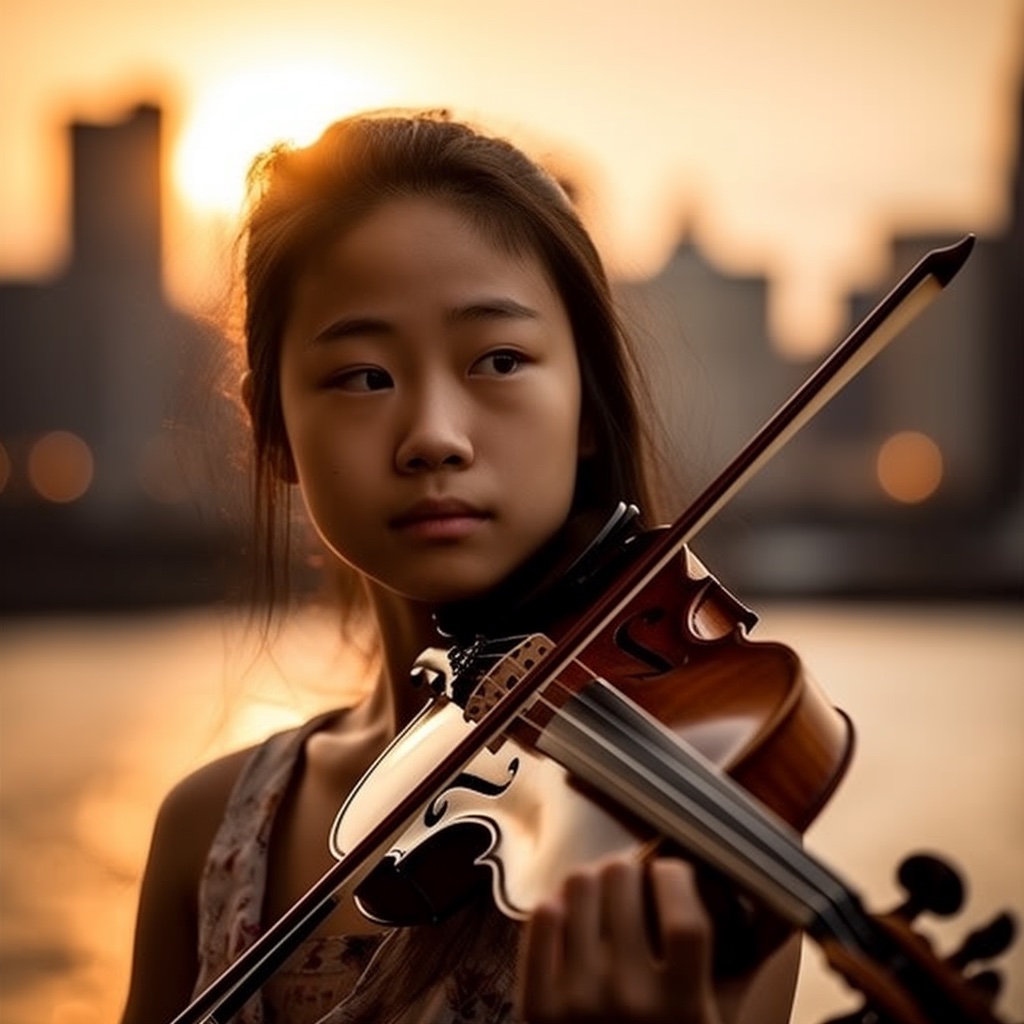
PG3 is Posting Group 3, a Secondary 1 admission route in Singapore’s Full Subject-Based Banding (Full SBB) system. It does not create a separate PG3-only Art or Music course. Art and Music form part of the common lower-secondary curriculum, where students across subject-level profiles can develop observation, creativity, listening and communication. For Punggol families, the first step is to distinguish ordinary curriculum lessons from school aesthetics programmes, performing-arts CCAs and selective Art or Music Elective Programmes.
At Punggol Secondary School, the school’s July 2026 Aesthetics Programme page describes workshops, performances and arts exposure, including clay work and music experiences. Such programmes illustrate how a school can broaden students’ interests, but one school’s offerings must not be assumed at Edgefield, Greendale or Yusof Ishak Secondary. Parents should check each school’s actual 2027 curriculum, CCA options and elective arrangements. The right goal is not simply a grade or certificate: it is a child who can notice, create, interpret and express ideas with increasing confidence.
- PG3 controls a posting route; lower-secondary Art and Music are shared curriculum experiences, not PG3-exclusive classes.
- MOE’s revised lower-secondary Art syllabus began with the 2024 Secondary 1 cohort.
- Art learning involves observation, experimentation, visual language, interpretation and reflection—not drawing talent alone.
- Music learning can involve listening, performing, creating and responding to different musical traditions.
- A general Art or Music lesson, a CCA and an Art/Music Elective Programme are different commitments.
- AEP/MEP can involve four-year study, selection and travel to a centre; do not assume automatic local availability.
- Compare school offerings and costs honestly, let children explore interests and keep time for the rest of secondary life.
Definition lock: four different arts pathways
| Pathway | What it means | Parent check |
|---|---|---|
| Common Art lesson | Lower-secondary shared curriculum | Learning, process and portfolio tasks |
| Common Music lesson | Lower-secondary shared curriculum | Listening, creating, performance and reflection |
| Arts CCA | Co-curricular commitment | Actual selection, weekly schedule, transport |
| AEP/MEP | Selective, extended four-year programme | Official eligibility, centre, timing and subject implications |

In this guide
- The first confusion: PG3 does not mean advanced Art classes
- What the 2024 lower-secondary Art syllabus is designed to do
- Art is a language of observation and meaning
- The sketchbook should show thinking, not only finished pieces
- How to describe and evaluate an artwork
- Materials are tools for expression, not proof of talent
- Understanding Music as listening, creating and performing
- Rhythm and patterns can be explored without paid lessons
- Creativity does not always begin with improvisation
- Music traditions are opportunities for cultural literacy
- Why Art and Music complement academic subjects
- What Punggol Secondary School actually publishes
- How Yusof Ishak Secondary describes the common curriculum
- An Art CCA is not the same as an Art lesson
- AEP is a selective four-year Art route
- MEP is an intensive Music route, not an automatic reward
- The AEP/MEP calendar must be checked afresh
- A realistic family Art activity in Punggol
- A realistic family listening activity
- What a strong Art portfolio really demonstrates
- Art and Music assessment is not always a written test
- How arts learning can support belonging
- What to ask at an arts-related school open house
- A practical first-term plan for Art and Music
The first confusion: PG3 does not mean advanced Art classes
A parent might hear that their child enters secondary school through PG3 and expect every subject to be taught in an exclusive G3 class. Under Full SBB, that expectation is inaccurate. The lower-secondary common curriculum brings students together for subjects such as Art, Music, Physical Education, Design and Technology, and Food and Consumer Education. The precise timetable is set by the school. The sharing of curriculum experiences is an important part of the system’s design.
Students arrive with different strengths. A pupil confident in algebra might have little experience with drawing or rhythm; another who studies Mathematics at a different subject level may be a gifted painter. A useful classroom allows these students to work, discuss and learn together. If adults insist that every activity should reflect an academic ranking, they miss the point of a common curriculum.
PG3 is relevant to admission and typical initial levels for other subjects. Art and Music should instead be discussed in terms of what students do, which skills they develop and how schools help them participate. Distinguish common curriculum lessons from higher-level elective routes that have their own selection criteria.
What the 2024 lower-secondary Art syllabus is designed to do
MOE’s revised lower-secondary Art teaching and learning syllabus began with the 2024 Secondary 1 cohort. It frames art as a way to expand imagination, discern visual information, communicate meaning and explore culture and identity. Students are invited to make things, discuss artworks, interpret choices and reflect on their own processes. The subject is much more than reproducing an attractive picture from a teacher’s example.
An art task can begin with an everyday scene, such as people crossing a Punggol walkway in the rain. A student can decide which shapes and contrasts make the scene feel hurried or calm. Another might create a collage that highlights the movement of umbrellas. Neither piece needs to look identical. The teacher can discuss how composition, colour and material choices communicate an idea.
Parents who only ask whether the final drawing looks realistic may miss the deeper learning. Ask what the child wanted a viewer to notice, which choice proved difficult and how their plan changed. Art education can develop the ability to experiment, judge and communicate with a form of evidence that is visual rather than purely verbal.
Art is a language of observation and meaning
Consider a photograph of a bus interchange. One student notices repeated vertical structures; another notices the bright yellow of an approaching bus; a third notices how people are grouped. Each can make a distinct visual argument about the same scene. The work starts by looking carefully and deciding what is important. The ability to choose a focus is useful in other subjects as well.
Encourage the child to describe a picture without immediately giving an opinion. Where is the focal point? What lines guide the viewer? Which textures are repeated? How does empty space affect the mood? Then ask what might change if an element were moved. This sequence teaches observation before interpretation, much as Science teaches students to separate what they see from what they infer.
A beginner may lack drawing control but still be excellent at visual interpretation. When parents recognise that difference, they can teach a specific skill without telling the child they are either ‘artistic’ or ‘not artistic’.
The sketchbook should show thinking, not only finished pieces
A sketchbook can hold first impressions, rough compositions, experiments with materials, notes about artists and revisions after feedback. In the MOE Art framework, processes and portfolios support visible thinking. A messy preliminary page may therefore be educationally valuable. The pupil is learning how an idea develops rather than hiding every attempt that did not work.
Suppose a student begins with an image of a Punggol riverside tree. In one sketch the branches dominate; in another the path becomes central. A short note might say the second composition better shows how people move through the place. That written observation reveals deliberate judgement. It is a stronger sign of learning than copying an online image perfectly without understanding why it was made.
Parents should resist erasing every imperfect line or completing a school project themselves. The teacher needs to see the pupil’s choices, methods and progress. Adult craftsmanship can produce a more polished submission while making the evidence of student learning less reliable.
How to describe and evaluate an artwork
A good art response moves from what is visible to what it might communicate. ‘The work uses repeated circles and dark blue shapes’ is a description. ‘The repetition creates a sense of rhythm and the dark colours suggest a quiet atmosphere’ is an interpretation. Both require appropriate caution: a viewer cannot always know an artist’s intention from the image alone.
Ask the pupil to make a claim and identify the visual evidence. If the work feels energetic, which diagonal lines, colour contrasts or repeated shapes contribute to that experience? Can another viewer interpret the same feature differently? The discussion should build confidence while retaining openness to alternatives. Art appreciation is not simply guessing the one adjective an examiner wants.
This kind of visual reasoning helps students read posters, advertisements, diagrams and digital content more critically. It connects aesthetics to the ability to question how images influence an audience.
Materials are tools for expression, not proof of talent
Drawing, painting, collage, clay and digital media each offer different possibilities. An artist may choose pencil for delicate line, paint for layered colour or collage for strong juxtaposition. The important question is which medium supports the intended effect and how the pupil learns to handle it safely. More expensive materials do not automatically produce deeper work.
One low-cost home activity uses recycled paper and a few coloured pencils. Ask the child to create three variations of a scene: one calm, one energetic and one mysterious. The same elements can be rearranged to produce different effects. Later, ask which change had the greatest impact and why. This is an original family exercise, not a school assessment task.
Before buying specialist tools, check the school’s actual requirements and whether they are supplied during lessons. Private shopping lists assembled from social media can waste money and may introduce materials that are inappropriate for the classroom.
Understanding Music as listening, creating and performing
Lower-secondary Music is not restricted to pupils who have passed graded instrumental examinations. The curriculum can involve attentive listening, recognising patterns, performing, making creative choices and exploring music from different cultural traditions. A child may contribute through singing, rhythmic work, ensemble cooperation, analysis or simple composition. Musical learning includes understanding and expression as well as performance.
Ask the pupil to listen to an instrumental passage and identify what changes. Does the texture become thicker? Is the beat steady? Which instrument or musical layer draws attention? Then ask how the change affects the listener’s experience. These questions treat listening as active reasoning. They can be answered without expensive equipment or a long history of private lessons.
Schools decide their actual teaching activities, instruments and software. A family should avoid assuming that a course shown on another school’s website is available locally. The more useful question is which opportunities the receiving school currently provides for interested beginners.
Rhythm and patterns can be explored without paid lessons
Rhythm gives a child a concrete entry into music. Students can listen for a repeating beat, clap a short original sequence, pause, then reproduce or vary it. The exercise involves memory, timing, cooperation and attention. An adult who is not a trained musician can still participate by keeping the task simple and asking what changed.
Two students might perform a pattern differently: one follows the beat precisely, while the other emphasises a surprising pause. The class can discuss whether that pause creates tension or makes the phrase easier to remember. This is not a contest to identify who was born with rhythm. Repetition and feedback develop skill over time.
The family should not present a homemade rhythmic activity as a substitute for the school’s Music syllabus. It is a small way to encourage listening and creativity before the pupil encounters more formal learning.
Creativity does not always begin with improvisation
Some children are comfortable inventing a tune immediately; others need a model first. A teacher may help students examine a short musical idea, notice how it is organised and then create a variation. This resembles writing, where learners read examples before producing independent paragraphs. The point is not mechanical copying but learning the structure that makes creative decisions possible.
A pupil might start with a simple two-phrase melody invented in class and adjust its ending. Ask what effect the change has on expectation or mood. Another might create a rhythmic accompaniment for a school story. Different learners can contribute through composition, performance, editing or explanation. All should understand their personal contribution.
Parents can praise the process: the pupil tried an alternative, listened again and made a considered choice. ‘You improved the ending because it now completes the idea’ conveys more useful feedback than ‘You are a genius musician’.
Music traditions are opportunities for cultural literacy
Singapore’s cultural environment includes many musical forms, and students can encounter music connected to different communities and historical contexts. Listening across traditions helps pupils recognise that instruments, scales, performance settings and musical purposes vary. The educational goal is not to reduce a tradition to an exotic sound effect but to learn with curiosity and respect.
Before describing a musical example, ask where the information comes from and whether the piece’s context is understood. Students should not make sweeping claims about a whole culture based on one recording. A respectful discussion can compare instrumentation and performance purpose while acknowledging differences within a tradition.
Parents can connect this learning to appropriate public arts events or recordings, checking age suitability and current availability. An experience outside school becomes useful when the child can notice something specific and explain it thoughtfully.
Why Art and Music complement academic subjects
Art and Music require students to make choices under constraints. A composition must communicate through selected elements, and an ensemble must respond to timing and fellow performers. These demands can support communication, attention, collaboration and adaptive thinking. They do not automatically raise a Mathematics score, and parents should be cautious about exaggerated claims that artistic activities guarantee academic achievement.
A visual explanation may help a student organise a Science idea. Rhythmic pattern recognition may encourage precise listening. These are possible connections, not reasons to turn every creative experience into an examination strategy. Art and Music are valuable fields in their own right and provide a distinct way to encounter the world.
An education that includes aesthetic judgement helps pupils understand design in buildings, screens, posters, cultural events and the environments they inhabit every day. That breadth matters even for a teenager who will not pursue an arts-related career.
What Punggol Secondary School actually publishes
Punggol Secondary School’s official Aesthetics Programme page, updated in July 2026, describes students experiencing different arts genres through workshops, learning journeys, assembly performances and concert opportunities. The page includes examples of clay work, a Wayang Kulit performance and music-related assemblies. Those are grounded examples of the school’s programme, not assurances that every activity will recur identically in a later year.
Families can use that information as a starting point for questions. What do lower-secondary students experience as part of common lessons? Which opportunities belong to a CCA, an enrichment event or an optional performance? Are there prerequisites or limited places? A school may provide broad exposure without turning every student into a formal performer.
Do not transfer details from Punggol Secondary’s page onto Edgefield, Greendale or Yusof Ishak Secondary. Each campus should be researched using its own current programme pages and staff guidance.
How Yusof Ishak Secondary describes the common curriculum
Yusof Ishak Secondary School’s Design and Aesthetics page explains that all lower-secondary students take common-curriculum subjects including Art and Music, alongside Design and Technology and Food and Consumer Education. It frames these experiences as ways to develop creativity, curiosity, communication and informed judgement. That school-specific description is useful evidence of how Full SBB appears in everyday learning.
Families should read the actual page rather than infer that every school rotates subjects on the same timetable. One school may organise modules differently from another. A parent’s question about term length, portfolio requirements or display opportunities should be answered by the receiving school, not an assumption based on an unrelated school calendar.
Ask what the pupil will make or discuss and how feedback will be given. These specifics give a clearer picture of learning than simply asking whether Art and Music ‘count’.
An Art CCA is not the same as an Art lesson
Curricular Art is part of a broad educational experience. An Art Club or other arts CCA is a separate co-curricular commitment governed by the school’s offerings, selection and participation arrangements. A pupil may love classroom drawing but prefer sport as a CCA. Another may want additional artistic practice outside the timetable. Both choices are sensible.
Likewise, a Concert Band or dance group is not the same as a general Music lesson. Performing-arts CCAs can require rehearsal, equipment and specific skills over time, whereas common curriculum lessons aim to reach a broader range of students. Parents should not assume that joining a band automatically places a pupil in a special Music curriculum.
Separate the decisions on a family worksheet. One line records compulsory subjects; another records optional CCAs; a third records selective programmes such as AEP or MEP where applicable. This prevents workload confusion.
AEP is a selective four-year Art route
The Art Elective Programme is designed for students with artistic potential and motivation to study Art in greater depth. Official 2026 school notices describe application and selection processes, a four-year commitment and the option of a centre-based arrangement where available. The programme has a practical and analytical component and leads toward the applicable Higher Art examination.
Families should understand what the commitment means. At some participating arrangements, the pupil may have weekly afternoon lessons at a centre and a heavier Art workload. Official notices also describe how AEP may replace lower-secondary Design and Technology and Food and Consumer Education to manage curriculum time, affecting later subject options. The actual rules must be verified for the pupil’s intake.
An attractive portfolio does not guarantee acceptance, and PG3 status is not itself an AEP admission ticket. Ask about eligibility, selection tasks, travel, schedules and subject-combination implications before deciding to apply.
MEP is an intensive Music route, not an automatic reward
The Music Elective Programme similarly offers in-depth Music study for pupils with aptitude, potential and interest. Official school information describes centre-based options, extended lessons and a four-year commitment, with the applicable Higher Music examination at the end. It can include listening, creation, performance and study of varied musical practices rather than simply practising a single instrument more often.
Parents sometimes confuse strong piano examination grades with certain school admission. MEP selection and demands involve more than one piece of evidence, and the actual criteria should be read from MOE and the current application materials. The child also needs to enjoy musical inquiry, not just the idea of an impressive programme name.
Before applying, assess whether the family can support after-school travel and the student’s other obligations. Four years of sustained creative work should be chosen deliberately, especially where the elective affects lower-secondary D&T and FCE lessons.
The AEP/MEP calendar must be checked afresh
Official 2026 school pages recorded an application window early in January 2026 for that year’s intake. Those dates are historical evidence of how the programme was administered, not a published deadline for 2027. A parent should avoid submitting to an expired link or assuming a window will be identical in the following year.
Check the latest MOE AEP and MEP pages and the secondary school’s own instructions after posting. Some students may be eligible to consider centres outside their school; this does not mean every course is available at every venue or that transport is provided. Eligibility, applications and school timetable arrangements are administrative matters requiring current confirmation.
The sensible action is to create a reminder to verify the actual intake announcement when it is released, then discuss the workload and subject implications with the child before choosing.
A realistic family Art activity in Punggol
A family walk beside Punggol Waterway can be an opportunity to observe repeated lines, changing light or the contrast between greenery and buildings. Choose a public area where it is safe to stand and sketch. Ask the pupil to produce three small frames showing different focal points. None needs to be a polished artwork, and the child should not enter restricted spaces or interrupt other visitors.
Afterward, invite the child to select one frame and explain what it communicates. Ask how the effect might change if more empty space were included or if the viewer’s position shifted. This is an original learning exercise for parents, not a description of an official school excursion or graded coursework.
A local setting makes learning tangible, but the purpose is visual inquiry rather than collecting picturesque proof of how artistic a child has become.
A realistic family listening activity
Select a short piece of legally accessible music and listen together. Without attempting to play or reproduce copyrighted music in a new recording, discuss a few features: the pulse, the main instrumental colour, a change in dynamics and the feeling created by a transition. Ask the pupil which observation supports their interpretation. This uses ordinary listening rather than an expensive course.
On a second listen, ask what the student noticed that was missed previously. A quiet accompanying part may become clearer, or the pupil may revise an earlier impression. The willingness to revisit a judgement is part of musical understanding. Parents need not claim to know the composer’s private intentions.
Keep the exercise relaxed. Students should be able to enjoy Music without treating every song as a graded analysis. Formal tasks can be followed according to the actual teacher’s instructions.
What a strong Art portfolio really demonstrates
A portfolio can show experimentation, process and growth across different tasks. It should not simply be a set of polished works secretly produced by adults. A student applying for an elective may benefit from showing how an idea changed after feedback, what materials they tried and why they made certain visual decisions. Official portfolio requirements differ and should be read carefully.
Encourage captions that use plain language: ‘I changed the contrast to focus attention on the main figure’ is more informative than ‘This is my masterpiece.’ If a drawing was created after viewing another artist’s work, the pupil should acknowledge the influence appropriately. Integrity is as important in creative work as in a Science report.
The central question is what the reviewer can learn about the child’s own thinking. A portfolio that honestly displays effort and reflection serves that purpose better than a collection of impressive but unexplained images.
Art and Music assessment is not always a written test
Schools may evaluate making, performance, listening, interpretation, process or reflection as appropriate to their curriculum. The common subjects need not be assessed in the same way as a G3 Mathematics examination. Parents should ask what evidence of learning the teacher expects instead of inventing marks or assuming that every project has a fixed national examination weight.
A pupil who is nervous during a presentation may still demonstrate careful preparation and thoughtful work. A student who draws beautifully may still need to explain the artistic decisions made. Good feedback separates the quality of the outcome from the learning habits that produced it.
Where a child has a relevant access need, discuss appropriate classroom support with the school. The objective is meaningful participation, not lowering every challenge or making all pupils submit identical products.
How arts learning can support belonging
A student entering a mixed form class may find shared creative experiences an accessible way to meet peers. Producing a display or working in an ensemble gives pupils opportunities to contribute through different skills. One child organises materials; another suggests a strong visual concept; a third patiently checks details. The group needs communication and respect more than a hierarchy based on Posting Group.
Creative projects can also create friction. Students may disagree on a design or rehearsal choice. Encourage the child to explain a reason, listen to other proposals and evaluate alternatives according to the task. These are small leadership skills developed in a real context.
Parents should value the social learning without promising that every arts activity will solve friendship problems. A pupil’s sense of belonging grows through repeated respectful experiences over time.
What to ask at an arts-related school open house
Ask whether Art and Music are taught as common curriculum in the applicable lower-secondary year, how the timetable is organised and what students actually produce. Enquire about current school arts events, visiting performances, CCAs and elective programmes. If the pupil wants AEP or MEP, ask about centre participation and how it affects other subjects.
Look for evidence instead of superlatives. A school that displays students’ initial sketches alongside finished work may help visitors understand process. A clear description of feedback can show how teachers support learning. Public performances can be exciting, but they are only one part of the Arts experience.
Keep the child involved. Ask which activity they can imagine practising, what they would like to learn and which responsibilities they can manage. A strong fit is personal, not universal.
A practical first-term plan for Art and Music
In the first two weeks, help the child organise the required materials and understand school instructions. During the next month, build a habit of reflecting on one creative choice after a lesson. This might be the use of colour in Art or a change of rhythm noticed in Music. Ask for specific language rather than a vague ‘It was fun’.
Later in the term, encourage an independent small project that stays within the school’s rules. Keep a record of what was attempted, what changed and what the student learned. Where a selective programme is under consideration, obtain current official information before adding rehearsals or portfolio demands to an already busy calendar.
The goal is a teenager who can notice detail, communicate a choice and remain curious. That is valuable whether the child chooses an Arts CCA, Higher Art, Higher Music or simply enjoys learning through the common curriculum.
Frequently asked questions
Does PG3 mean G3 Art is compulsory in Secondary 1?
PG3 concerns school posting. The lower-secondary common curriculum includes Art; do not assume it is a separate PG3-only exam subject.
Are Music lessons only for children who already play instruments?
No. General Music education can include listening, creation, performance and appreciation for pupils with different starting experiences.
Is an Art CCA the same as AEP?
No. A CCA is co-curricular; AEP is a selective extended Art programme with its own curriculum and application requirements.
Can a PG3 child apply for MEP?
PG3 status alone is not the acceptance criterion. Check current MOE eligibility, selection and school or centre arrangements.
Do AEP/MEP students still study D&T and FCE?
Official programme notices say extended Art/Music study may replace lower-secondary D&T and FCE, affecting later subjects. Verify current arrangements before applying.
Is the January 2026 application date valid for 2027?
No. That was a 2026 intake notice. Use the published timeline for the actual intake year.
Which Punggol school has the best arts programme?
There is no universal answer. Compare the student’s interests with current school curriculum, exposure programmes, CCAs and practical timetable.
Do I need to buy art materials before school begins?
Buy only what the actual school requires; some materials are supplied, while specialist elective needs may differ.
Can a shy child enjoy the arts?
Yes. Creative learning offers multiple ways to contribute, including observation, design, listening and small-group work.
Will Art automatically improve Mathematics results?
No automatic improvement can be promised. Art develops valuable thinking and expression skills in its own right.
What can parents discuss after a Music lesson?
Ask what the child noticed, created, performed or changed, and what evidence supports their explanation.
Where can I see current syllabus requirements?
Use MOE’s syllabus pages and the receiving school’s current programmes and teacher guidance.
Continue the PG3 curriculum and programmes series: PG3 Food and Consumer Education | PG3 Outdoor Education and cohort camps | PG3 ALP and LLP school programmes
MOE and Punggol school sources
- MOE lower-secondary Art teaching and learning syllabus (implemented from 2024 cohort)
- Punggol Secondary School Aesthetics Programme, updated July 2026
- Yusof Ishak Secondary Design and Aesthetics common curriculum
- MOE Art Elective Programme
- MOE Music Elective Programme
- Tanjong Katong Secondary 2026 AEP/MEP centre details and commitment
- PG3 Punggol schools: compare learning fit and CCAs
Your next step
Ask your child to describe one visual choice and one musical change they noticed recently. Read the actual school’s Art and Music information and check which experiences are common lessons, CCAs or selective AEP/MEP options. If a programme requires extra time or travel, make a realistic weekly plan before applying. The educational aim is curiosity and thoughtful expression, not collecting an impressive label.


